Shinjuku or Shibuya: Which Is the Better Base in Tokyo?
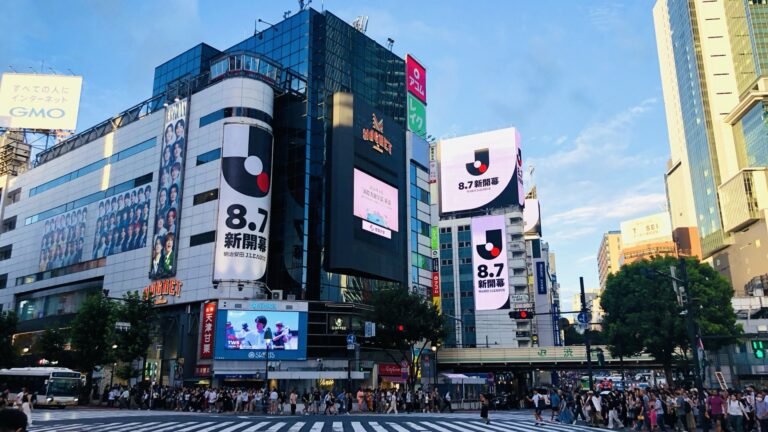
These fares and times come from the operators’ own pages, gathered in the japan-japan.com airport transfer and routes databases, as of 14 October 2026. The Shinjuku vs Shibuya comparison below uses numbers: fares, times, lines, passengers, sight prices, hotel tax and drinking rules. It does not rate the mood or safety of either area.
Shinjuku vs Shibuya side by side
The table puts the two areas next to each other. Read each row with its label: some numbers are boardings, some are rooms in the whole city, and some are fares on one route.
| Item | Shinjuku | Shibuya |
|---|---|---|
| From Haneda, Keikyu and JR | 43 min, 590 yen | 37 min, 540 yen |
| From Haneda, Limousine bus | 40–55 min, 1,400 yen, 67 a day | 49–69 min, 1,300 yen, 20 a day |
| From Narita, Narita Express | 3,330 yen | 3,330 yen |
| JR lines on the timetable list | 8 | 5 |
| JR boardings a day (FY2024) | 666,809 | 324,414 |
| Hotels and ryokan in the ward (31 March 2025) | 511, with 23,854 rooms | 462, with 8,075 rooms |
| Nearby view | Tokyo Metropolitan Government observatories, free | SHIBUYA SKY, from 2,700 yen online |
| Drinking on the street | Limited at Halloween in parts of Shinjuku 3-chome and Kabukicho 1-chome | Banned 6 p.m. to 5 a.m., every day |
Three rows decide most trips. From Haneda, Shibuya is cheaper and shorter by train. From Narita, the Narita Express fare is the same 3,330 yen to both. For Hakone and Mt Fuji, Shinjuku is the starting point.
The hotel numbers cover each city ward, not the streets around the station. On 31 March 2025, Shinjuku City had 511 licensed hotels and ryokan with 23,854 rooms. Shibuya City had 462 with 8,075 rooms. So Shinjuku has nearly three times as many rooms, while the number of buildings is close. The figures come from the Tokyo Metropolitan Government lodging licence statistics.
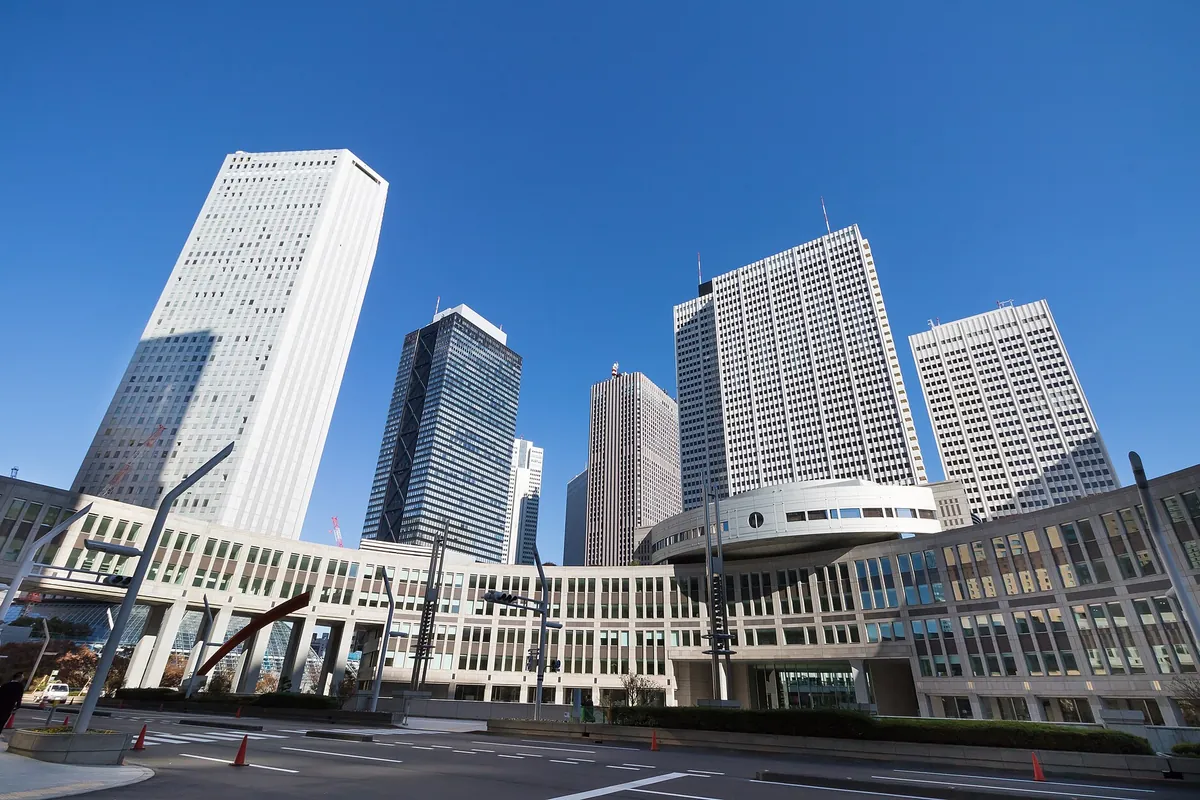
The photo shows the towers of west Shinjuku. Several big hotels there are Airport Limousine bus stops from Haneda, such as Keio Plaza Hotel and Park Hyatt Tokyo. In Shibuya, the bus stops at Cerulean Tower Tokyu Hotel and Shibuya Excel Hotel Tokyu in Shibuya Mark City.
From Haneda and Narita airports
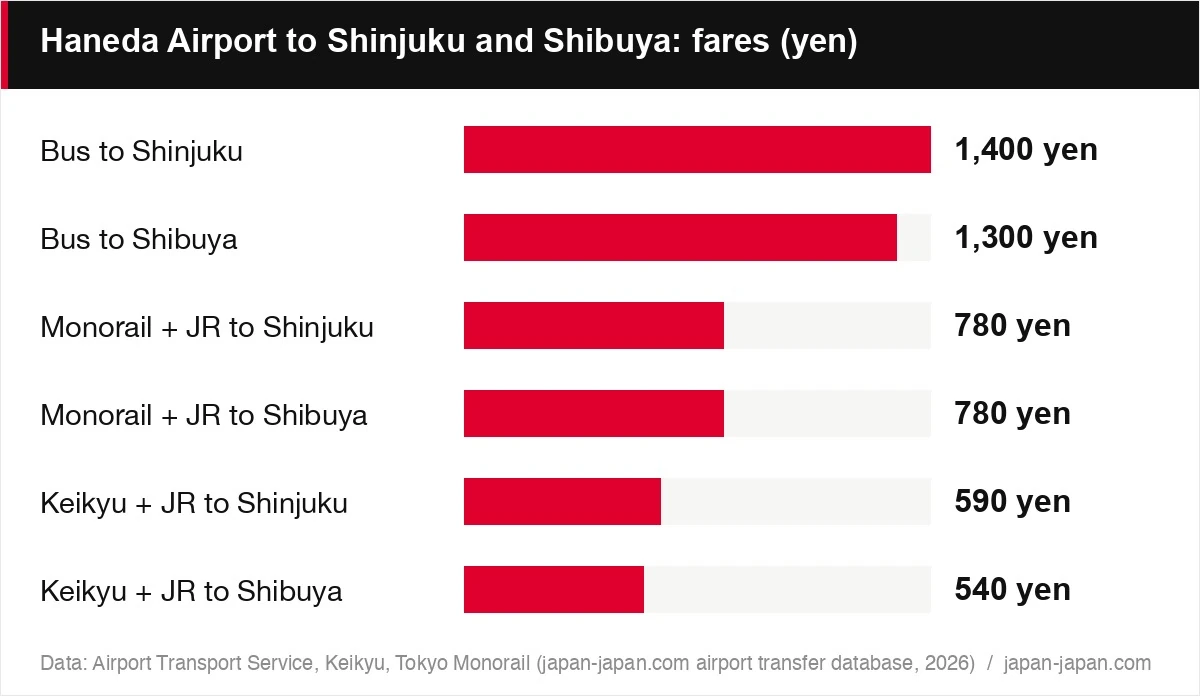
From Haneda there are three ways to each area: two trains with a change, and a direct bus.
| Item | Value | Note |
|---|---|---|
| Bus to Shinjuku | 1400 yen | 40–55 min |
| Bus to Shibuya | 1300 yen | 49–69 min |
| Monorail + JR to Shinjuku | 780 yen | |
| Monorail + JR to Shibuya | 780 yen | |
| Keikyu + JR to Shinjuku | 590 yen | 43 min |
| Keikyu + JR to Shibuya | 540 yen | 37 min |
The chart shows the six fares. The cheapest is the Keikyu Airport Line to Shinagawa, then the JR Yamanote Line. To Shibuya it takes about 37 min for 540 yen, or 536 yen with an IC card. To Shinjuku it takes about 43 min for 590 yen, or 580 yen with an IC card. From Terminals 1 and 2, allow about 43 min to Shibuya and 49 min to Shinjuku.
The Tokyo Monorail to Hamamatsucho, then the JR Yamanote Line, costs 780 yen to either station with a paper ticket. On Saturdays, Sundays and holidays, the Monorail and Yamanote Line Discount Ticket costs 590 yen to any Yamanote Line station.
The Airport Limousine bus
The bus is where Shinjuku pulls ahead. From Terminal 3, 67 buses a day run to Shinjuku Station West Exit (Keio Department Store), the first at 06:15 and the last at 23:40. The fare is 1,400 yen and the ride takes 40–55 min. Board at stop 3 at Terminal 3.
To Shibuya, 20 buses a day leave Terminal 3, from 07:40 to 22:35. The fare is 1,300 yen, 100 yen less than Shinjuku, and the ride takes 49–69 min. Board at stop 4 at Terminal 3. If your flight lands late in the evening, Shinjuku gives you more buses and a later last bus. Our Haneda Airport Limousine Bus guide has the other stops.
Back to Haneda, buses leave Busta Shinjuku 55 times a day and Shibuya Station 20 times. Full timetables are on our pages for Haneda Airport to Shinjuku and Haneda Airport to Shibuya.
From Narita Airport
From Narita, the choice of area does not change the fare. The Narita Express runs to both Shinjuku and Shibuya without a change for 3,330 yen in an ordinary reserved seat. Holders of a non-Japanese passport can buy the N’EX TOKYO Round Trip Ticket for 5,200 yen, valid 14 days.
The Airport Limousine bus also costs 3,600 yen to either area, but the service levels differ. From Terminal 1, 54 buses a day go to Shinjuku, from 07:15 to 23:05, in 80–105 min. Only 6 a day go to Shibuya, from 09:20 to 19:50, in 90–100 min. Check Narita Airport to Shinjuku and Narita Airport to Shibuya for the stops at each terminal. Staying near Ueno instead? Compare Keisei Skyliner vs Narita Express and the ways from Narita and Haneda into Tokyo.
Train lines and station passengers
Shinjuku has more JR lines. The JR East Shinjuku Station information page and JR East’s timetable list show 8 conventional lines and services at Shinjuku. Three are Chuo lines: the Chuo-Sobu Line (Local), the Chuo Line (Rapid) and the Chuo Main Line limited expresses. The others are the Saikyo/Kawagoe, Shonan-Shinjuku and Yamanote lines, the Narita Express and the Sotetsu through service. Shibuya has 5: the Saikyo/Kawagoe Line, Shonan-Shinjuku Line, Yamanote Line, Narita Express and the Sotetsu through service.
By station numbering, JR East counts 5 lines at Shinjuku and 3 at Shibuya. Either way, only Shinjuku has the Chuo Line.
The subway and private railways add more. Shinjuku has the Tokyo Metro Marunouchi Line, the Toei Shinjuku and Oedo lines, and the Odakyu and Keio lines. Seibu-Shinjuku Station serves the Seibu Shinjuku Line. Nearby Shinjuku-sanchome adds the Fukutoshin Line. The Tokyo Metro Shibuya Station page lists the Ginza, Hanzomon and Fukutoshin lines at Shibuya. Shibuya also has the Keio Inokashira Line and the Tokyu Toyoko and Den-en-toshi lines.
| Railway | Shinjuku | Shibuya | How counted |
|---|---|---|---|
| JR East | 666,809 | 324,414 | Boardings, FY2024 |
| Tokyo Metro | 201,609 (Shinjuku), 159,057 (Shinjuku-sanchome) | 196,339 | In and out, FY2025 |
| Odakyu | 458,284 | – | In and out, FY2025 |
| Keio | 684,055 | 291,490 (Inokashira Line) | In and out, FY2025 |
| Tokyu | – | 425,889 (Toyoko), 619,956 (Den-en-toshi) | In and out, FY2025 |
| Seibu | 151,685 (Seibu-Shinjuku) | – | In and out, FY2025 |
| Toei Subway | 145,957 (Shinjuku Line), 62,465 (Oedo Line) | – | Boardings, FY2024 |
The table lists each company’s own count, so the rows do not add up. JR East counts only people boarding, and its latest year is FY2024. Tokyo Metro, Odakyu, Keio, Tokyu and Seibu count people entering and exiting in FY2025. Toei counts boarding and alighting separately, also for FY2024.
Within each company, the order is clear. The JR East daily boardings by station (FY2024) put Shinjuku first with 666,809 a day, up 2.5%. Shibuya is fifth with 324,414, up 3.3%. On the Tokyo Metro Shinjuku Station page, Shinjuku ranks 8th of 130 stations with 201,609 a day, and Shibuya ranks 9th with 196,339. The Odakyu station passenger numbers page lists Shinjuku as its busiest station, at 458,284 a day.
Both stations are big, so note your exit name before you meet anyone there.
To get around the city, two subway passes work from both areas. The Tokyo Subway Ticket costs 1,000 yen for 24 hours, 1,500 yen for 48 hours and 2,000 yen for 72 hours. It covers all Tokyo Metro and Toei Subway lines and is sold to overseas visitors. The Tokyo Metro 24-hour Ticket costs 700 yen at any Tokyo Metro ticket machine and covers the nine Tokyo Metro lines.
Day trips to Hakone and Mt Fuji
This is the clearest difference between the two areas. In our routes database, the Romancecar, Rapid Express, Fuji Excursion, Azusa and highway bus all start in Shinjuku. The only other one is the Shinkansen from Tokyo Station. From Shibuya, you ride to Shinjuku first, for example on the Yamanote, Saikyo or Shonan-Shinjuku Line.
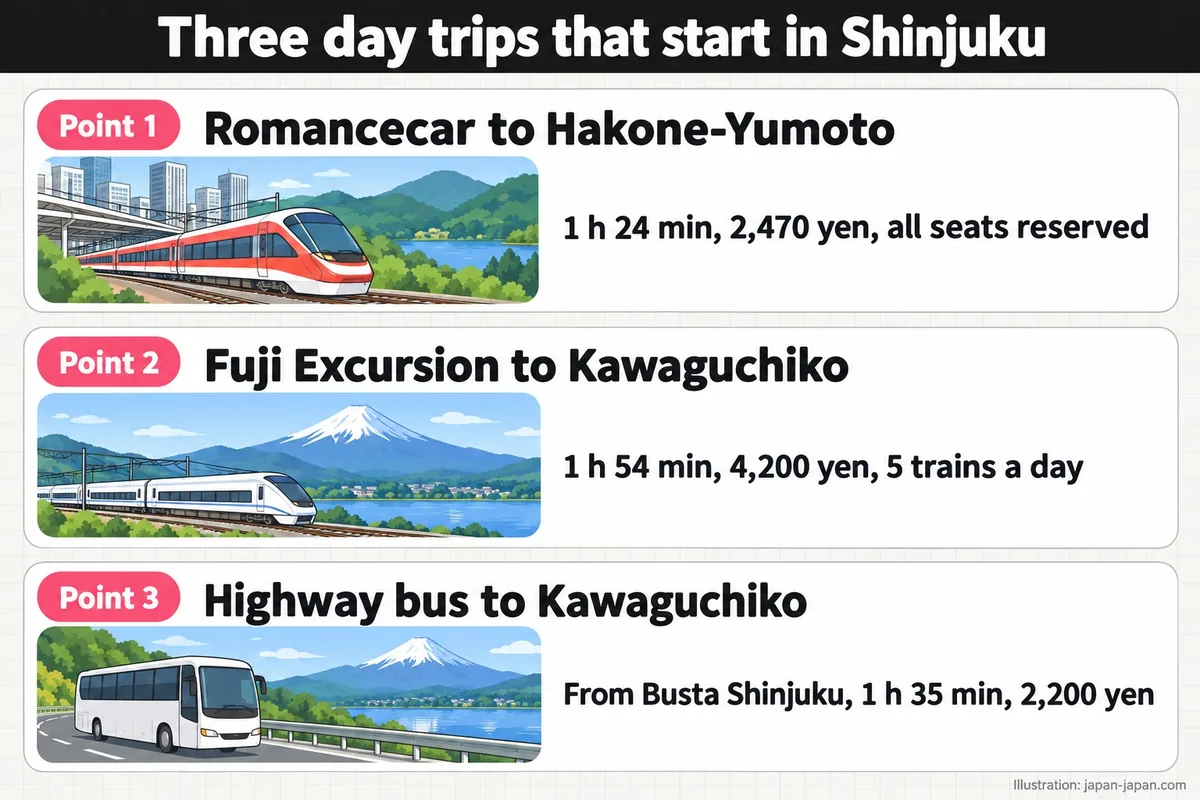
The drawing sums up the three main options. Details below are for 14 October 2026.
To Hakone
The Odakyu Romancecar runs from Shinjuku to Hakone-Yumoto. The fastest train takes 1 h 24 min. The reserved seat costs 2,470 yen: a 1,270 yen fare plus a 1,200 yen limited express charge. Bought online as a ticketless fee, the charge drops to 1,150 yen. There are 16 trains a day, the first at 07:37 and the last at 18:00. All seats are reserved.
The cheaper way is the Odakyu Rapid Express to Odawara, then the Hakone Tozan Train. The fare is 1,270 yen in all, and the two rides add up to 1 h 40 min of riding time. Add time for the change at Odawara on top of that. There are 63 trains a day from Shinjuku to Odawara.
Coming back, the last Romancecar from Hakone-Yumoto leaves at 19:50 and reaches Shinjuku at 21:26. Our page on Tokyo to Hakone also covers the Shinkansen from Tokyo Station.
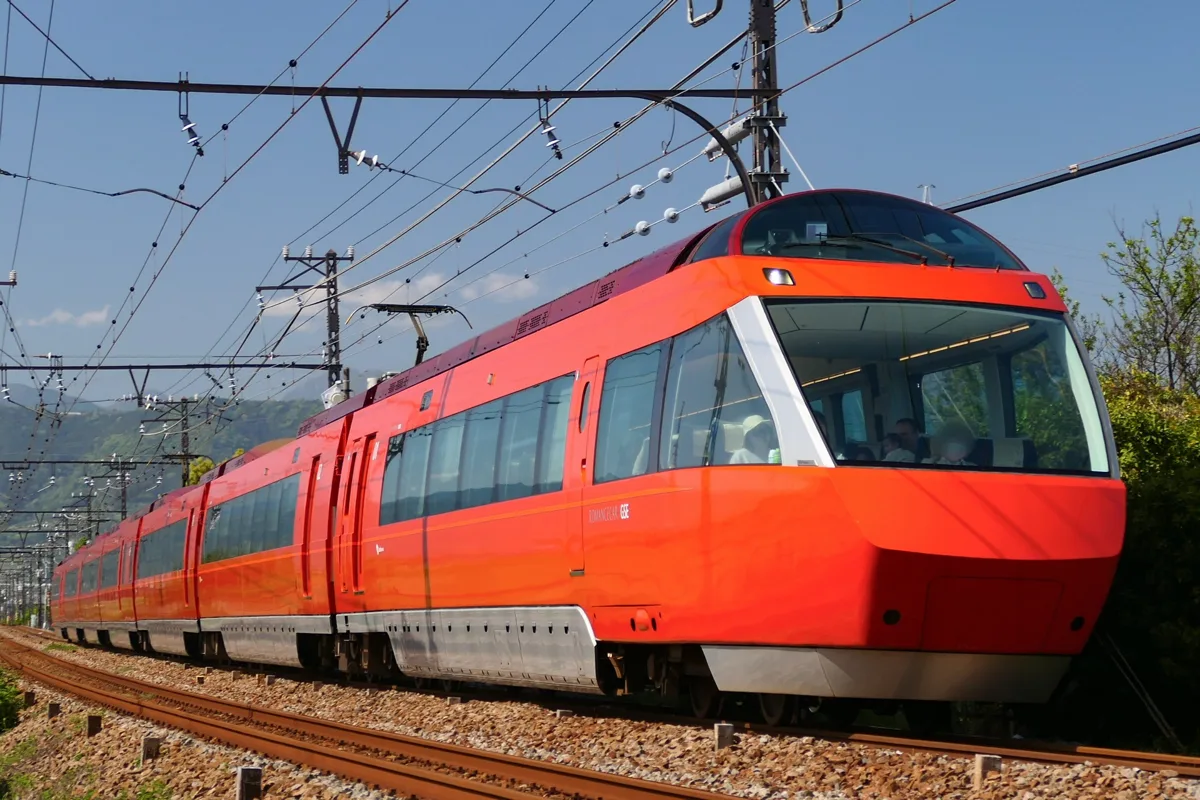
The photo shows a GSE, one of the Romancecar trains on the Hakone run. Buy your limited express ticket before you reach the platform.
To Mt Fuji and Kawaguchiko
The Limited Express Fuji Excursion runs from Shinjuku Station to Kawaguchiko. The fastest takes 1 h 54 min, and the reserved seat costs 4,200 yen. Only 5 trains run a day, from 07:30 to 11:34, so this is a morning trip.
The highway bus runs far more often. Keio Bus and Fujikyu Bus run 55 buses a day from Busta Shinjuku to Kawaguchiko Station, from 06:45 to 22:25. The fastest takes 1 h 35 min, and the fare is 2,200 yen, or 2,000 yen when booked and paid online. Booking opens one month before travel.
Busta Shinjuku is the highway bus terminal on the 4th floor, directly connected to the South Exit of Shinjuku Station. A third way is the Limited Express Azusa to Otsuki, then the Fujikyu Line: 1 h 49 min of riding time and 3,600 yen. Times and stops are on Tokyo to Mt Fuji.
Sights and what they cost
Each area has one view from high up and one large green space.
Shinjuku side
The Tokyo Metropolitan Government Building observatories page lists free entry to two decks, 202 meters above ground on the 45th floor. Take the observatory elevator from the 1st floor of the Main Building No. 1.
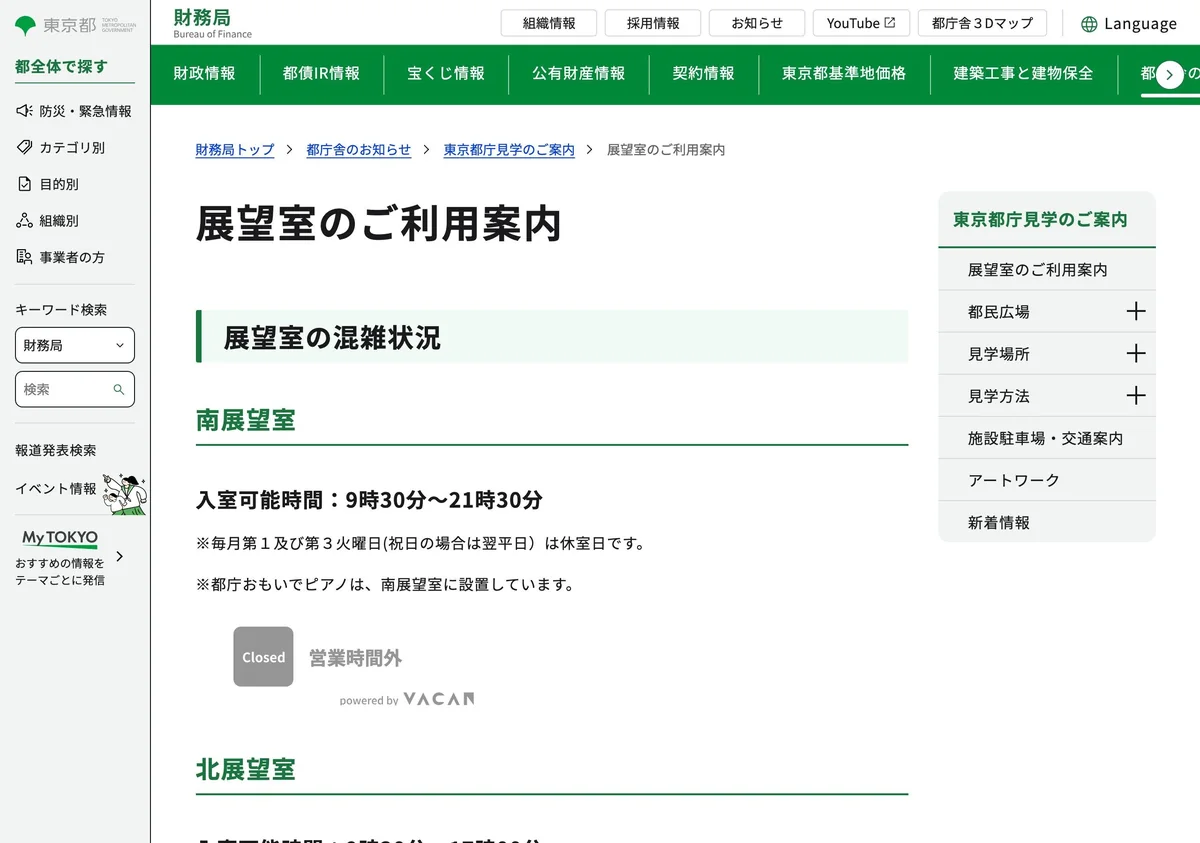
The screenshot is the official visitor page of the Tokyo Metropolitan Government. It gives the opening hours as 9:30 to 22:00, with last entry 30 minutes before closing. The North Observatory closes at 17:30. The South Observatory is closed on the 1st and 3rd Tuesday, and the North on the 2nd and 4th Monday. Expect to queue 20–30 minutes. From December to February, the cold, clear air gives many days with a view of Mt Fuji to the west.
| Place | Tokyo Metropolitan Government Building observatories |
|---|---|
| Price | Free |
| Hours | 9:30-22:00, last entry 30 min before closing. North deck closes 17:30. South closed 1st and 3rd Tue, North 2nd and 4th Mon |
| Access | Observatory elevator from the 1st floor of Main Building No. 1, west Shinjuku |
| Official site | Tokyo Metropolitan Government Building observatories page |
Shinjuku Gyoen National Garden charges adults 500 yen. Seniors aged 65 and over and students aged 16 and over pay 250 yen, and children aged 15 and under enter free. You can pay with a transport IC card at the gates. From 1 October to 14 March the garden opens 9:00 to 16:30, with last entry at 16:00. It closes on Mondays, but it opens every day during the Chrysanthemum Exhibition from 1 to 15 November.
The Shinjuku Gyoen National Garden garden rules page bans alcoholic drinks inside, so leave the beer for later.
| Place | Shinjuku Gyoen National Garden |
|---|---|
| Price | Adults 500 yen, seniors 65+ and students 16+ 250 yen, ages 15 and under free |
| Hours | 1 Oct-14 Mar 9:00-16:30 (last entry 16:00). Closed Mondays, open daily 1-15 Nov |
| Official site | Shinjuku Gyoen National Garden visitor information |
Shibuya side
SHIBUYA SKY sits on top of Shibuya Scramble Square. Adult tickets (12 and over) cost 2,700 yen online for entry until 14:59, and 3,400 yen from 15:00. At the counter they cost 3,000 yen and 3,700 yen. Child tickets are sold at the counter only, for 1,200 yen, and preschoolers up to 6 go free. It opens 10:00 to 22:30, with last entry at 21:20.
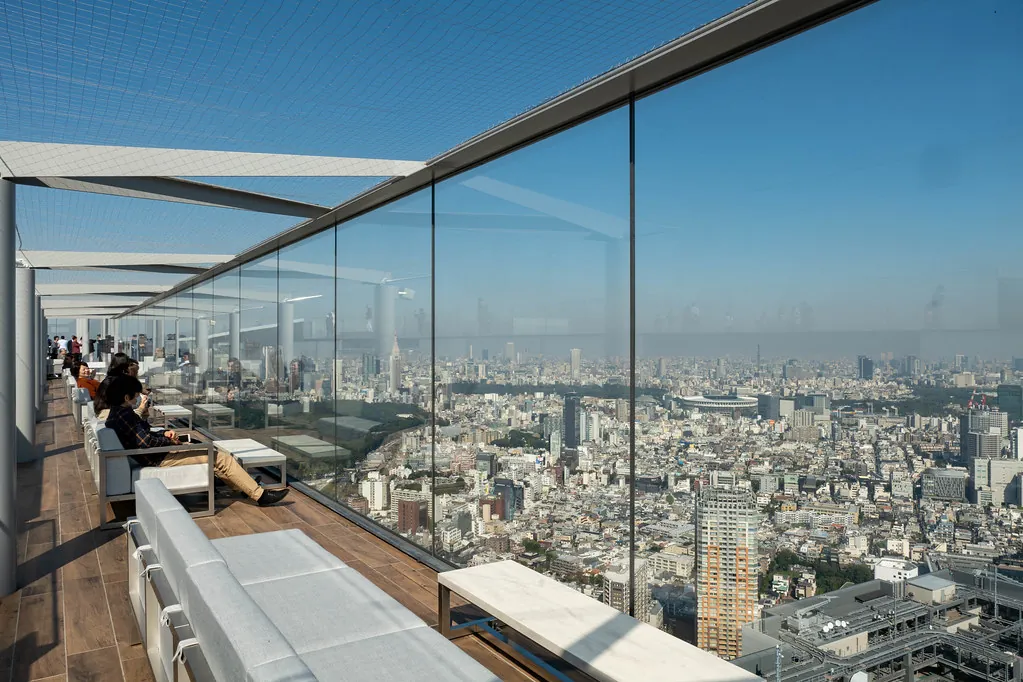
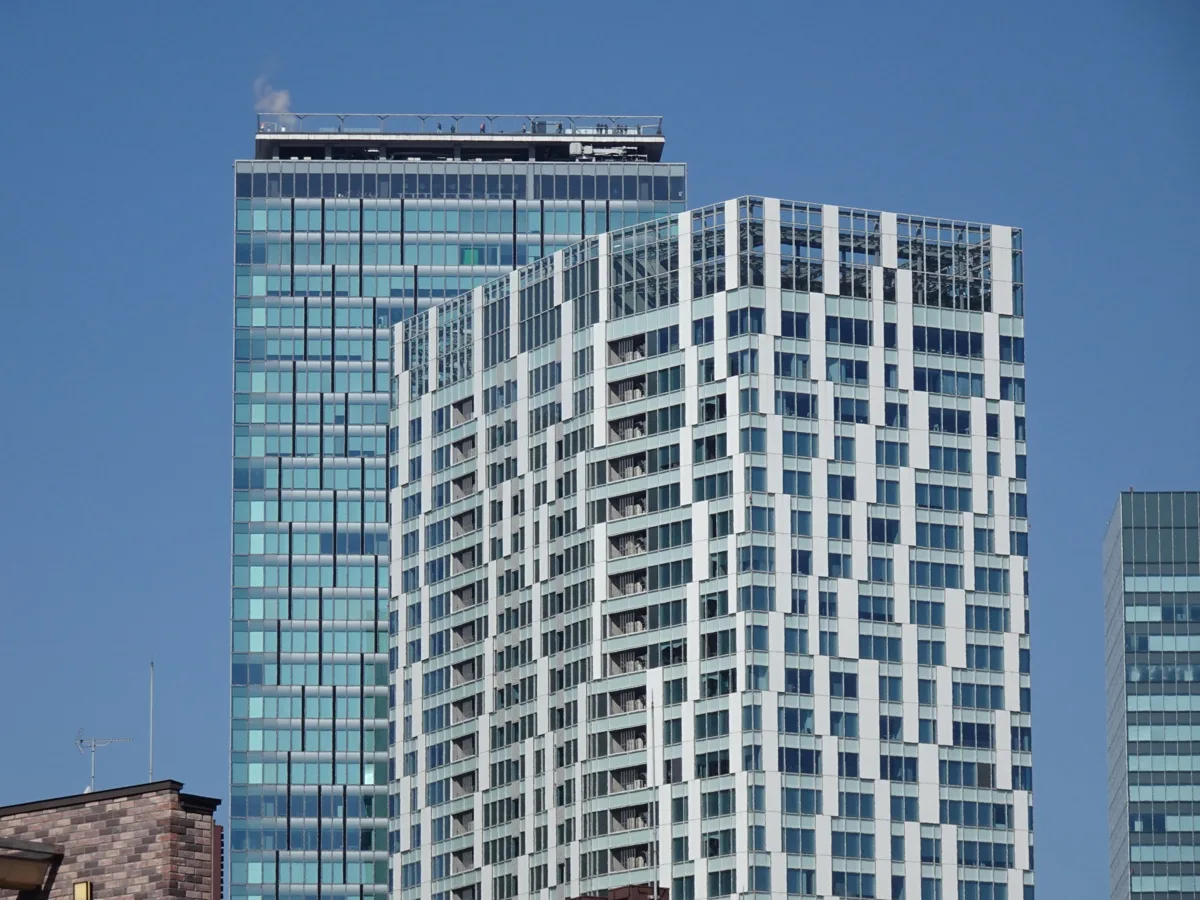
The photo shows the open-air rooftop. Bags cannot go up there, so leave them in the lockers on the 46th floor. Online tickets are sold up to two weeks ahead.
Meiji Jingu, in Shibuya City, is free and open every day from sunrise to sunset. In October it opens 5:40 to 16:40, in November 6:10 to 16:10 and in December 6:40 to 16:00. Our Tokyo in November page lists other events that month.
Hotels, tax and street drinking rules
Tokyo charges an accommodation tax on top of your room rate. It is the same in Shinjuku and Shibuya, and your hotel collects it. The Tokyo Bureau of Taxation accommodation tax FAQ sets the current rates per person per night:
- Under 10,000 yen: no tax.
- 10,000 yen to under 15,000 yen: 100 yen.
- 15,000 yen and over: 200 yen.
The rate is judged on the room-only price, without meals or tax. Two people in a twin room are judged on the price per person. Children pay too when their share reaches 10,000 yen.
The rules change on 1 April 2027. The Tokyo Bureau of Taxation accommodation tax revision page says the tax becomes 3% of the room charge. Stays under 13,000 yen per person per night will not be taxed. The tax will also cover simple lodgings and minpaku rentals, which are outside it now. The Tokyo Metropolitan Assembly passed the change on 27 March 2026. Rates in other cities are on our Japan accommodation tax page.
Drinking on the street
Here the two areas differ. Since 1 October 2024, Shibuya City bans drinking alcohol in public places from 6 p.m. to 5 a.m., every day of the year. The ban covers streets, parks and the area around Shibuya Station.
Shinjuku City’s ordinance works differently. It limits street drinking on 31 October and 1 November, plus other periods the mayor names. The Shinjuku City Halloween street drinking notice sets the 2026 limit from 5 p.m. on Saturday 31 October to 5 a.m. on Sunday 1 November. It covers parts of Shinjuku 3-chome and Kabukicho 1-chome. At Halloween 2025, staff stopped street drinkers 133 times.
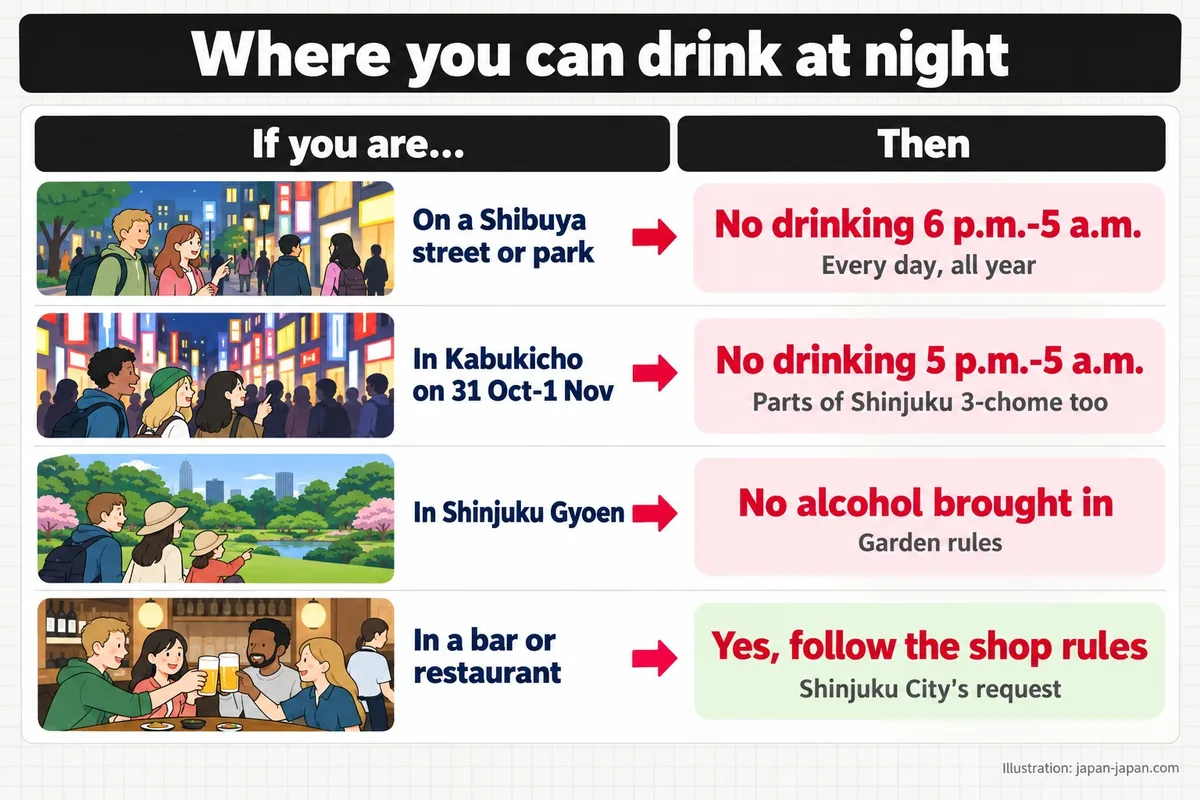
The chart shows where you can drink at night. On signs and notices, look for 路上飲酒 (rojō inshu), which means drinking on the street. Shinjuku City’s message is simple: if you drink, drink in a bar or restaurant and follow its rules.
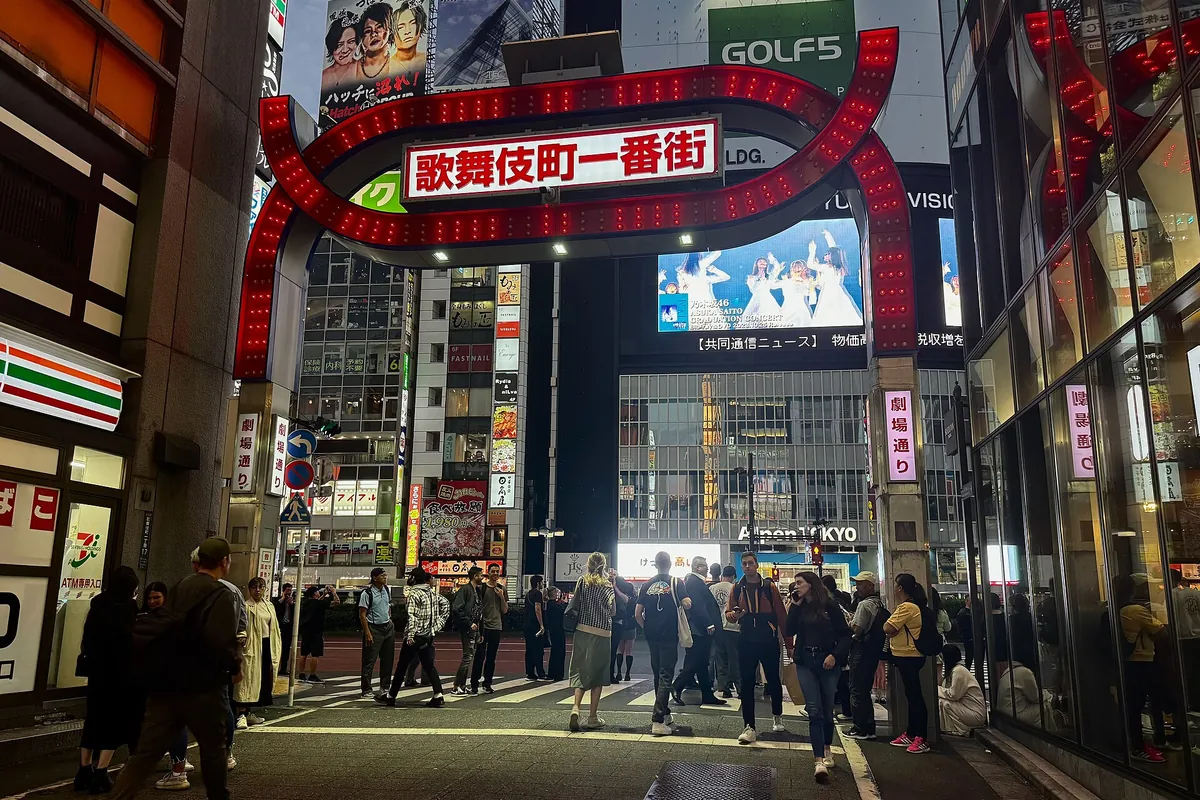
The photo shows the gate to Kabukicho, Shinjuku’s nightlife district. Its bars and izakaya are where the city wants you to drink. For how to order, the cover charge and Golden Gai, read our izakaya guide for beginners.
Shinjuku vs Shibuya: which should you choose?
Pick by what your trip actually needs. Two questions settle most cases.
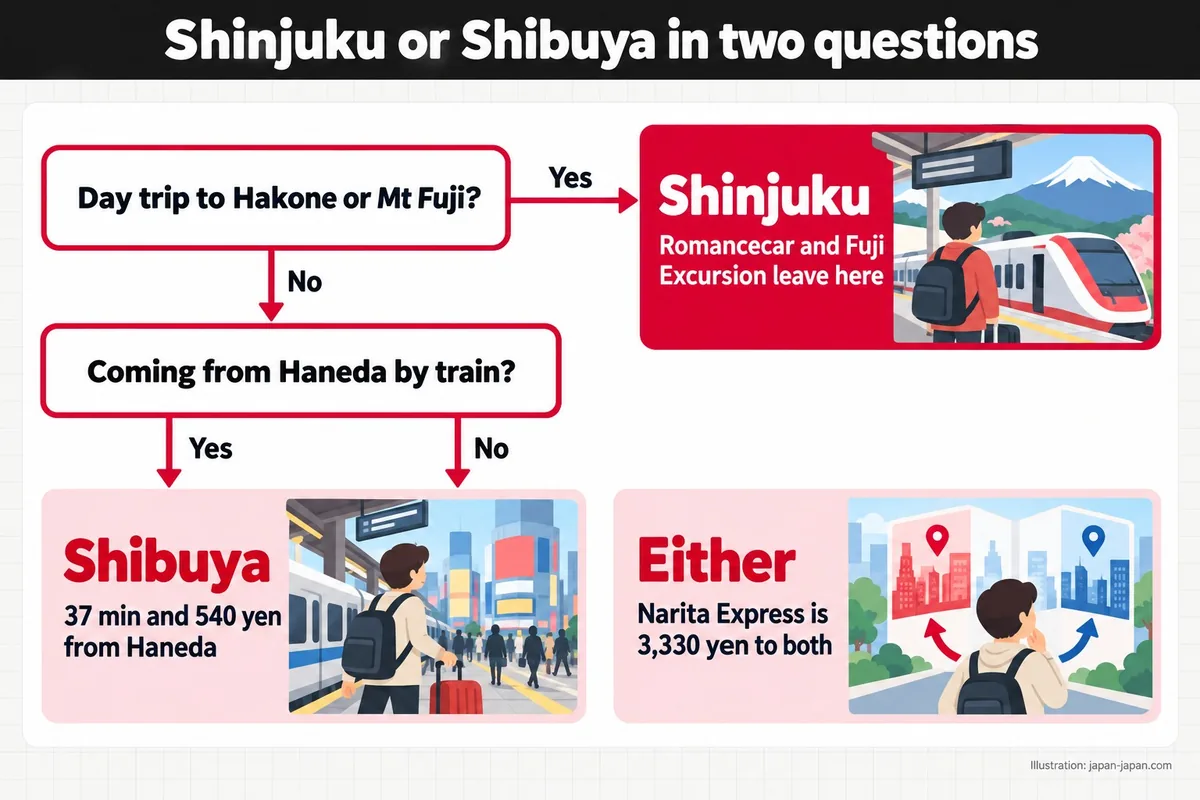
The flow chart asks about day trips first, then about your airport.
- Day trips to Hakone or Mt Fuji: stay in Shinjuku. The Romancecar (2,470 yen), the Fuji Excursion (4,200 yen) and the highway bus (2,200 yen) all start there.
- Arriving at Haneda by train: stay in Shibuya. It is 37 min and 540 yen, against 43 min and 590 yen to Shinjuku.
- Arriving at Haneda late, by bus: stay in Shinjuku. The last bus from Terminal 3 leaves at 23:40, and 67 run a day.
- Arriving at Narita: either works. The Narita Express is 3,330 yen to both, but the bus runs 54 times a day to Shinjuku and 6 to Shibuya.
- A view on a budget: the Shinjuku observatories are free. SHIBUYA SKY costs from 2,700 yen online.
If you plan to drink outdoors at night, Shibuya’s ban applies every evening from 6 p.m. Shinjuku’s limit is set for Halloween night.
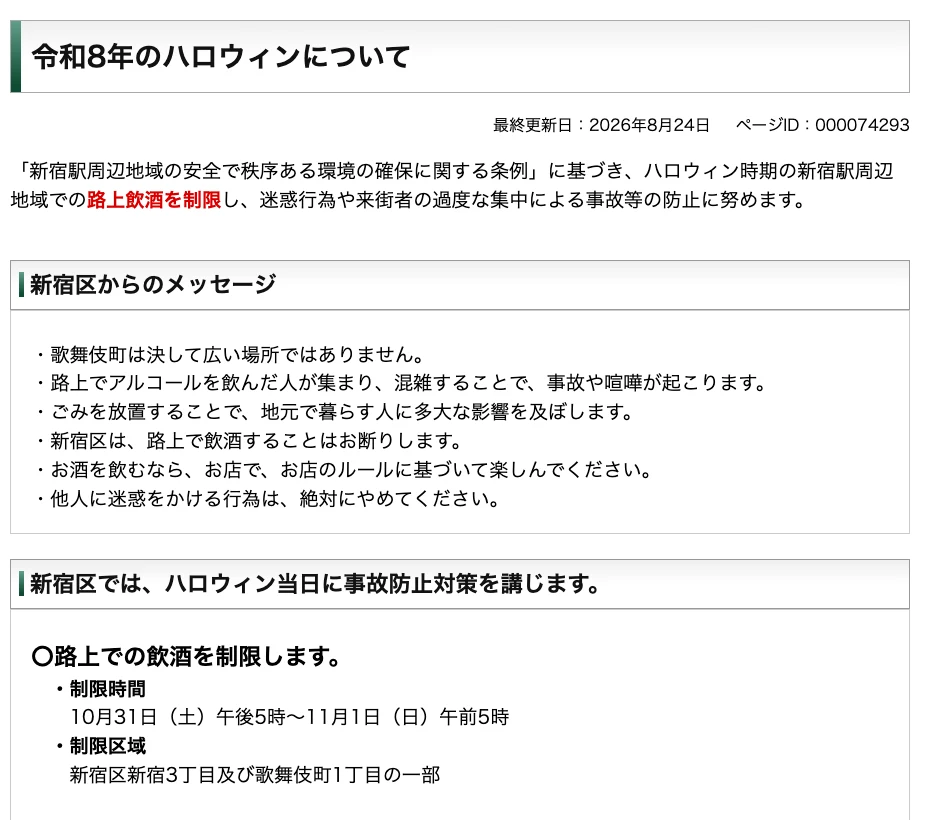
The screenshot is Shinjuku City’s official notice for Halloween 2026. It lists the hours and the area of the street drinking limit, and the city’s request to drink in shops.
For heavy bags, our guide to coin lockers in Japan gives sizes and prices. To travel light on day trips, use luggage forwarding in Japan to send them ahead.
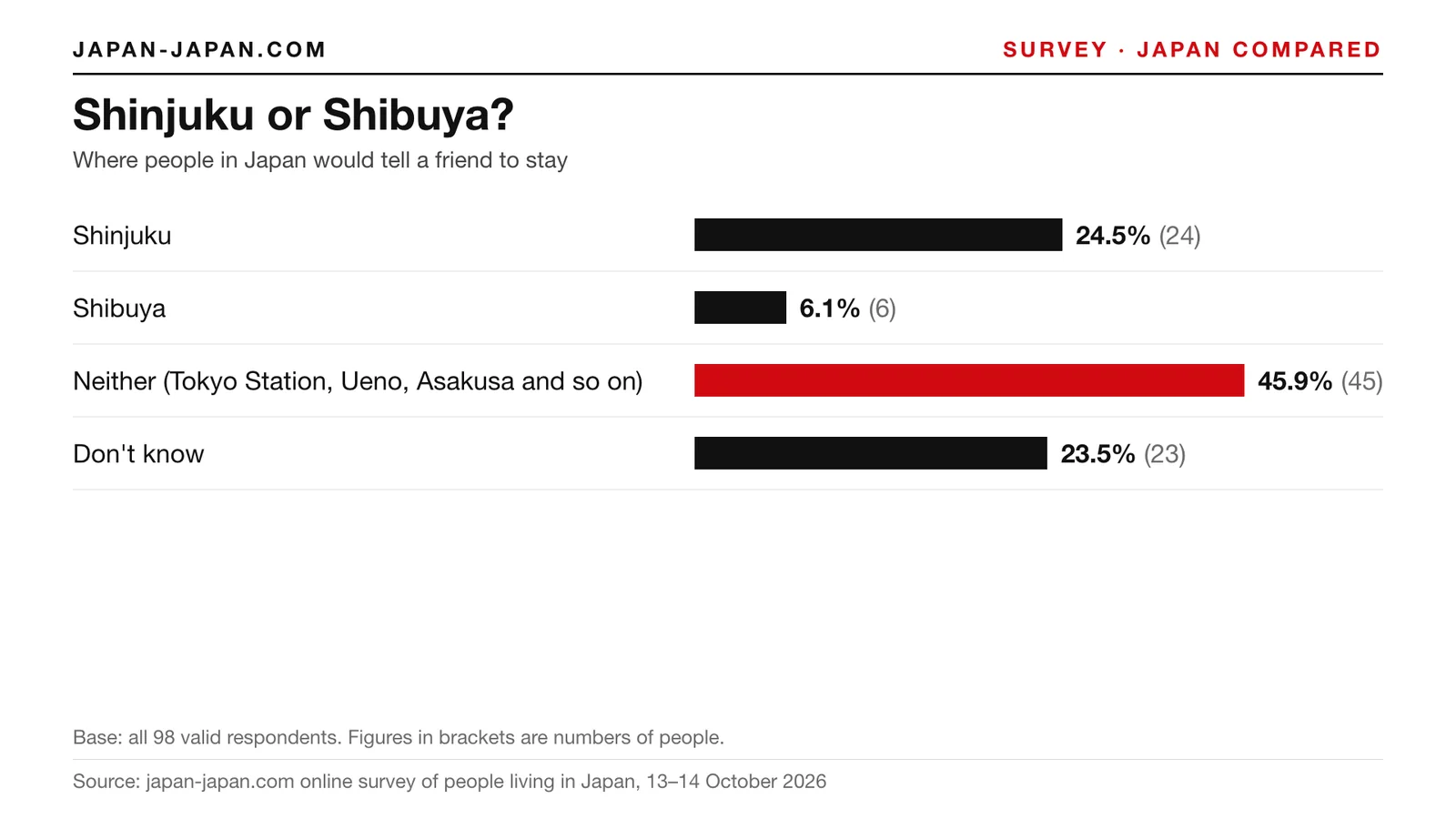
Shinjuku or Shibuya: what 98 people in Japan would tell a friend
On 13–14 October 2026, japan-japan.com ran an online survey of people living in Japan about 32 travel choices. 130 people answered. We removed answers that looked machine-written, one from outside Japan and most of those that contradicted themselves, which left 98. Shares below are of the 98 respondents unless a smaller group is named; they describe these people, not all travellers in Japan. See all 32 comparisons and how we asked.
For a friend from abroad staying in Tokyo, 24.5% (24 people) would recommend Shinjuku and 6.1% (6 people) Shibuya. The largest group, 45.9% (45 people), would pick neither and suggest an area such as Tokyo Station, Ueno or Asakusa. The 30 who chose Shinjuku or Shibuya gave easy transfers (50.0%), lots of places to eat (33.3%), hotels that are easy to find (23.3%) and shopping (also 23.3%) as their reasons.
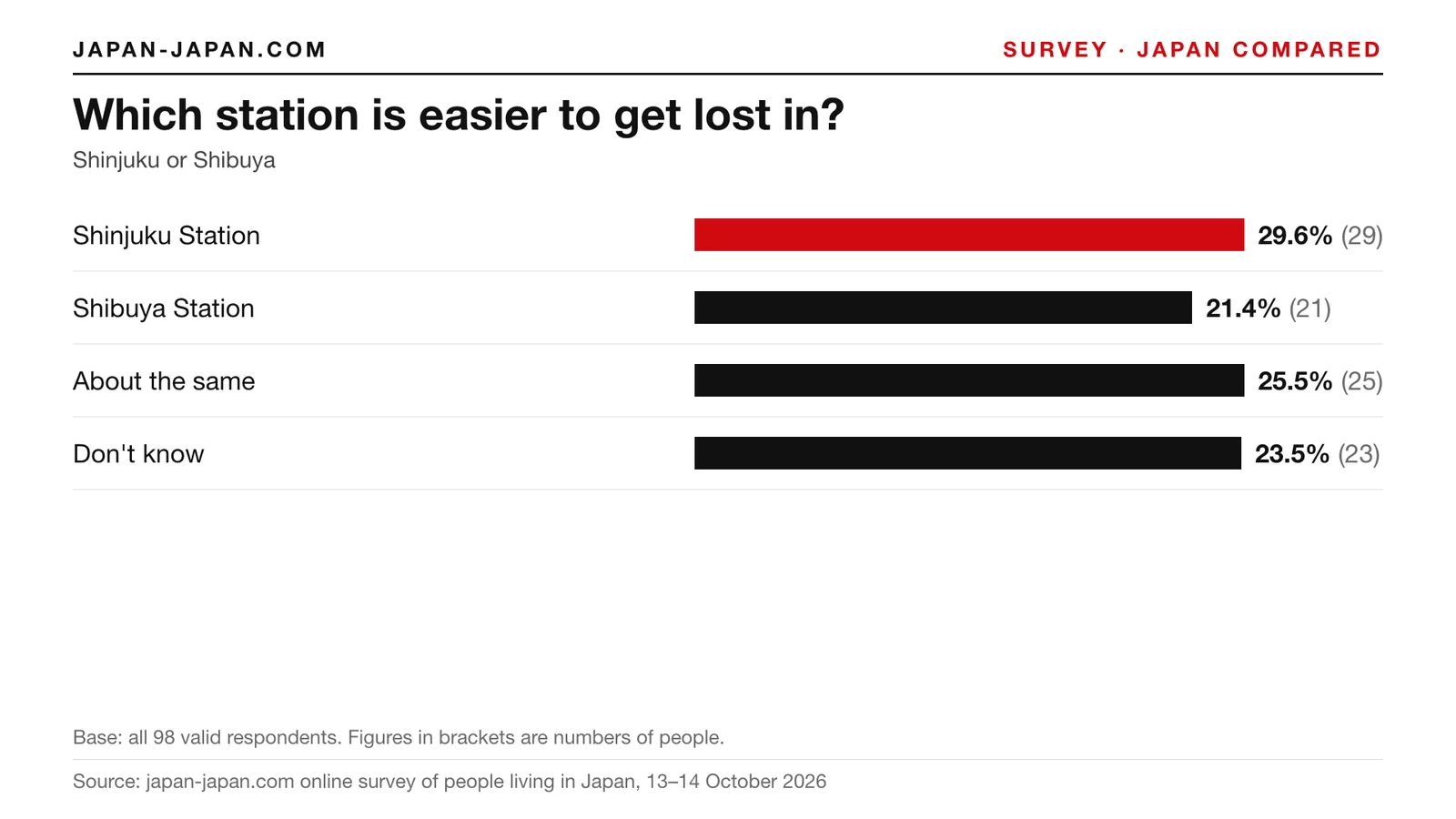
Asked which station is easier to get lost in, 29.6% (29 people) said Shinjuku, 21.4% (21 people) Shibuya and 25.5% (25 people) about the same.
FAQ
Is Shinjuku or Shibuya easier to reach from Haneda Airport?
By train, Shibuya is quicker and cheaper. Keikyu and JR take about 37 min for 540 yen, against about 43 min and 590 yen to Shinjuku. By bus, Shinjuku has more departures. From Terminal 3, 67 Airport Limousine buses run to Shinjuku each day until 23:40, while 20 run to Shibuya until 22:35.
Can you drink alcohol on the street in Shibuya?
Not at night. Since 1 October 2024, Shibuya City bans drinking in public spaces such as streets, parks and around Shibuya Station from 6 p.m. to 5 a.m., every day of the year. Drink in a bar or restaurant instead.
Is Shinjuku better for day trips to Hakone and Mt Fuji?
Yes. The Romancecar to Hakone-Yumoto takes 1 h 24 min for 2,470 yen, and the Fuji Excursion to Kawaguchiko 1 h 54 min for 4,200 yen. Both leave from Shinjuku Station. The highway bus to Kawaguchiko (1 h 35 min, 2,200 yen) leaves from Busta Shinjuku. From Shibuya, you ride to Shinjuku first.
How much is the hotel tax in Tokyo?
Right now, stays under 10,000 yen per person per night pay nothing. From 10,000 yen you pay 100 yen, and from 15,000 yen you pay 200 yen, based on the room-only price. From 1 April 2027, the tax becomes 3% of the room charge, and stays under 13,000 yen are not taxed. The same rules apply in Shinjuku and Shibuya.
About the author



.jpg)

