Glamping in Japan: Prices, Winter Sites and Fire Rules
Glamping means sleeping in a tent, dome or cabin where the site supplies the beds and bedding. You skip pitching a tent, but you usually bring your own food. In Japan, most glamping units sit inside ordinary campsites run by towns and cities. They share the grounds with bungalows, tent pitches and barbecue areas.
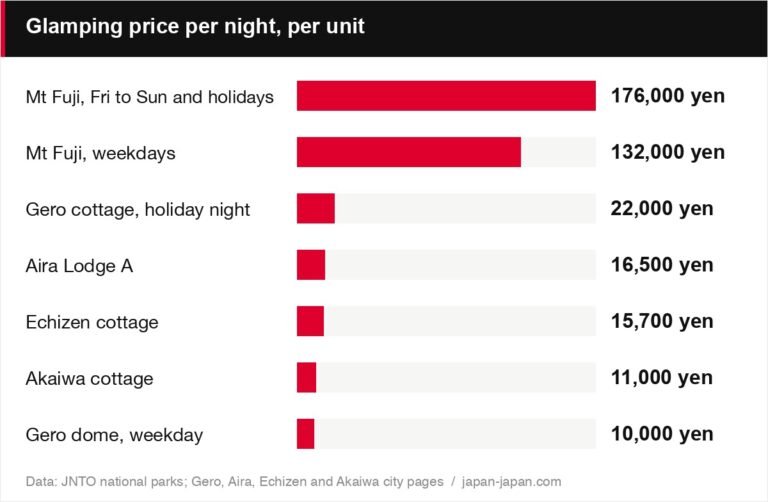
A smaller group of packages adds guides and tours. The best known is at the foot of Mount Fuji, listed on the national parks site run by JNTO. The prices below come from the fee tables that each city publishes and from two JNTO national park pages. Each price is for one night unless the page says otherwise.
What glamping includes, and what you still bring
The equipment list decides how much you pack. At Marukari no Sato Kunogawa in Gero, Gifu, the Gero City Marukari no Sato Kunogawa page lists what comes with each dome. You get two beds, bedding, a wooden deck, a gas grill, a tarp, chairs, a table and a fire stand. The page says all of it is included in the price.
The cottages at the same site are larger. Each has two Japanese-style rooms of 6 tatami mats, a living and dining kitchen, a unit bath, bedding, cooking tools, home appliances and barbecue equipment. A cottage suits around 8 people, while a dome suits 1 to 3.
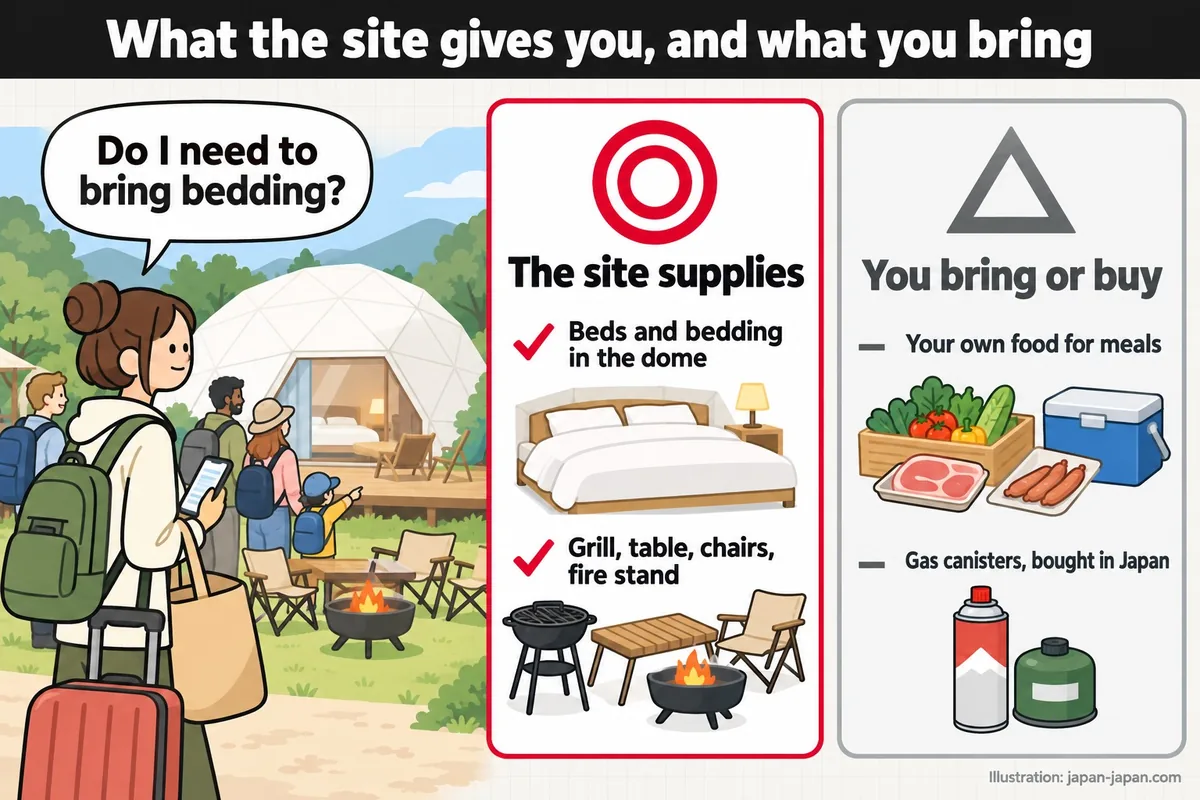
The picture above splits the list in two: what the site supplies, and what you sort out yourself.
Cabins at other public sites follow the same pattern. The Echizen City Kinkasan Green Land page describes two-storey log-style cottages with a kitchen, bath, toilet, bedding, heating and cooling. The cottages also have Wi-Fi. Yoshii Ryuten is a city campsite in Akaiwa, Okayama. The Akaiwa City Yoshii Ryuten campsite fees page lists power, air conditioning, a shower, a fridge and a simple kitchen in each cottage.
Some lodges charge for bedding. Saezuri no Mori in Aira, Kagoshima, rents blankets for 330 yen each, sheet included, and pillows for 110 yen.
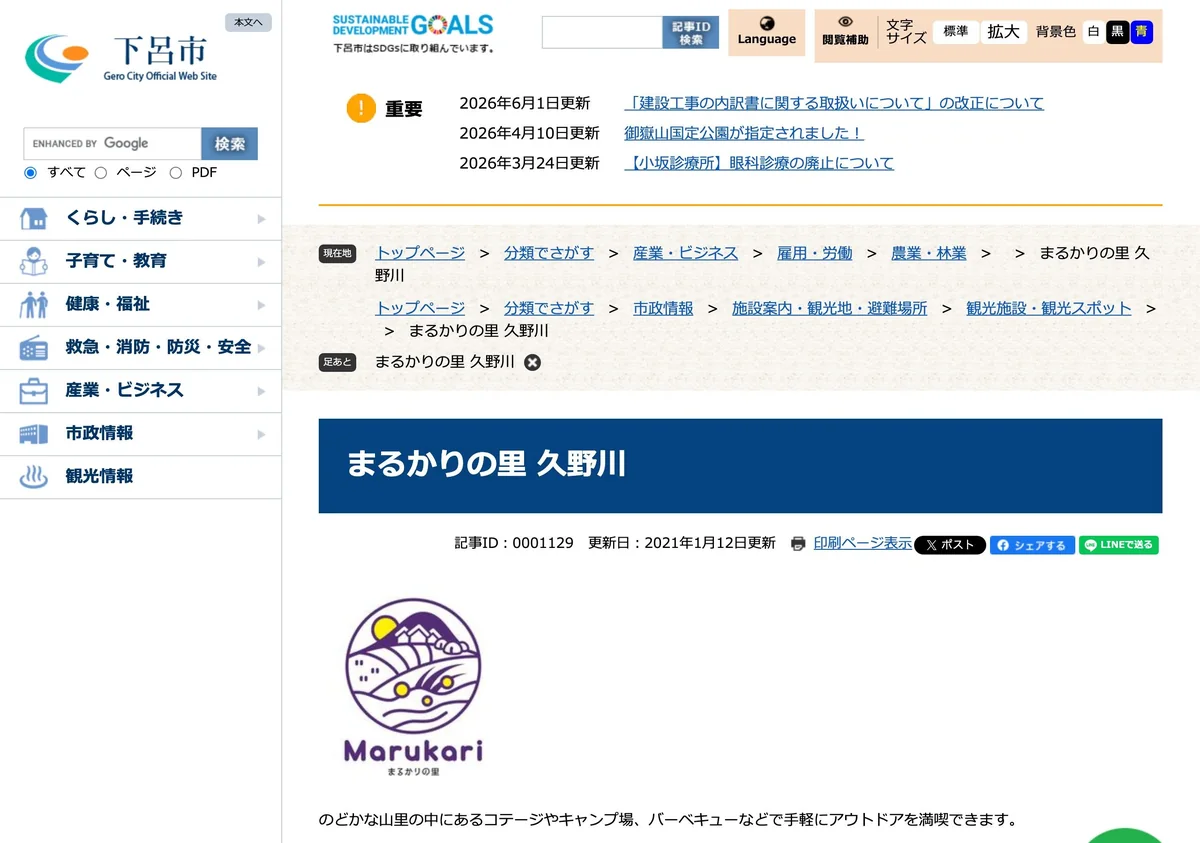
This screenshot shows the Gero City page in Japanese, with the table of domes, cottages and the tent site. Each row gives the number of units, the suggested group size and the equipment.
Food is the big item you bring. Akaiwa rents a tabletop cassette stove for 550 yen, with gas canisters sold separately. Its shop sells charcoal, firewood, fire starters, gas canisters, drinks and ice.
Buy fuel in Japan instead of packing it. You cannot fly with gas canisters for camping stoves, in carry-on or checked bags. Camping stoves and lanterns can travel only when the gas is gone, and gasoline lanterns stay out of the cabin. You may carry one lighter on your body. Charcoal for burning cannot go on the plane either.
Glamping prices in Japan: per tent, not per person
You pay for the dome, so the price stays the same for one guest or three.
Gero sets three rates for each unit. The page lists one rate for a holiday night, one for a stay that includes a holiday, and one for a weekday night. Cottages also add a facility fee of 500 yen per person.
| Unit at Marukari no Sato Kunogawa | Holiday night | Stay including a holiday | Weekday night |
|---|---|---|---|
| Dome (1 to 3 people) | 15,000 yen | 12,000 yen | 10,000 yen |
| Cottage (around 8 people) | 22,000 yen | 20,000 yen | 18,000 yen |
| Tent site (one group) | 3,000 yen per pitch, plus 500 yen per person | ||
The site is open all year, with a break over the New Year. Showers cost 300 yen a time.
| Place | Marukari no Sato Kunogawa, Gero |
|---|---|
| Price | Dome 10,000 to 15,000 yen a night; cottage 18,000 to 22,000 yen plus 500 yen per person |
| Hours | Open all year except the New Year break |
| Access | 1263 Kunogawa, Gero, Gifu |
| Official site | Gero City Marukari no Sato Kunogawa page |
Saezuri no Mori in Aira uses a different model. The Aira City Saezuri no Mori fees and rules page sets a base rate for up to 4 people. Each extra guest adds 2,200 yen. Lodge A costs 16,500 yen, Lodge B 15,400 yen, the cottage 13,750 yen and the bungalow 12,650 yen. Small children stay free.
Two more city sites charge a flat rate per cottage. Echizen charges 15,700 yen a night for a cottage that sleeps 5. Akaiwa charges 11,000 yen a night for a cottage that takes up to 5 people. Echizen also has bungalows for 4 at 2,100 yen.
Some sites add per-person fees on top. At Ki no Mura in Tokigawa, Saitama, everyone pays an entry fee. It is 800 yen from high school age and 500 yen for ages 3 to junior high. Parking costs 1,000 yen per car, and a small bungalow for 5 to 6 people costs 9,000 yen.
| Item | Value | Note |
|---|---|---|
| Mt Fuji, Fri to Sun and holidays | 176,000 yen | Up to 4 people |
| Mt Fuji, weekdays | 132,000 yen | Up to 4 people |
| Gero cottage, holiday night | 22,000 yen | Around 8 people |
| Aira Lodge A | 16,500 yen | Up to 4 people |
| Echizen cottage | 15,700 yen | 5 people |
| Akaiwa cottage | 11,000 yen | Up to 5 people |
| Gero dome, weekday | 10,000 yen | 1 to 3 people |
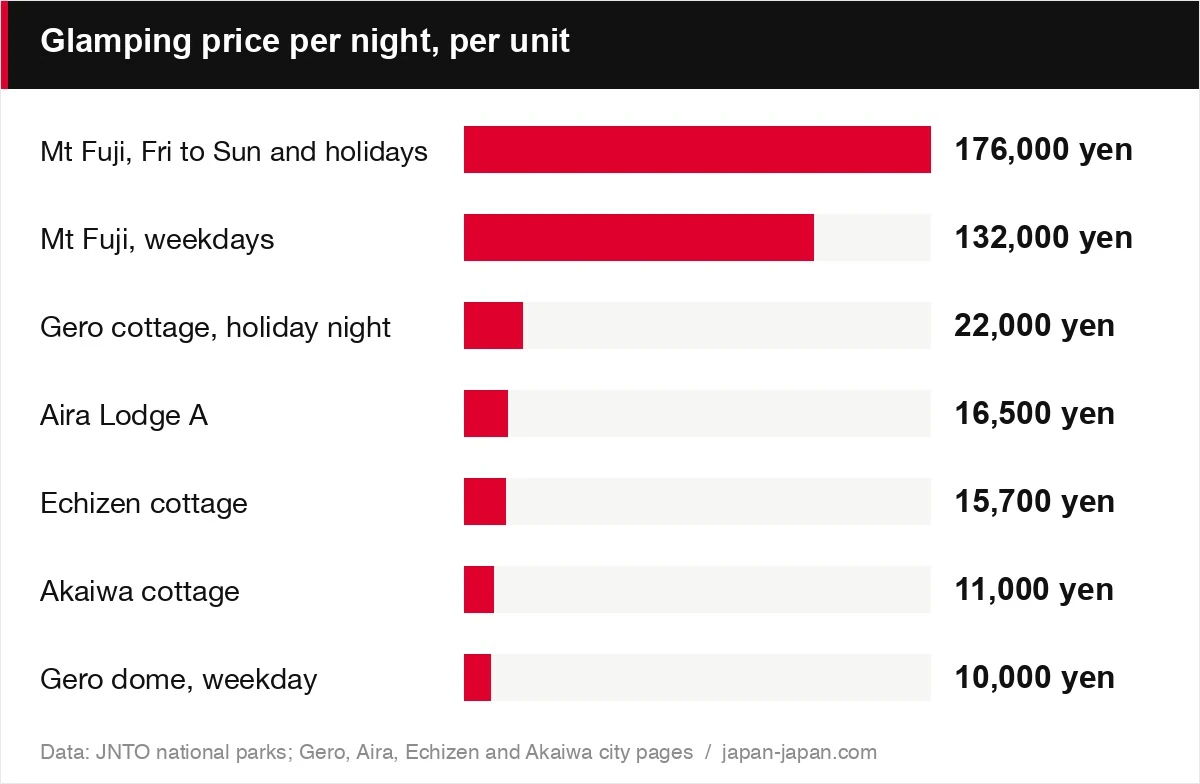
The chart puts the unit prices side by side. The Mount Fuji package sits far above the public sites because it includes a guided ecotour on the second day.
Per-person maths makes the gap smaller. The Fuji weekday rate of 132,000 yen for four works out at 33,000 yen each. That matches the fee the operator charges for each extra adult. A full group is the cheapest way to book any unit, so fill the dome or cottage up to its limit.
Mount Fuji glamping in Fujinomiya
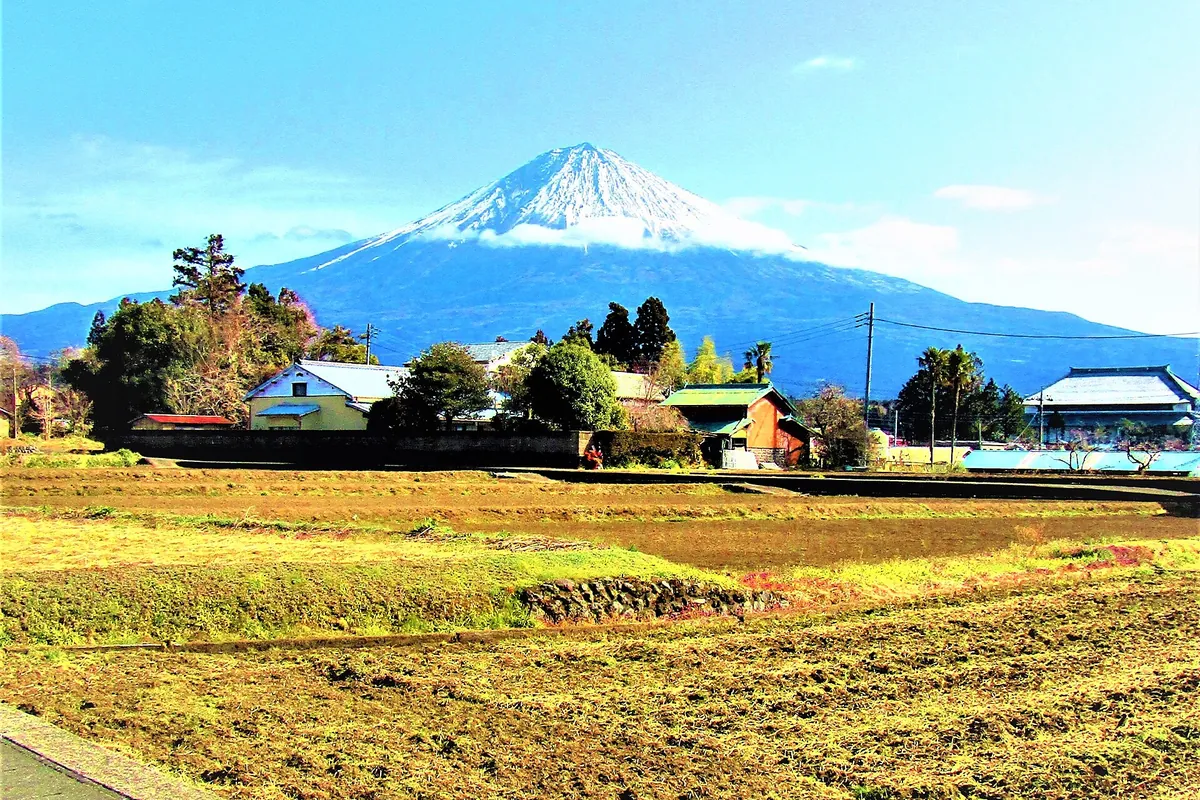
This photo shows Mount Fuji, the view guests come for. The JNTO national parks Mount Fuji glamping page lists a glamping stay in the foothills, inside Fuji-Hakone-Izu National Park. The operator is Mt. Fuji Satoyama Vacation, based at 8-2 Kariyado, Fujinomiya, on the Shizuoka side of the mountain.
The package runs year-round and lasts 1 night, 2 days. On day one you rest in a hammock or sit by a bonfire with a view of the farmland. On day two you join an ecotour built around sustainability and local culture, and you can shape it to your group.
The price depends on the day. On weekdays, the base price is 132,000 yen for up to 4 people. Each extra adult adds 33,000 yen, and each extra child aged 3 to 12 adds 16,500 yen.
On Fridays, Saturdays, Sundays and holidays, the base price is 176,000 yen for up to 4 people. Each extra adult then adds 44,000 yen, and each extra child adds 22,000 yen. Staff speak English and French, and you can contact them by phone or email.
| Place | Mount Fuji Glamping and Ecotours |
|---|---|
| Price | Weekdays 132,000 yen for up to 4 people; Fridays to Sundays and holidays 176,000 yen for up to 4 |
| Hours | Year-round; 1 night, 2 days |
| Access | 8-2 Kariyado, Fujinomiya, Shizuoka; run by Mt. Fuji Satoyama Vacation |
| Official site | JNTO national parks Mount Fuji glamping page |
Pick your dates with the weekday rate in mind. A Thursday night costs 44,000 yen less than a Friday night for the same group of four. National holidays also take the higher rate, so check the Japan public holidays calendar before you choose.
Plan for cold nights in winter. Kawaguchiko, the lake town at the northern foot of the mountain, stands 860 m above sea level. Mount Fuji in January averages a low of −5.7°C there, and snow covers the ground on 13.0 days. The Mount Fuji weather by month page shows the rest of the year.
| Type | Price | Group and season | What you get |
|---|---|---|---|
| City campsite dome (Gero) | 10,000 to 15,000 yen a night | 1 to 3 people; all year except New Year | Beds, bedding, gas grill, fire stand |
| City cottage (Echizen) | 15,700 yen a night | 5 people; 1 April to 15 November | Kitchen, bath, bedding, heating and cooling |
| National park package (Mount Fuji) | 132,000 to 176,000 yen | Up to 4 people; year-round, 1 night 2 days | Bonfire, guided ecotour on day two |
| Winter experience (Kushiro) | About 30,000 yen per person | One group a day; December to February | 3 hours on frozen Lake Toro with a meal |
The table compares the kinds of glamping in this guide. Public sites are cheap and simple, and the Fuji package adds a guide. The next section covers Kushiro.
Winter glamping: what stays open from December to February
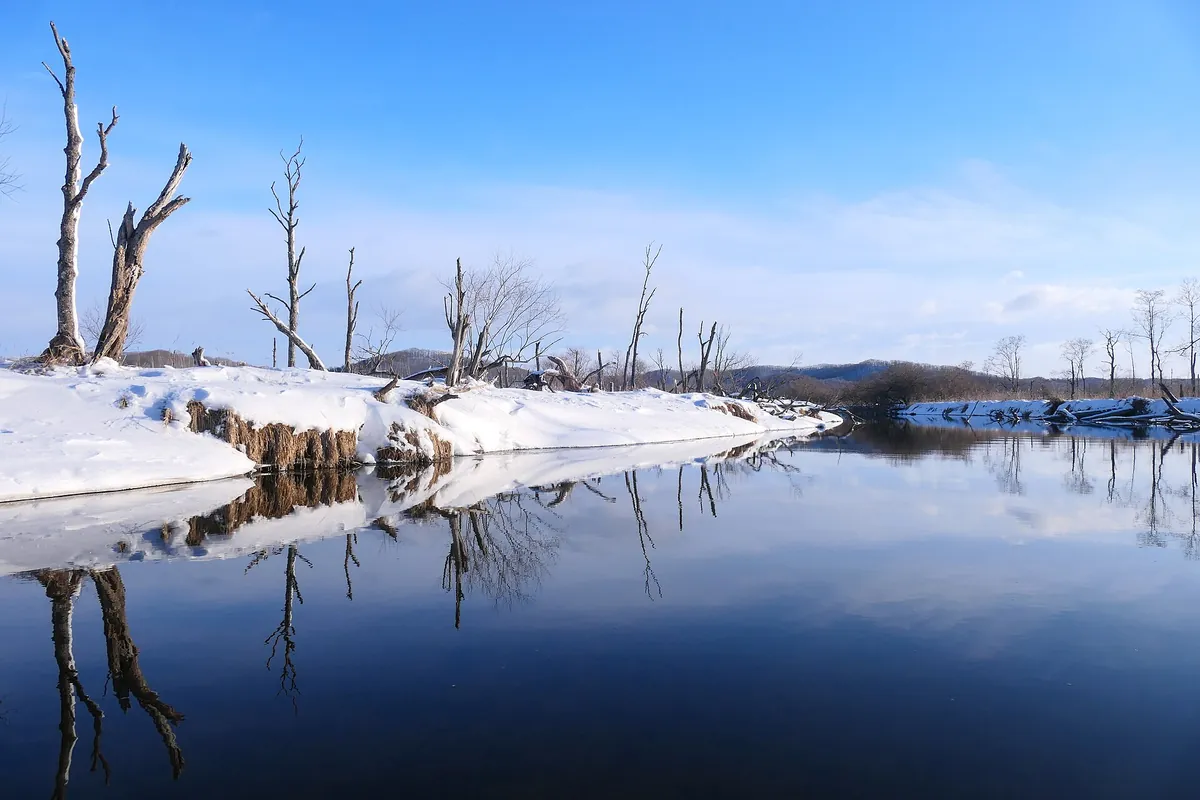
This photo shows the Kushiro Marsh area in eastern Hokkaido under snow. The JNTO national parks Kushiro Marsh winter glamping page lists a stay on Lake Toro, the largest lake in the marsh. The lake freezes over completely in winter, and the glamping takes place on its surface.
The experience runs from December to February and lasts 3 hours. It costs about 30,000 yen per person and takes one group a day. It includes Ainu culture and a meal made with food from eastern Hokkaido and Shibecha Town. The guide speaks English, and the operator is THE GEEK in Shibecha.
The listing gives a length of 3 hours, so plan a separate bed for the night.
| Place | Kushiro Marsh Winter Glamping |
|---|---|
| Price | About 30,000 yen per person |
| Hours | December to February; 3 hours; one group a day |
| Access | 49-43 North 7th Toro, Shibecha, Hokkaido; run by THE GEEK |
| Official site | JNTO national parks Kushiro Marsh winter glamping |
Many public campsites close for the cold months. Kinkasan Green Land in Echizen, Fukui, opens from 1 April to 15 November and closes from 16 November to 31 March. It also closes every Wednesday, except during the summer school holidays.
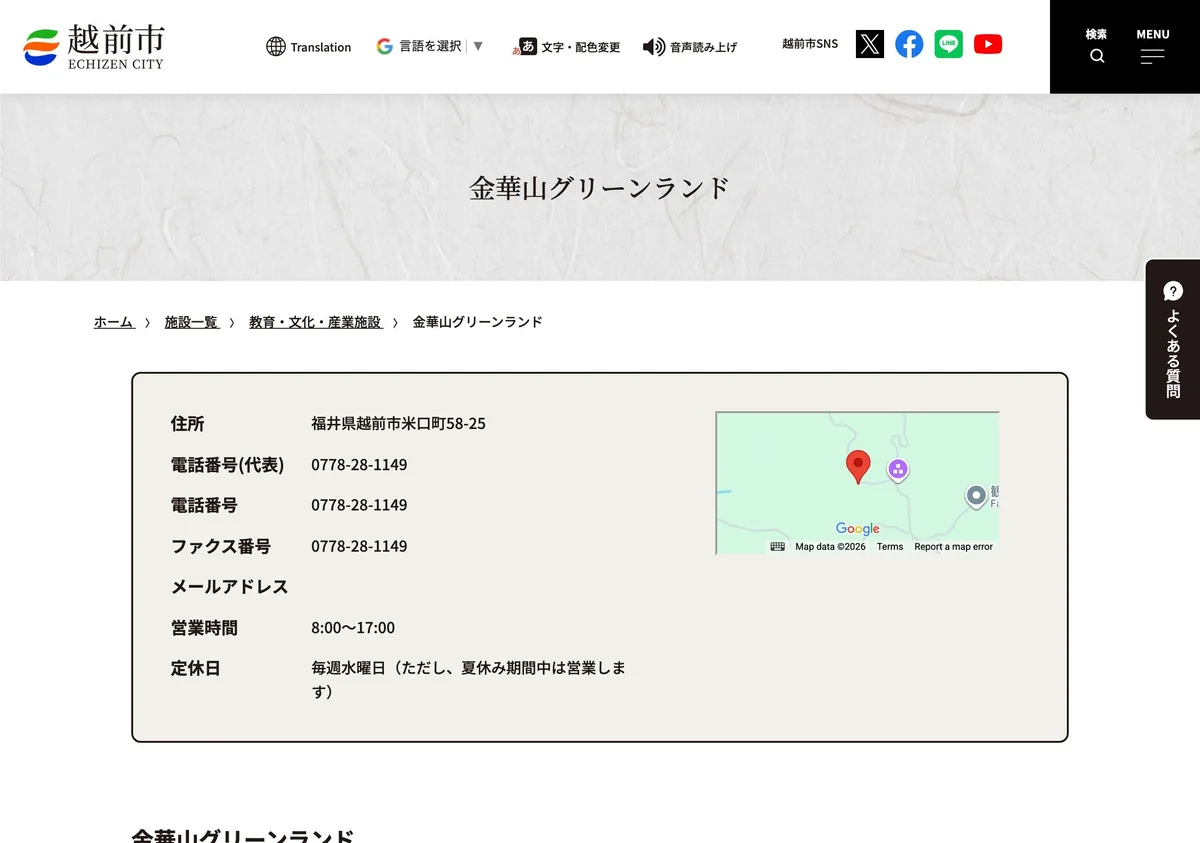
This screenshot shows the Echizen City page in Japanese. The fee table lists the 15,700 yen cottage, and a note below states the winter closure from 16 November to 31 March.
Other sites stay open. Gero runs all year except the New Year break, and the Fuji package is listed as year-round.
Winter holidays push prices and crowds up. New Year’s Day, Friday 1 January 2027, is the only national holiday of the New Year 2026–27 holiday period. Banks close from 31 December to 3 January, and government offices close from 29 December 2026 to 3 January 2027. Every Nozomi train runs reserved-only from 25 December 2026 to 5 January 2027.
February has its own national holiday, listed on the Japan public holidays in February page. At the Fuji package, holidays take the 176,000 yen rate. January is quieter at Mount Fuji, where hotels were 33.0% full in January 2025.
Booking, group size and cancellation fees
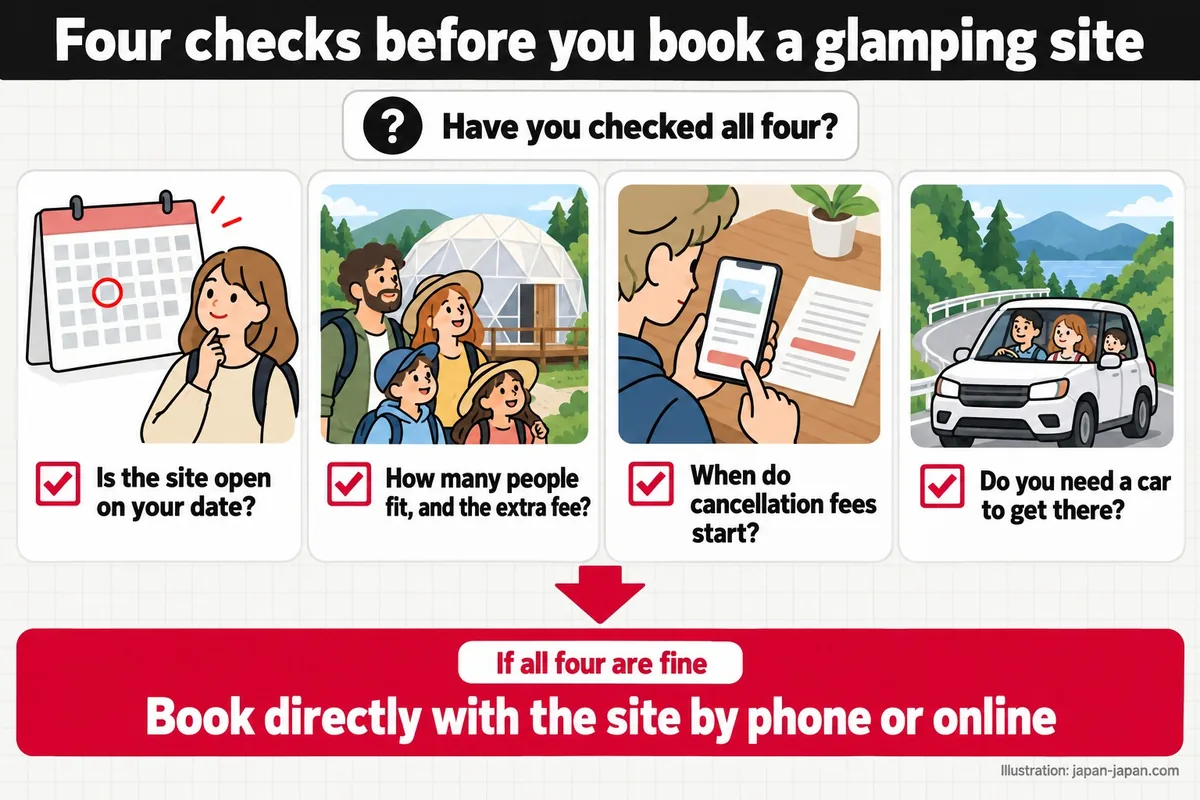
Run through the four checks in the picture before you pay. Is the site open on your date? How many people does a unit take, and what does each extra person cost? When do cancellation fees start? Do you need a car?
Most public sites take bookings themselves. Echizen takes online bookings through the Fukui Prefecture facility booking service, or by phone and fax. The site then contacts you to confirm. If nobody calls, the page asks you to call the site, since city hall cannot handle bookings.
Tokigawa works the same way. The Tokigawa Town Ki no Mura fees and cancellation page says the town does not book or cancel on your behalf. You deal with the campsite directly by phone or fax, and a fax cancellation still needs a phone call to confirm.
Ki no Mura charges a cancellation fee of 30% of the facility fee from 14 days before your stay up to the day before. On the day itself, you pay 100%. Phone lines get busy in peak season, the page warns.
Group size sets the price. Echizen caps each cottage at 5 people, and Akaiwa allows up to 5. Aira includes 4 people in the base rate, then charges 2,200 yen for each extra guest. Gero suggests 1 to 3 people per dome and around 8 per cottage.
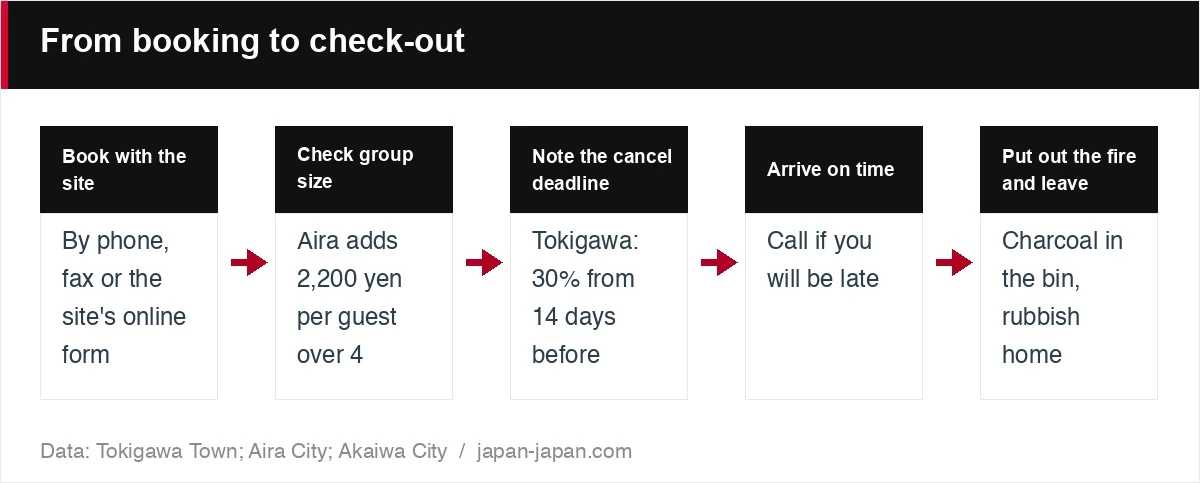
The flow above follows one stay from booking to check-out. Arrival times matter at small sites. Echizen runs check-in from 14:00 and check-out by 10:00 the next day. Akaiwa takes cottage guests from 3:00 pm to 4:30 pm and asks you to call if you will arrive later. Aira sets check-in at 4:00 pm and check-out at 10:00 am, and the manager leaves at 5:00 pm.
Campfires and gas: Japan’s fire rules
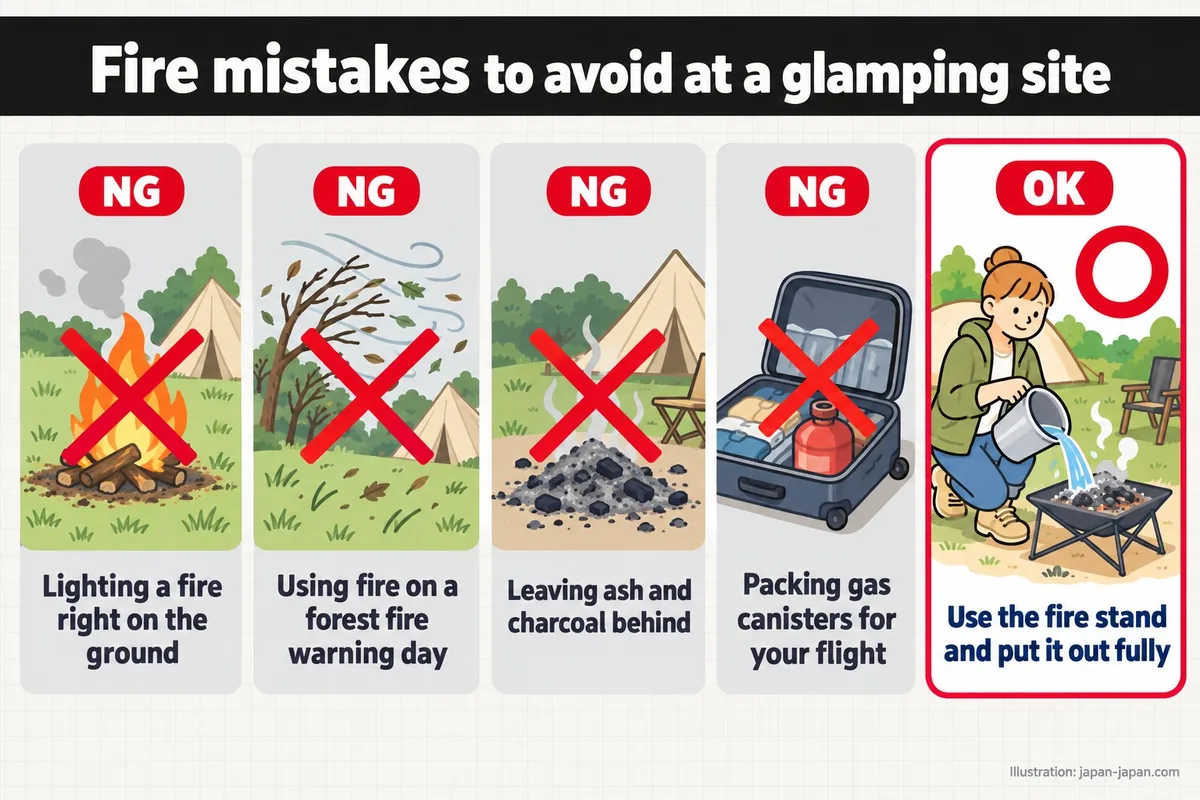
The picture lists the fire mistakes that get visitors into trouble. Japan added two new alerts for forest fires. The Fire and Disaster Management Agency forest fire warnings page explains both. Each town sets them in its fire prevention ordinance, and the mayor issues them when the risk is high.
A forest fire advisory means the ground and air are dry enough for fires to start and spread. People in the area should try to avoid using fire outdoors, and no penalty applies. A forest fire warning adds a strong wind advisory to those conditions. Outdoor fire is then banned in that area.
Breaking the ban under a warning can lead to a fine of up to 300,000 yen or detention under the Fire Service Act. On a campsite notice board or a town website, look for the term 林野火災警報 (rin’ya kasai keihō), which means forest fire warning.
The agency gives an example of when an advisory goes out. Rain over the previous 3 days totals 1 mm or less. On top of that, rain over the previous 30 days totals 30 mm or less, or a dry air advisory is in force. Days with rain forecast or snow on the ground do not count.
Forest fires peak from February to May, when the air is dry and winds are strong. Most start from human causes, such as bonfires and burning. The count has fallen from a peak of 8,351 a year to around 1,300 in recent years.
The agency lists six habits for any outdoor fire. Skip fire on dry, windy days. Light fires with more than one person present. Never leave a fire alone. Keep water ready. Put the fire out completely, and never throw away a lit cigarette.
Campsites add their own rules. Akaiwa bans fireworks across the whole site because they can start mountain fires. Aira bans fireworks too, and asks you to put used charcoal in the marked bin. Aira also asks you to take all your rubbish home.
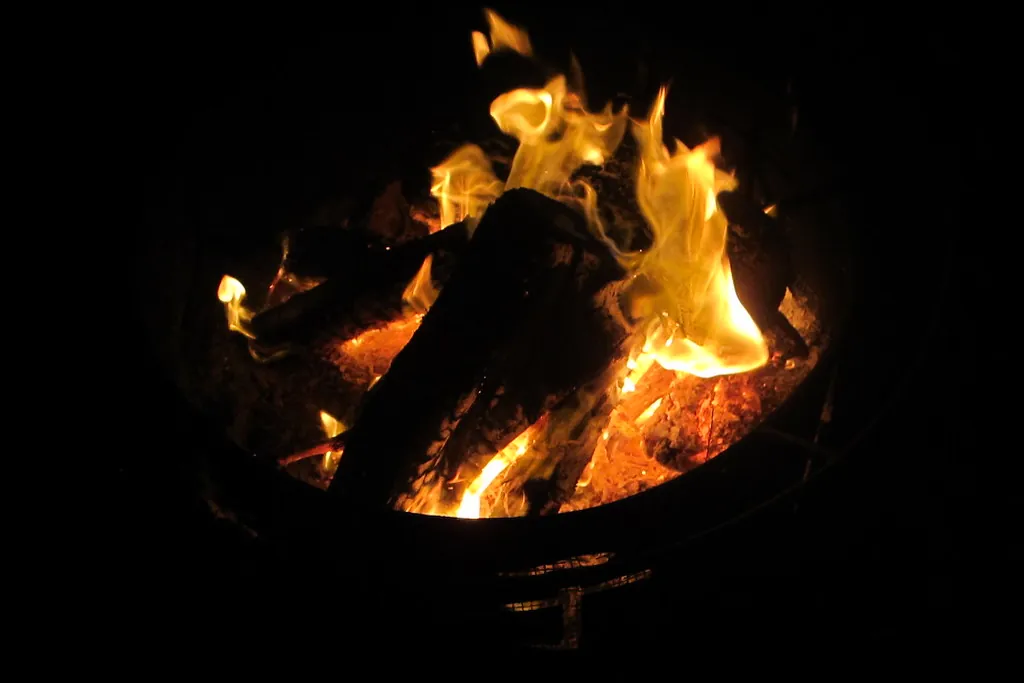
A raised fire stand like the one in this photo keeps the fire off the ground. Gero includes a fire stand with every dome. Echizen charges 2,000 yen for a campfire session, 300 yen for a bundle of firewood and 900 yen for 3kg of charcoal. Tokigawa sells firewood for 500 yen a bundle and a 3kg box of charcoal for 700 yen.
Getting there: car, bus and luggage
Most public glamping sites expect you to drive. Akaiwa has you park beside your cottage. Echizen has auto-camp pitches where you drive onto the site, and Tokigawa charges 1,000 yen to park.
If you plan to drive, read our guide to car rental in Japan first. It covers the driving permit you need, tolls and winter rules.
The Fuji area is the easiest to reach without a car. Highway buses run from Haneda Airport to Mt. Fuji and Kawaguchiko in about 2 hr 20 min. The bus leaves from stop 7 at Terminal 3, stop 14 at Terminal 2 and stop 13 at Terminal 1.
From central Tokyo, the Tokyo to Mt Fuji route guide compares three ways. The highway bus from Busta Shinjuku takes 1 h 35 min and costs 2,200 yen. Fujikyu Bus runs 55 a day, the first at 06:45 and the last at 22:25. The Fuji Excursion train takes 1 h 54 min for 4,200 yen.
The Fuji glamping package itself sits in Fujinomiya, on the south-west side of the mountain. Email the operator before you book, and ask how to reach the site from the nearest station.
Big suitcases are awkward in a dome. Send them ahead with luggage forwarding in Japan to your next hotel, and bring a small bag for the night. For regional sites, start from the Japan airport guides to see how far the nearest airport is from town.
FAQ
How much does glamping cost in Japan?
At town and city campsites, a glamping dome or cottage costs 10,000 to 22,000 yen a night for the whole unit. Gero charges 10,000 yen for a dome on a weekday. The Mount Fuji package costs 132,000 yen on weekdays and 176,000 yen on Fridays, weekends and holidays, for up to 4 people.
Can you go glamping in Japan in winter?
Yes, but fewer sites are open. Kushiro offers ice glamping on Lake Toro from December to February for about 30,000 yen per person. Gero stays open except over the New Year, and the Fuji package runs year-round. Echizen closes from 16 November to 31 March.
Do you need a car to go glamping in Japan?
For most public sites, yes. Akaiwa, Echizen and Tokigawa all plan for guests who arrive by car. The Fuji area has buses from Haneda and Shinjuku to Kawaguchiko, but ask the Fujinomiya operator how to reach their site.
Can you have a campfire at a glamping site in Japan?
Usually yes, on a fire stand or in a set campfire area, and some sites charge for it. Echizen charges 2,000 yen per campfire. When the town issues a forest fire warning, outdoor fire is banned, and breaking the ban can mean a fine of up to 300,000 yen.
About the author

.jpg)
