How to get out of 40 Japanese airports and into the city: the train, the bus and the taxi, what each costs where the operator publishes it, where to leave a bag, where to buy a SIM, and what happens between the plane and the exit.
Koriyama Station · 40 min · 1,200 yen / Aizu-Wakamatsu Station · 2,200 yen
By taxi
Fukushima City · 5,200 yen
Coin lockers
From 200 yen per a use, 2 sizes
Send bags on
The shop Fukushima Ippindo · domestic building 1F, 07:00–18:00
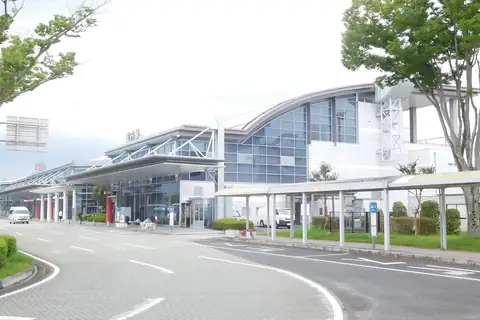
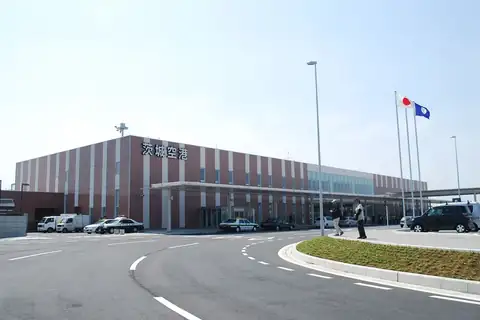
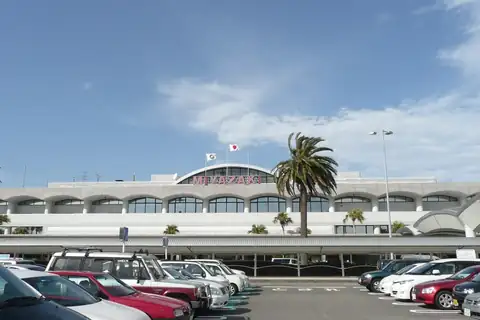
Fukushima Prefecture's airport, about 40 minutes by limousine bus from Koriyama Station, with direct charter flights from Taipei (Tigerair Taiwan) every Tuesday and Friday until 26 March 2027.
Lockers, sending your bags on, and where these numbers come from
Sending a bag on
The shop Fukushima Ippindo · domestic building 1F, 07:00–18:00
Morioka Station · 45 min · 1,500 yen / Shin-Hanamaki Station (Tohoku Shinkansen) · 11 min · 480 yen / Hanamaki Station · 14–17 min · 410 yen
By taxi
Hanamaki Onsen · 15 min · about 3,800 yen / Morioka Station · 56 min · about 13,600 yen
Coin lockers
From 200 yen per a day, 2 sizes
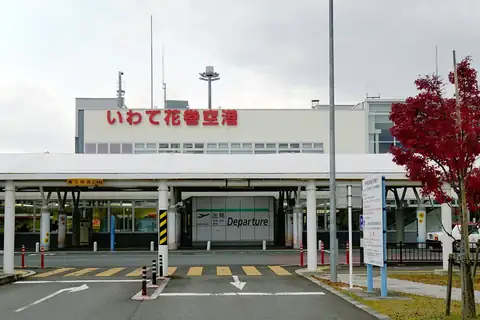
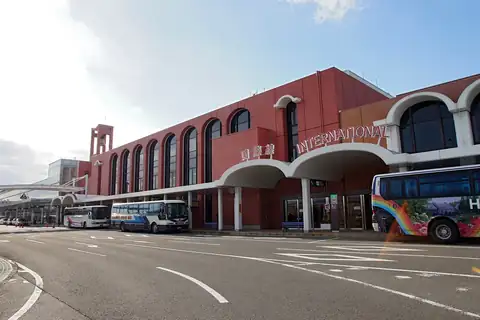
Iwate's airport, near Hanamaki, with direct flights from Taipei (Tigerair Taiwan) on Wednesdays and Saturdays. Buses run to Morioka in about 45 minutes and to Shin-Hanamaki on the Tohoku Shinkansen.
Lockers, sending your bags on, and where these numbers come from
Hamamatsucho · 13 min · 520 yen / Shinagawa · 15 min · 330 yen / Yokohama · 30 min · 370 yen
By bus
Tokyo Station · 35 min · 1,200 yen / Shinjuku Station West Exit · 35 min · 1,400 yen / Shibuya · 40 min · 1,300 yen
Coin lockers
From 400 yen per a day, 5 sizes
Send bags on
Yamato Transport · Terminal 1 1F, Terminal 2 1F and 2F, Terminal 3 2F
Leave a bag
Staffed baggage storage counter
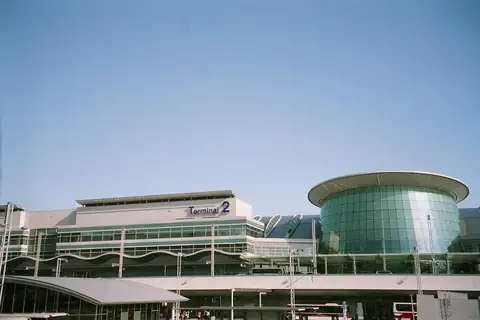
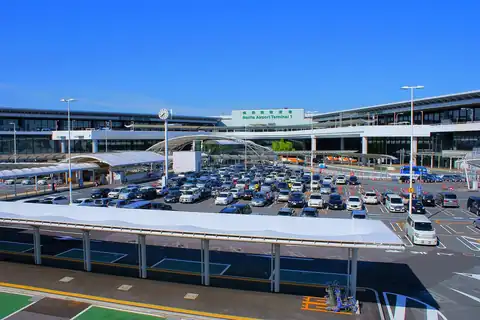
Japan's busiest airport and the one closest to central Tokyo. Terminal 3 handles international flights; Terminals 1 and 2 are mostly domestic, with some international flights from Terminal 2.
Lockers, sending your bags on, and where these numbers come from
Sending a bag on
Yamato Transport · Terminal 1 1F, Terminal 2 1F and 2F, Terminal 3 2F · next day, or the day after for some areas
Nagoya Station · 28 min · 1,430 yen / Nagoya Station · 36 min · 980 yen
By bus
Sakae and Fushimi · 55 min · 2,000 yen / Nagoya Station West Exit (late night and early morning) · 55 min · 1,500 yen / Tokoname Station · 10 min · 460 yen
By taxi
Nagoya Station · 50 min · about 20,000 yen
Coin lockers
From 500 yen per a day, 3 sizes
Send bags on
Yamato Transport · Terminal 1 2F and 3F, Terminal 2 2F
Leave a bag
Staffed baggage storage counter
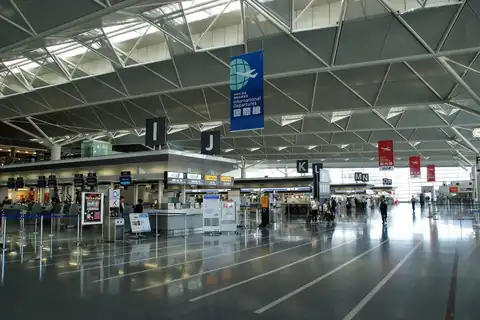
Nagoya's airport, on its own island in Ise Bay, with a train station inside the terminal building. Terminal 2 handles low-cost carriers.
Lockers, sending your bags on, and where these numbers come from
Sending a bag on
Yamato Transport · Terminal 1 2F and 3F, Terminal 2 2F · next day, or the day after for some areas
Shizuoka Station · 50 min · 1,200 yen / JR Kanaya Station · 15 min · 500 yen / JR Shimada Station · 25 min · 600 yen
By taxi
Shizuoka Station area · 11,500 yen
Coin lockers
From 300 yen per a day, 5 sizes
Send bags on
Sagawa Express (Tebura SAGAWA hands-free delivery) · 1F, near the international arrivals exit, 08:30–17:00
Shizuoka's airport, between Shizuoka and Hamamatsu, with direct flights from Seoul (Jeju Air) and Busan (Air Busan). Buses run to Shizuoka Station and to stations on the JR Tokaido Line.
Lockers, sending your bags on, and where these numbers come from
Sending a bag on
Sagawa Express (Tebura SAGAWA hands-free delivery) · 1F, near the international arrivals exit, 08:30–17:00
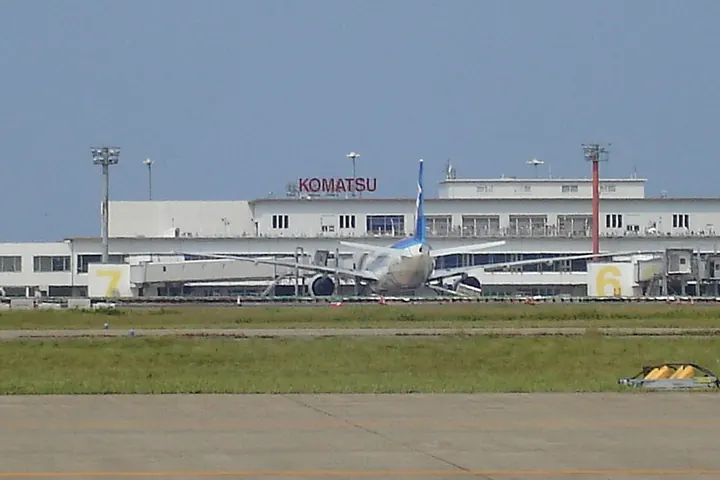
No scheduled international flights. You reach Nagoya Airfield on a domestic flight, or by train.
By bus
Nagoya Station · 35 min · 800 yen / Kachigawa Station · 23 min · 400 yen
Send bags on
General information counter (bag storage, and Yamato Transport parcels), 1F.
The old Nagoya airport, now a domestic base for Fuji Dream Airlines. Not to be confused with Chubu Centrair, which is where international flights land.
Lockers, sending your bags on, and where these numbers come from
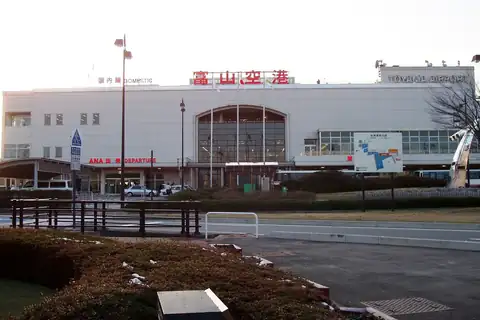
Toyama Station · 23–34 min · 470 yen / Toyama Station (North Exit) · 30 min
By taxi
Toyama Station · 20 min · about 3,000 yen / Takaoka Station · 40 min · about 9,000 yen
Coin lockers
From 300 yen per a use, 2 sizes
Send bags on
Parcel sending at shop Maidoha-ya (send only), domestic 2F.
Toyama's airport, about 25 minutes by bus from Toyama Station, with direct flights from Taipei (China Airlines) twice a week. Since July 2026 it also goes by the nickname Toyama-Takayama Sushi Airport.
Lockers, sending your bags on, and where these numbers come from
Namba · 34 min · 1,670 yen / Namba · 43 min · 970 yen / Tennoji · 30 min · 1,300 yen
By bus
Osaka Station (Umeda) · 60 min · 1,800 yen / Kyoto Station · 85 min · 2,800 yen / Kobe Sannomiya and Rokko Island · 65 min · 2,200 yen
Send bags on
Yamato Transport · Terminal 1 North 4F, and 1F
Western Japan's international gateway, built on an artificial island in Osaka Bay. Terminal 1 takes most airlines; Terminal 2 is for Peach and Jetstar and sits a shuttle ride away.
Lockers, sending your bags on, and where these numbers come from
Sending a bag on
Yamato Transport · Terminal 1 North 4F, and 1F · next day, or the day after for some areas
No scheduled international flights. You reach Izumo Airport on a domestic flight, or by train.
By bus
JR Izumoshi Station · 30 min · 850 yen / Izumo Taisha · 40 min · 1,100 yen / JR Matsue Station · 35 min · 1,300 yen
Send bags on
Yamato Transport · information desk, 1F
Named after Izumo Taisha, one of the oldest shrines in Japan, which the airport bus reaches in 40 minutes. Matsue is about the same distance the other way.
Lockers, sending your bags on, and where these numbers come from
Sending a bag on
Yamato Transport · information desk, 1F · next day, or the day after for some areas
Yonago Station · 25 min · 640 yen / Matsue Station · 45 min · 1,200 yen
By taxi
Yonago Station · 30 min · about 5,500 yen / Matsue Station · 45 min · about 8,500 yen
Coin lockers
From 400 yen, 3 sizes
Send bags on
Yamato Transport (at the 1F Seven-Eleven) and Sagawa Express (at the information desk) · 1F
On the coast between Yonago and Sakaiminato, with direct flights from Seoul (Air Seoul) and Taipei (Tigerair Taiwan). Buses run to Yonago Station and Matsue Station.
Lockers, sending your bags on, and where these numbers come from
Sending a bag on
Yamato Transport (at the 1F Seven-Eleven) and Sagawa Express (at the information desk) · 1F
JR Matsuyama Station · 15 min · 1,000 yen / Matsuyamashi Station · 20 min · 1,000 yen / Dogo Onsen · 40 min · 1,200 yen
Coin lockers
From 300 yen per a day, 6 sizes
Send bags on
SAGAWA Hands-Free Travel Service counter, 1F domestic arrival lobby (08:10–13:00); SAGAWA same-day delivery of luggage to partner hotels in Matsuyama City, 1F domestic arrival lobby (accepted until 13:00, arrival after about 17:00).
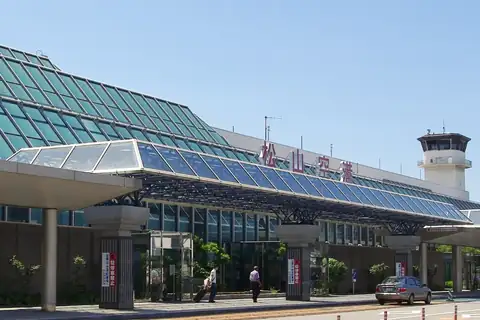
Fifteen minutes from Matsuyama Station and 40 from Dogo Onsen, one of the oldest hot springs in the country.
Lockers, sending your bags on, and where these numbers come from
JR Takamatsu Station · 45 min · 1,300 yen / Ritsurin Garden · 23 min · 1,000 yen / JR Kotohira Station · 48 min · 2,000 yen
By taxi
JR Takamatsu Station · about 6,300 yen / Ritsurin Garden east gate · about 5,400 yen
Send bags on
Same-day luggage delivery to eligible hotels in central Takamatsu, 1F arrival lobby, Information Center (reception 08:00–12:00); FamilyMart Takamatsu Airport (parcel delivery also available), 2F (06:15–20:00).
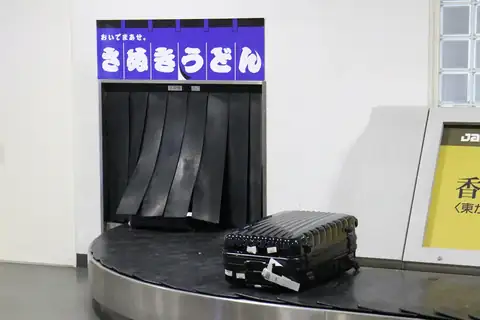
The way into Shikoku from the north, and the closest airport to the Seto Inland Sea art islands.
Lockers, sending your bags on, and where these numbers come from
Tokushima Station · 30 min · 800 yen / Naruto Park · 580 yen
By taxi
Tokushima Station · 30 min · about 5,000 yen / Naruto Station · 15 min · about 2,800 yen
Coin lockers
From 300 yen per a day, 4 sizes
Send bags on
The airport's hands-free sightseeing service · 1F information desk, 08:30–11:45
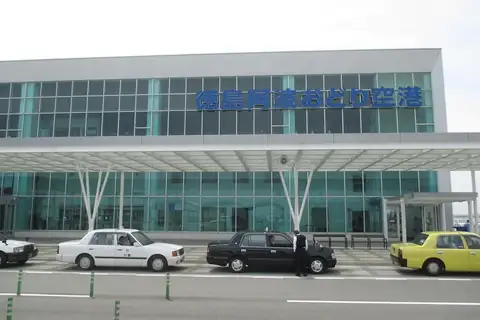
Between Tokushima and Naruto, with direct flights from Seoul (Eastar Jet) three times a week. The limousine bus reaches Tokushima Station in about 30 minutes.
Lockers, sending your bags on, and where these numbers come from
Sending a bag on
The airport's hands-free sightseeing service · 1F information desk, 08:30–11:45 · the same day, between 18:00 and 21:00, at accommodation in Tokushima Prefecture
Hakata Station · 5 min · 260 yen / Tenjin · 11 min · 260 yen
By bus
Tenjin · 30 min · 500 yen / Hakata Station (Chikushi Exit) · 400 yen
Send bags on
Yamato Transport · international terminal 1F, domestic terminal 1F
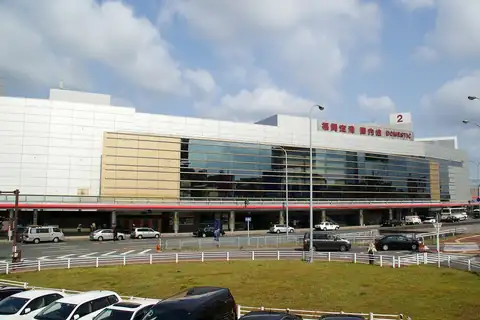
The airport closest to a city centre anywhere in Japan: the subway reaches Hakata Station in a few minutes. The international terminal is on the far side of the runway from the domestic one.
Lockers, sending your bags on, and where these numbers come from
Sending a bag on
Yamato Transport · international terminal 1F, domestic terminal 1F · next day, or the day after for some areas
Kanzaki and Yoshinogari · 40 min · 3,500 yen / Takeo · 60 min · 4,000 yen / Ureshino · 60 min · 4,000 yen
Coin lockers
From 300 yen per a day, 2 sizes
A small airport on the Ariake Sea south of Saga city, with direct flights from Seoul (Trinity Airways) and Taipei (Tigerair Taiwan). The bus to Saga Station takes about 30 minutes.
Lockers, sending your bags on, and where these numbers come from
Hirara Port (Matida Civic Theater) · 28 min · 600 yen
By taxi
Hirara, the main town · 25 min · about 4,000 yen
Send bags on
Japan Post (Yu-Pack) · information counter in the check-in building
Leave a bag
Staffed baggage storage counter
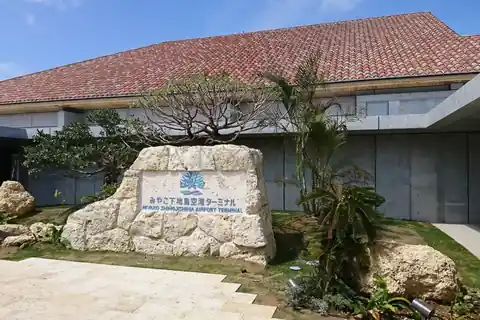
On Shimojishima, west of Miyakojima, with direct flights from Seoul and Busan (Jin Air) and from Taipei and Taichung (Starlux Airlines). The airport liner bus reaches Hirara in under half an hour.
Lockers, sending your bags on, and where these numbers come from
Sending a bag on
Japan Post (Yu-Pack) · information counter in the check-in building
Kencho-mae, for the prefectural office and Kokusai-dori · 13 min · 290 yen / Shuri, for the castle · 27 min · 360 yen
By bus
Hilton Okinawa Chatan Resort · 82 min · 1,000 yen / Renaissance Okinawa Resort (Onna) · 62 min · 1,700 yen / The Moon Beach Museum Resort (Onna) · 60 min · 1,700 yen
Send bags on
Okinawa Yamato Transport · domestic arrivals hall 1F, near security checkpoint C 2F
Leave a bag
Staffed baggage storage counter
Okinawa's gateway, with the monorail running from the terminal into the city. The international terminal is joined to the domestic one by a connecting building.
Lockers, sending your bags on, and where these numbers come from
Sending a bag on
Okinawa Yamato Transport · domestic arrivals hall 1F, near security checkpoint C 2F · next day, or the day after for some areas
No airport matched. Try the three-letter code, such as HND or CTS.
Getting into the city from 40 Japanese airports, from each airport's own published information (checked September 2026)
How long it takes to reach the nearest city centre, what the train or bus costs where the operator publishes it, and whether the airport has a rail link of its own.
Every airport here is listed with what its own pages publish: how long the train or the bus takes into the city, what it costs where the operator says so, what a coin locker holds and what it costs, and whether you can hand your suitcase to a courier and collect it at your hotel.
40 airports12 with a rail link26 with a courier counter36 with international flights
Blank means the operator does not publish that number on its own pages. Where an airport lists several routes, this is the quickest one it publishes.
Highlighted row: the quickest airport-to-city run in Japan
The three letters in front of each airport
HND
That is the IATA code, the three letters an airline prints on your boarding pass and your baggage tag. HND is Haneda, NRT is Narita, KIX is Kansai, CTS is New Chitose, OKA is Naha. If the code on your tag is not the airport you are standing in, your bag is somewhere else.
What the columns mean
Into
The city the airport serves, and where the routes below end up.
Fastest way in
The line or operator the airport itself puts first for the quickest run.
Time
As published by the airport. Door to door will be longer — add the walk to the platform and the wait.
Fare
The cheapest adult one-way fare we could find published by the operator. Express surcharges are not included unless the operator quotes them together.
Rail link
Yes means there is a station in or under the terminal, or one the airport lists as its own.
At most Japanese airports you have two or three ways in, and the right one depends on your luggage more than your budget.
Train
Fastest and the least affected by traffic, but you carry your bags up and down stairs and through crowded stations. 12 of these airports have a rail station in or under the terminal, or one the airport lists as its own.
Airport bus
Your case goes in the hold and comes out at the other end, and the bus usually stops at the major hotels. Slower than the train and subject to traffic.
Taxi
Worth it for three or four people with luggage, or late at night. Some airports publish a fixed fare by zone, which is the number to ask for.
IC card
Suica, ICOCA, PASMO and the rest work on almost every train and bus here. Buy one at the airport station and stop counting coins.
The last train is earlier than you think. Most Japanese city rail lines stop around midnight, and airport lines often stop earlier. If you land after 22:00, check before you plan on the train.
Quickest published way into the city, in minutes
The fastest route each airport publishes, for the airports that publish a time.
Fukuoka Airport → Fukuoka5 min
Miyako Airport → Miyakojima7 min
Miyazaki Airport → Miyazaki9 min
Haneda Airport → Tokyo13 min
Naha Airport → Naha13 min
Matsuyama Airport → Matsuyama15 min
Kobe Airport → Kobe18 min
Hakodate Airport → Hakodate20 min
Kochi Ryoma Airport → Kochi20 min
New Ishigaki Airport → Ishigaki20 min
Toyama Airport → Toyama20 min
Itami Airport → Osaka25 min
Source: Each airport's own access pages
Japan's door-to-door courier network reaches the airports, so you can put a suitcase on a conveyor at arrivals and pick it up at your hotel. It is called takkyubin, and it is the reason you see so few large cases on Japanese trains.
26of these airports have a courier counter
660 yencounter fee at Narita, Haneda and Kansaion top of the delivery charge
30kgthe weight limit per parcelrefused above it
How long it takes
Next day to most of the country, the day after to remote areas. It is not a same-day service unless the airport says otherwise.
Same day to a hotel
Narita and Haneda both run one. At Narita, leave the bag in a MULTIECUBE locker by 11:30 and it reaches a participating hotel in ten central Tokyo wards or Urayasu that evening. At Haneda, JAL ABC takes it by 13:00 for 1,500 yen a bag to Urayasu, Odaiba and Maihama.
What it costs
The charge depends on size and distance, so ask at the counter. The airport fee of 660 yen at Narita, Haneda and Kansai is on top.
Going home
It works in reverse too. Send the case to the airport two days before you fly and collect it at the counter on the day.
Take what you need for the first night in your hand luggage. The bag will not arrive before you do.
Every airport here has coin lockers, and the bigger ones also have a staffed counter for cases that will not fit.
What fits
A small locker takes a cabin bag. A large one takes a mid-size case. Anything bigger goes to the staffed counter.
What it costs
Between 200 and 500 yen a day for a small locker, depending on the airport, and up to 2,000 yen for the largest size at Haneda Terminal 3.
How a day is counted
Watch this one. At Narita a day ends at midnight, not 24 hours after you put the bag in — leave it from 21:00 to 01:00 and you pay for two days.
How you pay
Newer lockers take IC cards and some take cards or code payment. Older ones want 100-yen coins.
If it will not fit
Staffed counters at Haneda charge 800 to 2,000 yen a day by size, and take skis and surfboards.
Do not leave a bag in a locker overnight if you can avoid it. The maximum is three days at New Chitose and seven at Haneda. After that the contents are moved to storage and you have to go and claim them.
Three ways to get a connection, and the one you choose is best decided before you fly.
eSIM
Bought and installed before you leave home, so you land already connected and skip the counter. Needs a phone that supports eSIM and is not locked to your carrier.
Prepaid SIM
Sold at counters and vending machines in the arrivals halls of the larger airports. You swap your physical SIM, so keep the one you take out somewhere safe.
Pocket Wi-Fi
A rented router that covers several devices and several people. Collected at the airport counter and returned there, or posted back in the envelope they give you.
Narita, Haneda, Kansai, Chubu, New Chitose, Fukuoka and Naha all have staffed rental counters in the arrivals hall. Smaller airports may have a vending machine or nothing at all — arrange an eSIM before you fly if you are landing at one of them.
Free airport Wi-Fi will get you as far as the station, not around the country. Every airport here has free Wi-Fi in the terminal. Once you are on the train it stops, and Japanese cafes and stations are far less blanketed than you might expect.
The order is the same at every international airport in Japan, and it is not the order most countries use.
Quarantine. A health check as you come off the aircraft. You walk straight through unless you are unwell or coming from an area with an outbreak.
Immigration. Fingerprints and a facial photograph, taken from everyone aged 16 and over. This has been compulsory since 20 November 2007. The officer stamps or seals your passport with the landing permission.
Baggage claim. Your checked bags, on the carousel for your flight.
Animal and plant quarantine. Before customs, not after. If you are carrying meat, fruit, vegetables, seeds or plants, you take them to this counter first — it is a legal requirement, and the fines are heavy.
Customs. Green channel if you have nothing to declare, red channel if you do. Every passenger hands in a declaration, one per family.
Visit Japan Web
Register your immigration and customs details online before you fly and you get a single 2D code covering both. Show it on your phone at each counter. You can fill it in on a computer, but you need a phone or tablet to display the code.
What you can bring in duty free
Set by Japan Customs, and the same at every airport. If the value of what you are declaring is over 300,000 yen, you are treated as commercial cargo.
Cash
Over 1 million yen in cash or equivalent has to be declared. Ask an officer for the form.
Meat is the one that catches people out. Bringing meat or meat products into Japan without a certificate is prohibited, including ham, sausage and jerky in your hand luggage. It has nothing to do with customs allowances — it is about foot-and-mouth disease and African swine fever.
1
Quarantine
2
Immigration
3
Baggage
4
Animal & plant
5
Customs
The two rules in the officer's own words
Japan Customs
The green channel is for passengers who have no goods subject to duty and/or tax and goods not prohibited or restricted for import. The red channel is for all other passengers.
Japan's two biggest cities put their international and domestic flights in different buildings, and sometimes at different airports.
Tokyo
International flights land at Haneda Terminal 3 or at Narita. From Haneda Terminal 3, a free shuttle bus runs to Terminals 1 and 2 for domestic flights. Between Narita and Haneda, Haneda Airport lists 90 to 115 minutes by train (from 1,760 yen) or 65 to 85 minutes by limousine bus (3,600 yen) — do not book a same-day connection between the two lightly.
Osaka
International flights land at Kansai; most domestic flights leave from Itami. They are different airports on opposite sides of the city.
Fukuoka
The international and domestic terminals sit on opposite sides of the runway, joined by a free bus that takes about 10 minutes.
Sapporo
New Chitose keeps both under one roof, with a connecting walkway between the terminals.
Your bags
On a single ticket with one airline they are usually checked through. On separate tickets, or across a low-cost carrier, you collect them and check in again — add an hour.
You clear immigration and customs at the first airport you land in. Not at your final destination. So the connection time has to cover the queue at immigration, the wait at the carousel, and the customs channel before you can check in again.
Connecting, asked and answered
Is Narita or Haneda better for connecting onto a domestic flight?
Haneda, by a long way. Its domestic terminals are a free shuttle bus from the international one. From Narita you have to cross Tokyo, which takes 90 to 115 minutes by train.
Do I collect my bags when connecting through a Japanese airport?
On a single ticket with one airline they are normally checked through to your final destination. On separate tickets, or when a low-cost carrier is involved, you collect them and check in again.
What is the cheapest way from the airport into the city in Japan?
Almost always the local train or the ordinary route bus rather than the express. At Haneda the Keikyu Airport Line to Shinagawa is 330 yen; at Matsuyama the route bus into town is 530 yen against 1,000 yen for the limousine bus.
Can I send my suitcase from the airport to my hotel in Japan?
Yes. Yamato Transport runs courier counters at 22 of these airports, and the bag reaches most of the country the next day. Narita and Haneda also deliver the same day: Narita to hotels in ten central Tokyo wards and Urayasu, Haneda to hotels in Urayasu, Odaiba and Maihama.
How much does a coin locker cost at a Japanese airport?
Between 200 and 500 yen a day for a small one and up to 2,000 yen for the largest, at Haneda Terminal 3. Check how the day is counted — at Narita it ends at midnight rather than 24 hours after you start.
Where do I buy a SIM card at a Japanese airport?
At the rental counters in the arrivals hall at the larger airports: Narita, Haneda, Kansai, Chubu, New Chitose, Fukuoka and Naha all have them. Smaller airports may have only a vending machine, so buy an eSIM before you fly if you are landing at one of those.
What is the order of arrival procedures in Japan?
Quarantine, then immigration, then baggage claim, then animal and plant quarantine, then customs. The animal and plant check comes before customs, not after — if you are carrying meat, fruit or plants you go to that counter first.
How long should I allow to connect from an international to a domestic flight in Japan?
You clear immigration and customs at the first airport you land in, so the connection has to cover that queue as well as the transfer. At Haneda the international and domestic terminals are a free shuttle bus apart; at Fukuoka the bus takes about 10 minutes; between Narita and Haneda, Haneda Airport lists 90 to 115 minutes by train or 65 to 85 minutes by limousine bus.
Do Japanese airports have free Wi-Fi?
Yes, all of the airports here have free Wi-Fi in the terminal. It stops at the terminal door, though, so you still need a SIM, an eSIM or a rented router for the rest of the trip.
Ground transport, luggage and arrival information for 40 Japanese airports: the train, bus and taxi routes into the nearest city with published times and fares, coin locker prices by size, courier counters for sending baggage on, and the order of arrival procedures. Compiled from each airport's own access pages and from Yamato Transport, Japan Customs and the Immigration Services Agency.
Times and fares are what each airport and operator publishes on its own pages. Where an operator does not publish a number, we leave it out rather than guess.
 Most searched