Japan Trip Planner: What to Book 3 Months to 1 Day Out
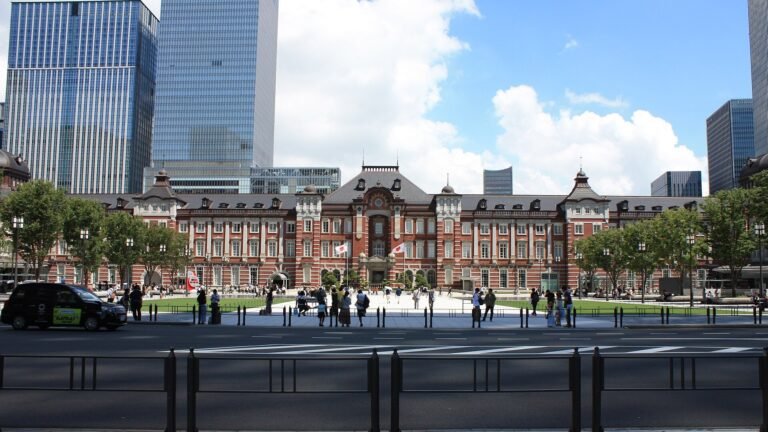
The dates below suit a winter trip between December 2026 and February 2027. Each step links to the official page that sets the rule, so you can check it yourself before you pay.
The chart below matches the time left before your flight to the one thing you should book now.
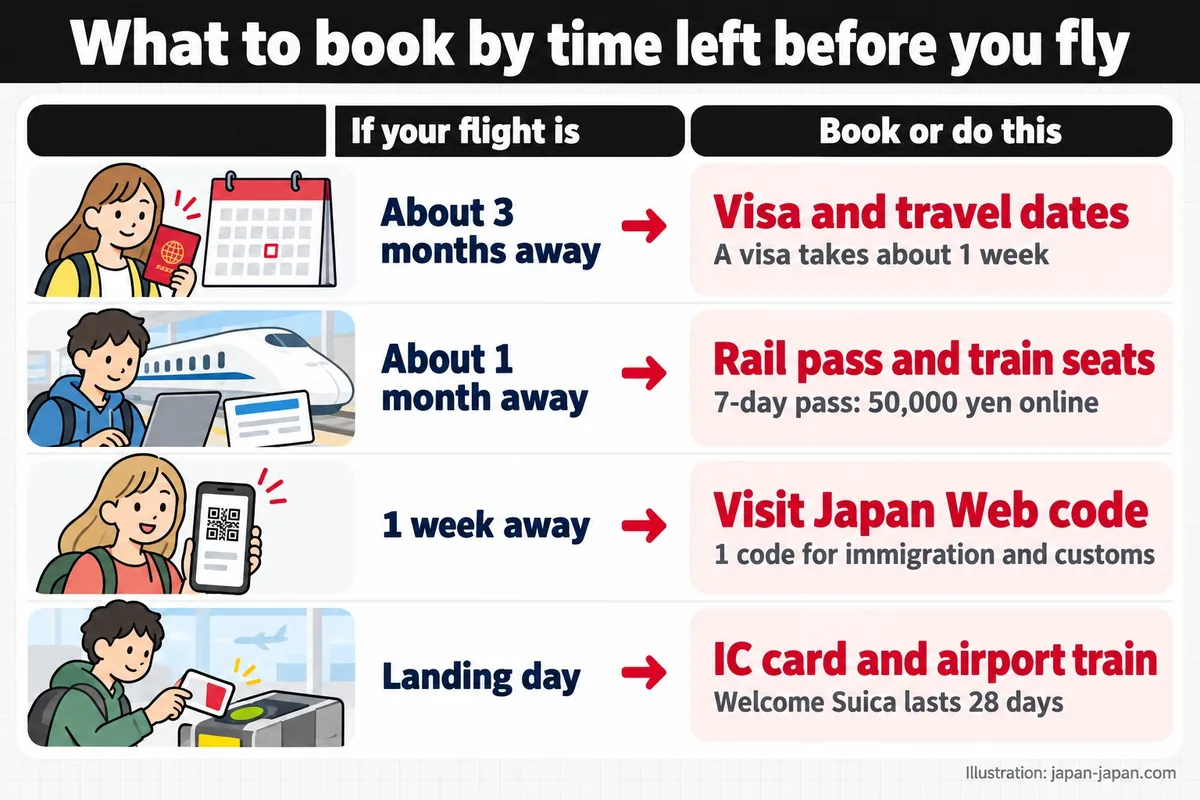
Here is the whole countdown on one table. Keep it open while you book, and tick off each row.
| When | What to do | Key number | Source |
|---|---|---|---|
| 3 months out | Check if you need a visa and apply | About 1 week to process | Ministry of Foreign Affairs |
| 3 months out | Fix dates around winter holidays | Nozomi all reserved 25 Dec 2026 to 5 Jan 2027 | Cabinet Office; JR Central |
| 1 month out | Buy the Japan Rail Pass | 7 days: 50,000 yen online | Japan Rail Pass official site |
| 1 month out | Register and reserve shinkansen seats | Member registration and credit card | smart EX |
| Week before | Make your Visit Japan Web code | 1 code for immigration and customs | Digital Agency |
| Arrival day | Buy an IC card | Welcome Suica lasts 28 days | JR East |
| Departure day | Tax-free customs check before bag drop | Within 90 days, 5,000 yen minimum | Japan Tourism Agency |
| Departure day | Departure tax added to your fare | 3,000 yen per departure | National Tax Agency |
Three months out: visa, dates and flights
Start with the visa. It is the one step you cannot fix after you land. The Ministry of Foreign Affairs of Japan visa page says embassies and consulates abroad issue visas. You cannot get one on arrival or while you are in Japan.
Many travellers need no visa at all. Nationals of 74 countries and regions can make a short stay without one, most for up to 90 days. Our list of visa-free countries for Japan shows the shorter stays: 30 days for Brunei and Qatar, and 15 days for Indonesia and Thailand. The foreign ministry last revised that list on 1 September 2025.
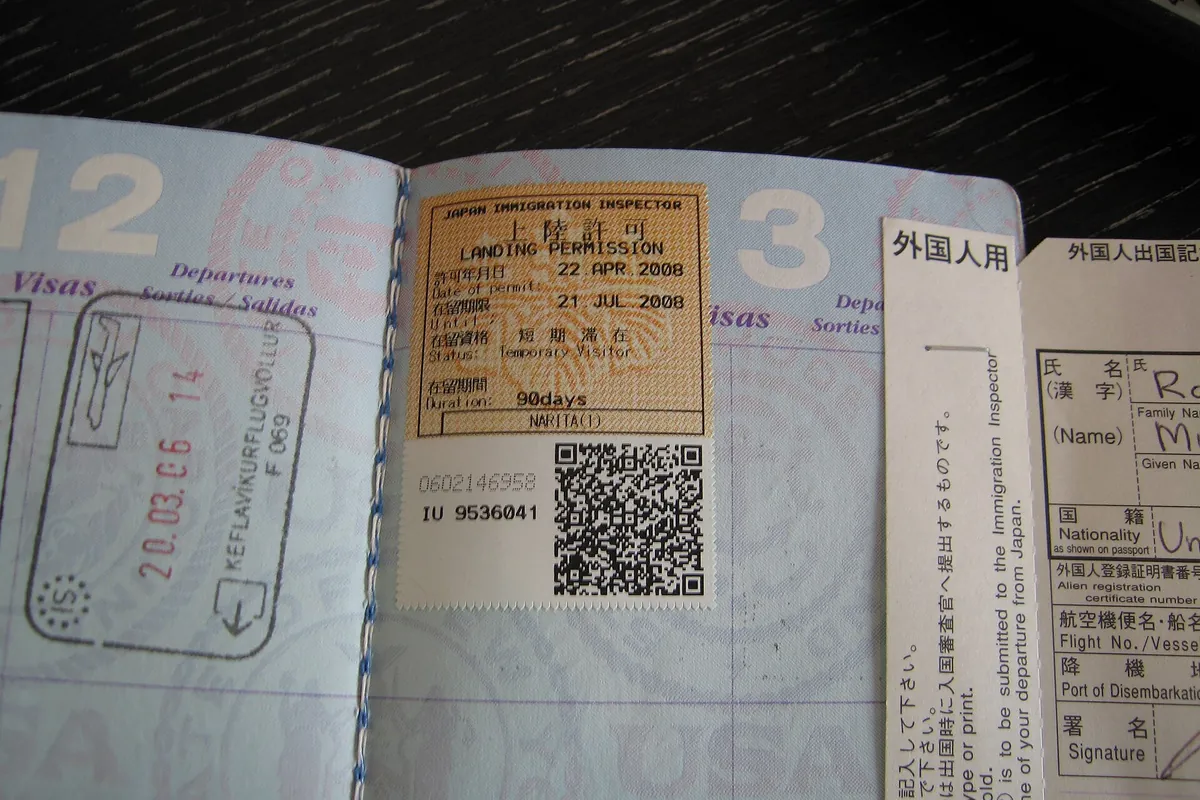
If your country is on the list, an immigration officer grants landing permission at the airport. The photo shows the kind of page you get in your passport.
If you need a visa
The foreign ministry says processing takes approximately one week if your application meets every requirement. Our page on Japan visa processing time puts the standard at 5 working days from the day after the embassy receives your papers. A case referred to Tokyo can take more than a month. Three months gives you room for that slower case.
From 1 July 2026 the fee is about 15,000 yen for a single-entry visa and about 30,000 yen for a multiple-entry visa. You pay it in local currency. Residents of Australia, Brazil, Cambodia, Canada, Saudi Arabia, South Africa, Taiwan, the United Kingdom and the U.S.A. can apply online through JAPAN eVISA. That online route covers a single-entry tourist visit only.
JESTA, the planned pre-travel screening, is not in force yet. The law passed on 29 May 2026, and it starts on a date the Cabinet sets, no later than 31 March 2029.
Fix your dates before you book flights
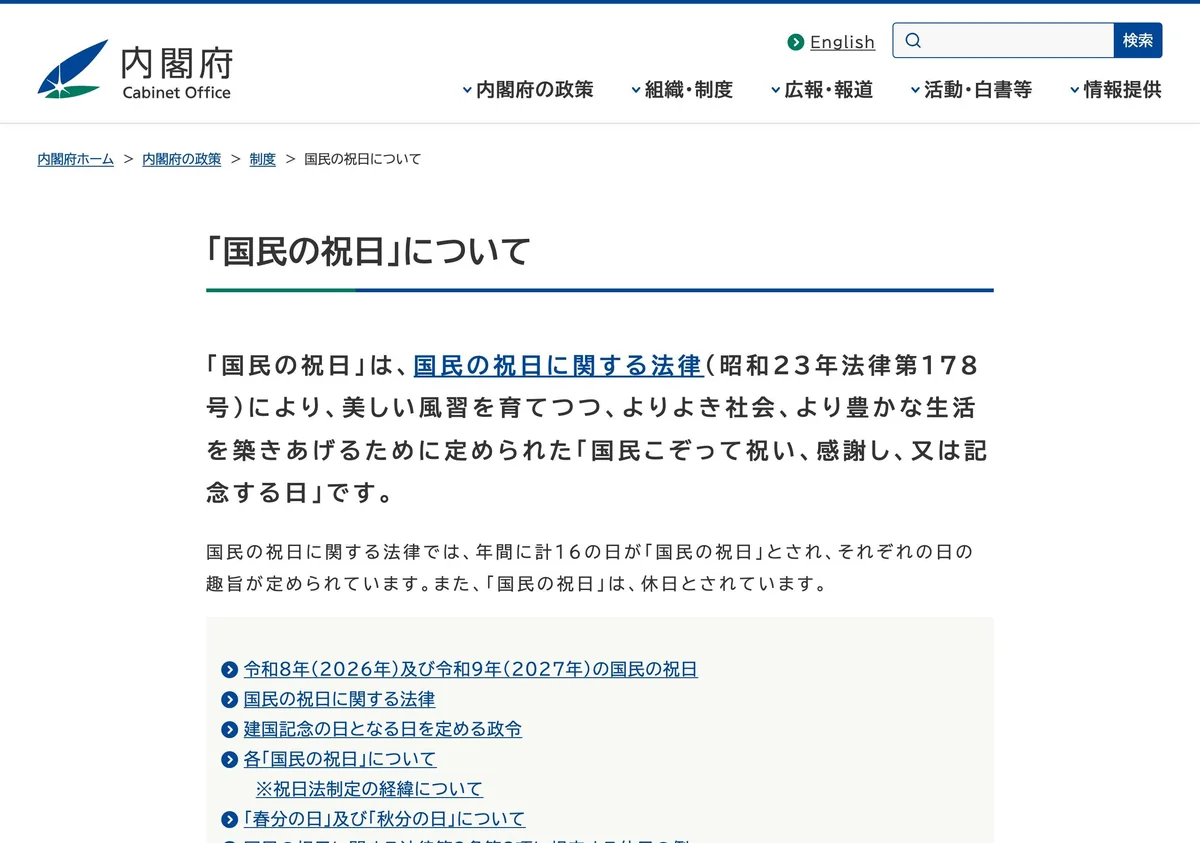
Pick your travel dates next. Our public holidays in 2027 page lists 17 days off in 2027 and 6 three-day weekends. The government source for those dates is the Cabinet Office.
The screenshot below is that Cabinet Office page, titled 「国民の祝日」について (kokumin no shukujitsu ni tsuite, “About national holidays”). It lists every national holiday for 2026 and 2027. It also says the 2028 dates go up in February 2027.
Book flights only after your dates clear the busy days in the next section. A return flight that lands on 3 January or leaves on 11 January puts you on the same trains as millions of people heading home.
Busy dates to plan around in winter 2026-27
Winter has three crowded stretches: New Year, the January long weekend and two February holidays. The Cabinet Office national holidays of Japan page sets the dates. Our holiday pages add the weekdays and the long breaks.
| Date | Day | What it means for your trip |
|---|---|---|
| 23 November 2026 | Monday | Labor Thanksgiving Day. Every Nozomi is reserved-seat only from 21 to 23 November. |
| 25 December 2026 to 5 January 2027 | Friday to Tuesday | Every Nozomi is reserved-seat only. Banks close from 31 December to 3 January. |
| 1 January 2027 | Friday | New Year's Day. A 3-day break runs from Friday 1 to Sunday 3 January. |
| 11 January 2027 | Monday | Coming of Age Day. A 3-day break from 9 to 11 January, with every Nozomi reserved-seat only. |
| 11 February 2027 | Thursday | National Foundation Day. |
| 23 February 2027 | Tuesday | Emperor's Birthday. |
JR Central makes every Nozomi reserved-seat only on its busiest days. On those days you cannot ride the Nozomi in a non-reserved car, so a seat booking matters more. Its busiest single day last winter was Sunday 4 January 2026, with 350,000 passengers heading to Tokyo. Our New Year 2026–27 page shows what closes over the break.
January has 2 days off in 2027: New Year's Day and Coming of Age Day. See January holidays in Japan for both breaks. February also has 2 days off, but in 2027 neither one makes a break of three days or more. Our February holidays in Japan page shows the dates. Midweek holidays still fill trains on the day itself, so avoid long rides on 11 and 23 February.
Monday holidays change museum hours. The national museums in Tokyo and Kyoto close on Mondays, but they open on a Monday holiday and close the next day instead. On 11 January 2027 that means open on Monday and closed on Tuesday 12 January.
How many visitors come in winter
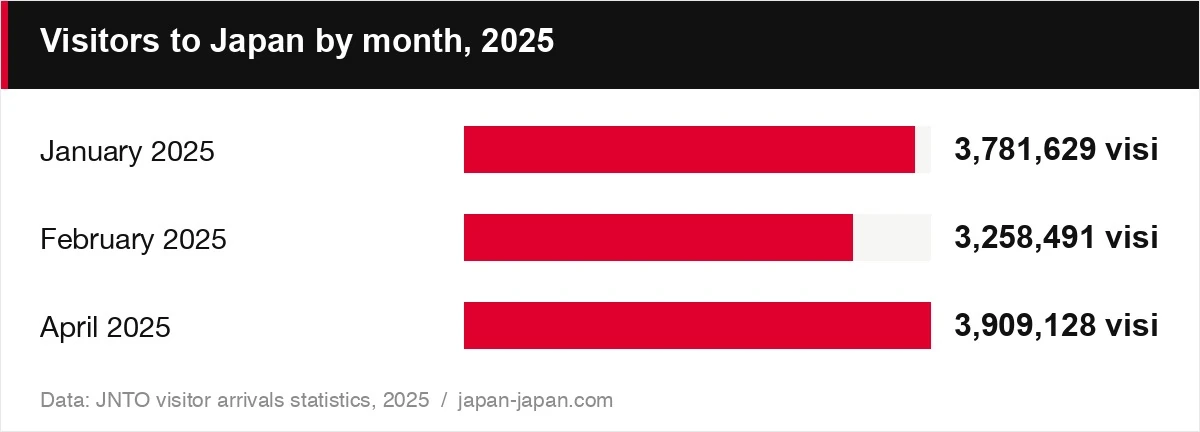
The JNTO visitor arrivals statistics count every visitor by month. In 2025, 3,781,629 visitors arrived in January, the 3rd busiest of 12 months. February had 3,258,491, the fewest of the year. April had the most, at 3,909,128.
The chart puts those three months side by side. February is the quietest month for visitors, but its two holidays still bring local crowds.
| Item | Value | Note |
|---|---|---|
| January 2025 | 3,781,629 visitors | 3rd of 12 months |
| February 2025 | 3,258,491 visitors | Fewest of 12 months |
| April 2025 | 3,909,128 visitors | Most of 12 months |
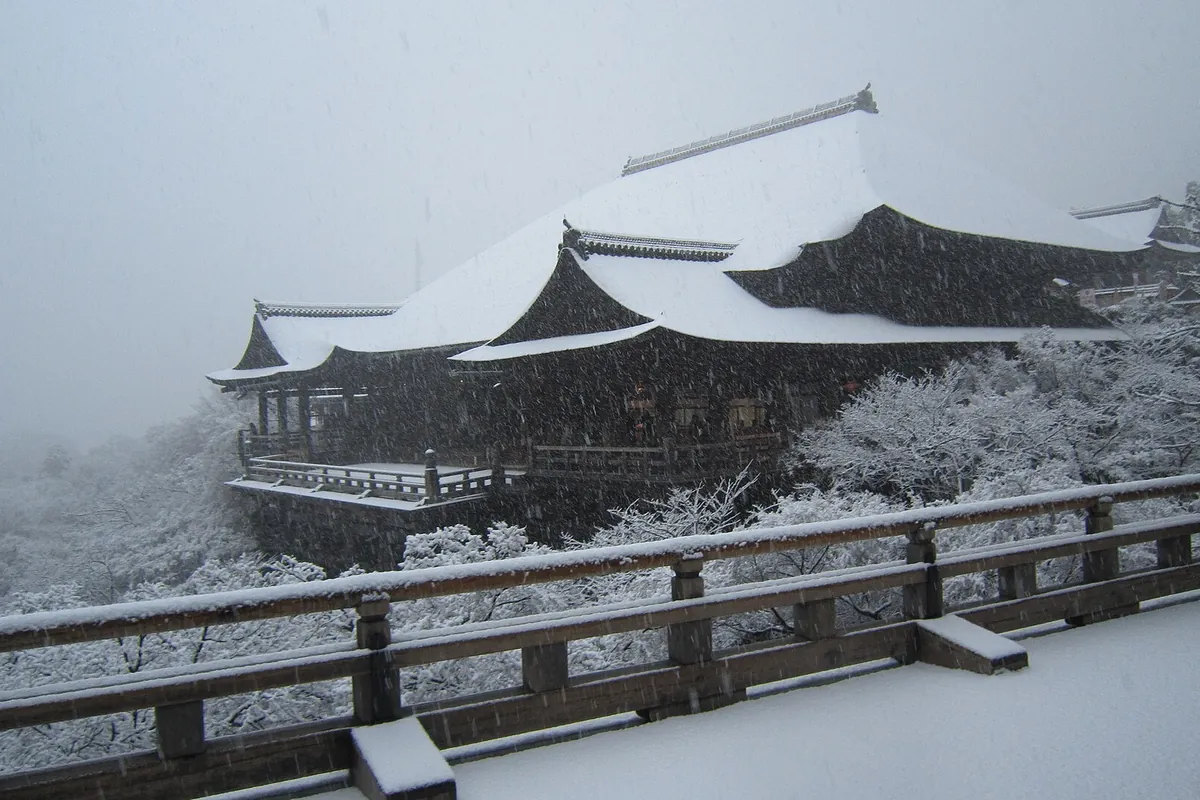
Famous temples stay busy in winter too. Kyoto's Kiyomizu-dera, in the photo, draws visitors on holiday weekends, so go early in the morning on 9 to 11 January.
One month out: shinkansen seats and rail passes
Decide on a rail pass before you book seats, because the pass changes how you book. The Japan Rail Pass official prices page lists six types: 7, 14 or 21 days, in an ordinary car or a Green car. It costs less on the official website than at an overseas travel agency.
| Ordinary car, adult | Official website | Overseas JR-designated agency |
|---|---|---|
| 7 days | 50,000 yen | 53,000 yen. |
| 14 days | 80,000 yen | 84,000 yen. |
| 21 days | 100,000 yen | 105,000 yen. |
The Green car pass costs 70,000 yen for 7 days online. Children aged 6 to 11 pay less: a 7-day ordinary pass for a child is 25,000 yen online. You pay in Japanese yen online. An overseas agency converts the price at the bank selling rate on the day it issues the Exchange Order.
The pass does not cover the Nozomi or Mizuho on the Tokaido, Sanyo and Kyushu lines. To ride them, buy the special NOZOMI MIZUHO Ticket for your section before boarding. Otherwise take the Hikari, Sakura, Kodama or Tsubame. Our Japan Rail Pass page lists which trains the pass covers.
Do the sums before you buy. A Nozomi reserved seat from Tokyo to Kyoto costs 14,170 yen one way, and 13,320 yen in a non-reserved car. A simple Tokyo to Kyoto return costs less than the 7-day pass. The pass pays off when you add more long rides, as in our 10-day Japan itinerary for first-timers.
Booking shinkansen seats from abroad
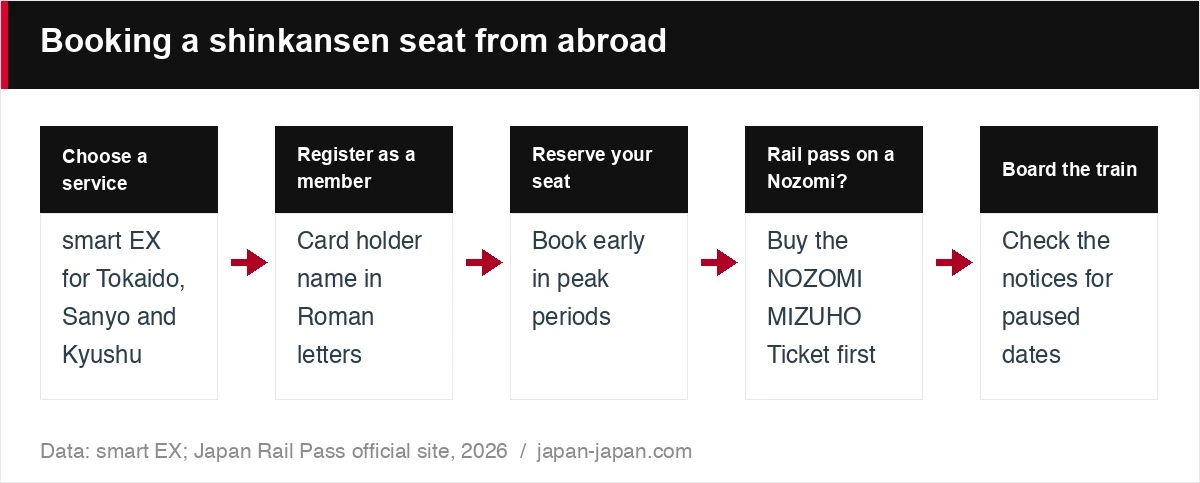
For the Tokaido, Sanyo and Kyushu shinkansen, JR Central, JR West and JR Kyushu run one booking service. The JR Central smart EX reservations page lets you book seats and pay by credit card. You need to register as a member first. Enter the card holder's name in Roman letters, as the site asks.
The smart EX app is also offered in the United States, Canada, Australia, Singapore, Hong Kong, Malaysia, Thailand and Taiwan. The site asks you to reserve in advance during peak periods. On 8 October 2026 it also posted a notice that new Kyushu Shinkansen bookings are paused for certain travel dates. Read the notices before you plan around a Kyushu leg.
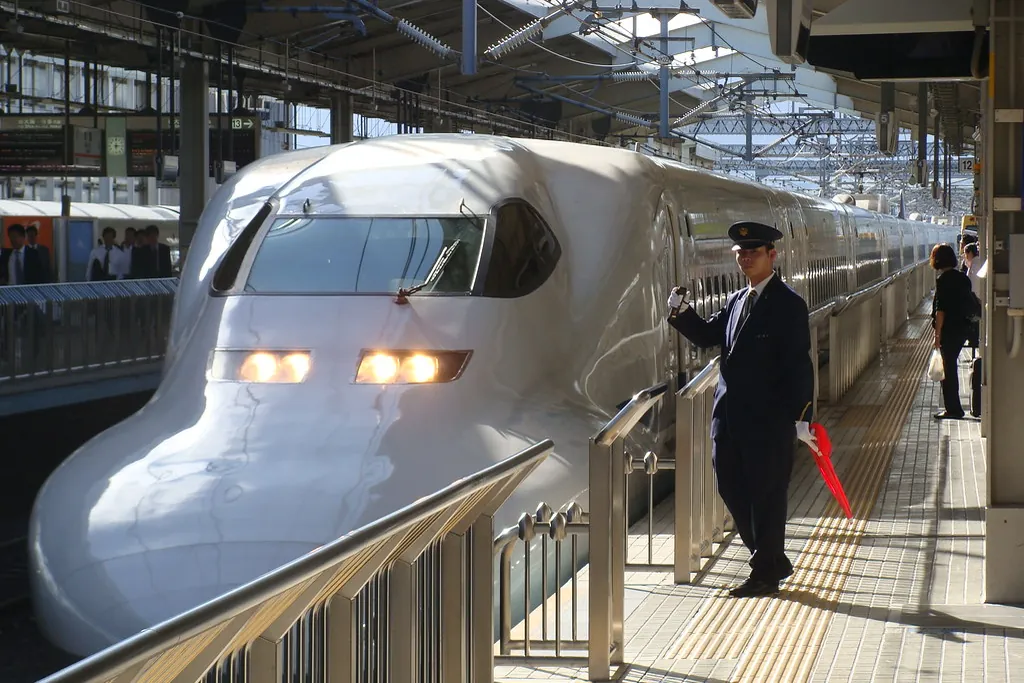
The photo shows a shinkansen waiting at Tokyo Station, where most first trips on the Tokaido line begin.
The steps below show the order: choose a service, register, reserve, then board with your ticket. If you hold a rail pass, add the NOZOMI MIZUHO Ticket step only when you want those trains.
The week before: Visit Japan Web, IC cards and bags
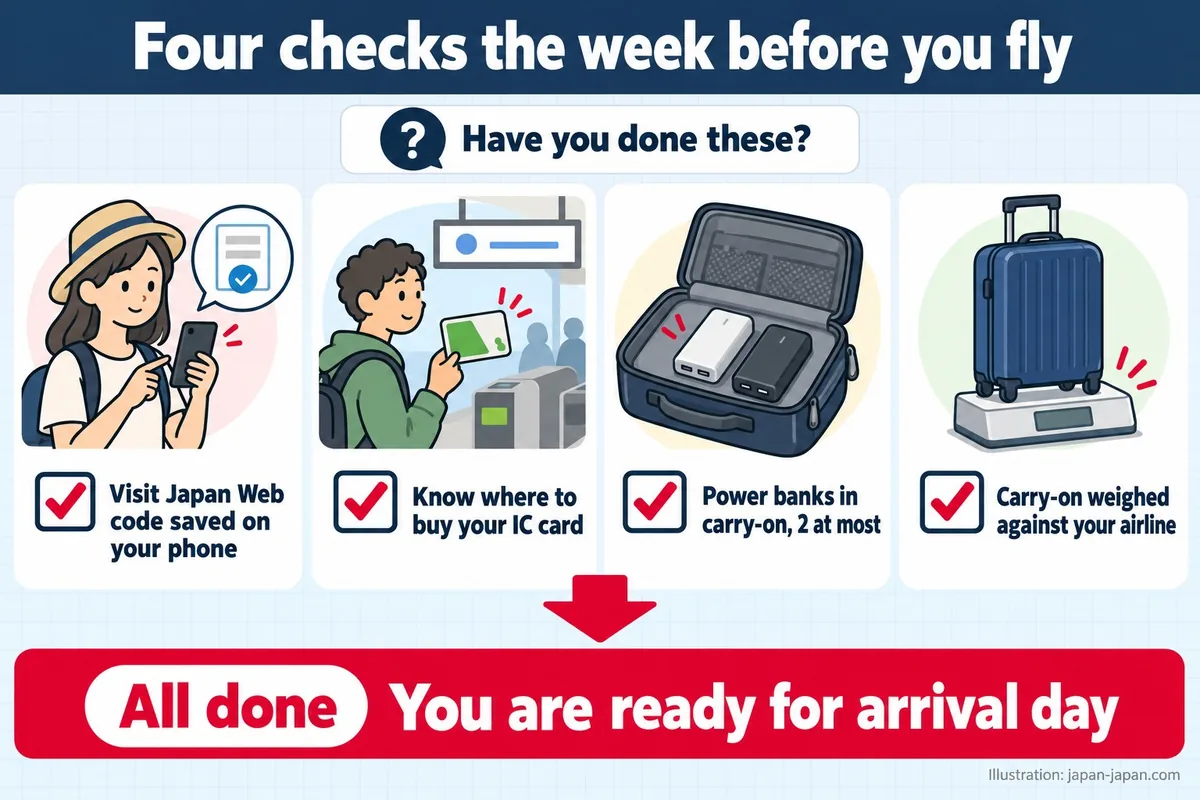
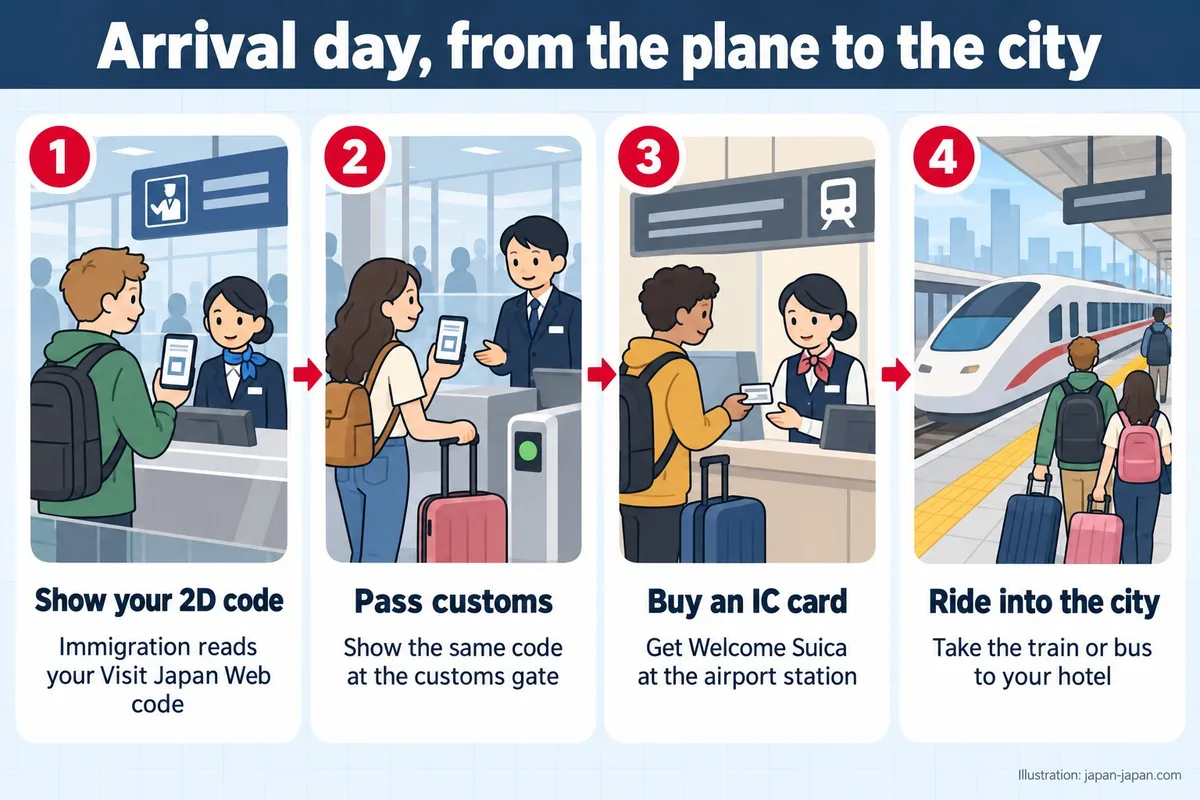
Visit Japan Web handles your arrival forms. The Digital Agency Visit Japan Web page says you register your immigration and customs details in advance. At the airport you show one 2D code. Since 25 January 2024 a single code covers both immigration clearance and the customs declaration.
You can fill in the forms on a computer, but you must show the code on a smartphone or tablet. The Digital Agency also warns about fake apps such as “Visit Japan Web Info”, so use the official site only. Our guide to the Visit Japan Web QR code walks through each screen.
IC card
Plan where you will buy an IC card for trains and buses. Welcome Suica is JR East's card for visitors. It needs no deposit, holds up to 20,000 yen and lasts 28 days from the day you buy it. It comes loaded with 1,000 to 10,000 yen, and it cannot be refunded.
JR East sells it at Narita Airport Terminal 1, Narita Airport Terminal 2・3 and Haneda Airport Terminal 3 stations, and at big Tokyo stations. In principle each person can buy one card. TOURIST PASMO is the other visitor card. At Narita it costs 2,000 yen at the Keisei information center, open 7:00 a.m. to 9:00 p.m.
Bags
Check what goes in which bag. Since 24 April 2026 Japan allows 2 power banks per person, each 160Wh or less, in carry-on only. Our what you can bring guide covers 180 items, from medicine to food. On international flights each liquid container must be 100 ml or less, in one clear bag of 1 litre or less.
Weigh your carry-on against your airline. Of 99 airlines flying to Japan, 36 allow up to 7 kg and 27 allow up to 10 kg. See carry-on size and weight by airline for yours. On 22 of 26 low-cost airlines the cheapest fare has no checked bag, so add one online if you need it.
The checklist below sums up the four checks for the last week.
Arrival day: from the airport to your hotel
After landing you pass quarantine, immigration, baggage claim, animal and plant quarantine, then customs. Have your Visit Japan Web code ready on your phone for immigration and again for customs. The four panels below follow that order to the train.
Pick your ride into town before you fly. Our airport transfers guide compares 73 routes from 25 airports. For the three main gateways, these are the usual choices:
- Narita Airport: the Keisei Skyliner reaches Nippori in 36 minutes at the fastest. The Narita Express reaches Tokyo Station in 53 minutes for 3,140 yen. The AIRPORT BUS TYO-NRT to Tokyo Station costs 1,500 yen.
- Haneda Airport: Keikyu trains reach Shinagawa in 11 minutes for 330 yen. The Tokyo Monorail to Hamamatsucho costs 520 yen. The Airport Limousine bus to Shinjuku takes 40–55 minutes for 1,400 yen.
- Kansai Airport: the Nankai Rapi:t reaches Namba in 34 minutes for 1,670 yen. The Nankai Airport Express takes about 45 minutes for 970 yen. For Kyoto, the JR Haruka takes about 75 minutes.
Visitors with a foreign passport can buy a one-way Haruka ticket for 2,200 yen. Our Kansai Airport to Kyoto page compares it with the 2,800-yen limousine bus.
If your flight lands late, look up the last train and bus on the airport page before you book the hotel.
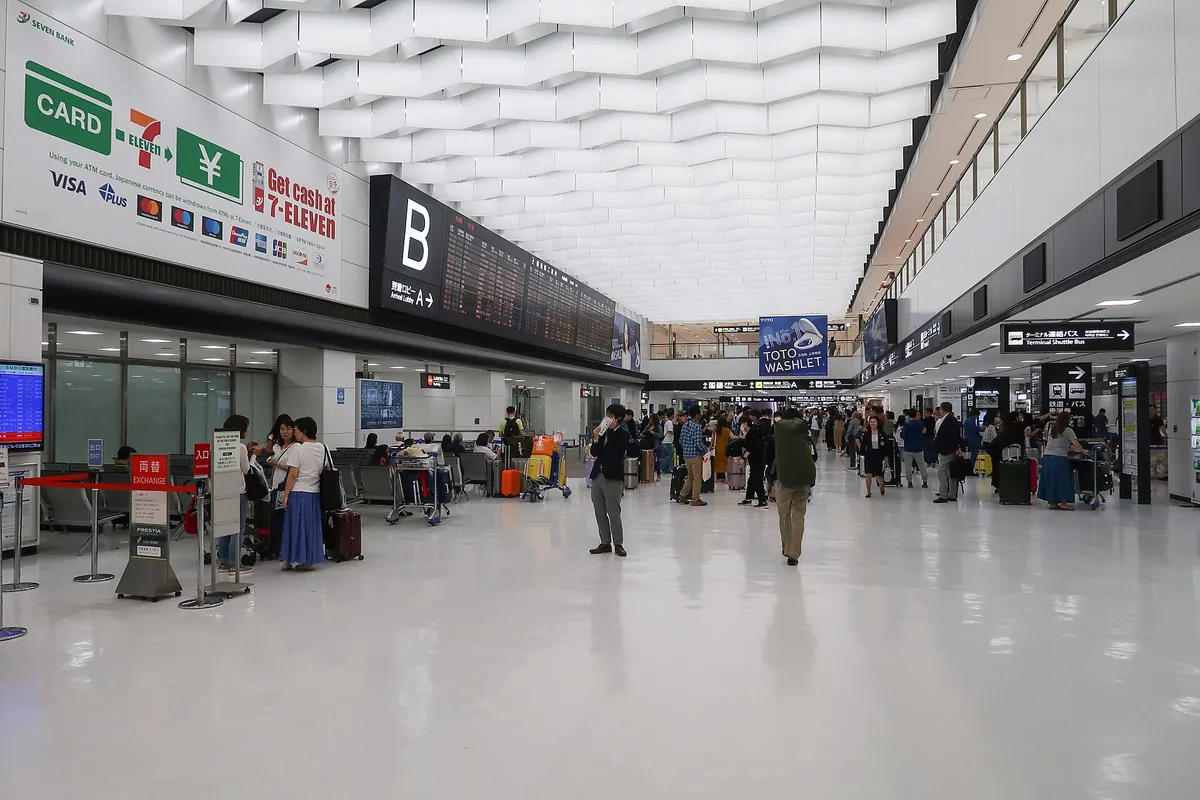
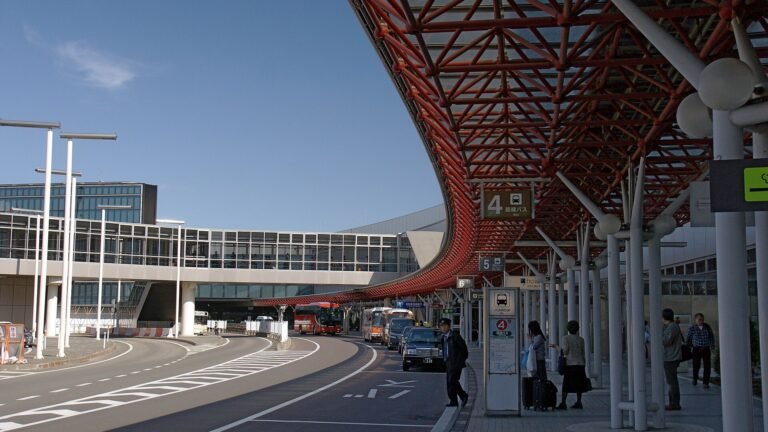
The photo shows Narita's arrivals lobby, where the train and bus counters sit after customs.
Two services make arrival day lighter. Yamato Transport runs courier counters at 22 airports, and most bags arrive the next day. Narita can deliver the same day to hotels in ten central Tokyo wards and Urayasu. Narita, Haneda, Kansai, Chubu, New Chitose, Fukuoka and Naha all have SIM rental counters in the arrivals hall.
Before you leave: tax-free refunds and departure tax
Tax-free shopping changed on 1 November 2026. The Japan Tourism Agency new tax-free system page says you now pay the price including consumption tax in the shop. The refund comes after customs confirms, at departure, that you are taking the goods out of Japan. Goods bought in October 2026 keep the old rules, even if you leave in November.
The rules for the refund are strict:
- Minimum: 5,000 yen or more before tax, in the same shop on the same day.
- Deadline: pass the customs check within 90 days of the purchase.
- Where: a tax-free terminal in the international departure lobby, before you check in your bags.
- Refund: 10% of the price before tax, or 8% for food and drink other than alcohol. The shop or its refund agent pays it.
Scan your passport at the terminal. A green result means you are done. A red result means a customs officer inspects the goods. Our page on the customs check at the airport shows where the terminals are.
You must carry every item from one receipt. If you ate or used even one, the whole receipt loses its refund. You cannot pull a bag back from the airline once you check it in. If you connect from a domestic flight, do the check at the last airport you leave Japan from.
At Narita, Haneda, Kansai, Chubu, Fukuoka, New Chitose and Naha you can also do the check online with Visit Japan Web. Our page on what changes on 1 November 2026 compares the old and new steps.
Departure tax
The National Tax Agency international tourist tax page sets the tax at 3,000 yen for each departure from Japan. The airline collects it, usually by adding it to your ticket price. A lower rate of 1,000 yen applies to departures on or after 1 July 2026 under certain contracts made before that date. Children under 2 do not pay, and nor do transit passengers who leave within 24 hours of arrival. Our article on the Japan departure tax increase explains which rate your ticket gets.
Leave enough time at the airport for the tax-free check and the bag drop. Of 80 airlines that give a number, 50 close check-in 60 minutes before departure. Our table of check-in deadlines by airline shows your airline's time.
Related Japan trip planner guides
These pages go deeper on each step of the countdown.
- 10-Day Japan Itinerary for First-Timers: Tokyo, Hakone, Kyoto and Osaka with every train leg.
- Visit Japan Web QR code: the arrival form step by step.
- Japan departure tax: who pays 3,000 yen and who is exempt.
- Japan visa processing time: the standard wait and what slows it down.
- Public holidays in 2027: every date with its weekday.
FAQ
How far in advance should I plan a trip to Japan?
Start about 3 months before you fly if you might need a visa. The foreign ministry says processing takes about one week, but a case referred to Tokyo can take more than a month. If you need no visa, 1 month is enough to buy a rail pass and reserve seats.
When can I book shinkansen seats for my trip?
You can book Tokaido, Sanyo and Kyushu shinkansen seats online through smart EX after you register as a member with a credit card. The site asks you to reserve in advance during peak periods. Over New Year, from 25 December 2026 to 5 January 2027, every Nozomi is reserved-seat only.
Do I need to fill in Visit Japan Web before I fly?
It is the way to do your immigration and customs forms online before you land. You register your details in advance and show one 2D code at immigration and at customs. You can register on a computer, but you must show the code on a smartphone or tablet.
Which dates should I avoid when planning a winter trip to Japan?
Avoid long train rides from 25 December 2026 to 5 January 2027 and on 9 to 11 January 2027. On those dates every Nozomi is reserved-seat only. The holidays on 11 and 23 February 2027 fall midweek, so they cause shorter peaks. February had the fewest visitors of 2025, at 3,258,491.
About the author

_1.jpg)


