Matcha vs Green Tea vs Hojicha: What Is the Difference?
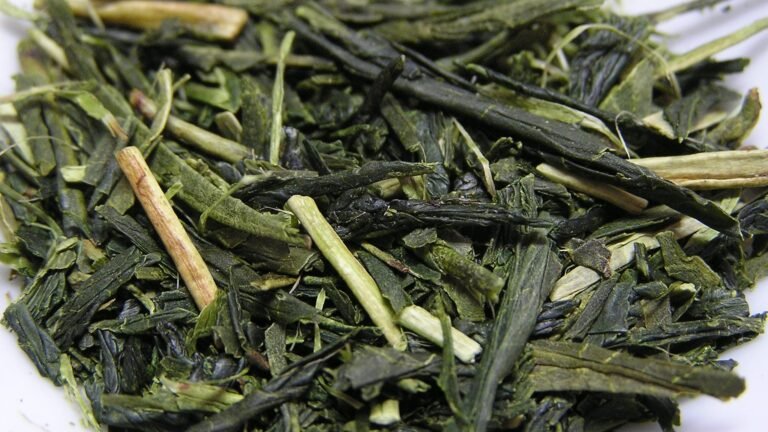
Is matcha green tea?
Yes. Japan sorts its teas by fermentation first, and matcha falls on the green side. The MAFF aff magazine: kinds of tea explains that green tea, oolong and black tea all come from the same kind of tea plant. Green tea is unfermented: makers heat the fresh leaves at the very first step, which stops the leaf enzymes and keeps the colour green. Oolong is stopped partway through fermentation, and black tea is fully fermented.
Matcha, sencha and hojicha all belong to the unfermented group. MAFF’s October 2026 tea report describes the "Japanese Tea" geographical indication (GI) the same way. It covers green, unfermented tea grown and processed in Japan, and it names sencha, gyokuro, matcha and kamairicha.
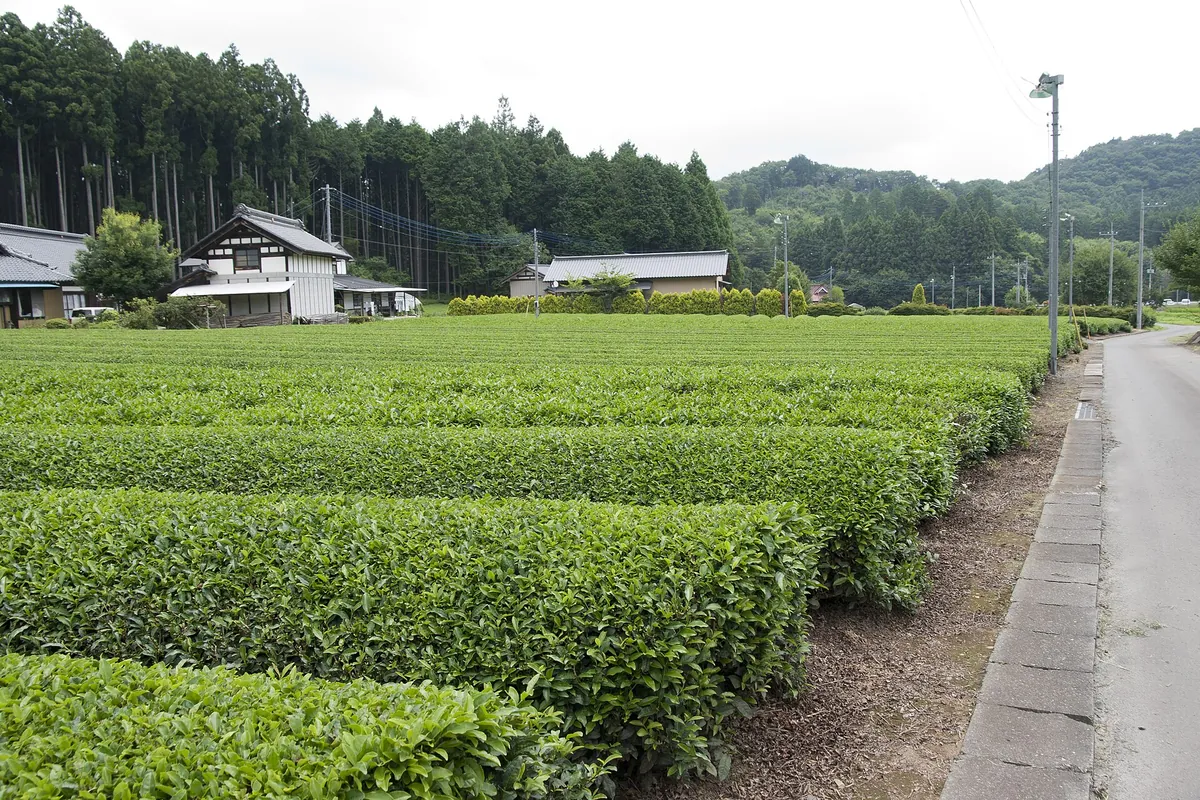
Labels in Japan follow two layers of rules. Japan’s food labelling law sets what every package must show. On top of that, the Japan Tea Central Council green tea labelling standard is a voluntary standard the tea industry set for itself. The council last revised it on 10 July 2026.
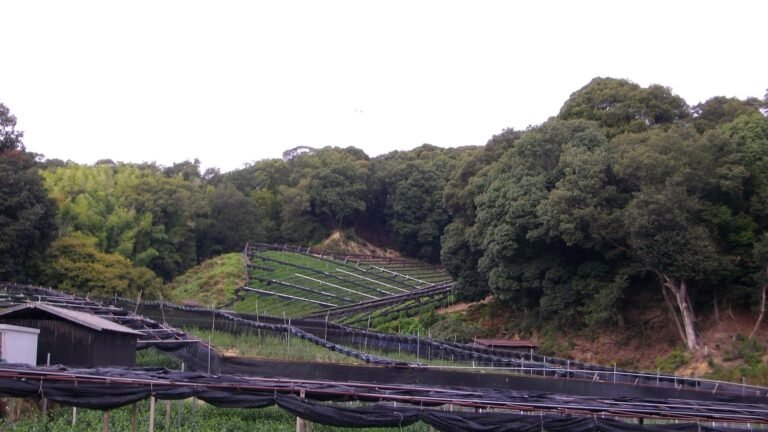
That standard defines matcha as tencha milled into a fine powder with a tea stone mill or an equivalent. Any grinding method counts as a tea mill if it works like a stone mill. Tencha itself must come from fields shaded for roughly two to three weeks. The leaves are steamed and then dried in a tencha oven without rolling.
Shade links three teas. Gyokuro, kabusecha and tencha are all shaded before picking, and MAFF groups the three together as ooicha, or shaded teas. Sencha and bancha are not shaded.
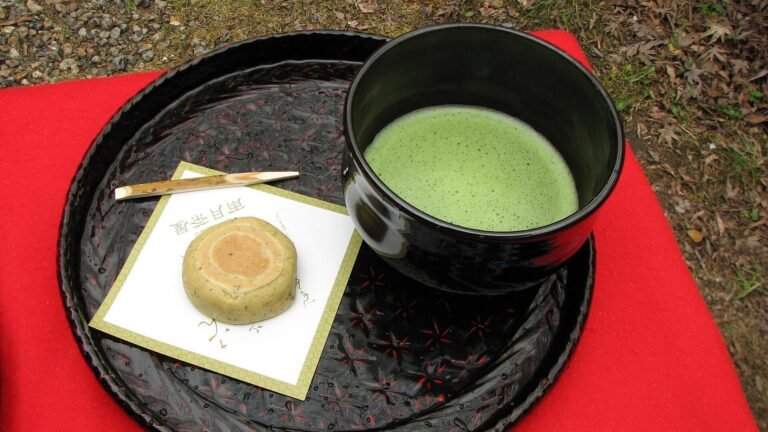
On packages in Japan, look for the kanji: 抹茶 (matcha), 煎茶 (sencha), 玉露 (gyokuro) and ほうじ茶 (hojicha). The bright green powder whisked at a tea ceremony is the same matcha, and our tea ceremony price list compares the experiences you can book.
MAFF’s aff magazine printed its guide to tea types in April 2022, and the Japanese page below comes from the PDF version. It covers kamairicha, Japanese black tea and oolong, which shows where green tea ends and fermented tea begins.
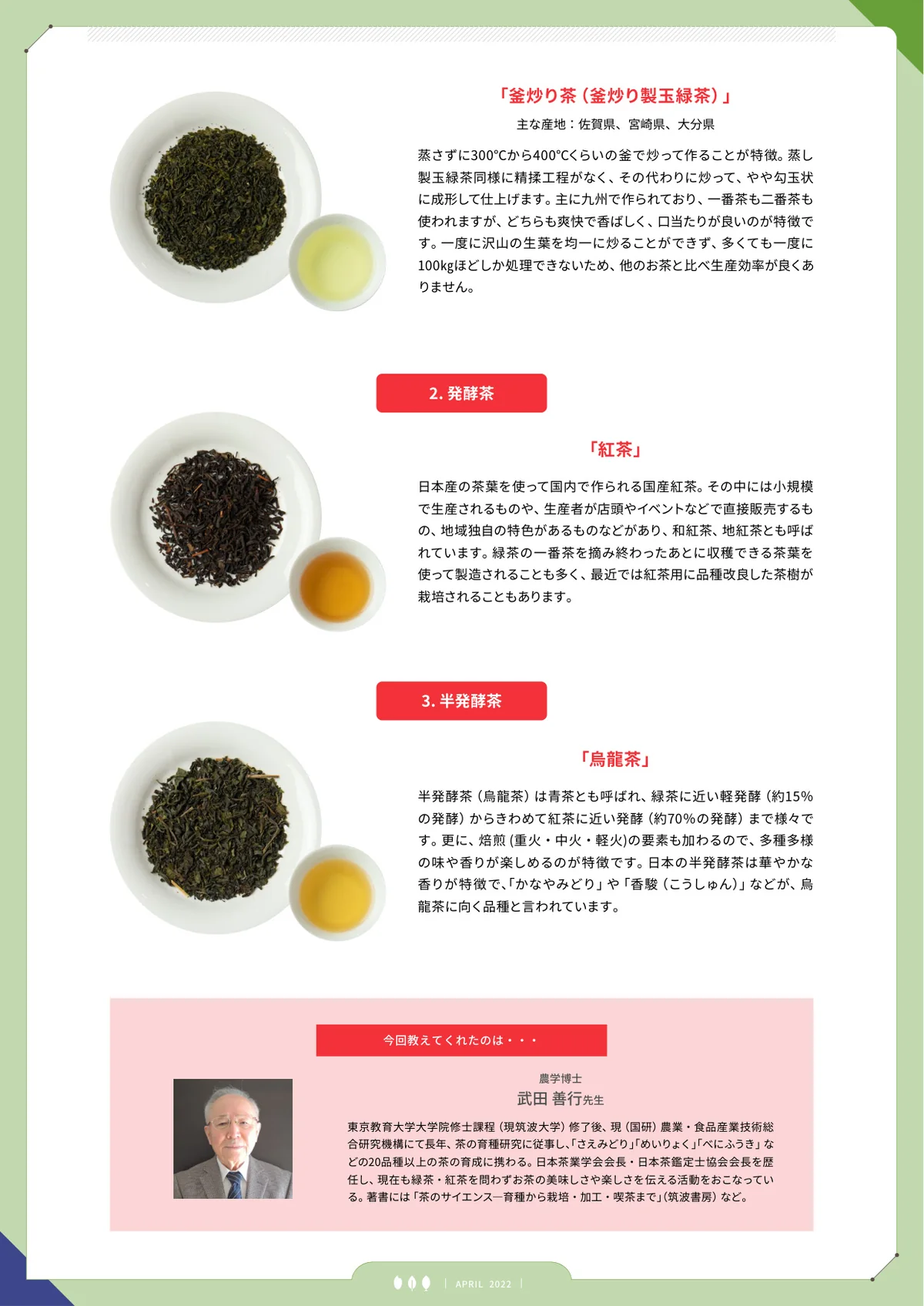
Kamairicha is the green tea on that page. Makers pan-fire the leaves at about 300°C to 400°C instead of steaming them, and one pan handles about 100 kg at most.
How matcha, sencha and hojicha are made
All three teas start as fresh leaves. Each one splits off at a single step: shade for matcha, rolling for sencha, roasting for hojicha.
Sencha is the base recipe. Makers steam the new leaves, roll them and dry them, and MAFF’s October 2026 report puts sencha at 48.1% of Japan’s crude tea output. The MAFF aff magazine: green tea, part 1 breaks it into three steps. Steaming stops fermentation, rolling runs through four stages, and hot air dries the leaves to about 5% moisture.
The dried leaf at that point is aracha, or crude tea. It goes through finishing before it reaches a shop. Deep-steamed sencha, called fukamushi, steams the fresh leaves two to three times longer than standard sencha.
| Tea | Shading | How it is processed | Share of crude tea |
|---|---|---|---|
| Sencha | None | Steamed, rolled, dried | 48.1% |
| Gyokuro | About 20 days | Made like sencha | 1.0% |
| Kabusecha | About 7 days | Made like sencha | 2.0% |
| Tencha (for matcha) | About two to three weeks | Steamed, dried in a tencha oven without rolling, then milled into matcha | 8.6% |
| Tamaryokucha | None | Made like sencha, final shaping skipped | 2.0% |
| Hojicha | None | Sencha or bancha roasted over strong heat | Roasted from sencha or bancha |
| Bancha | None | Hard or old leaves and stems, made like sencha | Leaves from between the main harvests |
The table above sets the shade time, processing and share of crude tea side by side. Gyokuro is shaded for about 20 days before picking, then made like sencha; it is 1.0% of output. Kabusecha gets about 7 days of shade and is also made like sencha, at 2.0%.
Tencha gets about two to three weeks of shade. After steaming, the leaves go into a tencha oven and dry without any rolling. Tencha makes up 8.6% of crude tea output, and milling it gives matcha.
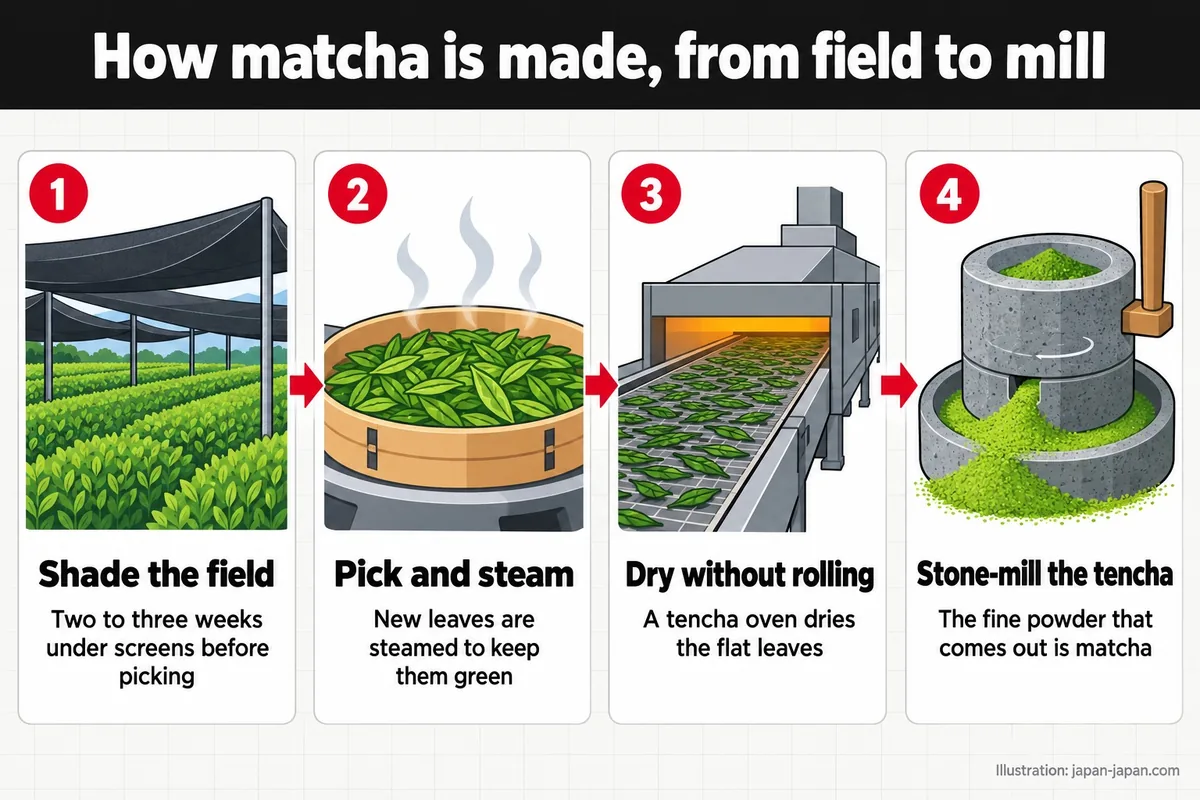
The drawing follows matcha in four steps, from the shaded field to the stone mill. Skipping the rolling step is the key difference from sencha, whose rolled leaves end up needle-shaped.
Hojicha takes a different path. It is sencha or bancha roasted over strong heat. Bancha uses leaves that have grown hard, old leaves and stems, or leaves picked between the main harvest seasons. Makers process bancha the same way as sencha.
The Marukyu Koyamaen guide to kinds of tea lists hojicha as roasted sencha, senryu and similar teas. The Uji tea house also explains that bancha is a group by use and grade, while hojicha is a group by the roasting step. Our Marukyu Koyamaen page lists its shops in Uji and Kyoto city.
Two more teas start from the same kind of leaf. Genmaicha is sencha, bancha or similar tea mixed with roasted rice. Tamaryokucha is steamed, rolled and dried like sencha but skips the final shaping step, so its leaves curl. It comes mainly from Saga, Nagasaki and Kumamoto and is 2.0% of output.
Caffeine in matcha, sencha and hojicha, by the numbers
Japan’s official caffeine figures come from the MEXT Standard Tables of Food Composition in Japan, 8th edition, 2023 supplement. Each entry gives caffeine per 100 g. The catch is that the tables measure three different forms: the powder itself, dry leaf and brewed infusion. Compare only the same form.
For powder and dry leaf, matcha powder (food number 16035) lists 3.2 g. Gyokuro leaf (16033) lists 3.5 g, sencha leaf (16036) 2.3 g and hojicha leaf (16063) 1.5 g.
For infusions, the tables also record how each tea was brewed. Sencha (16037) used 10 g of leaves in 430 mL of 90°C water for 1 minute and lists 0.02 g. Hojicha (16040) used 15 g in 650 mL of 90°C water for 0.5 minutes and also lists 0.02 g.
Bancha (16039), brewed the same way as hojicha, lists 0.01 g. Gyokuro (16034) used 10 g in only 60 mL of 60°C water for 2.5 minutes and lists 0.16 g.
| Food number | Food | Caffeine per 100 g | How it was brewed |
|---|---|---|---|
| 16035 | Matcha | 3.2 g | Powder itself |
| 16033 | Gyokuro | 3.5 g | Dry leaf |
| 16036 | Sencha | 2.3 g | Dry leaf |
| 16063 | Hojicha | 1.5 g | Dry leaf |
| 16034 | Gyokuro | 0.16 g | Infusion: 10 g, 60°C, 60 mL, 2.5 min |
| 16037 | Sencha | 0.02 g | Infusion: 10 g, 90°C, 430 mL, 1 min |
| 16040 | Hojicha | 0.02 g | Infusion: 15 g, 90°C, 650 mL, 0.5 min |
| 16039 | Bancha | 0.01 g | Infusion: 15 g, 90°C, 650 mL, 0.5 min |
The table puts all eight entries in one place, with the form and the brewing method for each. There is no matcha infusion row. You whisk the powder into water and drink all of it, so the powder row is the only matcha figure.
Roasting does not strip caffeine out in a predictable way. The Japan Tea Central Council tested 38 export hojicha samples in fiscal 2024. Roasting cut caffeine by only about 10% on average. The drop varied widely from sample to sample, and 7 samples had more caffeine after roasting.
The producers in that test roasted at 100°C to 335°C, for anywhere from 0.5 to 80 minutes.
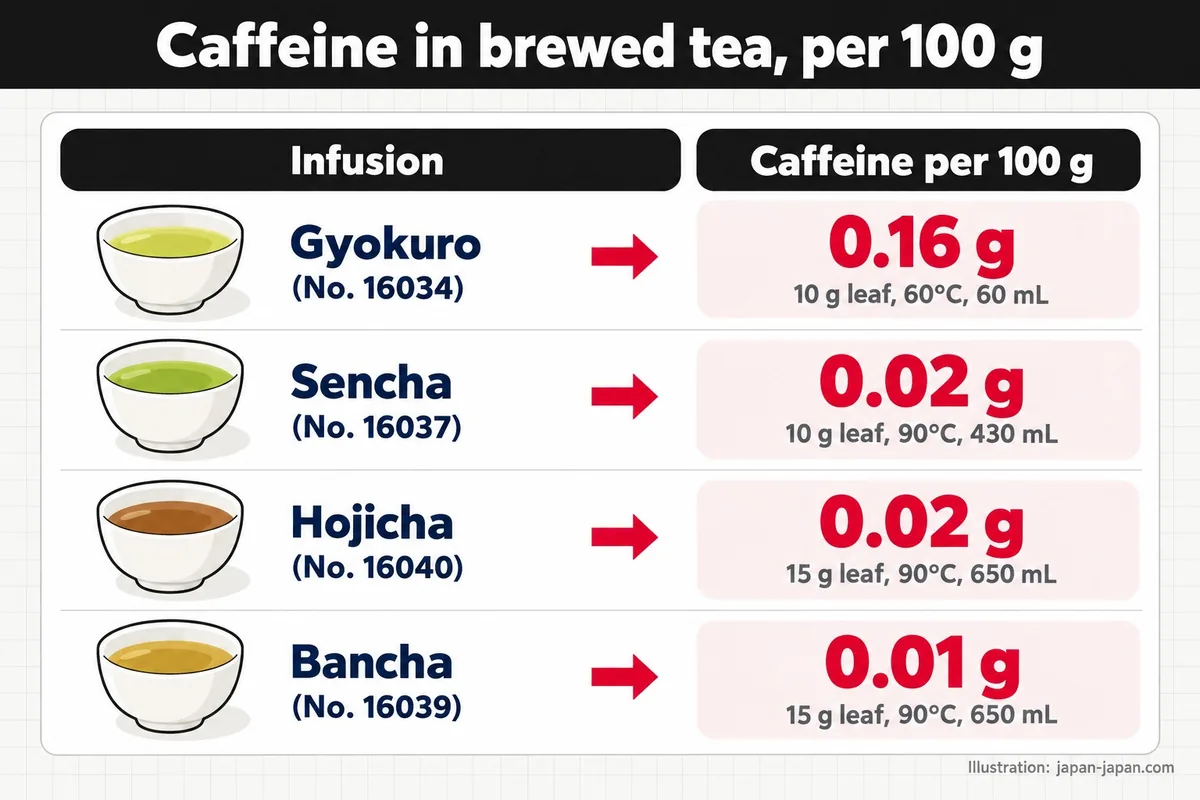
The chart lines up the four infusions only, so powder and leaf figures do not mix in. MAFF’s tea pages describe hojicha as low in caffeine. The leaf figures support that against sencha, 1.5 g versus 2.3 g, while the brewed figures tie at 0.02 g.
Matcha, powdered tea and konacha are different
Three green powders sit on shop shelves in Japan. They look alike in the bag, but the labelling standard gives each its own name and its own raw leaf.
Matcha is tencha milled into a fine powder with a tea stone mill or equivalent. Marukyu Koyamaen says it mills only the leaf flesh of tencha, after the stems and veins come out. MAFF also notes that tencha has its stems and leaf veins removed before it is finished.
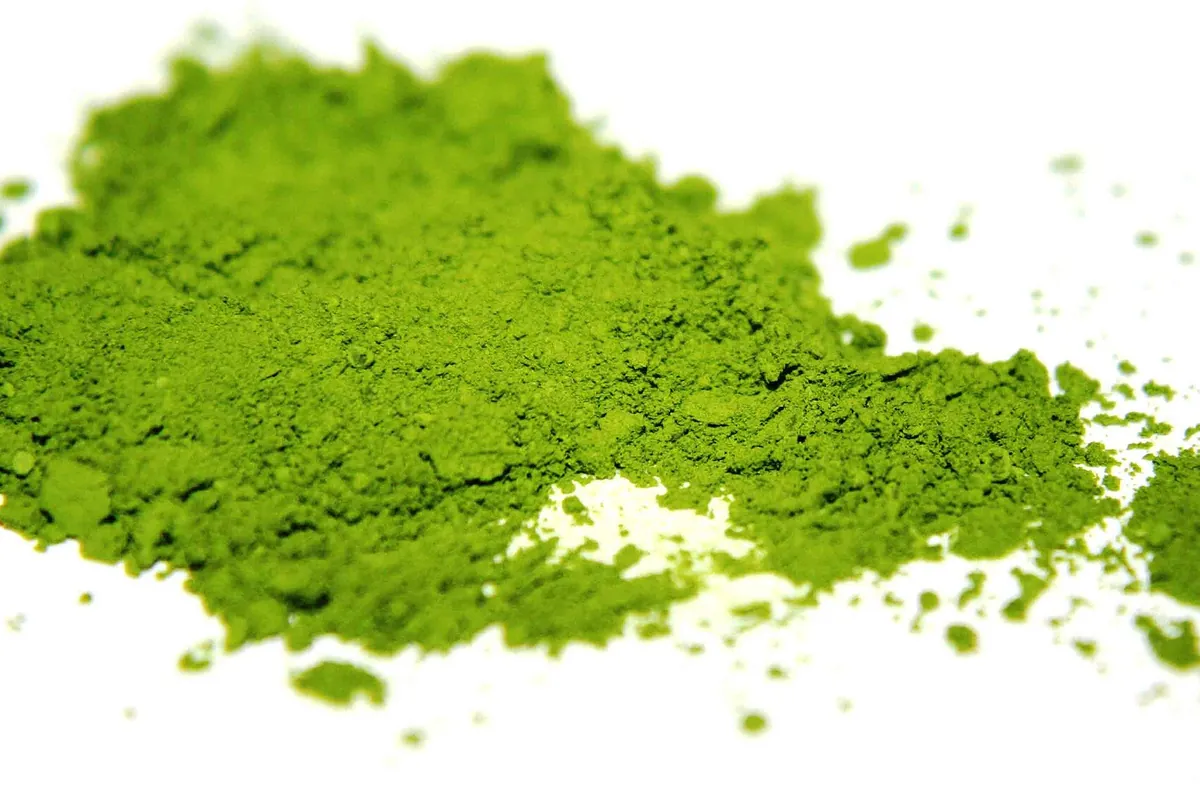
Funmatsucha (粉末茶, powdered tea) is tea pulverised with a grinder or similar machine. The MAFF aff magazine describes it as sencha finely powdered by machine. It is the agari tea served at sushi restaurants, and it dissolves in hot water without leaving used leaves. MAFF lists it separately from matcha.
Konacha (粉茶) is the fine siftings separated out when tea is finished. The standard says it includes coarse dust and cut leaves. Marukyu Koyamaen describes it as the near-powder left over from processing and refining. It is sifted out, not milled.
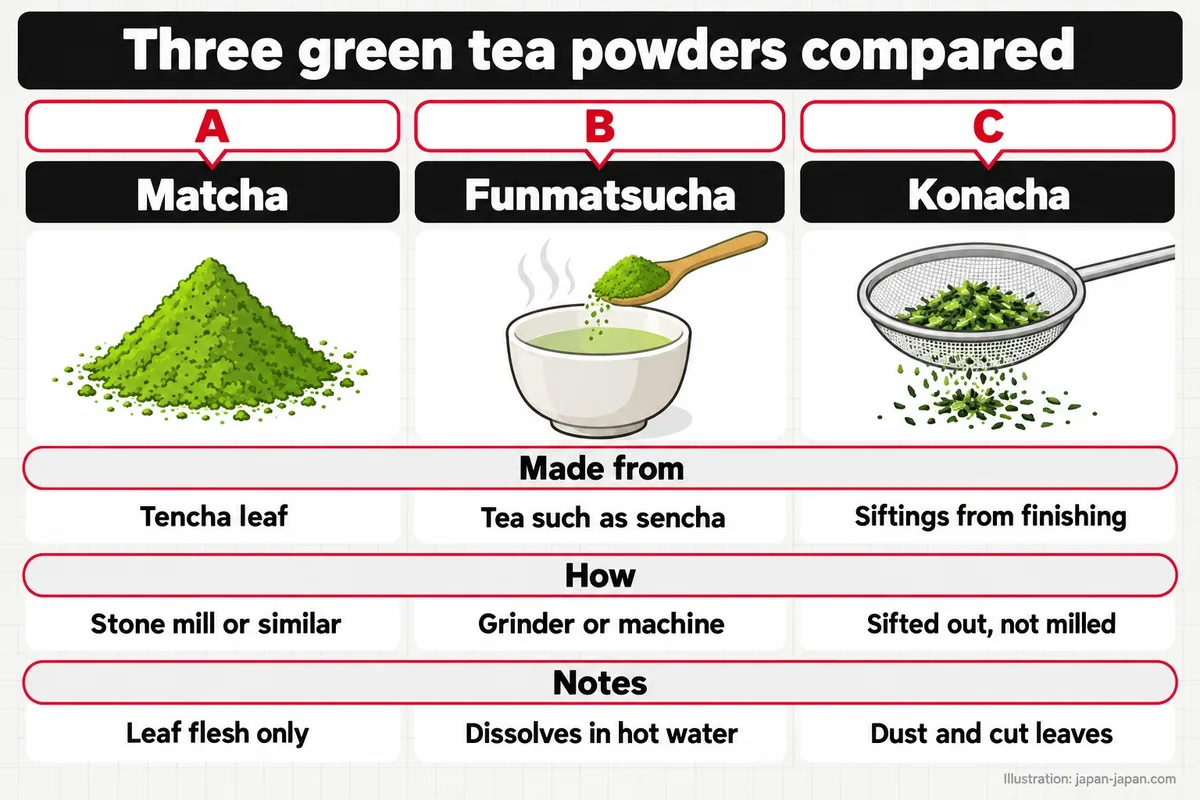
The drawing compares the three powders by raw leaf, method and where you meet them. The standard also mentions tencha for food processing, such as autumn tencha, which is used mainly as an ingredient. Our price counts below leave those cooking grades out.
Prices: matcha and hojicha in Japan
We counted the teas in our matcha shops database, which takes prices from the brands’ official online shops (checked 17 and 18 October 2026). Of its 155 products, 3 are hojicha, from 2 brands: Fukujuen and Kanbayashi Shunsho.
- Kanbayashi Shunsho, 雁ヶ音ほうじ茶 (Karigane Hojicha): 432 yen with tax
- Fukujuen, ほうじ茶 初かほる (Hatsukaoru), 100 g bag: 648 yen with tax, 6.5 yen per gram
- Fukujuen, Hatsukaoru tea bags, 2 g × 10: 486 yen with tax
In the same database, the 124 matcha at 15 brands, with cooking grades left out, have a median of 125.1 yen per gram. They range from 14.9 to 1,080 yen per gram, and our matcha price comparison lists them brand by brand.
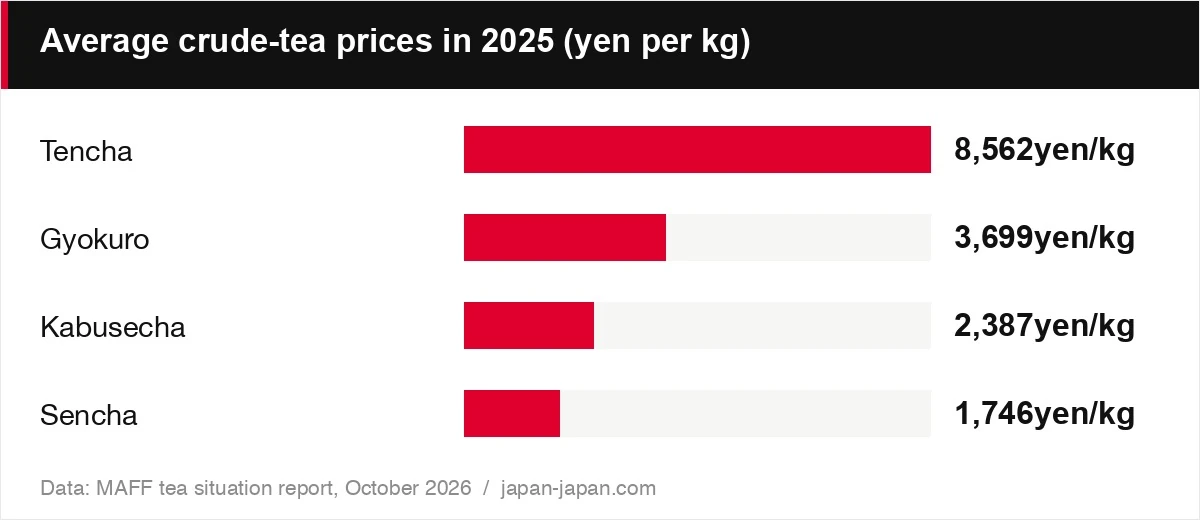
The gap starts before the tea reaches a shop. MAFF’s October 2026 report puts the average 2025 crude-tea price at 8,562 yen per kg for tencha and 1,746 yen per kg for sencha. Tencha sells for about 4.9 times the price of sencha. Gyokuro averaged 3,699 yen per kg and kabusecha 2,387 yen.
| Item | Value |
|---|---|
| Tencha | 8562 yen/kg |
| Gyokuro | 3699 yen/kg |
| Kabusecha | 2387 yen/kg |
| Sencha | 1746 yen/kg |
The bars show the four crude-tea prices on one scale, with tencha at the top. Gyokuro, shaded for about 20 days, comes second, and unshaded sencha comes last.
Hojicha prices are moving now. Fukujuen changes the prices of 14 items on 1 November 2026: gyokuro, sencha, kabusecha and hojicha, with no matcha on the list. Hatsukaoru 100 g goes from 648 to 1,188 yen, and the tea bags from 486 to 648 yen, both with tax. Our Fukujuen page has the brand’s shop at Kansai International Airport.
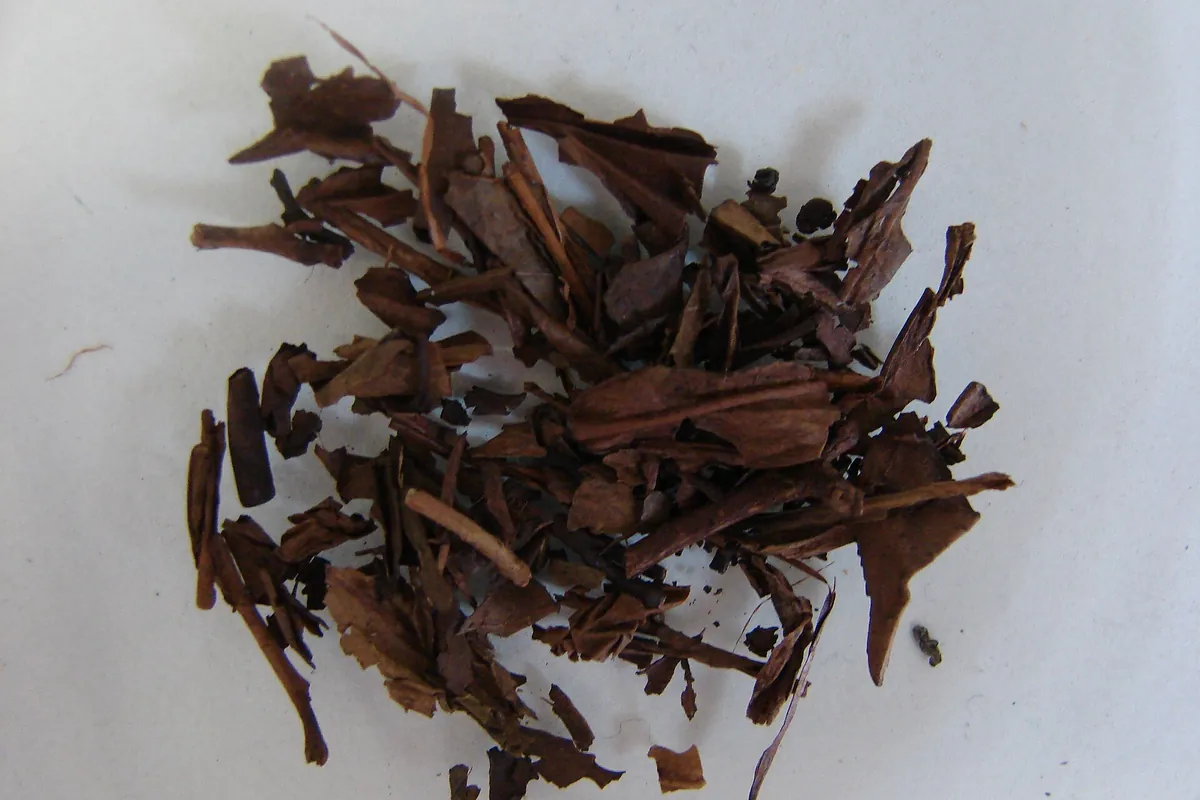
Ippodo Tea sells its roasted, brown-leaf teas under its bancha heading.
Ippodo Tea in Kyoto has limited sales of its bancha teas, such as hojicha and genmaicha, since February 2026. The Ippodo Tea notice on bancha sales limits gives the dates.
Shop prices in Japan include consumption tax, which is 8% for food and drink such as tea. Japan’s tax-free rules change on 1 November 2026; our guide to how much tax-free shopping returns explains the refund.
How to brew hojicha and sencha
The MAFF tea promotion page sorts teas by water temperature. For hojicha, it suggests 90°C to 100°C water for about 30 seconds to 1 minute. For sencha, it suggests 70°C to 80°C water for 30 seconds to 1 minute. Gyokuro takes cooler water, 50°C to 60°C, for 1 to 2 minutes.
The Ippodo Tea basic brewing for bancha teas gives one recipe for all its bancha teas, hojicha included. Use 10 g of leaves and 240 ml of water at 100°C, then pour off the tea 30 seconds after you start adding the water. For hojicha, 10 g is about 4 tablespoons; for genmaicha, about 2.
Ippodo groups its roasted bancha, the brown leaves, as Gokujo Hojicha, Kuki Hojicha and Iri Bancha. Kuki means stems, so Kuki Hojicha is a roasted stem tea.
The MAFF aff page on kinds of tea is shown below in Japanese.
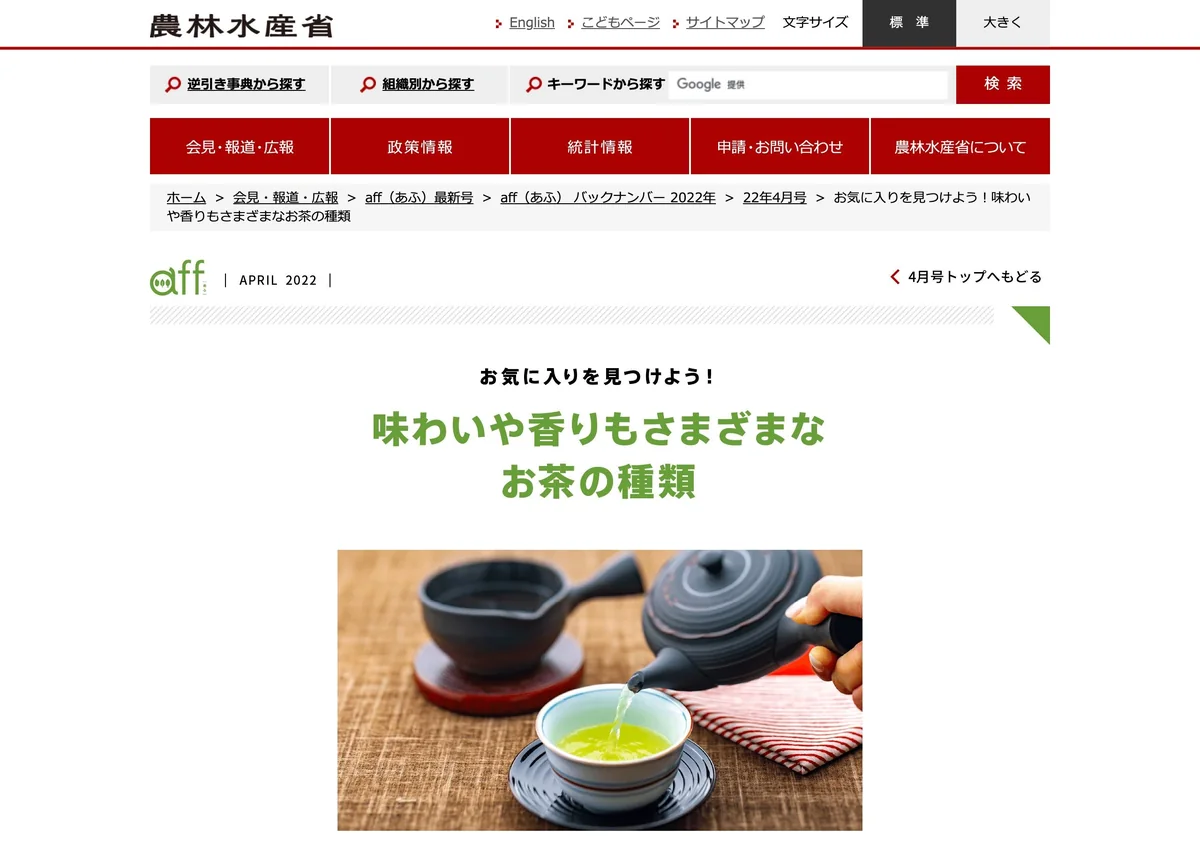
MAFF also suggests food pairings. It matches hot hojicha with rice balls, and it pairs hojicha with rich sauce dishes such as yakisoba, okonomiyaki and takoyaki. Cold sencha goes with spicy curry on the same page.
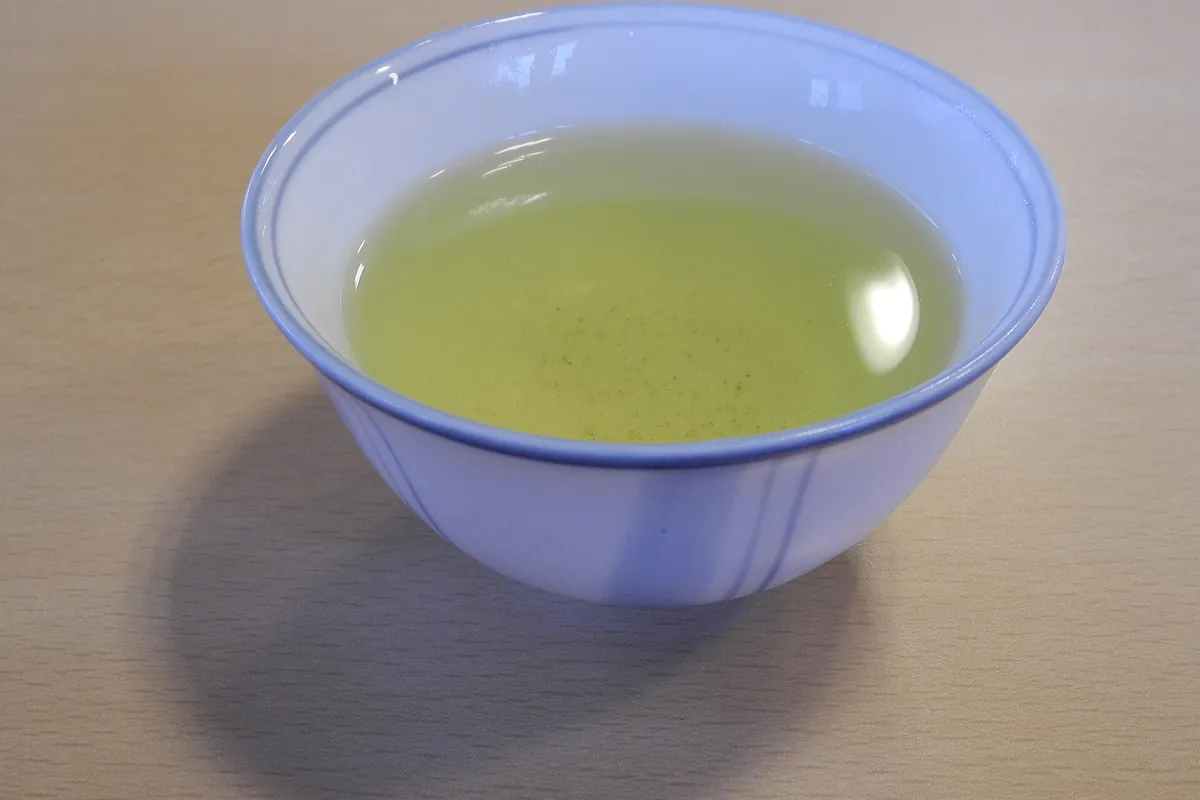
Matcha is different at the table: you whisk the powder rather than steep leaves.
Matcha vs green tea: FAQ
Is matcha green tea?
Yes. Matcha is a green tea, which in Japan means an unfermented tea. It is made from tencha, leaves shaded for about two to three weeks, dried without rolling and milled into a fine powder.
What is the difference between matcha and green tea?
Matcha is one kind of green tea, and sencha is the most common kind. Sencha leaves grow without shade and are rolled, while tencha for matcha is shaded and never rolled. You whisk matcha powder into water, but you steep sencha leaves and pour off the tea.
What is hojicha?
Hojicha is sencha or bancha roasted over strong heat, so the leaves and the tea are brown. MAFF suggests brewing it with 90°C to 100°C water for about 30 seconds to 1 minute.
Does hojicha have less caffeine than matcha?
Japan’s food tables list 1.5 g of caffeine per 100 g of hojicha leaf (16063) and 3.2 g per 100 g of matcha powder (16035). These are different forms, so they do not give a per-cup answer. Brewed hojicha (16040) lists 0.02 g per 100 g, the same as brewed sencha. In a test of 38 hojicha samples, roasting cut caffeine by only about 10% on average.
About the author