Where Is Matcha Grown in Japan? Kagoshima First, Then Kyoto
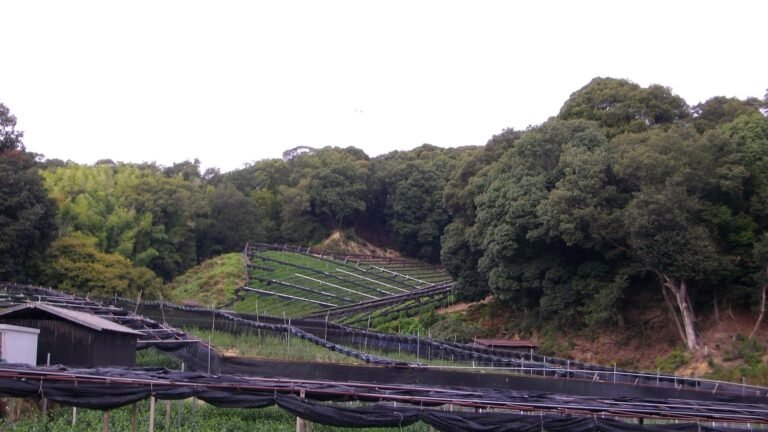
Kagoshima grows more tencha than any other prefecture. Shizuoka has the largest tea fields. Nishio in Aichi and Yame in Fukuoka are home to two matcha brands in our database.
The three outside brands in our matcha shops database are Nanaya from Shizuoka, Saijoen from Nishio and Hoshino Seichaen from Yame. The other 12 brands sit in Kyoto, Uji or Tokyo. This guide walks through the prefectures with the ministry’s own numbers, then shows what each matcha area sells and where you can visit.
Where tea is grown in Japan: prefectures in numbers
The MAFF tea page and October 2026 tea report ranks the main tea areas by planted area. The order is Shizuoka, Kagoshima, Mie, Kyoto and Fukuoka. The top three prefectures hold about 70 percent of Japan’s tea fields.
The big change is in output. In the 2024 and 2025 crops, Kagoshima produced the most crude tea in Japan for the first time since records began. Crude tea (aracha) is the first-stage dried leaf that factories later sort and finish.
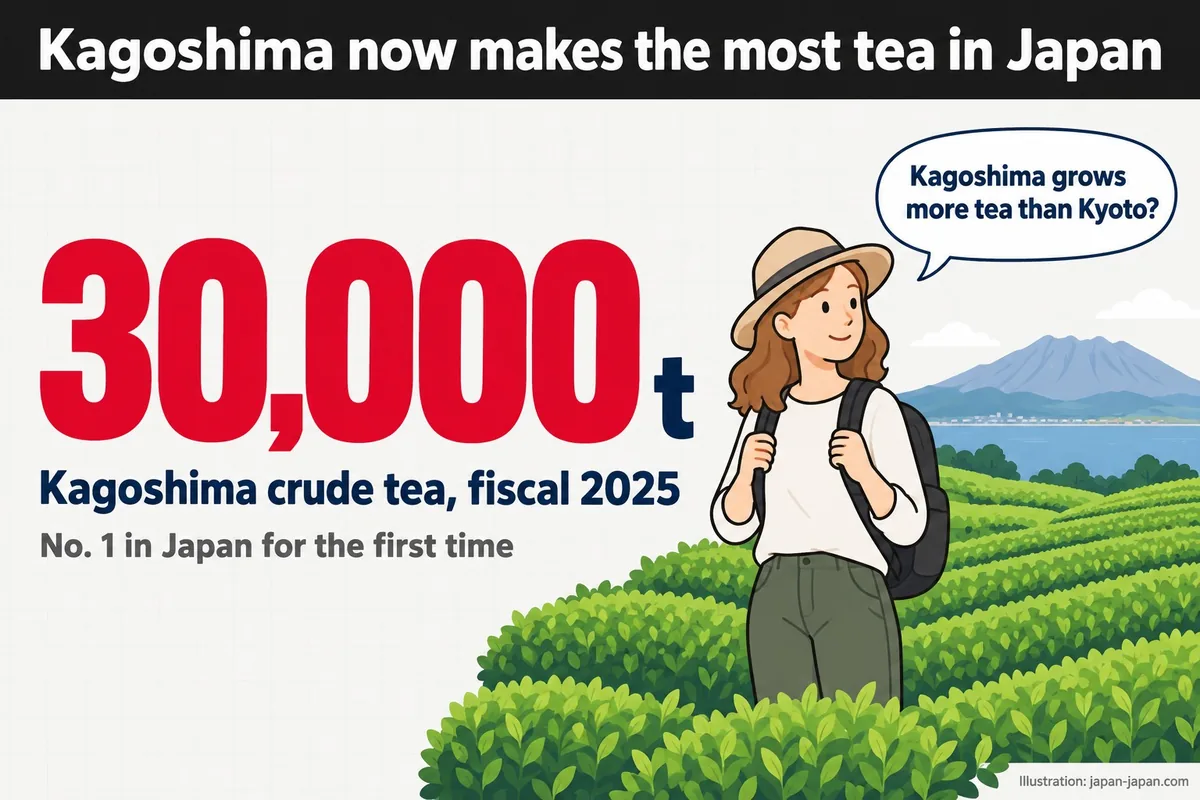
The illustration above shows the headline number: 30,000 t of crude tea from Kagoshima in fiscal 2025. Shizuoka still has more land under tea, at 11,600 ha against 8,040 ha.
The table below lists the eight prefectures the report names, plus Japan as a whole. The last column shows what the ministry says each area is known for.
| Prefecture | Tea fields (ha) | Crude tea (t) | What the ministry notes |
|---|---|---|---|
| Shizuoka | 11,600 | 24,100 | Mostly sencha; No. 3 for tencha |
| Kagoshima | 8,040 | 30,000 | No. 1 for crude tea and tencha |
| Mie | 2,580 | 4,860 | No. 1 for gyokuro and kabusecha |
| Kyoto | 1,510 | 2,280 | No. 2 for gyokuro and tencha |
| Fukuoka | 1,450 | 1,850 | No. 3 for gyokuro |
| Miyazaki | 1,110 | 2,880 | No. 1 for kamairicha |
| Kumamoto | 908 | 1,140 | No. 3 for tamaryokucha |
| Saitama | 690 | 921 | Mostly sencha |
| Japan total | 33,400 | 75,100 | Top three hold about 70% of fields |
Japan as a whole had 33,400 ha of tea and made 75,100 t of crude tea in fiscal 2025. Kyoto, the home of Uji, had 1,510 ha and 2,280 t, smaller than Mie and Miyazaki in output.
Each area leans toward one style. Shizuoka mainly makes sencha, especially deep-steamed (fukamushi) sencha. Mie is first in Japan for gyokuro and kabusecha. Fukuoka is third for gyokuro. Miyazaki is first for kamairicha, a pan-fired tea. Kumamoto is third for tamaryokucha, a curled green tea that makes up 2.0 percent of output. Saitama makes mostly sencha.
Tencha, the leaf for matcha: Kagoshima, Kyoto and Shizuoka
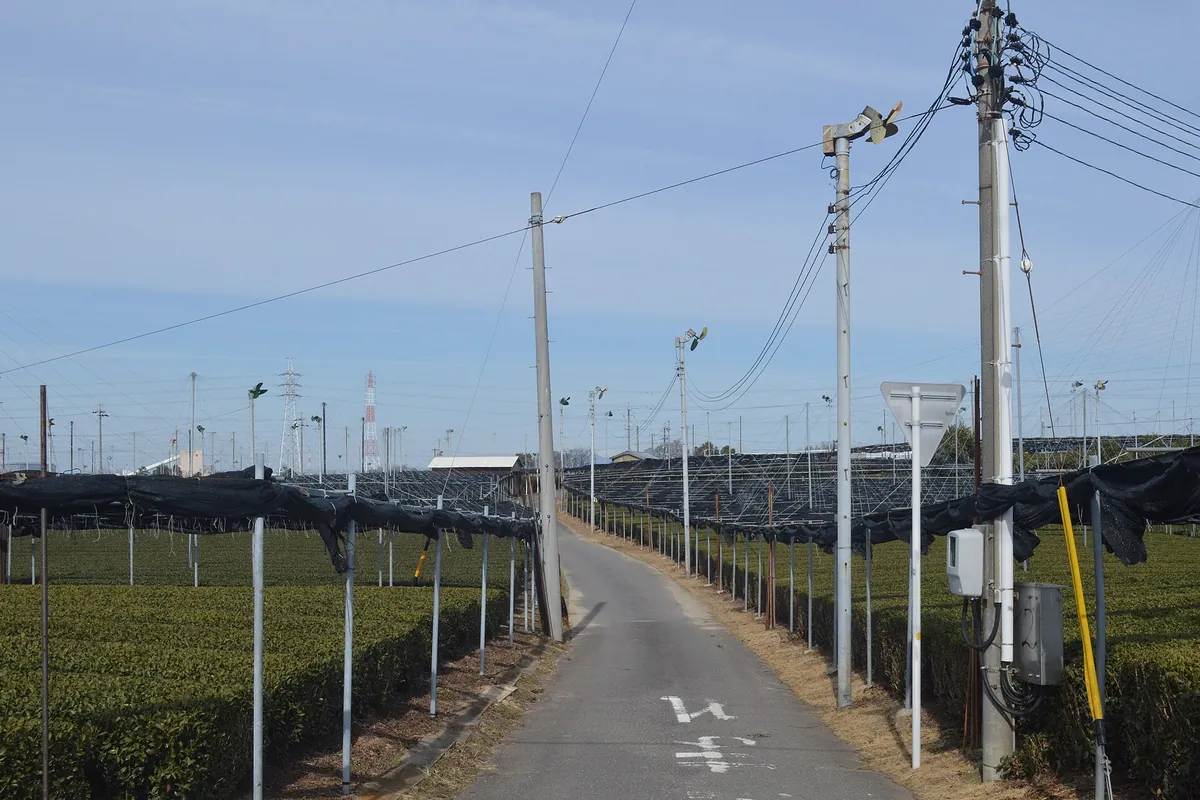
Matcha starts as tencha. Farmers shade the tea fields with reed screens, straw mats or cloth for about two to three weeks before picking. The shaded leaves are made into tencha, and a stone mill or similar grinds tencha into the fine powder sold as matcha.
The ministry names three main tencha areas: Kagoshima, Kyoto and Shizuoka. Kagoshima is No. 1 for tencha. Kyoto is No. 2 for both gyokuro and tencha. Shizuoka is No. 3 for tencha and kabusecha.
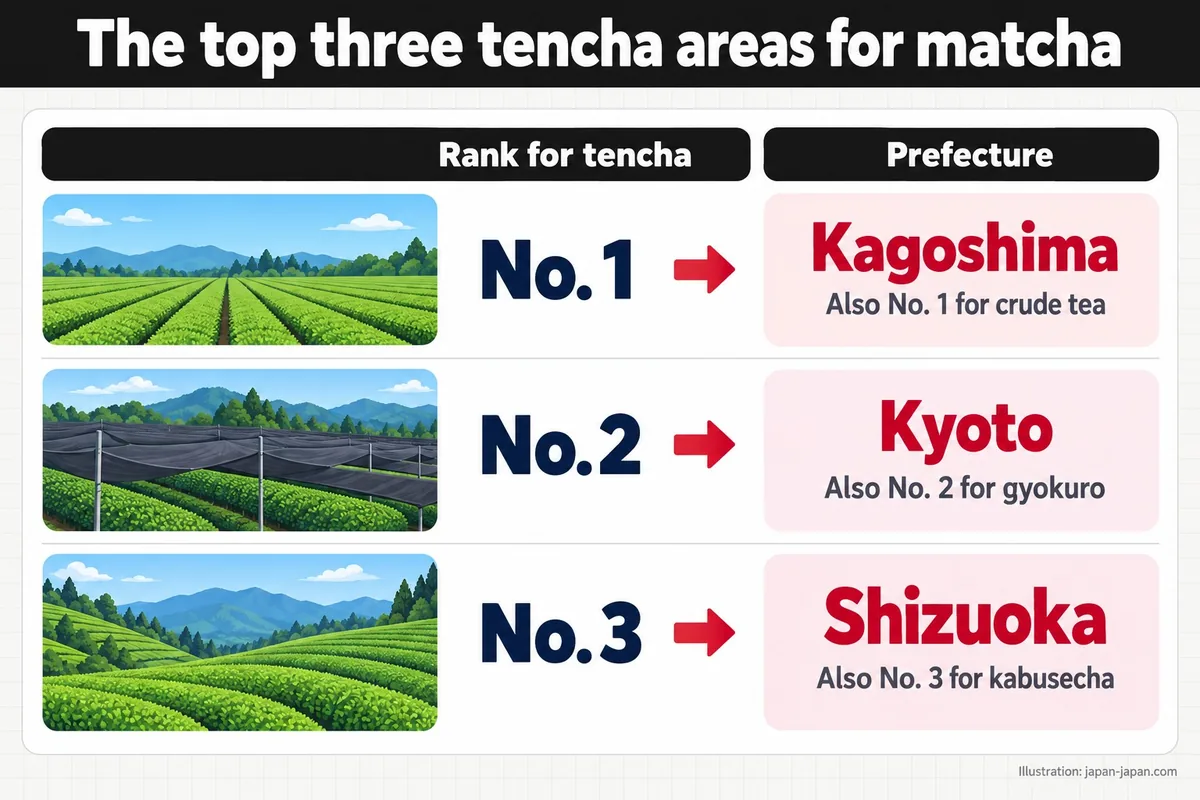
The lookup chart above puts the three in order. Tencha output reached 6,278 t in 2025, according to a chart label in the report that uses data from the national tea producers’ federation. That is about 3.2 times the 2014 level. Even so, tencha is only 8.6 percent of Japan’s crude tea output.
The flow below shows the steps from field to powder, using the ministry report and the Saijoen museum’s own description.
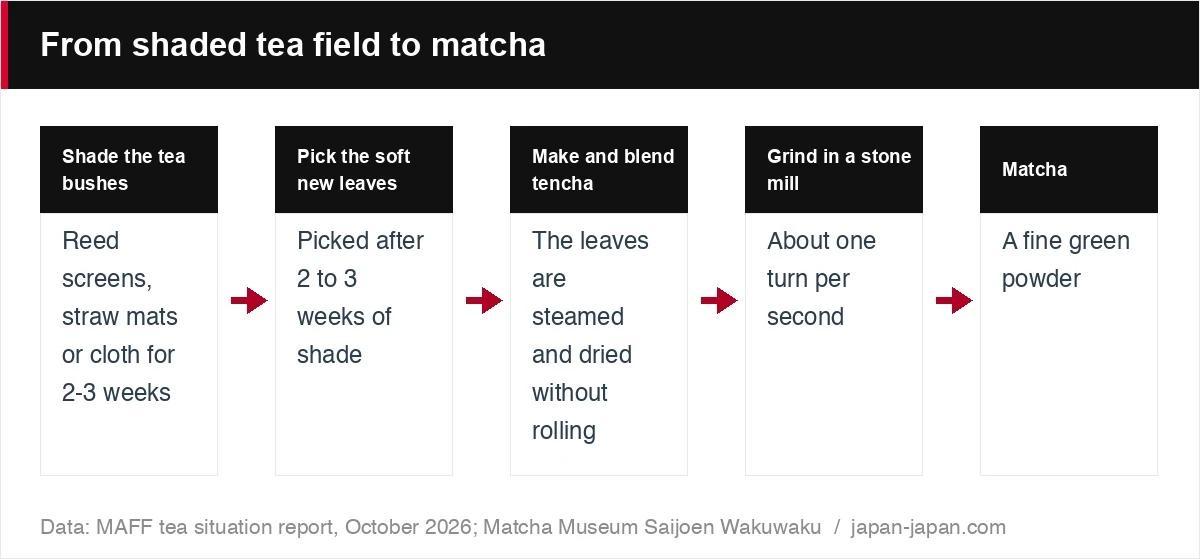
The Matcha Museum Saijoen Wakuwaku official page says that in early April, the Nishio tencha fields are covered with a shade cloth called kanreisha.
Some tea houses now limit online orders. Our article on why there is a matcha shortage counts 6 of 15 brands that do.
Kagoshima matcha: Japan’s top tea producer
Kagoshima made 30,000 t of crude tea in fiscal 2025 and is No. 1 for tencha, the ministry says.
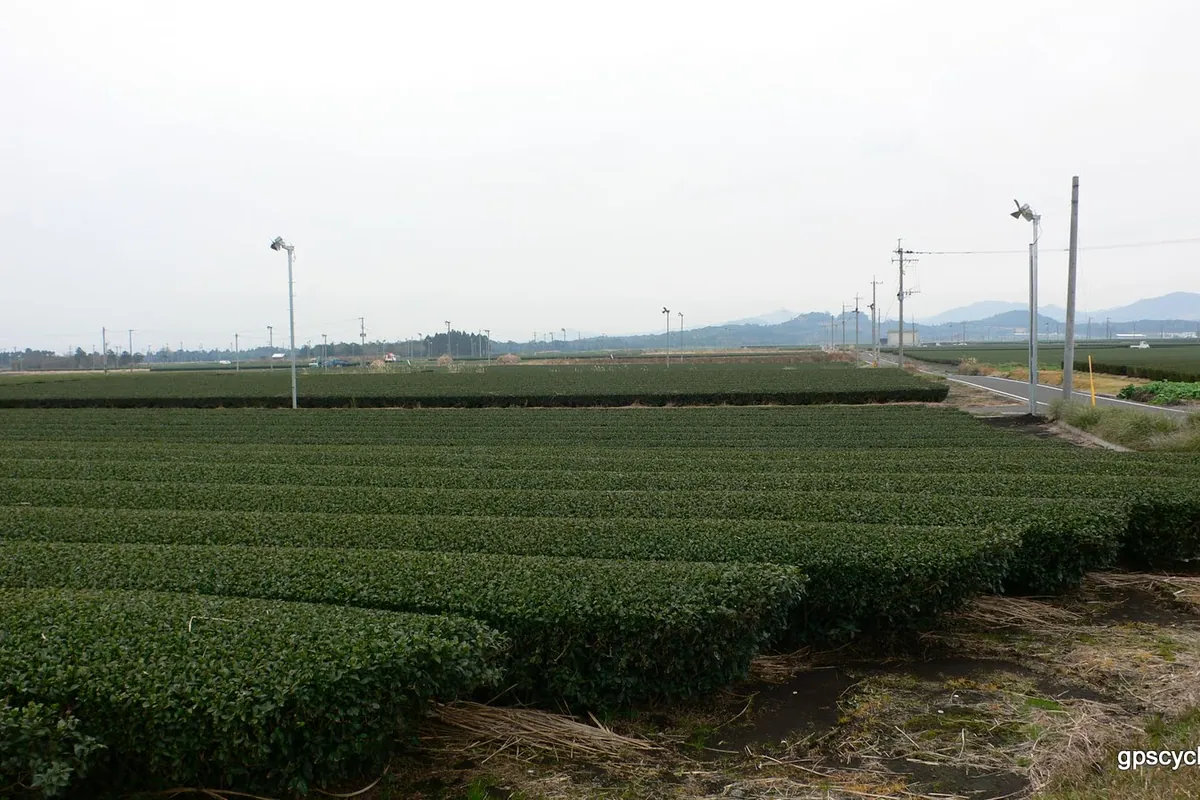
You can buy matcha labelled by origin. The Uji tea company Morihan sells three 30 g tins named after where the leaf comes from. The Morihan official shop single-origin 30 g tins page lists them side by side.
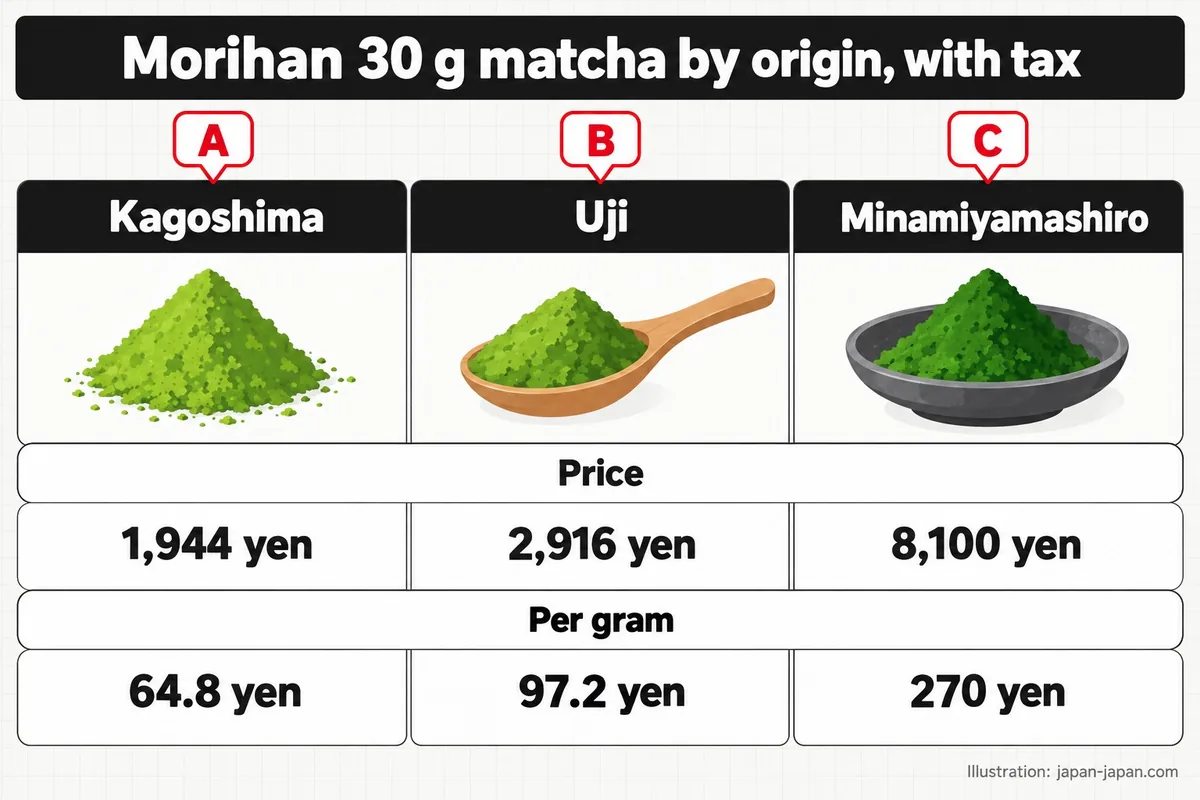
The comparison above uses the shop’s prices with tax. The Kagoshima tin costs 1,944 yen, or 64.8 yen per gram. The Uji tin costs 2,916 yen, or 97.2 yen per gram. The Kyoto Minamiyamashiro tin costs 8,100 yen, or 270 yen per gram.
This is one company’s line-up, not a rule for every shop.
Prices you see in Japanese shops include 8% consumption tax on food such as tea. Look for the label 税込 (zeikomi), which means “tax included”. Morihan prints it next to every price.
Leaf prices rose in 2026. The ministry reports that first-flush tea traded at about twice the previous year’s price in Kagoshima and about 70% higher in Shizuoka. Our matcha price guide for Japan tracks a median of 125.1 yen per gram across 124 matcha at 15 brands.
Shizuoka matcha and the tea museum
Shizuoka has the most tea fields in Japan, at 11,600 ha, and made 24,100 t of crude tea in fiscal 2025. Most of it becomes sencha, especially deep-steamed sencha. Shizuoka is also No. 3 for tencha.
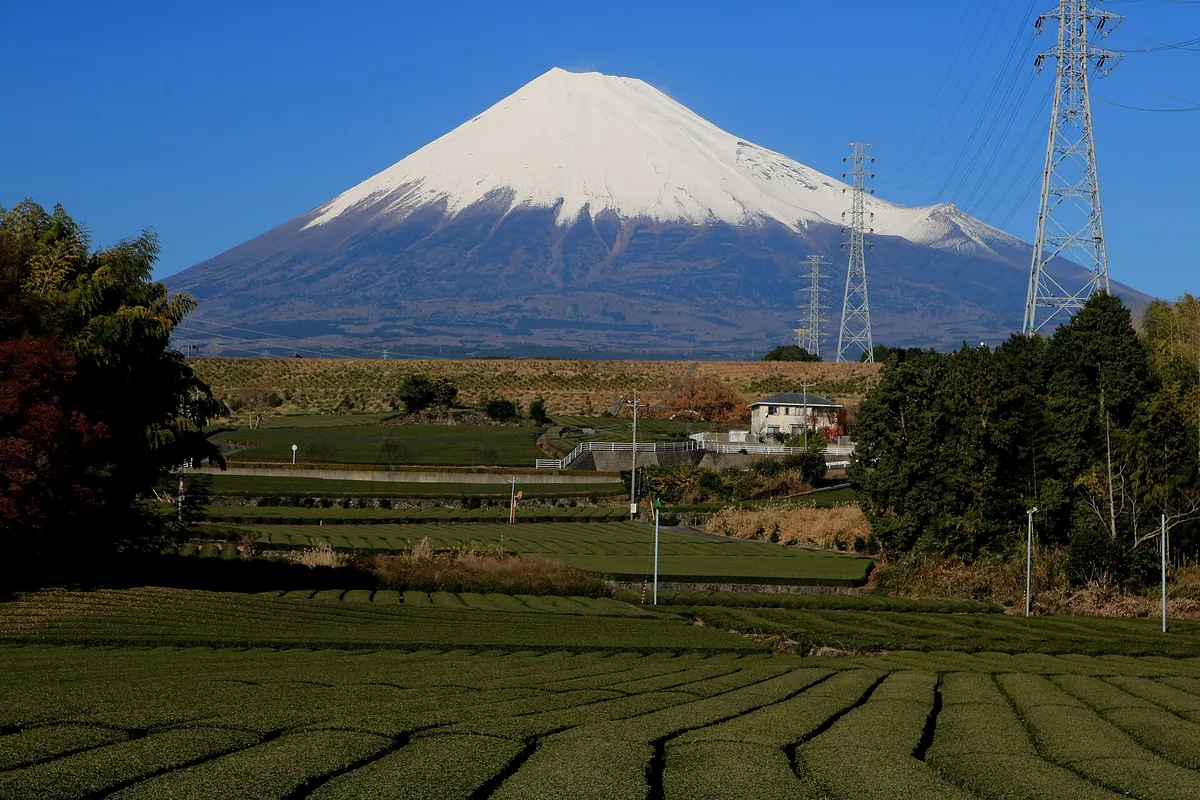
The Shizuoka brand in our database is Nanaya, run by the tea company Marushichi Seicha. The Nanaya (Marushichi Seicha) official site lists shops in Fujieda, Shizuoka, Makinohara, Aoyama in Tokyo and Kyoto Sanjo.
We counted 5 Nanaya matcha with sizes, from 21.6 to 108 yen per gram, with a median of 65 yen. Prices with tax run from 864 yen for the 40 g Rakuraku matcha to 2,160 yen for 20 g of 新舟の風. Asahina-no-yuki costs 1,620 yen for 20 g.
To see how tea is made, visit the Fujinokuni Cha no Miyako Museum, a prefectural tea museum in Shimada city. The Fujinokuni Chanomiyako Museum tea ceremony experience page sets out the details.
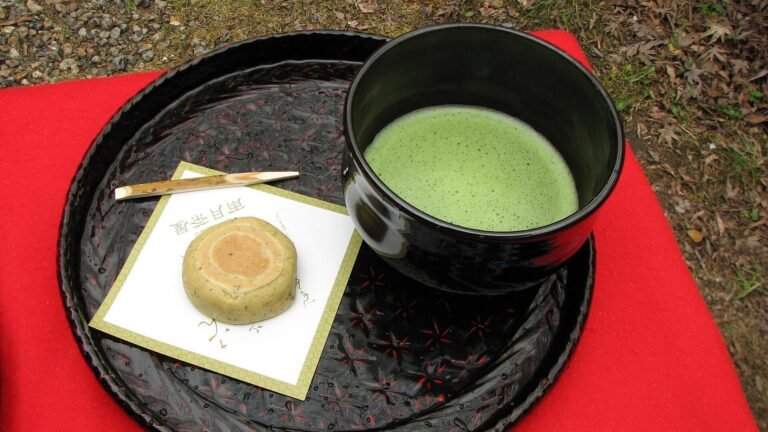
- Tea ceremony: 700 yen, plus a separate 500 yen museum ticket. A teacher serves matcha and a seasonal sweet in the tea room, and you can whisk your own bowl if you ask.
- Length: about 20 minutes. Sittings start every 20 minutes from 9:30 to 15:30, with a break at midday, and each takes up to 16 people.
- Grinding matcha: 300 yen plus the 500 yen ticket. You grind tencha with a stone mill for about 20 minutes and take the matcha home. Each session takes up to six people.
- Payment: the experience fee is cash only.
Sign up at the tea room entrance, take the booking card, then buy the experience ticket from the machine. For more places that serve matcha, see our tea ceremony price list, sorted by cost per 45 minutes.
Nishio matcha in Aichi: Saijoen
Nishio matcha comes from Nishio, a city in Aichi Prefecture. The tea company Aiya runs the Saijoen brand there. The Aiya corporate site says the company was founded in 1888 and has its head office in Nishio. The corporate site has an English version, but the Saijoen shop is in Japanese.
Saijoen’s online list has 12 matcha. It marks 8 as usucha (薄茶, thin tea) and 3 as koicha (濃茶, thick tea). The Sui usucha comes in a 20 g can for 2,376 yen including tax. That is 118.8 yen per gram, the only Saijoen matcha with its size on the page.
Online sales have rules. From 8 July 2026, Saijoen limits 3 matcha to 1 item per checkout. Prices of all its matcha changed for orders from 1 August 2026.
Nishio also has a matcha museum. At Matcha Museum Saijoen Wakuwaku you watch stone mills grind matcha in the factory. Saijoen says more than 1,000 mills turn around the clock and make about 1 tonne of matcha a day.
- The course: 75 minutes for 1-6 people, 2,500 yen. You watch the mills, blend tencha and grind your own matcha.
- The trick: turn the stone mill at about one turn per second, the museum says.
- Times: starts at 10:00, 13:00 and 15:00, by booking only. Children of elementary school age and up can join since 1 March 2026.
- Booking from abroad: call the museum, because visitors from abroad should book by phone and not on the web.
- Getting there: about 7 minutes by taxi from Meitetsu Nishio Station, or about 20 minutes by taxi from Mikawa-Anjo Station on the Tokaido Shinkansen.
The museum also serves usucha with matcha sweets. Saijoen runs a matcha cafe at its Nishio main shop.
Yame matcha in Fukuoka: Hoshino Seichaen
Yame matcha comes from Yame in Fukuoka Prefecture. Fukuoka had 1,450 ha of tea and made 1,850 t of crude tea in fiscal 2025. The prefecture is third in Japan for gyokuro, and Yame Dento Hon Gyokuro is a protected GI name.
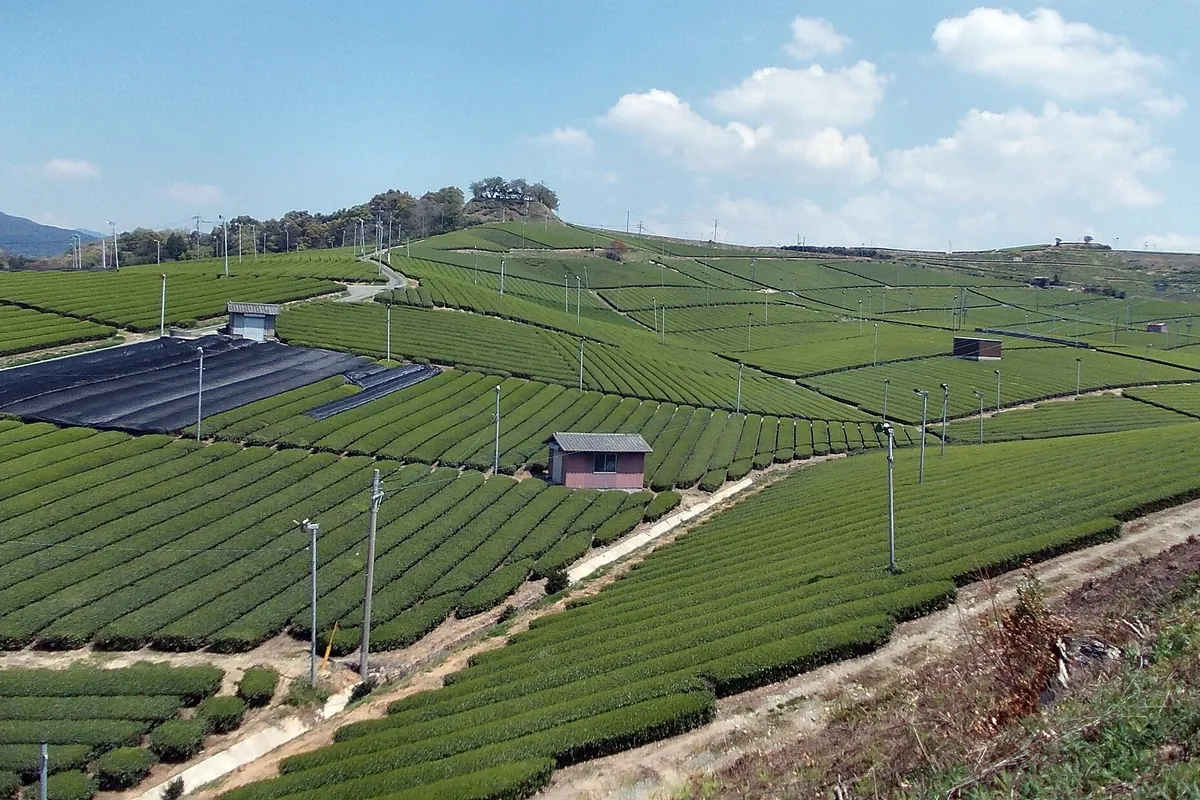
The Yame brand in our database is Hoshino Seichaen, based in Hoshino village, Yame city. The Hoshino Seichaen official shop matcha list shows 12 matcha. On 17 October 2026, all 12 were marked SOLD OUT.
We counted 8 matcha with sizes, from 54 to 216 yen per gram, with a median of 97.2 yen. The cheapest is Yame-no-hana at 1,080 yen for a 20 g bag. Houju costs 4,320 yen for a 20 g can. Hoshino Seichaen does not say whether these prices include tax, so we show them as listed.
The Hoshino Seichaen official site, Yame posts several notices for buyers:
- Prices: revised, mainly for matcha, since July 2026.
- Autumn tea: a notice dated 1 October 2026 announced its autumn new tea. The leaf was picked from April to early May and stored frozen until autumn.
- Shipping: it ships only within Japan and refuses forwarding services, and it says so in English.
- Matcha questions: by phone only, from a notice of April 2026.
Hoshino Seichaen’s shop in Hoshino village opens 9:00 to 17:00.
Uji matcha made in China and the Japanese Tea GI
The ministry report adds a warning for buyers. It notes that Chinese-made tea sold as “Uji matcha” is in circulation. That is one reason Japan created a new geographical indication (GI) for its tea.
“Japanese Tea” was registered as a GI on 10 July 2026. It covers green tea grown and processed in Japan, including sencha, gyokuro, matcha and kamairicha. Before that, two tea names had GI status: Fukamushi Kikugawa-cha and Yame Dento Hon Gyokuro.
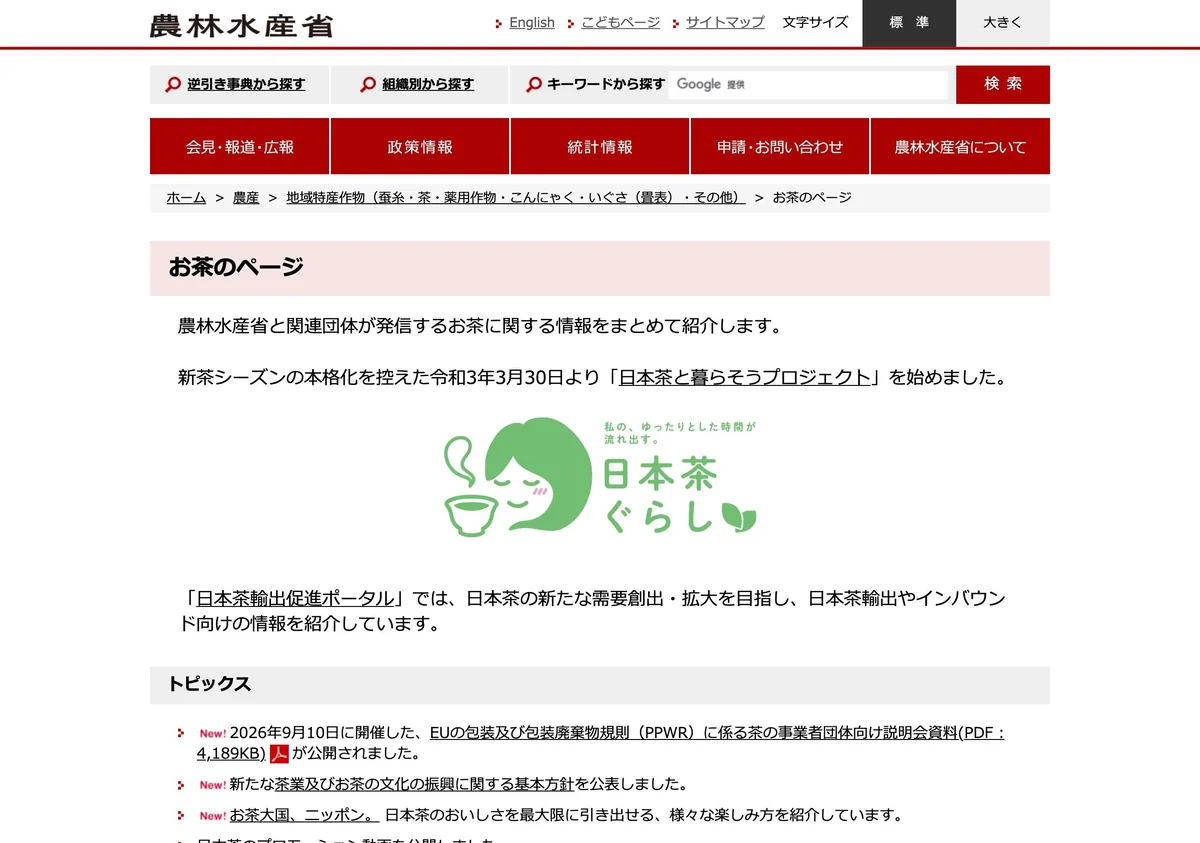
The screenshot shows the top of the ministry’s tea page, お茶のページ (ocha no pēji, “tea page”), in Japanese. The October 2026 tea situation report with the prefecture numbers is linked from this page.
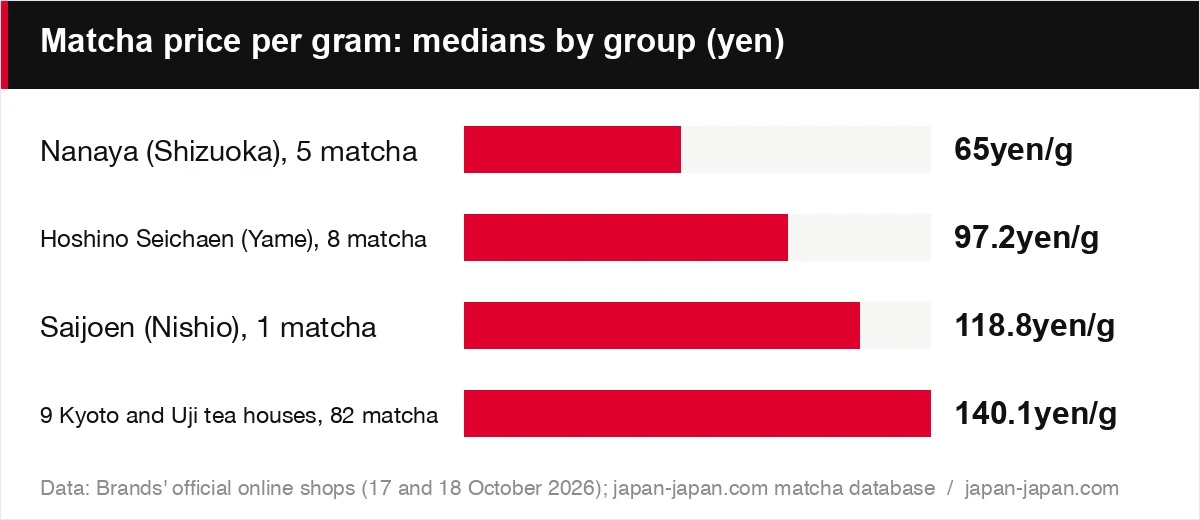
In our counts, the 82 matcha with sizes from 9 Kyoto and Uji tea houses have a median of 140.1 yen per gram. The chart below sets that against the Shizuoka, Nishio and Yame brands.
| Item | Value | Note |
|---|---|---|
| Nanaya (Shizuoka), 5 matcha | 65 yen/g | With tax |
| Hoshino Seichaen (Yame), 8 matcha | 97.2 yen/g | Tax not stated |
| Saijoen (Nishio), 1 matcha | 118.8 yen/g | With tax |
| 9 Kyoto and Uji tea houses, 82 matcha | 140.1 yen/g | Median |
The chart compares price only. We do not rank taste, and grade, size and blend all move the number. Hoshino Seichaen’s figure is the price as listed, since the shop does not state tax.
Uji is 17 minutes and 240 yen from Kyoto Station on the JR line from Kyoto to Uji. Our Uji matcha day trip guide lists the shops near the station, and tea ceremony prices in Uji covers the tea rooms. For a single brand, see Ippodo Tea’s prices and shops.
Visitors can also shop tax-free at registered stores. See our tax-free shopping guide and the page on what you can buy tax-free. Japan’s tax-free rules change on 1 November 2026.
FAQ
Where is matcha grown in Japan?
Kagoshima, Kyoto and Shizuoka are the three main tencha areas in the farm ministry’s October 2026 report. Smaller matcha towns include Nishio in Aichi and Yame in Fukuoka. Uji is in Kyoto Prefecture.
Which prefecture grows the most tencha for matcha?
Kagoshima. The ministry ranks it No. 1 for tencha, ahead of Kyoto and Shizuoka. Kagoshima also made the most crude tea in Japan in fiscal 2025, at 30,000 t.
Can I visit a matcha region besides Uji?
Yes. In Nishio, Matcha Museum Saijoen Wakuwaku runs a 75-minute course for 2,500 yen where you grind your own matcha. In Shizuoka, the Fujinokuni Cha no Miyako Museum offers stone-mill grinding for 300 yen plus a 500 yen ticket.
What is the Japanese Tea GI mark?
It is a geographical indication registered on 10 July 2026 for green tea grown and processed in Japan. It covers sencha, gyokuro, matcha and kamairicha. The ministry gives Chinese-made tea sold as “Uji matcha” as one reason for it.
About the author