How to Reserve Seats With a JR Pass: Free Except Nozomi
The Japan Rail Pass official seat reservation guide states the rule in one line: there is no additional charge for making seat reservations. The hours above are the longest any office or machine keeps, and each station sets its own. Unmanned stations cannot issue seat tickets, so book at a larger station before you head into the countryside.
The pass comes in two types, Green Car and Standard Car. Each one runs for 7, 14 or 21 days, according to the Japan Rail Pass official About the pass page.
Our Japan Rail Pass guide lists what it covers: all JR Group trains, Shinkansen included, except the Nozomi and Mizuho. That takes in 63 of our city-to-city routes.
Three ways to book a reserved seat
JR gives pass holders three ways to get a seat ticket. Which ones you can use depends on where you bought the pass and whether it is already in your hand. The table compares them side by side.
| Method | Who can use it | What you need | Hours and changes |
|---|---|---|---|
| Online (JAPAN RAIL PASS Reservation) | Only passes bought on the official website | Your booking; pick up the seat ticket at a JR station | Book before pickup; changes after printing at a ticket window |
| Reserved seat ticket machine | All pass holders, after pickup | QR code or reservation number on the pass, passport number | 4:00 a.m. to 11:30 p.m. at most; no changes after printing |
| Ticket office or Travel Service Center | All pass holders, after pickup | Your JAPAN RAIL PASS | 4:00 a.m. to 11:30 p.m. at most; changes and cancellations here |
The first way is online. Bought your pass on the official website, JAPAN RAIL PASS Reservation?
Then you can book seats on the same site before you pick up the pass. Everyone else books in Japan, after exchanging or collecting the pass.
The second way is a reserved seat ticket machine at a JR station. You scan the QR code on your pass, type your passport number and pick a train.
It skips the queue at the counter. Some JR stations do not have these machines.
The third way is a staffed counter. Show your pass at a Travel Service Center, a JR ticket office or a JR-associated travel agency.
The staff there issue the seat ticket. Counters can be slow when busy, so allow extra time before your train.
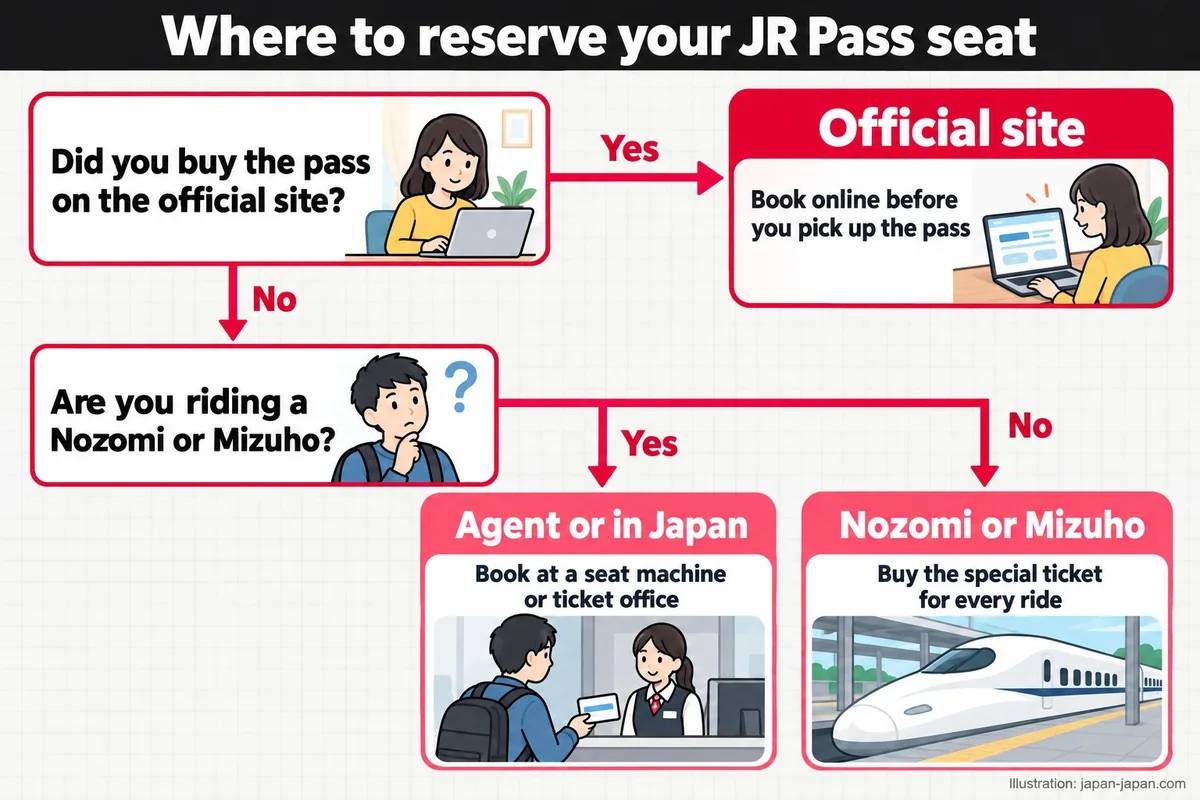
Two questions decide your route, as the chart below shows. Did you buy the pass on the official site?
Are you riding a Nozomi or Mizuho? Answer both and you know where to book and whether you pay anything.
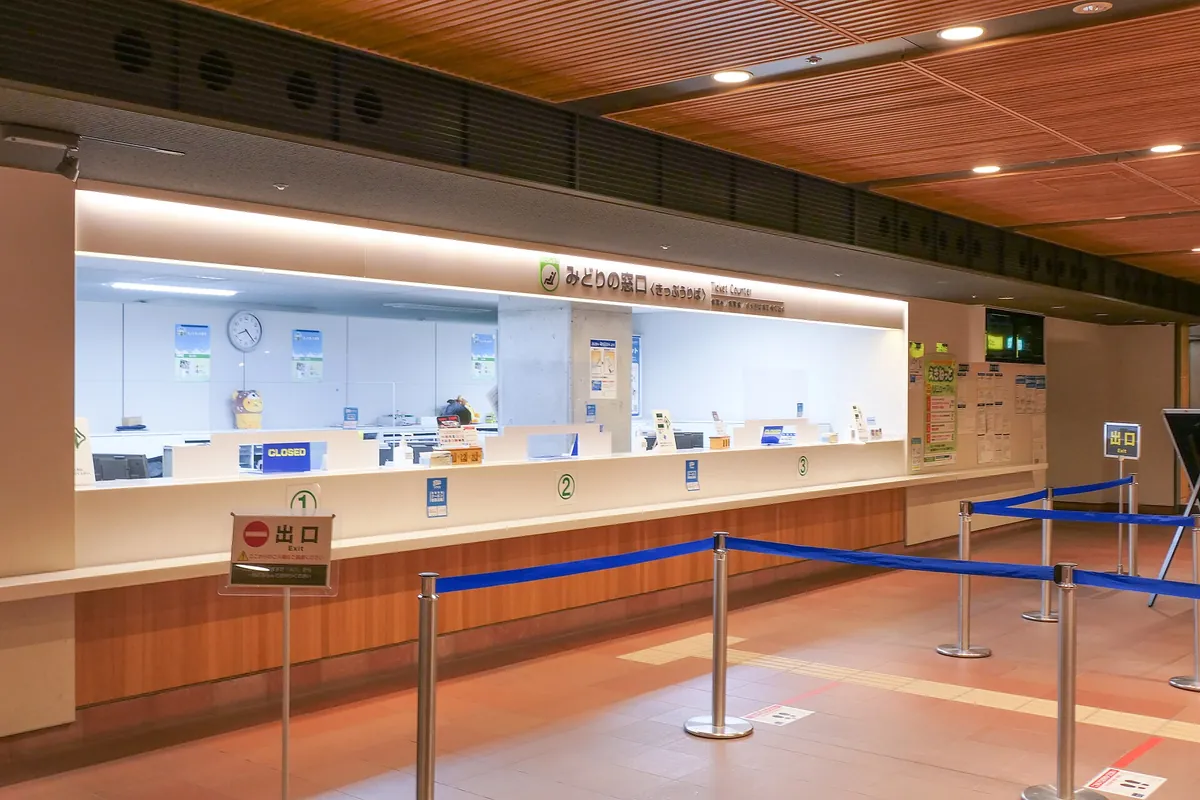
At big stations, look for the green sign that reads みどりの窓口 (Midori-no-madoguchi). It means ticket office, and it is where you change or cancel a seat once the ticket is printed.
If you hold an exchange order from an overseas agency, this is also where you swap it for the pass. Our guide to the JR Pass exchange order covers the offices and the 3-month deadline.
Seats for JR Pass holders go on sale at 10:00 a.m. one month before the departure date, on the same day of the previous month. That start time comes from the JR Central Nozomi all-reserved peak periods page, which answers pass questions in its FAQ.
JR Pass seat reservation online
Online seat booking is the main reason to buy the pass from the official site. Only when you purchase the pass online from the official website can you book reserved seats before picking up your ticket. You book on JAPAN RAIL PASS Reservation, the same site that sold you the pass.
A booking on the website does not let you board by itself. Before boarding, you still collect the printed seat ticket from a reserved seat ticket machine or a ticket office at a JR station. At the machine, scan your pass and choose the itinerary you already booked, and the machine prints it.
The official site is also cheaper. The Japan Rail Pass official prices page lists a 7-day Ordinary pass at 50,000 yen online and 53,000 yen from an overseas JR-designated agency.
The 7-day Green pass is 70,000 yen online against 74,000 yen from an agency. A 7-day Ordinary pass for a child aged 6 to 11 is 25,000 yen online and 27,000 yen through an agency.
The gap widened recently. From October 1, 2026, the 7-day Ordinary pass from an overseas agency rose to 53,000 yen from 50,000 yen.
The official website kept 50,000 yen for a limited time. Our Japan Rail Pass price page tracks the change.
The website can also hold a seat with an oversized baggage area. JR Central says reservations of this type have been possible on JAPAN RAIL PASS Reservation since June 1, 2020. If you plan to travel with a large suitcase, book the baggage seat in the same step.
If you bought the pass from an agent, the online route is closed to you. Exchange the order at a staffed JR counter, then book at a machine or at the same counter. Many travellers do both at once: exchange the pass, then ask for every seat on the trip while they stand at the window.
Using a reserved seat ticket machine
The machine is the quickest way to book once you are in Japan. The official guide breaks the process into three steps, shown in the panels below.
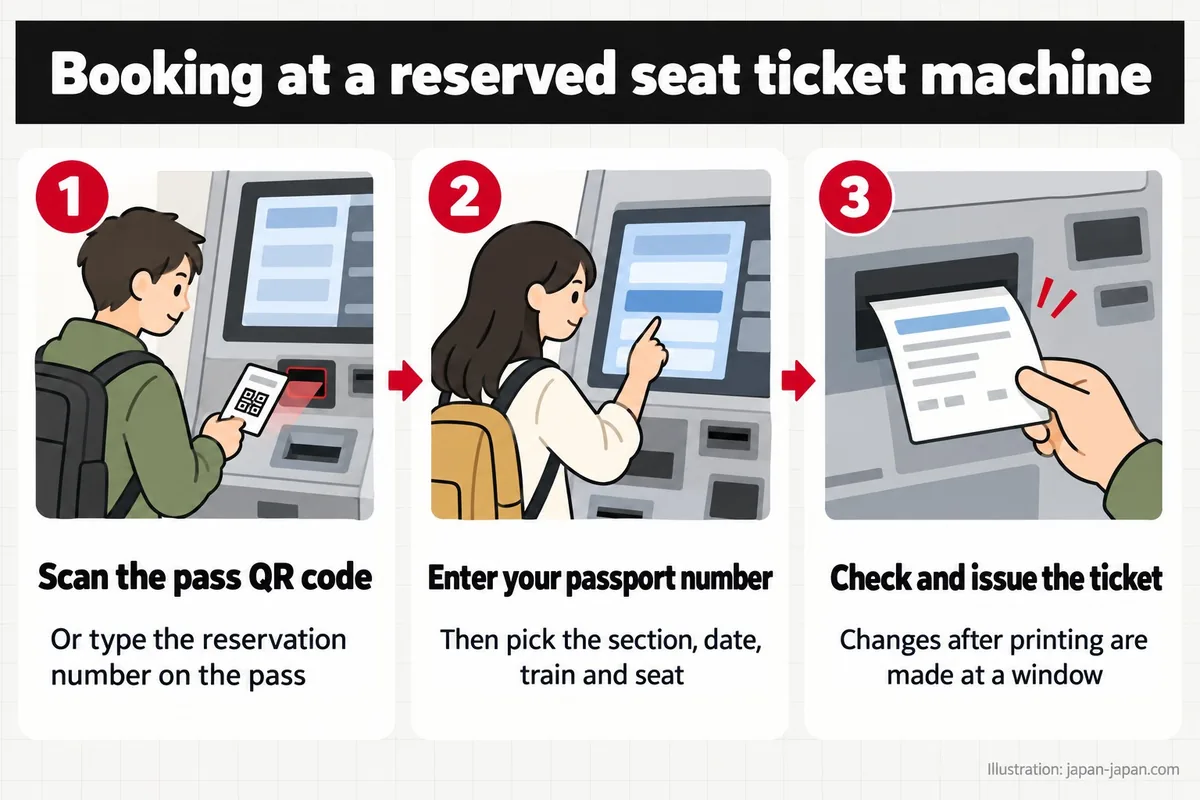
- Scan the QR code on your JAPAN RAIL PASS with the reader on the machine, or type the reservation number written on the pass. Then enter your passport number.
- Enter the travel section, date and time, and select the train and facilities. If you already booked online, select the itinerary to print instead.
- Check the inputs. If everything is correct, issue the ticket.
The machine books most trains the pass covers. It will refuse seats you could not actually use, such as two seats at the same time on different trains. Decide on your train first, then book.
Changes are where the machine stops. Once a seat ticket is printed, you change or cancel it at the ticket window at the station. Carry the printed ticket and your pass to the counter and say which train you want instead.
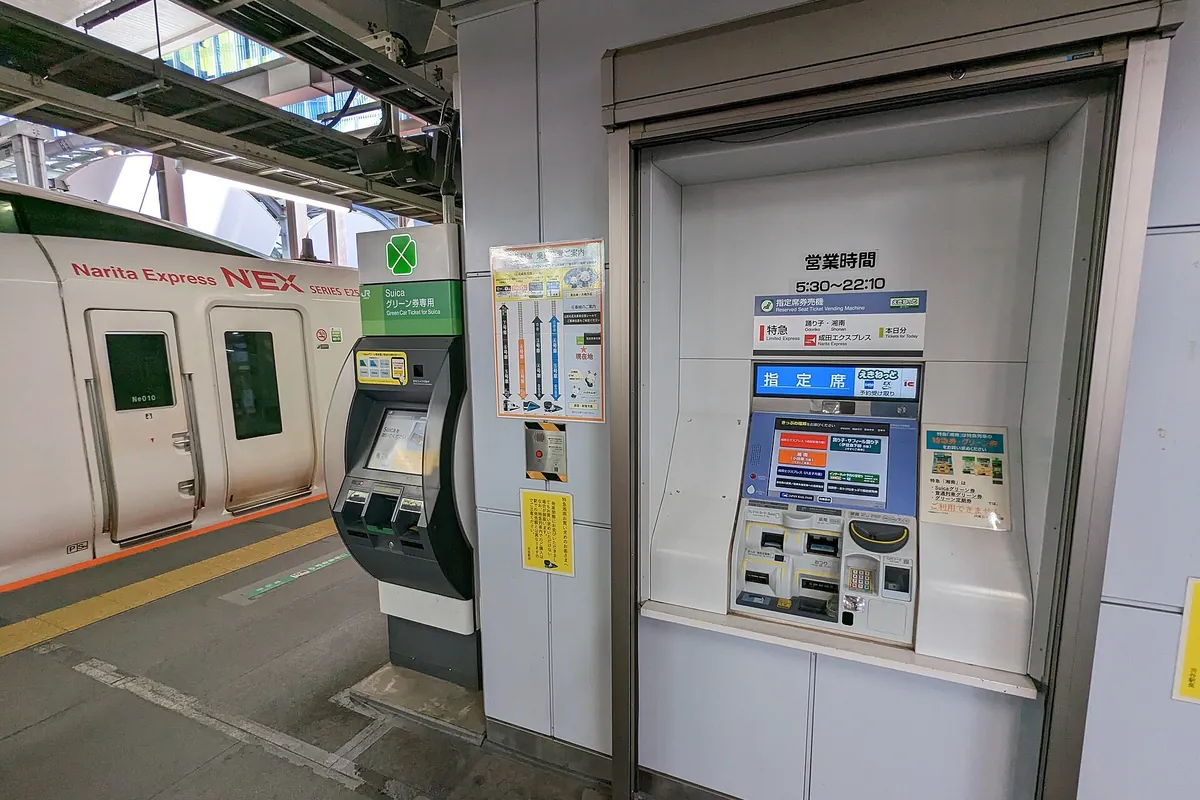
Look at the seat types on the screen. Shinkansen, limited express and express trains have reserved Green Car seats, reserved standard car seats and non-reserved seats.
Some trains have no non-reserved seats at all. Most Hikari and Kodama trains on the Sanyo Shinkansen (Shin-Osaka to Hakata) have no Green Cars. Neither do Series 800 trains on the Kyushu Shinkansen.
You do not have to reserve. A non-reserved seat on any train the pass covers works with the pass alone.
On busy days, though, a reserved seat is the only sure way to sit. Our comparison of reserved and non-reserved Shinkansen seats explains when it is worth booking.
Nozomi and Mizuho: the special ticket and prices
The JR Pass covers no seat on the Nozomi or Mizuho. That holds on the Tokaido, Sanyo and Kyushu Shinkansen, for Green Car, reserved and non-reserved seats alike. To ride one, buy an [ONLY WITH JAPAN RAIL PASS] NOZOMI MIZUHO Ticket before you board, every time you use one of these trains.
The Japan Rail Pass official Nozomi and Mizuho ticket page lists six main sections. Prices include tax, and the chart shows them in order.

| Item | Value |
|---|---|
| Tokyo to Nagoya | 4180 yen |
| Tokyo to Kyoto | 4960 yen |
| Tokyo to Shin-Osaka | 4960 yen |
| Shin-Osaka to Hakata | 4960 yen |
| Hakata to Kagoshima-Chuo | 5150 yen |
| Tokyo to Hiroshima | 6500 yen |
Tokyo to Nagoya costs 4,180 yen. Tokyo to Kyoto, Tokyo to Shin-Osaka and Shin-Osaka to Hakata each cost 4,960 yen. Tokyo to Hiroshima costs 6,500 yen, and Hakata to Kagoshima-Chuo costs 5,150 yen.
The same price applies whether you take a Green Car seat, a reserved ordinary seat or a non-reserved ordinary seat.
Compare that with a normal ticket. Our Tokyo to Osaka route page shows the Nozomi at 2 h 21 min and 14,720 yen with a reserved seat.
With a pass, the same ride costs 4,960 yen on top. On our Osaka to Hiroshima route page, the Mizuho takes 1 h 20 min for 10,950 yen without a pass.
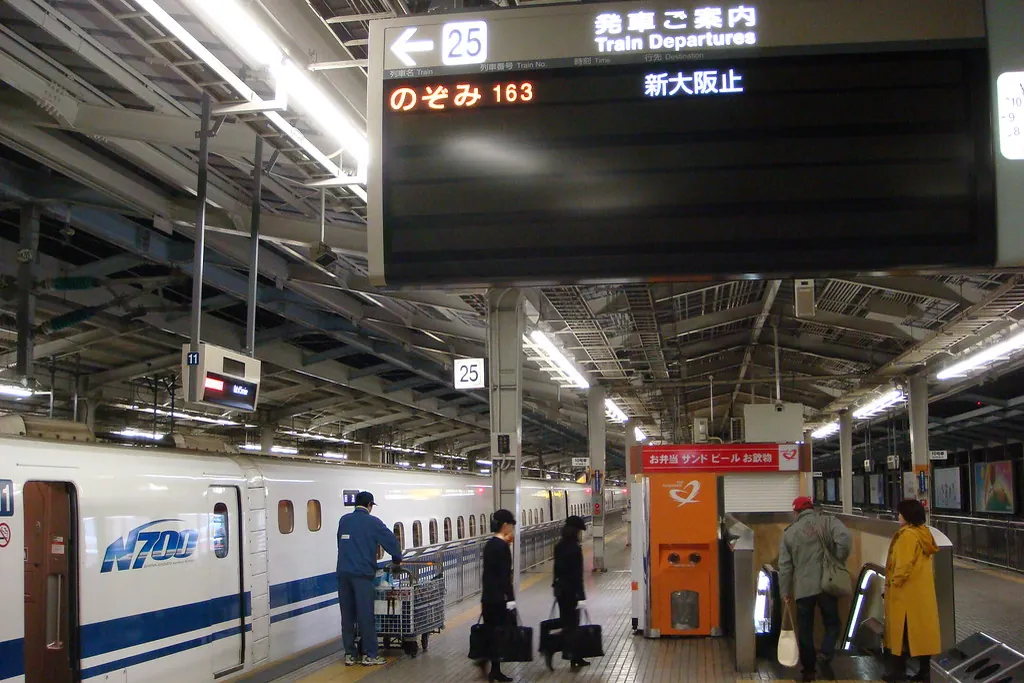
Four rules apply to this ticket.
- When to buy: From one month before the day you board until the day itself, within the valid period of your pass.
- Where to buy: Reserved seat ticket machines, JR ticket offices, Travel Service Centers and some travel agencies in Japan.
- Green Cars: Only Green Car pass holders can buy Green Car tickets. Standard Car pass holders can buy reserved or non-reserved ordinary seats.
- Validity: One day, for the section, direction and route on the ticket. Get off early and the rest of the section is lost.
Reserved tickets are sold per train, and non-reserved tickets are sold one way. The number of reserved seats sold this way is limited, so a train can show as full even with open seats. You can change a Green Car or reserved ticket once to the same seat type before the train leaves.
Refunds have a handling fee. Before travel starts, you get the price back minus a handling fee. The fee is 340 yen for a Green Car or reserved ticket and 220 yen for a non-reserved one.
After travel starts, there is no refund. If the train is delayed by more than two hours, go through a staffed gate and tell JR staff, and the ticket may be refunded.
Many pass holders skip the extra ticket and take the Hikari, which the pass covers. Our page on Nozomi vs Hikari sets out the time you give up. Our Tokyo to Kyoto route page and Osaka to Fukuoka route page list the fastest trains on both lines.
Big suitcases and oversized baggage seats
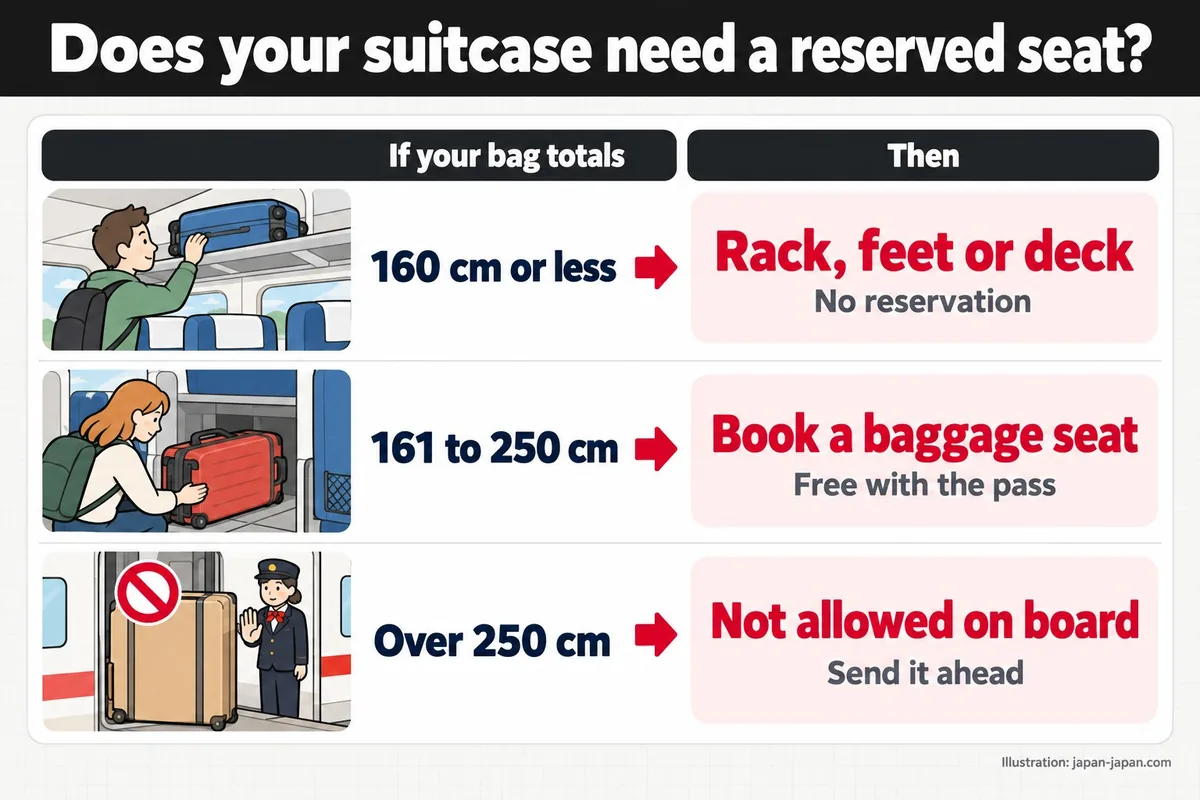
Your bag size decides whether you need a special seat. On the Tokaido, Sanyo and Kyushu Shinkansen between Tokyo, Shin-Osaka, Hakata and Kagoshima-Chuo, the rule turns on the total of length, width and height. The table sets out the three bands from the JR Central Shinkansen luggage information page.
| Total size | Where it goes | Reservation |
|---|---|---|
| 160 cm or less | Overhead rack, at your feet or the deck baggage area | Not required |
| 161 to 250 cm | Oversized baggage area behind a last-row seat | Required, no extra charge |
| Over 250 cm | Cannot be brought on board | Not possible |
Bags of 160 cm (63 inches) or less go at your feet, on the overhead rack or in the baggage area on the deck. You need no reservation.
JR Central says the rack is about 42 cm deep, so a 160 cm bag usually fits. In an ordinary car, a bag of 120 cm or less usually fits by your feet.
Bags between 161 and 250 cm (64 and 98 inches) need a seat with an oversized baggage area. These are seats in the last row of some cars, and the space behind them holds your bag.
The seat costs the same as any reserved seat. With a JR Pass it is free like any other reservation.
Bags over 250 cm (98 inches) cannot come on board. JR lets you carry two pieces free, each 30 kg or less. Each must total 250 cm or less, with no side longer than 200 cm.
Board with an oversized bag and no reservation, and you pay a 1,000 yen fee. The conductor then tells you where to put the bag.
If the train is full, staff will ask you to book another train. A 16-car Nozomi on the Tokaido Shinkansen has 57 seats with an oversized baggage area: 12 in Green Cars and 45 in ordinary cars.
To book one with your pass, tell the staff at a JR ticket office that you want a seat with an oversized baggage area. In Japanese that is 特大荷物スペースつき座席 (tokudai nimotsu supēsu tsuki zaseki).
At a machine, choose “Seat with an oversized baggage area” on the screen. The rule applies only on the Tokaido, Sanyo, Kyushu and Nishi Kyushu Shinkansen, not on conventional lines.
You can also send the bag ahead. JR Central points to LUGGAGE EXPRESS, a paid service for bags up to 200 cm, delivered to your next hotel the same day. Our guide to luggage forwarding in Japan compares the options and cut-off times.
Busy dates when seats sell out
Booking early matters most during Japanese holidays. In crowded periods, JR cannot guarantee a seat on a specific train. The official pass guide names four periods when seats are hardest to get.
| Period | Dates | Why trains fill up |
|---|---|---|
| Golden Week | May 1 to 6 | Consecutive holidays in a common travel season. |
| Obon | August 7 to 16 | People return to their hometowns. |
| September holidays | September 18 to 23 | Consecutive holidays in a common travel season. |
| Year end and New Year | December 29 to January 3 | The most popular travel time for Japanese people. |
The year end and New Year stretch is the busiest of the four. If your trip falls between December 29 and January 3, book every Shinkansen seat as soon as sales open, at 10:00 a.m. one month before each departure. Our New Year 2026–27 holiday page lists the closures and crowd dates for that week.
JR Central adds its own rule for major peak periods. On those days every seat on the Nozomi is reserved, and the 165 non-reserved seats on each train switch to reserved seats. The Hikari, Kodama, Mizuho, Sakura and Tsubame keep their non-reserved cars, but those can be overcrowded.
For pass holders, JR Central’s advice is to book a reserved seat in advance. If you buy a non-reserved NOZOMI MIZUHO Ticket during a peak period, you stand. If you miss your reserved train, a non-reserved seat on a later Hikari or Kodama on the same day is still open to you.
Plan the spring and summer peaks the same way. Our Golden Week 2027 page and Obon page give the dates. If a train is full, try a different time or day, or a Hikari instead of a Nozomi.
JR Pass seat reservation FAQ
Do JR Pass seat reservations cost extra?
No. Seat reservations on trains the pass covers cost nothing, and that includes seats with an oversized baggage area. The only extra cost is the NOZOMI MIZUHO Ticket for the Nozomi and Mizuho, such as 4,960 yen from Tokyo to Kyoto.
Can I reserve JR Pass seats online if I bought the pass from an agent?
No. Only passes bought on the official website, JAPAN RAIL PASS Reservation, can book seats online before pickup. With an agent’s exchange order, swap it for the pass in Japan, then book at a reserved seat ticket machine or a JR ticket office.
Can I use a JR Pass on the Nozomi without a reservation?
Not with the pass alone. The pass covers no seat on the Nozomi or Mizuho, reserved or non-reserved. Buy a NOZOMI MIZUHO Ticket for a non-reserved seat if you do not want a fixed train, and check that the train has non-reserved cars. During peak periods every Nozomi seat is reserved, so you stand.
How do I change a JR Pass seat reservation after the ticket is issued?
Go to the ticket window at a JR station with the printed ticket and your pass. Machines book and print seats, but changes and cancellations after printing are done at the counter. For a NOZOMI MIZUHO Ticket, you can change a reserved or Green Car ticket once before the train leaves.
About the author