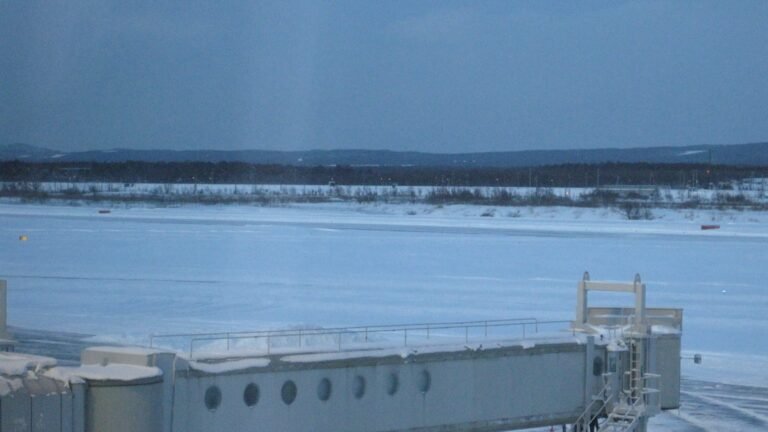
Shinkansen Price Increase: Non-Reserved Seats Stay the Same
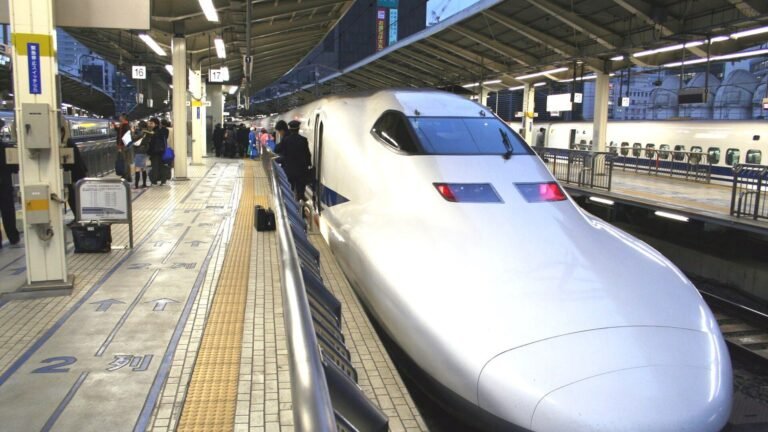
The JR Central press release on Nozomi and Mizuho fare revision came out on the same day as a matching notice from JR West. Both companies point to higher costs from inflation. They say the extra money will go into safety and better service on the line.
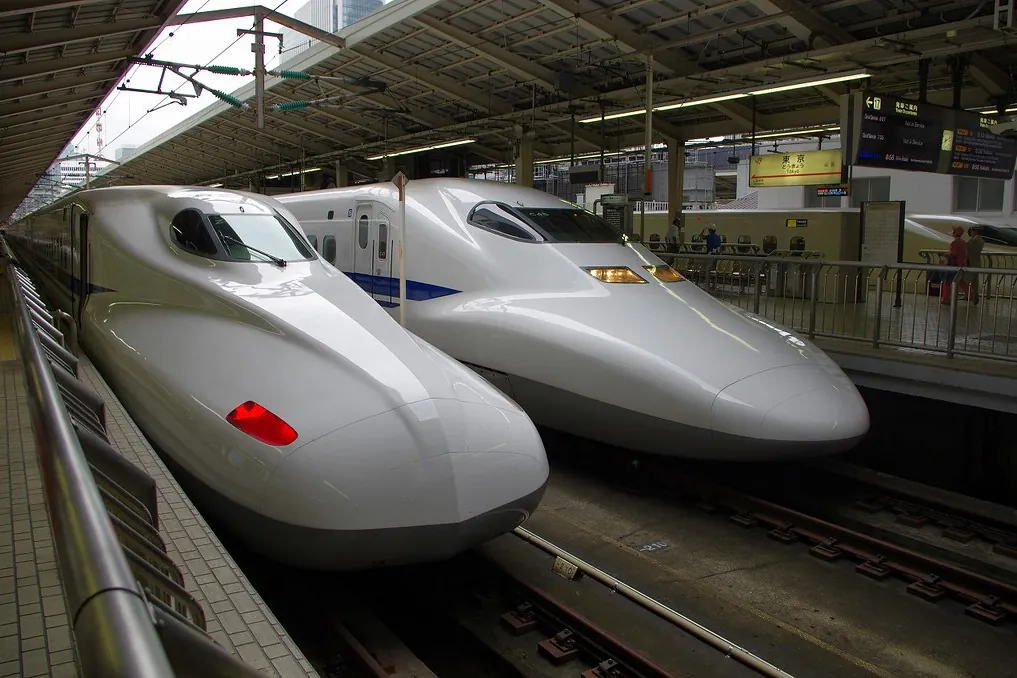
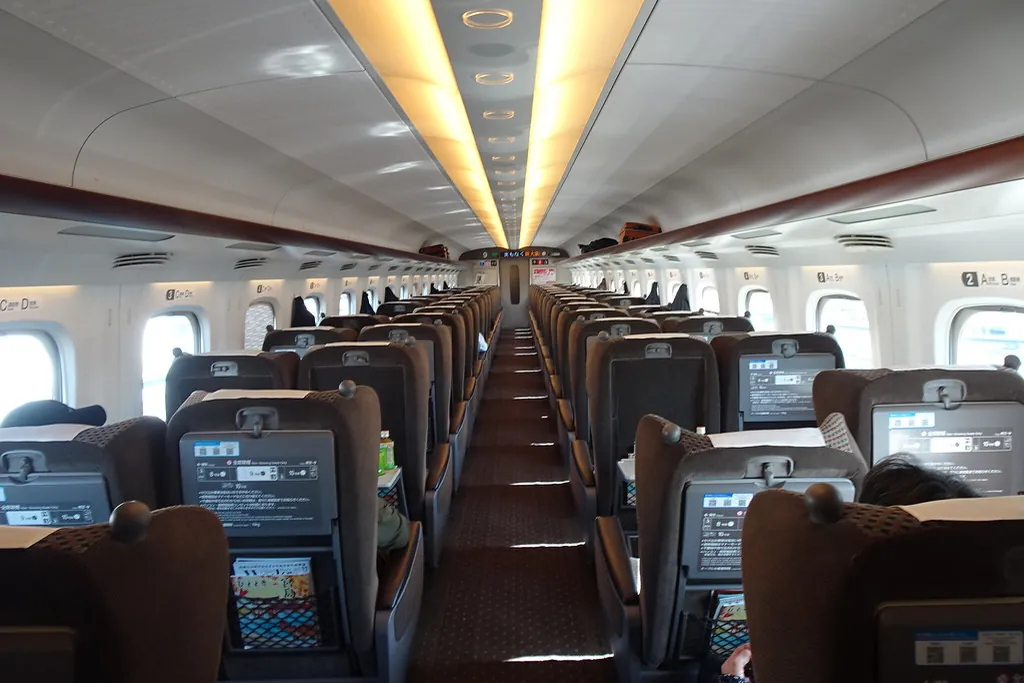
The photo shows a Nozomi on the Tokaido Shinkansen. Our route pages list it as the fastest train from Tokyo to Osaka and from Osaka to Fukuoka.
How much does a Nozomi seat cost before the increase?
Any increase starts from today’s fare. Our route pages take times and fares from JR Central’s own fare search and timetables. The table shows today’s fares from those pages, for one adult travelling one way, with the timetable for Wednesday 14 October 2026.
| Route | Train | Reserved seat today | Fastest time |
|---|---|---|---|
| Tokyo to Shin-Osaka | Nozomi | 14,720 yen | 2 h 21 min |
| Shin-Osaka to Hiroshima | Mizuho | 10,950 yen | 1 h 20 min |
| Shin-Osaka to Hakata | Nozomi | 16,020 yen | 2 h 28 min |
Start with Tokyo to Osaka. A reserved Nozomi seat costs 14,720 yen, and the fastest train takes 2 h 21 min. JR Central’s timetable lists 155 trains a day from Tokyo Station to Shin-Osaka. The last one leaves Tokyo at 21:24 and reaches Shin-Osaka at 23:45.
West of Osaka, the Mizuho runs from Shin-Osaka to Hiroshima in 1 h 20 min for 10,950 yen with a reserved seat. The Nozomi from Shin-Osaka to Hakata in Fukuoka takes 2 h 28 min for 16,020 yen. The announcement names both trains, so both fares will rise once the new charges begin.
Our Tokyo to Kyoto, Tokyo to Nagoya and Tokyo to Hiroshima pages give today’s Nozomi fares for those trips.
How the new Nozomi fares start: buy date or ride date
JR Central and JR West presented the change at their October press conferences on 16 October 2026. The JR West press releases page files it under tickets. A second notice on that list covers new prices on Express Reservation, smart EX and LINE kara EX, the line’s online booking services.
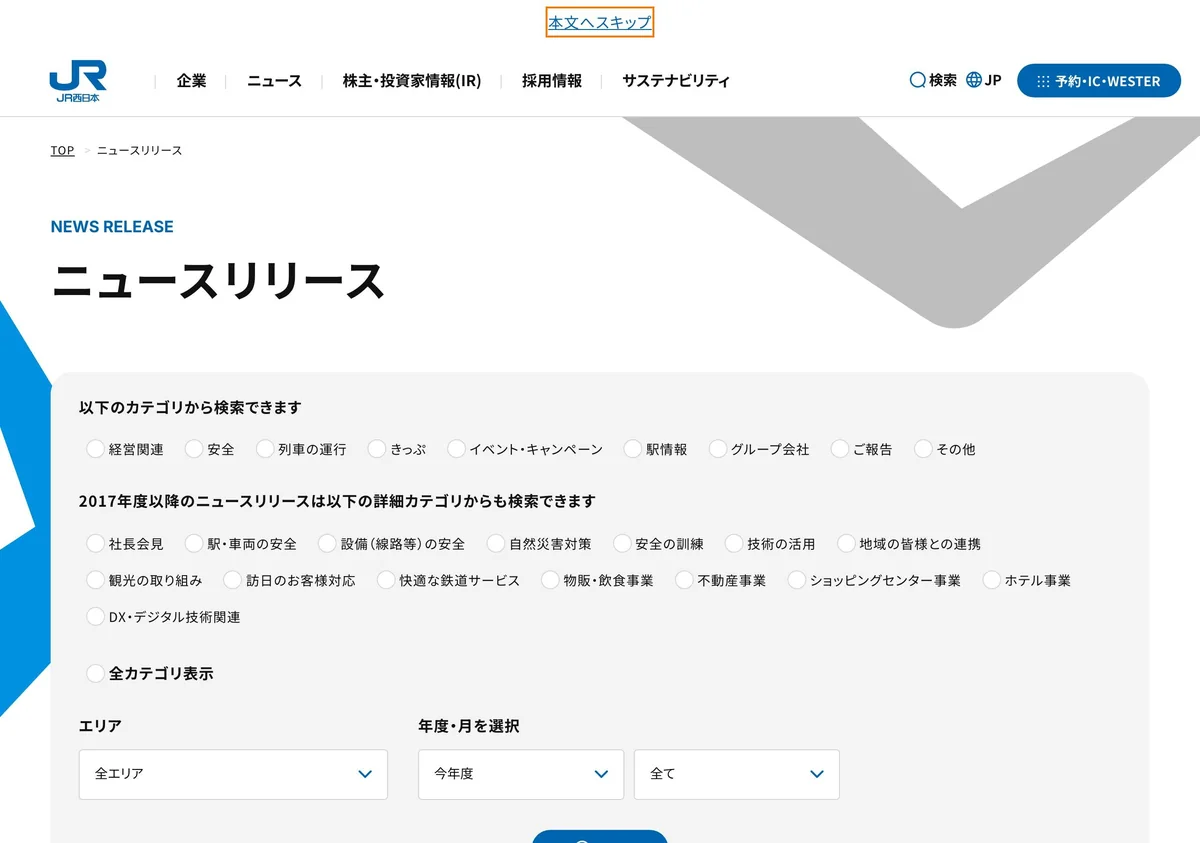
The screenshot shows that list, with the fare review and the online booking notice side by side under 16 October 2026.
The two parts of the change start on different rules. For ordinary reserved seats on the Nozomi and Mizuho, the new charge applies by the date you buy the ticket. A reserved ticket bought before the switch keeps its old price, even if the train runs later. For Green Cars, the new charge applies by the date you ride, so the travel date decides the price.
The companies also plan new prices for early-booking deals and other discounts on the EX services. They say the details will follow once they are set. The current deals still run. On 2 October 2026, JR West announced a limited-time EX early-booking sale for the year-end and New Year holidays.
Which tickets go up, and which do not
Three kinds of seat are in the increase. The first is the ordinary reserved seat on the Nozomi and Mizuho. The second is the Green Car, whose new charge covers every train on the Tokaido and Sanyo Shinkansen, Hikari and Kodama included. The third is Supreme Class, whose cabin prices move with both charges. On a Nozomi Green Car you pay both higher charges, because the reserved-seat charge also applies to Green Car and Supreme Class seats.
JR Central and JR West plan two seat types: one with multi-function armrests and one with partitions. Each seat gets new cushions, a large table that folds out of the armrest and a flip-up footrest. Major stations will also get waiting rooms inside the ticket gates for Supreme Class and Green Car passengers, with free soft drinks.
Our Green Car vs ordinary seat comparison shows what the Green Car adds to a fare today. The Supreme Class guide covers the private cabins.
Non-reserved seats stay as they are. The Japanese word for them is 自由席 (jiyūseki, non-reserved seats), the word you will see on platform signs. Ordinary reserved seats on the Hikari, Kodama and Sakura also sit outside the reserved-seat change, which names only the Nozomi and Mizuho.
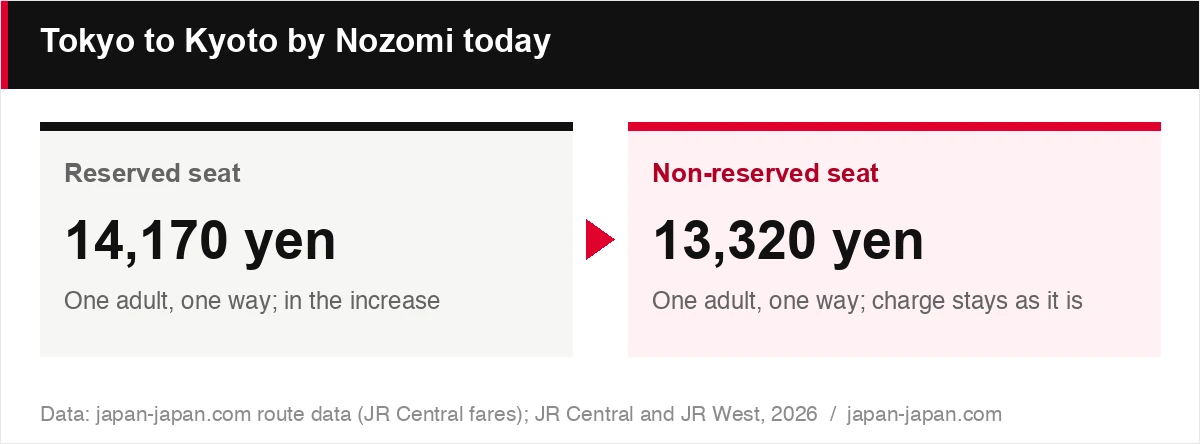
The comparison above shows Tokyo to Kyoto by Nozomi. A reserved seat costs 14,170 yen and a non-reserved seat 13,320 yen, and only the reserved price is in the increase.
What to do if you are planning a Nozomi trip
Nothing changes today, so book the way you planned. Tickets on sale now use the fares in the table above. The choices below matter once the new charges begin.
A non-reserved car is the simplest way around the increase. There is a catch at busy times. In past years JR Central has run every Nozomi with reserved seats only during peak periods, such as Golden Week and Obon in 2024. The JR Central English news releases list those periods. On those days the non-reserved option disappears on the Nozomi. Our guide to reserved and non-reserved seats covers when a seat is worth booking.
With a Japan Rail Pass, the increase matters less. The pass covers the Hikari, Kodama, Sakura and other JR trains, but no seat on the Nozomi or Mizuho. It costs 50,000 yen for 7 days in an ordinary car on the official website, a price JR keeps there for a limited time. From an overseas agency, the same pass has cost 53,000 yen since 1 October 2026.
To ride a Nozomi on the pass, you buy the NOZOMI MIZUHO Ticket for your section before boarding. The Japan Rail Pass page on the NOZOMI MIZUHO Ticket explains how. Our Nozomi vs Hikari comparison shows how much time the Hikari adds.
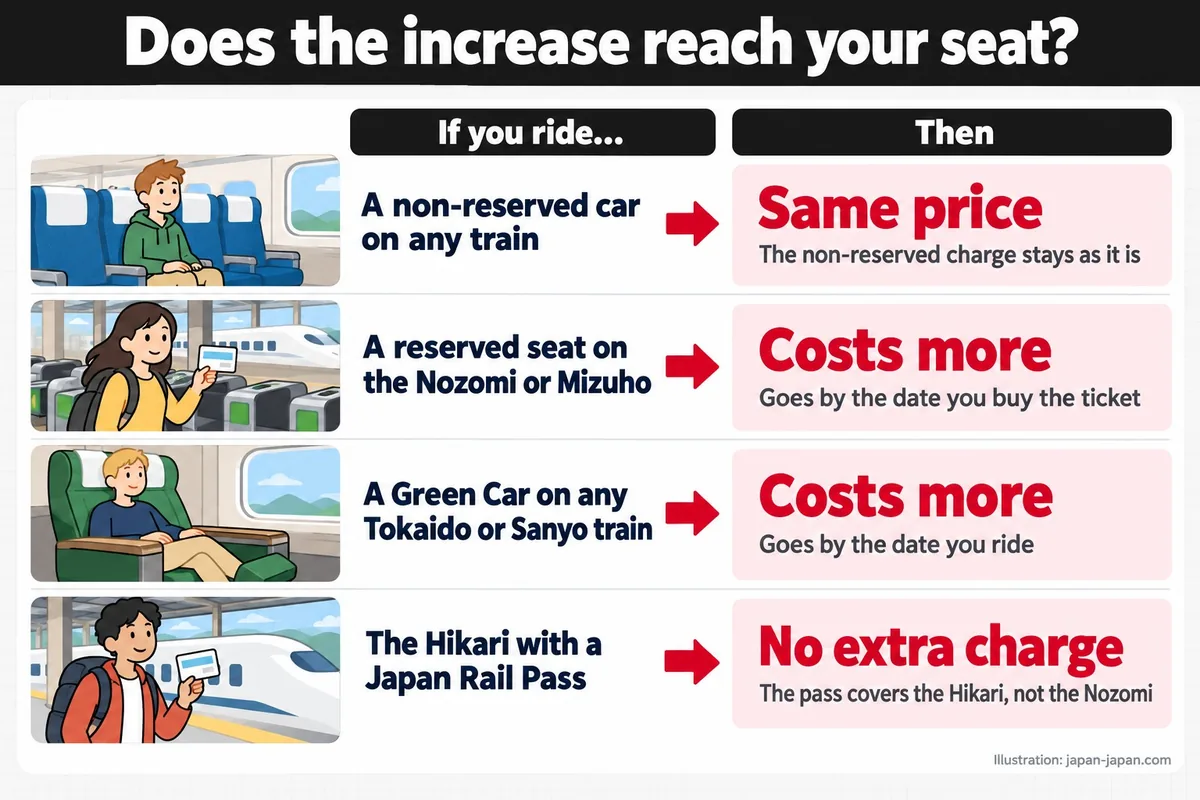
The chart above sorts the common cases by train and seat, from the non-reserved car to the Hikari on a rail pass.
If you book on smart EX, the new charges will reach you there too, because the EX prices move by the same amount. The SmartEX official site for Tokaido and Sanyo Shinkansen asks you to register as a member and pay by credit card. It also asks riders to reserve seats in advance during peak periods.
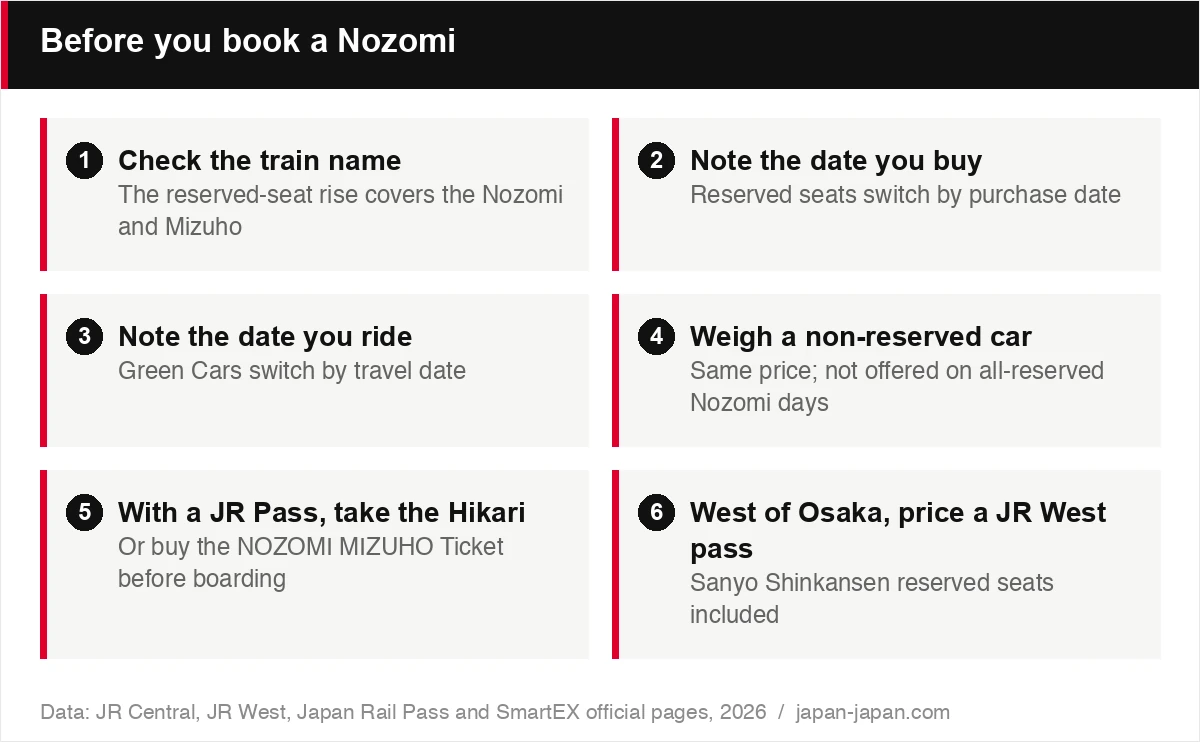
The cards sum up these checks in the order most bookings need them.
Where a JR West pass costs less than two Nozomi tickets
West of Shin-Osaka, there is a way around the Nozomi and Mizuho fares that the Tokyo leg does not have. JR West sells passes for visitors from abroad that cover the Sanyo Shinkansen, reserved seats included. Our rail pass pages list these five, with JR West’s prices.
| Pass | Adult price | Days | Sanyo Shinkansen section |
|---|---|---|---|
| Kansai-Hiroshima Area Pass | 17,000 yen | 5 | Shin-Osaka to Hiroshima |
| Setouchi Area Pass | 22,000 yen | 7 | Shin-Osaka to Hakata |
| Sanyo-San’in Area Pass | 23,000 yen | 7 | Shin-Osaka to Hakata |
| JR-WEST All Area Pass | 26,000 yen | 7 | Shin-Osaka to Hakata |
| Sanyo-San’in Northern Kyushu Pass | 26,000 yen | 7 | Shin-Osaka to Hakata |
Now compare those prices with today’s tickets. Two one-way Mizuho trips between Shin-Osaka and Hiroshima, at 10,950 yen each, already cost more than the 17,000 yen Kansai-Hiroshima Area Pass. Two one-way Nozomi trips between Shin-Osaka and Hakata, at 16,020 yen each, cost more than any of the 7-day passes above.
This announcement covers ticket charges and EX prices. The pass prices in the table are JR West’s current prices. For the Tokyo leg, the choices stay the same: a regular ticket, the Japan Rail Pass on the Hikari, or a non-reserved car.
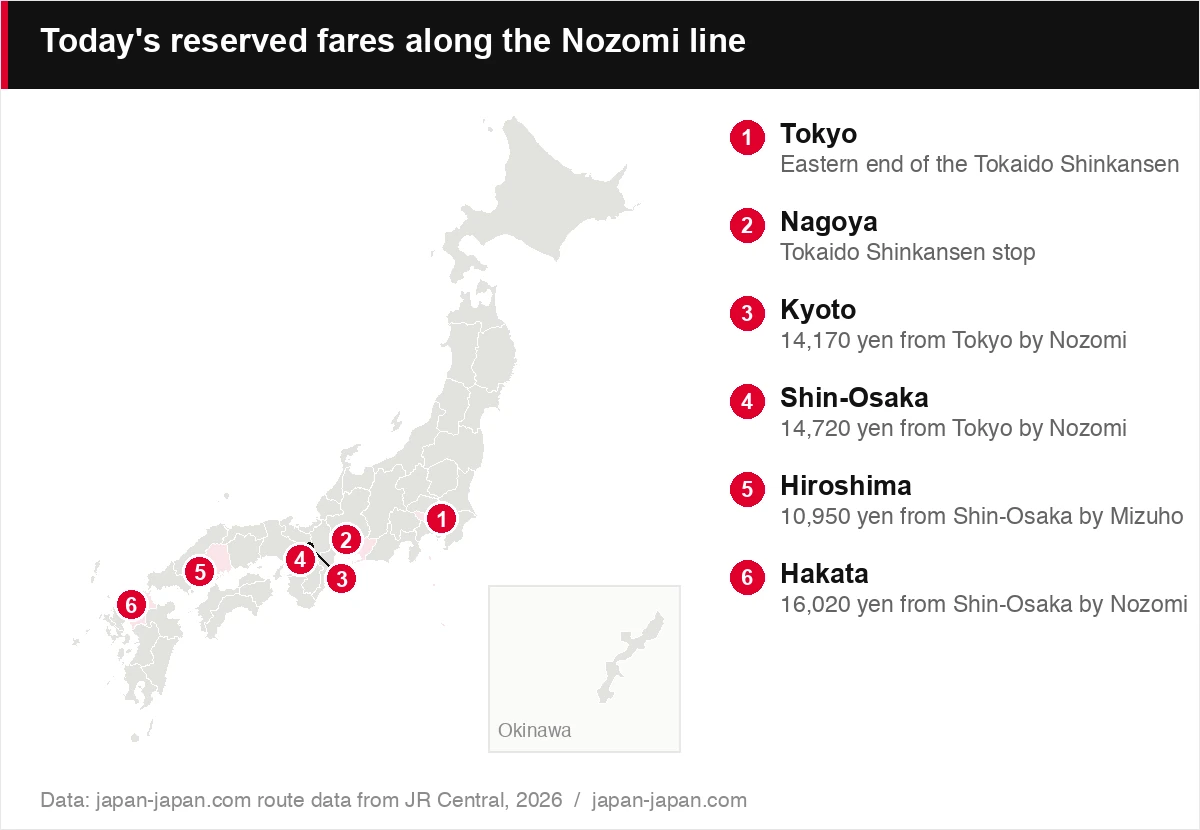
The map shows the stations along the line with today’s reserved fares from our route pages, for one adult, one way. Our Osaka to Hiroshima and Osaka to Fukuoka pages list the first and last trains too.
Shinkansen price increase FAQ
Does the Nozomi shinkansen cost more yet?
No. JR Central and JR West announced the increase on 16 October 2026, and tickets sold today still use current fares. A reserved Nozomi seat from Tokyo to Shin-Osaka costs 14,720 yen.
Will non-reserved shinkansen seats cost more?
No. JR Central and JR West say the non-reserved seat charge stays as it is. From Tokyo to Kyoto, a non-reserved Nozomi seat costs 13,320 yen, against 14,170 yen for a reserved one.
If I buy my Nozomi ticket before the change, do I pay the old price?
Yes for an ordinary reserved seat, because that part of the change goes by the date you buy. Green Car seats go by the date you ride, so the travel date sets that price.
About the author