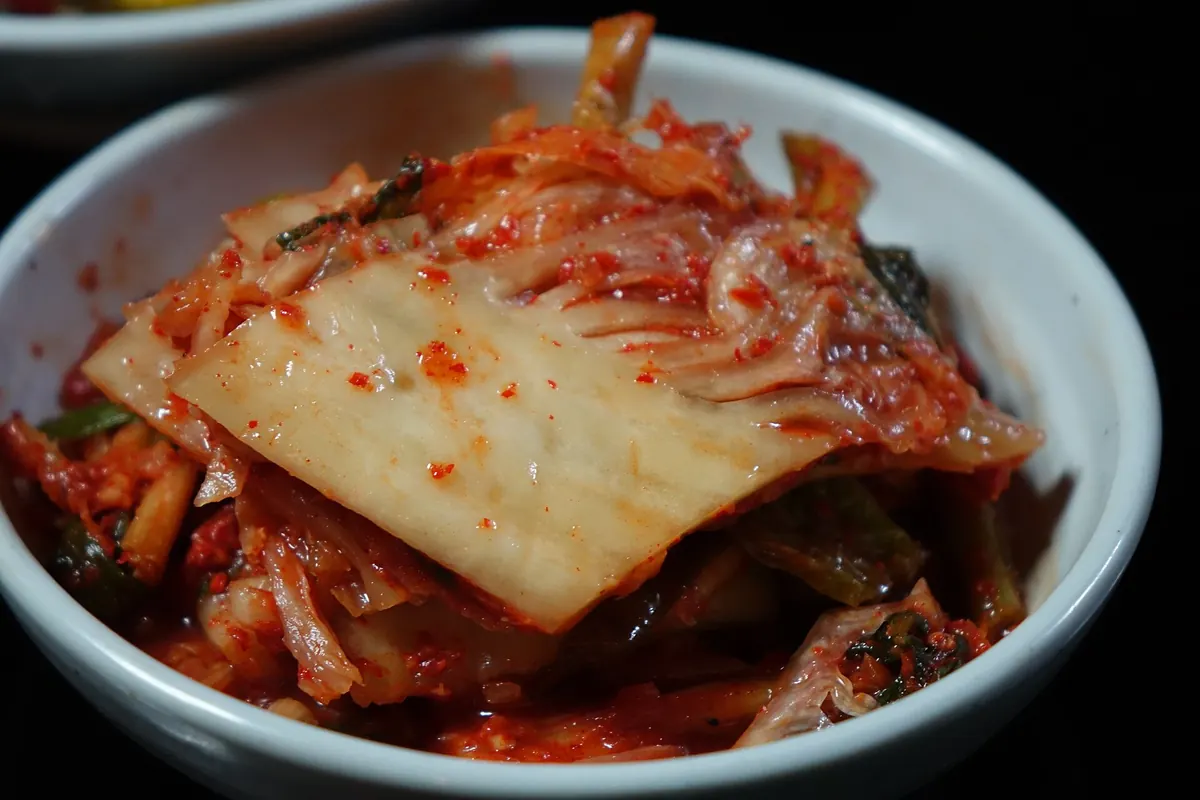

Plants pickled in salt, sugar, acetic acid, alcohol or sulfurous acid are on the official list of items not subject to import plant quarantine.
Checked against the official page on · Report a correction
Kimchi with meat in it falls under the meat rules, unless it meets the Exclusion Criteria, for example as a sealed retort-sterilised product.
Kimchi and pickles at the Japanese border
This is decided when you land in Japan, by the quarantine services. Airport security at your departure airport is a separate check.
Plants pickled in salt, sugar, acetic acid, alcohol or sulfurous acid are on the official list of items not subject to import plant quarantine. Kimchi with meat in it falls under the meat rules, unless it meets the Exclusion Criteria, for example as a sealed retort-sterilised product.
- Plant quarantine
- not required for plants pickled in sulfurous acid, alcohol, acetic acid, sugar, salt and the like
- If it contains meat
- products that use any meat at all cannot be brought in, unless they meet the Exclusion Criteria
- Excluded (Standard 3)
- sealed, retort-sterilised products
- Excluded (Standard 21)
- foods whose heat-processed meat ingredients leave no solid meat, such as soup stock and seasonings
- If it contains only fish products
- fish products without livestock meat or eggs are not subject to Animal Quarantine Service inspection
Pickled, not fresh: where kimchi sits on Japan's lists
Kimchi is read against both quarantine lists: the plant list for the vegetables and the animal list for whatever seasons them.
- Fresh cabbage and pickled cabbage sit on opposite lists
- The Plant Protection Station treats every plant that could carry pests as subject to inspection, and says most fresh vegetables cannot be brought in. Its exempt list is built on processing: plants steeped in salt, sugar, acetic acid, alcohol or sulfurous acid are outside quarantine. That entry is not written for kimchi alone, so brined or vinegared pickles and fruit preserved in sugar or alcohol fall under it too.
- Meat stock in the seasoning has its own standard
- Kimchi seasoned with meat stock, rather than pieces of meat, is a question for the Animal Quarantine Service's Exclusion Criteria. Their standard headed seasonings and flavouring liquids covers a food in its final form that contains meat, organs or fat processed by heat or hydrolysis, with soup stock and consommé as examples. It is limited to products in which no solid matter derived from meat, organs or fat is present. If it is unclear whether a product qualifies, the Service asks to be consulted beforehand, with an ingredient list.
Frequently asked questions
Can I bring kimchi to Japan?
Plants pickled in salt, sugar, acetic acid, alcohol or sulfurous acid are on the official list of items not subject to import plant quarantine. Kimchi with meat in it falls under the meat rules, unless it meets the Exclusion Criteria, for example as a sealed retort-sterilised product.
Can I bring homemade or duty-free kimchi into Japan?
Yes, if it contains no meat. The Plant Protection Station's entry for pickled plants sets no condition on who made the kimchi or where it was bought, unlike its entry for dried spices, which must be sealed in retail containers. For kimchi made with meat neither helps: the quarantine notice allows no exception for products that are vacuum packed, sold at airport duty-free shops or labelled in Japanese. Such kimchi is left out of animal quarantine only if it meets the Exclusion Criteria.
Do I need a phytosanitary certificate for kimchi?
Plants pickled in salt, sugar, acetic acid, alcohol or sulfurous acid are on the official list of items that are not subject to import plant quarantine.
What if the kimchi contains pork?
Pieces of pork make it a meat product, and products that use any meat at all cannot be brought in, even when meat is not the main ingredient. A sealed, retort-sterilised product that meets Standard 3 of the Exclusion Criteria is left out.
And kimchi made with fish sauce or seafood?
Fish products that do not contain meat from livestock or eggs are not subject to inspection by the Animal Quarantine Service, though an officer may check on arrival that there is no meat.
Read more
- Osechi 2027: Boxes From 6,480 Yen, Order by 22 DecemberOsechi is Japan's boxed New Year meal, eaten 1 to 3 January. 2027 department store boxe…
- Japan Packing List for Winter: What to Wear and Carry OnJapan packing list for winter: layers for Tokyo (1.2°C lows), boots for Sapporo (-6.4°C…
- Nishiki Market vs Kuromon vs Tsukiji: Hours and Eating RulesNishiki Market asks you to eat at the shop, Kuromon welcomes eating as you stroll, and …
- What Is Kobe Beef? A5 Grades, Rules and Where to Eat ItKobe beef is Tajima cattle raised in Hyogo with marbling of BMS 6 or higher and quality…
Sources for this page
- Plant Protection Station — Plants not subject to import plant quarantine (Japanese)
- Plant Protection Station — Request to people coming to Japan
- Animal Quarantine Service — Bringing animal products into Japan from overseas
- Animal Quarantine Service — Exclusion Criteria (articles that clearly pose no risk of spreading pathogens)