What Japan Convenience Store Food Is Worth It? 2026 Picks
Most konbini are open 24 hours. What to pick at 7-Eleven, FamilyMart and Lawson, why the till charges 8% or 10%, and what you can take on a plane.
By Shunta Fujii
Convenience stores in Japan are not a compromise. For breakfast, a late-night meal, or the first thing you eat after landing, they are often the sensible choice.
Start with an onigiri, the egg sandwich and a coffee from the machine, in that order. Most stores are open 24 hours a day, according to the Japan National Tourism Organization (JNTO). Take your food away and the tax on it is 8%. Eat it at the store’s tables and the rate is 10%. Rice balls, bento and snacks can go in your cabin bag on a flight from Japan, while drinks follow the liquid rules.
The three chains
7-Eleven, FamilyMart and Lawson are everywhere and broadly similar. Each has items the others do not, and regulars have strong opinions about which does what best.
The Japanese word for these shops is konbini, sometimes spelled conbini. In JNTO’s guide to getting the most out of konbini, Tokyo-based travel writer Lucy Dayman names Lawson, FamilyMart and 7-Eleven as the three major chains. In more local areas and regional towns, she says, you may also find rarer chains: Mini Stop, Daily Yamazaki, Seico Mart and Poplar.
You are rarely far from one. JNTO’s konbini guide for Muslim travellers says most convenience stores in Japan are open 24 hours a day. The major chains have branches in rural areas as well as in cities, so you can drop in at any point on a trip.
Each chain has something it is known for. FamilyMart’s fried chicken, sold as Famichiki, is the most famous, at least in unofficial circles. For soft-serve ice cream, find a Mini Stop. It is one of the few stores that serves fresh soft serve, in rotating seasonal flavours such as mango and apple pie.
The shelves also change with the season and the region. Most stores sell seasonal items, from Halloween treats in October to cherry blossom themed products in spring. In Hokkaido, many stores sell Royce Chocolate, a famous chocolate brand based in Sapporo.
What to pick
- Onigiri — rice balls. Look for the tuna mayonnaise or the grilled salmon.
- Egg sandwich — soft white bread and egg salad. Inexplicably good.
- Hot food at the counter — fried chicken, steamed buns, oden in winter.
- Coffee — brewed to order from a machine, and better than it has any right to be.
That list is also the order to try things in. Asked what a konbini beginner should start with, JNTO’s guide names the onigiri: a foundational product, and one of the most varied. It is a fist-sized ball of rice wrapped in dry seaweed, called nori, usually with a filling inside.
The filling is the choice that matters. JNTO lists ume (salty plum), tuna and mayo, chicken and even omelette rice. Its Muslim guide adds salmon, tarako (fish eggs), pickled vegetables and pickled plums. The tuna mayonnaise and the grilled salmon from the list above are the two to start with.
Once you have tried those four, work down the rest of the shelves in this order.
- Bento — a boxed meal with a bed of rice and a cluster of sides: fish, meat, vegetables and the occasional mystery item. JNTO calls it a great budget-friendly alternative to going out for lunch. Staff will offer to heat it when you pay.
- Cup noodles — spicy Korean soup, shrimp and seafood noodles, or miso soup with mushrooms. Fill the cup at the store’s hot water dispenser and eat it on the spot.
- Canned coffee — anything from very sweet milky mixes to pure black blends. It takes some trial and error to find your favourite. The in-store coffee machines also make a good iced latte.
- Chu-hi — drinks made from shochu, a Japanese spirit, and a flavoured mixer, with 3% to 12% alcohol. You can find lemon, green tea and many fruit flavours, plus seasonal ones such as apple in the colder months and salty watermelon in summer.
- Something light — cut fruit and salads in plastic cups, packs of almonds, macadamias or cashews, and edamame beans that are already cooked. JNTO’s Muslim guide recommends all of these as healthy snacks.
For dinner, the choice goes well beyond snacks. JNTO lists rice and vegetables, pasta, gyoza and even ramen as everyday konbini meals.
Things worth knowing
Staff will offer to heat anything that should be hot. Most stores have a free hot water dispenser for instant noodles, and a small seating area in larger branches. Almost all take IC cards and contactless.
You can heat food yourself as well. JNTO’s Muslim guide says a microwave is readily available in konbini for warming what you buy. Above the hot water dispenser you may see a sign reading ご自由にお使いください (go jiyū ni o tsukai kudasai). It means “feel free to use it”, and you may see it next to spare chopsticks too.
A konbini also handles a lot that has nothing to do with food. The illustration below matches four common needs to the service that covers each one.
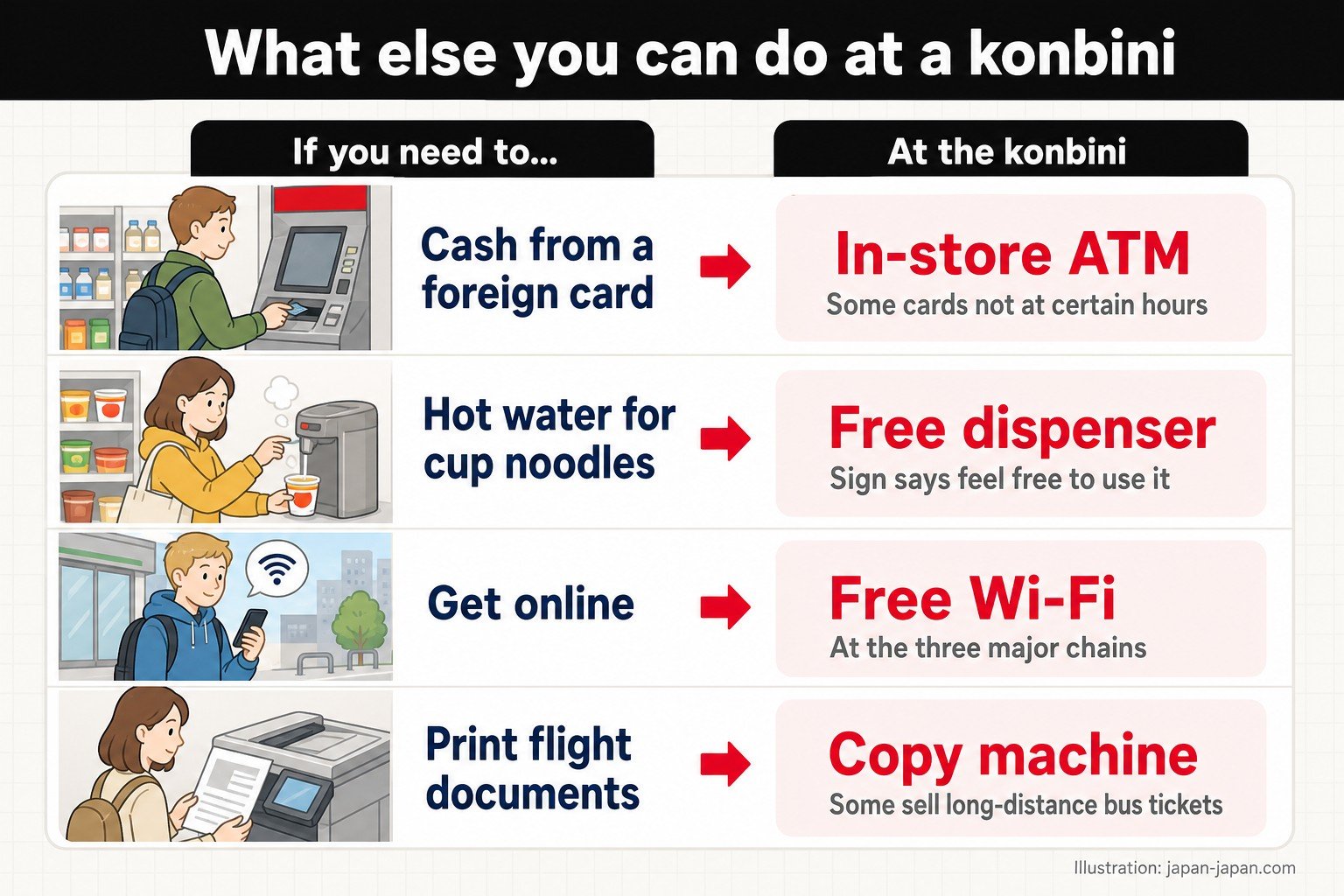
Cash. JNTO says the ATM is the konbini service most visitors will use at least once. Major stores in cities have multilingual ATMs that accept foreign cards, and 7-Eleven has them most widely. The Muslim guide says some konbini ATMs let you withdraw cash with selected international debit or credit cards. Depending on the card, the service may also be unavailable at certain hours, so if your card is refused, the time of day may be the reason.
Printing. Most stores have a printing and photocopying machine with multilingual settings. JNTO suggests it for paper copies of flight tickets. Upload the file to your profile on the Network Print website, then enter your personal code at the machine to print it. Many stores also sell long-distance bus tickets, depending on the bus company.
Wi-Fi. All three major chains offer free Wi-Fi. Stand near the store and follow the login prompts on your phone.
A seat and a toilet. Many bigger stores have tables and chairs where you can eat what you bought. JNTO’s guide lists clean bathrooms alongside Wi-Fi, ATMs and dining space among the things konbini are equipped with.
Eating in or taking away: the 8% and 10% tax rates
A konbini bill depends on where you eat. Japan’s consumption tax has a standard rate of 10% and a reduced rate of 8%, according to the National Tax Agency. The reduced rate covers “food and drink excluding alcoholic drink and dining out”.
That line sorts everything in the store. An onigiri, a sandwich or a bottle of tea that you carry out is food and drink, so it is taxed at 8%. Beer and chu-hi are alcoholic drinks, so they are taxed at 10% wherever you drink them. Eating at the store’s own tables counts as dining out, so the same onigiri is taxed at 10% there. The table below puts the three cases side by side.
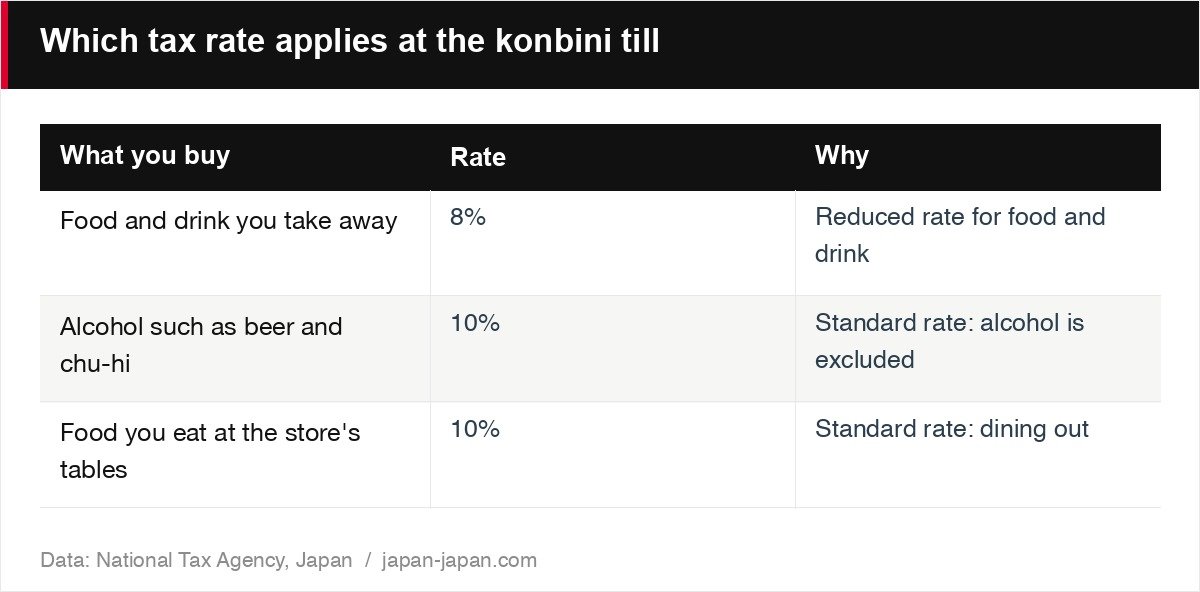
This is why the staff at the till may ask whether you will eat in. If you plan to use the seating area, say so when you pay. Food you take back to your hotel, eat on a train or carry to a park is take-away, and the 8% rate applies.
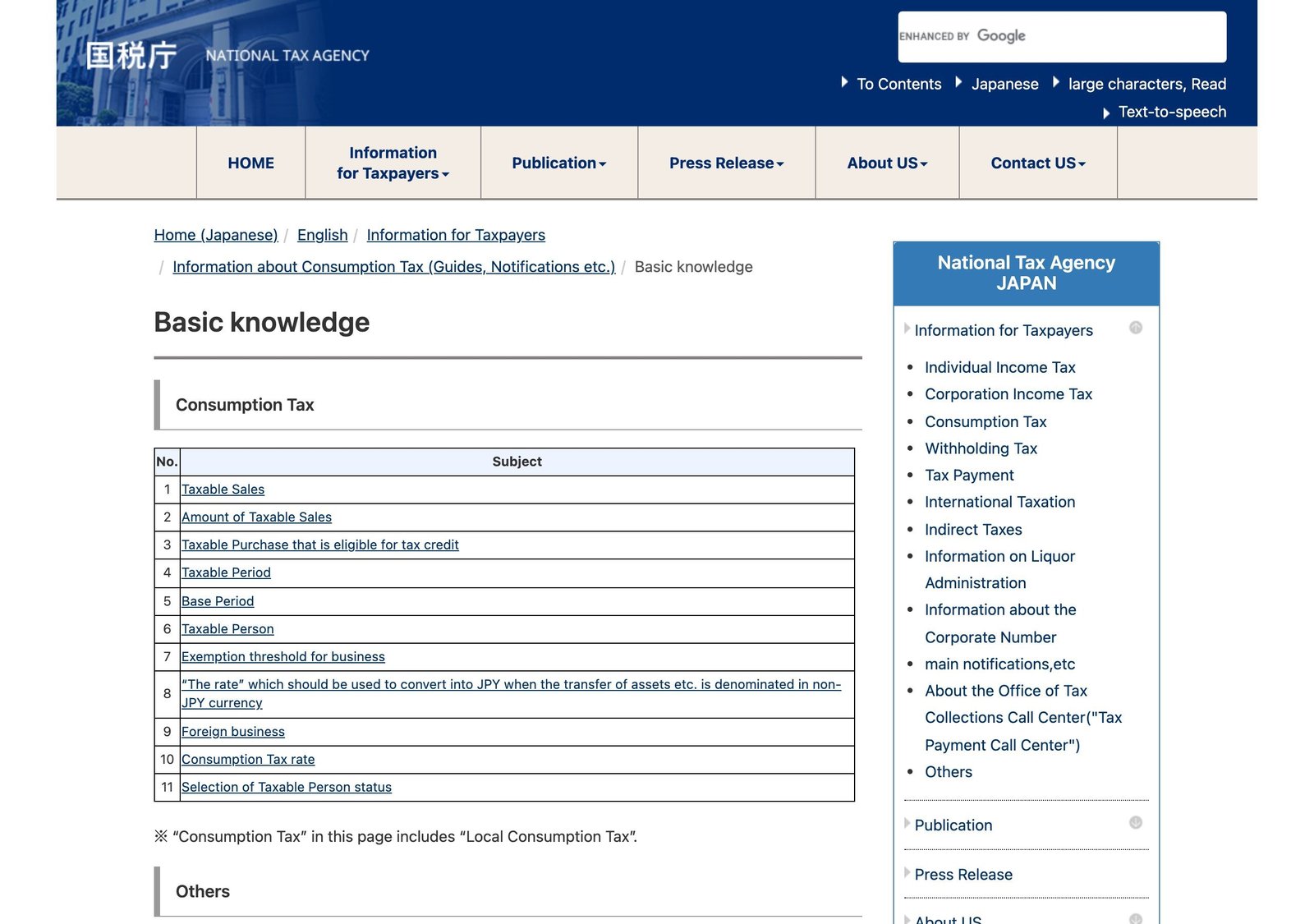
The agency’s English page, shown below, opens with a numbered list of consumption tax topics. The rates are under item 10, Consumption Tax rate, which also lists what the reduced rate covers.
A change is already scheduled. The agency’s Japanese-language page on the reduced rate says the consumption tax rate on sales of food and drink will be lowered for two years, from 1 April 2027 to 31 March 2029. Until then, the 8% and 10% rates in this section apply.
Reading the label: allergens, mirin and alcohol
Konbini labels are in Japanese. The Consumer Affairs Agency says food labelling must be in Japanese when food is sold in Japan. The checklist below covers what to look at before you pay.
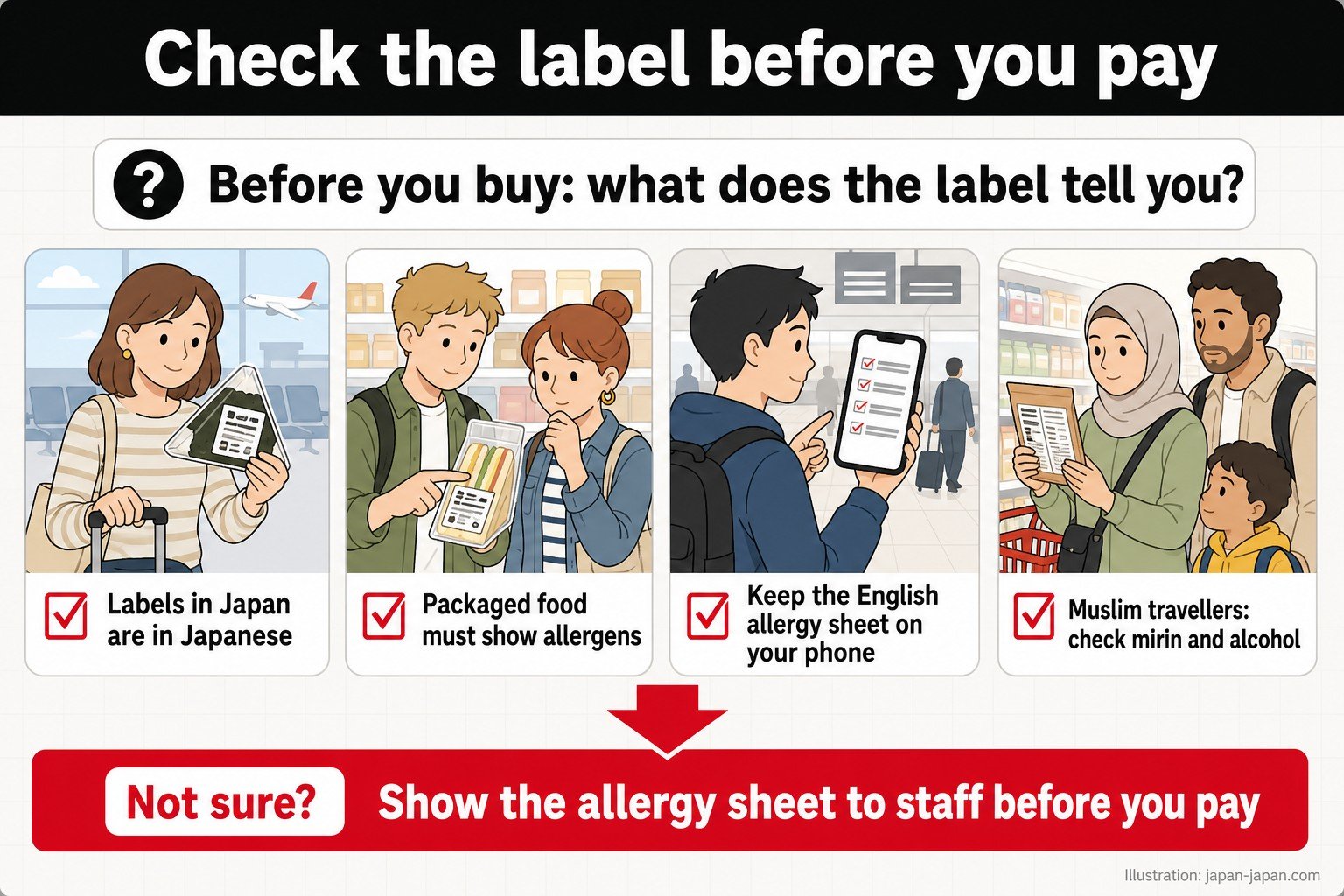
For allergies, the agency publishes a Food Allergy Communication Sheet made for smartphones, in English, Chinese, Korean and Japanese. Download it before you travel, because the check boxes do not work unless the file is downloaded. Tick your allergens and show the screen to the staff when you need help. The same page has an English guide to Japan’s food labelling system, including how best-before and use-by dates work.
The law helps with packaged food. For processed food sold in a container or wrapping, Japan requires the label to say when the food contains an ingredient on its list of specified allergens. The agency sets that list from a national survey of allergy specialists, carried out about every three years, based on the number of cases and how severe they are. According to its allergy labelling page, walnuts joined the list on 9 March 2023 and cashew nuts on 1 April 2026.
The agency’s English guide shows where to find that information. The page below takes a sample label for potato salad. The ingredients line, marked 原材料名, lists allergens in brackets, either after each ingredient or together at the end. The same label carries the use-by date, after which the food may no longer be safe to eat.
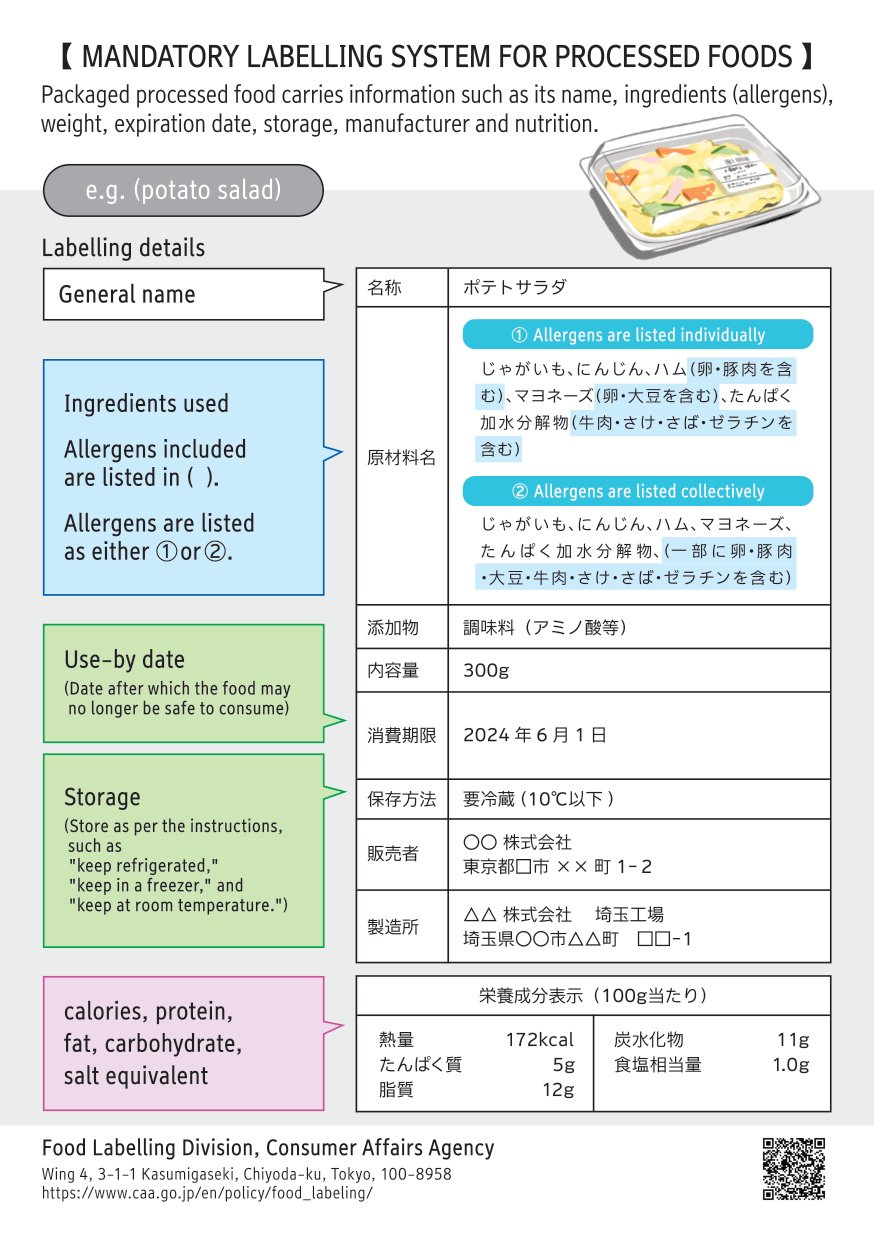
The rule is written for packaged food. For hot food handed to you from the counter, such as fried chicken, ask the staff and show your sheet.
Mirin and alcohol are checked the same way, in the ingredients list. JNTO’s Muslim guide asks travellers to read the label for ingredients such as mirin, a sweet rice seasoning, and alcohol before paying.
The same guide suggests cut fruit, salads, nuts and cooked edamame as easy choices, and calls onigiri a good option for a heartier snack. If you carry your own condiments, instant rice that heats in the microwave is also on the shelves. Check the label on each one before you pay, as the guide advises.
Your first konbini meal after landing
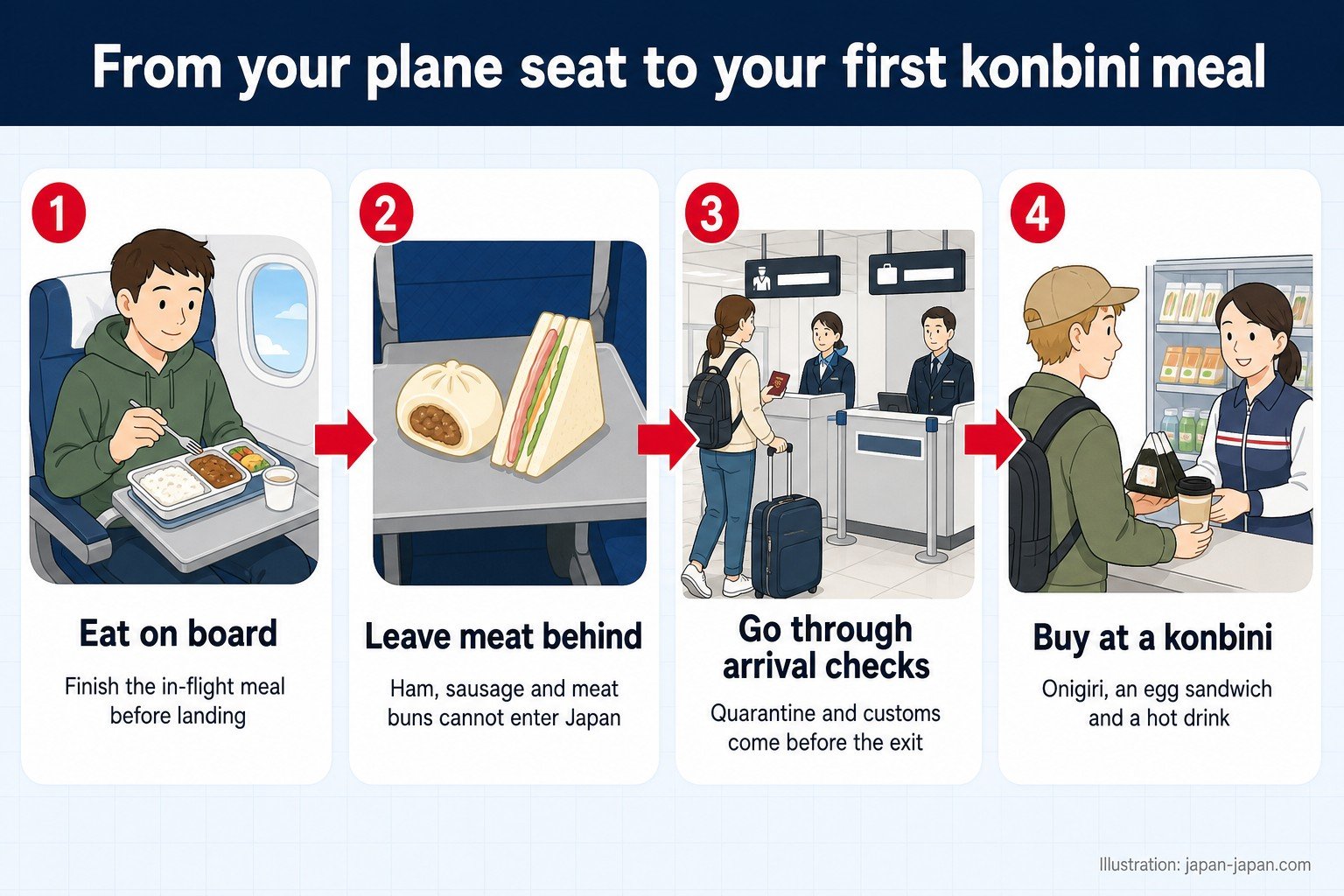
Buy your first meal in Japan after you land, not before you fly. It is illegal to bring meat and meat products into Japan, and the Animal Quarantine Service names jerky, ham, sausages, bacon and meat buns as examples. The ban applies to food bought in a shop, including at an airport, and to food that is vacuum packed or heat processed. The illustration below shows the order to do things in.
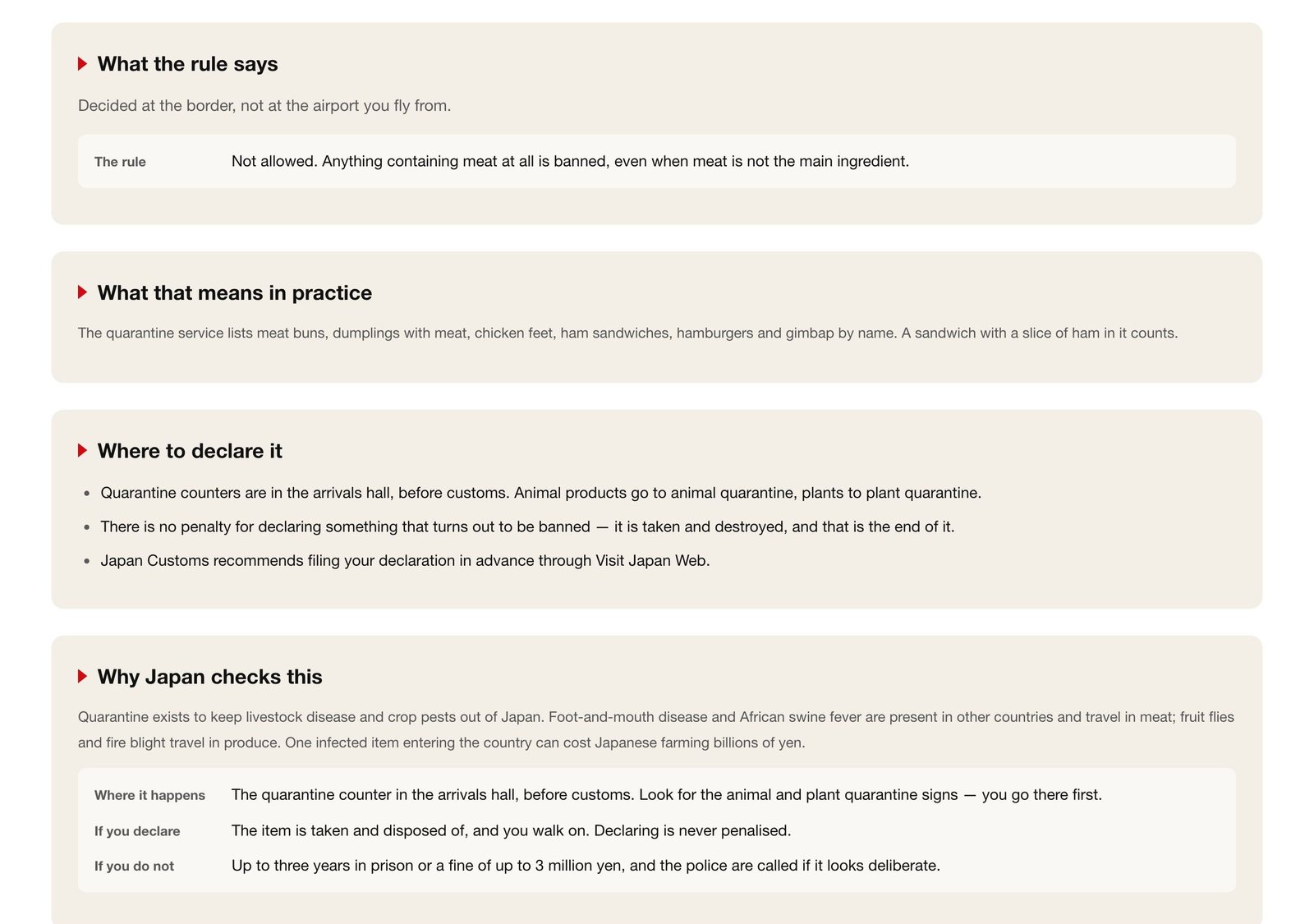
That rules out a lot of travel food. Our page on meat buns, dumplings and gimbap shows how wide the list is. The quarantine service names meat buns, dumplings with meat, chicken feet, ham sandwiches, hamburgers and gimbap, and a sandwich with a single slice of ham counts. Anything containing meat is banned, even when meat is not the main ingredient. The page, pictured below, gives the rule first and then says where to declare what you carry.
Cured meat gets no exception. Our page on ham, sausage, bacon and salami notes that being cured, dried or vacuum packed makes no difference, and neither does buying it at an airport duty-free shop on the way.
The meal on the plane follows the same rule. Eat your in-flight meal on board or leave it on the aircraft. Cut fruit and sandwiches from the meal tray are on the banned list, and taking them through arrivals counts as an illegal import.
The penalties are heavy. Since 1 July 2020, bringing in meat or animal products can mean a prison sentence of up to 3 years or a fine of up to 3 million yen. Quarantine officers can ask whether you have animal products and inspect your luggage, and detector dogs check bags at international airports. If you do carry an animal product, declare it at the Animal Quarantine Service counter in the baggage claim area. There is no penalty for declaring it.
Fish is treated differently. The quarantine service says dried fish and other fish products with no livestock meat or eggs are outside its inspection, although an officer may check that they contain no meat. Fresh fruit and vegetables have their own ban, which our guide to what cannot be brought into Japan covers along with medicines and fake brand goods.
Once you are through arrivals, eat at the first konbini you find. An onigiri, the egg sandwich and a hot drink make a good first meal, and most stores are open 24 hours a day. If you land late at night or early in the morning, when most shops are closed, JNTO’s Muslim guide calls the konbini a likely saving grace. If you travel with a baby, konbini and drugstores in Japan sell liquid baby formula in cartons, so you can restock soon after you arrive.
Taking konbini food to the airport and on the plane
Konbini food can fly with you. Under the Japan Civil Aviation Bureau’s rules, food and packed meals such as rice balls and bento are allowed in the cabin and in checked bags. Snacks and sweets are the same, and chocolate and biscuits are no problem. Anything containing meat falls under the quarantine rules above.
Drinks depend on the flight. On a domestic flight inside Japan, there is no limit on how much liquid you carry in the cabin. On an international flight, each container must be 100ml or less, and all of them go in one transparent re-sealable bag of 1 litre or less, one bag per person. The transport ministry’s page on liquids for international flights has the full rule, and our bottled drinks page applies it to what you buy. In checked baggage, bottled drinks have no limit.
Expect a quick check at security. Staff at Japanese airports may ask you to open a bottle and take a sip, or scan it with a liquid detector. It is routine and takes a few seconds. There is no need to stock up before the checkpoint, because vending machines are everywhere after security.
If you like to carry water, bring your own water bottle. On an international flight it must be empty when you pass through security. Most Japanese airports have free water fountains past the checkpoint, and many have hot water taps for tea. The table below sums up the rules for what you are most likely to buy.
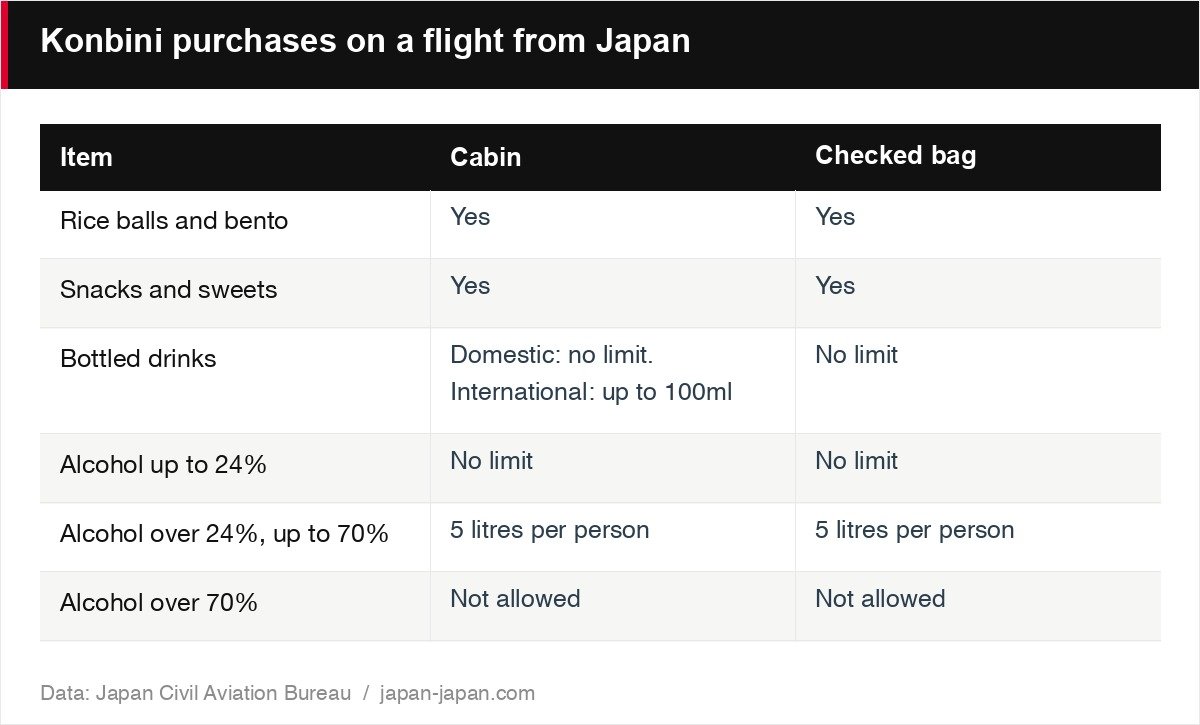
Alcohol has a second set of limits, based on strength. Drinks up to 24% alcohol have no limit. Over 24% and up to 70%, you can carry 5 litres per person. Over 70%, you cannot carry it at all. The same limits apply in checked bags. The drink must also stay in the retail bottle it was sold in, so pouring it into a hip flask is not accepted. Our page on alcohol has the full rules.
Chu-hi sits far below that line. At 3% to 12% alcohol, a chu-hi from the konbini is in the no-limit band. It is still a liquid, though, so on an international flight the 100ml rule applies to it in the cabin like any other drink.
FAQ
Are convenience stores in Japan open 24 hours?
Most are. JNTO’s guide for Muslim travellers says most convenience stores in Japan are open 24 hours a day, and the major chains have branches in rural areas as well as cities. That makes a konbini the easiest place to eat late at night or early in the morning, when most other shops are closed.
Why is the tax different if I eat inside the store?
Because Japan has two consumption tax rates. Food and drink you take away is taxed at the reduced rate of 8%, while eating at the store’s tables counts as dining out and is taxed at the standard 10%. Alcohol is always taxed at 10%. Tell the staff at the till if you plan to eat in.
Can I take a konbini rice ball or drink through airport security?
A rice ball, yes: food and packed meals are allowed in the cabin and in checked bags. A drink depends on the flight. Domestic flights inside Japan have no limit, while on international flights each container must be 100ml or less, packed in one 1 litre bag, as our bottled drinks page explains.
Can I use a foreign card at a konbini ATM?
Often, yes. JNTO says major stores in cities have multilingual ATMs that accept foreign cards, and 7-Eleven has them most widely. Some konbini have ATMs that take selected international debit or credit cards. Depending on the card, the service may also be unavailable at certain hours.
Photo: JP 日本 Japan 沖繩 OKINAWA Ashibinaa 豐見城市 Tomigusuku shop Muten Kura Sushi — Wikimedia Commons, CC0