Is 7-Eleven Japanese? US-Born, Japan-Owned, 21,956 Stores
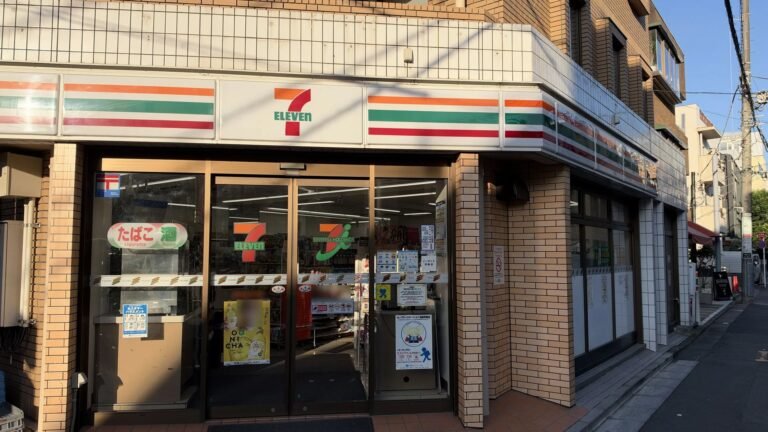
So the answer depends on what you mean by Japanese. The brand and the first store are American. The company that owns the American business today sits in Tokyo, and so does its parent. Both share one address: 8-8 Nibancho, Chiyoda ward.
We also did our own count for this article. We lined up the month 7-Eleven opened its first store in each prefecture against which of the three big chains leads there today. In the 19 prefectures 7-Eleven entered before 1990, it still has the most stores in all 19. The last section explains the count.
Where 7-Eleven started
7-Eleven started in the United States. The Seven-Eleven Japan overseas business page dates the founding to 1927. The Japanese company’s profile gives 28 June 1927 as the day 7-Eleven, Inc. was established.
The American company went by a different name when Japan first dealt with it. It was The Southland Corporation. Seven-Eleven Japan’s timeline calls it Southland and adds that it is the company now called 7-Eleven, Inc. You will see both names in older records, and they mean the same business.
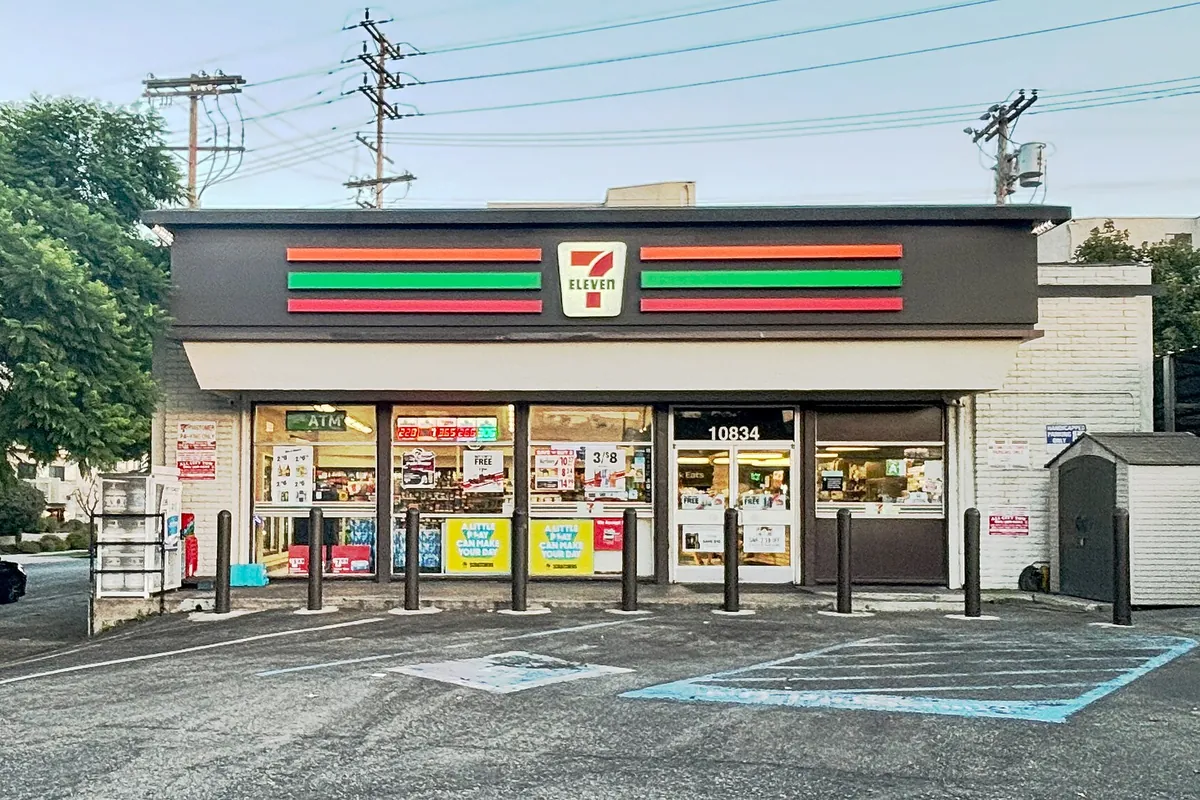
The stores in the United States are still run by 7-Eleven, Inc., which now operates in the United States and Canada.
By store count, the chain grew into the largest in the world. In 2007, 80 years after the founding, 7-Eleven became the chain store with the most stores on the planet. Seven-Eleven Japan notes that it already held the record among retailers. That year it passed fast food chains too.
The worldwide count kept climbing. Seven-Eleven Japan’s timeline marks 40,000 stores in December 2010, 50,000 in March 2013 and 60,000 in July 2016. The Seven & i Holdings company history dates 70,000 stores to December 2019 and 80,000 to April 2022.
Outside Japan and North America, the brand is licensed through a joint company. In June 2021 Seven-Eleven Japan and 7-Eleven, Inc. set up 7-Eleven International LLC. The Seven-Eleven Japan overseas group companies list says it licenses the brand in other parts of the world from two bases, Texas and Tokyo.
The Seven & i Holdings overseas convenience store operations page says it handles master franchising and licensing in 15 countries and regions. In April 2024 it completed buying the shares of Convenience Group Holdings Pty Ltd, the company behind 7-Eleven in Australia.
The Japanese side also opened stores abroad on its own. Seven-Eleven Japan opened its first store in Beijing in April 2004, in Dongcheng district. Its timeline adds the first 7-Eleven in the United Arab Emirates in October 2015 and in Vietnam in June 2017.
How a Japanese company came to own 7-Eleven
The story starts with a licence. In November 1973 a Japanese company called York-Seven was set up. It signed an area service and licence agreement with Southland, so it could run 7-Eleven stores in Japan. Seven & i’s group history lists York-Seven in the same month as Denny’s Japan.
The first store opened in May 1974 in Toyosu, Koto ward, Tokyo. Seven-Eleven Japan calls it the first convenience store in Japan run on a full franchise system. In June 1975 a store in Koriyama, Fukushima, became the first to stay open 24 hours. In January 1978 York-Seven took the name Seven-Eleven Japan. In Japanese the company writes it 株式会社セブン‐イレブン・ジャパン (kabushiki-gaisha sebun-irebun japan), meaning Seven-Eleven Japan Co., Ltd.
Then the direction of the deal began to turn. In December 1989 Seven-Eleven Japan bought Southland’s Hawaii division. In March 1991 it acquired shares of Southland and took part in running the company. Seven & i puts that stake at 69.98% of Southland’s shares.
| Year | What happened | Source |
|---|---|---|
| Nov 1973 | York-Seven is set up and signs a licence with Southland (now 7-Eleven, Inc.) | Seven-Eleven Japan |
| May 1974 | First store opens in Toyosu, Koto ward, Tokyo | Seven-Eleven Japan |
| Jan 1978 | York-Seven takes the name Seven-Eleven Japan | Seven-Eleven Japan |
| Dec 1989 | Seven-Eleven Japan buys Southland’s Hawaii division | Seven-Eleven Japan |
| Mar 1991 | 69.98% of Southland’s shares acquired | Seven & i Holdings |
| Feb 2005 | 7-Eleven, Inc. becomes a subsidiary of Seven-Eleven Japan | Seven-Eleven Japan |
| Sep 2005 | Seven & i Holdings is set up | Seven & i Holdings |
| Nov 2005 | 7-Eleven, Inc. becomes a wholly owned subsidiary | Seven-Eleven Japan and Seven & i Holdings |
| Mar 2011 | Seven-Eleven Japan acquires the 7-Eleven trademark rights in Japan | Seven-Eleven Japan |
| Jul 2019 | First store in Okinawa, the last of the 47 prefectures | Seven-Eleven Japan and Seven & i Holdings |
The table above lists each step with the page that records it. The last moves came in 2005. In February 2005 7-Eleven, Inc. became a subsidiary of Seven-Eleven Japan. In September 2005 the holding company Seven & i Holdings was set up. In November 2005 Seven-Eleven Japan came to own all of 7-Eleven, Inc. That same month the store count in Japan passed 11,000.
One more step closed the loop in Japan. In March 2011 Seven-Eleven Japan acquired the trademark rights to the 7-Eleven name in Japan. By then it had owned the American company for more than five years.
The two sides swapped places. In 1973 the Japanese company held a licence from the American one. From November 2005 the Japanese company owned the American one outright.
Read the timeline this way. The idea and the brand came from the United States. The company that grew from the Japanese licence ended up owning the American business. Both statements are true at the same time, which is why the question has no one-word answer.
Who owns 7-Eleven today
Three companies sit in a line. At the top is Seven & i Holdings Co., Ltd. The Seven & i Holdings corporate overview, last updated in July 2026, gives a head office in Nibancho, Chiyoda-ku, Tokyo. It was established on 1 September 2005.
Seven & i describes itself as a pure holding company. It plans, manages and runs group companies centred on the convenience store business. Its President and Representative Director is Steve Dacus (Seven & i Holdings Corporate Overview, July 2026).
Under the holding company is Seven-Eleven Japan Co., Ltd., which runs the stores in Japan. The Seven-Eleven Japan company profile gives the same Nibancho address and a founding date of 20 November 1973. It had 8,090 employees at the end of February 2026.
The same profile lists the main subsidiaries of Seven-Eleven Japan. The American company is one of them.
- 7-Eleven, Inc.: established on 28 June 1927, with 12,712 stores at the end of December 2025 in the United States and Canada.
- Seven-Eleven Hawaii: established on 30 November 1989, with 67 stores at the end of December 2025.
- Seven-Eleven Okinawa: established on 25 October 2017 to run the stores in Okinawa.
- China: companies in Beijing (400 stores), Tianjin (236) and Chengdu (73), all at the end of December 2025.
So the line of ownership runs from Seven & i Holdings to Seven-Eleven Japan, and from Seven-Eleven Japan to 7-Eleven, Inc. The American company keeps its own chief executive. The Japanese profile names that CEO as Mauricio Leyva.
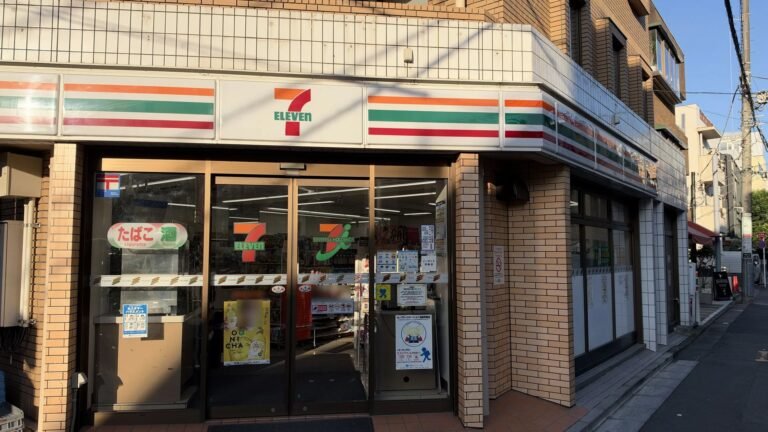
For a visitor, the practical point is simple. The 7-Eleven you walk into in Japan belongs to the Seven-Eleven Japan chain or, in Okinawa, to Seven-Eleven Okinawa. Both are Japanese companies inside the same group, and both answer to the holding company in Nibancho.
How many 7-Eleven stores are in Japan?
Japan had 21,956 7-Eleven stores at the end of September 2026. That is the total on the Seven-Eleven Japan stores by prefecture map (checked 18 October 2026). It is 29 more than the 21,927 on the company profile for the end of February 2026.
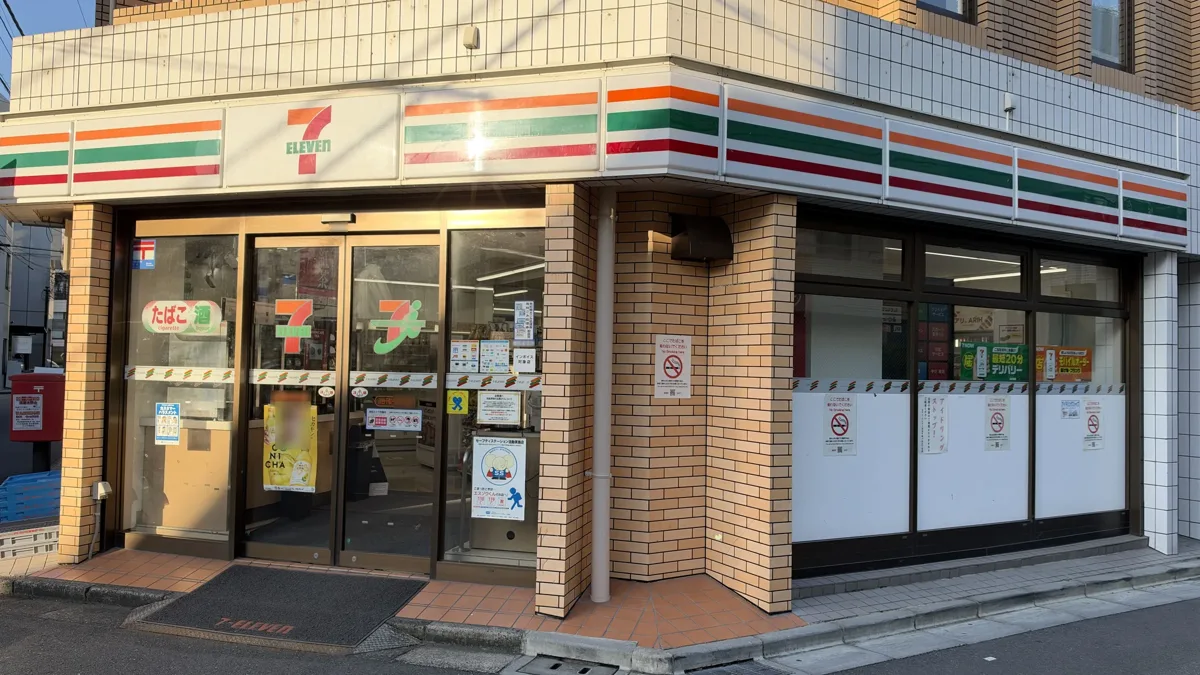
Tokyo has more 7-Eleven stores than any other prefecture, and the chain’s first store in Japan opened there in May 1974.
The count grew fast in the early years. The Seven-Eleven Japan store numbers by year table starts with 15 stores in fiscal 1974. The corporate history marks 1,000 stores in November 1980, 10,000 in August 2003 and 20,000 in January 2018.
| Fiscal year | Stores in Japan |
|---|---|
| 1974 | 15 |
| 1980 | 1,040 |
| 1990 | 4,270 |
| 2000 | 8,602 |
| 2010 | 13,232 |
| 2020 | 21,167 |
| 2024 (year to February 2025) | 21,743 |
The table shows the count at ten-year steps. Growth slowed in the last decade. Japan had 21,167 stores in fiscal 2020 and 21,743 in fiscal 2024, the year to February 2025.
Each store is busy. For the year to February 2025, the Seven-Eleven Japan 7-Eleven in numbers page gives an average of 922 customers a day per store. The average spend was 750 yen per customer, and average daily sales per store were 692 thousand yen.
7-Eleven has the most stores of the three big chains in most of Japan, but not everywhere. Our convenience stores by prefecture database counts 7-Eleven as the leader in 26 of the 47 prefectures, Lawson in 11 and FamilyMart in 10. It uses 7-Eleven and FamilyMart counts at the end of September 2026 and Lawson counts at the end of February 2026. Our 7-Eleven vs Lawson vs FamilyMart guide compares the three chains region by region.
For the practical side of a trip, see our 7-Eleven ATM guide for foreign cards, the 7-Eleven Japan payments database and the 7-Eleven Japan food database.
7-Eleven stores by prefecture
Tokyo has the most 7-Eleven stores. All of Tokyo had 2,943 at the end of September 2026. That is 13.4% of every 7-Eleven in Japan, by our calculation. The next four are Kanagawa (1,540), Osaka Prefecture (1,317), Saitama (1,274) and Chiba (1,196).
In our Tokyo convenience store count, 7-Eleven makes up 41.9% of the 7,025 stores of the three chains. FamilyMart has 2,443 and Lawson 1,639.
The fewest 7-Eleven stores are in Kochi (52), Tottori (63) and Fukui (73), all at the end of September 2026. All three are prefectures the chain entered late, which the next section counts.
| Prefecture | 7-Eleven stores (end of September 2026) | Leader of the three chains |
|---|---|---|
| Tokyo | 2,943 | 7-Eleven |
| Kanagawa | 1,540 | 7-Eleven |
| Osaka Prefecture | 1,317 | FamilyMart |
| Saitama | 1,274 | 7-Eleven |
| Chiba | 1,196 | 7-Eleven |
| Hokkaido | 991 | 7-Eleven |
| Kyoto Prefecture | 351 | 7-Eleven |
| Fukui | 73 | FamilyMart |
| Tottori | 63 | Lawson |
| Kochi | 52 | Lawson |
Big prefectures have more stores, so a second measure helps. Across Japan there are about 17.7 7-Eleven stores for every 100,000 people. We worked that out with the population estimate for 1 October 2024 by the Statistics Bureau of Japan.
By that measure the highest are Yamanashi (26.4), Fukushima (26.2) and Gunma (26.1). The lowest are Kochi (7.9), Aomori (9.6) and Fukui (9.9). Fukushima got its first 7-Eleven in September 1974, and Koriyama in Fukushima had the first 24-hour store in June 1975.
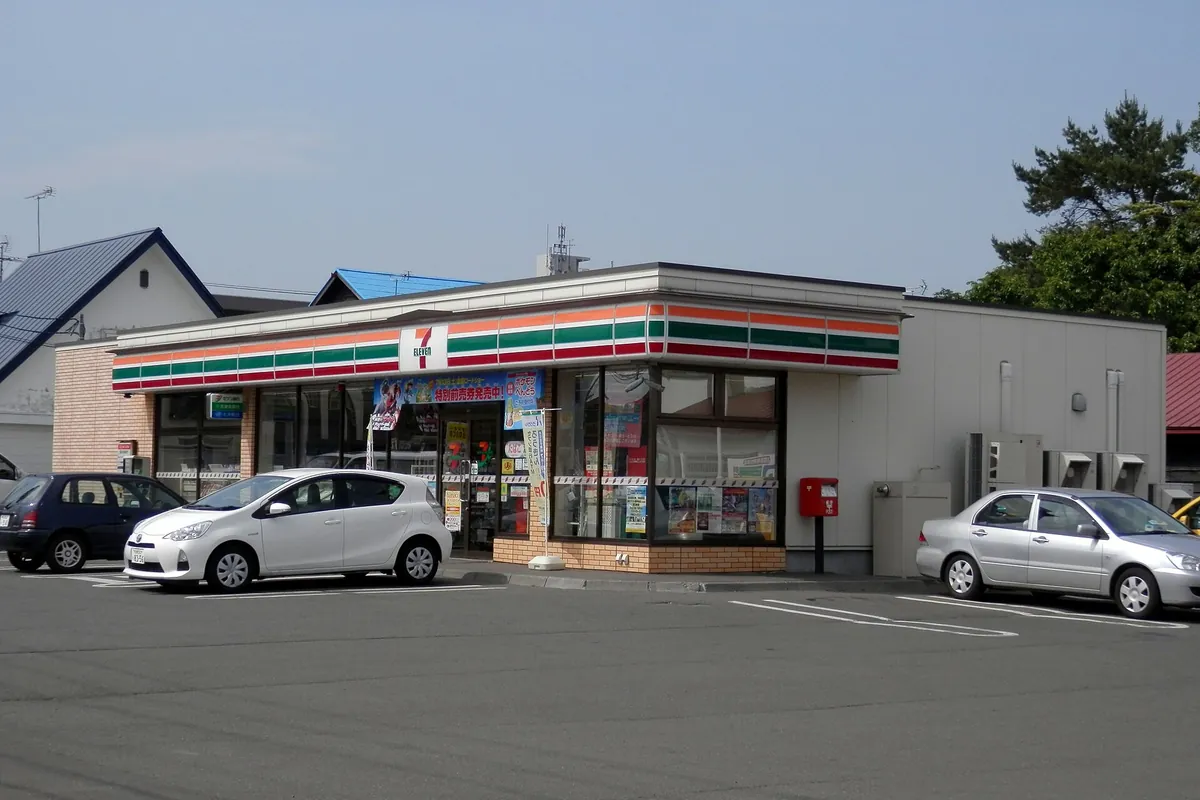
Hokkaido is a special case. Our Hokkaido convenience store count puts 7-Eleven at 991 stores, 50.2% of the 1,976 stores of the three chains. A local chain has even more. Seicomart had 1,087 stores in Hokkaido at the end of September 2026, so 7-Eleven is not the biggest chain in Hokkaido once local chains count.
Kyoto is close to a three-way tie. The Kyoto convenience store count gives Kyoto Prefecture 351 7-Eleven, 331 FamilyMart and 327 Lawson stores. Kyoto also has the most foreign guest nights for each store of the three chains: 18,128 in 2025.
Osaka tips the other way. The Osaka convenience store count gives Osaka Prefecture 1,362 FamilyMart stores, ahead of 1,317 7-Eleven and 1,200 Lawson.
When 7-Eleven reached each prefecture, and who leads there now
This is the count we did for this article. The Seven-Eleven Japan 7-Eleven in numbers page lists the month the first store opened in each of the 47 prefectures. It runs from Tokyo in May 1974 to Okinawa in July 2019. We put that list next to our own count of which of the three big chains has the most stores in each prefecture today.
| Decade of first store | Prefectures | 7-Eleven has the most stores in |
|---|---|---|
| 1970s | 11 | 11 |
| 1980s | 8 | 8 |
| 1990s | 7 | 6 |
| 2000s | 12 | 1 |
| 2010s | 9 | 0 |
The table groups the prefectures by the decade of the first 7-Eleven. The two ends are clear. 7-Eleven opened its first store in 19 prefectures before 1990, and it has the most stores of the three chains in all 19. In the 13 prefectures it first entered in 2009 or later, it leads in none.
The early group starts in 1974. Tokyo came in May, Kanagawa in June, Fukushima in September and Saitama in October. Nagano and Chiba followed in 1975, Hokkaido in May 1978, and Tochigi, Fukuoka, Shizuoka and Ibaraki in 1979.
The 1980s added eight more. They were Gunma (1981), Miyagi, Hiroshima and Saga (1982), Yamanashi and Yamaguchi (1983), Niigata (1986) and Kumamoto (1987). 7-Eleven leads in all eight today.
The middle years are mixed. In the 1990s 7-Eleven entered 7 prefectures and leads in 6 of them. Shiga, Kyoto and Osaka all got their first store in March 1991. Kyoto now leads for 7-Eleven, while Osaka leads for FamilyMart.
In the 2000s 7-Eleven entered 12 prefectures but leads in only 1. Aichi is the biggest of them. The first store there opened in July 2002. Our Aichi convenience store count now gives FamilyMart 1,625 stores in Aichi Prefecture, against 1,070 7-Eleven and 707 Lawson.
The late group is the 13 prefectures 7-Eleven first entered from 2009. Toyama, Fukui, Shimane and Ishikawa came in 2009, Kagoshima in 2011 and Akita in 2012. Kagawa and Tokushima followed in 2013, Ehime in 2014, Kochi, Aomori and Tottori in 2015, and Okinawa in 2019.
All four prefectures of Shikoku are in that group. Kagawa and Tokushima got their first store in March 2013, Ehime in March 2014 and Kochi in March 2015. Each of the four has more Lawson stores than 7-Eleven or FamilyMart stores. In Kochi, Lawson has 138 of the 288 stores of the three chains.
Okinawa was the last prefecture. The first store opened in July 2019, 45 years after the first store in Tokyo. Seven & i’s history says that opening gave the chain a presence in every prefecture of Japan. The stores there are run by Seven-Eleven Okinawa.
Our Okinawa convenience store count gives 211 7-Eleven stores at the end of September 2026. FamilyMart had 336 at the same date and Lawson 269 at the end of February 2026. Okinawa also has the most stores of the three chains per person in Japan, 55.7 per 100,000 people.
For a trip, the count tells you which sign you will see most. In Tokyo, Kanagawa, Saitama, Chiba and Hokkaido, 7-Eleven has the most stores of the three. In Shikoku, look for Lawson first. In Osaka, Aichi and Okinawa, FamilyMart has the most. Our guide to Japanese convenience store food covers what to buy at all three.
FAQ
Is 7-Eleven Japanese or American?
It started in the United States in 1927 and is still an American brand by origin. Since November 2005 the US company, 7-Eleven, Inc., has been owned outright by Seven-Eleven Japan in Tokyo. So the owner is Japanese and the founding was American.
Who owns 7-Eleven?
Seven-Eleven Japan owns 7-Eleven, Inc. Seven-Eleven Japan in turn sits under Seven & i Holdings, a pure holding company set up on 1 September 2005. Both have their head office in Nibancho, Chiyoda ward, Tokyo.
How many 7-Eleven stores are in Japan?
Japan had 21,956 7-Eleven stores at the end of September 2026, according to Seven-Eleven Japan’s map of stores by prefecture. Tokyo has the most, with 2,943. Kochi has the fewest, with 52.
Is there a 7-Eleven in every prefecture of Japan?
Yes. Okinawa was the last prefecture to get one, in July 2019, and that opening put 7-Eleven in all 47 prefectures. Okinawa had 211 stores at the end of September 2026.
About the author