Can you bring food on a plane?
In Japan food is allowed in carry-on with conditions, and in checked bags. Carry-on: Solid food: yes. On international flights liquid, gel and paste foods fall under the 100ml liquid limit: yogurt, miso, soup, curry, sauces, jam, honey, tofu packed in water, and canned fruit or vegetables. A little sauce inside a packed lunch is excepted. Checked baggage: Yes.
Carry-on: conditionsChecked bag: yes
Food on flights in and from Japan
The rule for food comes from the Civil Aviation Bureau's list of restricted items. On international flights its liquids list applies as well.
| Where | Allowed? | What applies |
|---|---|---|
| In the cabin | Yes, within limits | Solid food: yes. On international flights liquid, gel and paste foods fall under the 100ml liquid limit: yogurt, miso, soup, curry, sauces, jam, honey, tofu packed in water, and canned fruit or vegetables. A little sauce inside a packed lunch is excepted. |
| In checked baggage | Yes | Yes. |
Getting food onto the plane is the easy part. Japan does not let meat, most fresh fruit or most fresh vegetables into the country. That includes a ham sandwich, a meat bun or the leftovers of your in-flight meal, even when it was bought at a duty-free shop.
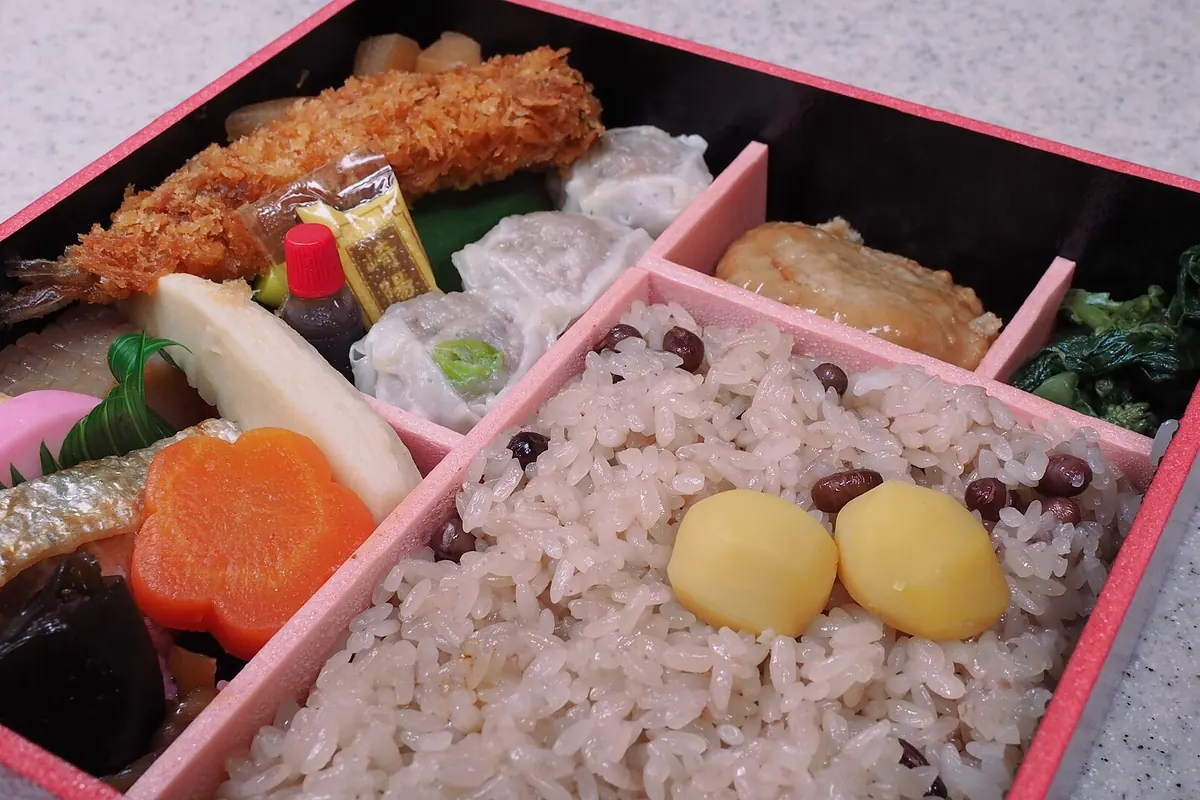

Bento, miso, mentaiko and canned food: what the list names
Japan's liquids list goes through food shelf by shelf. Its Japanese-language edition names far more products than the English one.
- Bento sauce, packaged rice and ready meals
- The list excepts a small quantity of sauce in packed lunches or snacks, so the sauce does not turn a bento into a restricted item. Ready meals are split by type: curry, stew, risotto and rice porridge in cans, jars, plastic containers or retort pouches are restricted, while cooked rice in a plastic container or vacuum pack is excepted from that row.
- Condiments taken home as souvenirs
- Bottled and tubed seasonings are restricted as a group. The English list names soy sauce, miso, gochujang, mayonnaise and ketchup. The Japanese-language edition adds dressing, dipping sauces, noodle soup base (tsuyu), wasabi and mustard paste, grated ginger and garlic, Tabasco and yuzu kosho. Dried seasonings and spices such as dried red pepper, pepper and curry powder are excepted.
- Mentaiko, roe and pickles
- Salted seafood is not treated as one group. Sea urchin, salmon roe, caviar and mentaiko in cans, jars or vacuum packs are listed as unrestricted unless they are packed with full liquid, and Narita's FAQ says the same of mentaiko. Pickles, pasted or boiled marine products and umeboshi are restricted, and the list in Japanese also names kimchi and shiokara. Dried ume is excepted.
- Canned tuna: excepted in Japan, a liquid in Australia
- Canned food is where the lists part. Japan restricts canned vegetables and fruit but excepts canned marine and meat products such as canned tuna, crab, salmon, ham and sausage, as cans that hold very little liquid. Australia's Home Affairs counts canned food with high liquid content, such as abalone, sardines or tuna, as a liquid. The TSA suggests a checked bag for canned foods, which can need additional screening.
- Tofu, natto, cheese and eggs
- Tofu and tokoroten come under a restricted row for foods packaged with water, joined in the Japanese edition by konnyaku and fresh yuba. Cheese, natto, eggs and fruit are on the unrestricted list, with cheese paste in a tube as the exception. Soft cheese is judged more strictly elsewhere: Australia's Home Affairs lists brie and camembert as gels, and the TSA limits Cheese (Creamy) to 3.4oz/100 ml.
Food: the rule country by country
In the United States and Australia the authority's page lists food as allowed in carry-on.
| Flying from | Carry-on | Checked bag | What the authority says |
|---|---|---|---|
| JapanCivil Aviation Bureau | With limits | Yes | Solid food: yes. On international flights liquid, gel and paste foods fall under the 100ml liquid limit: yogurt, miso, soup, curry, sauces, jam, honey, tofu packed in water, and canned fruit or vegetables. Source |
| United StatesTSA | Yes | Yes | Solid food items (not liquids or gels) are allowed in carry-on and checked bags. TSA officers may ask you to separate food from your carry-on bag for X-ray screening.TSA entry: Solid Foods, Cooked Meat, Seafood and Vegetable (No Liquid) Source |
| European UnionEuropean Commission, EASA | With limits | — | Soups, syrups and other liquid/solid mixtures count as liquids: containers of 100 ml or less in one transparent re-sealable bag of one litre or less. Source |
| United KingdomUK Government | With limits | Yes | Food in hand luggage can obstruct x-ray images, so bags may be checked again by hand. Liquid or semi-liquid foods (for example soup, jam, honey and syrups) count as liquids. Frozen food cannot usually go in hand luggage. Source |
| TaiwanCivil Aviation Administration | With limits | Yes | Canned food and pickled food in jars usually contain liquid: on international flights a container over 100 ml cannot be carried on board. Putting such food in checked baggage is advised. Source |
| AustraliaHome Affairs, CASA | Yes | Yes | Food is not considered dangerous goods and is generally allowed in carry-on and checked baggage; it may be subject to quarantine. On international flights sauces, soups, stews, jam, yoghurt and honey count as liquids or gels.CASA Pack Right entry: Food (bread, cheese, chocolate, fruit, honey, jam, jelly, lentils, noodles, nougat, rice, tuna) Source |
Each row comes from that authority's own page. Airlines can be stricter, and the screening officer has the final say.
If security in Japan will not let food through
- What to do
- Move food to the bag you check in before you reach security. Narita Airport states that anything given up at the checkpoint is discarded and cannot be returned.
Buying food in Japan
- Where to buy
- Convenience stores sell full meals, heated at the counter.
Frequently asked questions
Can you bring food on a plane?
On flights in and from Japan: Solid food: yes. On international flights liquid, gel and paste foods fall under the 100ml liquid limit: yogurt, miso, soup, curry, sauces, jam, honey, tofu packed in water, and canned fruit or vegetables. A little sauce inside a packed lunch is excepted. In checked baggage: Yes.
Can you bring instant noodles on a plane?
Yes. The Japanese-language edition of Japan's liquids list has a line for this: small packs of concentrated sauce, such as the soup packet attached to dried noodles, are excepted from the condiment row. Dried agricultural products sit outside the restriction altogether. Australia's CASA names noodles in its general food entry: food is not considered dangerous goods and is generally allowed.
Can you take food for an allergy or special diet through security?
Yes. Narita's FAQ, asked about home-prepared snacks for a child with an egg allergy, says food that is not liquid can be brought on board without any specific declaration. Japan's list permits diabetic foods and liquid nutrition for a medical condition in the amount needed in the cabin, declared to the screener. GOV.UK allows containers up to 2 litres at all UK airports for special dietary requirements.
Does peanut butter count as a liquid at airport security?
Yes. Japan's liquids list has a spreads row that names peanut butter, jam and jelly in cans, jars, plastic containers or tubes. The TSA limits Peanut Butter, Hummus and Creamy Dips and Spreads to 3.4oz/100 ml in carry-on. Australia's Home Affairs lists peanut butter, cheese spread and Vegemite as gels.
Does the TSA allow food in carry-on bags?
Solid food items (not liquids or gels) are allowed in carry-on and checked bags. TSA officers may ask you to separate food from your carry-on bag for X-ray screening.
Can you take food in hand luggage in the UK or Europe?
The United Kingdom: Food in hand luggage can obstruct x-ray images, so bags may be checked again by hand. Liquid or semi-liquid foods (for example soup, jam, honey and syrups) count as liquids. Frozen food cannot usually go in hand luggage.
What is the rule for food on flights from Australia and Taiwan?
Australia: Food is not considered dangerous goods and is generally allowed in carry-on and checked baggage; it may be subject to quarantine. On international flights sauces, soups, stews, jam, yoghurt and honey count as liquids or gels. Taiwan: Canned food and pickled food in jars usually contain liquid: on international flights a container over 100 ml cannot be carried on board. Putting such food in checked baggage is advised.
Related items
Sources for this page
- Japan Civil Aviation Bureau (MLIT) — List and Description of LAGs Restriction (1 October 2015)checked October 2, 2026
- Japan Civil Aviation Bureau — Items restricted in carry-on and checked baggage (updated 24 April 2026)checked October 2, 2026
- Narita International Airport — FAQ: prohibited itemschecked October 2, 2026
- Japan Civil Aviation Bureau — List of liquids covered by the quantity limits (Japanese, 1 October 2015)checked October 2, 2026
- TSA — What Can I Bring?: Solid Foods + Cooked Meat, Seafood and Vegetable (No Liquid)checked October 1, 2026
- European Commission — Information for air travellerschecked October 1, 2026
- GOV.UK — Hand luggage restrictions: Overviewchecked October 1, 2026
- Taiwan CAA — Q&A on the new security measures for carry-on baggage (liquids, gels and aerosols)checked October 1, 2026
- CASA — Pack Right: Food (bread, cheese, chocolate, fruit, honey, jam, jelly, lentils, noodles, nougat, rice, tuna)checked October 1, 2026
- Australian Department of Home Affairs — TravelSECURE: What you can and can't bringchecked October 1, 2026
Read more
- Nishiki Market vs Kuromon and Tsukiji: 2026 Hours and RulesNishiki Market asks you to eat at the shop, Kuromon welcomes eating as you stroll, and …
- Types of Ramen in Japan 2026: Tonkotsu, Miso, Shoyu, ShioThe four main types of ramen are shoyu, miso and shio, named for the seasoning, and ton…
- Conveyor Belt Sushi in Japan 2026: Prices and How to OrderConveyor belt sushi plates typically start at 100 yen, and at 120 yen at Sushiro. Order…
- Japanese Snacks to Bring Home in 2026: Tax-Free and CustomsJapanese snacks go in your carry-on in any amount; sake bought before security goes in …
Compiled by Japan Japan !! · Updated October 2, 2026