Japan Visa 2026: Who Needs One, Fees and How to Apply
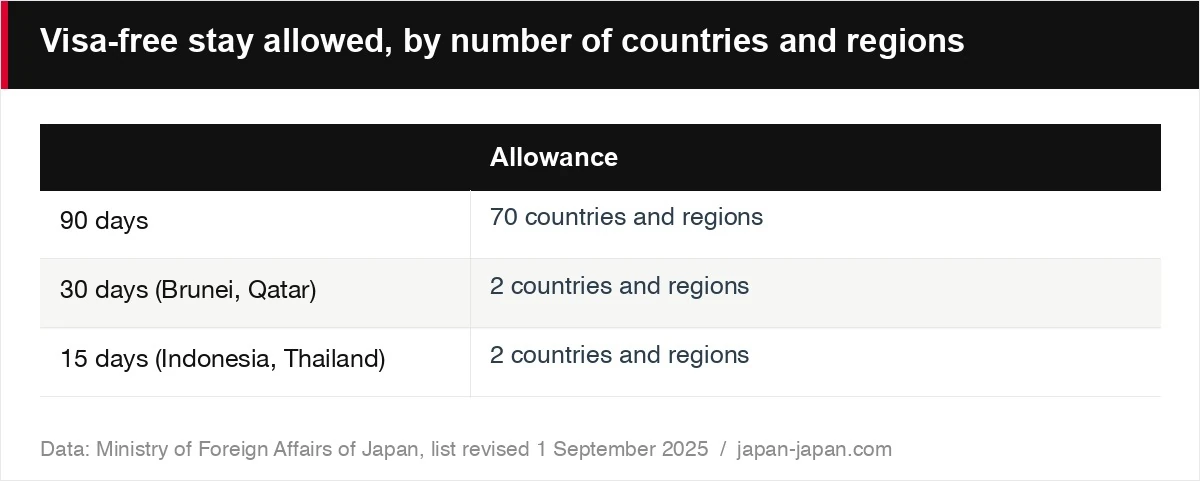
| Item | Value |
|---|---|
| 90 days | 70 countries and regions |
| 30 days (Brunei, Qatar) | 2 countries and regions |
| 15 days (Indonesia, Thailand) | 2 countries and regions |
The chart above counts the 74 visa-free countries and regions by the stay they get. 70 of them get 90 days. Only four get a shorter stay: Brunei and Qatar get 30 days, and Indonesia and Thailand get 15 days.
The rest of this guide covers who qualifies, what the fee is, where to apply, how long it takes and what happens at the airport. Every number comes from the Ministry of Foreign Affairs of Japan (MOFA) or the Immigration Services Agency.
Who Needs a Visa for Japan
Start with your passport. The MOFA Japan list of visa exemption countries and regions names 74 countries and regions with reciprocal visa exemption arrangements. MOFA last revised the list on 1 September 2025. If your passport country is on it, you can arrive without a visa for a short stay.
Two conditions apply. The MOFA Japan visa FAQ says the exemption covers stays of 90 days or less, with no income-earning activities. Tourism, visiting relatives and friends, and attending meetings fit inside that rule. Paid work in Japan does not.
Answer yes to both and you can fly without a visa. Answer no to either and you apply for a visa before you travel.
Countries that get 90 days
The United States, Canada, the United Kingdom, Australia, New Zealand and every European Union country on the list get 90 days. US citizens can check the details on our Japan visa page for US citizens, which lists 18 Japanese missions in the country. Australians, Canadians and Britons have their own pages too, such as the Japan visa page for UK citizens.
A few European nationals get a longer allowance under bilateral arrangements of up to 6 months. Germany, Austria, Ireland, Liechtenstein, Mexico, Switzerland and the United Kingdom fall in this group. They still land with 90 days. To stay longer, they apply for an extension at a regional immigration bureau before those 90 days run out.
Countries with shorter stays or passport conditions
Brunei and Qatar get 30 days. Indonesia and Thailand get 15 days. Some exemptions also depend on the passport itself. 18 of the 74 carry a passport condition, according to our list of visa-free countries for Japan.
- Registered ePassport: Indonesia and Qatar. You register an ICAO-compliant ePassport at a Japanese mission first. The registration lasts three years or until the passport expires.
- ePassport only: Brazil, Montenegro, Panama, Paraguay, Peru, Serbia, Thailand and the United Arab Emirates. Without an ICAO-compliant ePassport, you need a visa.
- Machine-readable passport: Barbados, Lesotho and Türkiye.
- Taiwan: only passports with a personal ID number qualify.
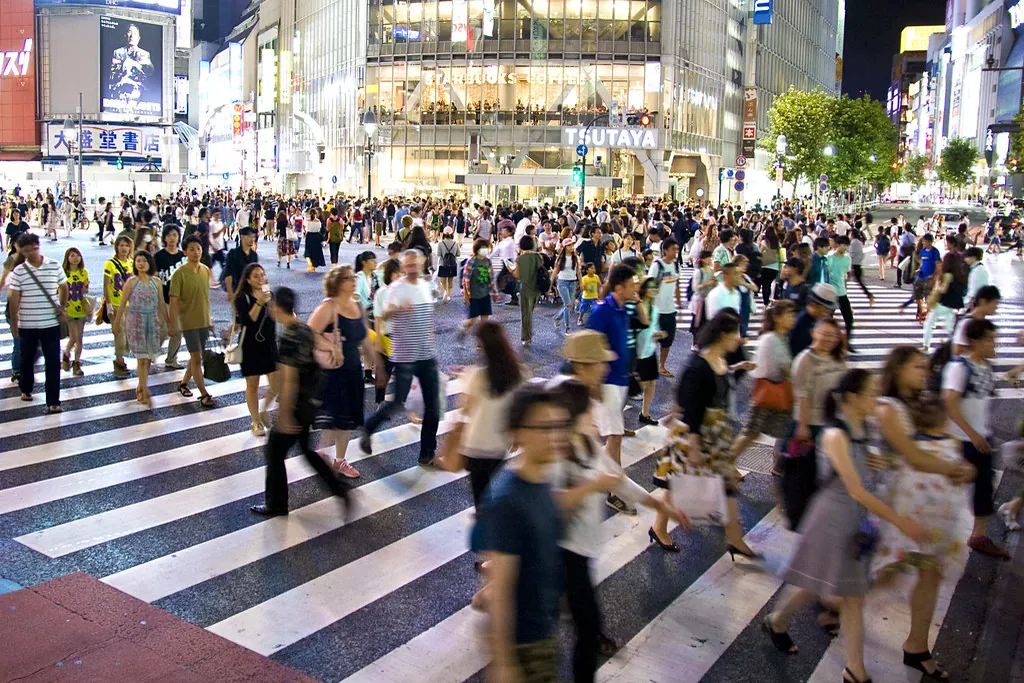
Crowds like this one at the Shibuya crossing include many visitors who arrived visa-free. Others came on a visa. China, India, the Philippines and Vietnam are not on the exemption list, so their nationals apply first. Check your own country on the Japan visa guide by country.
Japan Visa Fee from 1 July 2026
Japan changed its visa fee on 1 July 2026. The MOFA Japan visa fees page says the Cabinet Order on Fees Collected by Consular Officers was amended. For applications accepted on or after that date, the fee is about 15,000 yen for a single-entry visa. A multiple-entry visa costs about 30,000 yen.
The multiple-entry figure is double that. Applications accepted by 30 June 2026 used the old fee table.
How you pay
You pay in the local currency of the country where the embassy or consulate sits. The yen figure is a conversion, so your receipt shows dollars, pounds or another currency. In principle, you pay in cash. If you apply on the JAPAN eVISA website, some countries and regions allow online payment by credit card.
- No visa, no fee: if Japan does not issue the visa, you pay no visa fee.
- Agency charges: an accredited agency adds its own handling fee on top of the visa fee.
- Different amounts: your purpose and nationality can make the fee free or different.
- No refunds: a visa cancelled before use does not get its fee back.
| Item | Single-entry visa | Multiple-entry visa |
|---|---|---|
| Fee | About 15,000 yen | About 30,000 yen |
| Standard processing | 5 working days | 5 working days |
| If referred to Tokyo | More than a month | More than a month |
| Validity | Three months, one entry | One to five years, any number of entries |
| Fee if not issued | None | None |
The table above puts the fee next to the processing time and the validity. Our Japan visa fees page tracks the amounts, and the guide to Japan’s departure tax covers the other charge you pay when you leave.
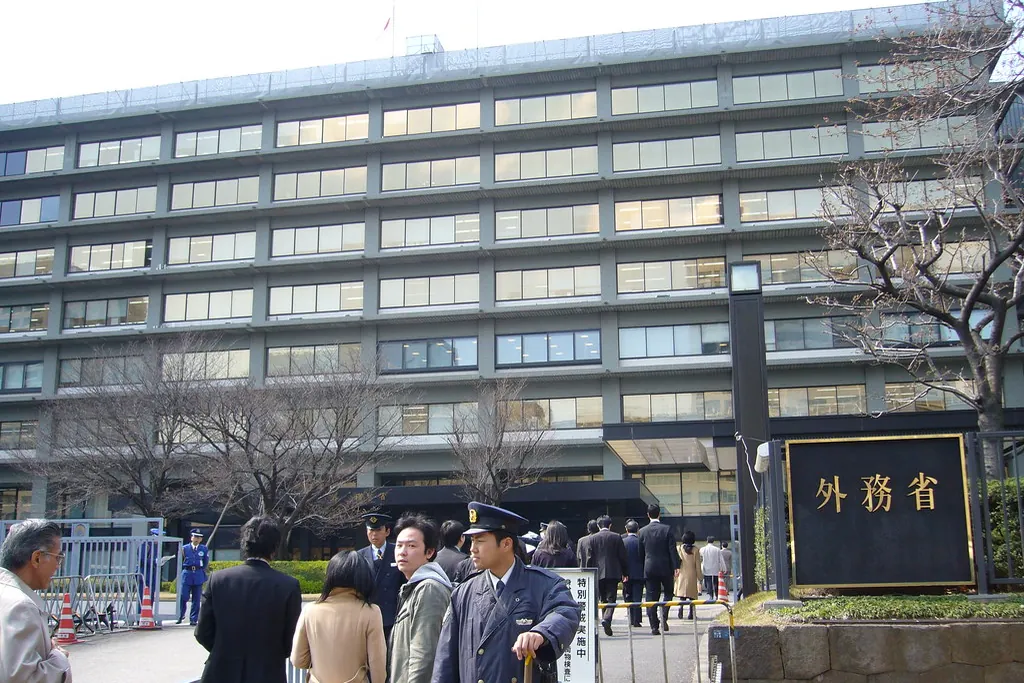
The Ministry of Foreign Affairs in Kasumigaseki, Tokyo, sets these rules. Its embassies and consulates abroad collect the fee and issue the visa.
Japan Visa Application: Embassy, Agency or eVISA
You apply in the country where you live, before you travel. The MOFA Japan notes on visa applications say you file at the Japanese embassy or consulate general with jurisdiction over your area. In some places, an accredited travel agent approved by that mission files for you.
The visa FAQ lists four ways to apply:
- Go to the Japanese embassy or consulate general yourself.
- Write a Letter of Proxy and send someone in your place.
- Use an accredited travel agent approved by the mission.
- Apply online on the JAPAN eVISA website.
Your mission may accept only some of these. Check its website before you prepare anything. You cannot apply at a Japanese embassy in a country you are only visiting. Our guide on how to apply for a Japan visa explains which mission takes your file.

An embassy building like this one is where most paper applications go. The mission puts a visa sticker in your passport. eVISA applicants get an electronic visa instead.
JAPAN eVISA
The MOFA Japan JAPAN eVISA page lists where online tourist visas work. As of 15 May 2026, people residing in Australia, Brazil, Cambodia, Canada, Saudi Arabia, South Africa, Taiwan, the United Kingdom and the U.S.A. can apply directly. This covers residents who need a visa, whatever their nationality.
In other places, an accredited agency files the eVISA for you. These include China, the Philippines, Vietnam, Hong Kong, India, Indonesia, Macau, Mongolia, the Republic of Korea, Singapore and the United Arab Emirates. Filipino and Vietnamese residents must join a packaged tour from a designated travel agency.
- Visa type: single-entry short-term stay for tourism, up to 90 days
- Travel: by air, or by scheduled international ferry from Busan or Shanghai
- Passport: ordinary passports only
- At the airport: show the Visa issuance notice online. A PDF, screenshot or printout is refused
Our JAPAN eVISA guide walks through the website step by step. MOFA warns about fake websites that copy the JAPAN eVISA site, so type the address from the official page.
The illustration splits a short stay into what fits and what does not. Sightseeing, family visits and meetings fit. Paid work and stays past 90 days need a different visa.
Japan Visa Requirements and Documents
Japan visa requirements change with your purpose and your nationality. The notes on visa applications say some files need papers from the person inviting you in Japan. Your host should send these to you well before you apply.
For a short stay with relatives, friends or business partners, the visa FAQ names two papers from the host:
- Letter of Reason for Invitation: why the host is inviting you
- Schedule of Stay: your day-by-day plan in Japan
Some applicants from China, Russia, CIS countries and Georgia need more when the host pays the travel costs. The host adds a Letter of Guarantee, the guarantor’s certificate of residence and proof they can pay. For a long stay, the host first asks a Regional Immigration Services Bureau for a Certificate of Eligibility.
Our Japan tourist visa requirements page lists the documents by country. Your mission may also ask for extra papers after it accepts the file. If you do not send them, the examination stops.
Why a mission refuses an application
The FAQ lists cases where a mission may not accept an application. These include errors or missing documents and a passport without enough validity or blank pages. A refusal also follows if you already hold a valid visa or apply outside your country of birth or residence.
If Japan rejects your visa, the mission does not give the specific reason. You cannot reapply for the same purpose within six months of a rejection. A big change in your situation or humanitarian need can be an exception, so ask the mission first.
Processing Time and Validity
Plan for 5 working days. The MOFA Japan visa processing time page counts from the day after the mission receives your application. That figure assumes there is no problem with the content of your file.
It can take longer. A rush of applications slows things down. If the mission sends your file to the Ministry of Foreign Affairs in Tokyo, the visa can take more than a month. Interviews, extra documents and inquiries can stretch it from a couple of weeks to several months. Our Japan visa processing time page covers these cases, so apply as soon as your trip is set.
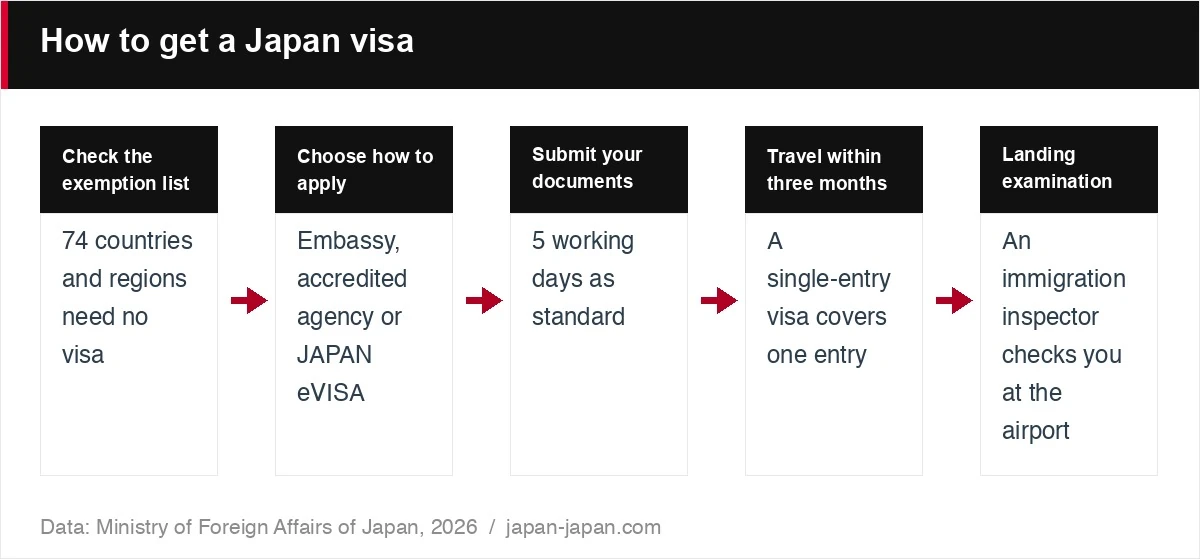
The flow above shows the whole path, from checking the exemption list to landing in Japan. Two clocks run on it: the 5 working days to issue, and the three months to use the visa.
How long a visa stays valid
The MOFA Japan visa validity page says a single-entry visa is valid for three months. You must apply for landing before it expires. The visa becomes invalid once you use it to enter, so one visa covers one entry.
You cannot extend the validity of a visa. If you postpone your trip past three months, you apply again. Multiple-entry visas go to business travelers and similar groups. They last from one to five years and work any number of times in that period.
Arriving in Japan with or without a Visa
A visa is one requirement for landing. It does not promise entry. The MOFA visa FAQ says an officer can still refuse you if you cannot explain your planned activities in Japan.
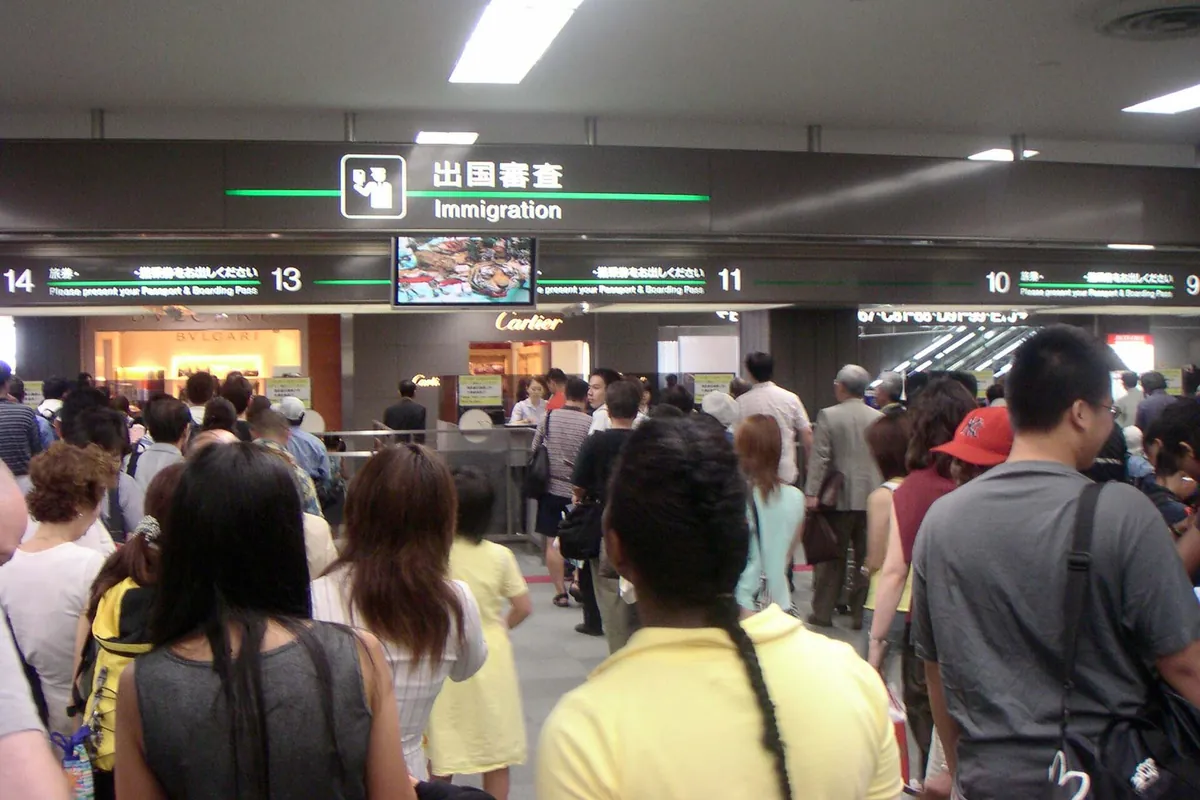
Lines like this at the arrival immigration counters are where landing happens. The Immigration Services Agency of Japan landing procedures page says every foreign visitor takes a landing examination by an immigration inspector at the port of entry.
At the counter, you hand over your passport and give your fingerprints and face photo, unless the law exempts you. The officer checks that your passport and visa are valid and your planned activities are genuine. Your planned stay must also match the rules. When you pass, the officer puts a landing permission stamp in your passport. The Japanese term is 上陸許可 (jōriku kyoka), which means landing permission.
If an officer does not approve you, a special inquiry officer holds an oral hearing. After that hearing, you can object to the Minister of Justice within three days.
Before you land
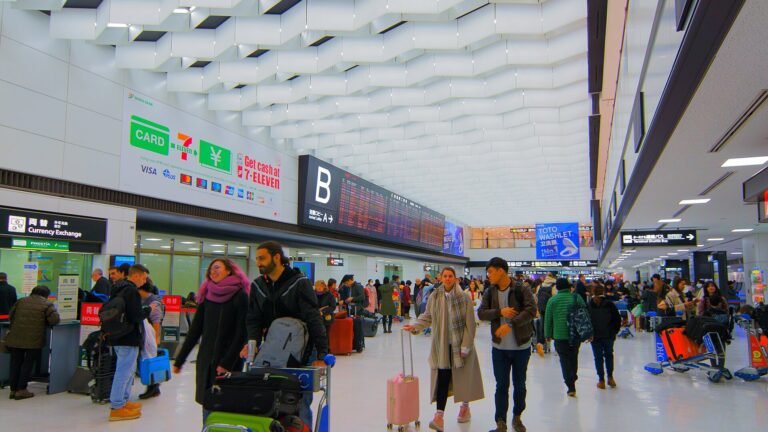
You can finish the immigration and customs forms online before the flight. Our guide to the Visit Japan Web QR code shows how. JESTA, Japan’s planned travel authorisation, is not something you apply for yet; see our JESTA guide. If you land at Narita, our Narita Airport guide covers the terminals and trains into Tokyo.
FAQ
Do US citizens need a visa for Japan?
No, not for a short stay. The United States is on Japan’s list of 74 visa-exempt countries and regions. US citizens can stay up to 90 days for tourism, family visits or meetings. Paid work needs a visa.
How much is a Japan tourist visa in 2026?
For applications accepted on or after 1 July 2026, a single-entry visa costs about 15,000 yen. A multiple-entry visa costs about 30,000 yen. You pay in local currency, and an agency adds its own fee.
How long does a Japan visa take to process?
The standard time is 5 working days from the day after the mission accepts your application. If the file goes to the ministry in Tokyo, it can take more than a month. Apply early.
Can I extend my stay or my visa while I am in Japan?
You cannot extend the validity of a visa. If you already live in Japan and want a longer stay, consult the regional immigration bureau. Nationals with a bilateral allowance of up to 6 months apply there before their 90 days end.
About the author

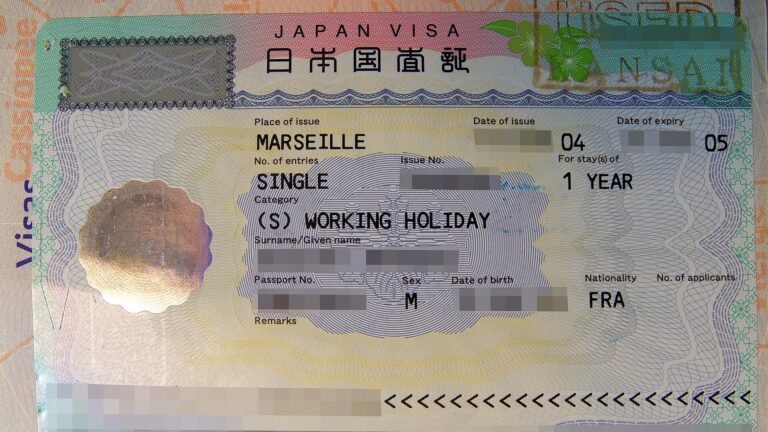
Photo: Passeport français – Visa japonais Working Holiday-v1.jpg by MathieuMD (Public domain, cropped), via Wikimedia Commons.



.jpg)
