Japan Visa Guarantee Letter: Who Signs and What to Attach
The MOFA Japan visa frequently asked questions page names one group clearly: nationals of China, Russia, the CIS countries and Georgia. If the person in Japan pays their travel costs, that person prepares a Letter of Guarantee. They add the guarantor’s certificate of residence and papers that show the guarantor can pay.
Other embassies ask for a guarantor depending on the purpose of the trip. The Embassy of Japan in the Philippines explains how to fill in the guarantee letter in its notes on document submission. A tourist who pays for the trip alone follows a different list. The foreign ministry’s tourist visa checklist asks for six things, including proof that you can pay.
So the first step is the visa page of the embassy or consulate where you will apply. Do that before your guarantor starts collecting papers in Japan.
When You Need a Japan Visa Guarantee Letter
The trigger is an invitation for a short stay. MOFA covers relatives, friends and employees of a business partner who come for 90 days or less and earn no income in Japan. In that case the inviter writes a Letter of Reason for Invitation and draws up a Schedule of Stay. Then the inviter sends them to you.
The guarantee letter joins that pair in two common cases. The first is the MOFA rule for nationals of China, Russia, the CIS countries and Georgia when the inviter pays the travel costs. The second is any embassy whose checklist for your purpose lists a guarantor.
Where you hand in the papers depends on where you live. In China and Vietnam you apply through travel agencies accredited by the Japanese mission, as our pages for Chinese citizens and Vietnamese citizens explain. In Russia you go through the Japan Visa Application Centre, covered on our page for Russian citizens.
Since 7 April 2025, applicants in the Philippines hand in their papers at a Visa Center run by VFS Services Philippines. It has branches in Paranaque, Makati, Quezon City, Cebu and Davao, and our Japan visa page for Filipinos has the details.
The Philippine embassy sorts temporary visitor visas into separate categories. Visiting relatives within the third degree is one. Visiting friends or distant relatives is another. Pick the category that matches your family tie, because each one has its own checklist.
An eVISA will not help here. The Embassy of Japan in South Africa temporary visitor visa page says the online JAPAN eVISA is for tourism only. If your trip includes visiting acquaintances or relatives, you apply on paper at the embassy or consulate. Our JAPAN eVISA guide lists who can apply online.
The blank forms sit on the MOFA short-term stay visa procedures and forms page, last updated on 9 February 2026. Its PDFs include a Letter of guarantee, a Letter of invitation, a List of visa applicants and a Travel itinerary. That page covers most nationalities. China, Russia, the CIS countries, Ukraine, Georgia, the Philippines and Viet Nam have separate pages. Filipinos use the MOFA short-term visa page for Philippine nationals.
What the Guarantor Promises, and the Limits
MOFA answers this in its FAQ. The guarantor is a person living in Japan who promises the head of the embassy or consulate that you will stay legally. That promise covers three matters: your expenses during the stay, your return travel expenses and compliance with Japanese laws.
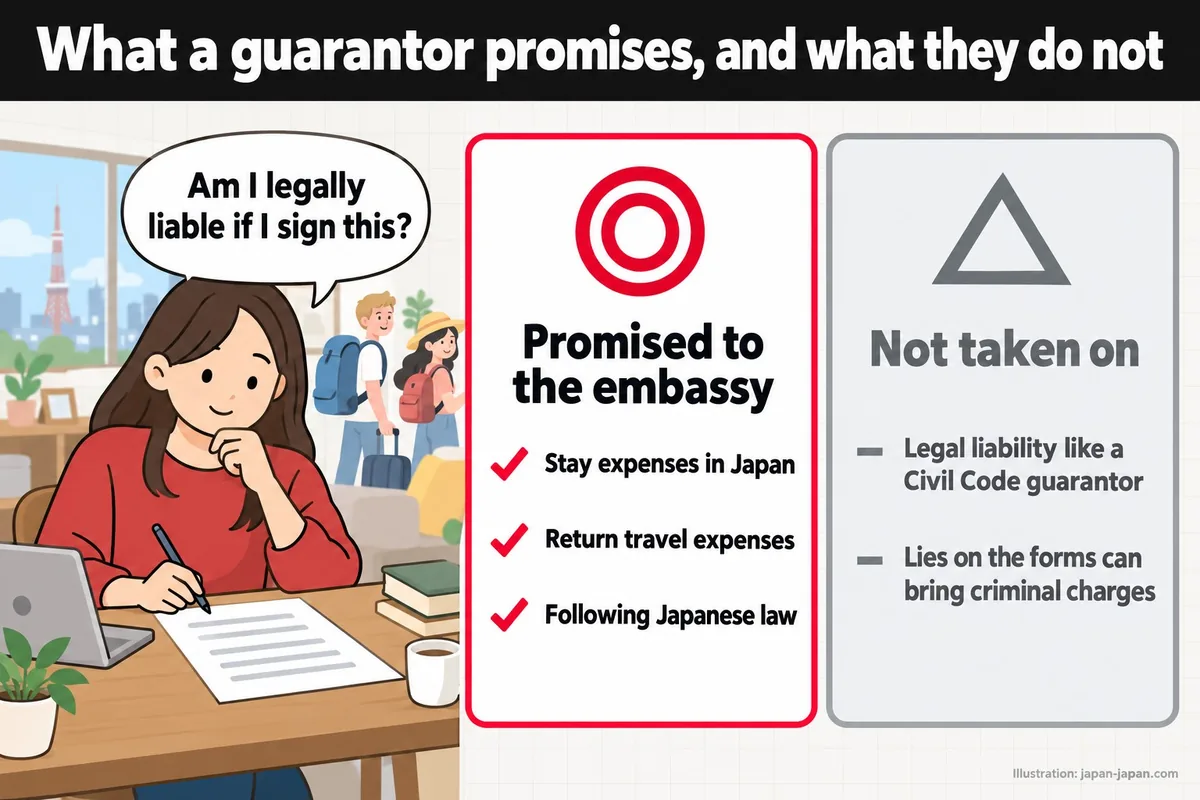
The illustration above sums up the split. MOFA says the guarantor’s responsibility is moral only. It carries no legal liability of the kind a guarantor takes on under Japan’s Civil Code.
The moral promise still has a cost if it breaks. If the embassy finds that the guaranteed matters were not carried out, the guarantor loses credibility as a guarantor in later visa applications. A visitor who does not go home, or who leaves costs unpaid, can cost the guarantor that credibility for the next invitation.
False statements are a different matter. MOFA warns that a guarantor or inviter who lies about the relationship or the purpose of the visit may be held criminally responsible. The same applies if the documents helped terrorists enter Japan or led to a crime such as human trafficking.
If someone asks you to be their guarantor, read the relationship and purpose lines before you sign. They must match the facts. Ask the applicant for the Schedule of Stay too, since you are promising to cover the costs of that plan.
MOFA also handles your details with care. The embassy manages the personal information of the applicant, the inviting person and the guarantor under Japan’s Act on the Protection of Personal Information.
Documents Your Guarantor Sends From Japan
The clearest list comes from the Consulate-General of Japan in Boston guarantor documents page. It asks for three forms from Japan, all as originals: the Letter of Guarantee, the Letter of Reason for Invitation and the Schedule of Stay. The invitation letter must describe the purpose of the invitation and your relationship in detail.
On top of the forms, the guarantor proves they are credible. What that means depends on who invites you.
- An individual: A certificate of employment, a certificate of income tax payment such as Kazei-shomeisho or Nozei-shomeisho, and a Jumin-hyo residence record issued without omissions.
- A Japanese company: A certified copy of the corporate register (Tokibo-tohon), or a company outline such as a brochure or annual report.
- A listed company: A copy of its page in Kaisya-Shikiho can replace the register.
- A non-Japanese guarantor: A copy of both sides of the residence card, with at least one year of stay left on the application date.
| Document | Individual | Company |
|---|---|---|
| Letter of Guarantee | Original | Original with the company’s official seal |
| Letter of Reason for Invitation | Purpose and relationship in detail | Purpose and relationship in detail |
| Schedule of Stay | Original | Original |
| Proof of credibility | Employment certificate, tax certificate with income, Jumin-hyo | Tokibo-tohon or company outline |
| Listed company | – | Kaisya-Shikiho copy accepted |
| Non-Japanese guarantor | Residence card, both sides, 1 year or more left | – |
The table compares the two cases side by side. Two notes from Boston matter most. The tax certificate must show the guarantor’s income, and a Gensen-Choshu-hyo (an employer’s withholding statement) is not accepted. A company guarantor must also stamp its official seal on the Letter of Guarantee.
The guarantor can ask for the residence record in Japanese at the ward office counter. Say: 住民票を世帯全員分、省略なし、個人番号なしでお願いします (jūminhyō o setai zen’in-bun, shōryaku nashi, kojin bangō nashi de onegaishimasu). It means a residence record for the whole household, with nothing left out and no My Number, please.
That matches the Philippine embassy’s rule. The Jumin-hyo must list all household members without omission, but the Individual Number (Kojin-bango) and the Residence Certificate Code must be left off.
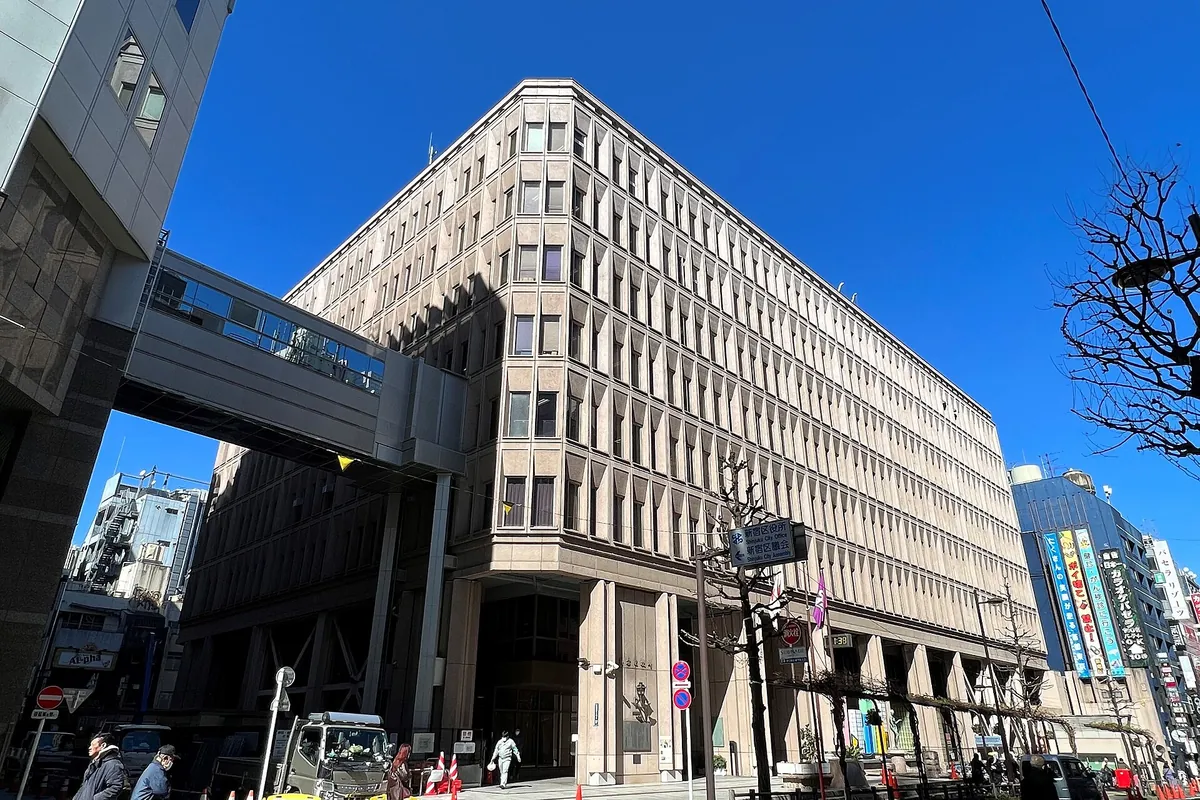
The photo shows a ward office in Tokyo, the kind of counter where residents get a Jumin-hyo and tax certificates. Ask for the latest tax certificate. The Philippine embassy wants the one that is current at the time of application, with the total income amount printed on it.
Before the envelope leaves Japan, the guarantor can run four checks, shown in the illustration below.
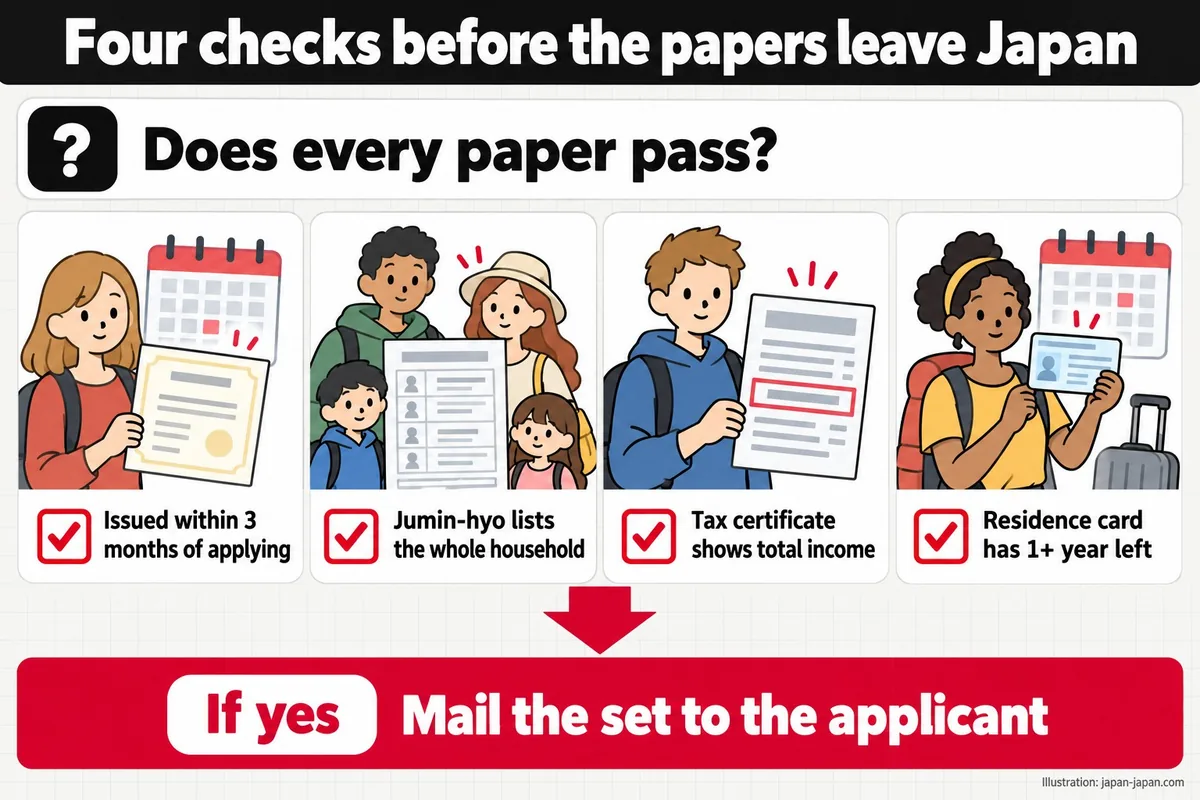
At the Philippine embassy, every paper must be issued within 3 months of the application date. The Jumin-hyo lists the whole household. The tax certificate shows total income. A non-Japanese guarantor’s residence card has at least one year left, which is Boston’s rule.
Filling In the Guarantee and Invitation Letters
Use the official forms. Searching for a Japan visa guarantee letter sample? Use the free PDF on the MOFA forms page or your embassy’s site. Template sites can carry old versions.
The Embassy of Japan in the Philippines visa services page has the forms to download. They include the Letter of Guarantee, the Invitation Letter, the List of Visa Applicants, the Itinerary in Japan and an Authorization Letter.
Language comes first. Boston asks guarantors who can write Japanese to fill in the forms in Japanese. Each form exists in both languages, so the guarantor can use the Japanese one while you read the English one.
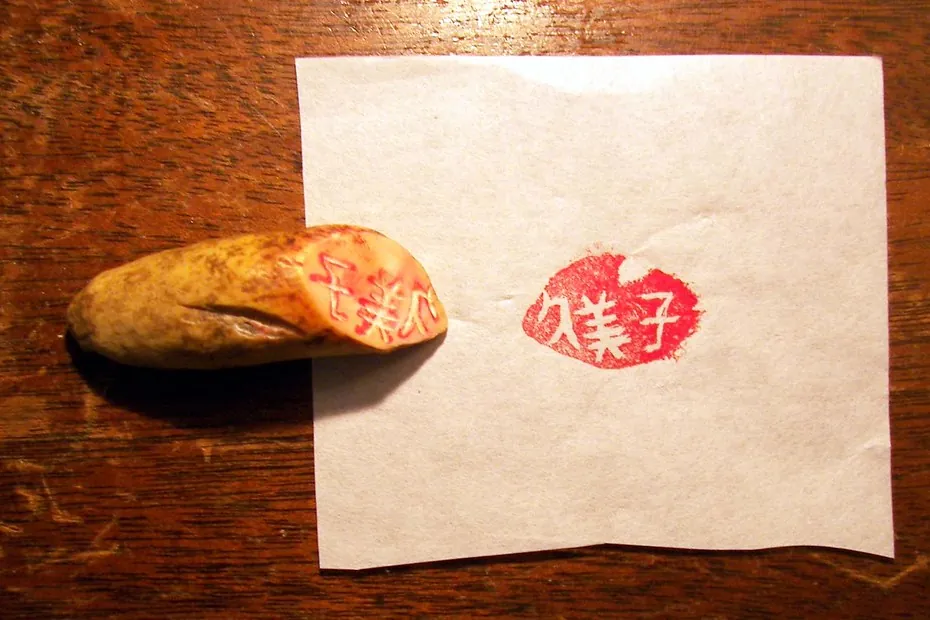
The photo shows a hanko, the seal Japanese companies stamp on documents. When a company is the guarantor, Boston requires its official seal on the Letter of Guarantee.
Several people can share one guarantor. The Embassy of Japan in the Philippines document submission notes explain how. Write the name of a representative applicant and add “Others names, see attached list”. Then attach a List of Visa Applicants with everyone else.
The invitation letter carries the most weight. The Philippine embassy wants the concrete activities and the background of the invitation in detail. A vague reason such as “Sightseeing”, “Visiting Relatives” or “Friend” is not accepted. Write who you will see, why now and what you will do on which days.
Some reasons need proof. Examples include a medical certificate and a copy of the Maternal and Child Health Handbook (Boshi-techo). An invitation showing the dates of a graduation ceremony or wedding also counts. If the stay will run longer than 30 days, add an explanation letter.
The Schedule of Stay goes day by day. Enter the planned dates of entry and departure, with flight details if you have them. Add the name, address and phone number of where you will sleep. You do not need bookings. When the same activity runs for several days, put those days in one entry as a date range.
Why Guarantor Documents Get Sent Back
MOFA lists errors or omissions in the documents as one reason an application is not accepted. The Philippine embassy’s notes, dated 7 April 2025, spell out what counts as an error.
- Old papers: Every document must be issued within 3 months of the application date. Birth and marriage certificates get 1 year.
- Wrong size: Papers must be A4. Copy other sizes onto A4 and submit them with the original.
- Staples: Never staple the documents, and remove the issuance receipt.
- No translation: Papers in a language other than English or Japanese need a translation with the date, the translator’s name and signature.
- Wrong tax paper: A Gensen-choshuhyo or a Kakutei-shinkokusho (final tax return) is not accepted.
- ID card copies: Never send a copy of a My Number Card or a Japanese medical insurance card.
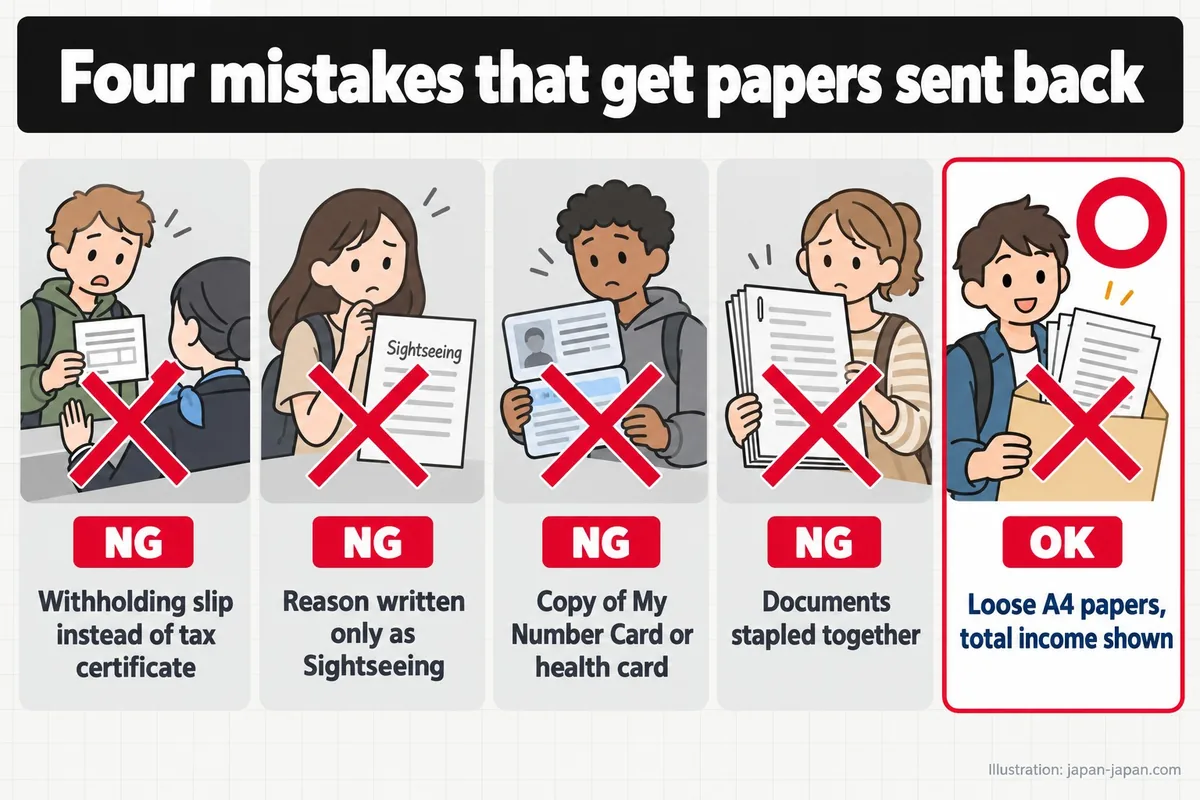
The illustration above shows four of these mistakes next to the fix. No tax certificate to send? The embassy then asks for another document, such as a certificate of bank deposit or a notice of pension payment.
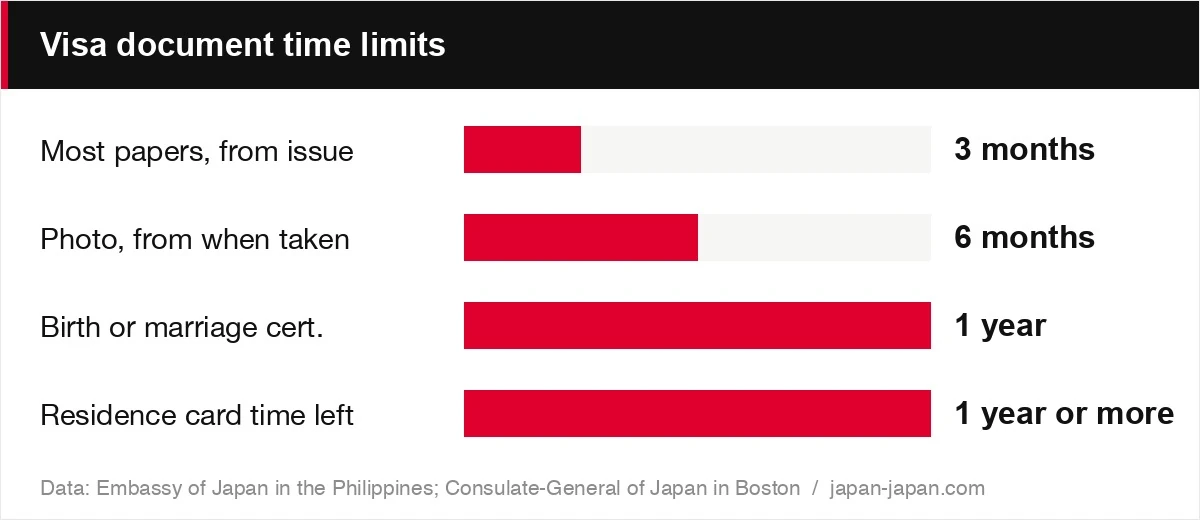
Each paper has its own clock, and the chart below puts the limits side by side.
| Item | Value | Note |
|---|---|---|
| Most papers, from issue | 3 months | |
| Photo, from when taken | 6 months | |
| Birth or marriage cert. | 12 months | |
| Residence card time left | 12 months | Non-Japanese guarantor |
The shortest limit in the chart is 3 months for most papers. The visa photo must be taken within 6 months and measure 4.5 x 3.5 cm. Birth and marriage certificates last 1 year. A non-Japanese guarantor needs at least one year left on the residence card.
Two more rules end applications outright. If the embassy asks for extra documents through the visa centre and you miss the 1-month deadline from the request, the application is terminated. MOFA also says that without the extra documents, the examination cannot continue and no visa is issued.
A split role is the last trap. Your guarantor and your inviter do not have to be the same person. When they differ, send proof of your relationship with the guarantor and a letter explaining why that person became your guarantor.
If the visa is refused, MOFA does not give the specific reason. It also does not accept a new application for the same purpose within six months. It sometimes makes an exception when your situation has changed a lot and the trip is needed for humanitarian reasons.
Fees, Processing Time and When to Apply
The fee changed on 1 July 2026. The MOFA Japan visa fees from July 2026 page puts it at about 15,000 yen for a single-entry visa. A multiple-entry visa costs about 30,000 yen. You pay in the local currency of the country where the embassy or consulate is.
You pay nothing if the visa is not issued. If you apply through an agency approved by the embassy, the agency charges its own handling fee on top. Some nationalities pay a different amount or nothing. Temporary visitor visas for Philippine nationals remain free, and our Japan visa fees page lists the amounts by embassy.
Two examples from our country pages: Chinese nationals pay 715 CNY, according to the Embassy of Japan in China. Indian nationals pay 500 INR and apply through VFS without an appointment, as our Japan visa page for Indians shows.
MOFA’s standard processing time is 5 working days, counted from the day after the embassy accepts your application. Extra checks, such as more documents, an interview or inquiries, can stretch it from a couple of weeks to several months. Our Japan visa processing time page covers what slows a case down.
The Philippine embassy warns that a tourist visa may take several weeks there because of the number of applications.
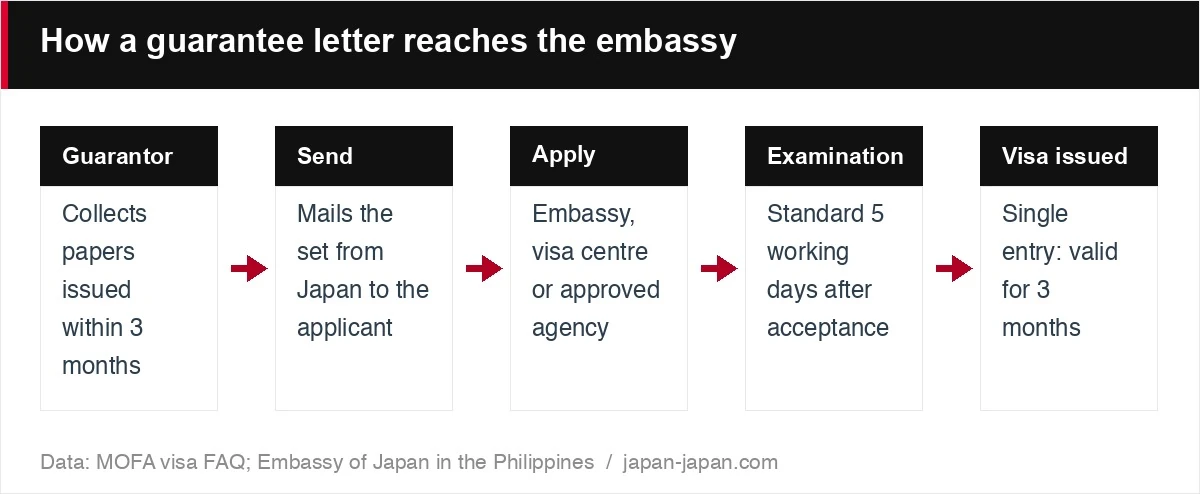
The flow chart above shows the route of the guarantee letter, from the guarantor’s desk in Japan to the visa in your passport. Do not apply too early. A single-entry visa is valid for 3 months from issue. The Philippine embassy therefore tells tourists not to apply earlier than 3 months before the planned travel date.
Plan how you pay, too. MOFA says fees are paid in cash in the local currency in principle. Card payment works only for eVISA applications from certain countries and regions. Our guide on how to apply for a Japan visa explains which embassy takes your case.
If your relative plans to visit often, ask about a Japan multiple entry visa instead of applying every time.
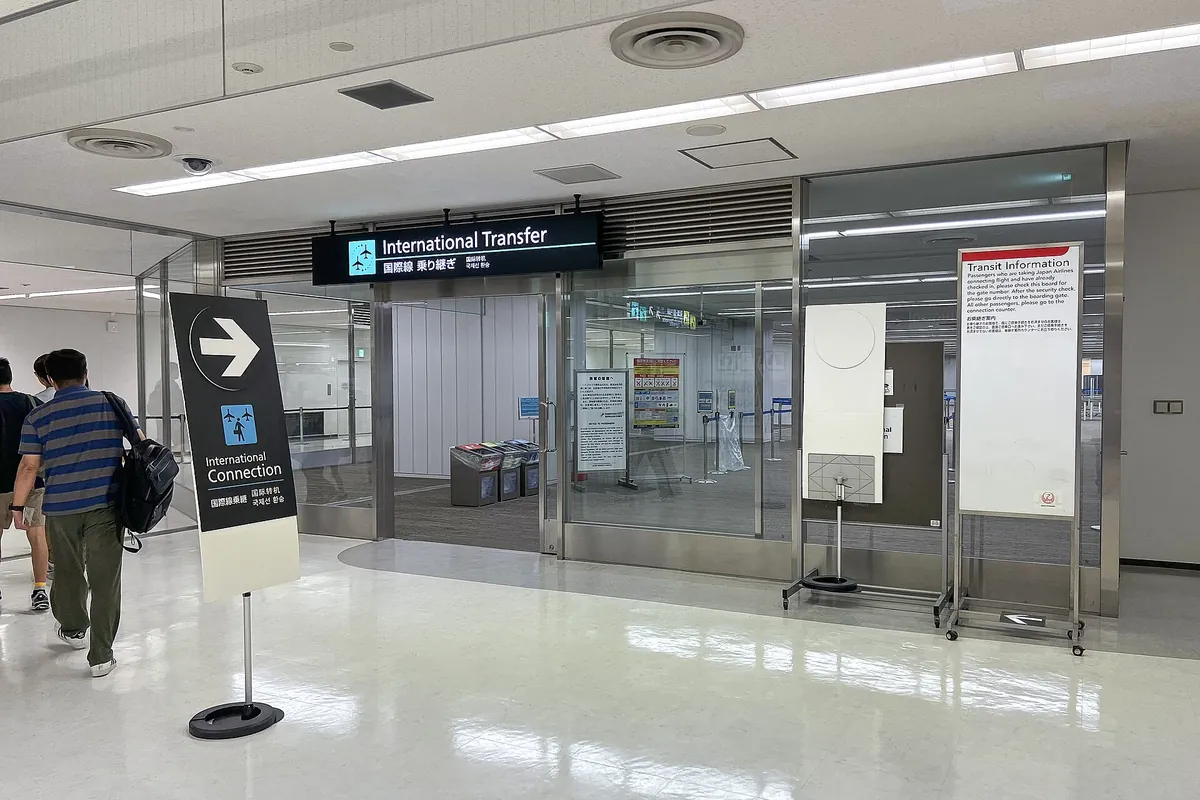
The photo shows the immigration area at Narita Airport. A valid visa still does not promise entry. MOFA notes that you can be refused entry if you cannot explain your planned activities to the immigration officer. Keep a copy of your Schedule of Stay in your bag.
The Philippine embassy also points travellers to Visit Japan Web for immigration and customs. Our Visit Japan Web QR code guide walks through it, and our Narita Airport guide covers the trip into Tokyo.
FAQ
Does the guarantor for a Japan visa have to be a Japanese citizen?
No. MOFA defines the guarantor as a person who lives in Japan. The Boston consulate accepts a non-Japanese guarantor who sends a copy of both sides of their residence card. That guarantor must have at least one year of stay left at the time of application.
Can the guarantor and the person inviting me be different people?
Yes. The Philippine embassy says they do not need to be the same person. In that case, submit proof of your relationship with the guarantor and an explanation of why that person became your guarantor.
Can my guarantor send photocopies instead of original documents?
It depends on the embassy. The Philippine embassy accepts photocopies of documents issued in Japan but may ask for the originals during the examination. The Boston consulate says all guarantor documents must be originals.
Is a letter of authorization the same as a guarantee letter?
No. A Japan visa letter of authorization lets another person handle your application. MOFA’s FAQ describes this route: you write a Letter of Proxy and a proxy goes to the embassy in your place. The guarantee letter is the promise from your guarantor in Japan. The Philippine embassy offers the two as separate forms.
About the author



.jpg)