Hikari vs Kodama: When Is the Slower Kodama Worth It?
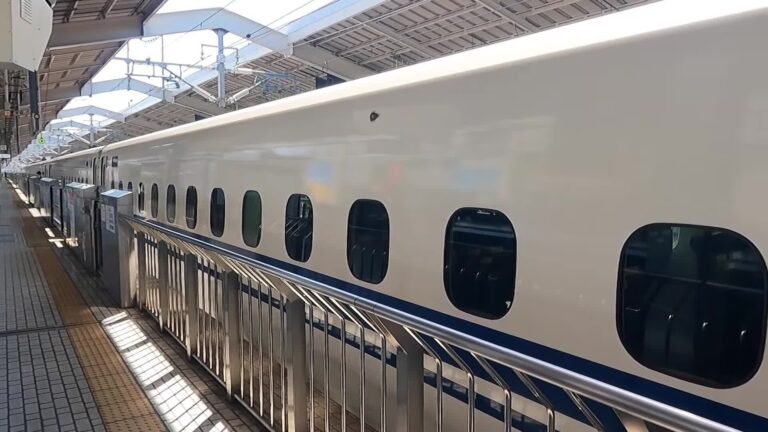
The travel times come from JR West’s timetables for Tuesday 13 October 2026. The JR West Tokaido Sanyo Shinkansen timetable 13 October 2026 lists 28 Hikari from Tokyo to Shin-Osaka that day. They took between 2 h 48 min and 3 h 6 min. The 11 Kodama took between 3 h 42 min and 3 h 54 min. JR Tokai Tours rounds these to about 3 hours for the Hikari and about 4 hours for the Kodama.
The JR West Kodama timetable 13 October 2026 shows what a Kodama trip looks like. Kodama 839 leaves Tokyo at 15:57 and stops at every station on the line. It reaches Shin-Osaka at 19:51.
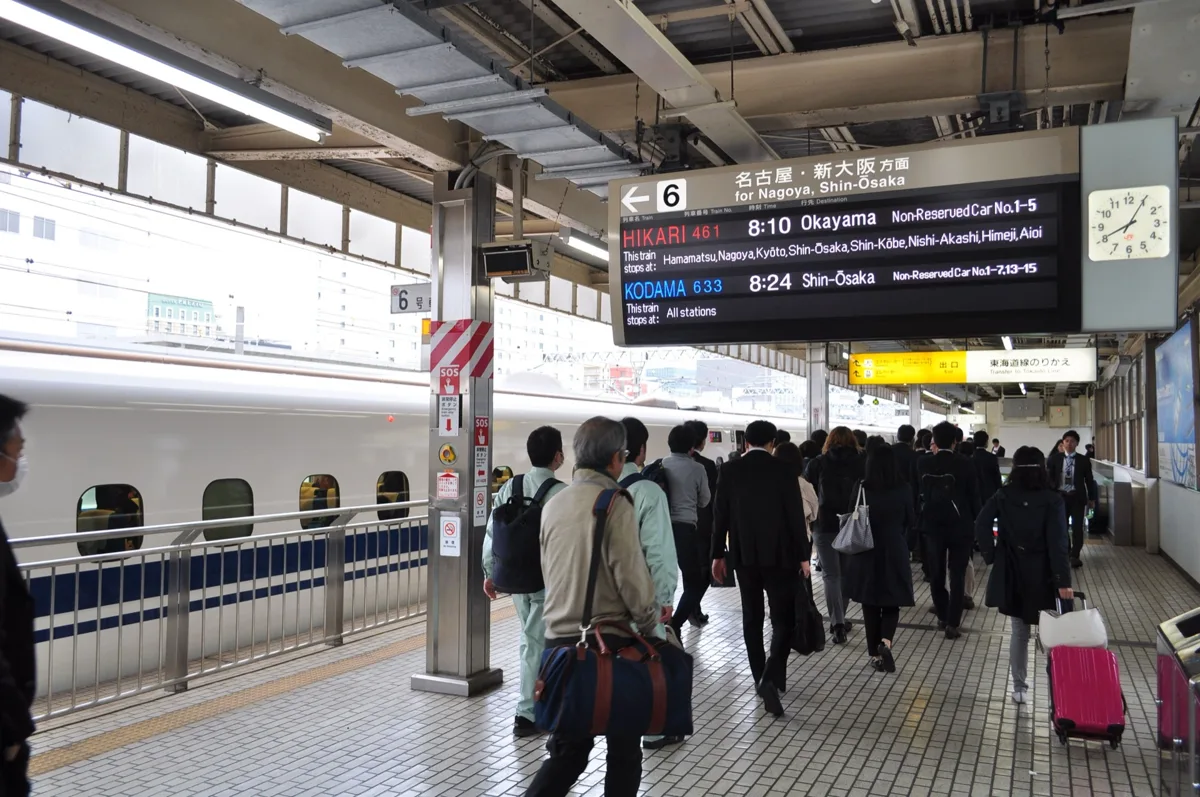
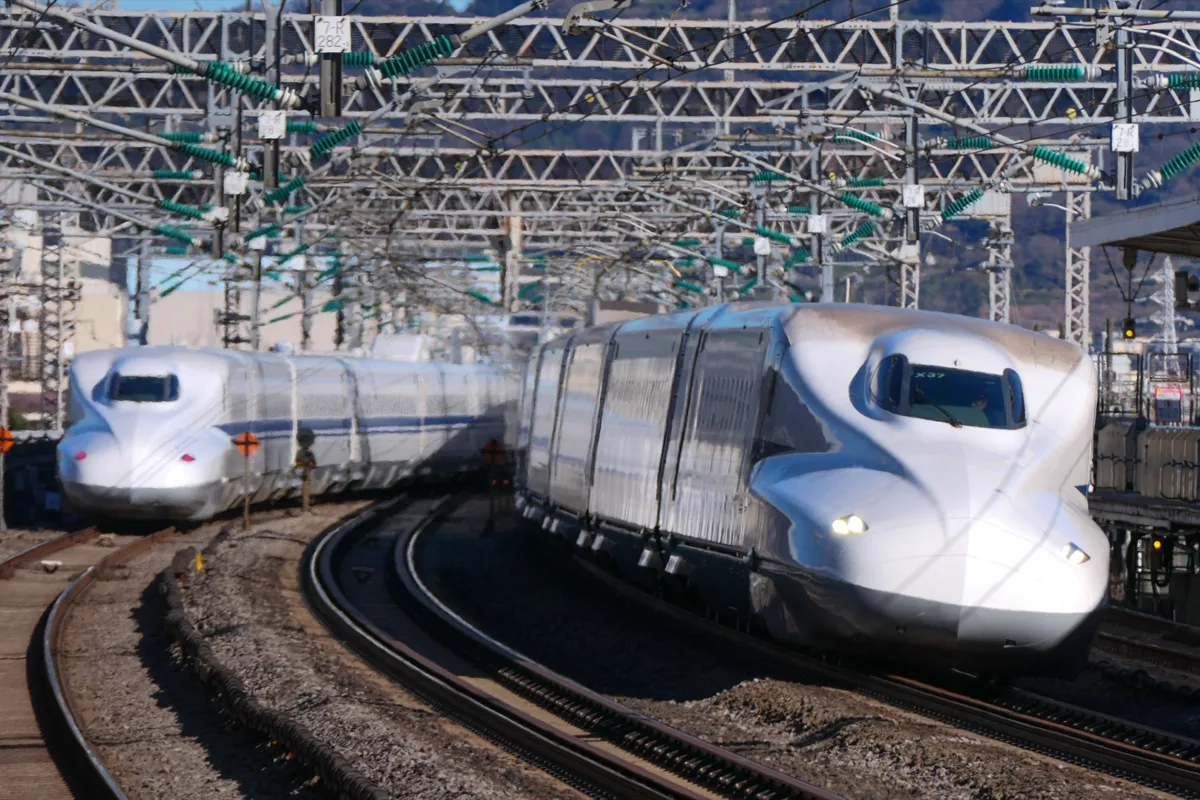
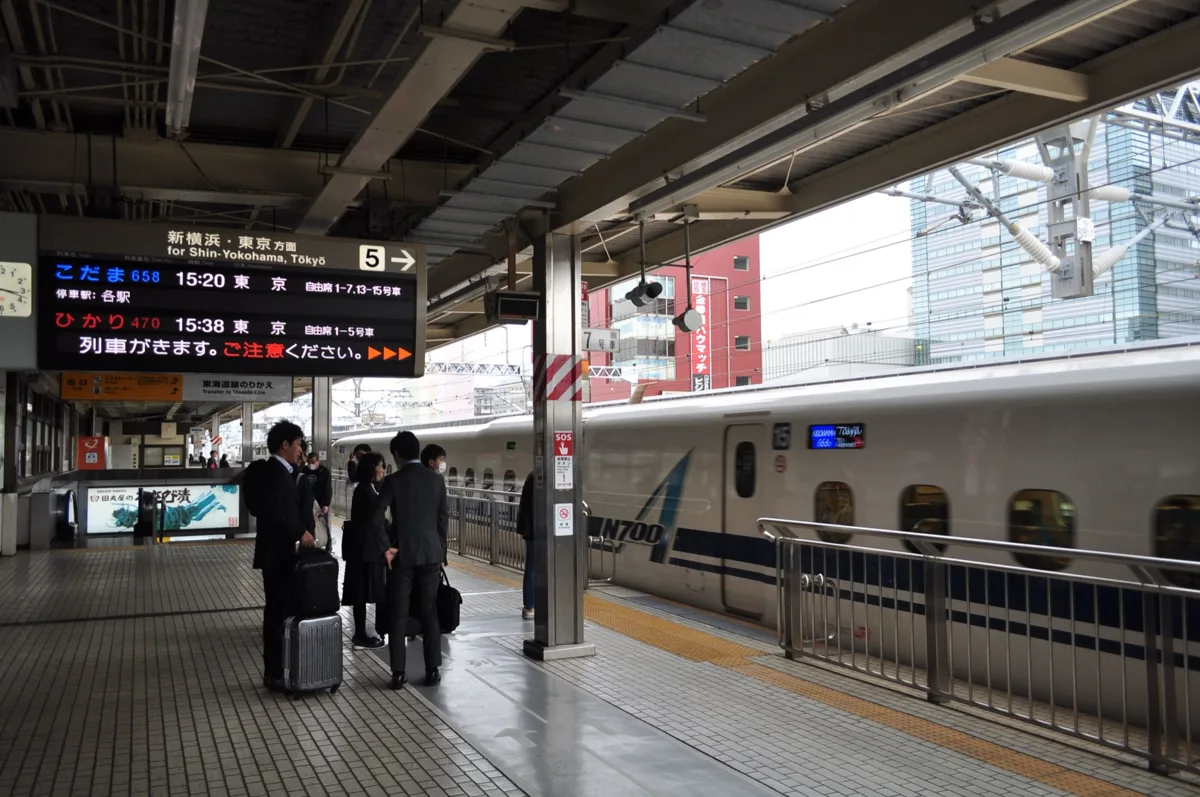
From the platform, a Kodama looks like any other Tokaido Shinkansen train. Every train on the line runs with 16 cars, and Kodama 839 uses N700 series trains. The only clues are the train name on the departure board and the list of stops.
Hikari and Kodama side by side
The table below puts the main differences in one place. Times are for Tokyo to Shin-Osaka on 13 October 2026. The train counts come from our routes database, which uses JR Central’s timetable for Wednesday 14 October 2026.
| Item | Hikari | Kodama |
|---|---|---|
| Tokyo to Shin-Osaka | 2 h 48 min to 3 h 6 min (middle 2 h 54 min) | 3 h 42 min to 3 h 54 min (middle 3 h 54 min) |
| Stations served | 8 to 11 of 17 | All 17 |
| Trains a day, Tokyo to Shin-Osaka | 28 | 11 |
| Trains a day, Tokyo to Atami | 3 | 36 |
| Non-reserved cars | Cars 1 to 5 (varies by train) | Cars 1 to 6 and 13 to 16 (varies by train) |
| Reserved seat, Tokyo to Shin-Osaka | 14,400 yen | 14,400 yen |
| Japan Rail Pass | Covered, no extra charge | Covered, no extra charge |
| Platt Kodama package | Not available | Available |
Without a rail pass, the two trains cost the same. A reserved seat from Tokyo to Shin-Osaka costs 14,400 yen on the Hikari or the Kodama, and a non-reserved seat costs 13,870 yen. The JR Tokai Tours Tokaido Shinkansen seats and non-reserved cars guide lists those fares for one adult, one way, in the regular season. It also places the Green Car, the first-class car, in cars 8 to 10.
So the real trade-off is time against stops. JR Tokai Tours describes the Hikari as the middle train: it stops more often than the Nozomi and less often than the Kodama. A reserved seat on the Nozomi costs 14,720 yen from Tokyo to Shin-Osaka, and the fastest Nozomi takes 2 h 21 min. The Japan Rail Pass does not cover the Nozomi, which is why many pass holders end up choosing between the Hikari and the Kodama.
Our Tokyo to Osaka route page lists all three train types with first and last trains. On 14 October 2026 it counts 155 trains a day on that route: 116 Nozomi, 28 Hikari and 11 Kodama.
Where the Hikari and Kodama stop
The Tokaido Shinkansen runs 552.6 km from Tokyo to Shin-Osaka and opened in 1964. The JR Tokai Tours Tokaido Shinkansen stops by train type page counts 17 stations on that stretch. The Kodama stops at every one of them.
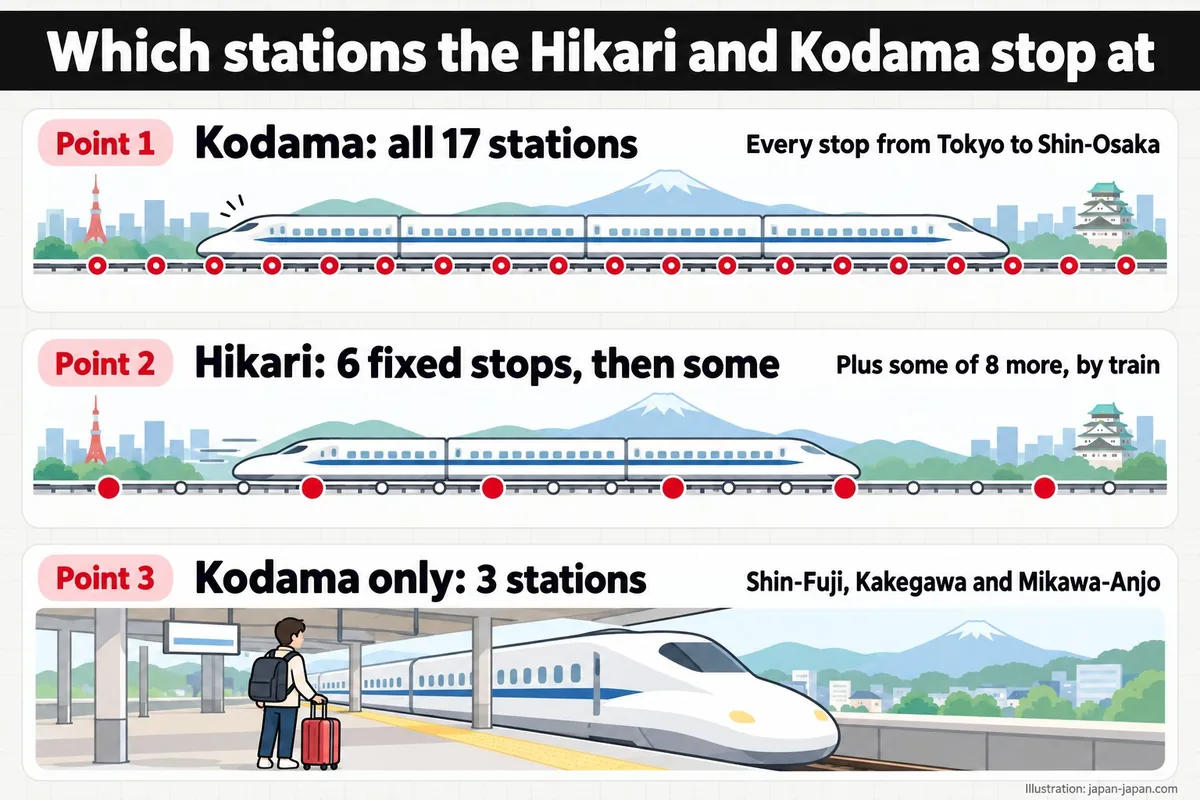
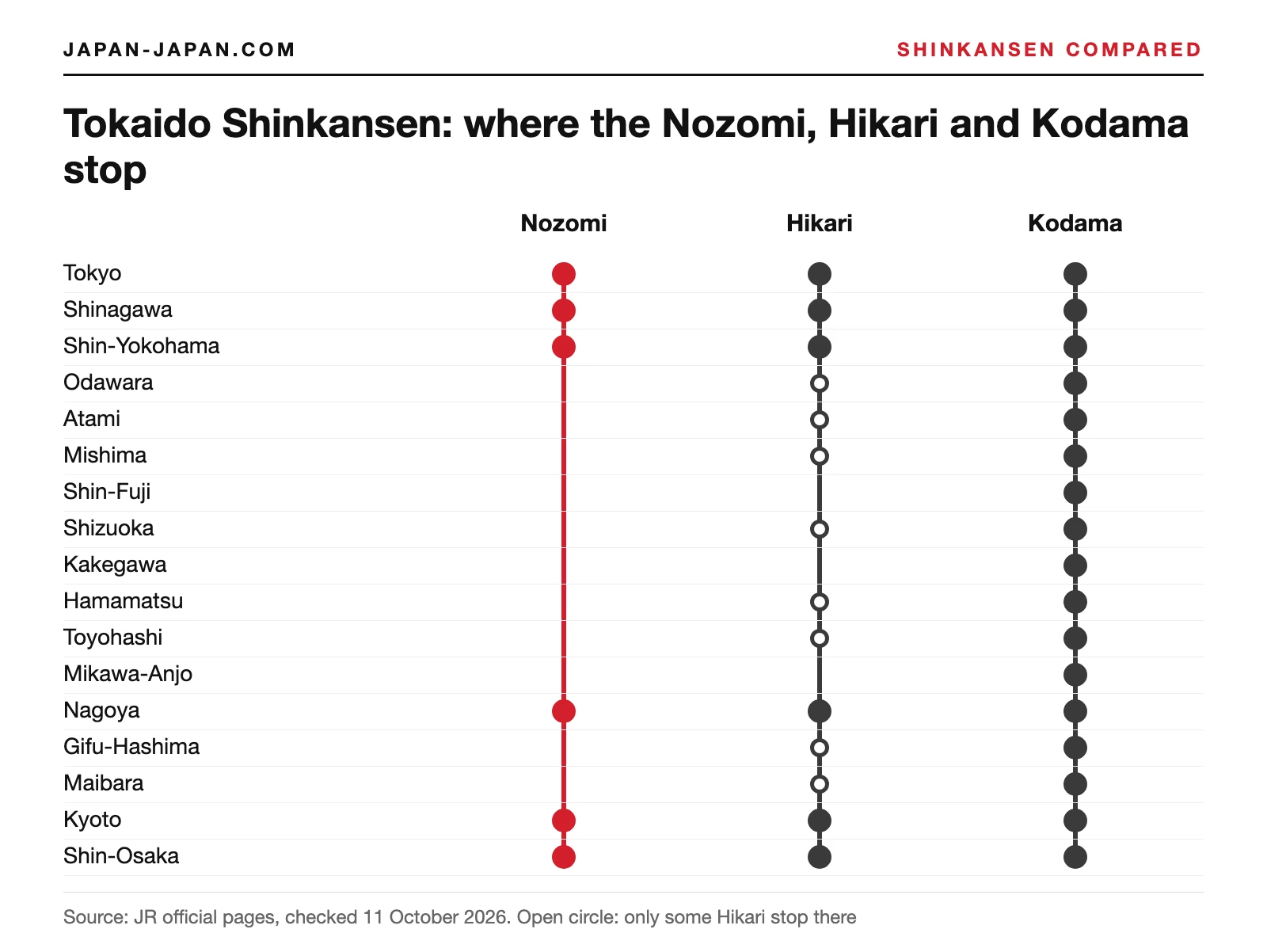
The illustration sums up the pattern. Every Hikari stops at the six Nozomi stations: Tokyo, Shinagawa, Shin-Yokohama, Nagoya, Kyoto and Shin-Osaka. Each Hikari then adds some of eight more stations: Odawara, Atami, Mishima, Shizuoka, Hamamatsu, Toyohashi, Gifu-Hashima and Maibara. JR Tokai Tours gives a rough frequency for each one:
- About one Hikari an hour in the daytime: Shizuoka, Hamamatsu, Gifu-Hashima and Maibara.
- About one Hikari every 2 hours in the daytime: Odawara, Mishima and Toyohashi.
- A few Hikari a day: Atami.
- No Hikari at all: Shin-Fuji, Kakegawa and Mikawa-Anjo.
That makes three stations Kodama-only. If your trip starts or ends at Shin-Fuji, Kakegawa or Mikawa-Anjo, you need a Kodama. The Nozomi skips them too.
The Hikari’s stops change from train to train. On 13 October 2026, the 28 Hikari from Tokyo to Shin-Osaka ran in 11 different stop patterns, with 8 to 11 stops each. Before you board, open the timetable entry for your train and check that your station is on its list.
Atami shows the gap most clearly. Our Tokyo to Atami route page counts 39 trains a day from Tokyo: 36 Kodama and 3 Hikari. The fastest is Hikari 707 at 36 min, for 4,270 yen with a reserved seat or 3,740 yen in a non-reserved car. The first train is Kodama 801 at 06:30, and the last is Kodama 915 at 22:48.
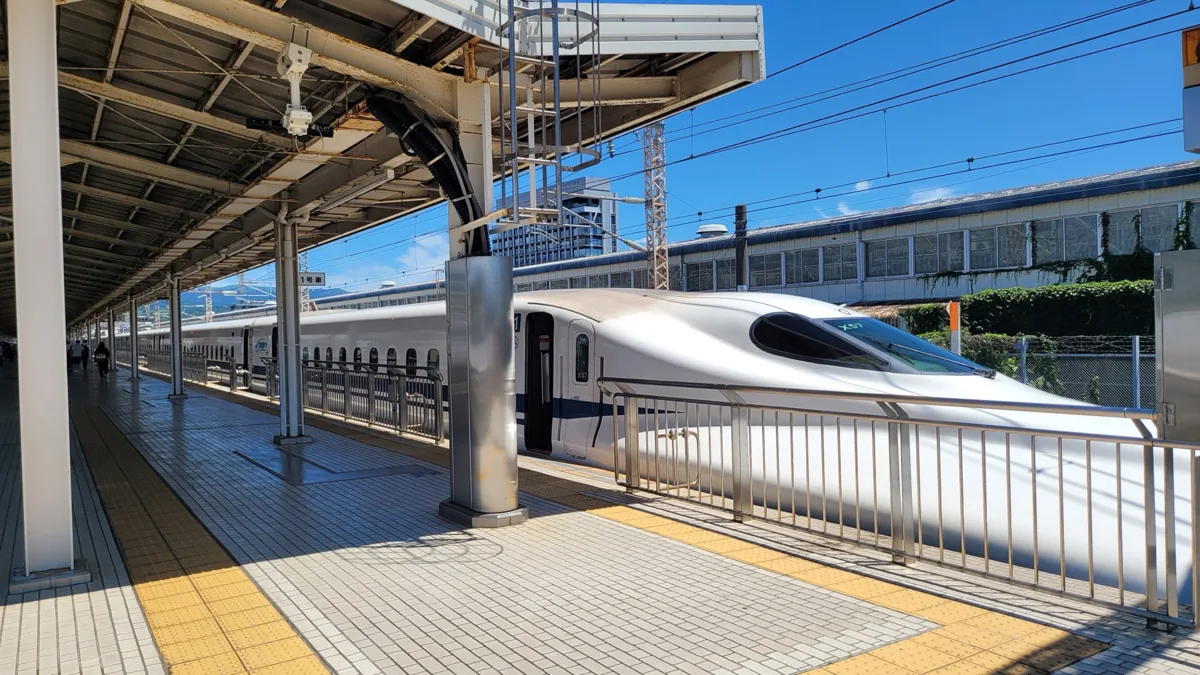
Shin-Fuji, one of the three Kodama-only stops, sits on one of the best stretches for views of Mount Fuji. JR Tokai Tours names Shin-Yokohama to Odawara and Mishima to Shin-Fuji as the sections to watch. Book an E seat for the Fuji side in both directions, or a D seat in the Green Car. Winter, from December to February, gives the clearest views.
Trains a day on six routes
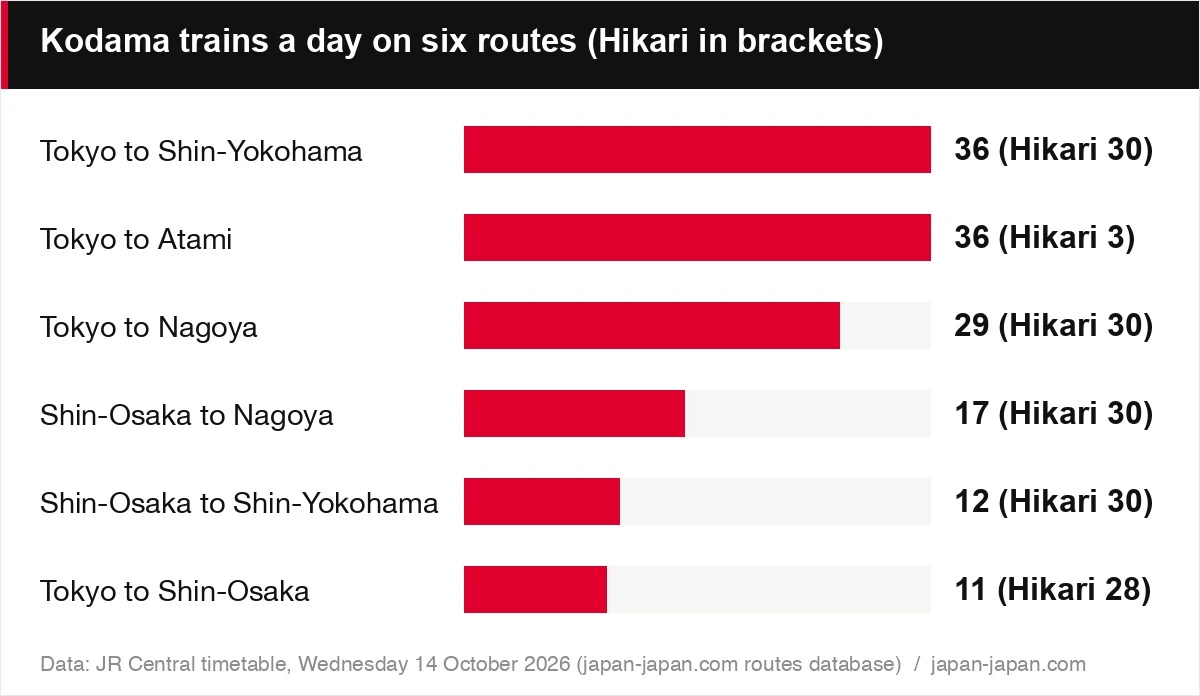
Speed is only half the story. On many short trips the next train is a Kodama, and taking it beats waiting for a Hikari. The chart counts Kodama trains on six routes, with the Hikari count in brackets. The numbers come from JR Central’s timetable for Wednesday 14 October 2026, as stored in our routes database.
| Item | Value |
|---|---|
| Tokyo to Shin-Yokohama | 36 trains |
| Tokyo to Atami | 36 trains |
| Tokyo to Nagoya | 29 trains |
| Shin-Osaka to Nagoya | 17 trains |
| Shin-Osaka to Shin-Yokohama | 12 trains |
| Tokyo to Shin-Osaka | 11 trains |
East of Nagoya, the Kodama runs about as often as the Hikari, or more often. Tokyo to Nagoya has 30 Hikari and 29 Kodama a day. Tokyo to Shin-Yokohama has 30 Hikari and 36 Kodama. To Atami, the Kodama makes up 36 of the 39 trains.
West of Nagoya the Kodama thins out. Shin-Osaka to Nagoya has 30 Hikari but only 17 Kodama. Shin-Osaka to Shin-Yokohama has 30 Hikari and 12 Kodama. Tokyo to Shin-Osaka, the full line, has 28 Hikari and 11 Kodama.
The JR Tokai Tours English booking guide for Kodama puts the Kodama at about 1 to 2 trains per hour. The same page gives sample Kodama times. Tokyo to Nagoya takes about 2 h 40 min, and Tokyo to Kyoto about 3 h 40 min. Tokyo to Shin-Osaka takes about 4 hours. For comparison, the Hikari 707 takes 1 h 58 min from Tokyo to Nagoya in our routes database.

The photo shows Atami Station in Shizuoka Prefecture, a typical Kodama station. With 36 Kodama and 3 Hikari a day from Tokyo, most visitors to Atami ride a Kodama whether they plan to or not.
Platt Kodama: a cheaper Kodama package
JR Tokai Tours sells Platt Kodama as a one-way travel package rather than a train ticket. You get a reserved seat on one Kodama plus either a 1-drink e-voucher or a Local Select Coupon. The coupon choice started with travel from 1 April 2026.
The JR Tokai Tours Platt Kodama prices and dates page uses a calendar with four price levels. A covers Monday to Thursday, B covers Friday, C covers weekends and holidays, and D covers peak days. Prices change over time, and you pay the price shown when you book. The table shows ordinary-car prices for one adult, one way, to Shin-Osaka, as of 1 September 2026.
| From | Mon to Thu (A) | Fri (B) | Sat, Sun and holidays (C) |
|---|---|---|---|
| Tokyo or Shinagawa | 11,360 yen | 11,710 yen | 11,900 yen |
| Shin-Yokohama | 11,120 yen | 11,470 yen | 11,650 yen |
| Shizuoka | 9,000 yen | 9,290 yen | 9,430 yen |
| Hamamatsu | 7,520 yen | 7,750 yen | 7,880 yen |
| Nagoya | 5,340 yen | 5,500 yen | 5,580 yen |
On D days, Tokyo or Shinagawa to Shin-Osaka costs 13,130 yen. The October 2026 calendar marks 10 to 12 October as D days, and November marks 21 to 23 November. For comparison, our routes database lists the Hikari 707 from Tokyo to Shin-Osaka at 14,400 yen with a reserved seat.
Shorter trips are on sale too. On an A day, Tokyo to Kyoto costs 10,960 yen and Tokyo to Nagoya 9,000 yen. A Green Car seat adds 840 yen from Tokyo to Nagoya and 1,190 yen from Tokyo to Shin-Osaka at the A price.
You book online. The English site asks you to register for a free membership, then book the package. Since 1 March 2024 the trip has been ticketless: you pass the gate with a transit IC card or a QR ticket. Sales open at 10:00 one month before travel and close at 23:30 the day before. You cannot buy Platt Kodama on the day you travel.
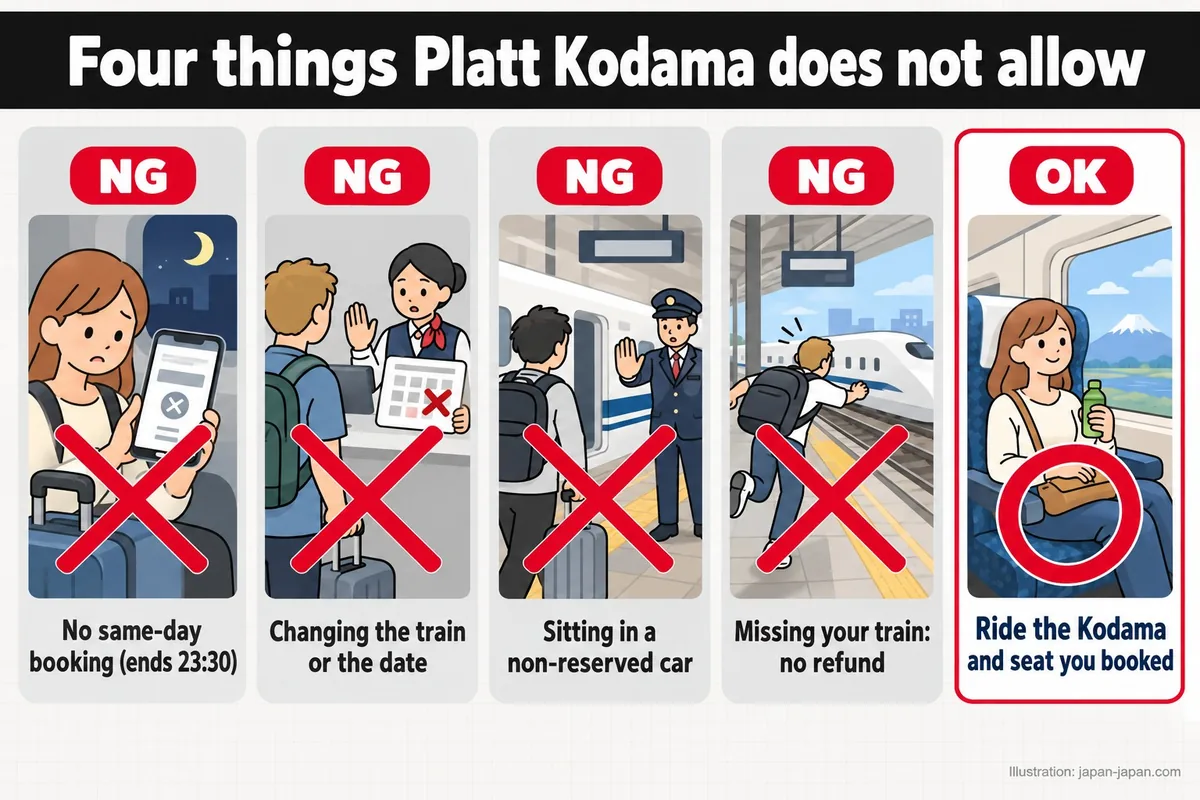
The illustration shows the four things Platt Kodama will not let you do. The JR Tokai Tours Platt Kodama terms and conditions page sets out these rules:
- You may ride only the train and seat you booked. Non-reserved cars are not allowed.
- You cannot change the date, the train, the stations or the number of people. A seat change on the same train is the only change allowed.
- If you miss your Kodama, JR Tokai Tours treats it as your own cancellation and gives no refund.
- You may get on and off only at the stations you booked. Tokyo and Shinagawa count as one, at staffed gates.
- Cancellation fees start on the 10th day before travel, counting back from the day before.
- Local train fares, such as Osaka to Shin-Osaka, are not included.
Some routes and dates are not on sale. There is no Platt Kodama between Tokyo or Shinagawa and Shin-Yokohama, between Shizuoka and Hamamatsu, or between Kyoto and Shin-Osaka. Kodama trains that run with only non-reserved seats are also excluded. Peak holidays are blocked out. The Golden Week block (25 April to 6 May 2026) and the Obon block (6 to 16 August 2026) have passed. The New Year block runs from 26 December 2026 to 4 January 2027. Our New Year 2026–27 guide, Golden Week 2027 guide and Obon guide show the busy days on the rest of the network. JR Tokai Tours will post prices for January to March 2027 once they are set.
Non-reserved cars and the Japan Rail Pass
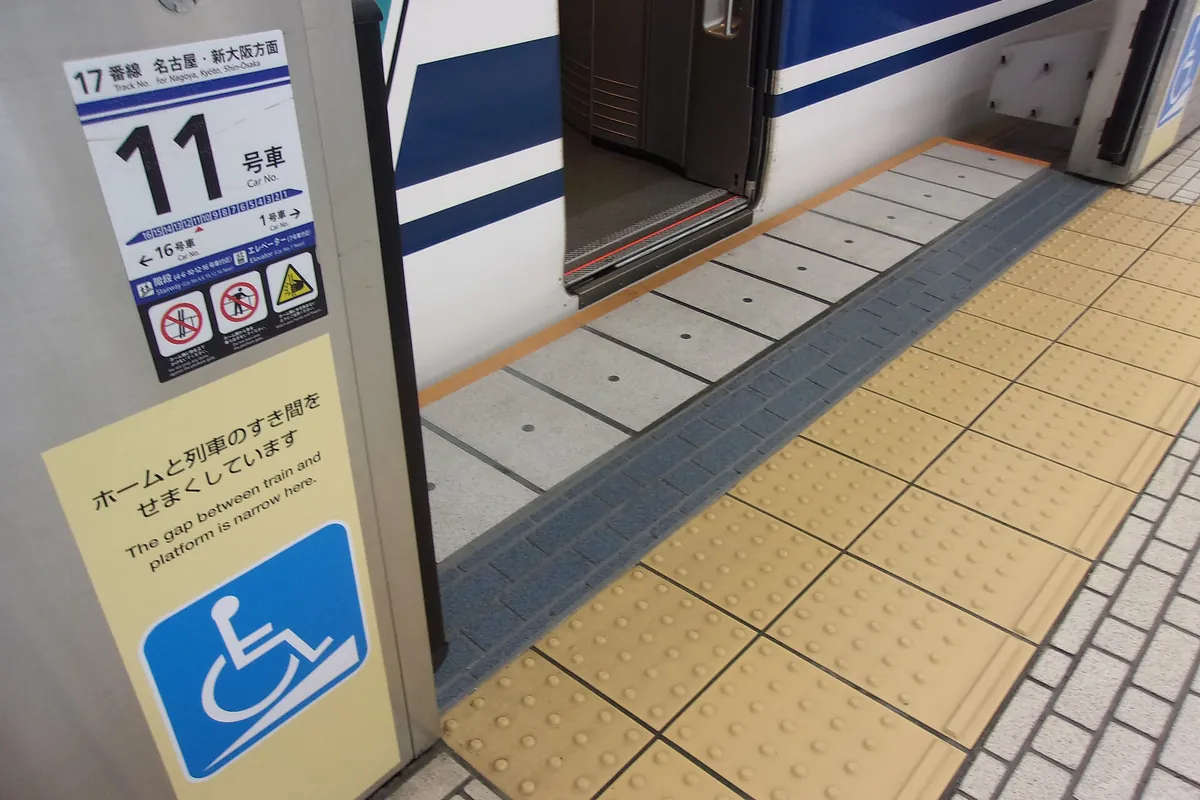
In Japanese, non-reserved seats are 自由席 (jiyuseki) and reserved seats are 指定席 (shiteiseki). The JR Tokai Tours seats guide lists the non-reserved cars for each train type:
- Hikari: cars 1 to 5, with some trains differing.
- Kodama: cars 1 to 6 and 13 to 16, depending on the train.
- Nozomi: cars 1 to 2, and every seat is reserved in peak periods such as Golden Week, Obon, New Year and three-day weekends.
That gives the Kodama the most non-reserved cars of the three. JR Tokai Tours adds that the Hikari and Kodama tend to be less crowded than the Nozomi. A non-reserved seat is never guaranteed, though, so reserve a seat on busy days. Some Kodama trains run with non-reserved seats only.
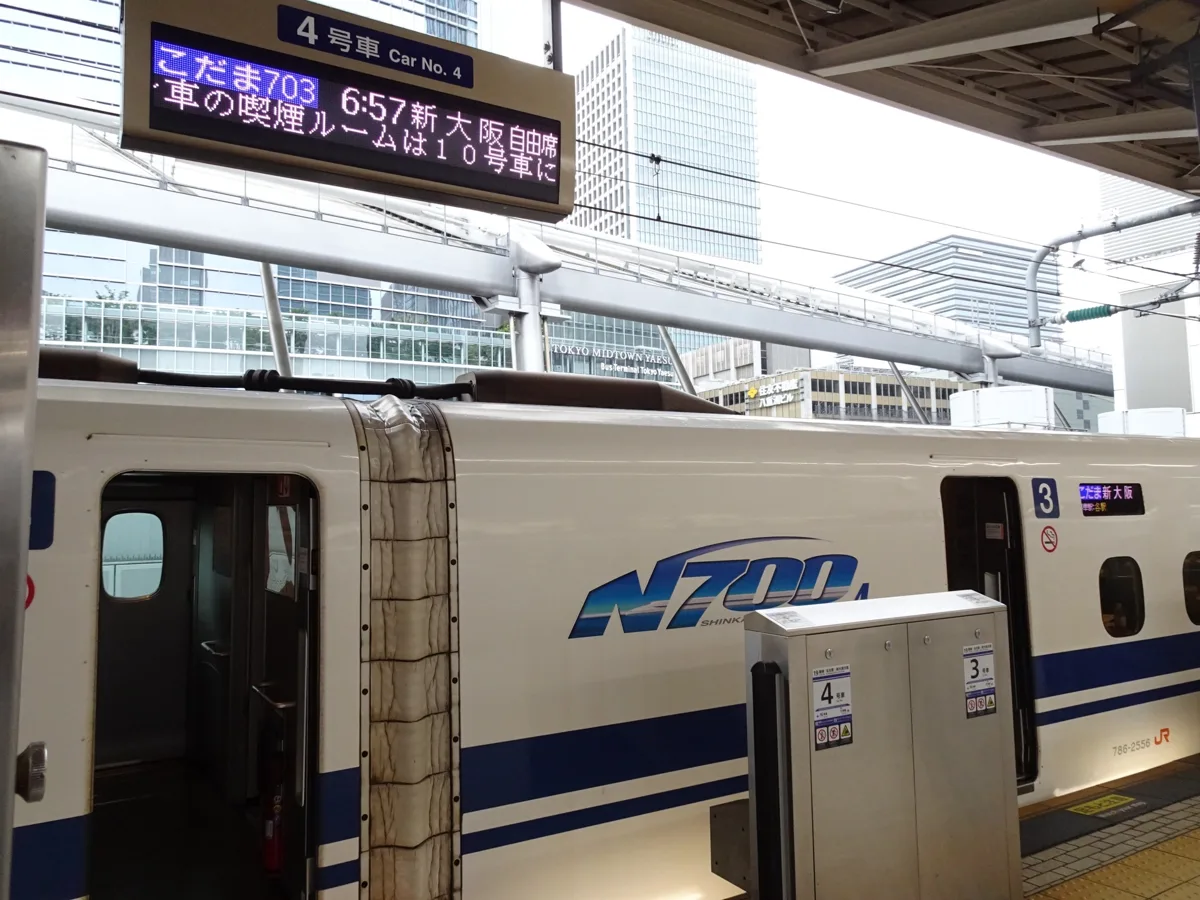
The photo shows a Tokaido Shinkansen platform at Tokyo Station, where you line up at the marker for your car. If you want a non-reserved seat on a Kodama, head for the markers of cars 1 to 6 or 13 to 16.
The Japan Rail Pass covers the Hikari and the Kodama with no extra charge. It does not cover any seat on the Nozomi or Mizuho. The JAPAN RAIL PASS NOZOMI MIZUHO Ticket page explains the workaround: buy a NOZOMI MIZUHO Ticket each time you ride one of those trains. It costs 4,960 yen from Tokyo to Shin-Osaka and 4,180 yen from Tokyo to Nagoya. Sales start one month before the day you ride.
With a pass, the Hikari and the Kodama cost you the same, so choose by stops and time. Whether the pass pays off depends on the rest of your trip. Our JR Pass worth-it guide compares the 50,000 yen 7-day pass with buying single tickets.
Luggage rules are the same on both trains. A bag measuring 161 to 250 cm in total across its three sides needs a seat with an oversized baggage area. You reserve that seat when you buy the ticket. Boarding without one costs a 1,000 yen fee, and bags over 250 cm cannot go on board. Bags up to 160 cm need no reservation. They fit the luggage spaces on the decks of cars 3, 5, 7, 9, 13 and 15.
Which one should you take?
Choose by your plan, not by the train’s name. These rules follow from the numbers above:
- Tokyo to Shin-Osaka in one go: take the Hikari, at 2 h 54 min in the middle of the range. Without a pass, the Nozomi is faster still.
- Shin-Fuji, Kakegawa or Mikawa-Anjo: only the Kodama stops there.
- Tokyo to Atami: 36 of the 39 trains a day are Kodama, so take the next one.
- Odawara, Mishima or Toyohashi: a Hikari stops about once every 2 hours in the daytime, so take whichever train comes first.
- No pass, fixed plan, booked by the day before: Platt Kodama, as long as you accept no changes and no refund for a missed train.
- Japan Rail Pass holders: both trains are covered, so pick the one that stops where you need.
- Non-reserved riders: the Kodama has more non-reserved cars, though a seat is never guaranteed.
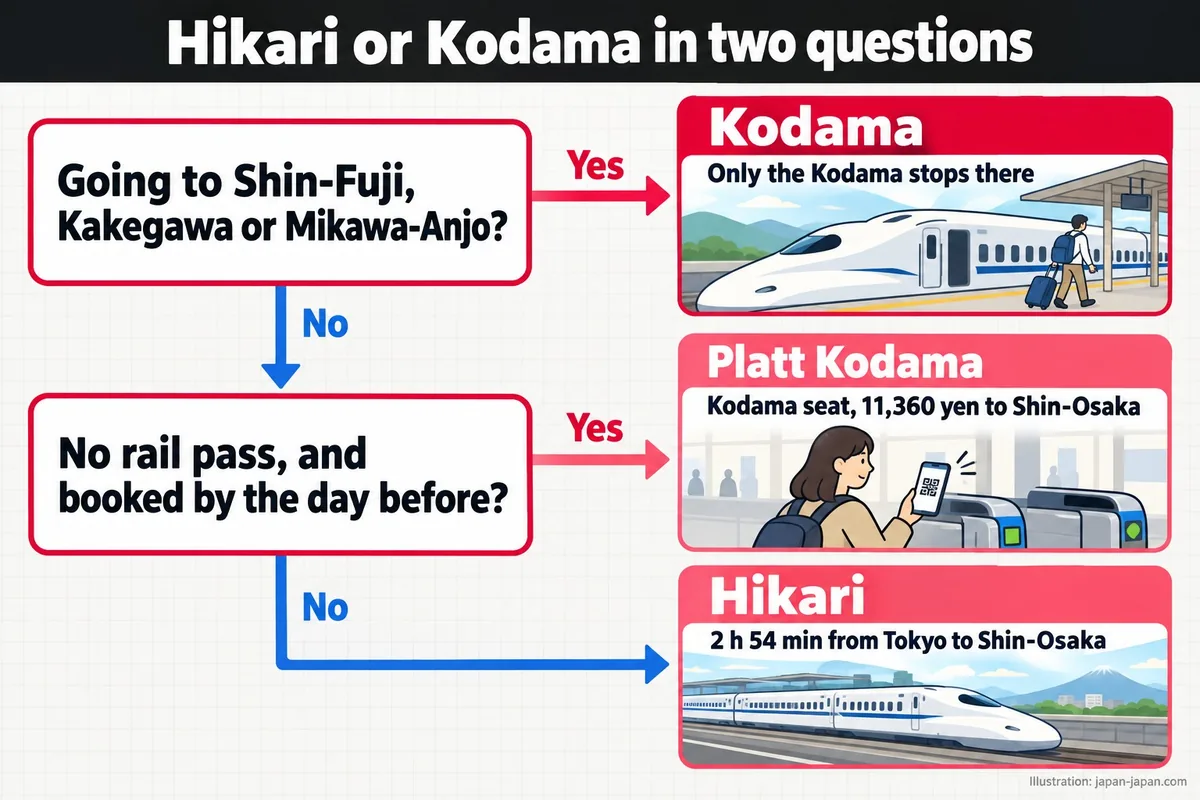
The chart walks through the same choice in two questions. If neither question fits your trip, the Hikari is the default.
On a Kodama you spend about 4 hours on board from Tokyo to Shin-Osaka, so bring food. On-board trolley sales ended in October 2023, and the mobile order service covers only Green Cars on the Nozomi and Hikari. Our ekiben guide to Tokyo Station shows where to buy a station bento before you board.
Hikari or Kodama: what 98 people in Japan chose
On 13–14 October 2026, japan-japan.com ran an online survey of people living in Japan about 32 travel choices. 130 people answered. We removed answers that looked machine-written, one from outside Japan and most of those that contradicted themselves, which left 98. Shares below are of the 98 respondents unless a smaller group is named; they describe these people, not all travellers in Japan. See all 32 comparisons and how we asked.
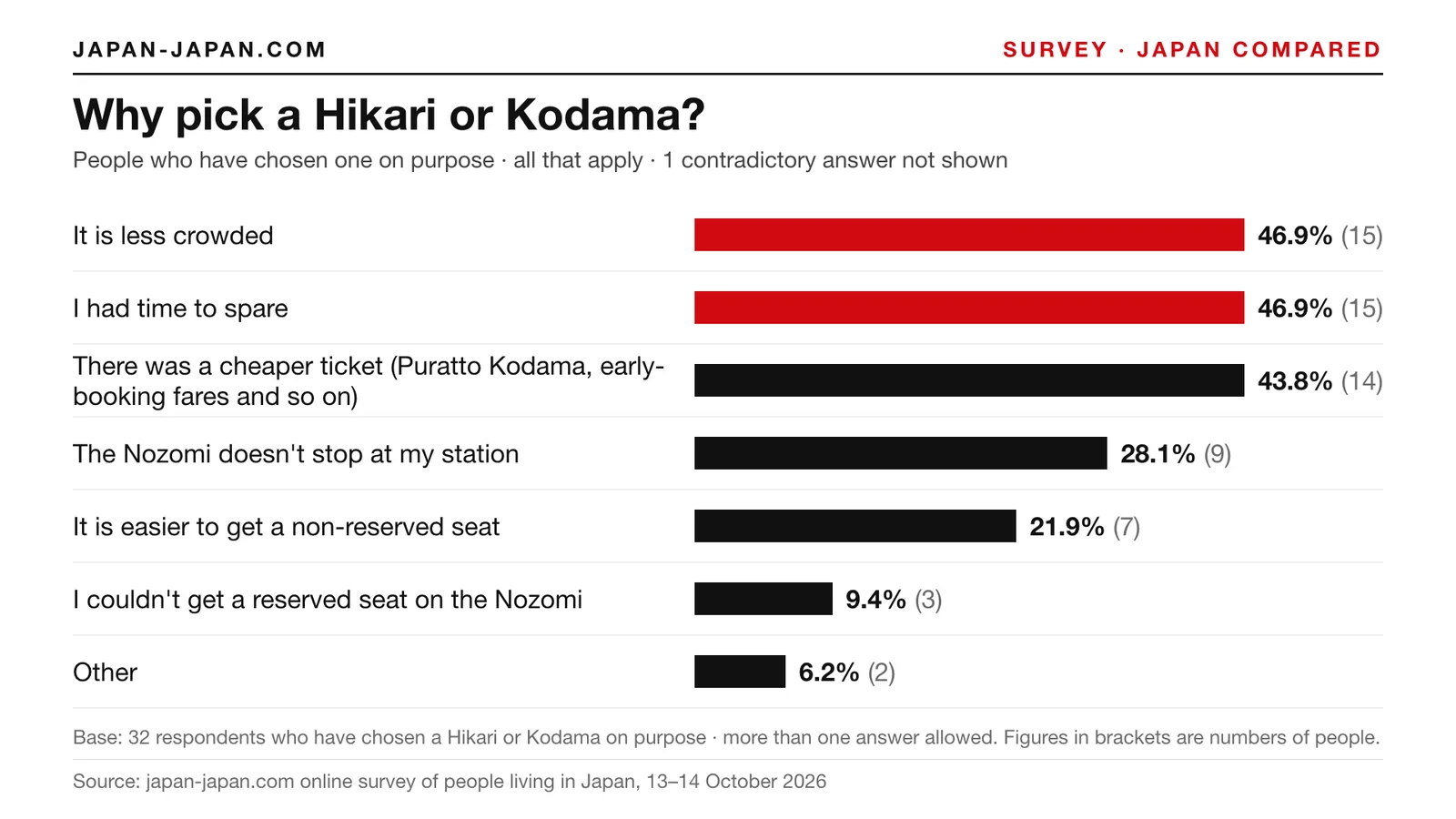
18.4% (18 people) have chosen a Kodama on purpose instead of a Nozomi, and 24.5% (24 people) a Hikari. Of the 32 who have done either, the reasons they gave most were fewer crowds (46.9%), having time to spare (also 46.9%) and a cheaper ticket such as Platt Kodama or an early-booking fare (43.8%).
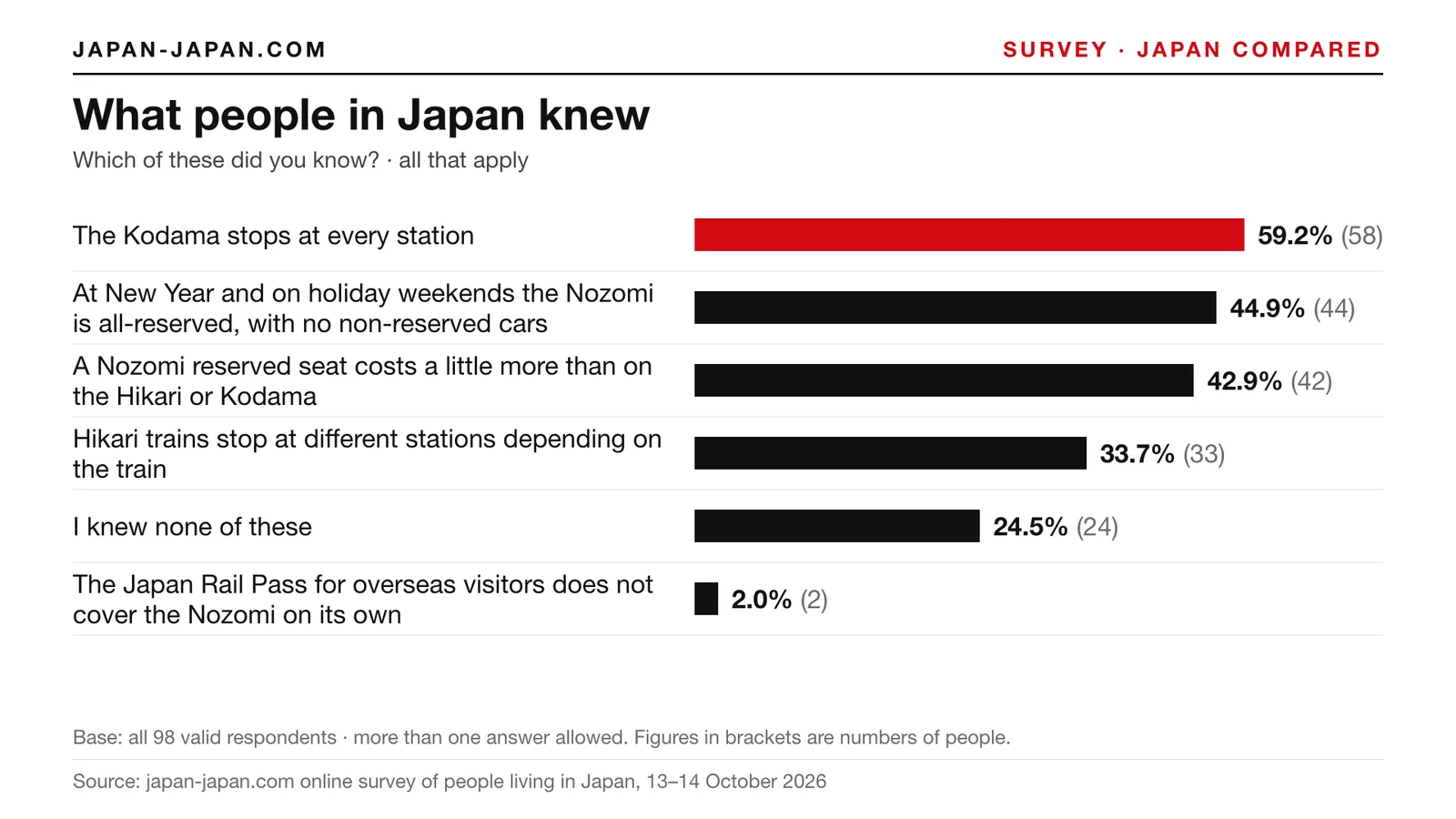
For a trip from Tokyo to Shin-Osaka, though, 3.1% (3 people) would take the Kodama and 7.1% (7 people) the Hikari, against 58.2% (57 people) for the Nozomi. 59.2% (58 people) knew the Kodama stops at every station, and 33.7% (33 people) knew that Hikari trains stop at different stations depending on the train.
Hikari vs Kodama FAQ
How much slower is the Kodama than the Hikari?
From Tokyo to Shin-Osaka on 13 October 2026, the middle Hikari took 2 h 54 min and the middle Kodama 3 h 54 min. The Hikari ranged from 2 h 48 min to 3 h 6 min. The Kodama ranged from 3 h 42 min to 3 h 54 min. On shorter trips the gap is smaller. The Kodama takes about 2 h 40 min from Tokyo to Nagoya, and the Hikari 707 takes 1 h 58 min.
Can I ride the Kodama with a Japan Rail Pass?
Yes. The Japan Rail Pass covers the Kodama and the Hikari at no extra cost. Only the Nozomi and Mizuho need the extra NOZOMI MIZUHO Ticket, which costs 4,960 yen from Tokyo to Shin-Osaka.
Can foreign visitors book Platt Kodama?
Yes. JR Tokai Tours sells it on an English website after a free membership sign-up. You board with a transit IC card or a QR ticket. Booking opens at 10:00 one month before travel and closes at 23:30 the day before. You cannot change the booking, and a missed train gets no refund.
Which stations does only the Kodama stop at?
Shin-Fuji, Kakegawa and Mikawa-Anjo. No Hikari or Nozomi stops at these three stations. Atami gets only a few Hikari a day, so the Kodama is usually the train for Atami as well.
About the author