JR Pass vs Suica: Do You Need Both? Real Fares Compared
The two products do different jobs. The JR Pass is one price for a fixed number of days on JR. Suica takes each fare from a stored balance when you walk out through the gate. Our routes database checked six common trips from Tokyo against JR’s fare search for Wednesday 14 October 2026. Every one of them came in under 50,000 yen. So the pass only wins when you pack several long JR rides into one week. Suica is the card you tap for the subway, the bus and the convenience store either way.
JR Pass vs Suica side by side
The table lines up the 7-day JR Pass with the two Suica cards that JR East sells. Pass prices come from the JAPAN RAIL PASS official price page. The card details come from the JR East Suica page for visitors.
| Item | JR Pass (7 days) | Suica | Welcome Suica |
|---|---|---|---|
| Price | 50,000 yen, Ordinary Car, official website | From 1,000 yen, including a 500 yen deposit | From 1,000 yen, no deposit |
| How you pay | One price for 7, 14 or 21 days | Fare taken from the balance | Fare taken from the balance |
| Where it works | JR Group trains, Tokyo Monorail, local JR Bus, Miyajima ferry | Trains, subways, buses, monorails and shops | Trains, subways, buses and shops, not PiTaPa-area stores |
| Top-ups | — | Cash only, balance up to 20,000 yen | Yen only, up to 20,000 yen, also at Seven Bank ATMs |
| Seats | Reserved seats at no extra cost, except Nozomi and Mizuho | Limited express ticket bought separately | Limited express ticket bought separately |
| Refund | Before first use only, 560 yen fee | Balance minus 220 yen, plus the 500 yen deposit | No refunds |
| Valid for | 7, 14 or 21 days | Invalid after 10 years unused | 28 days including the day of purchase |
The pass price depends on how and where you buy it. On the official website, the 7-day Ordinary Car pass costs 50,000 yen and the 14-day pass costs 80,000 yen. The 7-day Green Car pass costs 70,000 yen. Children aged 6 to 11 pay 25,000 yen for 7 days. Overseas travel agents charge 53,000 yen for the 7-day Ordinary Car pass. Our Japan Rail Pass guide notes that this agency price applies from October 1, 2026. The official website keeps 50,000 yen for a limited time.
If your plans change, you can refund the pass only before the first day of use. The fee is 560 yen per pass when you bought it online. Only foreign tourists who enter Japan with Temporary Visitor status can use it.
Suica works the other way round. You pay for what you ride. A new card costs from 1,000 yen up to 10,000 yen, and 500 yen of the price is a deposit. You tap in at the gate, and the fare comes off the balance at the station where you get off. Our Suica card guide covers where it works outside Tokyo.
Welcome Suica is the version JR East sells to short-term visitors. It has no deposit, lasts 28 days including the day you buy it, and gives no refund at the end. Our Welcome Suica vs Suica comparison shows which card fits which trip.
What a round trip costs without the pass
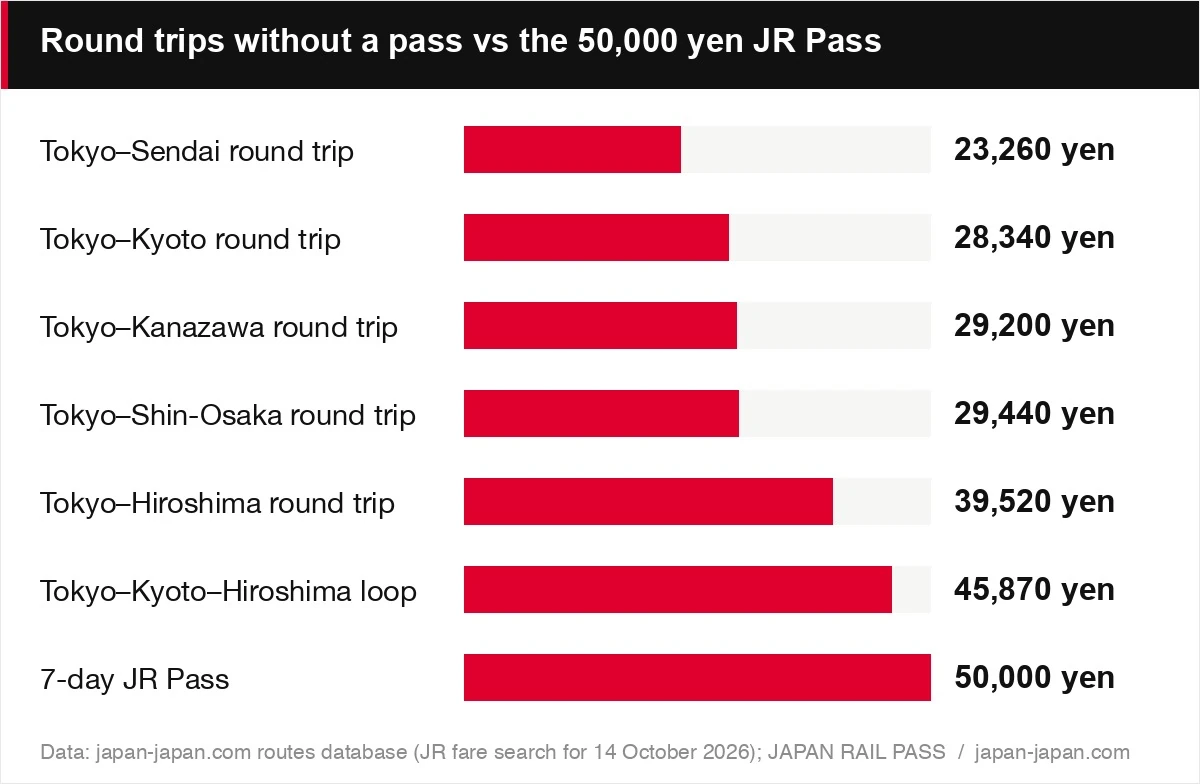
Every trip in the chart below costs less in normal tickets than the 50,000 yen pass. We took one-way reserved-seat fares from our routes database, which uses JR’s fare search for Wednesday 14 October 2026, and added them up.
| Item | Value | Note |
|---|---|---|
| Tokyo–Sendai round trip | 23,260 yen | Tohoku Shinkansen |
| Tokyo–Kyoto round trip | 28,340 yen | Nozomi |
| Tokyo–Kanazawa round trip | 29,200 yen | Kagayaki |
| Tokyo–Shin-Osaka round trip | 29,440 yen | Nozomi |
| Tokyo–Hiroshima round trip | 39,520 yen | Nozomi |
| Tokyo–Kyoto–Hiroshima loop | 45,870 yen | Nozomi |
| 7-day JR Pass | 50,000 yen | Official website |
The bars show how wide the gap is. A Tokyo to Kyoto Nozomi ticket costs 14,170 yen one way, so the round trip is 28,340 yen. That is 21,660 yen less than the pass. Tokyo to Shin-Osaka and back costs 29,440 yen. Tokyo to Kanazawa on the Kagayaki costs 29,200 yen for both ways. The cheapest of the six is the Tokyo to Sendai trip on the Tohoku Shinkansen, at 23,260 yen there and back.
Longer trips close the gap. A Tokyo to Hiroshima Nozomi ticket costs 19,760 yen one way, and the round trip comes to 39,520 yen. That is still 10,480 yen below the pass. A loop from Tokyo to Kyoto, on to Hiroshima and back to Tokyo costs 45,870 yen. Here the tickets come in only 4,130 yen under the pass. One more long ride in the same week, such as Kyoto to Hiroshima at 11,940 yen, would tip the balance. Our article on whether the JR Pass is worth it works through that break-even point.
The Nozomi is the fastest train on the Tokaido Shinkansen, and most of these fares are Nozomi fares.
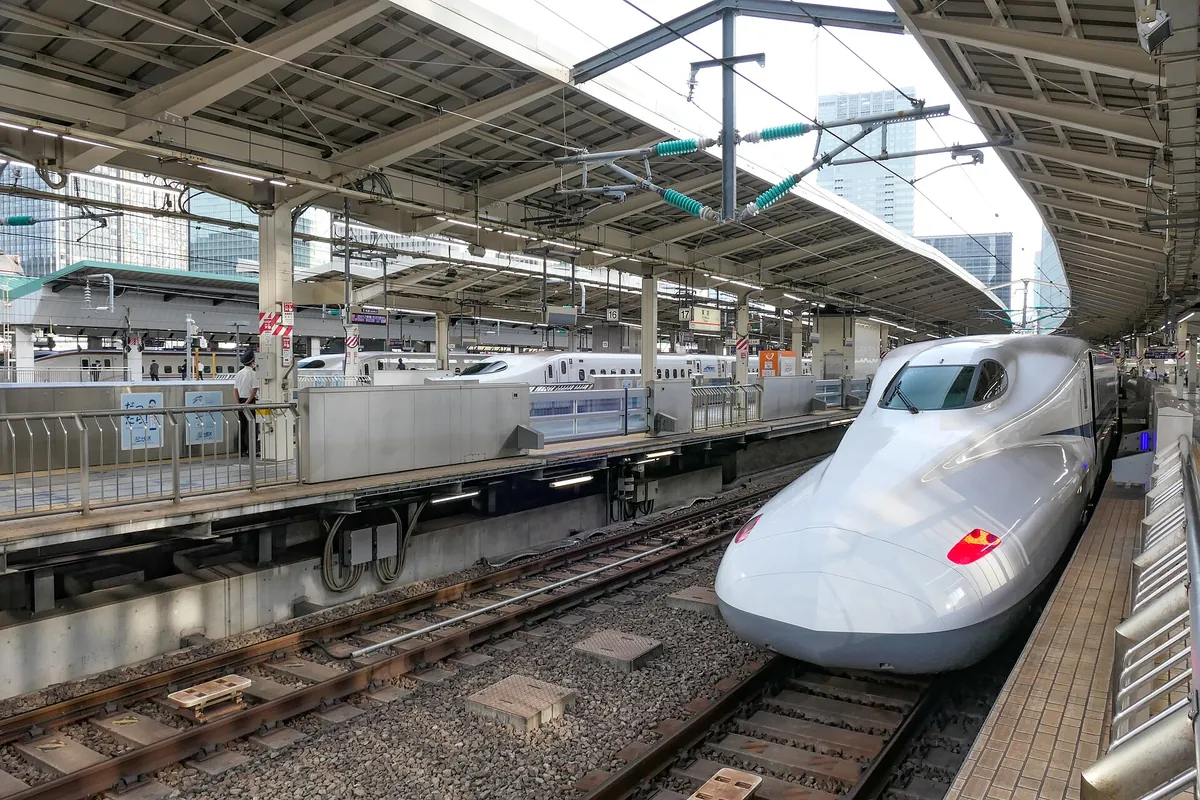
The pass does not cover any seat on the Nozomi or the Mizuho. Pass holders ride the Hikari or Kodama instead, or buy a special NOZOMI MIZUHO Ticket before boarding. That ticket costs 4,960 yen for Tokyo to Kyoto or Shin-Osaka, and 6,500 yen for Tokyo to Hiroshima. It goes on sale one month before the day of travel at reserved seat ticket machines and JR ticket offices.
The Hikari is slower but free with the pass. The Hikari 707, leaving Tokyo at 10:03, takes 2 h 34 min to Kyoto. The fastest Nozomi takes 2 h 7 min. Our Nozomi vs Hikari comparison looks at that time difference in detail.
Can you ride the Shinkansen with Suica?
Yes, on JR East’s Shinkansen lines, in non-reserved seats. JR East calls the service Touch de Go! Shinkansen. You register your Suica or another transit IC card once, free of charge. After that you tap the card at the Shinkansen gate and board. The fare comes off your balance when you leave the gate at your destination.
The JR East Touch de Go! Shinkansen page lists the cards it accepts: Suica, PASMO, Kitaca, TOICA, manaca, ICOCA, PiTaPa, SUGOCA, nimoca and Hayakaken. The steps are short, as the chart below shows.
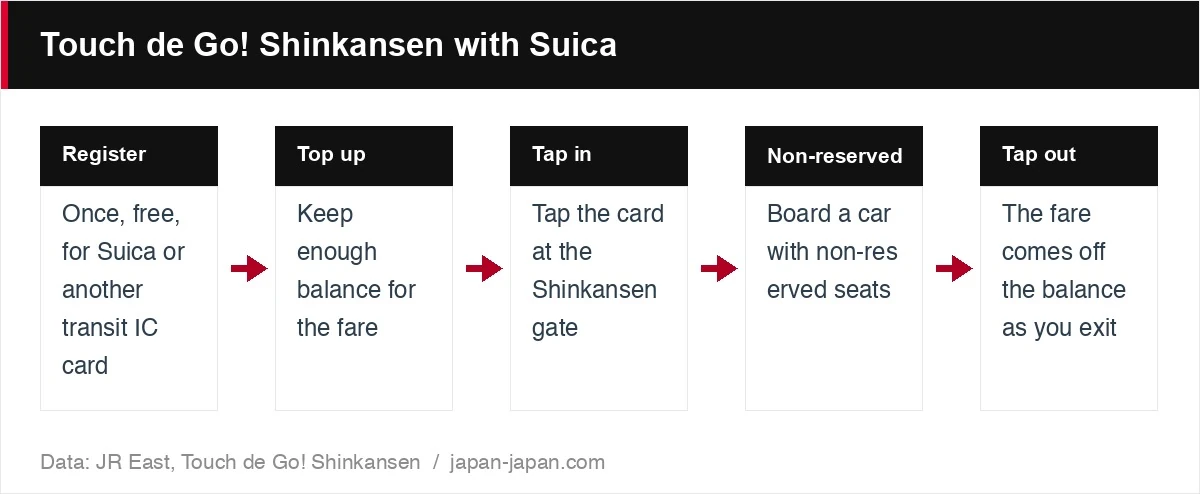
Registration is a one-time step. The JR East page on riding the Shinkansen with Suica calls it start-of-use registration and says some sections are excluded. You also need enough balance on the card before you tap in. JR East’s Japanese page calls non-reserved seats 自由席 (jiyū-seki), so that is the word to look for.
The JR East Welcome Suica Mobile Shinkansen guide goes one step further. With the Welcome Suica Mobile app, you need no registration and can ride on the day you get the card. Its area covers the Tohoku Shinkansen between Tokyo and Morioka and between Morioka and Shin-Aomori. It also covers the Joetsu Shinkansen between Tokyo and Niigata, and the Hokuriku Shinkansen between Tokyo and Joetsu Myoko.
Check the train before you tap. The Hayabusa, Hayate, Komachi and Tsubasa run with all seats reserved, so they have no non-reserved cars. On a Tokyo to Sendai trip, that means the Yamabiko. For reference, our database lists 10,780 yen for a non-reserved Yamabiko seat on that route. The service also does not work on trains that pass through Morioka, such as Tokyo to Shin-Aomori.
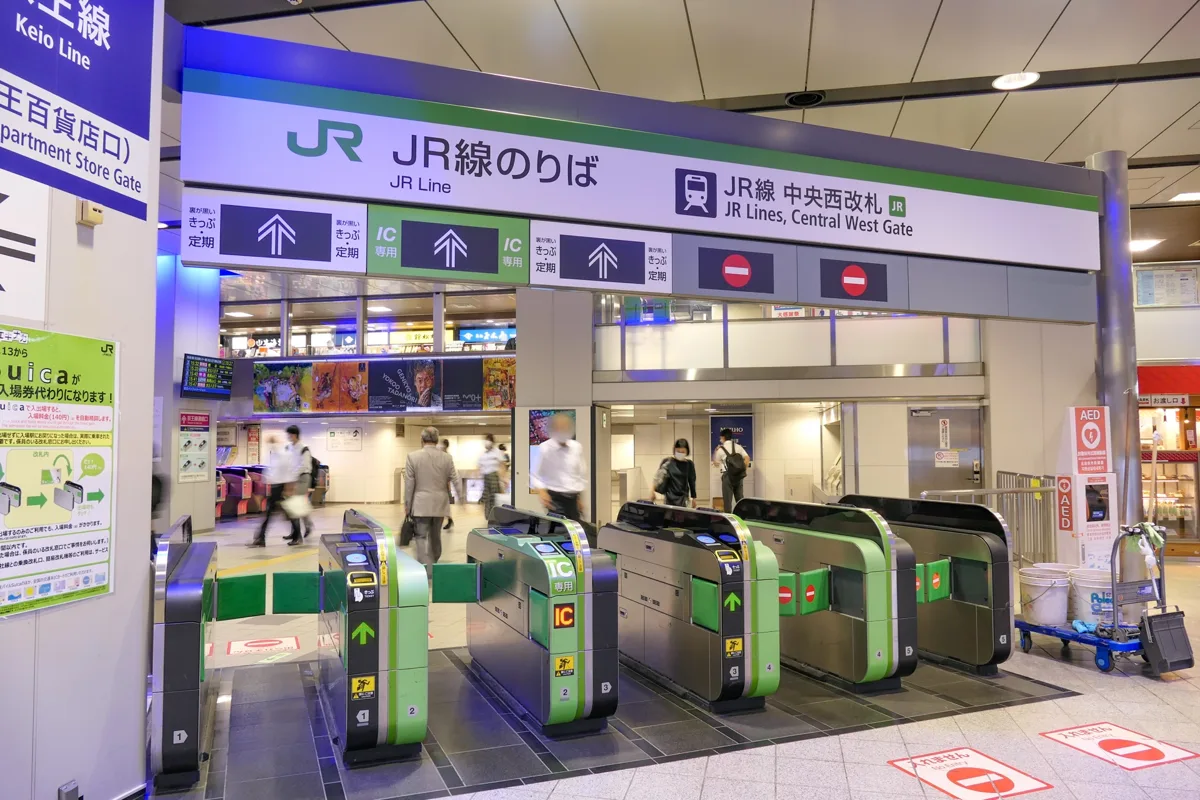
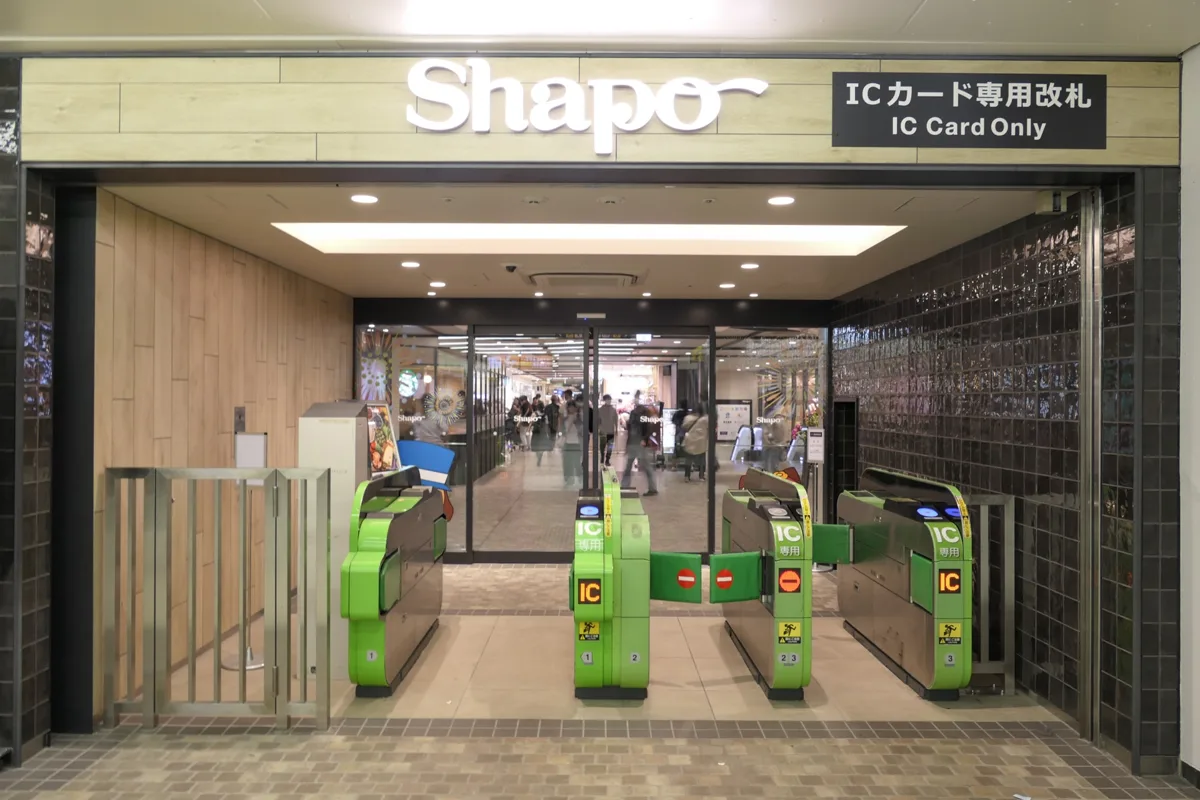
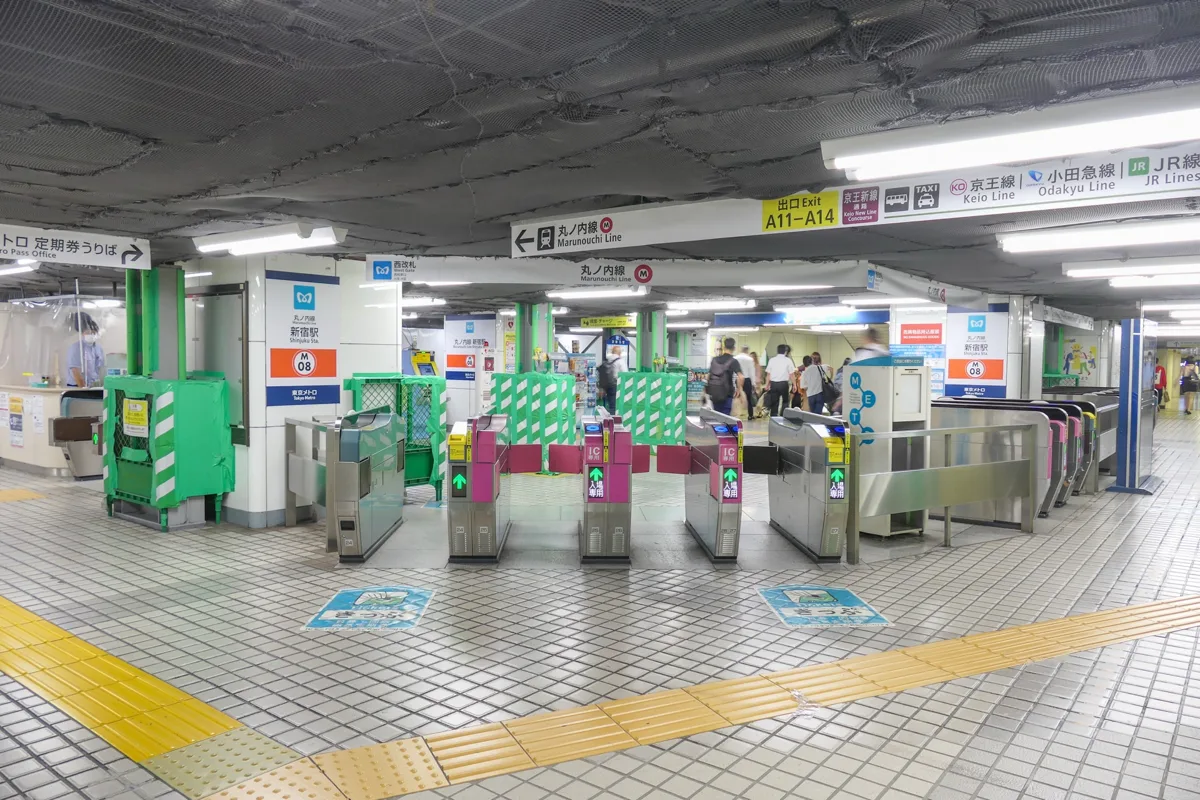
Shinkansen gates have an IC card reader too, like these at Atami on the Tokaido Shinkansen.
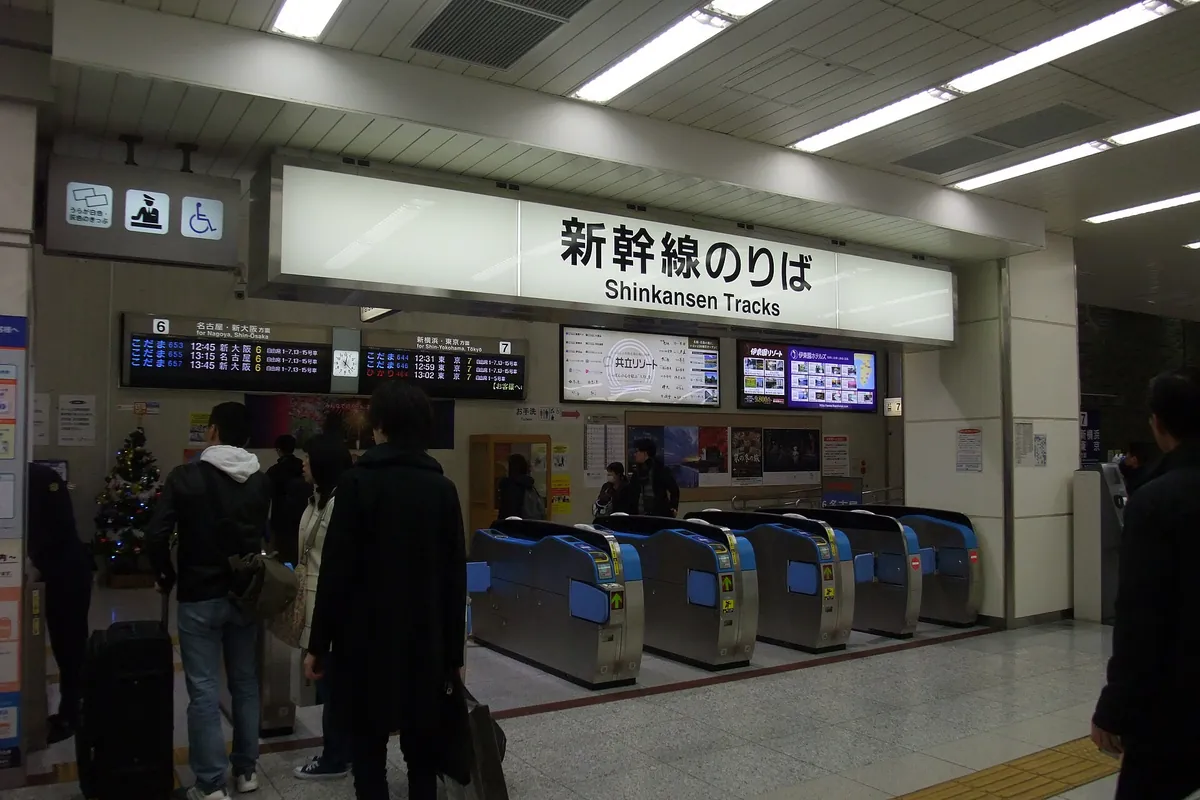
The Tokaido and Sanyo Shinkansen use a different system called Smart EX. You book online, register your IC card, and then tap it at the Shinkansen gate. The Smart EX page on boarding with an IC card says the fare goes on your registered credit card when you book. It does not come off the card balance. Pick up the Seat Information slip at the gate, because the crew checks it on the train. JR East adds that Mobile Suica works with the Express Reservation service between Tokyo and Hakata.
This matters for the balance limit. Suica holds 20,000 yen at most, and Tokyo to Hiroshima by Nozomi costs 19,760 yen one way. With Smart EX, that fare sits on your credit card instead.
On ordinary JR lines, Suica pays the base fare only. JR East says you must buy a limited express ticket separately for a limited express, an express or a Green Car.
Where the pass stops: subways and private lines
The pass covers JR and a short list of extras. The JAPAN RAIL PASS official page on covered routes lists all JR Group railways, the Tokyo Monorail, local JR Bus routes and the JR West Miyajima ferry. JR Bus express routes are excluded. On the ferry, you still pay the 100 yen Miyajima Visitor Tax.
The illustration below sorts what the pass covers from what you pay for yourself.
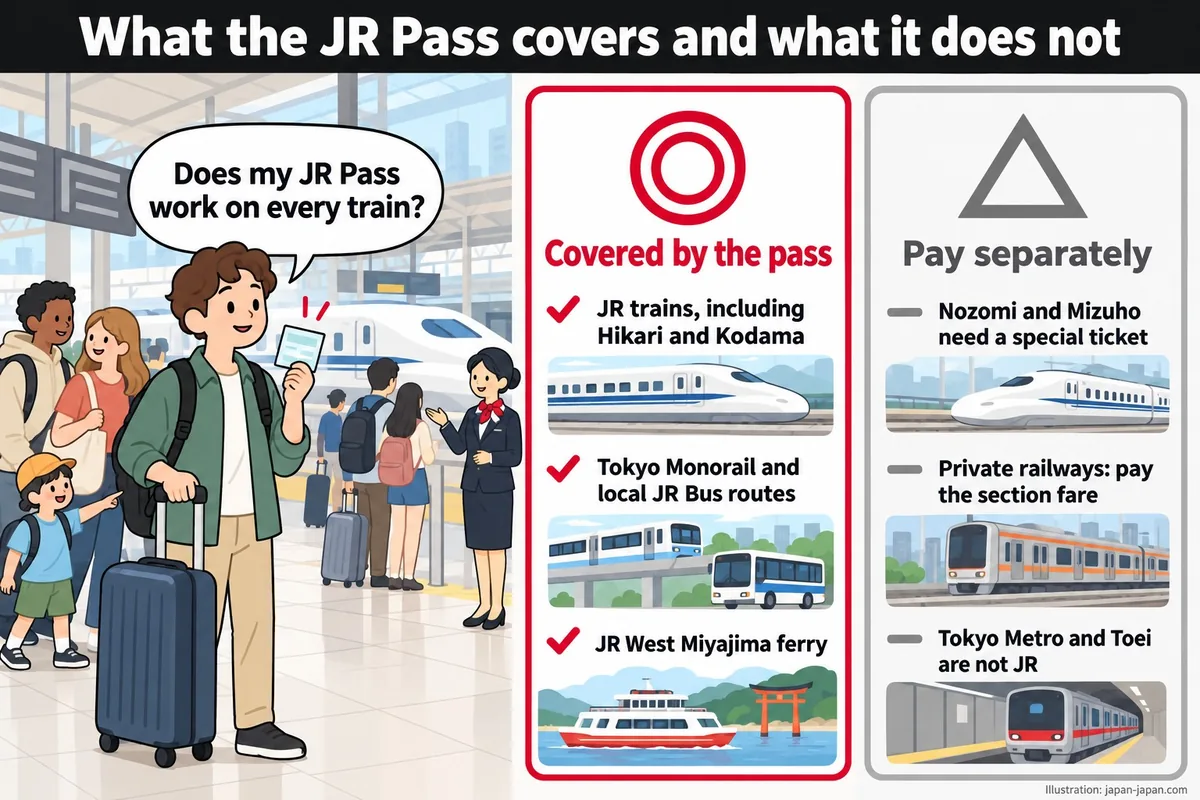
Private railways are the main gap. The official wording is plain: “When using a private railway, the fare and fee for the section used must be paid”. This applies even when a JR train runs straight onto another company’s tracks. The Fuji Excursion from Shinjuku is one example. The section from Otsuki to Kawaguchiko belongs to the Fujikyu Railway, and you pay that part yourself.
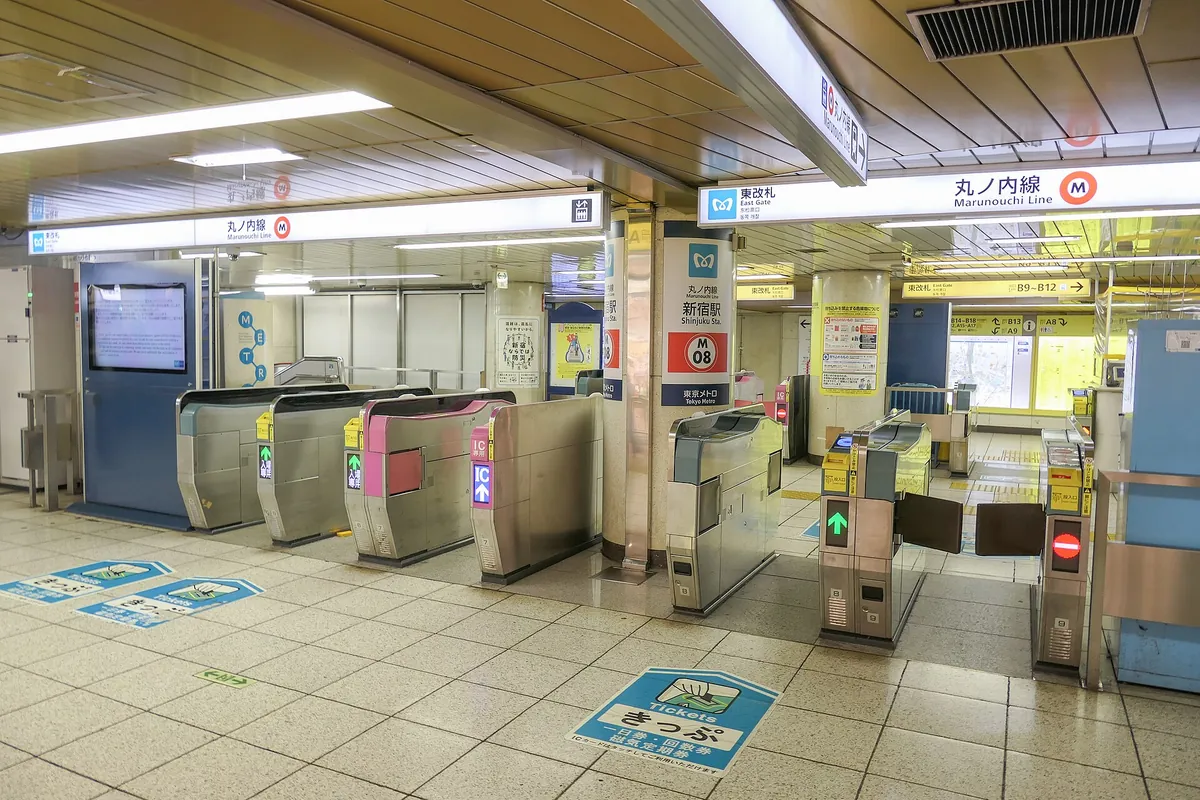
Tokyo Metro and Toei Subway are not JR companies, and neither appears on the pass’s list. Budget for them on Suica or with a subway pass. The Tokyo Subway Ticket covers all Tokyo Metro and Toei Subway lines. It costs 1,000 yen for 24 hours, 1,500 yen for 48 hours or 2,000 yen for 72 hours. Those prices went up on March 14, 2026. You can buy it at the tourist information counters at Haneda and Narita airports, where staff check your passport.
The Tokyo Metro 24-hour Ticket costs 700 yen and covers the nine Tokyo Metro lines only. Its IC version loads onto PASMO and not onto Suica. If you already carry Suica, buy the paper version from a Tokyo Metro ticket machine.
Without a subway pass, Suica simply pays each fare at Tokyo Metro and Toei gates.
Suica limits: 20,000 yen, deposit and Welcome Suica
Suica has a few limits that catch visitors out. Four of them matter most.
The first is the ceiling. You can top up as often as you like, but the balance cannot go above 20,000 yen. Top-ups come in steps of 500, 1,000, 2,000, 3,000, 5,000 or 10,000 yen. You pay in cash at ticket machines and fare adjustment machines, and a credit card will not work. Our page on topping up an IC card compares the rules for Suica, PASMO and ICOCA.
The second is the deposit. A JR East Suica goes back only at a JR East station. You get the balance minus a 220 yen handling fee, plus the 500 yen deposit. JR East’s own example: a balance of 1,000 yen returns 1,280 yen. Even with 0 yen left on the card, you still get the 500 yen deposit back.
The third is the area. Suica works only inside each area, and you cannot ride from one area to another on it. JR East’s example is a trip from the Tokyo area to the Sendai area. For that, buy a ticket in advance, or use Touch de Go! on the Shinkansen.
The fourth applies to Welcome Suica. The JR East Welcome Suica purchase page sets its life at 28 days, including the day you buy it. The card stops working on the 29th day, and the GOOD THRU date on the back is not the expiry date. Nothing is refunded, whatever the balance. You can top it up with yen at ticket machines and fare adjustment machines, or at Seven Bank ATMs in 7-Eleven stores. It works at shops across Japan that show the IC card logos, except stores in the PiTaPa areas.
A child Welcome Suica works until the March 31 after the child’s 12th birthday. Bring the child’s passport when you buy it. A lost Suica or Welcome Suica cannot be reissued. Only a registered My Suica can be.
JR East is also starting teppay, a separate code-payment service, on 20 October 2026. It handles purchases above the 20,000 yen Suica limit. Our Suica changes 2026-27 guide explains how it works.
Using both on one trip
Plenty of itineraries use both. The pass handles the long JR legs, and Suica handles everything in between.
For the long legs, reserved seats cost nothing extra with the pass. Book them at a ticket machine or a JR ticket office, called Midori-no-madoguchi (みどりの窓口). If you bought online, you can also book on the official website. You go through the automatic ticket gates with the pass, or show it at a staffed gate. Carry your passport whenever you use it.
You pick up the pass in Japan at a JR ticket office or a reserved seat ticket machine. Show the passport with your Temporary Visitor stamp. If you bought an Exchange Order from an overseas agent, swap it for the pass at a major JR station within three months of its issue.
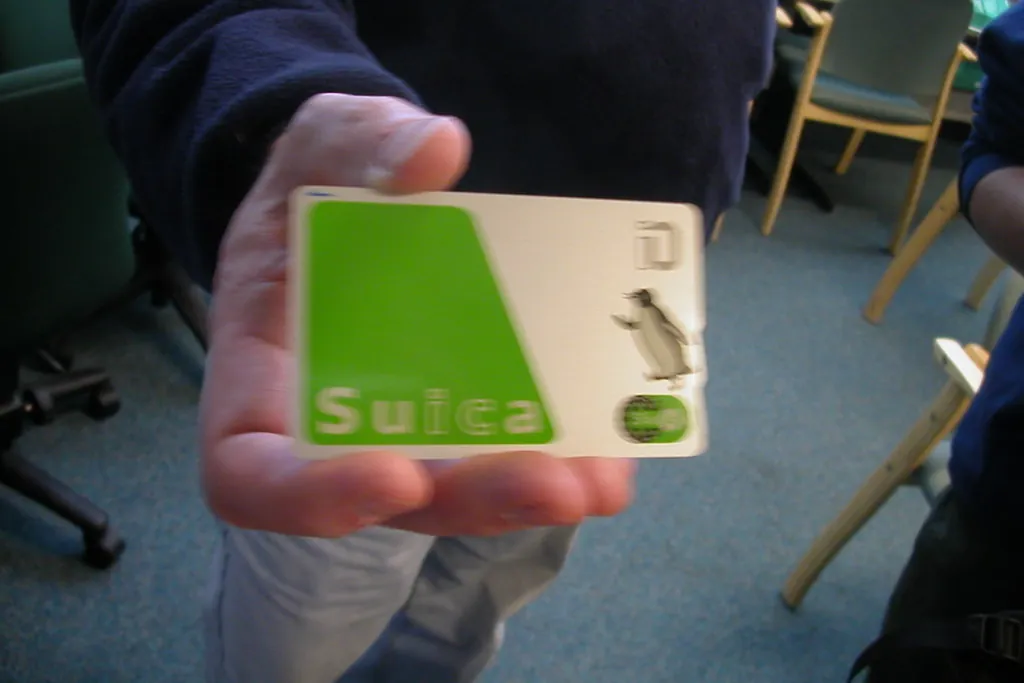
Suica covers the rest of the day. Welcome Suica pays for vending machines, coin lockers, convenience stores and restaurants, as well as subways and buses. Keep the two apart in your wallet. JR East asks you to use one IC card at a time and not to put more than one in the same pass case.
You can buy a Welcome Suica as soon as you land. JR EAST Travel Service Centers sell it at Narita Airport Terminal 1 (8:30 to 19:00) and Narita Airport Terminal 2・3 (8:30 to 20:00). The one at Haneda Airport Terminal 3 opens from 6:45 to 20:00. It sits next to the ticket gate on the 2nd floor of the Tokyo Monorail station. Welcome Suica vending machines stand at the same three stations. Our guide to where to buy Suica lists the city stations too.
From Haneda, the Tokyo Monorail is on the pass, so you can ride into the city on the pass if it has started. Our Welcome Suica guide shows where else the card works, including the monorail.
Which one should you choose?
Match the product to the shape of your trip. The lookup chart below gives four common answers.
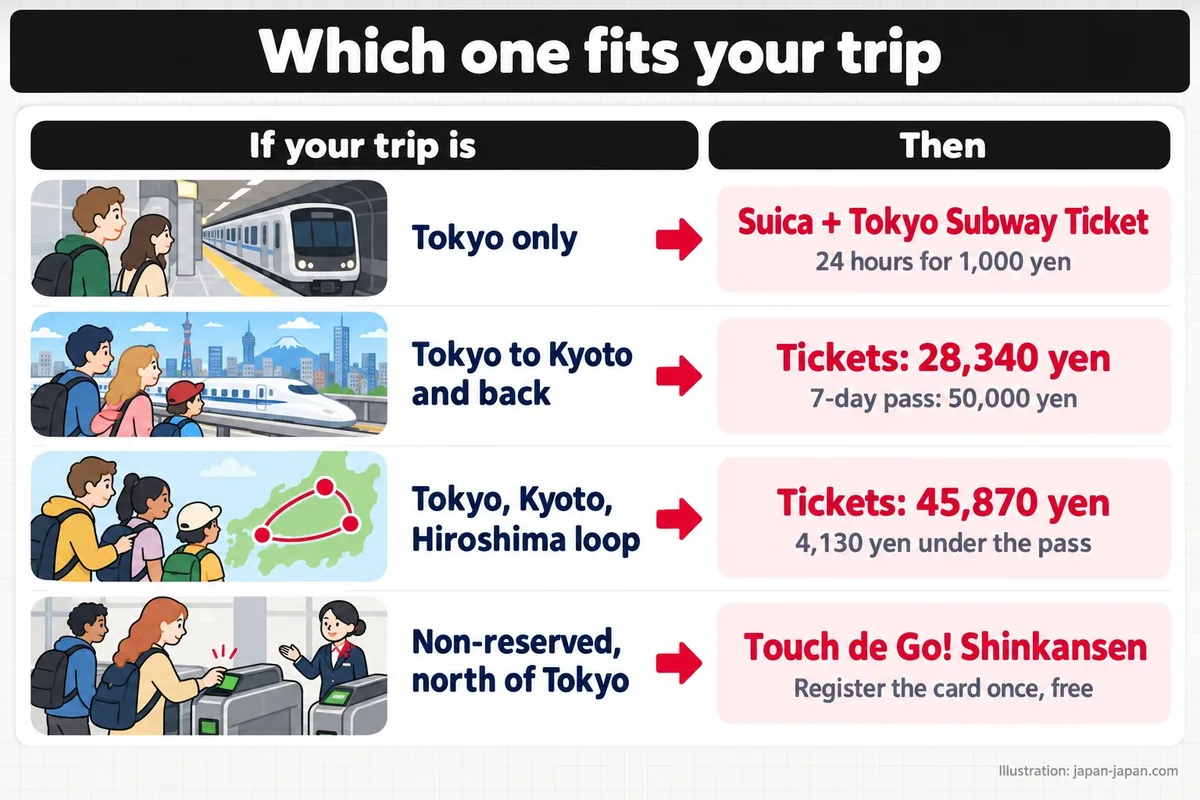
Tokyo only. Get Suica or Welcome Suica. If you plan a lot of subway rides, add the Tokyo Subway Ticket at 1,000 yen for 24 hours.
Tokyo to Kyoto and back within a week. Buy normal tickets. The Nozomi round trip costs 28,340 yen against 50,000 yen for the 7-day pass.
A loop through Kyoto and Hiroshima. The tickets cost 45,870 yen. Add any other JR ride over 4,130 yen in the same 7 days, and the pass comes out ahead. If you want the Nozomi with the pass, add the special ticket price to the pass side.
Non-reserved trips north of Tokyo. Register Suica for Touch de Go! Shinkansen and ride the Yamabiko or other trains with non-reserved cars.
Not entering as a Temporary Visitor. You cannot use the JR Pass at all, so plan on Suica and normal tickets.
Children change the maths. A child pays 25,000 yen for the 7-day pass. On normal tickets, children aged 6 to 11 pay half of the basic fare and limited express charge.
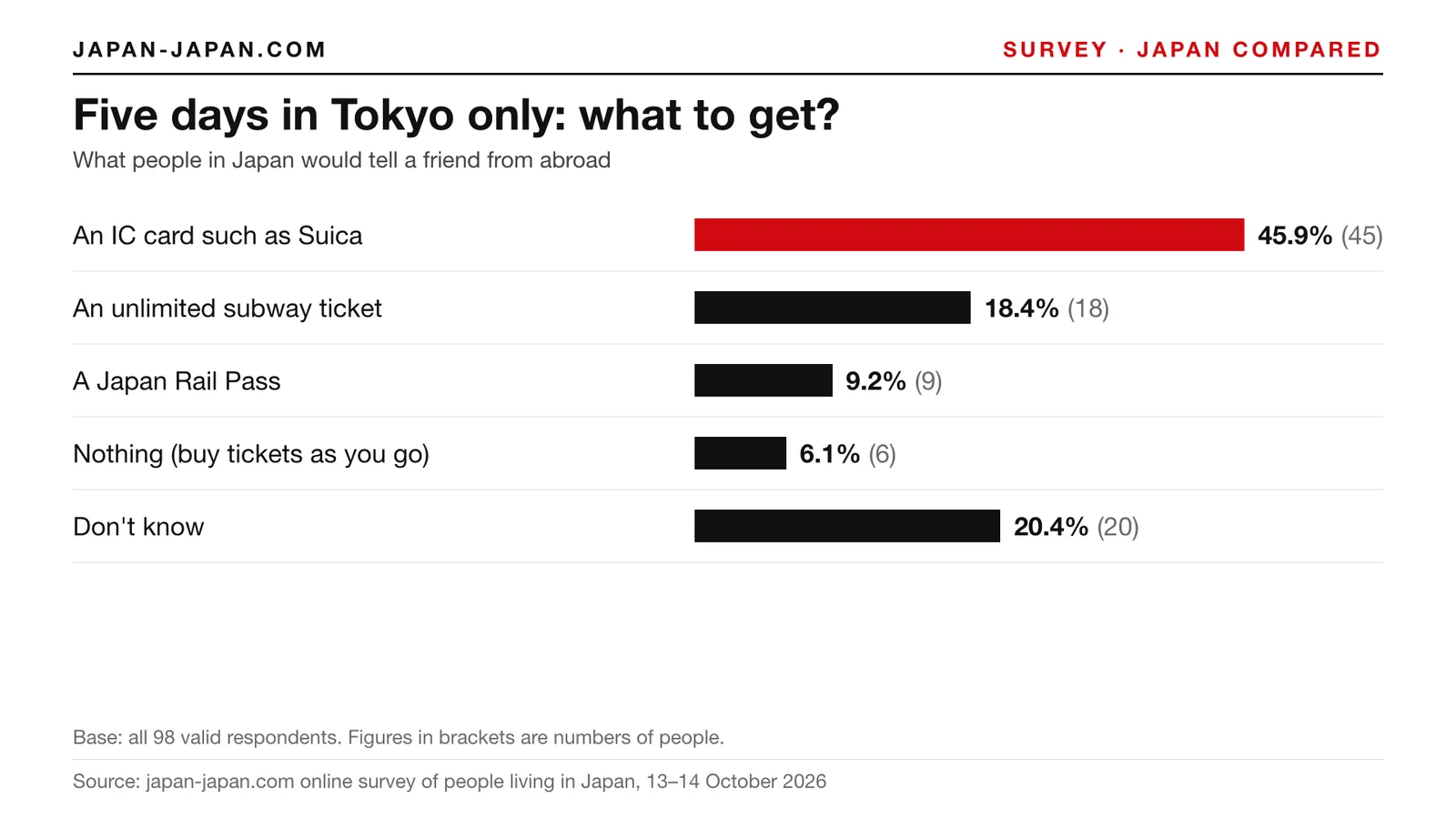
JR Pass or Suica: what 98 people in Japan would tell a friend
On 13–14 October 2026, japan-japan.com ran an online survey of people living in Japan about 32 travel choices. 130 people answered. We removed answers that looked machine-written, one from outside Japan and most of those that contradicted themselves, which left 98. Shares below are of the 98 respondents unless a smaller group is named; they describe these people, not all travellers in Japan. See all 32 comparisons and how we asked.
We asked what a friend from abroad spending 5 days only in Tokyo should get for getting around. 45.9% (45 people) said an IC card such as Suica, 18.4% (18 people) an unlimited subway ticket and 9.2% (9 people) a Japan Rail Pass; 6.1% (6 people) said nothing, just buy tickets as you go.
Only 2.0% (2 people) knew that the Japan Rail Pass does not cover the Nozomi on its own. Asked about common mistakes, two respondents wrote about passes:
“Buying a JR Pass and not getting your money’s worth.”
— Woman in her 40s, Kanto (outside Tokyo). Original Japanese (excerpt): 「JRパスの買い損」
“Buying a pass or an unlimited-ride ticket just because, when it doesn’t fit your itinerary or how often you travel.”
— Woman in her 40s, Kanto (outside Tokyo). Original Japanese (excerpt): 「自分の旅程や移動の頻度に合っていないパスやフリー切符を、なんとなく購入してしまうこと」
FAQ
Can I use Suica instead of a JR Pass?
Yes, for JR fares inside one Suica area and for non-reserved seats on JR East Shinkansen through Touch de Go! Shinkansen. You pay each fare from the balance, which tops out at 20,000 yen. For the Tokaido and Sanyo Shinkansen, use Smart EX with a registered IC card, or buy tickets.
Can I ride the Shinkansen with Suica?
Yes, in non-reserved seats on JR East lines. Register the card once for free, keep enough balance, and tap at the Shinkansen gate. The Hayabusa, Hayate, Komachi and Tsubasa are all reserved, so pick a train with non-reserved cars.
Do I still need Suica if I have a JR Pass?
Usually, yes. The pass covers JR Group trains, the Tokyo Monorail, local JR Bus routes and the Miyajima ferry. Private railways, subways, city buses and shops all need another way to pay, and Suica covers them with one card.
Can I use the JR Pass on the Tokyo subway?
Tokyo Metro and Toei Subway are not on the official list of what the pass covers. Pay their fares with Suica, or buy a Tokyo Subway Ticket from 1,000 yen for 24 hours. The pass does cover the Tokyo Monorail from Haneda.
About the author