Cherry Blossom Japan Season 2027: Bloom Dates by City
In an average year, Tokyo's cherry trees open on 24 March and Kyoto's on 26 March. Bloom dates for 10 cities, recent early springs and the 2027 holidays.
Cherry blossom Japan season: the short answer
Cherry blossom season in Japan runs from mid-January in Okinawa to May in Hokkaido. In an average year, Tokyo’s trees open on 24 March and reach full bloom on 31 March. Kyoto opens on 26 March.
These are the 1991–2020 averages from the Japan Meteorological Agency (JMA), which records the dates on a sample tree in each city. Fukuoka, Kochi and Kumamoto share the earliest average on the main islands, 22 March. Osaka opens on 27 March and reaches full bloom on 4 April, the same day as Kyoto. Of the 10 cities in our table, Sapporo opens last, on 1 May.
Okinawa is earlier still. There the JMA watches a different tree, the Taiwan cherry, and Naha’s average opening date is 16 January.
You can plan with these averages now. GO TOKYO says forecasts for Tokyo and other cities on Honshu, the main island, are announced as early as January. Last season, its cherry blossom guide quoted a Japan Weather Association forecast dated 29 January 2026.
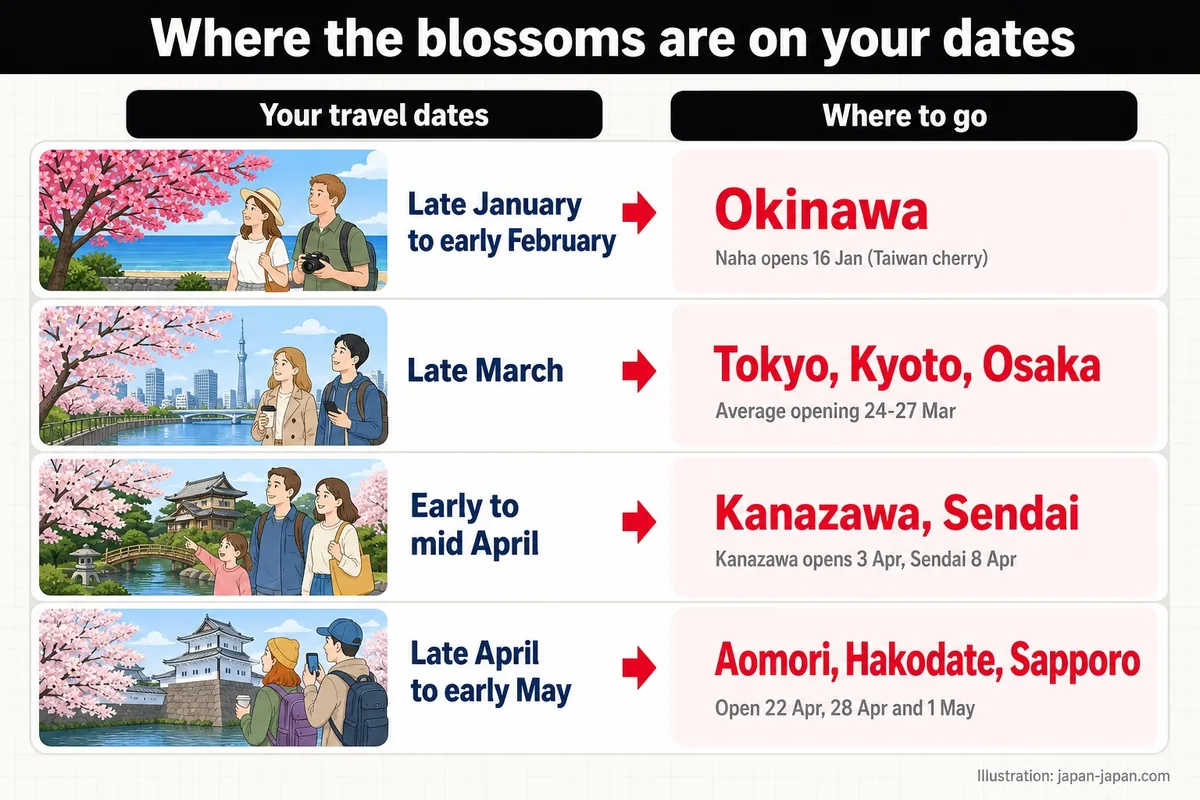
For a first trip, aim for the last week of March or the first days of April, and stay in Tokyo, Kyoto or Osaka. If your dates fall later in April, go north to Tohoku or Hokkaido. In January and early February, go to Okinawa.
When is cherry blossom season in Japan? Dates by city
In most big cities, from late March to early April. GO TOKYO puts the whole season, from Okinawa to Hokkaido, at around 4 months.
The table below lists 10 cities in order of their average opening date. It also gives the day each city’s sample tree opened in 2026.
| City | Opens | Full bloom | Opened in 2026 |
|---|---|---|---|
| Naha | 16 Jan | 4 Feb | 18 Jan |
| Fukuoka | 22 Mar | 31 Mar | 24 Mar |
| Tokyo | 24 Mar | 31 Mar | 19 Mar |
| Nagoya | 24 Mar | 2 Apr | 17 Mar |
| Kyoto | 26 Mar | 4 Apr | 23 Mar |
| Osaka | 27 Mar | 4 Apr | 26 Mar |
| Kanazawa | 3 Apr | 8 Apr | 29 Mar |
| Sendai | 8 Apr | 13 Apr | 31 Mar |
| Aomori | 22 Apr | 26 Apr | 13 Apr |
| Sapporo | 1 May | 6 May | 18 Apr |
The JMA and Japanese weather news use two words for these dates: 開花 (kaika), the opening, and 満開 (mankai), full bloom. Both come from that one sample tree, so use them as a guide to the whole city.
In Tokyo, GO TOKYO says it normally takes about one week to 10 days from opening to full bloom. The averages match: Tokyo opens on 24 March and peaks 7 days later.
Not every city watches the same kind of tree. Naha records the Taiwan cherry (hikanzakura). Sapporo and Hakodate record the Somei-yoshino, the same variety as Tokyo and Kyoto. Elsewhere in Hokkaido, Asahikawa, Obihiro and Kushiro record the Ezo mountain cherry (ezoyamazakura).
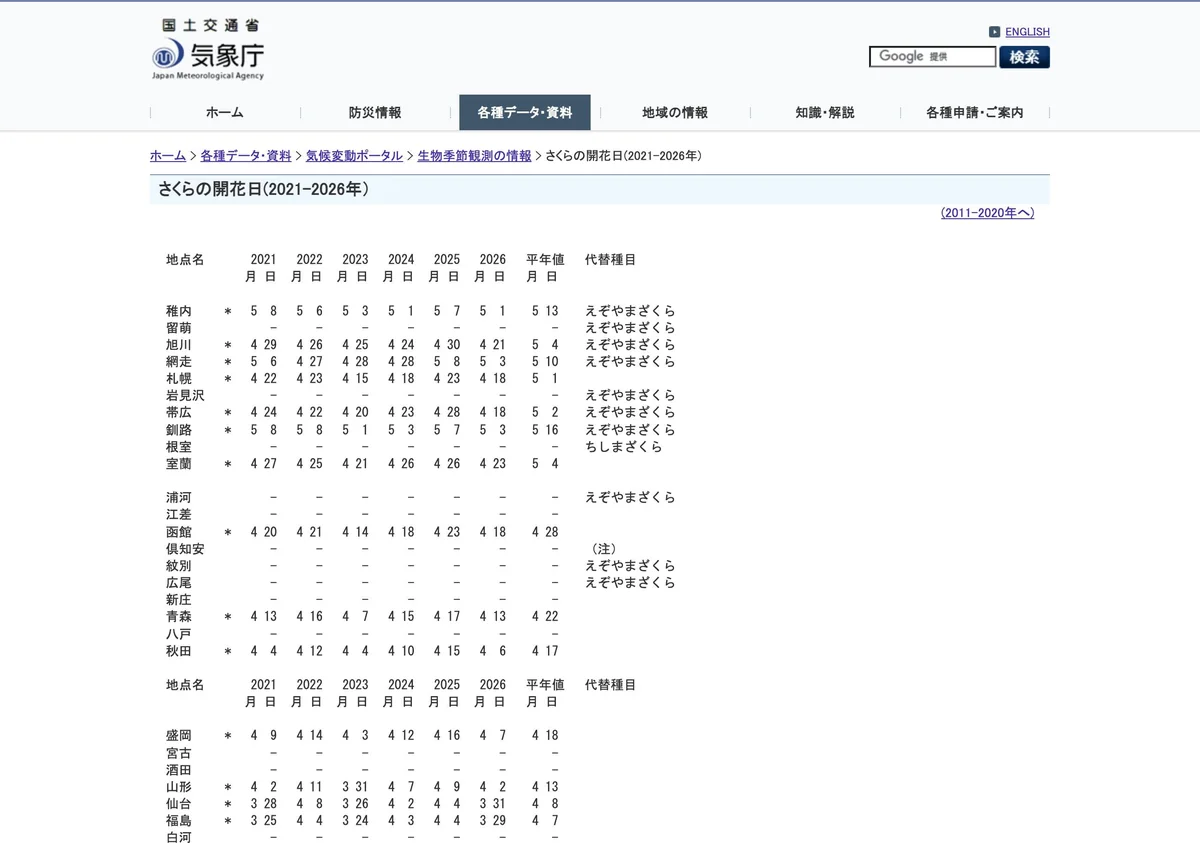
The screenshot below is the JMA’s opening-date table, titled さくらの開花日 (sakura no kaikabi). Stations appear in kanji: 札幌 is Sapporo, 函館 is Hakodate and 青森 is Aomori. The column 平年値 (heinenchi) holds the 1991–2020 average, and a blank last column means the Somei-yoshino.
Spring days are mild and the evenings cool. Our Tokyo in April guide gives an average high of 19.4°C and a low of 9.8°C, so bring a layer for evening hanami. For other cities, see Japan in March and Japan in April, with weather and events place by place.
How much the dates shift each year
By up to two weeks in the same city. Tokyo’s sample tree opened on 14 March in 2021 and 2023, but not until 29 March in 2024. Its full bloom ranged from 22 March to 4 April over the same six years. Kyoto’s full bloom came as early as 24 March in 2023 and as late as 5 April in 2024 and 2025.
Recent springs have mostly come early. Tokyo opened before its 24 March average in 4 of the 6 years from 2021 to 2026. The north moved the most. Sapporo opened between 15 and 23 April in every one of those years, against an average of 1 May. Its full bloom came between 21 and 27 April.
JNTO’s 2026 forecast page, which uses Japan Weather Association data, rated 8 of its 15 cities Very Early. They included Sapporo, Sendai, Aomori and Nagoya.
The diagram below follows one season from forecast to falling petals, with Tokyo in 2026 as the example.
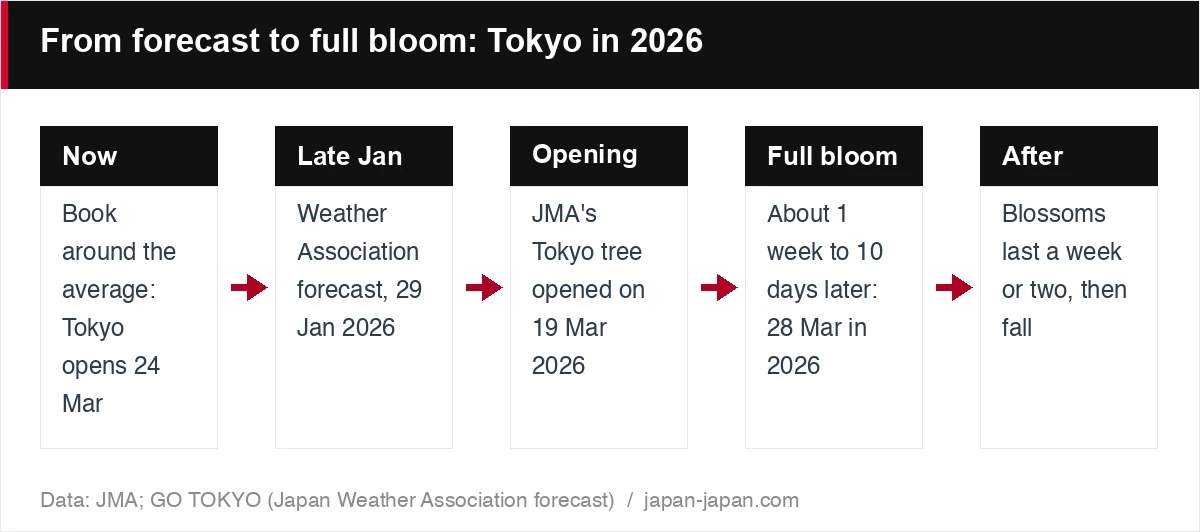
That year, the forecast quoted by GO TOKYO put Tokyo’s start at 21 March. The sample tree opened on 19 March and reached full bloom on 28 March. GO TOKYO says the blossoms generally last a week or two before they fall.
So build slack into your plans. Fix your flights around the average date and give the blossoms at least a week of the trip. Keep the end of the route open, so you can move north if the south is past its best. Sendai averages full bloom on 13 April and Aomori on 26 April.
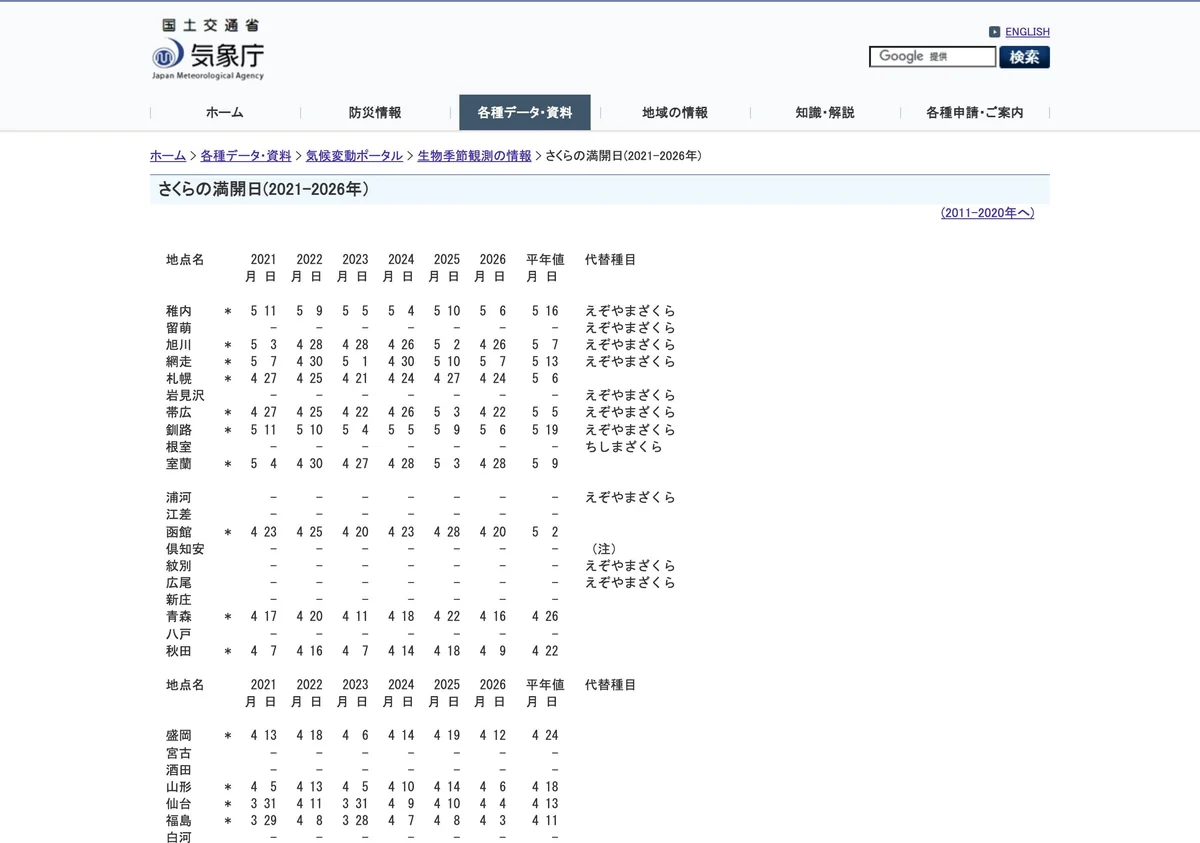
The JMA keeps a second table for full bloom, titled さくらの満開日 (sakura no mankaibi). In the screenshot below, Sapporo’s 2026 entry reads 4 24, meaning 24 April, against an average of 5 6, or 6 May.
Our 10-day Japan itinerary spends 4 nights in Tokyo, 1 in Hakone, 3 in Kyoto and 1 in Osaka. In an average year, starting it in the last week of March puts you in Tokyo, Kyoto and Osaka while the trees are in flower.
Cherry blossom spots in Tokyo, Kyoto and Osaka
Each city has a few famous spots. Two of the spots below needed a booking in 2026.
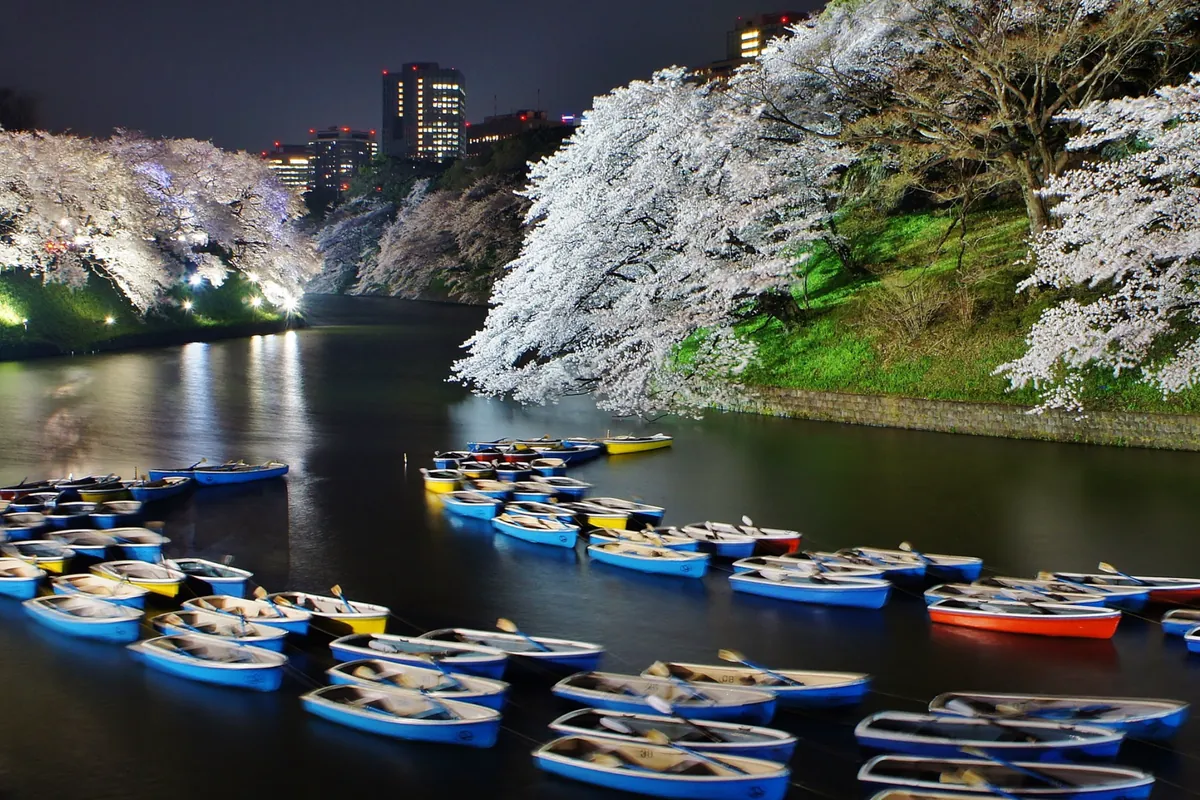
In Tokyo, start at Chidorigafuchi, just north of the Imperial Palace. GO TOKYO says the Chidorigafuchi Green Way becomes a 700-meter tunnel of cherry trees in spring. The photo below shows the trees along the Chidorigafuchi moat.
Ueno Park has 800 Somei-yoshino trees, and the avenue of cherry trees along its main path is famous across Japan. GO TOKYO says hundreds of thousands of people visit every day in the season, so expect a slow walk.
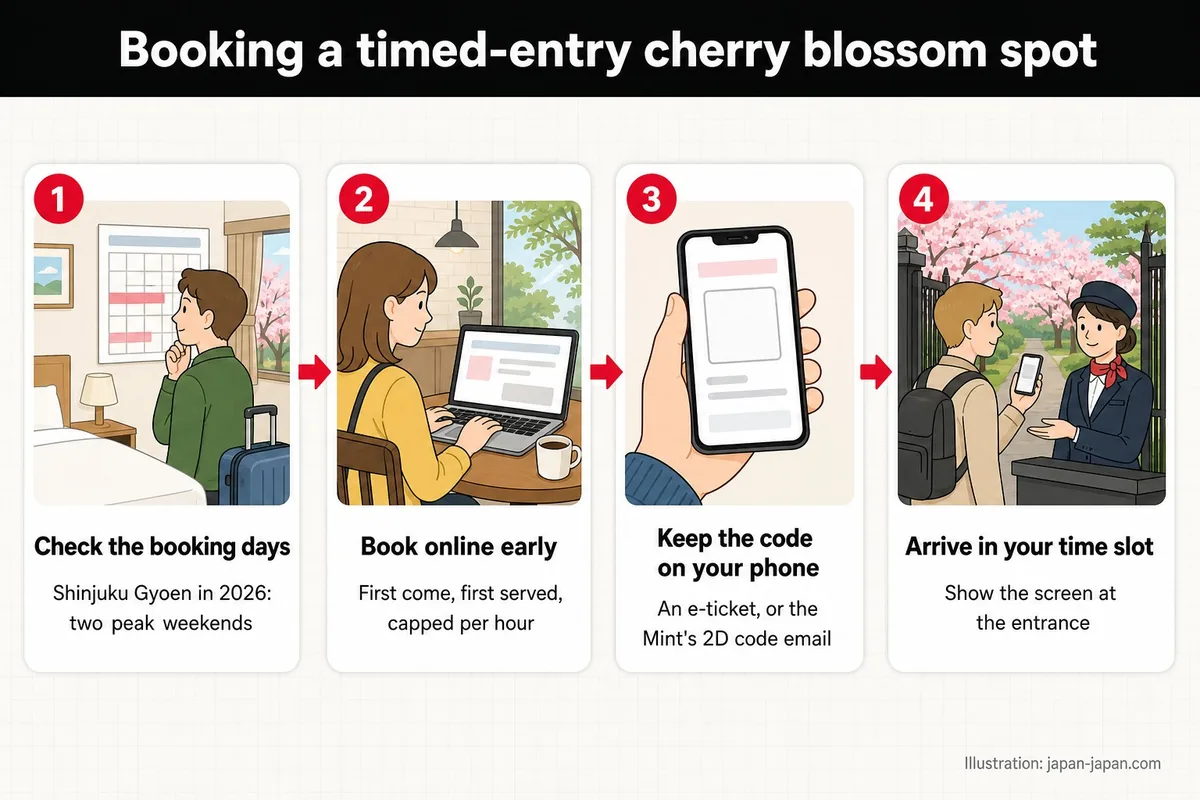
Shinjuku Gyoen National Garden used timed entry on the peak weekends of the 2026 season. In 2026, the Ministry of the Environment required a booking on 28 and 29 March and on 4 and 5 April, from 10:00 to 16:00. Bookings opened on 2 March, first come, first served, with a cap on visitors per hour. On those days you could still walk in without one from 9:00 to 10:00 and from 16:00 to 17:30. On 3 April, the garden dropped the booking for 4 April.
Annual pass holders, pregnant women, and children of junior high school age or younger with their parents did not need to book. Neither did visitors with a disability certificate, plus one helper each.
In Kyoto, the best-known tree is the weeping cherry in Maruyama Park, the city’s oldest park. The Kyoto City Tourism Association says the tree there now was planted in 1949 and is the second of its line. It is known as Gion no Yozakura, the night cherry of Gion.
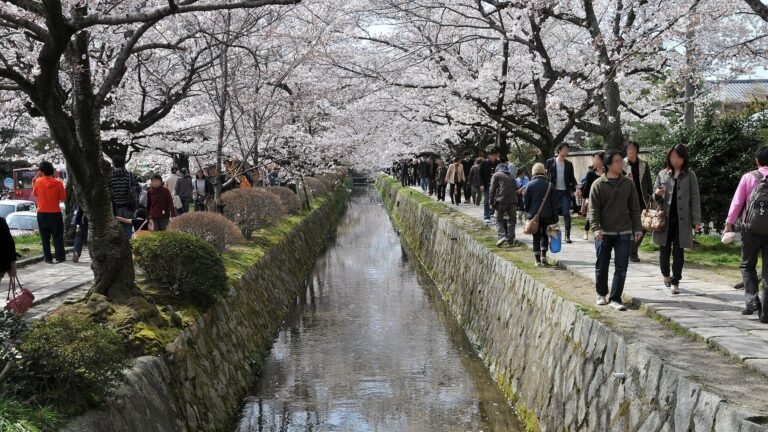
Hirano Shrine grows about 400 trees of 60 varieties, so something is in flower from early to late spring. At To-ji Temple, a weeping cherry called Fujizakura stands about 13 meters tall in front of the 55-meter five-story pagoda. The Philosopher’s Path follows a canal for about two kilometers near Ginkaku-ji, under about 400 Somei-yoshino and Oshima cherry trees.
Our Kyoto in April guide adds the Special Night Viewing at Kiyomizu-dera and the Miyako Odori to the month’s events.
In Osaka, the Japan Mint opens a path through its grounds for the Cherry Blossom Passage, or Sakura no Toorinuke. In 2026 the Mint ran it for 7 days, from Thursday 9 to Wednesday 15 April. It opened from 10:00 to 19:15 on weekdays and from 9:00 to 19:15 at weekends, and everyone had to leave by 19:45. The path had 331 trees of 140 varieties.
The Mint’s trees run late. Osaka’s sample tree reached full bloom on 3 April 2026, yet on 15 April the Mint reported about 60% of its trees in full bloom.
In 2026, entry needed an application in advance. On the day, staff checked visitors in with the 2D code from their confirmation email, shown on a phone or printed on paper. Each visitor entered in the time slot given in that email, with a little leeway for train delays.
Temmabashi Station, on the Osaka Metro Tanimachi Line and the Keihan Main Line, is about 15 minutes away on foot. So is Osakajo-Kitazume Station on the JR Tozai Line. The Mint has no parking. The passage is the main event in our Osaka in April guide.
The illustration below shows the four steps for a timed-entry spot like these two.
Cherry blossom festivals and night viewing
Tokyo’s festivals add food stalls, music and lanterns to the trees.
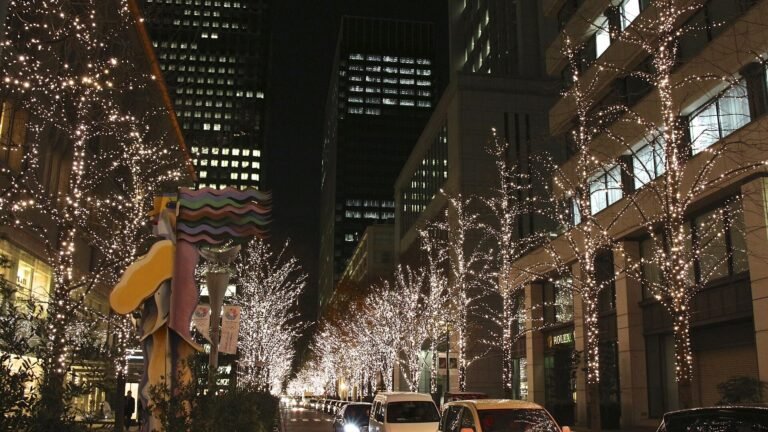
Japanese has a word for cherry blossoms at night: yozakura, literally night sakura. GO TOKYO lists these festivals and night views in Tokyo.
- Sakura Festival in Chiyoda: the night lighting at Chidorigafuchi ran from 28 March to 8 April in 2025. Some rowing boats could be booked ahead.
- Ueno Sakura Matsuri: 800 hanging lanterns light the main path through Ueno Park.
- Nakameguro Cherry Blossom Festival: lanterns light the trees along the canal from 17:00 to 20:00 for 15 days after they open.
- Koganei Cherry Blossom Festival: Koganei Park has 1,400 cherry trees of some 50 varieties. Around 40 food and drink stalls join the festival from late March to early April.
- Rikugien Gardens: a weeping cherry about 70 years old is lit up during the garden’s Spring Special Evening Opening.
- Bokutei Sakura-matsuri: a kilometer of trees lines the Sumida River from Azumabashi Bridge to Sakurabashi Bridge. They are lit at night, and so is Tokyo Skytree.
In Kyoto, Maruyama Park’s weeping cherry is lit at night and draws visitors from around the world. Hirano Shrine has been known for its night viewing, Hirano no Yozakura, since the Edo period.
Other cities hold festivals at their castles and gardens. Our April guides list the Nagoya Castle Cherry Blossom Festival and the Fukuoka Castle Sakura Festival. In Kanazawa, Kenroku-en has free entry and a light-up in the season. Check each organizer’s site for the year’s dates.
Near Mount Fuji, our Mount Fuji in April guide lists the Fuji-Kawaguchiko Sakura Festival. The photo below shows cherry trees by Lake Kawaguchi.
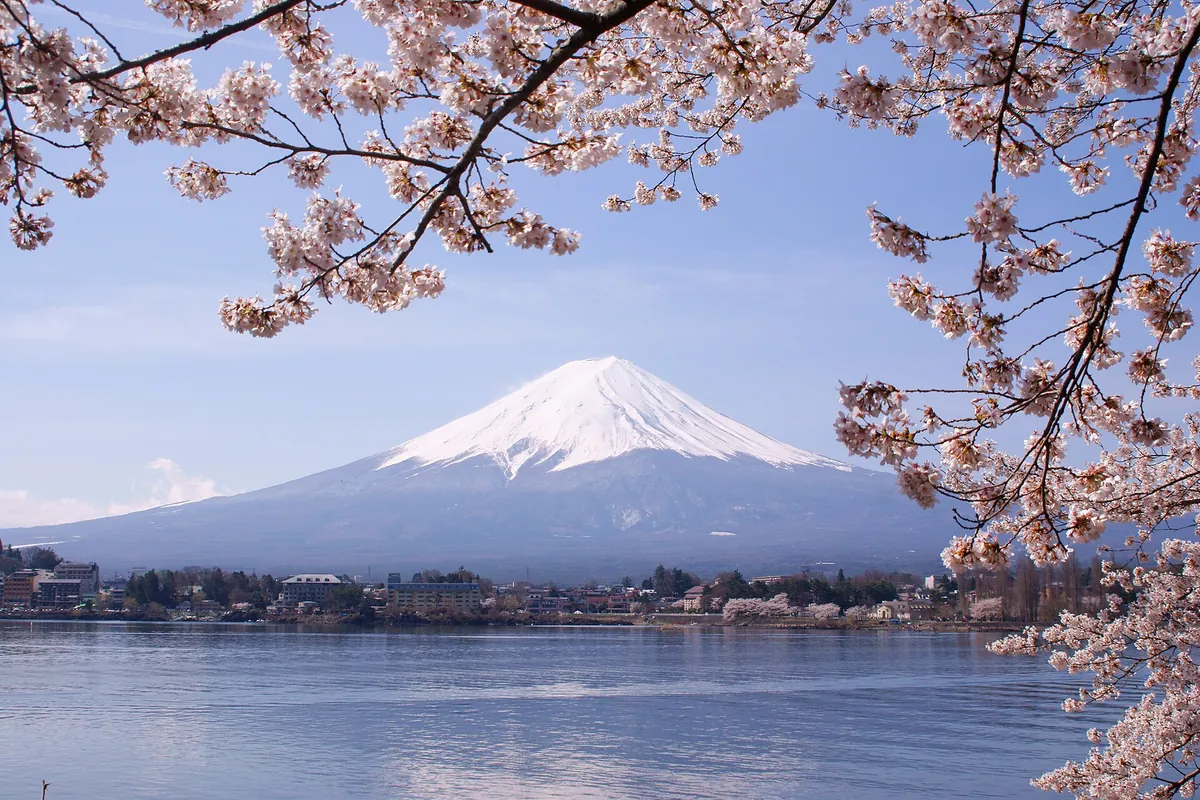
The JMA’s Kawaguchiko station stands 860 m above sea level, and April nights there average a low of 3.7°C. From Shinjuku, the Fuji Excursion limited express takes 1 h 54 min for 4,200 yen. The highway bus from Busta Shinjuku takes 1 h 35 min for 2,200 yen. Our Tokyo to Mt Fuji page compares the options.
Venues set their own rules. At the Mint’s passage in Osaka, eating, drinking and smoking are not allowed, and neither are selfie sticks, tripods or parasols. Staff check bags at the entrance. Bicycles and pets cannot come in, though assistance dogs can.
Cherry blossom Japan season from Okinawa to Hokkaido
Outside late March, follow the season south or north.
Okinawa comes first. Naha’s Taiwan cherries open on 16 January and reach full bloom on 4 February in an average year. From 2021 to 2026, Naha’s opening date ranged from 4 to 18 January. Our Okinawa in January guide lists the Motobu Yaedake Sakura Festival and the Nago Sakura Festival.
Closer to Tokyo, the Kawazu-zakura blooms in the south of the Izu Peninsula, just over 2-and-a-half hours from Tokyo by train. GO TOKYO says these deeper pink trees flower about a month before the Somei-yoshino, usually from later February to early March. Their festival draws around half a million people a year.
Tohoku, the north of Honshu, blooms through April. Sendai averages 8 April for opening and 13 April for full bloom, and Aomori averages 22 April and 26 April. GO TOKYO says the Hirosaki Cherry Blossom Festival in Aomori draws over 2 million visitors. JNTO points to Ashino Park, also in Aomori, for late blossoms.
Hokkaido comes last. Hakodate’s average opening is 28 April and Sapporo’s is 1 May, and GO TOKYO’s guide gives the first week of May. The last six springs came earlier. Sapporo’s sample tree opened in April every year, and Hakodate’s opened between 14 and 23 April.
That matters for Golden Week. In 2027, Showa Day falls on Thursday 29 April, and 1 to 5 May are 5 days off in a row. In each of the last six years, Sapporo reached full bloom before 29 April. Our Golden Week 2027 page has the day-by-day dates.
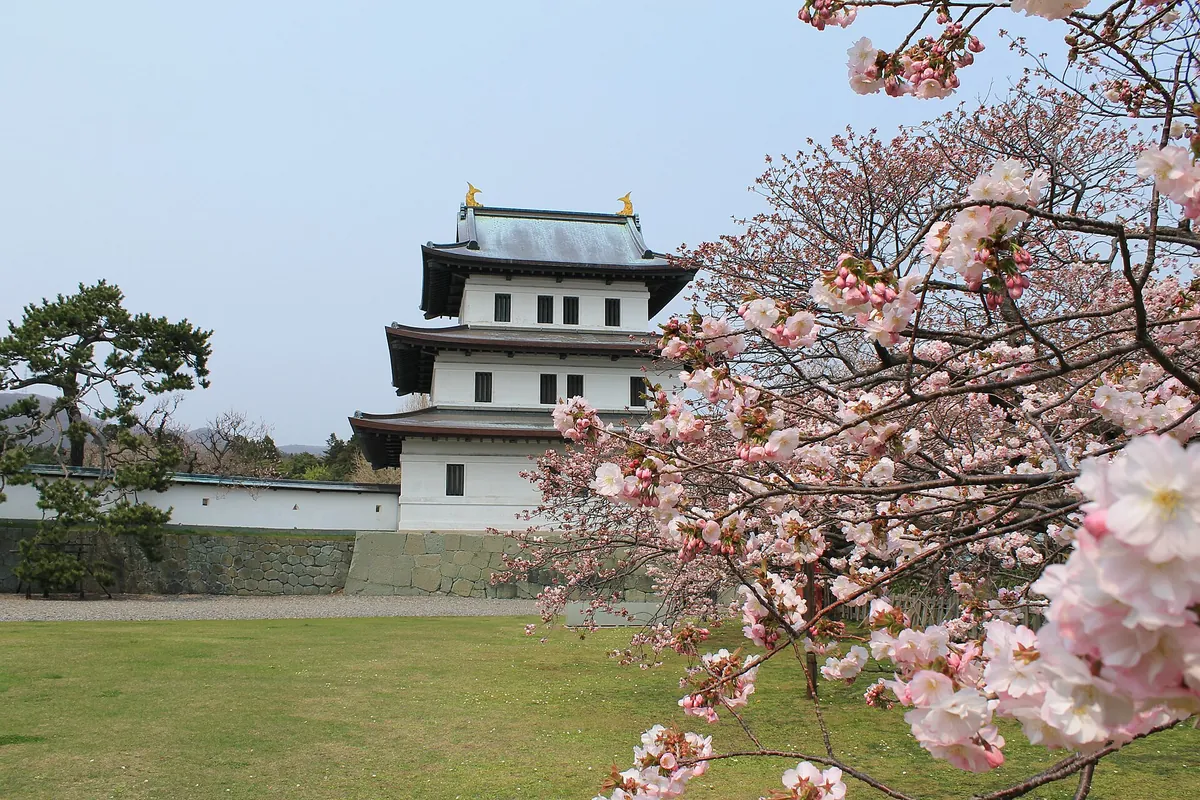
JNTO also suggests Matsumae Park in Hokkaido, with late spring blossoms and views of the castle. The photo below shows cherry trees in front of Matsumae Castle.
Pack for cold evenings in the north. Our Sapporo in April guide gives an average high of 11.7°C and a low of 3.4°C. It lists cherry blossoms in Maruyama Park and Nakajima Park.
The illustration below matches your travel dates to the places in flower, using the JMA averages.
Crowds, hotels and spring 2027 holidays
April is the busiest month for visitors to Japan.
In 2025, April brought 3,909,128 arrivals, the most of any month, according to JNTO figures in our Japan by month guide. The parks fill up as well. The photo below shows a hanami crowd under the trees in Ueno Park.
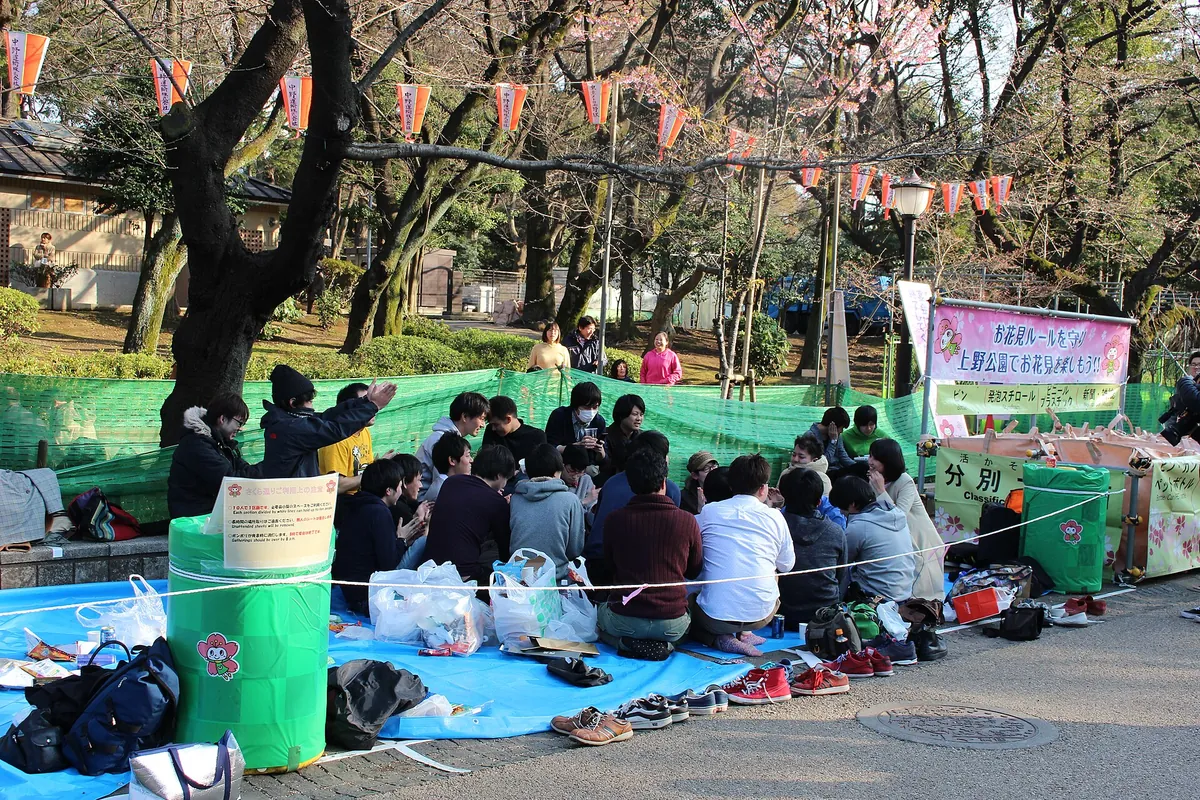
A hanami party is a picnic under the blossoms. GO TOKYO says people usually spread a blue plastic sheet, take off their shoes and share the food and drink they bring.
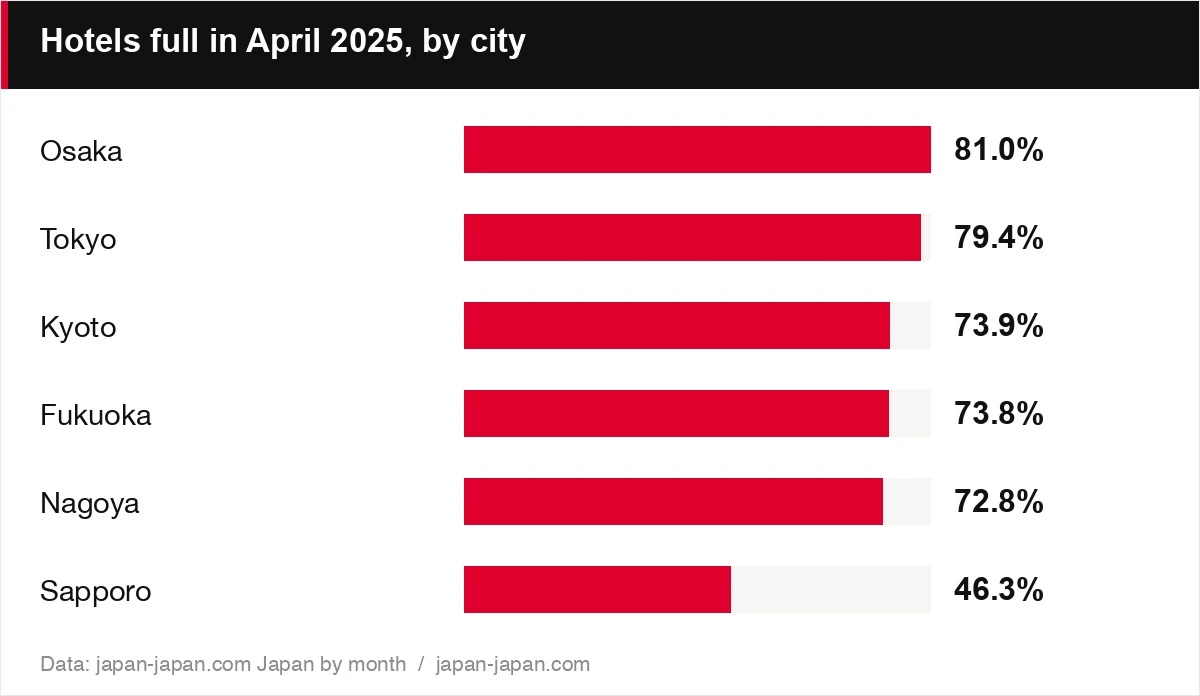
Hotels fill up in the same weeks. The chart below shows how full hotels were in April 2025 in six cities, from our month-by-month guides.
| Item | Value |
|---|---|
| Osaka | 81 % |
| Tokyo | 79.4 % |
| Kyoto | 73.9 % |
| Fukuoka | 73.8 % |
| Nagoya | 72.8 % |
| Sapporo | 46.3 % |
Osaka was the fullest in the chart, at 81.0%, ahead of Tokyo at 79.4% and Kyoto at 73.9%. In Sapporo, where the trees open later, hotels were 46.3% full. Book Osaka, Tokyo and Kyoto rooms once your dates are set.
Spring 2027 holidays and trains
Two Japanese holiday periods fall in the 2027 season.
The first is in March. Vernal Equinox Day falls on Sunday 21 March 2027, so Monday 22 March is a day off; see our March holidays page. JR Central makes every Nozomi reserved-seat only from 20 to 22 March 2027, one of its busiest periods.
The second is Golden Week, from Showa Day on Thursday 29 April to Wednesday 5 May. In 2026, the busiest day on the Tokaido Shinkansen was Wednesday 6 May, with 311,000 passengers heading to Tokyo.
Book long-distance trains early for both periods. Our Tokyo to Kyoto page gives 14,170 yen for a reserved seat on the Nozomi. If you fly into Kansai, the JR Haruka runs from Kansai Airport to Kyoto in about 75 minutes. Visitors with a foreign passport pay 2,200 yen one way.
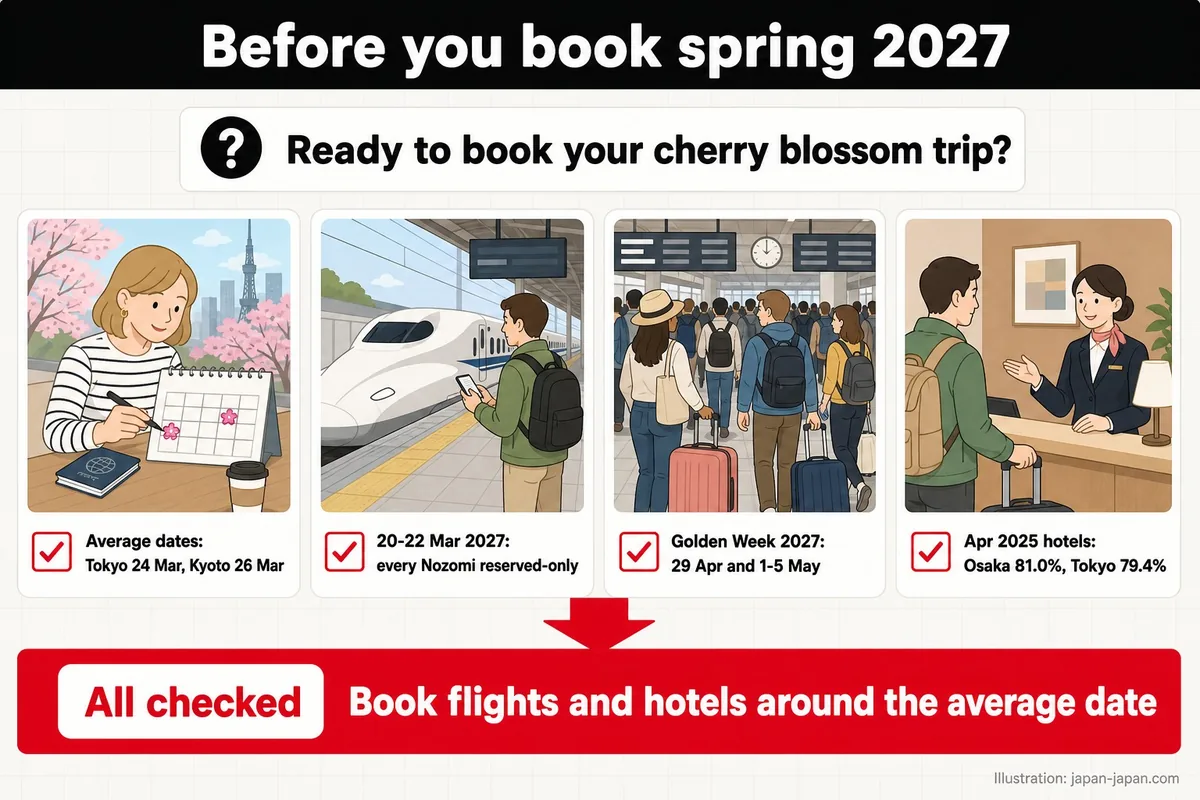
The illustration below sums up four checks to make before you book a spring 2027 trip.
FAQ
When does the 2027 cherry blossom forecast come out?
Expect it from January. GO TOKYO says forecasts for Tokyo and other Honshu cities are announced as early as January and covered on national TV. For 2026, its guide used a Japan Weather Association forecast dated 29 January, which put Tokyo’s start at 21 March. The JMA’s tree opened on 19 March.
Is early April too late for cherry blossoms in Tokyo?
Usually not. Tokyo’s average full bloom is 31 March, and GO TOKYO says blossoms generally last a week or two. In early years such as 2021 and 2023, full bloom came on 22 March, so the trees may be past their best by early April. In that case, go north or to the Mint in Osaka, which opened its passage from 9 to 15 April in 2026.
Where can you see cherry blossoms in Japan in February?
In Okinawa and on the Izu Peninsula. Naha’s Taiwan cherries reach full bloom on 4 February in an average year. The Kawazu-zakura in southern Izu usually blooms from later February to early March. In Kyoto, the rare oeshikizakura at Myoren-ji Temple flowers from October into the following spring.
Do you need a ticket to see cherry blossoms in Japan?
At a few places, yes. In 2026, Shinjuku Gyoen sold timed e-tickets for its peak weekend hours, and you showed the ticket on your phone at the gate. The Japan Mint’s passage in Osaka needed an application, with a 2D code sent by email. In Kanazawa, our April guide lists free entry to Kenroku-en during the cherry blossom season.
Photo: Tetsugaku no Michi 01.JPG by Reggaeman (CC BY-SA 3.0, cropped), via Wikimedia Commons.