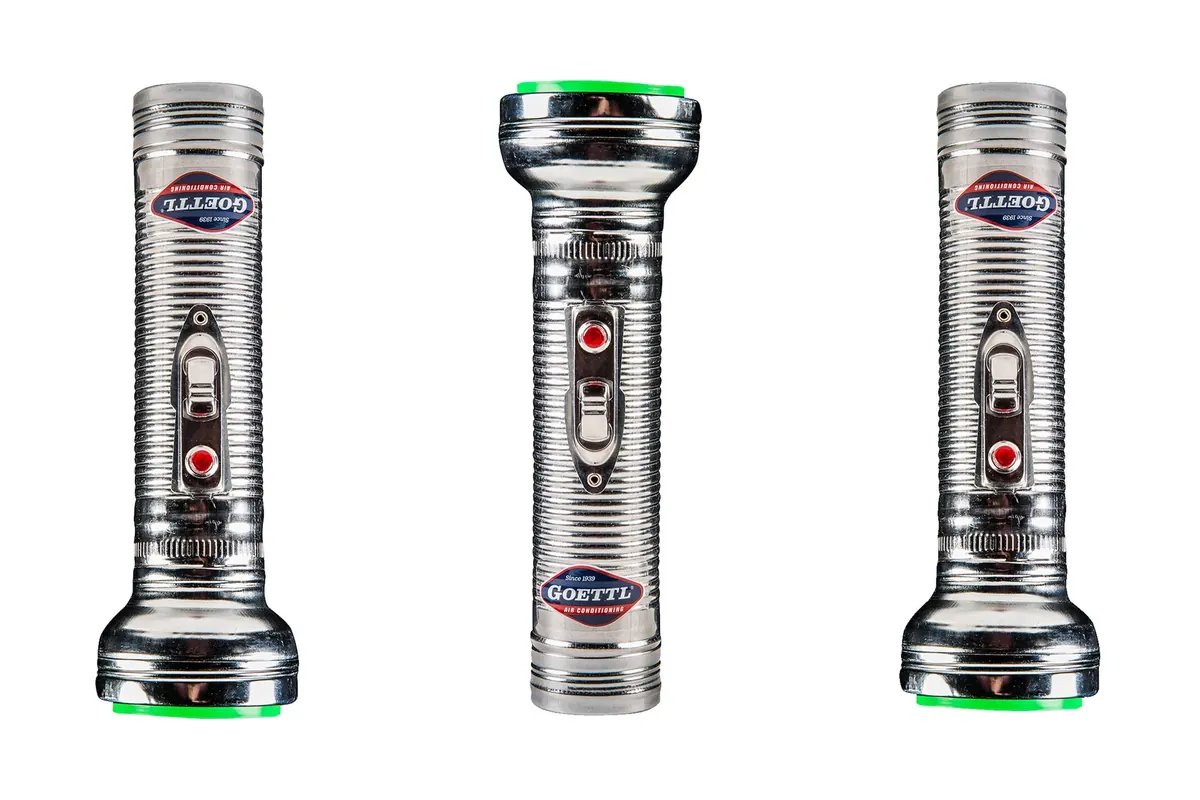

Flashlights can go in carry-on in Japan; checked bags have conditions.
Carry-on: Yes. A torch or headlamp that runs on alkaline batteries is not restricted: those batteries are permitted in the cabin and in checked baggage. A rechargeable one is a portable electronic device with a lithium-ion battery, allowed at 160Wh or less. Checked baggage: Yes. A rechargeable torch must be switched completely off when its battery is over 2.7Wh, and packed so that it cannot switch on or get damaged. Spare lithium batteries stay in the cabin.
Flashlights on flights in and from Japan
The rule for flashlights comes from the Civil Aviation Bureau's list of restricted items and is the same on domestic and international flights.
| Where | Allowed? | What applies |
|---|---|---|
| In the cabin | Yes | Yes. A torch or headlamp that runs on alkaline batteries is not restricted: those batteries are permitted in the cabin and in checked baggage. A rechargeable one is a portable electronic device with a lithium-ion battery, allowed at 160Wh or less. |
| In checked baggage | Conditions | Yes. A rechargeable torch must be switched completely off when its battery is over 2.7Wh, and packed so that it cannot switch on or get damaged. Spare lithium batteries stay in the cabin. |
The airline or the screener can refuse in the cabin any object whose material, strength or shape could make it a weapon, including one that is not on the list.
Torches and headlamps: the battery inside sets the rule
An ordinary torch is not on Japan's list by name, so the answer comes from the cells that power it.
- Named by the TSA, not by Japan
- The TSA has an entry called Flashlights, marked yes for carry-on and yes for checked bags. Japan's list has no row for an ordinary torch. The one light it names is the scuba diving light, which sits with heat-producing items and has conditions of its own.
- Dive lights are a separate class
- For a scuba diving light with a lithium-ion battery of 160Wh or less, Japan's list accepts cabin and checked carriage when the heat source and the battery can be separated; a battery taken out goes in the cabin only. ANA's page says an underwater torch lamp with its battery removed is accepted in both. Australia's CASA requires airline approval for diving lamps.
- LED torches on lithium cells
- The FAA's battery table uses LED flashlights as an example of small electronics that run on non-rechargeable lithium metal batteries. Its line for those batteries: spares in carry-on only, 2 grams or less lithium per battery. Japan's list draws its line for spare lithium metal cells at the same 2g.
- Dry-cell torches: fitted cells and spare cells
- Japan's list labels dry batteries non-dangerous goods for cabin and hold. Australia's CASA separates fitted from spare. Dry cells installed in equipment can be checked in with the device switched off. Its spare dry battery entry, which mentions torches and flashlights by name, says most operators require all spare batteries in carry-on baggage.
- Keeping a torch from switching on in a suitcase
- Hong Kong's CAD says equipment powered by dry batteries must be protected from unintentional activation, or have each battery disconnected and its exposed terminals insulated. For a rechargeable torch, Japan's list asks for measures against accidental operation or damage and gives packing in a sturdy suitcase as its first example.
Flashlights: the rule country by country
The carry-on answer for flashlights is the same in all 6 other places we checked.
| Flying from | Carry-on | Checked bag | What the authority says |
|---|---|---|---|
| JapanCivil Aviation Bureau | Yes | With limits | A torch or headlamp that runs on alkaline batteries is not restricted: those batteries are permitted in the cabin and in checked baggage. Source |
| United StatesTSA | Yes | Yes | Flashlights are allowed in carry-on and checked bags. Spare lithium metal batteries, as used in LED flashlights, can be carried in carry-on only.TSA entry: Flashlights Source |
| United KingdomUK Government | Yes | With limits | A rechargeable torch is a portable electronic device with a lithium battery: carry-on or checked; if checked with a battery over 2.7 Wh it must be completely switched off. Spare dry batteries: carry-on or checked. Source |
| South KoreaMOLIT Aviation Security 365 | Yes | Yes | A lithium-ion battery of 100Wh or less installed in an electronic device may be carried on or checked. Alkaline batteries are allowed in both, with the terminals insulated. Source |
| TaiwanCivil Aviation Administration | Yes | With limits | A torch with a lithium battery is a portable electronic device: hand baggage is recommended; if checked with a lithium-ion battery over 2.7 Wh it must be completely switched off. Dry batteries may go in checked or hand baggage. Source |
| Hong KongCivil Aviation Department | Yes | With limits | A torch with a lithium battery is a portable electronic device: carry-on and checked; over 2.7 Wh it must be completely switched off if checked. Equipment with dry batteries: carry-on and checked, protected from unintentional activation. Source |
| AustraliaHome Affairs, CASA | Yes | Yes | A torch with dry batteries fitted can be carried on or checked: switch it off so that it cannot be activated accidentally. Spare dry batteries used in torches and flashlights go in carry-on, packed to prevent short circuit.CASA Pack Right entry: Batteries - dry cell (in equipment), Battery Dry - spare Source |
Each row comes from that authority's own page. Airlines can be stricter, and the screening officer has the final say.
Frequently asked questions
Can you take a flashlight on a plane?
On flights in and from Japan: Yes. A torch or headlamp that runs on alkaline batteries is not restricted: those batteries are permitted in the cabin and in checked baggage. A rechargeable one is a portable electronic device with a lithium-ion battery, allowed at 160Wh or less. In checked baggage: Yes. A rechargeable torch must be switched completely off when its battery is over 2.7Wh, and packed so that it cannot switch on or get damaged. Spare lithium batteries stay in the cabin.
Can you take a headlamp on a plane?
Yes. Neither Japan's list nor the TSA's item list names the headlamp, so it is read like a torch, by its battery. Japan's list marks dry batteries for cabin and hold, and accepts a portable electronic device with a lithium-ion battery of 160Wh or less in both. The TSA's Flashlights entry is yes for carry-on and checked bags.
Can spare flashlight batteries go in checked luggage?
Only the non-lithium kind. Narita Airport's FAQ says batteries such as alkaline batteries are permitted in carry-on baggage and checked baggage. A spare lithium metal cell is different: Japan's list marks spares of 2g or less with a circle for the cabin and a cross for checked baggage.
Is a heavy metal or tactical flashlight allowed in carry-on?
It is the screener's call. Japan's list says an item can be refused in the cabin when the airline or the security screener judges that its material, strength or shape could make it a weapon. The TSA accepts Flashlights in carry-on, while its entries for Kubatons and Tactical Pen are marked no for carry-on and yes for checked bags.
Does the TSA allow a flashlight in carry-on bags?
Flashlights are allowed in carry-on and checked bags. Spare lithium metal batteries, as used in LED flashlights, can be carried in carry-on only.
Can you put a flashlight in checked luggage?
Yes. A rechargeable torch must be switched completely off when its battery is over 2.7Wh, and packed so that it cannot switch on or get damaged. Spare lithium batteries stay in the cabin.
Read more
- Can You Take an Electric Toothbrush in Hand Luggage? YesYes. You can take an electric toothbrush in hand luggage or checked bags to Japan. Spar…
- Can You Bring Hand Warmers on a Plane? Japan’s 2026 RulesYes, you can bring disposable hand warmers on a plane in Japan: MLIT bans only oil-fill…
- Luggage Forwarding in Japan, With Rates and Airport Cut-OffsLuggage forwarding in Japan with TA-Q-BIN costs 2,510 yen for a Size 160 suitcase withi…
- Is Tokyo Disneyland Worth It? What 100 People in Japan SaidYes for most: 86.9% of 99 Tokyo Disneyland visitors in our survey were satisfied, but 6…
Sources for this page
- Japan Civil Aviation Bureau (MLIT) — Items restricted in carry-on and checked baggage (updated 24 April 2026)
- Narita International Airport — FAQ: prohibited items
- TSA — What Can I Bring?: Flashlights
- UK Civil Aviation Authority — What items can I travel with and which are restricted
- Aviation Security 365 (MOLIT / KOTSA) — Items restricted on the plane: batteries
- Taiwan CAA — Dangerous goods passengers and crew may carry
- Civil Aviation Department (Hong Kong) — Packing Tips for Air Passenger: Provisions for Dangerous Goods Carried by Passenger and Crew
- CASA — Pack Right: Batteries - dry cell (in equipment)
- ANA — Items with conditions for carry-on and checked baggage, domestic flights (Japanese)