Can you take a laptop on a plane?
Laptops can go in carry-on in Japan; checked bags have conditions. Carry-on: Yes. A laptop with a lithium-ion battery of 160Wh or less can be carried on. Take it out of your bag and put it in a separate tray at screening. Checked baggage: Allowed if the battery is 160Wh or less, the laptop is switched completely off and it is protected from damage.
Carry-on: yesChecked bag: conditions
Laptops on flights in and from Japan
The rule for laptops comes from the Civil Aviation Bureau's list of restricted items and is the same on domestic and international flights.
| Where | Allowed? | What applies |
|---|---|---|
| In the cabin | Yes | Yes. A laptop with a lithium-ion battery of 160Wh or less can be carried on. Take it out of your bag and put it in a separate tray at screening. |
| In checked baggage | Conditions | Allowed if the battery is 160Wh or less, the laptop is switched completely off and it is protected from damage. |
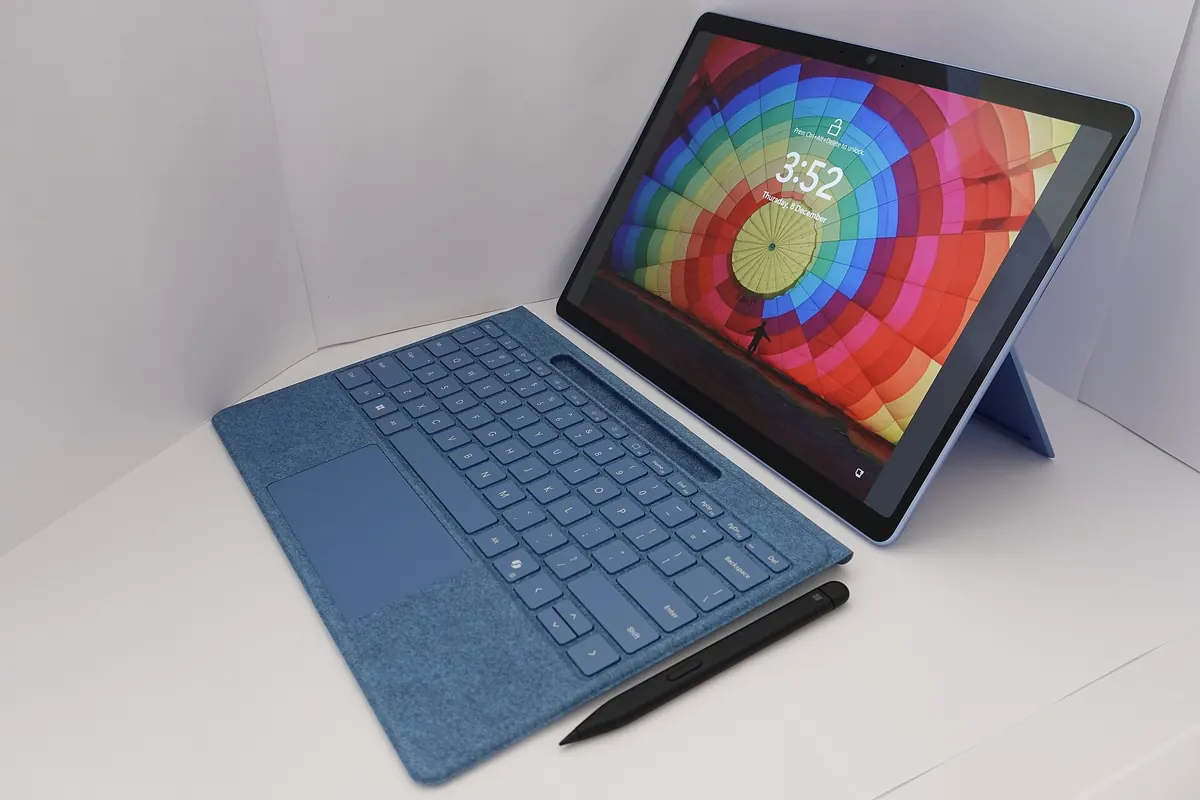

Laptops at screening, in sleep mode and with spare batteries
A laptop gets its own tray at Narita, and in a checked bag the question is whether it is really off.
- The separate tray is for every large device
- Narita's request for a separate tray is not limited to laptops. Its FAQ says large stationary game consoles go in a tray of their own too, and mentions no such step for portable consoles. The TSA words its desktop computer and full-size console entries the same way. At Hong Kong International Airport the smart lanes use CT-based X-ray scanners, and electronic devices may stay in hand baggage.
- Over 100Wh: no extra step in Japan, airline approval elsewhere
- Japan's list treats a laptop battery of any size up to 160Wh the same way. Australia's CASA, Hong Kong's CAD, Taiwan's CAA and South Korea's list draw a line at 100Wh: above it, up to 160Wh, the airline has to agree first. CASA also recommends taking a device of that size into the cabin.
- Extended-life and second batteries
- A second battery for a laptop is a spare and rides in the cabin. The TSA notes that its 101 to 160 Wh class covers the larger after-market extended-life laptop batteries: these need airline approval and are limited to 2 per person. Japan's leaflet also allows up to 2 spares over 100Wh up to 160Wh, but power banks of that size count toward the same 2.
- Notebooks, parts and external drives
- CASA's Laptop entry says it includes personal computers and other similar electronic devices, and the same category lists Notebook, Netbook and PC. The TSA keeps a separate entry for disassembled computers, computer parts and external hard drives: yes for carry-on and yes for checked bags, with nothing further written under it.
Laptops: the rule country by country
Extra conditions apply in Mainland China and Australia.
| Flying from | Carry-on | Checked bag | What the authority says |
|---|---|---|---|
| JapanCivil Aviation Bureau | Yes | With limits | A laptop with a lithium-ion battery of 160Wh or less can be carried on. Take it out of your bag and put it in a separate tray at screening. Source |
| United StatesTSA | Yes | Yes | Laptops are allowed in carry-on and checked bags. Remove the laptop from your bag and place it in a separate bin for X-ray screening; TSA PreCheck travelers do not need to remove laptops.TSA entry: Laptops Source |
| European UnionEuropean Commission, EASA | Yes | With limits | Carry laptops in hand baggage, not checked baggage. If one must go in checked baggage (not recommended), it has to be completely switched off and protected from accidental activation. At security, put it in a tray for separate screening. Source |
| United KingdomUK Government | Yes | Yes | Laptops are allowed in hand luggage and hold luggage. Make sure yours is charged: if a device does not switch on when requested, you will not be allowed to take it onto the aircraft. Source |
| South KoreaMOLIT Aviation Security 365 | Yes | Yes | Laptops are named among devices with a lithium battery installed: allowed in carry-on and checked baggage at 100Wh or less (lithium-ion); over 100Wh up to 160Wh needs airline approval. At screening, laptops go on the X-ray belt. Source |
| TaiwanCivil Aviation Administration | Yes | With limits | A portable electronic device with a lithium battery: carrying it in hand baggage is recommended. If checked with a lithium-ion battery over 2.7 Wh, it must be completely switched off (not in sleep or hibernation mode). Source |
| Hong KongCivil Aviation Department | Yes | With limits | Laptops are named as portable electronic devices allowed in carry-on and checked baggage. In checked baggage they must be completely switched off (not in sleep or hibernation mode) and protected from damage and unintentional activation. Source |
| Mainland ChinaCAAC | With limits | With limits | Lithium battery in a portable device: up to 100Wh can be carried on; over 100Wh and up to 160Wh needs airline approval. Checked: lithium batteries are banned and digital electronics should not be packed; ask the airline about such devices. Source |
| AustraliaHome Affairs, CASA | With limits | With limits | Carry-on or checked; carry-on is recommended. Lithium ion batteries must not exceed 100 Wh; above 100Wh up to 160Wh needs airline approval. If checked, the laptop must be completely switched off (not in sleep or hibernation mode).CASA Pack Right entry: Laptop, Portable electronic devices containing lithium metal or lithium ion cells, battery or batteries (watches, calculators, cameras, mobile phones, laptops, camcorders etc.), Portable electronic devices containing lithium ion batteries (batteries >100 Wh and <160 Wh) Source |
Each row comes from that authority's own page. Airlines can be stricter, and the screening officer has the final say.
Frequently asked questions
Can you take a laptop on a plane?
On flights in and from Japan: Yes. A laptop with a lithium-ion battery of 160Wh or less can be carried on. Take it out of your bag and put it in a separate tray at screening. In checked baggage: Allowed if the battery is 160Wh or less, the laptop is switched completely off and it is protected from damage.
Do you have to take your laptop out of your bag at security in Japan?
Yes. Narita Airport asks passengers to remove personal computers and other large electronic devices from carry-on baggage and place them in a separate tray, and calls this the policy of the transport ministry. The European Commission's guidance for EU airports reads the same way. In the United States the TSA lets PreCheck travellers leave laptops in the bag.
Can a laptop go in a checked bag in sleep mode?
No. Hong Kong's CAD and Australia's CASA both say a device in checked baggage must be completely switched off, not in sleep or hibernation mode, and Taiwan's CAA uses the same words. Japan's list requires the power to be completely off and the laptop protected against damage, and gives a sturdy suitcase and padding with clothes as examples.
Does the TSA allow a laptop in carry-on bags?
Laptops are allowed in carry-on and checked bags. Remove the laptop from your bag and place it in a separate bin for X-ray screening; TSA PreCheck travelers do not need to remove laptops.
Can you take a laptop in hand luggage in the UK or Europe?
The United Kingdom: Laptops are allowed in hand luggage and hold luggage. Make sure yours is charged: if a device does not switch on when requested, you will not be allowed to take it onto the aircraft. The European Union: Carry laptops in hand baggage, not checked baggage. If one must go in checked baggage (not recommended), it has to be completely switched off and protected from accidental activation. At security, put it in a tray for separate screening.
Can you put a laptop in checked luggage?
Allowed if the battery is 160Wh or less, the laptop is switched completely off and it is protected from damage.
What is the rule for laptops on flights from Mainland China, Australia and South Korea?
Mainland China: Lithium battery in a portable device: up to 100Wh can be carried on; over 100Wh and up to 160Wh needs airline approval. Checked: lithium batteries are banned and digital electronics should not be packed; ask the airline about such devices. Australia: Carry-on or checked; carry-on is recommended. Lithium ion batteries must not exceed 100 Wh; above 100Wh up to 160Wh needs airline approval. If checked, the laptop must be completely switched off (not in sleep or hibernation mode). South Korea: Laptops are named among devices with a lithium battery installed: allowed in carry-on and checked baggage at 100Wh or less (lithium-ion); over 100Wh up to 160Wh needs airline approval. At screening, laptops go on the X-ray belt.
Related items
Sources for this page
- Japan Civil Aviation Bureau (MLIT) — Items restricted in carry-on and checked baggage (updated 24 April 2026)checked October 2, 2026
- Narita International Airport — FAQ: security checkchecked October 2, 2026
- Japan Civil Aviation Bureau — To all passengers: bringing power banks on board (rules from 24 April 2026)checked October 2, 2026
- Narita International Airport — FAQ: prohibited itemschecked October 2, 2026
- TSA — What Can I Bring?: Laptopschecked October 1, 2026
- EASA — Dangerous goodschecked October 1, 2026
- GOV.UK — Hand luggage restrictions: Electronic devices and electrical itemschecked October 1, 2026
- Aviation Security 365 (MOLIT / KOTSA) — Dangerous goodschecked October 1, 2026
- Taiwan CAA — Dangerous goods passengers and crew may carrychecked October 1, 2026
- Civil Aviation Department (Hong Kong) — Packing Tips for Air Passenger: Provisions for Dangerous Goods Carried by Passenger and Crewchecked October 1, 2026
- CAAC — Air travel basics (航空旅行常识)checked October 1, 2026
- CASA — Pack Right: Laptopchecked October 1, 2026
- European Commission — Information for air travellerschecked October 1, 2026
- Hong Kong International Airport — Airport Securitychecked October 1, 2026
- Taiwan CAA — Table of dangerous goods passengers and crew may carry or check (Chinese)checked October 1, 2026
Read more
- Can You Bring a Power Bank on a Plane to Japan? 2026 RulesYes, in your carry-on only: 160Wh or less, two per person at most. Since 24 April 2026 …
- Japan Tax-Free Shopping from 1 Nov 2026: How Refunds WorkFrom 1 November 2026 you pay the tax in the shop, pass a customs check at the airport w…
- Nishiki Market vs Kuromon and Tsukiji: 2026 Hours and RulesNishiki Market asks you to eat at the shop, Kuromon welcomes eating as you stroll, and …
- Kobe Beef in Japan 2026: A5 Grades, Rules and Where to EatKobe beef is Tajima cattle raised in Hyogo with marbling of BMS 6 or higher and quality…
Compiled by Japan Japan !! · Updated October 2, 2026