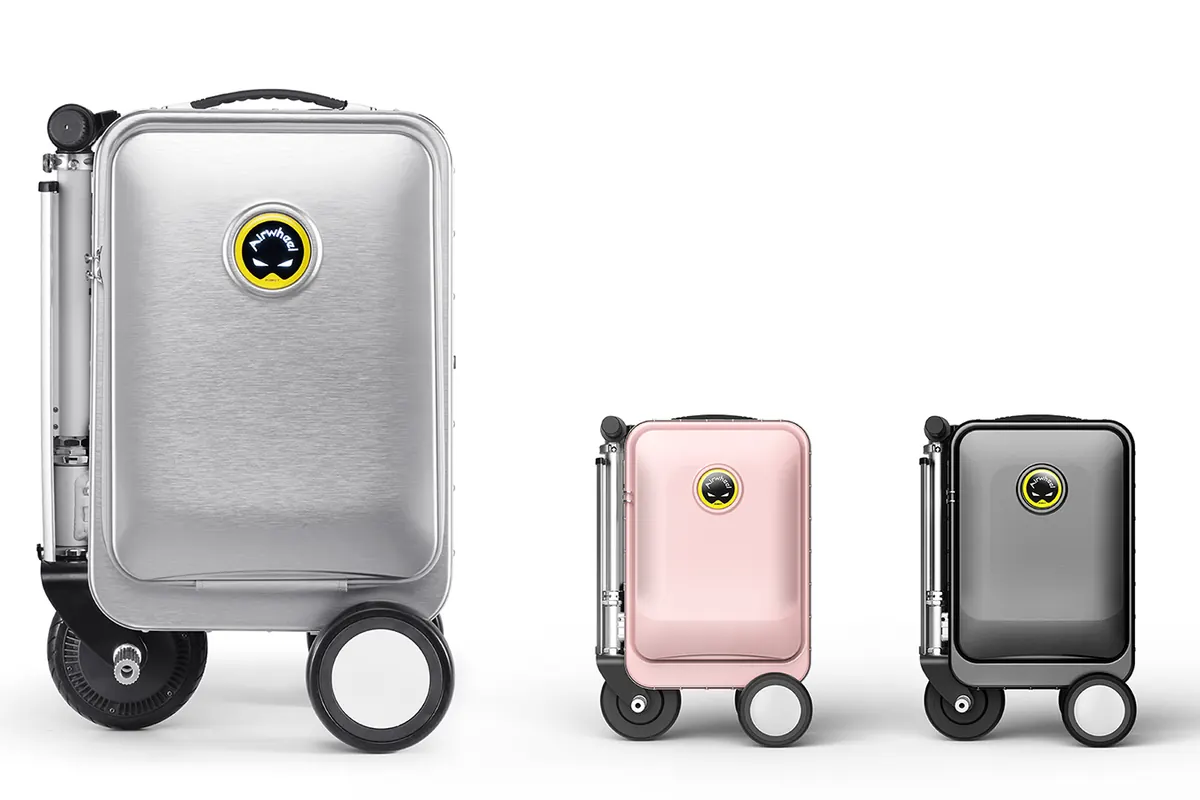

In Japan smart luggage is allowed in carry-on and checked bags, with conditions.
Checked against the official page on · Report a correction
Carry-on: Yes if the lithium-ion battery is 160Wh or less; the battery can stay in place. Over 160Wh: not allowed, though the bag with the battery taken out is fine. Checked baggage: Battery of 2.7Wh or less: yes, as it is. Over 2.7Wh and up to 160Wh: only with the battery removed, and the removed battery goes in the cabin.
Smart luggage on flights in and from Japan
The rule for smart luggage comes from the Civil Aviation Bureau's list of restricted items and is the same on domestic and international flights.
| Where | Allowed? | What applies |
|---|---|---|
| In the cabin | Yes, within limits | Yes if the lithium-ion battery is 160Wh or less; the battery can stay in place. Over 160Wh: not allowed, though the bag with the battery taken out is fine. |
| In checked baggage | Conditions | Battery of 2.7Wh or less: yes, as it is. Over 2.7Wh and up to 160Wh: only with the battery removed, and the removed battery goes in the cabin. |
For lithium metal batteries the thresholds are 0.3g and 2g of lithium.
Smart luggage once the battery comes out, and tracker tags
For smart luggage the lists ask how big the battery is and whether it comes out. What happens to the battery afterwards is where they add detail.
- What the lists mean by smart luggage
- Japan's list calls it a bag with a battery built in or fitted. Hong Kong's CAD words it as baggage equipped with lithium batteries, whether removable or non-removable, and Australia's CASA as baggage with installed lithium batteries, giving smart bags and smart luggage as examples. Each of them sorts the bag by the size of that battery, not by what the bag does.
- A battery taken out of the bag becomes a spare
- Japan's list says that a battery removed from the bag follows the rule for spare lithium-ion batteries. That means the cabin only, with protection against short circuits, and above 100Wh it counts toward the limit of 2 that spares share with power banks. Taiwan's CAA likewise has the removed battery carried under its spare-battery conditions.
- Tracker tags are listed as their own item
- CASA has a separate entry for Bluetooth trackers such as AirTag, Tile and SmartTag: accepted in checked and carry-on baggage with a lithium metal content of 0.3 grams or less, or a lithium-ion rating of 2.7 Wh or less. Hong Kong's CAD names baggage tracking devices among ordinary portable electronic devices. Japan's list uses the same pair of figures for a bag that can be checked with its battery in.
Smart luggage: the rule country by country
In Taiwan and Hong Kong the authority's page lists smart luggage as allowed in carry-on.
| Flying from | Carry-on | Checked bag | What the authority says |
|---|---|---|---|
| JapanCivil Aviation Bureau | With limits | With limits | Yes if the lithium-ion battery is 160Wh or less; the battery can stay in place. Over 160Wh: not allowed, though the bag with the battery taken out is fine. Source |
| United StatesTSA | With limits | Yes | Smart luggage is listed as allowed in carry-on with special instructions and in checked bags. For the conditions TSA refers to the FAA regulations on portable electronic devices.TSA entry: Smart Luggage Source |
| TaiwanCivil Aviation Administration | Yes | With limits | A suitcase fitted with a lithium-ion battery over 2.7 Wh must be carried as hand baggage, unless the battery is removed from the suitcase and carried in hand baggage as a spare battery. Source |
| Hong KongCivil Aviation Department | Yes | With limits | Allowed as carry-on. Checked only if the lithium ion battery is 2.7 Wh or less, or if a larger battery is removed and carried in the cabin; a bag with a larger non-removable battery cannot be checked. Airlines may add their own rules. Source |
| AustraliaHome Affairs, CASA | With limits | With limits | Checked: remove the battery and carry it in the cabin if it exceeds 2.7 Wh or 0.3 grams of lithium. Carry-on: it may stay installed up to 100 Wh or 2 grams. Bags with a charging battery: carry-on only; 101 to 160 Wh needs airline approval.CASA Pack Right entry: Baggage equipped with a lithium battery, Smart Bag (containing lithium ion battery for recharging devices) without mobile/wi-fi communication Source |
Each row comes from that authority's own page. Airlines can be stricter, and the screening officer has the final say.
If security in Japan will not let smart luggage through
- What to do
- Take the battery out. A bag with its battery removed can be carried on or checked, and the removed battery follows the spare-battery rule: cabin only. Narita Airport states that anything given up at the checkpoint is discarded and cannot be returned.
Frequently asked questions
Can you take smart luggage on a plane?
On flights in and from Japan: Yes if the lithium-ion battery is 160Wh or less; the battery can stay in place. Over 160Wh: not allowed, though the bag with the battery taken out is fine. In checked baggage: Battery of 2.7Wh or less: yes, as it is. Over 2.7Wh and up to 160Wh: only with the battery removed, and the removed battery goes in the cabin.
What if the battery in my smart suitcase cannot be removed?
Then the bag has to travel in the cabin once the battery is over 2.7Wh. Japan's list says a bag whose battery is not taken out is carried on, and Hong Kong's CAD marks baggage with a non-removable lithium battery above the limit as carry-on yes, checked no. A fixed battery over 160Wh puts the bag outside Japan's rule for cabin and hold alike.
Do you need airline approval to fly with smart luggage?
Only in some cases. Australia's CASA requires airline approval for a smart bag whose charging battery is between 101 and 160 Wh, and tells passengers to refer to the airline for any airline-specific requirements. Hong Kong's CAD notes that individual airlines may introduce additional requirements on smart luggage. Japan's list sets the battery thresholds and does not mention approval.
Does the TSA allow smart luggage in carry-on bags?
Smart luggage is listed as allowed in carry-on with special instructions and in checked bags. For the conditions TSA refers to the FAA regulations on portable electronic devices.
Can you put smart luggage in checked luggage?
Battery of 2.7Wh or less: yes, as it is. Over 2.7Wh and up to 160Wh: only with the battery removed, and the removed battery goes in the cabin.
What is the rule for smart luggage on flights from Taiwan, Hong Kong and Australia?
Taiwan: A suitcase fitted with a lithium-ion battery over 2.7 Wh must be carried as hand baggage, unless the battery is removed from the suitcase and carried in hand baggage as a spare battery. Hong Kong: Allowed as carry-on. Checked only if the lithium ion battery is 2.7 Wh or less, or if a larger battery is removed and carried in the cabin; a bag with a larger non-removable battery cannot be checked. Airlines may add their own rules. Australia: Checked: remove the battery and carry it in the cabin if it exceeds 2.7 Wh or 0.3 grams of lithium. Carry-on: it may stay installed up to 100 Wh or 2 grams. Bags with a charging battery: carry-on only; 101 to 160 Wh needs airline approval.
Read more
- Luggage Forwarding in Japan, With Rates and Airport Cut-OffsLuggage forwarding in Japan with TA-Q-BIN costs 2,510 yen for a Size 160 suitcase withi…
- JAL Baggage Allowance 2026: Free Bags, Sizes and Excess FeesOn international flights, Japan Airlines Economy includes two free checked bags of 23kg…
- Japan Power Bank Rules 2026: 160Wh, 2 Max and No ChargingYes, in your carry-on only: 160Wh or less, two per person at most. Since 24 April 2026 …
- Can You Take an Electric Toothbrush in Hand Luggage? YesYes. You can take an electric toothbrush in hand luggage or checked bags to Japan. Spar…
Sources for this page
- Japan Civil Aviation Bureau (MLIT) — Items restricted in carry-on and checked baggage (updated 24 April 2026)
- Japan Civil Aviation Bureau — To all passengers: bringing power banks on board (rules from 24 April 2026)
- TSA — What Can I Bring?: Smart Luggage
- Taiwan CAA — Dangerous goods passengers and crew may carry
- Civil Aviation Department (Hong Kong) — Packing Tips for Air Passenger: Provisions for Dangerous Goods Carried by Passenger and Crew
- CASA — Pack Right: Baggage equipped with a lithium battery
- Taiwan CAA — Table of dangerous goods passengers and crew may carry or check (Chinese)