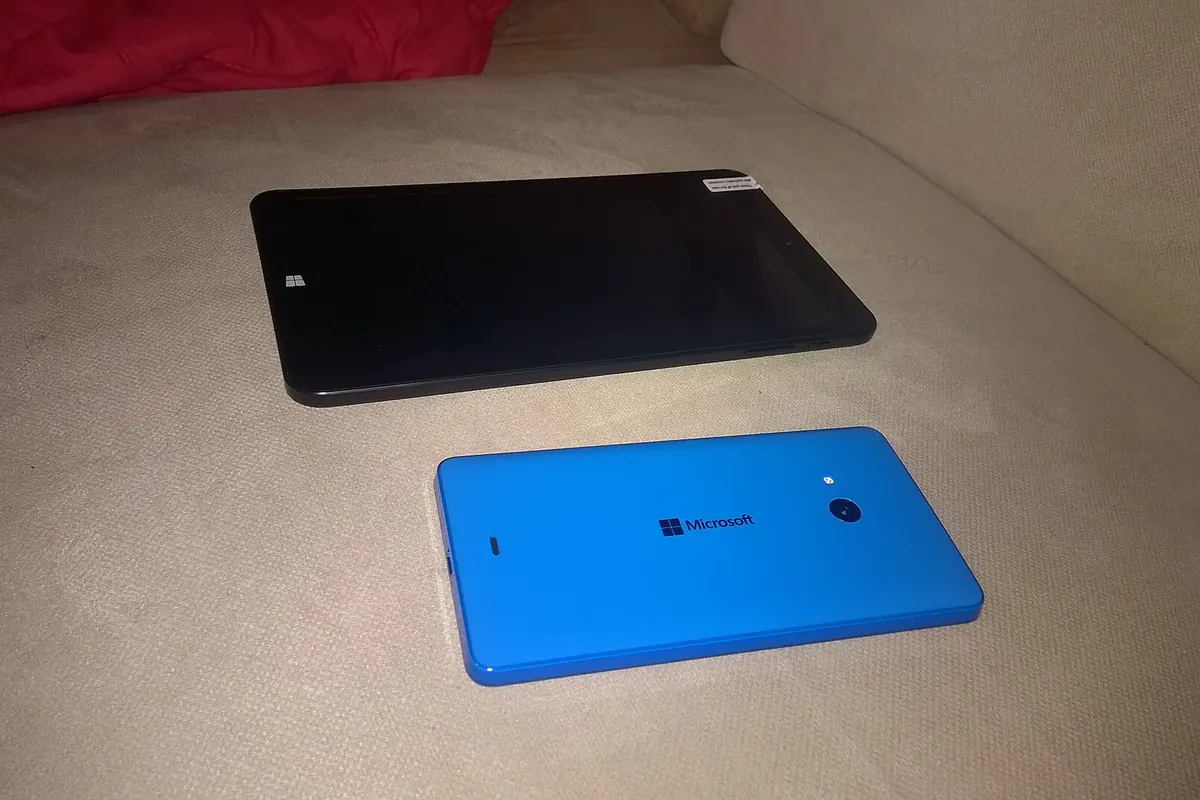

Tablets and phones can go in carry-on in Japan; checked bags have conditions.
Checked against the official page on · Report a correction
Carry-on: Yes. Tablets and smartphones with a lithium-ion battery of 160Wh or less can be carried on. Checked baggage: Allowed if switched completely off and protected from damage. Switching off is required when the battery is over 2.7Wh.
Tablets and phones on flights in and from Japan
The rule for tablets and phones comes from the Civil Aviation Bureau's list of restricted items and is the same on domestic and international flights.
| Where | Allowed? | What applies |
|---|---|---|
| In the cabin | Yes | Yes. Tablets and smartphones with a lithium-ion battery of 160Wh or less can be carried on. |
| In checked baggage | Conditions | Allowed if switched completely off and protected from damage. Switching off is required when the battery is over 2.7Wh. |
Narita Airport
Narita's FAQ says there is no restriction on lithium-ion batteries built into products such as computers, digital cameras and mobile phones.
Narita International Airport FAQ
Phones and tablets at the checkpoint and in the air
Phones, tablets and e-readers share one rule for carriage. Screening, use on board and faulty batteries are where the sources add detail.
- Phones and music players are listed beside tablets
- The TSA has separate entries for Tablets, Cell Phones and iPod, each marked yes for carry-on and checked bags. Australia's CASA files iPhone and iPod under mobile phones, which it sends to its entry for devices containing lithium cells, while its tablet entry states that no conditions apply. GOV.UK adds the MP3 player to its table of devices allowed in hand and hold luggage.
- At the checkpoint the phone leaves your pocket
- The European Commission's guidance tells passengers to remove metal items from their person, possibly including the mobile phone, and place them in a tray. South Korea's screening steps put phones, wallets, keys and coins in a basket for X-ray, with a tip attached: slip the phone and wallet into your bag before it goes on the belt, to prevent theft and loss.
- Narita's tray request does not name tablets
- Narita asks for personal computers and other large electronic devices to be placed in a separate tray, without naming tablets or phones. For handheld devices its FAQ offers one data point: portable game consoles can be brought into the cabin without any issues, while large stationary consoles need a tray. The TSA's Tablets entry carries no removal instruction, unlike its Laptops entry.
- Damaged or recalled devices
- A phone or tablet whose battery is damaged, defective or recalled is not treated like a healthy one. Hong Kong's CAD reminds passengers not to transport such batteries or devices on aircraft at all, and EASA says passengers should avoid carrying them. The TSA still lists the Samsung Galaxy Note 7 as refused in carry-on and checked bags under an emergency order.
Tablets and phones: the rule country by country
Extra conditions apply in Mainland China.
| Flying from | Carry-on | Checked bag | What the authority says |
|---|---|---|---|
| JapanCivil Aviation Bureau | Yes | With limits | Tablets and smartphones with a lithium-ion battery of 160Wh or less can be carried on. Source |
| United StatesTSA | Yes | Yes | Tablets and cell phones are listed as allowed in both carry-on and checked bags. For details TSA refers to the FAA regulations on portable electronic devices.TSA entry: Tablets, Cell Phones Source |
| European UnionEuropean Commission, EASA | Yes | With limits | Carry phones and tablets in hand baggage, not checked baggage. If a device must go in checked baggage (not recommended), it has to be completely switched off and protected from accidental activation. Source |
| United KingdomUK Government | Yes | Yes | Mobile phones and tablet devices are allowed in hand luggage and hold luggage. Make sure yours is charged: if a device does not switch on when requested, you will not be allowed to take it onto the aircraft. Source |
| South KoreaMOLIT Aviation Security 365 | Yes | Yes | Mobile phones are named among devices with a lithium battery installed: allowed in carry-on and checked baggage at 100Wh or less (lithium-ion); over 100Wh up to 160Wh needs airline approval. Source |
| TaiwanCivil Aviation Administration | Yes | With limits | A portable electronic device with a lithium battery: carrying it in hand baggage is recommended. If checked with a lithium-ion battery over 2.7 Wh, it must be completely switched off (not in sleep or hibernation mode). Source |
| Hong KongCivil Aviation Department | Yes | With limits | Tablet computers and cellular phones are named as portable electronic devices allowed in carry-on and checked baggage. In checked baggage they must be completely switched off (not in sleep or hibernation mode) and protected from damage. Source |
| Mainland ChinaCAAC | With limits | With limits | Lithium battery in a portable device: up to 100Wh can be carried on; over 100Wh and up to 160Wh needs airline approval. Checked: lithium batteries are banned and digital electronics should not be packed; ask the airline about such devices. Source |
| AustraliaHome Affairs, CASA | Yes | With limits | Tablets and mobile phones can go in carry-on or checked baggage and should be carried in carry-on. If checked, the device must be completely switched off (not in sleep or hibernation mode) and protected from damage.CASA Pack Right entry: Tablet (iPad etc), Mobile phones, Portable electronic devices containing lithium metal or lithium ion cells, battery or batteries (watches, calculators, cameras, mobile phones, laptops, camcorders etc.) Source |
Each row comes from that authority's own page. Airlines can be stricter, and the screening officer has the final say.
Buying tablets and phones in Japan
- Where to buy
- Electronics shops. Prepaid SIM and eSIM are sold at airports.
Frequently asked questions
Can you take a tablet or iPad on a plane?
On flights in and from Japan: Yes. Tablets and smartphones with a lithium-ion battery of 160Wh or less can be carried on. In checked baggage: Allowed if switched completely off and protected from damage. Switching off is required when the battery is over 2.7Wh.
Can you use an iPad on a plane?
Yes, under normal circumstances, in airplane mode. EASA says laptops, eReaders and tablets can be used on board for working, reading or watching films, and that airlines require airplane mode because devices may interfere with aircraft equipment. Japan's Civil Aviation Bureau states that operating a phone or other electronic device that could endanger safe flight, without good reason, is prohibited by law.
Can you take a Kindle or e-reader on a plane?
Yes. Australia's CASA lists e-Reader, Kindle and Kobo in its tablet category, accepted in checked and carry-on baggage with no conditions. EASA names eReaders among the devices passengers normally use during a flight. Under Japan's list an e-reader is a portable electronic device: with a lithium-ion battery of 160Wh or less it may travel in the cabin or the hold.
Does the TSA allow a tablet in carry-on bags?
Tablets and cell phones are listed as allowed in both carry-on and checked bags. For details TSA refers to the FAA regulations on portable electronic devices.
Can you take a tablet in hand luggage in the UK or Europe?
The United Kingdom: Mobile phones and tablet devices are allowed in hand luggage and hold luggage. Make sure yours is charged: if a device does not switch on when requested, you will not be allowed to take it onto the aircraft. The European Union: Carry phones and tablets in hand baggage, not checked baggage. If a device must go in checked baggage (not recommended), it has to be completely switched off and protected from accidental activation.
Can you put a tablet in checked luggage?
Allowed if switched completely off and protected from damage. Switching off is required when the battery is over 2.7Wh.
What is the rule for tablets and phones on flights from Mainland China, South Korea and Hong Kong?
Mainland China: Lithium battery in a portable device: up to 100Wh can be carried on; over 100Wh and up to 160Wh needs airline approval. Checked: lithium batteries are banned and digital electronics should not be packed; ask the airline about such devices. South Korea: Mobile phones are named among devices with a lithium battery installed: allowed in carry-on and checked baggage at 100Wh or less (lithium-ion); over 100Wh up to 160Wh needs airline approval. Hong Kong: Tablet computers and cellular phones are named as portable electronic devices allowed in carry-on and checked baggage. In checked baggage they must be completely switched off (not in sleep or hibernation mode) and protected from damage.
Read more
- Japan Power Bank Rules 2026: 160Wh, 2 Max and No ChargingYes, in your carry-on only: 160Wh or less, two per person at most. Since 24 April 2026 …
- Can You Take Nail Clippers on a Plane? Yes, Minus the KnifeYes: you can take nail clippers on a plane in Japan, in carry-on and checked bags, unle…
- Can You Take an Electric Toothbrush in Hand Luggage? YesYes. You can take an electric toothbrush in hand luggage or checked bags to Japan. Spar…
- Can You Bring Hand Warmers on a Plane? Japan’s 2026 RulesYes, you can bring disposable hand warmers on a plane in Japan: MLIT bans only oil-fill…
Sources for this page
Show all 16
- Japan Civil Aviation Bureau (MLIT) — Items restricted in carry-on and checked baggage (updated 24 April 2026)
- Narita International Airport — FAQ: prohibited items
- Japan Civil Aviation Bureau — Limits on the use of electronic devices on board (Japanese)
- Narita International Airport — FAQ: security check
- TSA — What Can I Bring?: Tablets + Cell Phones
- EASA — Dangerous goods
- GOV.UK — Hand luggage restrictions: Electronic devices and electrical items
- Aviation Security 365 (MOLIT / KOTSA) — Dangerous goods
- Taiwan CAA — Dangerous goods passengers and crew may carry
- Civil Aviation Department (Hong Kong) — Packing Tips for Air Passenger: Provisions for Dangerous Goods Carried by Passenger and Crew
- CAAC — Air travel basics (航空旅行常识)
- CASA — Pack Right: Tablet (iPad etc)
- European Commission — Information for air travellers
- Civil Aviation Department (Hong Kong) — Packing Tips for Air Passengers
- Aviation Security 365 (MOLIT / KOTSA) — Security screening procedure
- GOV.UK — Hand luggage restrictions at UK airports