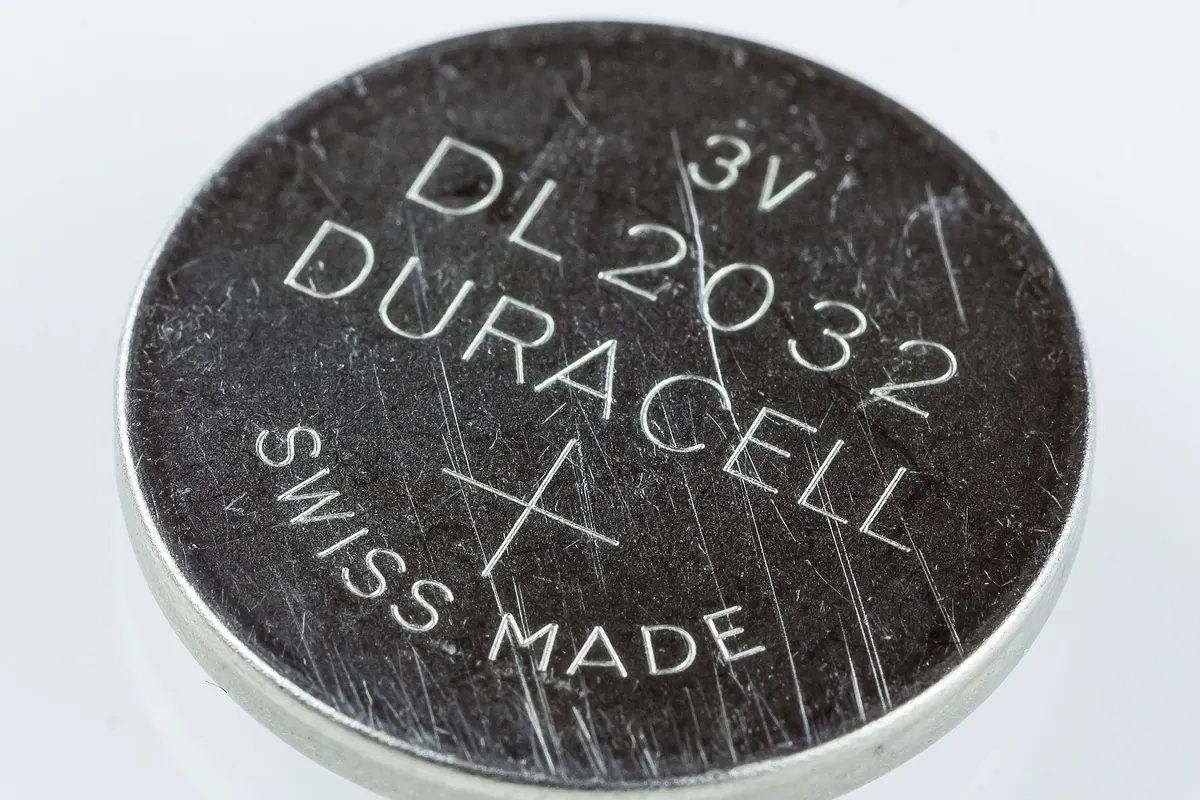

In Japan button cell batteries are allowed in carry-on and checked bags, with conditions.
Carry-on: Yes. A lithium coin cell (the CR types) is a lithium metal battery: spares holding 2g of lithium or less go in the cabin, each protected against short circuits. Narita Airport's FAQ says other batteries, such as alkaline batteries, are permitted in the cabin and in checked baggage. Checked baggage: Only inside a device, for lithium coin cells. A watch, car key or tracker with its cell fitted can be checked; spare lithium cells cannot. Alkaline button cells can go in checked baggage.
Button cell batteries on flights in and from Japan
The rule for button cell batteries comes from the Civil Aviation Bureau's list of restricted items and is the same on domestic and international flights.
| Where | Allowed? | What applies |
|---|---|---|
| In the cabin | Yes, within limits | Yes. A lithium coin cell (the CR types) is a lithium metal battery: spares holding 2g of lithium or less go in the cabin, each protected against short circuits. Narita Airport's FAQ says other batteries, such as alkaline batteries, are permitted in the cabin and in checked baggage. |
| In checked baggage | Conditions | Only inside a device, for lithium coin cells. A watch, car key or tracker with its cell fitted can be checked; spare lithium cells cannot. Alkaline button cells can go in checked baggage. |
Button cells and coin cells: lithium CR types and the rest
A button cell is judged by its chemistry: a lithium coin cell follows the lithium metal rows, and an alkaline one does not.
- ANA lists button batteries next to dry cells
- ANA's domestic FAQ has a single line for dry batteries and button-type batteries and accepts them in the cabin and at check-in. ANA's line does not separate lithium coin cells from the others. Japan's national list has no row called button battery: its battery section sorts by chemistry, with dry cells first and lithium metal batteries after.
- South Korea's list names the CR series
- South Korea's list is the one that describes coin cells in words. Its rows for lithium metal batteries of 2g or less say this generally means button-type lithium batteries of the CR series. A spare one is marked for the cabin and not for checked baggage. One fitted in electronic equipment is marked for both.
- A cell inside a watch is not a spare
- Japan's list accepts a device holding a lithium metal battery of 2g or less in the cabin and as checked baggage. Its spare row, which includes cells taken out of a device, is cabin only. The FAA's battery table gives watches and LED flashlights as examples of small consumer electronics that use non-rechargeable lithium metal batteries.
- Loose cells: cover the terminals
- Japan's list asks for short-circuit protection on spare lithium metal cells. Australia's CASA spells out how: original retail packaging, tape over exposed terminals, or each battery in a separate plastic bag or protective pouch. South Korea's list asks for the terminals of alkaline batteries to be insulated as well.
- Non-lithium button cells at the TSA
- The TSA's dry battery entry applies to typical non-lithium dry batteries and names the button cell among the most common sizes, next to AA, AAA, C, D and 9-volt. The entry is marked yes for carry-on and yes for checked bags, and says the batteries must be protected from damage and from creating sparks.
Button cell batteries: the rule country by country
In the United States, the United Kingdom, South Korea, Taiwan and Hong Kong the authority's page lists button cell batteries as allowed in carry-on.
| Flying from | Carry-on | Checked bag | What the authority says |
|---|---|---|---|
| JapanCivil Aviation Bureau | With limits | With limits | A lithium coin cell (the CR types) is a lithium metal battery: spares holding 2g of lithium or less go in the cabin, each protected against short circuits. Source |
| United StatesTSA | Yes | With limits | Non-lithium dry batteries, including button cells, are allowed in carry-on and checked bags. A lithium coin cell is a lithium metal battery: 2 grams or less of lithium, and spares go in carry-on only.TSA entry: Dry batteries (AA, AAA, C, and D) Source |
| European UnionEuropean Commission, EASA | With limits | No | A spare lithium coin cell is a spare lithium battery: carry-on baggage only, never checked baggage, individually protected to prevent short-circuits, with a maximum of two spares per person in total. Source |
| United KingdomUK Government | Yes | With limits | A spare lithium coin cell is a spare lithium battery: carry-on only, individually protected against short circuits, 2 g of lithium or less. Spare dry batteries can go in carry-on or checked baggage. Source |
| South KoreaMOLIT Aviation Security 365 | Yes | With limits | Spare lithium metal batteries of 2g or less, generally CR-type button lithium batteries: carry-on only, not checked. Fitted in a device they can be carried on or checked. Alkaline batteries: both, with the terminals insulated. Source |
| TaiwanCivil Aviation Administration | Yes | With limits | A spare lithium coin cell is a spare lithium battery: hand baggage only, each protected against short circuit. Dry batteries may go in checked or hand baggage. Source |
| Hong KongCivil Aviation Department | Yes | With limits | A spare lithium coin cell is a spare lithium metal battery: carry-on only, lithium content up to 2 g. Spare dry batteries: carry-on or checked, each protected from short circuit. Source |
| Mainland ChinaCAAC | With limits | No | A spare lithium coin cell is a spare lithium battery: hand baggage only, each one protected against short circuit. Lithium batteries cannot be checked. Source |
| AustraliaHome Affairs, CASA | With limits | With limits | Spare lithium metal batteries of AA size or smaller: carry-on only, no more than two, each protected against short circuits. Spare dry batteries: carry-on. Batteries fitted in a device: carry-on or checked.CASA Pack Right entry: Batteries - spare - lithium metal (non-rechargeable) - AA size or smaller, Battery Dry - spare, Batteries - lithium non-rechargeable (in equipment) Source |
Each row comes from that authority's own page. Airlines can be stricter, and the screening officer has the final say.
If security in Japan will not let button cell batteries through
- What to do
- Move button cell batteries to the bag you check in before you reach security, within the checked-baggage limits above. Narita Airport states that anything given up at the checkpoint is discarded and cannot be returned.
Frequently asked questions
Can you take button cell batteries on a plane?
On flights in and from Japan: Yes. A lithium coin cell (the CR types) is a lithium metal battery: spares holding 2g of lithium or less go in the cabin, each protected against short circuits. Narita Airport's FAQ says other batteries, such as alkaline batteries, are permitted in the cabin and in checked baggage. In checked baggage: Only inside a device, for lithium coin cells. A watch, car key or tracker with its cell fitted can be checked; spare lithium cells cannot. Alkaline button cells can go in checked baggage.
Can you take spare watch batteries on a plane?
Yes, in carry-on baggage. A spare lithium coin cell for a watch is a spare lithium metal battery: Japan's list accepts 2g or less in the cabin and marks it with a cross for checked baggage. The FAA's table says the same of spare lithium metal batteries: carry-on only, 2 grams or less lithium per battery.
How many coin cell batteries can you carry on a flight?
Japan's list prints no number beside spare lithium metal batteries of 2g or less. Airlines and other countries do set one. ANA's FAQ accepts up to 20 spare batteries per person in the cabin. Australia's CASA allows no more than 2 spare lithium metal batteries of AA size or smaller.
Do you have to take the coin cell out of a device before checking your bag?
No. Japan's list accepts a device with a lithium metal battery of 2g or less as checked baggage with the cell in place, and requires it to be switched completely off only above 0.3g of lithium. Australia's CASA says batteries in equipment must be securely installed in the device, with the device switched off.
Does the TSA allow a button cell battery in carry-on bags?
Non-lithium dry batteries, including button cells, are allowed in carry-on and checked bags. A lithium coin cell is a lithium metal battery: 2 grams or less of lithium, and spares go in carry-on only.
Can you take a button cell battery in hand luggage in the UK or Europe?
The United Kingdom: A spare lithium coin cell is a spare lithium battery: carry-on only, individually protected against short circuits, 2 g of lithium or less. Spare dry batteries can go in carry-on or checked baggage.
Can you put a button cell battery in checked luggage?
Only inside a device, for lithium coin cells. A watch, car key or tracker with its cell fitted can be checked; spare lithium cells cannot. Alkaline button cells can go in checked baggage.
Read more
- Can You Take an Electric Toothbrush in Hand Luggage? YesYes. You can take an electric toothbrush in hand luggage or checked bags to Japan. Spar…
- Can You Bring Hand Warmers on a Plane? Japan’s 2026 RulesYes, you can bring disposable hand warmers on a plane in Japan: MLIT bans only oil-fill…
- Luggage Forwarding in Japan, With Rates and Airport Cut-OffsLuggage forwarding in Japan with TA-Q-BIN costs 2,510 yen for a Size 160 suitcase withi…
- Is Tokyo Disneyland Worth It? What 100 People in Japan SaidYes for most: 86.9% of 99 Tokyo Disneyland visitors in our survey were satisfied, but 6…
Sources for this page
- Japan Civil Aviation Bureau (MLIT) — Items restricted in carry-on and checked baggage (updated 24 April 2026)
- TSA — What Can I Bring?: Dry batteries (AA, AAA, C, and D)
- EASA — Dangerous goods
- UK Civil Aviation Authority — What items can I travel with and which are restricted
- Aviation Security 365 (MOLIT / KOTSA) — Items restricted on the plane: batteries
- Taiwan CAA — Dangerous goods passengers and crew may carry
- Civil Aviation Department (Hong Kong) — Packing Tips for Air Passenger: Provisions for Dangerous Goods Carried by Passenger and Crew
- CAAC — Air travel basics (航空旅行常识)
- CASA — Pack Right: Batteries - spare - lithium metal (non-rechargeable) - AA size or smaller
- ANA — FAQ: Domestic flights, what cannot be carried on board or checked? (Japanese)
- ANA — FAQ: Handling of electronic devices with built-in lithium-ion batteries and power banks (Japanese)