Types of Ramen in Japan 2026: Tonkotsu, Miso, Shoyu, Shio
The four main types of ramen are shoyu, miso and shio, named for the seasoning, and tonkotsu, a pork bone soup. Sapporo is known for miso, Kyushu for tonkotsu.
Types of ramen in Japan: the short answer
Japan’s four most common types of ramen are shio, shoyu, miso and tonkotsu. Salt, soy sauce and miso season the first three, and tonkotsu is a creamy pork bone soup. Adult entry to the Shin-Yokohama Ramen Museum, which serves several types, is 450 yen.
Shops typically specialise in one or two types of soup, says the ramen guide from JNTO, Japan’s national tourism organisation. Region matters too. Sapporo is famous for miso ramen, Kyushu prefers tonkotsu, and Tokyo’s classic bowl is a dark shoyu on a pork bone or chicken base.
Here are quick answers to the questions visitors ask most.
- How do I order? In most shops you pay first at a ticket vending machine. At some shops you order from the staff instead.
- Is slurping rude? No. JNTO says slurping is not considered rude at all.
- Do I have to finish the soup? No. If you finish the noodles and toppings but leave some soup, that still counts as done.
- Where can I try many types in one place? At the Shin-Yokohama Ramen Museum, or at Tokyo Ramen Festa 2026 from 30 October to 3 November.
- What does a bowl cost? At Ramen Festa, one ¥1,100 meal ticket buys one bowl, tax included.
- Can vegetarians eat ramen? Ask first, because many soups use pork or chicken. The Ramen Museum serves two vegetarian bowls.
Types of ramen: shoyu, miso, shio, tonkotsu and tsukemen
Three of the four common types take their names from the seasoning in the soup. Shio means salt, shoyu means soy sauce, and miso ramen is seasoned with miso. Tonkotsu ramen is named for its soup instead, a creamy broth made from pork bones.
The Shin-Yokohama Ramen Museum lists the soup and noodle style of every shop inside it, so it works as a field guide to the types. The table below matches each type with one of the museum’s shops and its noodles.
| Type | Soup | Try it at the Ramen Museum | Noodles |
|---|---|---|---|
| Shoyu | Seasoned with soy sauce | Rishiri Ramen Miraku (scorched soy sauce, Rishiri kelp) | Medium-thick, wavy |
| Miso | Seasoned with miso | Ryu Shanghai Honten (spicy hot miso) | Extremely thick, wavy |
| Shio | Seasoned with salt | Ryukyu Shinmen Tondou (Okinawan pork, bonito, kelp) | Thin, straight |
| Tonkotsu | Creamy pork bone soup | Komurasaki (Kumamoto); Hakata Issou (Fukuoka) | Thin; flat at Hakata Issou |
| Pork bone soy sauce | Pork bone soup with soy sauce | Rokkakuya 1994+ (Iekei) | Thick, straight |
Shoyu (soy sauce). Rishiri Ramen Miraku comes from Rishiri Island in Hokkaido. Its yaki-shoyu is a rich, scorched soy sauce base made with large amounts of Rishiri kelp. Aged, medium-thick wavy noodles go with it. The Michelin Guide Hokkaido 2017 Special Edition named the main shop on Rishiri Island a Bib Gourmand restaurant.
Miso. Ryu Shanghai Honten serves a spicy hot miso ramen. Red spicy miso sits in the centre of the bowl, and you let it melt into the soup a little at a time. The broth blends plenty of dried small sardines into pork and chicken stock. The homemade noodles are extremely thick and springy.
Shio (salt). Ryukyu Shinmen Tondou brings salt ramen from Okinawa. Its soup uses long-loved Okinawan ingredients: pork, dried bonito, kelp and dried sardines. The museum describes the finished soup as golden, and the noodles are thin and straight.
Tonkotsu (pork bone). Komurasaki, founded in Kumamoto in 1954, serves Kumamoto-style tonkotsu. It is the only shop that has been open since the museum itself opened. Hakata Issou comes from Fukuoka, which the museum calls the holy land of tonkotsu ramen. The shop cooks pork bones slowly for a long time, and a fine layer of foamed fat covers the soup. That look gave the bowl its nickname, tonkotsu cappuccino.
Pork bone soy sauce. Some bowls combine two types. Rokkakuya 1994+ serves pork bone soy sauce ramen with thick, straight noodles. The museum calls Rokkakuya one of the three major Iekei ramen chains, and its bowl a classic Iekei ramen.
Tsukemen (dipping noodles). The noodles come in one bowl and the soup in another, and you dip the noodles before each bite. The museum’s Rock’n three shop features Junichi Shimazaki, the chef who created Kombu Water Tsukemen. The museum says the dish gained international acclaim. The museum lists the shop as soy sauce ramen with thin, straight noodles.
Regional ramen: Sapporo, Kyoto, Tokyo and Kyushu
Nearly every area of Japan has its own variety of ramen, JNTO says. Tottori’s ramen uses beef stock, and Tenri is known for a vegetable-heavy stamina ramen. JNTO’s advice is to try local shops wherever you are.
Sapporo: the home of miso ramen
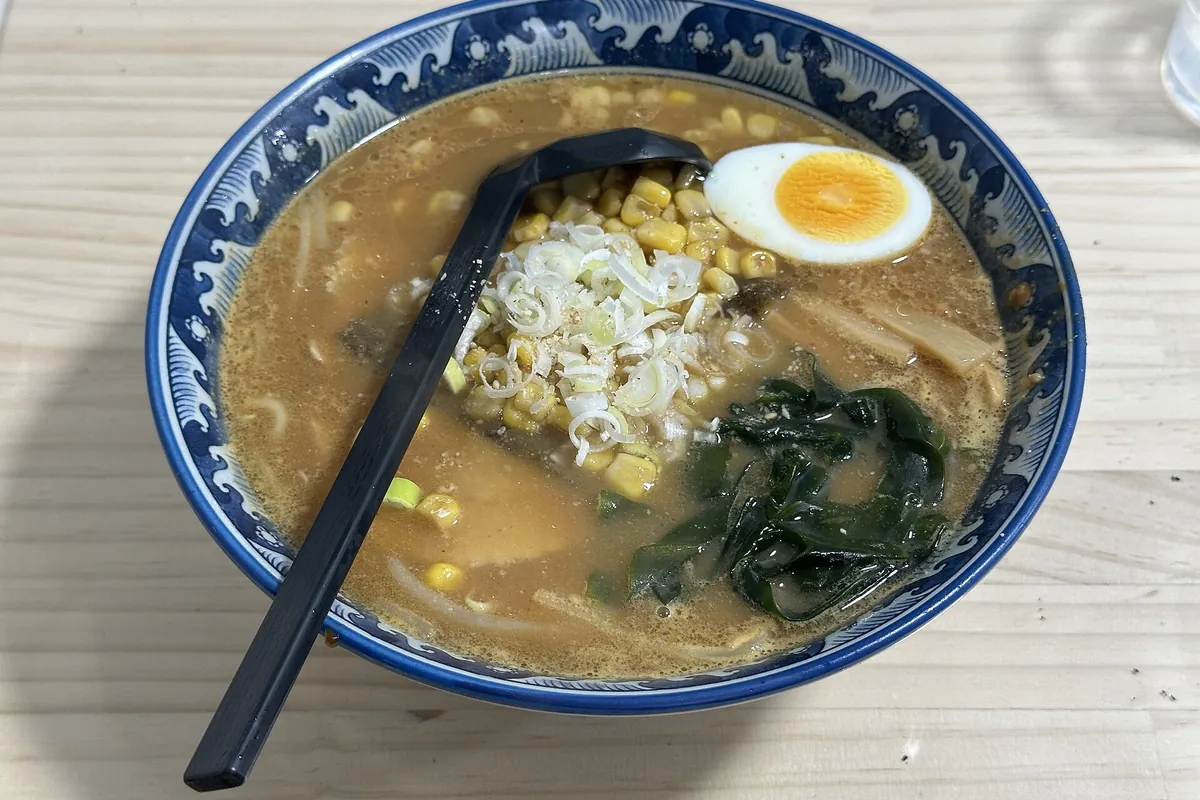
Sapporo, on the northern island of Hokkaido, is famous for miso ramen. The museum’s guide to Sapporo ramen counts 632 ramen shops in the city and calls Sapporo the birthplace of miso ramen. Cooks stir-fry bean sprouts, other vegetables and minced meat in a wok, then pour the soup over them.
A layer of lard on the surface keeps the soup from cooling. The noodles are medium-thick and wavy, at 140 to 150 g a portion, and firm enough to stand up to the vegetables. Most Sapporo shops serve shoyu and shio as well. The photo below shows a bowl of Sapporo-style miso ramen.
Kyoto: rich soups in three styles
Many people expect Kyoto ramen to be light. The museum’s Kyoto ramen guide says it is among the richest in Japan, and counts 373 shops in the city. It sorts Kyoto ramen into three main lines.
- Pork-based soup with dark soy sauce.
- Chicken and vegetables simmered into a thick, almost gel-like soup.
- Chicken stock with large amounts of pork back fat.
Kyoto noodles are medium, straight and cooked fairly soft. The green onions on top are Kujo negi, which are soft and sweet.
Tokyo: dark shoyu, and every other style
Tokyo’s classic style is a dark shoyu made with pork bone or chicken stock. Almost every other style is available in the capital too, including many inventive takes. Tokyo Ramen Street, covered below, puts 10 shops side by side.
Kyushu: tonkotsu country
On Kyushu, in the south, people prefer tonkotsu. Both tonkotsu shops at the Ramen Museum come from Kyushu: Komurasaki from Kumamoto and Hakata Issou from Fukuoka.
From the airport to each ramen city
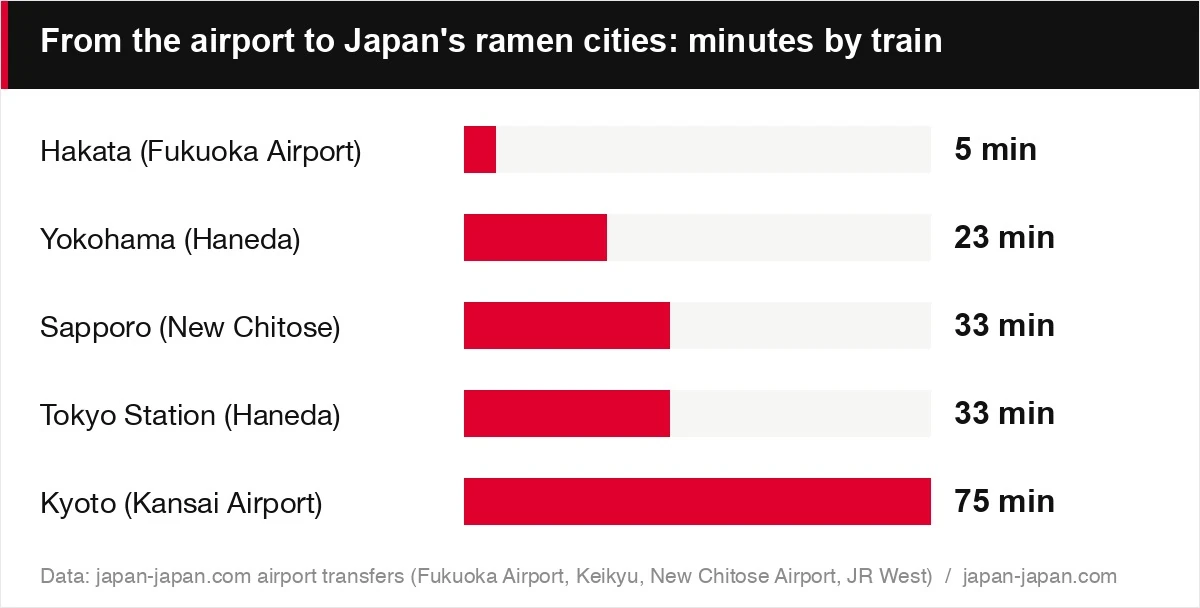
Our airport transfer pages list the quickest train from each airport. The chart below compares the minutes.
| Item | Value | Note |
|---|---|---|
| Hakata (Fukuoka Airport) | 5 min | Fukuoka City Subway |
| Yokohama (Haneda) | 23 min | Keikyu Line |
| Sapporo (New Chitose) | 33 min | JR Rapid Airport |
| Tokyo Station (Haneda) | 33 min | Keikyu Line and JR |
| Kyoto (Kansai Airport) | 75 min | JR Haruka |
- Fukuoka Airport to Hakata Station: Fukuoka City Subway, 5 min, 260 yen.
- Haneda Airport to Yokohama: Keikyu Line, 23 min, 370 yen.
- New Chitose Airport to Sapporo: JR Rapid Airport, 33 min, 1,230 yen.
- Haneda Airport to Tokyo Station: Keikyu Line and JR, 33 min, 540 yen, with one change.
- Kansai Airport to Kyoto: JR Haruka limited express, 75 min, 2,200 yen.
How to order ramen at a ticket machine
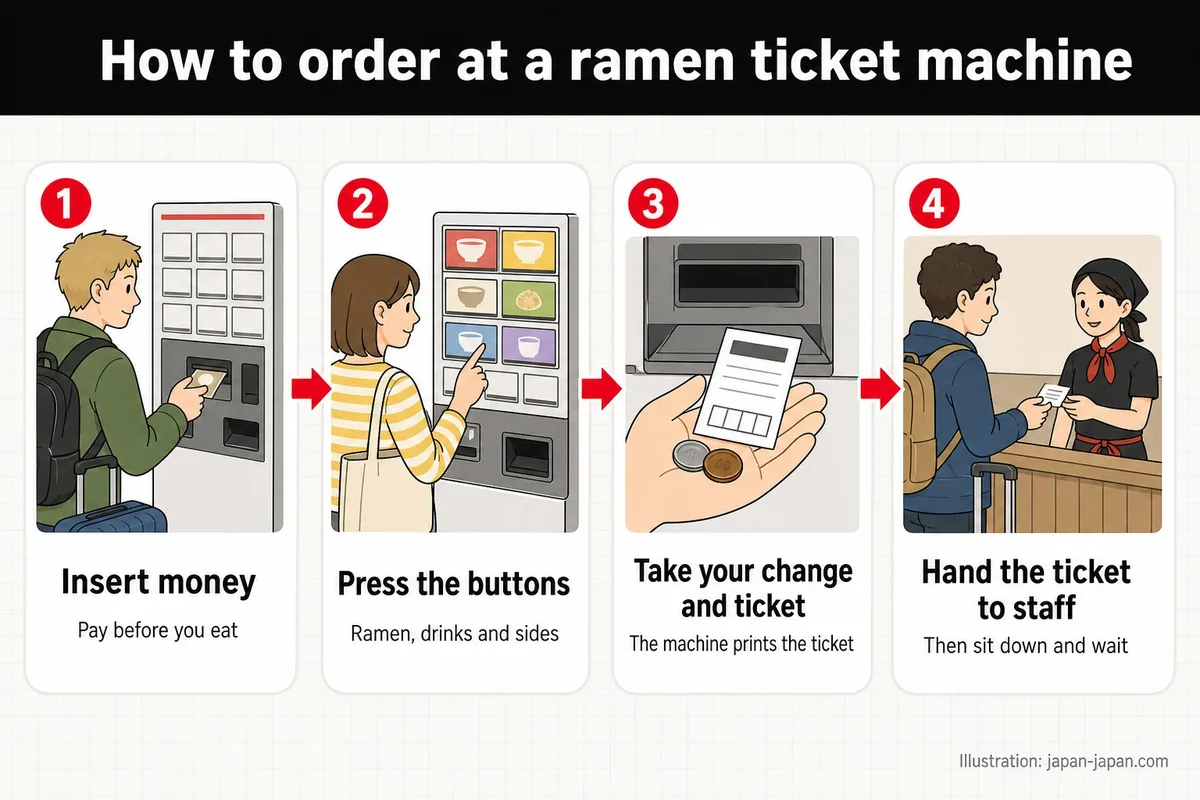
In most ramen shops you pay before you eat, at a ticket vending machine. At some shops you order from the staff instead. JNTO describes the machine in four steps.
- Insert money. Do this first, before you choose.
- Press the buttons. Choose your ramen, drinks and any sides you want.
- Take your change and the ticket. The machine prints a ticket for your order.
- Hand the ticket to the staff. Then sit down and wait for your food.
The illustration below shows the same four steps.
A line outside a shop is often a mark of quality, JNTO says. At its busiest, the line at Hakata Issou’s shop in Fukuoka runs to more than 200 customers. Its thin, flat noodles are popular enough that 80% of customers order a second serving.
Ordering works a little differently at each place in this guide.
| Where | How you order |
|---|---|
| Most ramen shops | Buy a ticket at the vending machine, then hand it to the staff. |
| Some ramen shops | Order from the staff. |
| Ramen Museum shops | Wait in line when busy; the shops take no seat reservations. Orders stop 30 minutes before closing. |
| Tokyo Ramen Festa | Buy a ¥1,100 meal ticket. One ticket gets one bowl. |
How to eat ramen: slurping and the soup
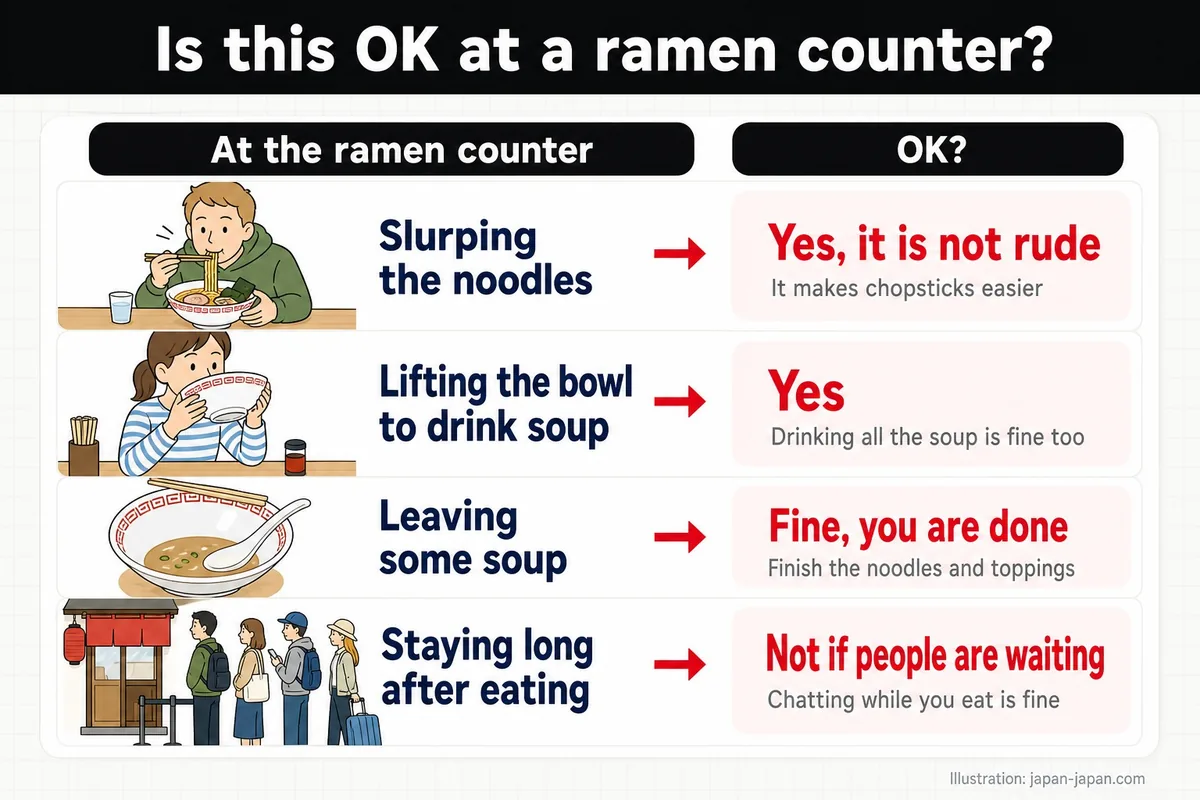
Slurp your noodles the way the locals do. JNTO says slurping is not considered rude at all, and many people find it makes eating noodles with chopsticks easier. Focus on drawing the noodles into your mouth, rather than making noise for its own sake.
The soup is up to you. Drink all of it if you like, and feel free to lift the bowl to your mouth. You do not have to finish it, though. If you eat all the noodles and toppings but leave some soup, the bowl still counts as done.
Ramen shops are places to eat and move on. Chatting is fine, but do not stay long after you finish, especially if people are lined up outside. The illustration below sums up what is fine at a ramen counter.
The Ramen Museum adds two house rules. Every visitor of junior high school age or older is expected to order at least one bowl at each ramen shop they visit. Do not bring food or drinks into the museum or its ramen shops.
Ramen Museum Yokohama: tickets, hours, access
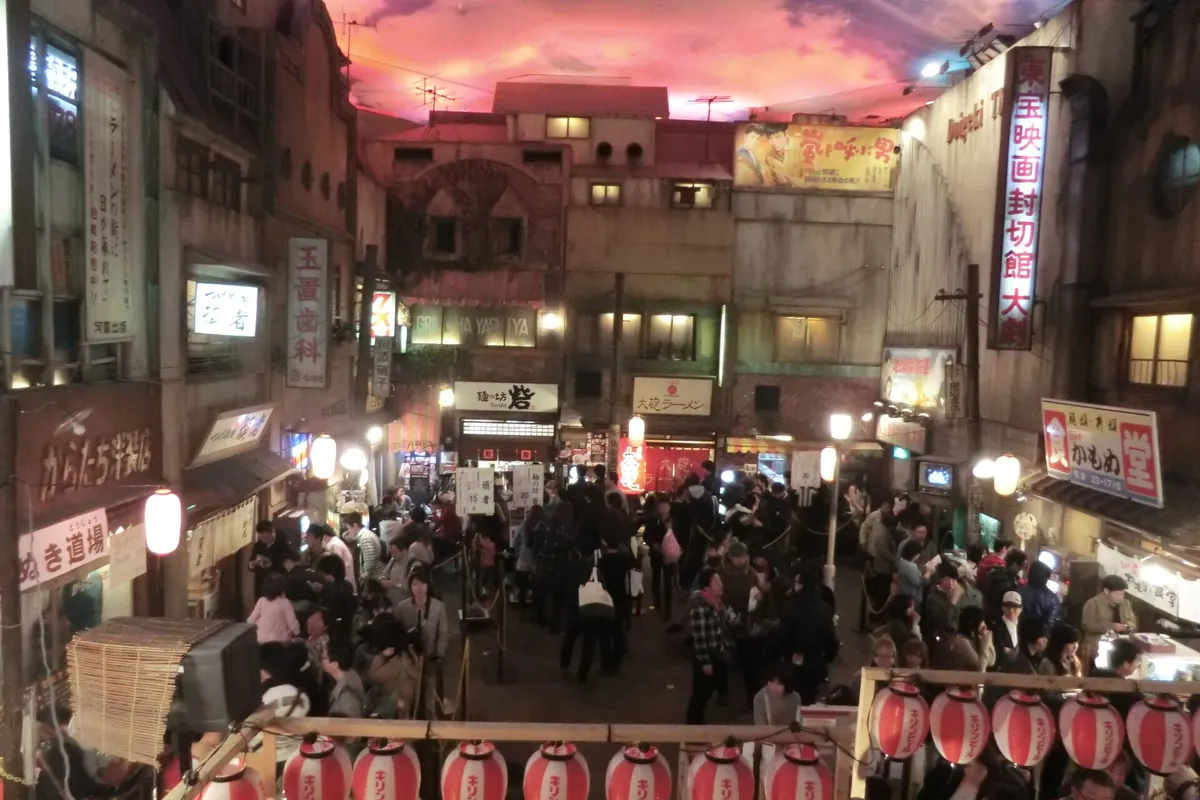
The Shin-Yokohama Ramen Museum opened on 6 March 1994 as the world’s first ramen-themed amusement park. Its idea is to let you taste ramen from famous shops across Japan without boarding a plane. The ramen shops line a replica street from 1958, the year the world’s first instant ramen was invented. An exhibition area on the first floor covers the history and culture of ramen.
The photo below shows the replica street inside the museum.
Admission is a one-day ticket, and groups of 15 or more pay less.
| Visitor | One-day ticket | Group of 15 or more |
|---|---|---|
| Adult (19 and over) | 450 yen | 400 yen |
| Child (6 to 18) | 100 yen | 50 yen |
| Under 6 | Free | Free |
The museum is open 11:00 to 21:00 on weekdays and 10:30 to 21:00 on holidays. Ramen shops take orders until 30 minutes before closing. The museum closes on 31 December and 1 January. You can buy admission in advance on Klook or Trip.com.
The museum also runs two hands-on activities. The Ramen Making Class, paid and by reservation, teaches aodake-uchi, a traditional Chinese way of making noodles known as green bamboo beating. At the Ra-haku Sugomen Lab, you build your own instant cup ramen from noodles, ingredients, soup, containers and lids.
To leave and come back on the same day, go to the information desk on the first floor. Staff stamp the back of your hand, and they check it when you re-enter.
Getting to the Ramen Museum
The museum’s access page gives two walking times from Shin-Yokohama Station. It is about 5 minutes on foot from the JR Tokaido Shinkansen and JR Yokohama Line station. It is about 1 minute from Exit 10, used by the Yokohama Municipal Subway and the Sotetsu/Tokyu Shin-Yokohama Line.
From the JR side, take the underground passage toward the subway and come up at Exit 10. Turn left at the first traffic light, then turn right just past the FamilyMart. The museum is the fourth building on your left.
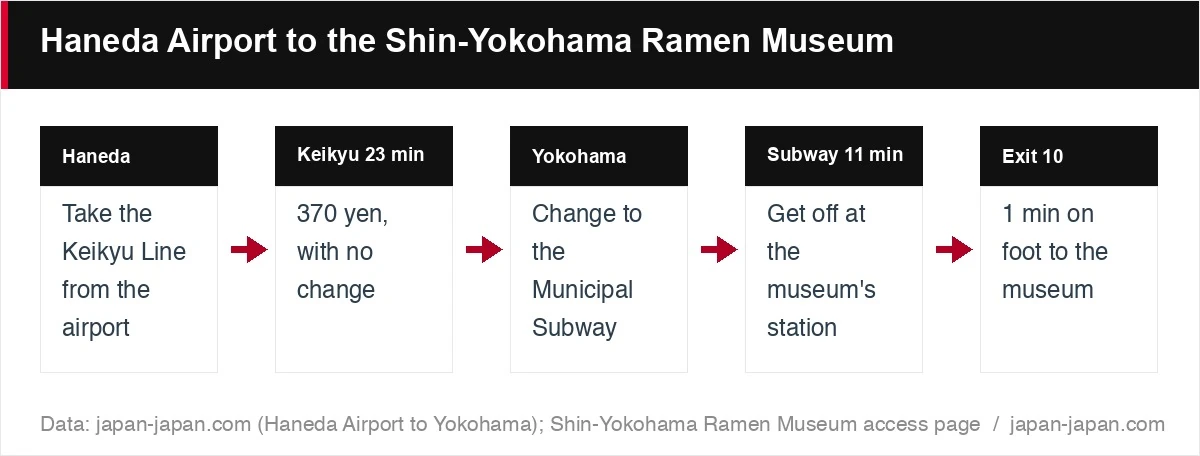
From Yokohama Station, the Yokohama Municipal Subway reaches Shin-Yokohama in about 11 minutes. JR takes about 15 minutes with a change at Higashi-Kanagawa, though some trains run through. From Haneda Airport, the Keikyu Line runs to Yokohama Station in about 23 minutes for 370 yen, with no change. The diagram below shows the whole route from the airport.
The museum shop sells famous and very rare dried and fresh ramen noodles from all over Japan. Solid food can go in your carry-on bag. On international flights, liquid, gel and paste foods such as soup and miso fall under the 100ml liquid limit. Food can also go in checked bags, and our page on bringing food on a plane has the details.
Ramen in Tokyo: Ramen Street and Ramen Festa
In Tokyo, two places let you compare many types of ramen in one visit.
Tokyo Ramen Street at Tokyo Station
Tokyo Station has its own underground ramen street. First Avenue Tokyo Station connects to the station at the Yaesu Underground Central Gate, 1 minute on foot. Its ramen zone, Tokyo Ramen Street, has a line of 10 ramen restaurants, each with its own menu.
First Avenue is open daily from 10:00 to 22:00, though hours vary by floor and store. GO TOKYO lists cash, Visa, JCB, MasterCard and AMEX as ways to pay. From Haneda Airport, the Keikyu Line and JR reach Tokyo Station in 33 minutes for 540 yen.
Tokyo Ramen Festa 2026
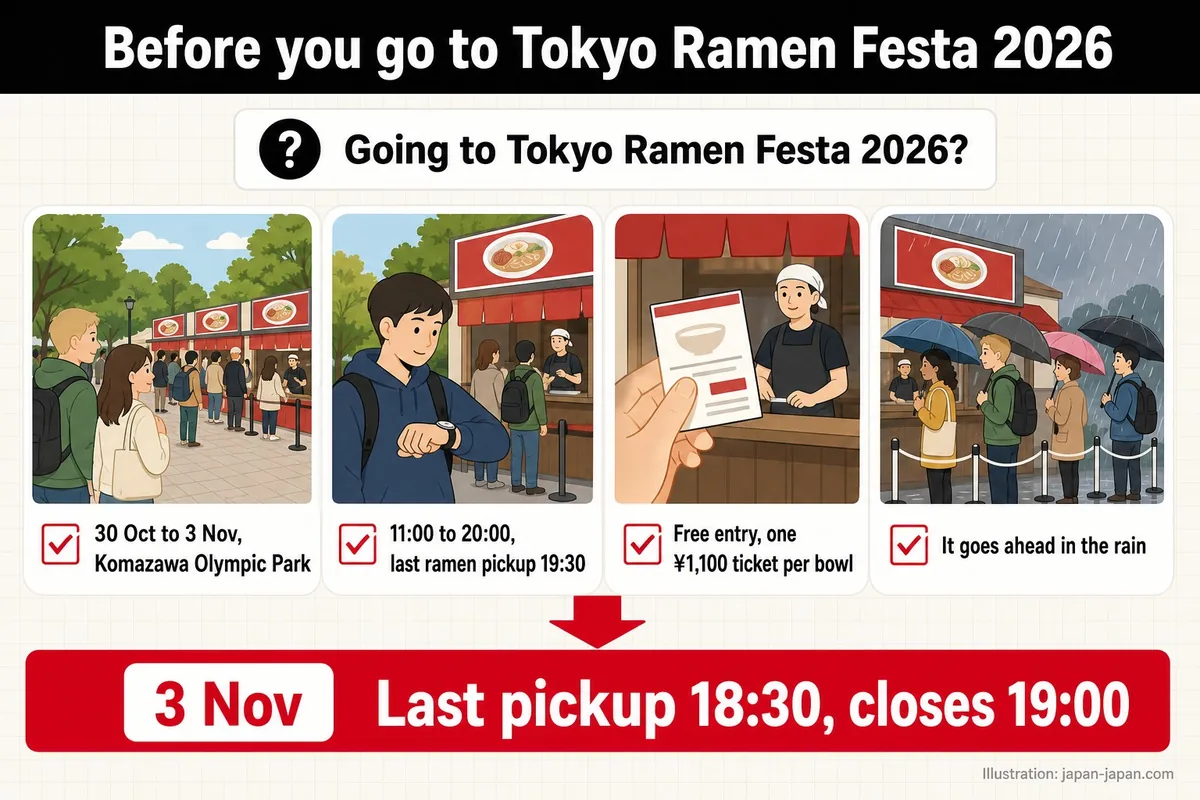
Tokyo Ramen Festa 2026 runs from 30 October to 3 November 2026 at Komazawa Olympic Park. GO TOKYO calls it the largest outdoor ramen event in Japan. Stalls serve regional styles from all over the country, including many popular local favourites.
Hours are 11:00 to 20:00, and ramen pickup ends at 19:30. On 3 November, pickup ends at 18:30 and the event closes at 19:00. The festa goes ahead in the rain.
Entry is free. You buy a ramen meal ticket for ¥1,100, tax included, and exchange one ticket for one bowl.
The nearest station is Komazawa-Daigaku on the Tokyu Den-en-toshi Line, 12 minutes on foot from the Komazawa Park Exit. Toritsu-Daigaku Station on the Tokyu Toyoko Line is 22 minutes on foot.
The last day, 3 November, is Culture Day, one of Japan’s November public holidays. GO TOKYO asks visitors to check the official event website for the latest dates, times and prices. The illustration below lists four things to check before you go.
Vegetarian and halal ramen: what to ask
Ramen soup often starts from pork or chicken, so ask before you order. Tonkotsu is a pork bone soup, and Tokyo’s classic shoyu uses pork bone or chicken stock. A miso bowl can use meat too: Ryu Shanghai Honten makes its miso soup on a pork and chicken broth.
The Shin-Yokohama Ramen Museum serves vegetable ramen built on the techniques of shojin ryori, Japan’s Buddhist temple cooking. Two shops serve one each, and you can show the Japanese name to the staff.
- Ryu Shanghai Honten: ベジタリアンラーメン (bejitarian rāmen, vegetarian ramen), ¥1,050. Raw miso with the savoury taste of shiitake and kelp, flavoured with sesame oil and served with spicy miso.
- Komurasaki: 野菜だけで作った王様ラーメン (yasai dake de tsukutta ōsama rāmen, king ramen made only from vegetables), ¥1,100. It uses no animal products at all. Wheat gluten (fu) takes the place of chashu pork, with bean sprouts, bamboo shoots, wood ear mushrooms and green onion.
The museum adds that its table of these dishes is a guide for vegetarians and not an allergy label.
The museum also states that its menu is not halal compatible, and gives four reasons.
- No shop has a Muslim chef.
- No shop keeps a separate kitchen or tableware.
- Ryu Shanghai Honten and Komurasaki add no alcohol on their ingredient labels, but soy sauce and miso ferment and may produce some.
- Every shop sells alcohol.
The museum does provide prayer facilities for Muslim visitors: a prayer space, prayer mats and a compass that shows the qibla, the direction of prayer. For eating out elsewhere, our guide to vegetarian, vegan and halal food in Japan covers what to ask.
FAQ
What is the difference between tonkotsu and shoyu ramen?
Shoyu ramen takes its name from its seasoning, soy sauce. Tonkotsu ramen takes its name from its soup, a creamy broth of pork bones. The two often meet. Tokyo’s classic shoyu can use a pork bone base, and Rokkakuya 1994+ serves pork bone soy sauce ramen.
Is it rude to slurp ramen in Japan?
No. JNTO says slurping is not considered rude at all, and many people find it makes eating noodles with chopsticks easier. Aim to draw the noodles into your mouth rather than make noise for its own sake.
How much does ramen cost in Japan?
JNTO calls ramen in Japan inexpensive, and says its low price makes even the best ramen available to anyone. At Tokyo Ramen Festa 2026, one ¥1,100 meal ticket buys one bowl. The vegetarian bowls at the Shin-Yokohama Ramen Museum cost ¥1,050 and ¥1,100, and adult entry is 450 yen.
When is Tokyo Ramen Festa 2026?
It runs from 30 October to 3 November 2026 at Komazawa Olympic Park in Tokyo. Hours are 11:00 to 20:00, with ramen pickup until 19:30. On 3 November, pickup ends at 18:30 and the event closes at 19:00. Entry is free, and the festa goes ahead in the rain.
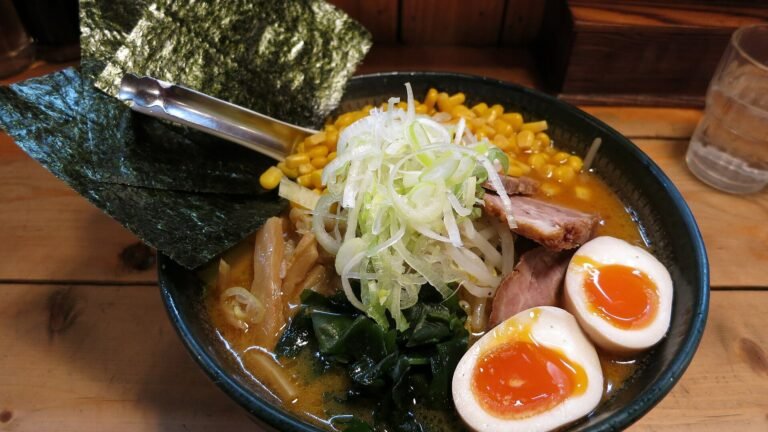
Photo: Ramen with eggs.jpg by Douglas Paul Perkins (CC0), via Wikimedia Commons.