Tokyo Market Festival 2026: Dates at 7 Wholesale Markets
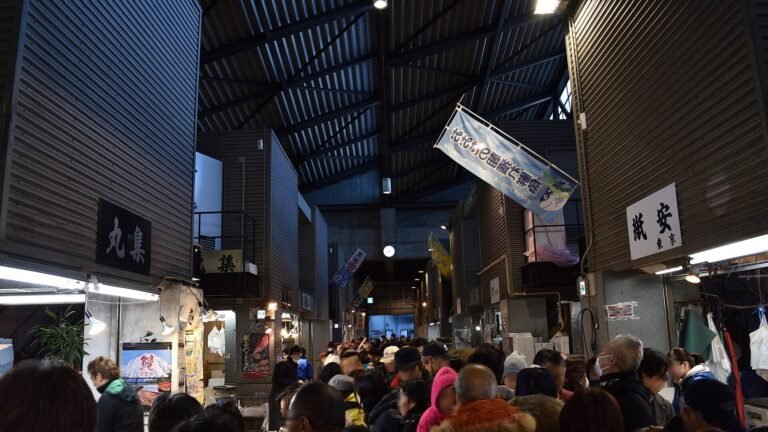
The Tokyo Metropolitan Government (TMG) announced the festival on 6 October 2026. The Tokyo Metropolitan Government Market Festival press release says the goal is to help residents learn about wholesale markets and fresh food. At each venue, the programs center on letting visitors touch the products that the markets trade.
Wholesale markets are where produce, meat and flowers change hands before they reach shops and restaurants. On festival days, you can walk in as a shopper.
The timeline below puts the dates in order, from the Meat Market’s two days to the last day at Toshima Market.
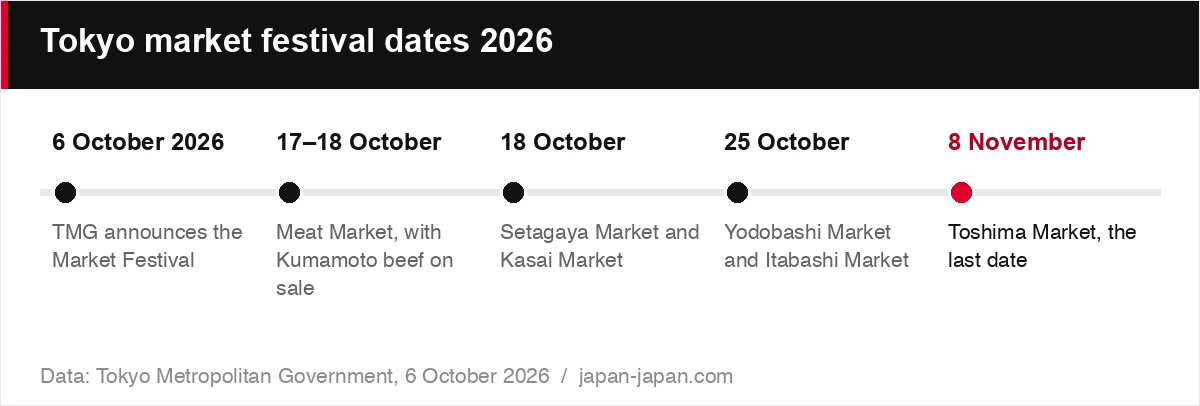
Every date falls on a Saturday or Sunday, so the festival fits easily into a weekend in Tokyo.
Which markets open on which day
TMG lists the dates market by market. The Meat Market goes first, on Saturday 17 and Sunday 18 October. Setagaya Market and Kasai Market follow on Sunday 18 October. Yodobashi Market and Itabashi Market open on Sunday 25 October. Toshima Market closes the series on Sunday 8 November.
The screenshot below shows TMG’s English release, which gives these dates along with the regional products each market will sell.
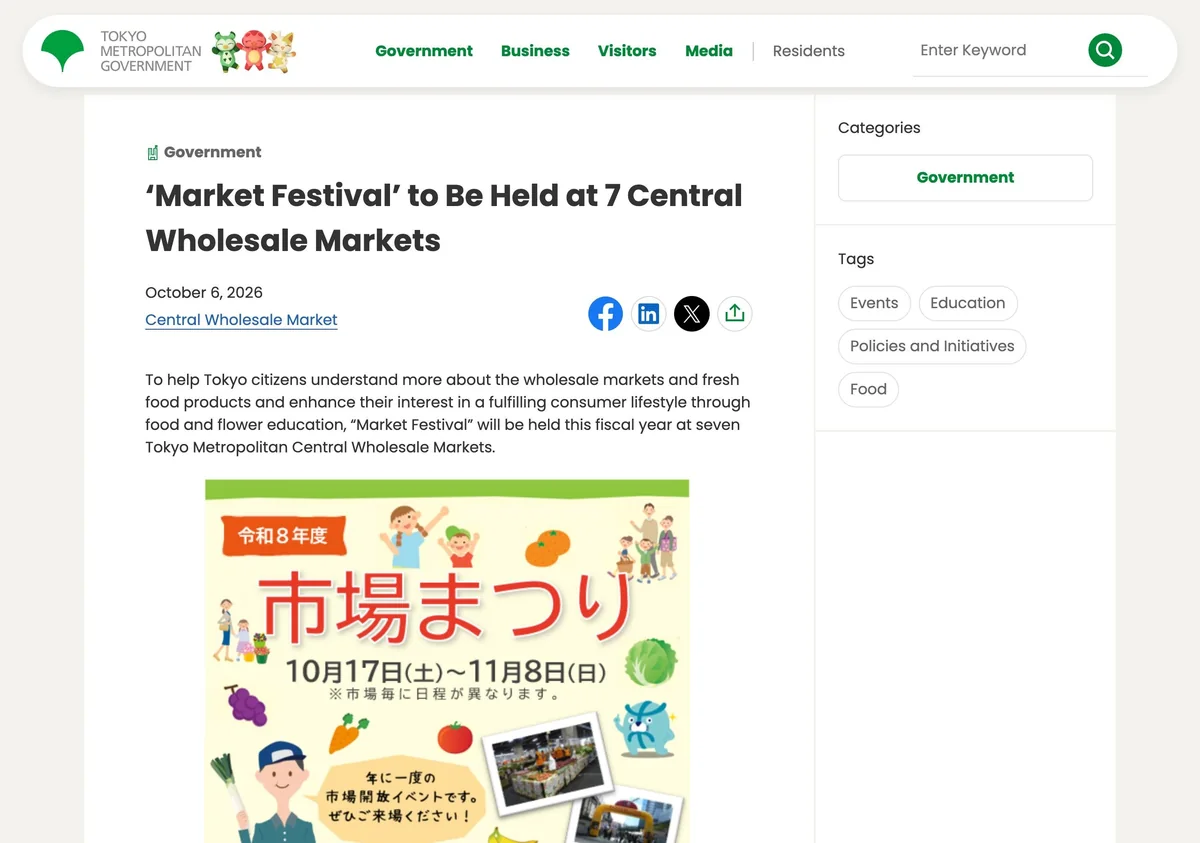
TMG says dates, time frames and event details vary by venue. Sales corners also close once products sell out. Arrive at the start of the day if you want to buy rather than just look.
The Japanese notice for this year’s festival went up on the Tokyo Metropolitan Central Wholesale Market official site on 4 September 2026. Look for the heading 市場まつり (ichiba matsuri), meaning market festival. The same site keeps reports from past festivals at each market.
Two pairs of markets share a date. Setagaya and Kasai both open on 18 October but sit in different parts of Tokyo. Yodobashi and Itabashi share 25 October in the same way. Pick one market per day and give it a few hours.
What you can do at a Tokyo wholesale market festival
The release describes four kinds of program. Visitors can handle the products the markets trade. Sales corners sell vegetables, fruit, meat and flowers. There are food education corners, and mock auctions show how bidding works on a wholesale market floor.
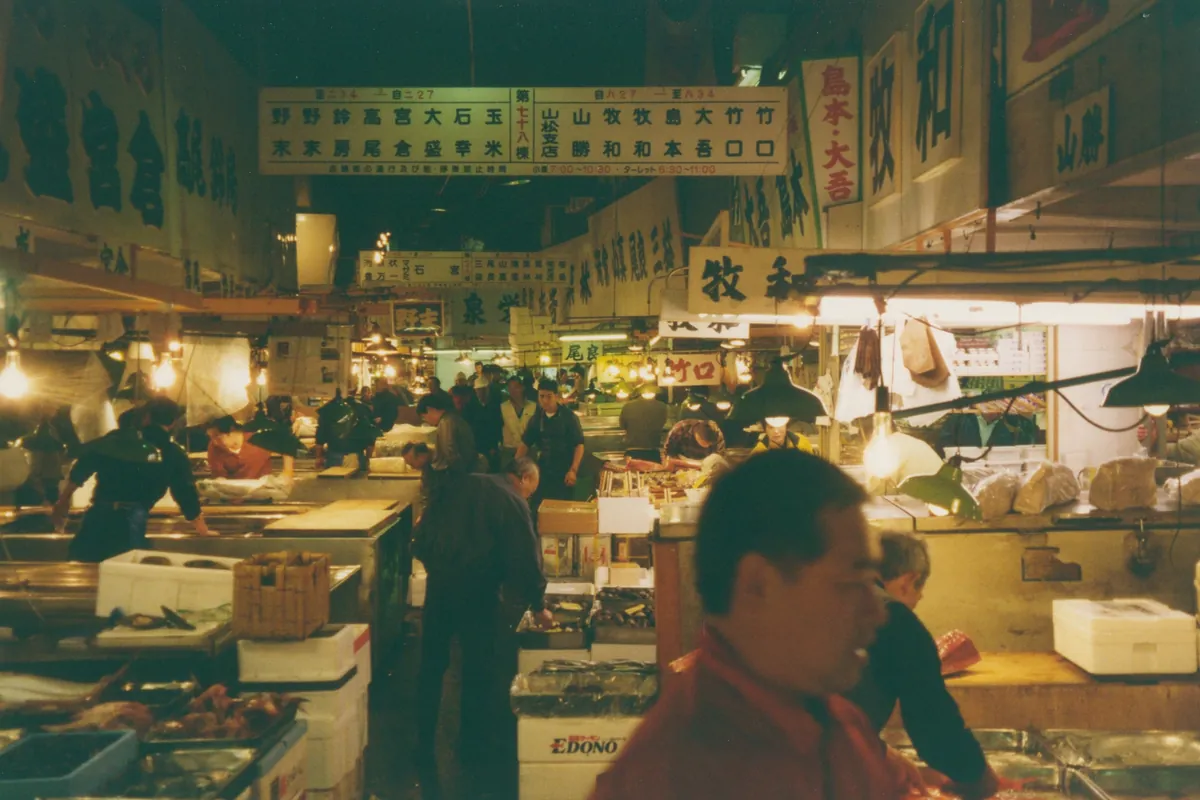
The photo below shows a Tokyo central wholesale market, the kind of working space the festival opens up for the day.
Each market also runs a PR corner for regions that are rebuilding. TMG names Iwate, Miyagi, Fukushima, Ishikawa and Kumamoto prefectures. The corners hand out brochures on local food and tourism to support reconstruction.
Some markets go further and sell products from those regions. Setagaya, Yodobashi and Toshima markets sell specialties from Miyagi Prefecture. Kasai Market sells products from Fukushima Prefecture, and Itabashi Market sells goods from Iwate Prefecture. The Meat Market puts beef from Kumamoto Prefecture on sale, among other items.
The table below matches each market to its date, its part of Tokyo and the regional products TMG says it will sell.
| Market | Date (2026) | Area | Regional products on sale |
|---|---|---|---|
| Meat Market | 17–18 October | Shinagawa | Beef from Kumamoto Prefecture |
| Setagaya Market | 18 October | Setagaya | Specialties from Miyagi Prefecture |
| Kasai Market | 18 October | Kasai | Products from Fukushima Prefecture |
| Yodobashi Market | 25 October | Shinjuku | Specialties from Miyagi Prefecture |
| Itabashi Market | 25 October | Itabashi | Goods from Iwate Prefecture |
| Toshima Market | 8 November | Ikebukuro | Specialties from Miyagi Prefecture |
Is it worth it for visitors (and who should skip it)
The festival suits food lovers who will be in Tokyo on one of the dates. It also suits travelers who have seen the tourist markets and want something more local. Our guide to Nishiki, Kuromon and Tsukiji markets covers the well-known food markets and notes that Toyosu shuts on Sundays.
It suits you less in three cases:
- You want English guidance. TMG built the event for Tokyo residents, so plan as if signs and announcements will be in Japanese.
- You want a street-food crawl. The program centers on sales, education corners and mock auctions. Kuromon fits better for eating as you walk.
- You dislike early starts. Sales close when stock runs out, so the best buys go to people who arrive first.
If you go, carry some cash in case a stall does not take cards. Bring a small cooler bag if you plan to buy meat. Check that your room has a fridge before you buy anything raw.
The map shows where the markets in TMG’s schedule sit across Tokyo. Use it to pick the one nearest your hotel.
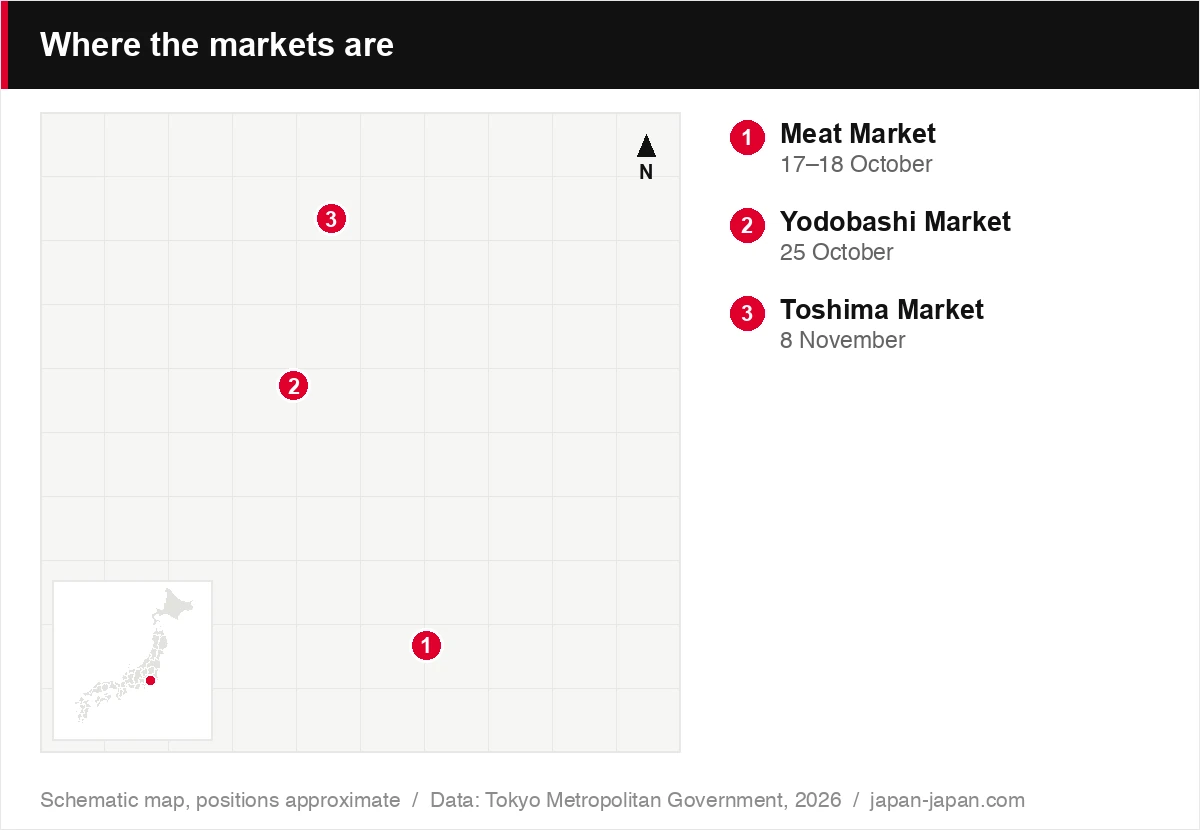
Shinagawa, Shinjuku and Ikebukuro are big rail hubs. That makes the Meat Market, Yodobashi Market and Toshima Market the simplest picks for a first visit.
Getting to the markets from the airport and central Tokyo
The Meat Market is near Shinagawa Station, the market area closest to Haneda by train. Our Haneda Airport to Shinagawa train guide lists the Keikyu Airport Line at about 18 minutes for 330 yen. You don’t need to change trains. The Tokyo Monorail and JR Yamanote Line route costs 720 yen. Trains run from 05:26 to 00:08.
From Narita, the Narita Express runs to Shinagawa for 3,330 yen. Our Narita Airport to Shinagawa page has the details.
The photo below shows the east side of Shinagawa Station, the side you walk out of toward the Meat Market.
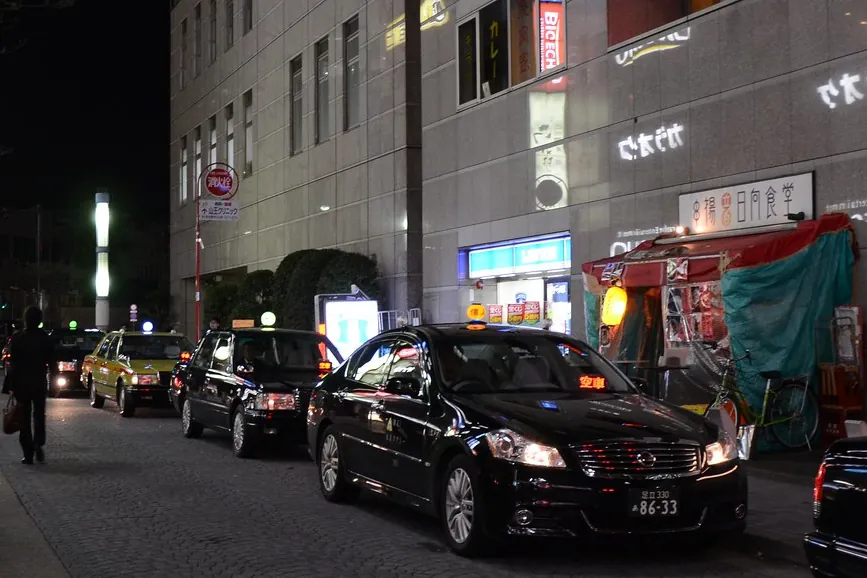
Yodobashi Market is in Shinjuku. From Haneda, the Keikyu Line and JR take 43 minutes for 590 yen, with a change at Shinagawa. The Airport Limousine bus takes 40–55 minutes and costs 1,400 yen. Our Haneda Airport to Shinjuku page lists the bus stops and last departures.
Toshima Market is in the Ikebukuro area. The Keikyu Line and JR take about 49 minutes for 680 yen. The bus takes 50–70 minutes for 1,400 yen, and our Haneda Airport to Ikebukuro page has the times.
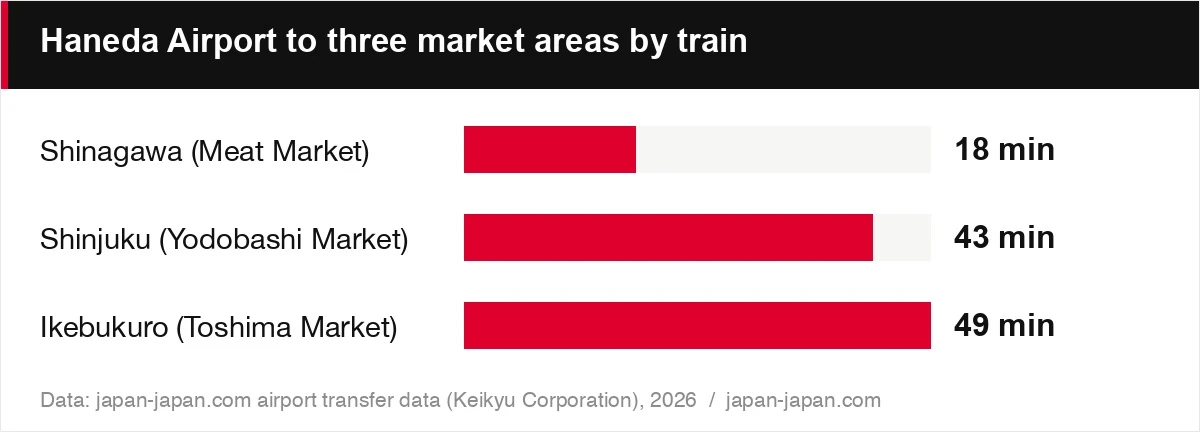
The chart compares the train times from Haneda to these three market areas.
| Item | Value | Note |
|---|---|---|
| Shinagawa (Meat Market) | 18 min | Keikyu Airport Line, 330 yen |
| Shinjuku (Yodobashi Market) | 43 min | Keikyu Line and JR, 590 yen |
| Ikebukuro (Toshima Market) | 49 min | Keikyu Line and JR, 680 yen |
Inside the city, an IC card covers trains, subways and buses. A regular Suica card includes a 500 yen deposit, which you get back when you return the card. Welcome Suica has no deposit and lasts 28 days from purchase. JR East sells it at Haneda Airport Terminal 3 station, among other places.
Tokyo weather and autumn leaves in late October and early November
Our Japan by month guide rates a month as comfortable when the average high sits between 15°C and 25°C, with fewer than 10 wet days. By that rule, November and April qualify in 8 places each, more than any other month. October qualifies in 6.
For Tokyo itself, see our Tokyo in October and Tokyo in November pages for the monthly averages and what to wear. They also list other events, such as Oeshiki at Ikegami Honmonji in October and Tori-no-ichi at Otori Shrine in Asakusa in November.
The festival ends before the autumn colour peaks. The Japan Meteorological Agency’s sample ginkgo in Tokyo turns yellow around 23 November on average. Its sample maple turns red around 28 November. Our Tokyo autumn leaves page tracks both trees.
Wear layers and shoes you can stand in for a few hours. Market floors are hard, and an early start can feel cooler than the afternoon.
If you stay on, JR Central makes every Nozomi reserved-seat only on 21–23 November 2026. Our Japan public holidays guide lists that weekend and the other busy days.
Tokyo market festival FAQ
Do I need a ticket or reservation for the Tokyo market festival?
TMG presents the festival as days when the markets open to the public. Times and programs vary by venue, so check the market’s notice on the Central Wholesale Market site before you go. Arrive early, because sales end when stock runs out.
Is Toyosu Market part of the 2026 market festival?
TMG’s English release gives dates for the Meat, Setagaya, Kasai, Yodobashi, Itabashi and Toshima markets. Toyosu is not on that list. TMG posted a separate notice on 25 September 2026 about restrictions on entry to the visitor’s course at Toyosu Market.
Can tourists buy fresh fish and meat to take back to the hotel?
The release lists vegetables, fruit, meat and flowers at the sales corners, and the Meat Market adds beef from Kumamoto Prefecture. You can buy meat, but bring a cooler bag and make sure your room has a fridge first.
About the author
Photo: Ota Wholesale Market Yearend Sale.jpg by Doricono (CC BY-SA 4.0, cropped), via Wikimedia Commons.
.jpg)

