Miyajima Ferry Is Free on a JR Pass, Plus a 100 Yen Tax
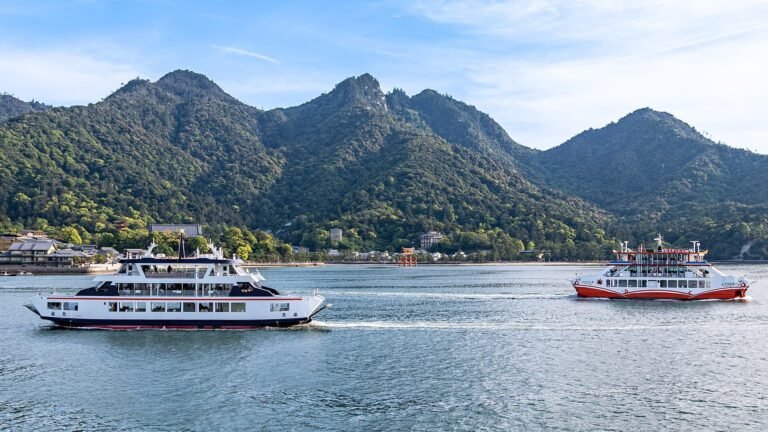
The Japan Rail Pass scope of validity page puts it in one line: only the JR-WEST Miyajima ferry is covered. The same page adds that you pay the Miyajima Visitor Tax of 100 yen when you visit. So the boat is free on the pass, and the tax is yours to pay. The sections below show which pass works on which boat, how you reach the pier, and when the crossing gets crowded.
JR or Matsudai: which Miyajima ferry to take
Both ferries leave from the Miyajimaguchi pier on the mainland and land on Miyajima. The JNTO Miyajima destination guide puts the crossing at around 10 minutes, depending on the weather. The pier is a short walk from JR Miyajimaguchi Station. Your choice comes down to the ticket in your pocket.
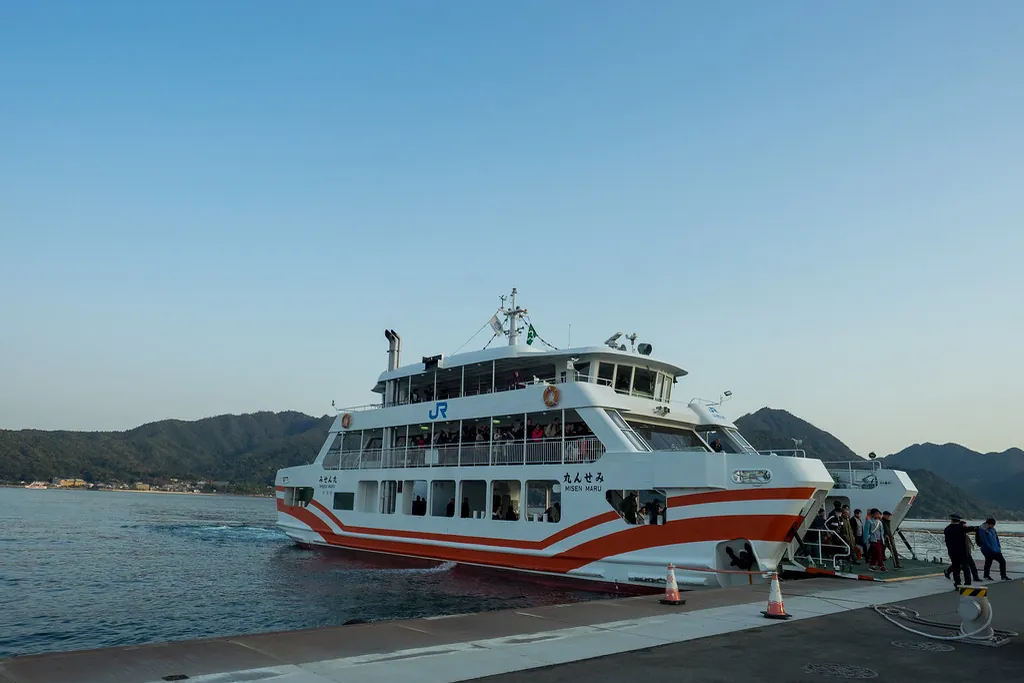
The photo above shows a passenger ferry on the short crossing to the island. Both companies run boats of this kind on the same route, so the view and the time on the water are close. What changes is the ticket each boat accepts.
If you hold any JR pass, take the JR-West Miyajima Ferry. Walk to its gate and show the pass to the staff. If you hold a Hiroshima Electric Railway (Hiroden) pass, check which one it is. Our page on the Hiroden 1 Day Streetcar and Ferry Pass lists the Matsudai ferry as covered. The JR ferry is not covered. That pass price already includes the 100 yen visitor tax.
The Visit Hiroshima Tourist Pass is the one pass in our database that covers both boats. It does not include the tax. Buy a 100 yen tax ticket at the machine on the pier. Then show the pass and hand over the tax ticket at the gate.
| Ticket you hold | JR-West Miyajima Ferry | Miyajima Matsudai Kisen |
|---|---|---|
| Japan Rail Pass | Covered | Not covered |
| JR-West area passes | Covered | Not covered |
| Hiroden 1 Day Streetcar and Ferry Pass | Not covered | Covered, tax included |
| Visit Hiroshima Tourist Pass | Covered | Covered |
| No pass | Pay the fare and the tax | Pay the fare and the tax |
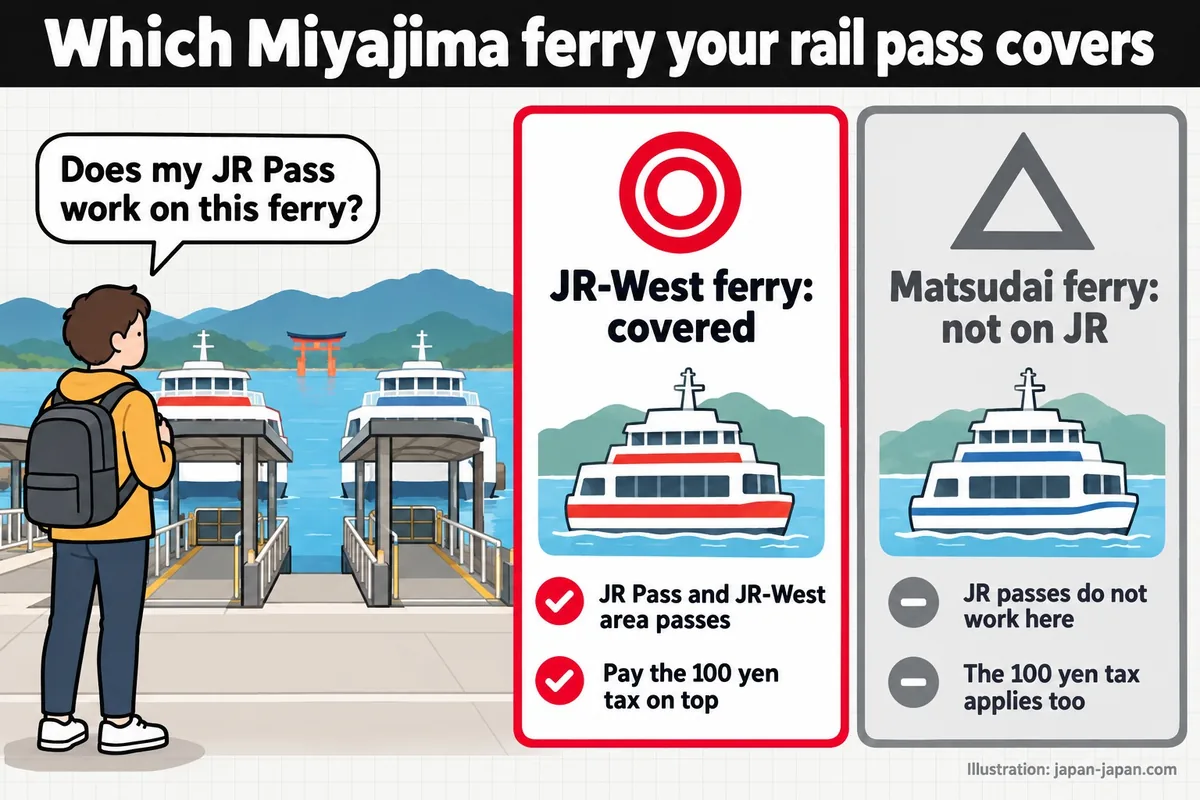
The drawing sums up the line between the two boats. The JR boat takes JR passes, while the Matsudai boat does not. The 100 yen tax sits on top of both. If you have no pass at all, pick the boat that leaves first. The crossing takes about the same time either way.
Which passes cover the ferry
Every JR pass that reaches Hiroshima lists the Miyajima ferry, and each one adds the same limit. The JR-West All Area Pass information page puts it in a footnote: only JR West Miyajima Ferry is valid. The JR-West Kansai-Hiroshima Area Pass page and the JR-West Hiroshima-Yamaguchi Area Pass page carry the same footnote. The table below compares adult prices from our pass database.
| Pass | Miyajima ferry | Adult price | Shinkansen |
|---|---|---|---|
| Japan Rail Pass | JR ferry | 50,000 yen, 7 days | All lines except Nozomi and Mizuho |
| JR-WEST All Area Pass | JR ferry | 26,000 yen, 7 days | Shin-Osaka to Hakata |
| Sanyo-San’in Area Pass | JR ferry | 23,000 yen, 7 days | Shin-Osaka to Hakata |
| Setouchi Area Pass | JR ferry | 22,000 yen, 7 days | Shin-Osaka to Hakata |
| Kansai-Hiroshima Area Pass | JR ferry | 17,000 yen, 5 days | Shin-Osaka to Hiroshima |
| Okayama-Hiroshima-Yamaguchi Area Pass | JR ferry | 17,000 yen, 5 days | Okayama to Hakata |
| Hiroshima-Yamaguchi Area Pass | JR ferry | 15,000 yen, 5 days | Mihara to Hakata |
| Hiroden 1 Day Streetcar and Ferry Pass | Matsudai ferry, tax included | 1,000 yen, 1 day | None |
The nationwide Japan Rail Pass costs 50,000 yen for 7 days in an Ordinary Car on the official website. From 1 October 2026, the same pass costs 53,000 yen from an overseas agency. It covers the Shinkansen except the Nozomi and Mizuho. That matters on the way to Miyajima, because the fastest trains from Osaka and Kyoto are often Nozomi. Ride a Hikari or Sakura instead. Our guide on whether the JR Pass is worth it works through the maths for longer trips.
The JR-WEST All Area Pass costs 26,000 yen for 7 days, or 13,000 yen for a child. It covers reserved and non-reserved seats on the Sanyo Shinkansen between Shin-Osaka and Hakata. It does not cover the Tokaido Shinkansen, including the stretch between Kyoto and Shin-Osaka.
The Kansai-Hiroshima Area Pass is the shorter option. It costs 17,000 yen for 5 days, and children pay 8,500 yen. It covers the Sanyo Shinkansen between Shin-Osaka and Hiroshima. It does not go west of Hiroshima toward Hakata.
If you start in Hiroshima or Fukuoka, look at the Hiroshima-Yamaguchi Area Pass at 15,000 yen for 5 days. Its Shinkansen section runs from Mihara to Hakata. The Okayama-Hiroshima-Yamaguchi Area Pass stretches east to Okayama for 17,000 yen. Wider passes such as the Setouchi Area Pass and the Sanyo-San’in Area Pass also list the JR ferry.
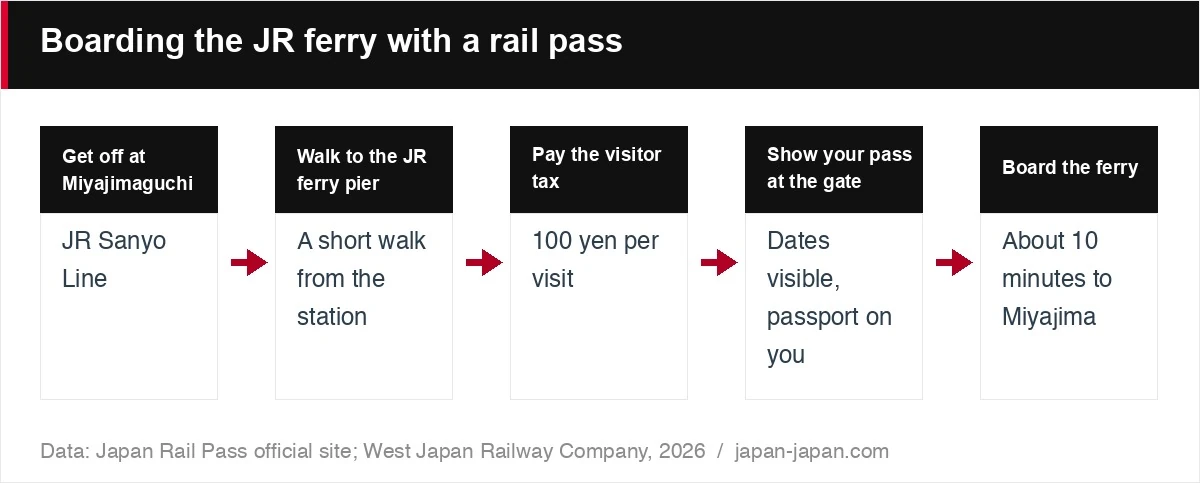
The flow above shows what happens at the pier. The Japan Rail Pass conditions for use page says you can go through the automatic gate or show the pass at a staffed gate. At the staffed gate, hold the pass so the staff can see its dates. Carry your passport too, because staff can ask for it while you use the pass.
Miyajima Visitor Tax: 100 yen per visit
Miyajima charges every visitor 100 yen when they cross to the island. JR-West has noted the tax on its pass pages since October 2023. The All Area Pass page says you pay it when you board the Miyajima Ferry. A rail pass covers the fare and never the tax.
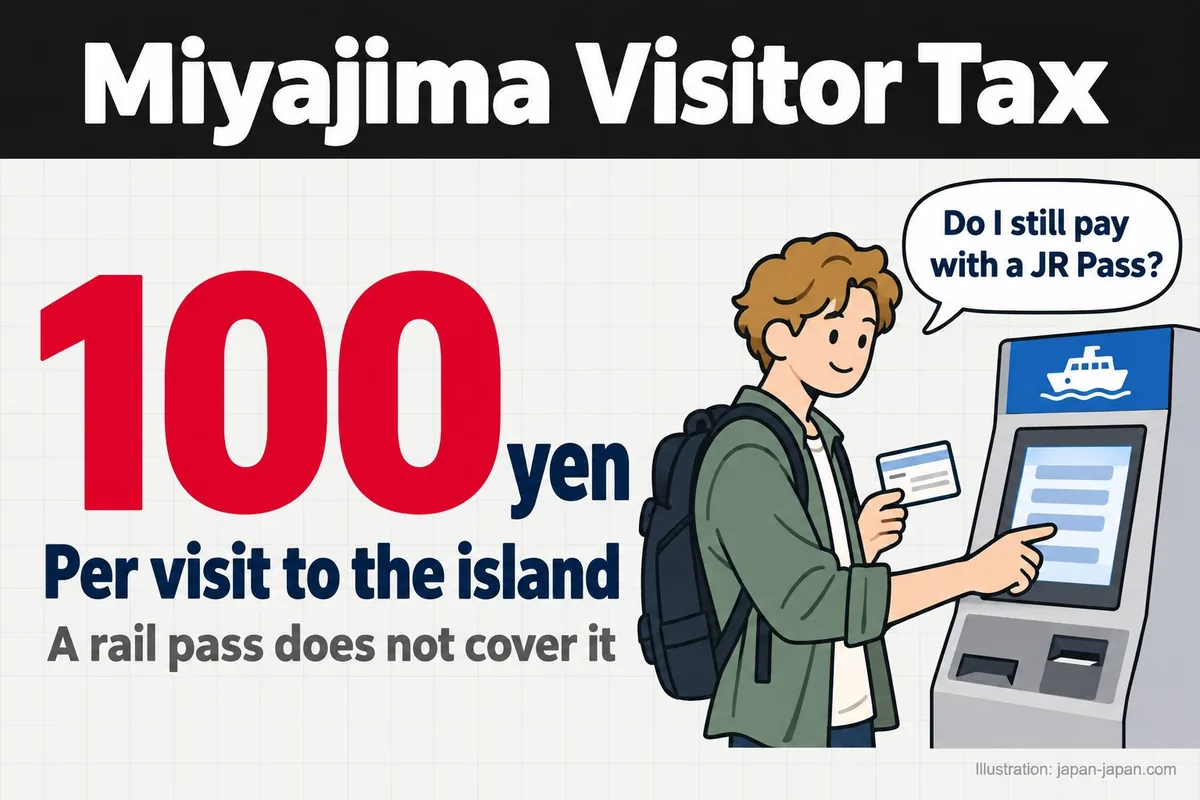
As the drawing shows, the amount is small and fixed. The JNTO guide explains how the island collects it. The tax is included in ferry tickets to the island. It applies both when you buy a ticket at the machine and when you use the automatic ticket gate. The money pays for environmental conservation and the upkeep of historic sites.
With a pass, you pay the tax on its own before you go through the gate. Look for the tax ticket machine on the Miyajimaguchi pier. Pay 100 yen, take the slip, then show your pass. Holders of the Hiroden 1 Day Streetcar and Ferry Pass skip this step on the Matsudai boat. The tax is already in that price.
Some people do not pay the tax. JNTO lists local residents, commuters and young children as exempt. Older children and adults pay the full 100 yen. Each person who is not exempt pays on each trip to the island.
You pay again on every visit. If you go to Miyajima on two separate days, you pay 100 yen twice. Keep a few 100 yen coins ready if you plan to buy the tax ticket with cash.
Getting to Miyajimaguchi pier
Most visitors reach the pier from Hiroshima Station on the JR Sanyo Line. JNTO puts the ride from Hiroshima Station to Miyajimaguchi Station at around 30 minutes. The ferry pier is a short walk from the station. A JR pass covers both the train and the JR ferry.
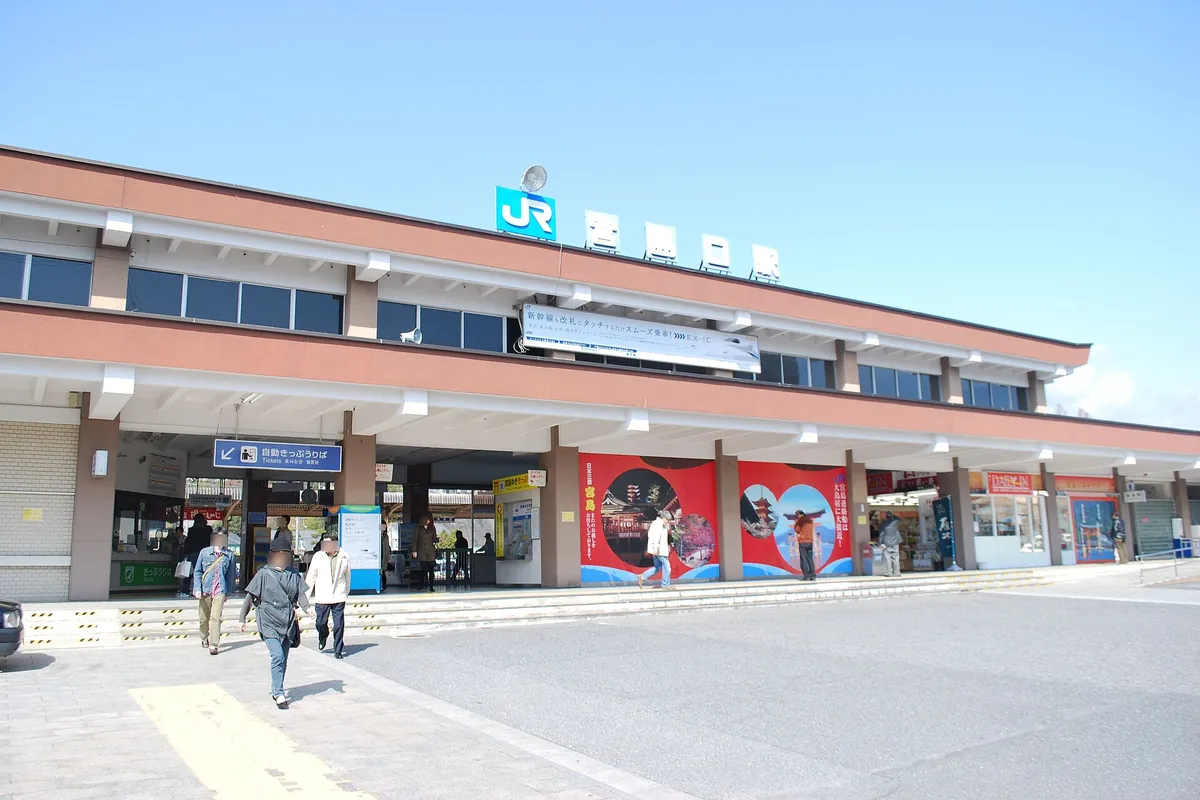
The station in the photo is your stop. Leave the ticket gates and walk toward the water. The JR ferry building sits at the pier, and the sign reads JR西日本宮島フェリー (Jei-āru Nishi-Nihon Miyajima Ferī), meaning JR West Miyajima Ferry. Show that sign to staff or a passer-by if you lose your way.
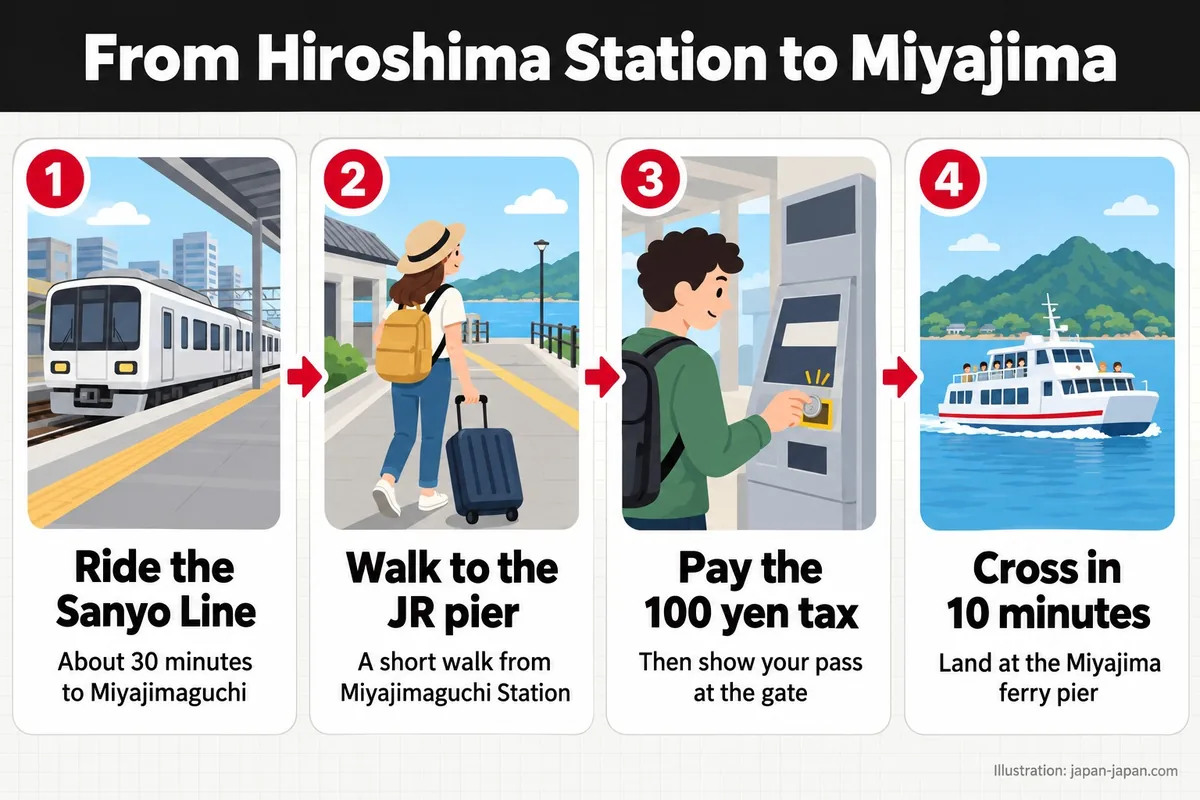
The four steps in the drawing cover the whole trip from Hiroshima Station. Ride the Sanyo Line, walk to the JR pier, pay the 100 yen tax, then cross in about 10 minutes. You land at the Miyajima ferry pier on the island.
You can also ride the Hiroden streetcar. The Visit Hiroshima Tourist Pass covers all Hiroden streetcar lines, including the Miyajima Line. The streetcar is slower than the JR train, but it stops in the city centre.
From Osaka, take the Shinkansen to Hiroshima and change to the Sanyo Line. Our Osaka to Miyajima route lists 1 h 55 min and 11,280 yen from Shin-Osaka Station to Miyajimaguchi on the Nozomi and the Sanyo Line. Add the JR ferry at 10 minutes and 200 yen. That makes 2 h 5 min of riding time and 11,480 yen in all.
From Kyoto, the Kyoto to Miyajima route lists 2 h 10 min and 12,270 yen from Kyoto Station to Miyajimaguchi. With the ferry, the trip takes 2 h 20 min of riding time and costs 12,470 yen. These fares are for regular tickets. With a JR Pass, swap the Nozomi for a Hikari or Sakura.
From Tokyo, ride the Shinkansen to Hiroshima first. Our Tokyo to Hiroshima route gives the time and fare. Then continue on the Sanyo Line to Miyajimaguchi.
If you fly in, Hiroshima Airport has no rail link. The Hiroshima Airport access page lists a bus from the airport to the Shinkansen gate at Hiroshima Station. Our Hiroshima Airport guide puts that bus at 50 minutes and 1,500 yen. From Hiroshima Station, take the Sanyo Line to Miyajimaguchi.
On Miyajima: the torii, the shrine and the walk from the pier
Itsukushima-jinja is the reason most people take the Miyajima ferry. The JNTO guide says the shrine appears to float on the water when the tide is in. It is one of the most photographed places in Japan.
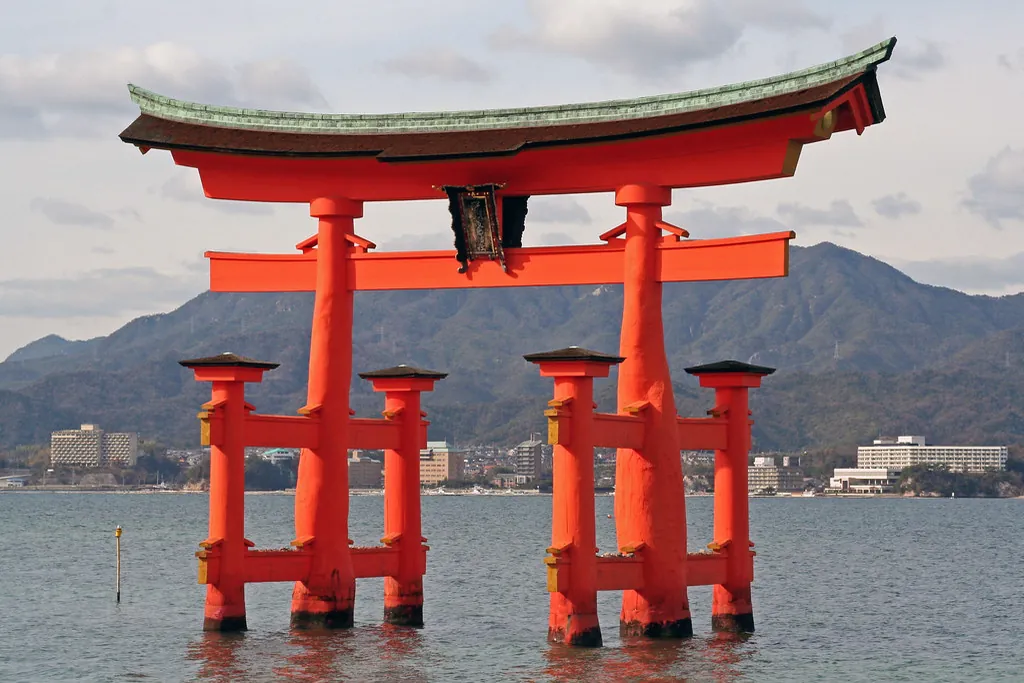
The large red gate in the photo stands offshore in front of the shrine. JNTO explains why. The island was once so sacred that the shrine was kept apart from it, so the entrance gate was also built in the sea. Itsukushima-jinja and the floating gate are UNESCO World Heritage sites.
The tide changes the view. At high tide, the gate and the shrine look like they sit on the sea. At low tide, you can walk out to the large torii gate on foot. Check the tide before you choose your ferry time, and plan your day around the view you want.
The island is small. JNTO gives the population as around 2,000 people, plus deer that roam free. Several other sights sit within walking distance of the shrine:
- Senjokaku: the largest building on the island, its name meaning “hall with 1,000 mats”. The warlord Toyotomi Hideyoshi oversaw the work, and it was still unfinished in 1598.
- Gojunoto: a five-story red pagoda first built in 1407.
- Daiganji Temple: next to the shrine and dedicated to Benzaiten, goddess of music, art and water.
- Daishoin Temple: the oldest temple on Miyajima, ringed by maples that turn red in autumn.
A ropeway takes you up Mt. Misen for views over the island and the bay. If you want to bring something home, Miyajima is famous for wood carving, known as Miyajima bori.
When the ferry is busiest
The Miyajima ferry gets crowded in autumn leaf season and over New Year. In both periods, go early in the day and have your pass and tax money ready before you reach the gate.
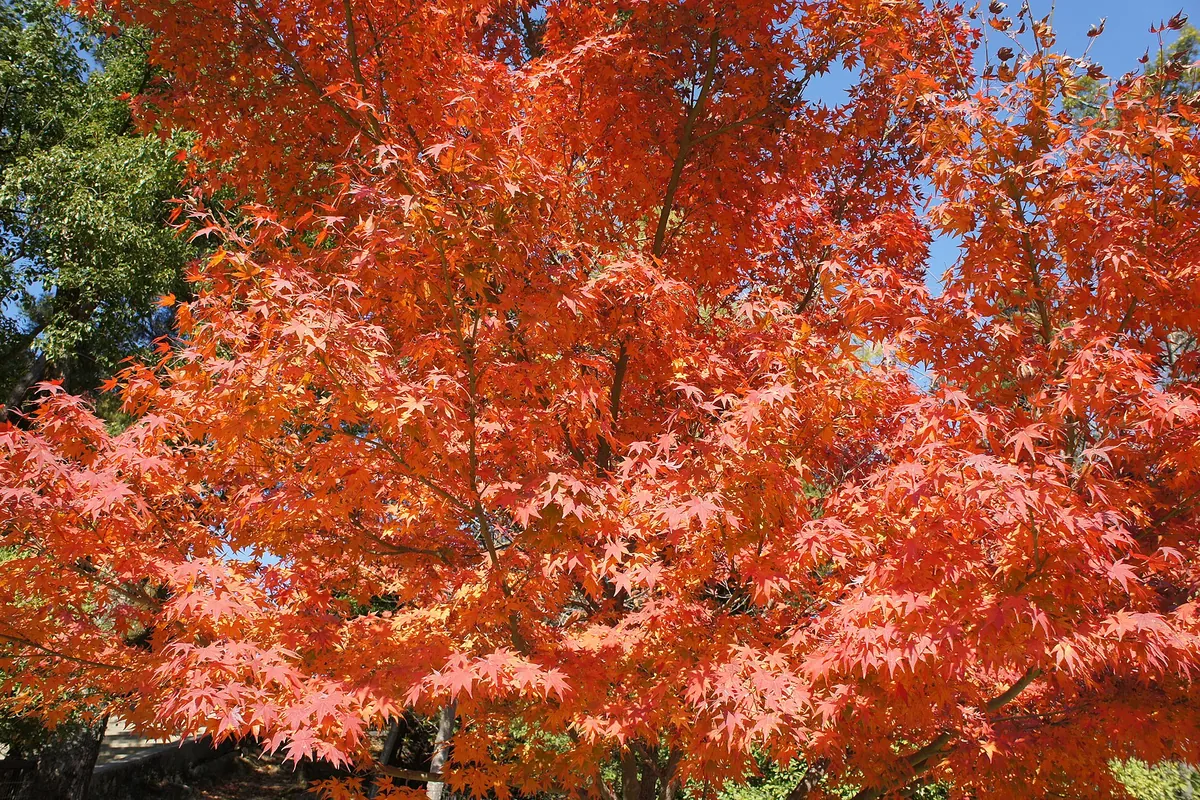
The red maples in the photo draw large crowds to the island each autumn. Our Hiroshima autumn leaves page shows that the sample maple in Hiroshima turns red around 22 November in an average year. Daishoin Temple is one of the best-known spots for autumn colour. Our Hiroshima in November guide lists the events that month, including a fire-walking ritual at Daishoin Temple.
New Year is the other peak. Many people visit shrines for hatsumode, the first prayer of the year. Our New Year 2026-27 page shows that New Year’s Day falls on Friday 1 January 2027. It also shows that every Nozomi runs reserved-only from 25 December 2026 to 5 January 2027. The Hiroshima in January guide lists New Year rites at Itsukushima Shrine.
Festival months bring crowds too. Use our Japan public holidays calendar to spot long weekends, when domestic visitors fill the ferries. If your dates are flexible, a weekday outside these periods gives you the quietest crossing.
Related routes and passes
The chart below sets the riding times on the way to Miyajima side by side. Kyoto to the island takes 140 minutes of riding time and Osaka takes 125 minutes. The local legs are short: 50 minutes by bus from the airport, about 30 minutes by train and 10 minutes by boat.
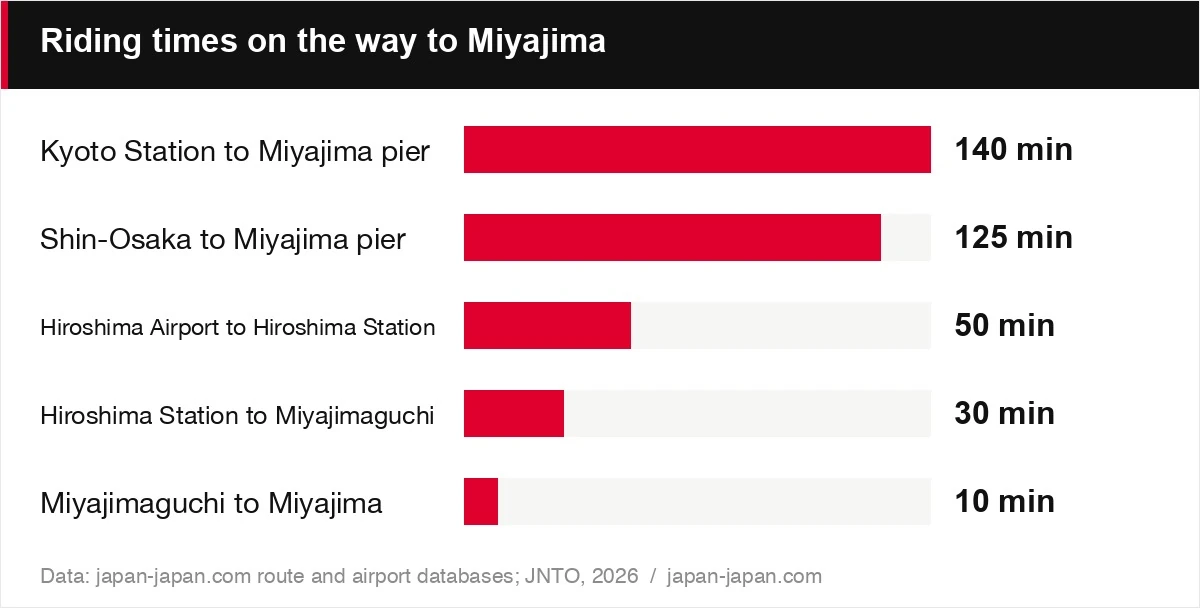
| Item | Value | Note |
|---|---|---|
| Kyoto Station to Miyajima pier | 140 min | Nozomi, Sanyo Line, JR ferry |
| Shin-Osaka to Miyajima pier | 125 min | Nozomi, Sanyo Line, JR ferry |
| Hiroshima Airport to Hiroshima Station | 50 min | Bus |
| Hiroshima Station to Miyajimaguchi | 30 min | JR Sanyo Line, around |
| Miyajimaguchi to Miyajima | 10 min | Ferry, around |
For the trip into Hiroshima, see our routes from Kyoto to Hiroshima and Osaka to Hiroshima. To compare every pass in one place, open our rail passes database. If you bought a Japan Rail Pass exchange order abroad, read how to swap your JR Pass exchange order before you head west.
For short city rides, an IC card is easier than single tickets. Our ICOCA guide explains how to buy JR West’s card. The ICOCA vs Suica comparison covers which card works where.
FAQ
Is the Miyajima ferry free with the JR Pass?
Yes, on the JR-West Miyajima Ferry only. The Japan Rail Pass covers the JR boat between Miyajimaguchi and Miyajima. It does not cover Miyajima Matsudai Kisen. You still pay the 100 yen visitor tax.
Do I have to pay the Miyajima Visitor Tax if I have a JR Pass?
Yes. The tax is 100 yen per visit, and the pass does not cover it. JR-West says you pay it when you board the Miyajima Ferry. Local residents, commuters and young children are exempt.
Can I use ICOCA or Suica on the Miyajima ferry?
JNTO says the 100 yen tax is collected both with machine tickets and through the automatic ticket gate. If you tap an IC card at the gate, the tax is part of what you pay. Our ICOCA guide explains how to get a card.
Which ferry is included in the Hiroden 1 Day Streetcar and Ferry Pass?
The Miyajima Matsudai Kisen ferry. The pass also covers all Hiroden streetcar lines, and its price includes the 100 yen visitor tax. It does not cover the JR ferry or JR trains.
About the author