Awa Odori 2027: 4 Nights, Over 1,000 Dance Groups
The Awa Odori festival goes back about 400 years, says the Tokushima Prefecture Awa Odori (Awa Dance) page. Each group of dancers, called a ren, moves through downtown to a fast two-beat rhythm.
The city closes its main roads for them. The 4 nights fall in the Obon week, so trains, buses and rooms fill early. Fix your dates first, then book your room and your seats.
Awa Odori 2027 dates and the Obon week
Tokushima Prefecture runs the season in a set order. The Naruto City Awa Odori opens it on 9 August every year. Other towns in the prefecture hold their own dances after that.
The busiest and most popular one is the Awa Odori festival in Tokushima City, held from 12 to 15 August every year.
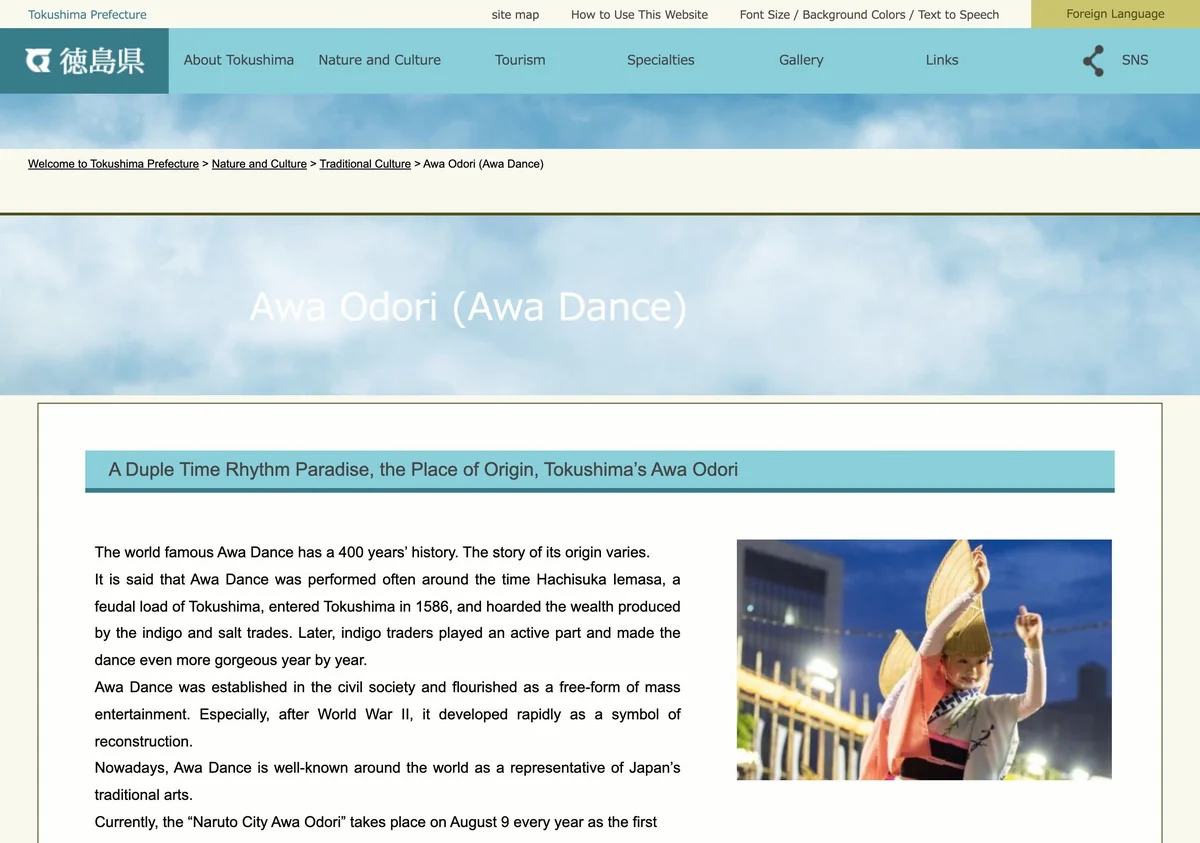
The screenshot above shows the prefecture’s English Awa Odori page. It sets out both festival dates, the three origin stories and a short dictionary of dance words for visitors.
The national calendar shapes the week as much as the festival does. The Cabinet Office national holidays page lists Mountain Day on Wednesday 11 August 2027.
It is the only national holiday in August. The Tokushima nights follow straight after it, from Thursday 12 to Sunday 15 August. Naruto’s opening dance on 9 August 2027 falls on a Monday.
| Date | Day | What happens |
|---|---|---|
| 9 August 2027 | Monday | Naruto City Awa Odori, the first dance of the season |
| 11 August 2027 | Wednesday | Mountain Day, the only national holiday in August |
| 12 August 2027 | Thursday | Tokushima City Awa Odori, night 1 |
| 13 August 2027 | Friday | Tokushima City Awa Odori, night 2 |
| 14 August 2027 | Saturday | Tokushima City Awa Odori, night 3 |
| 15 August 2027 | Sunday | Tokushima City Awa Odori, night 4 |
| 7 to 16 August 2026 | Last year | JR Central’s Obon period, busiest on Sunday 16 August |
The table above lines up the whole week in one place. Read it from the top: Naruto first, then the holiday, then the 4 Tokushima nights.
Obon itself has no public holiday, yet many people in Japan take that week off to visit family. Our guide to Obon in Japan 2027 shows how heavy the trains get.
In 2026 JR Central counted 7 to 16 August as its Obon period. Its busiest day was Sunday 16 August 2026, when the Shinkansen carried 294,000 passengers toward Tokyo.
Expect the same pattern around the festival in 2027. The last Tokushima night, Sunday 15 August, sits near the end of the Obon week, when people travel home.
Plan your trip out of Tokushima with that rush in mind, and reserve train seats early. Our August public holidays page lists Mountain Day for 2026, Tuesday 11 August, as well as for 2027.
You can also see Awa Odori outside Tokushima. The JNTO Awa Odori Festival spot page notes that the dance has spread to other parts of Japan, including Tokyo.
Tokyo’s Koenji Awa Odori is one of the events on our Japan in August page. Tokushima City is still where the dance began and where the biggest festival takes place.
Ren, zomeki and the words you will hear
Learn a few words before you go and the street show starts to make sense. The prefecture keeps a short dictionary for visitors. Here are the terms in the order you meet them on the road.
- Ren: one group of dancers. The famous, long-standing groups are called yumeiren. Other ren are made up of company staff, students and friends. More than 1,000 ren take part in total.
- Takahari chochin: two paper lanterns on a long bamboo pole at the front of each ren. They carry the group’s name and set the pace for the dancers behind them.
- Zomeki: the cheerful two-beat rhythm of the dance. The word also means boisterous, so it describes a dance that is showy and lively.
- Narimono: the band that plays behind the dancers: shamisen, o-daiko (big drum), shime-daiko (small high drum), kane (gong), fue (flute) and tsuzumi (hand drum).
- Yoshikono: the song sung during the dance. Indigo merchants are said to have brought it from Kyoto and Osaka as a late Edo period folk song.
- Torioigasa: the braided hat that female dancers wear. The name means bird-scaring hat, after the hats once worn in rice fields.
- Nagashi: a parade of musicians only. They play through town from morning until noon, with no dancers.
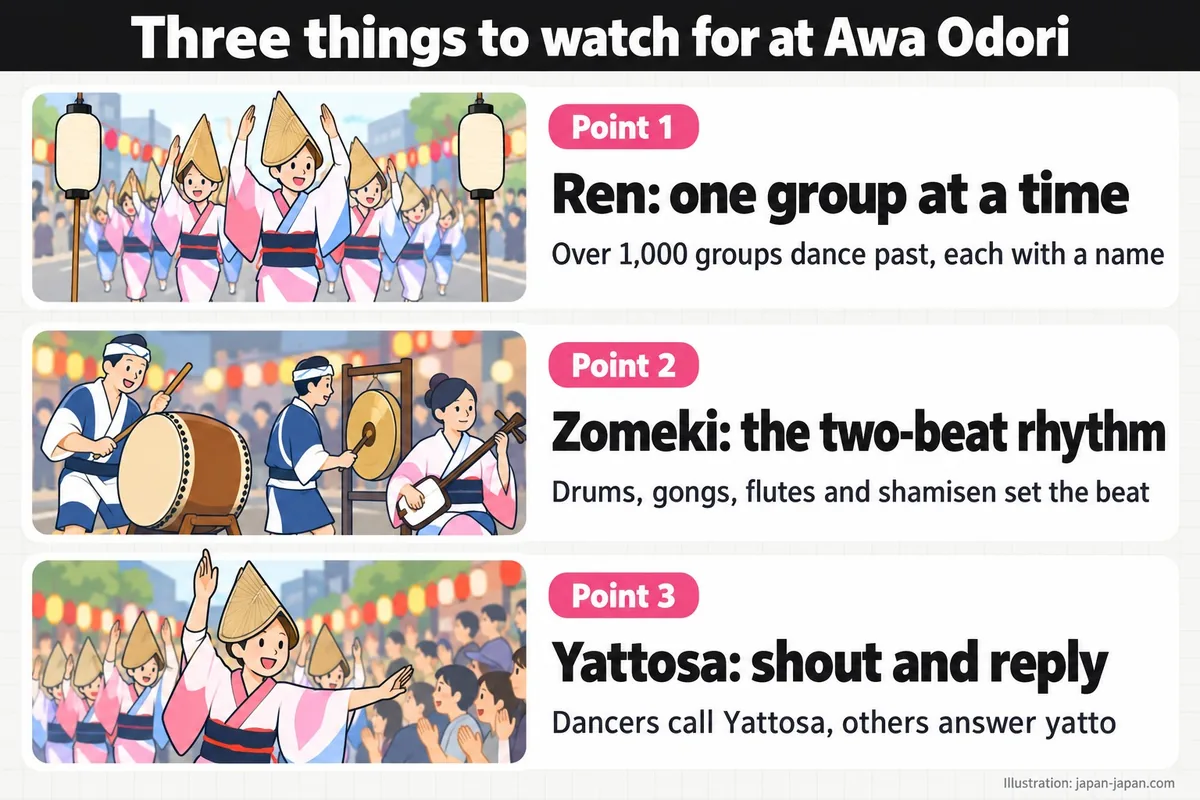
The picture above gives you the three things to watch for from the roadside: the ren arriving one group at a time, the zomeki beat, and the Yattosa shout.
That shout is the easiest part to join. A dancer calls out Yattosa at the start and all through the dance.
The others answer Ah, yatto, yatto. The prefecture translates the exchange as a greeting: it has been a while, how are you?
Nobody agrees on where the dance came from. The prefecture gives three theories.
- Castle construction: local people danced to celebrate when Tokushima Castle, ordered by Hachisuka Iemasa, was finished in 1587.
- Furyu dance: the Miyoshiki record, written in 1663, says Sogo Nagayasu held a furyu dance at Shozui Castle in 1578. Furyu is said to be a root of Noh theatre, and the group style of the ren may come from it.
- Bon dance: Awa Odori takes place in the 7th month of the old lunisolar calendar, the same time as the Bon dance for Obon.
The prefecture also ties the dance to 1586, when Hachisuka Iemasa entered Tokushima as its feudal lord. Indigo and salt brought the area wealth, and indigo traders made the dance grander year by year.
It later grew into a free-form mass entertainment and became a symbol of the city’s rebuilding. JNTO adds that Tokushima City began to promote it as a tourist event in the early Showa period (1926-1989). The dance got its present name at that time.
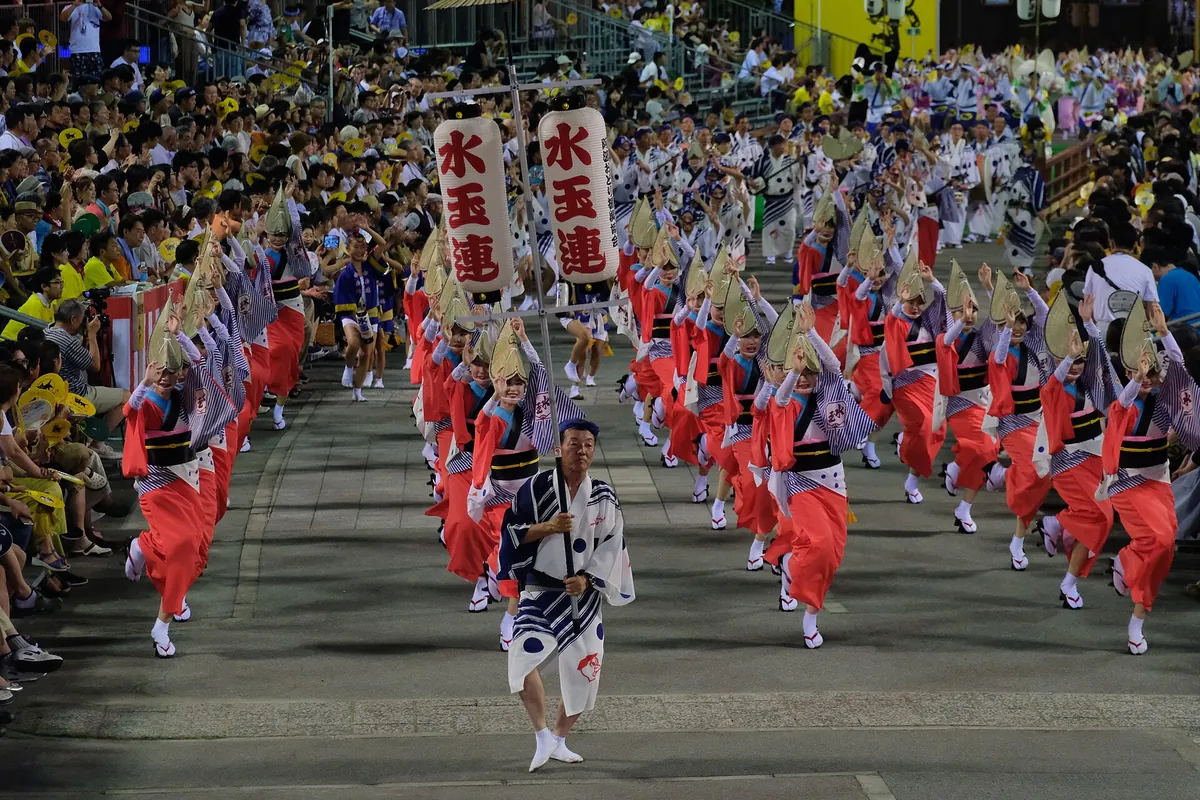
The photo shows a ren on the move. Dancers wear happi coats and yukata, the traditional uniforms of each group, and the women pull their torioigasa hats low over their eyes.
During the 4 nights, the city cordons off its major roads and sets up spectator stands at several points. JNTO counts six stages for dancers. Street food stalls, called yatai, line the river areas, and the whole downtown turns into an outdoor party.
You can dance too. Festival dancers must be registered with a ren. If you are not, join the Niwaka Ren instead.
You need no costume, and a famous dance troupe gives you a short lesson before you start.
Getting to Tokushima by plane, train and bus
The Tokushima Prefecture access to Tokushima page lists three ways in: by air, by rail and by express bus. Pick the one that matches the city you start from.
By plane. Regular flights reach Tokushima from Tokyo and Fukuoka, and seasonal flights come from Sapporo. JNTO points travellers from Tokyo to Haneda Airport.
You land at Tokushima Awaodori Airport, which sits between Tokushima and Naruto. It also has direct flights from Seoul on Eastar Jet three times a week.
The airport has no rail link, so you leave by bus or taxi. The limousine bus reaches Tokushima Station in about 30 minutes for 800 yen. The bus to Naruto Park costs 580 yen.
A taxi to Tokushima Station takes 30 minutes and costs about 5,000 yen. A taxi to Naruto Station takes 15 minutes and costs about 2,800 yen.

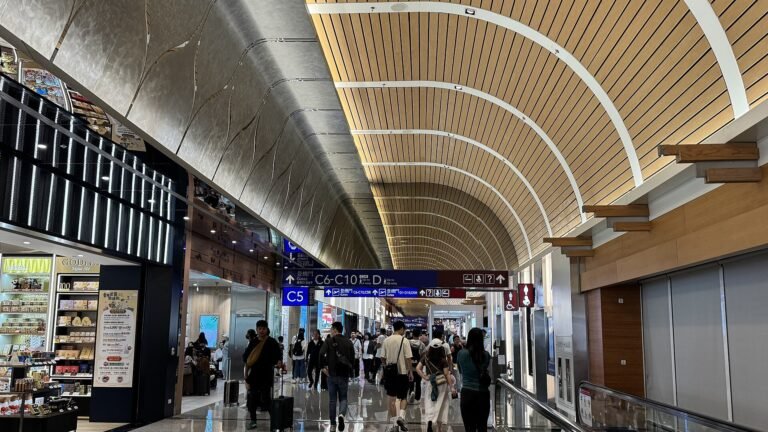
The photo shows the airport terminal, where the bus stop for Tokushima Station sits just outside.
By train. The Limited Express Uzushio runs from Okayama to Tokushima. JNTO gives the full rail route: take the Tokaido-Sanyo Shinkansen to Okayama Station.
Then continue to Tokushima Station on the JR Seto-Ohashi and Kotoku lines. The JR Shikoku English guide for visitors has a time and fare search for picking your train.
By express bus. Many express buses bound for Tokushima leave from Osaka, Kobe and other cities. JR Shikoku Bus and Tokushima Bus run them. JNTO names the service from Osaka Station to Tokushima Station.
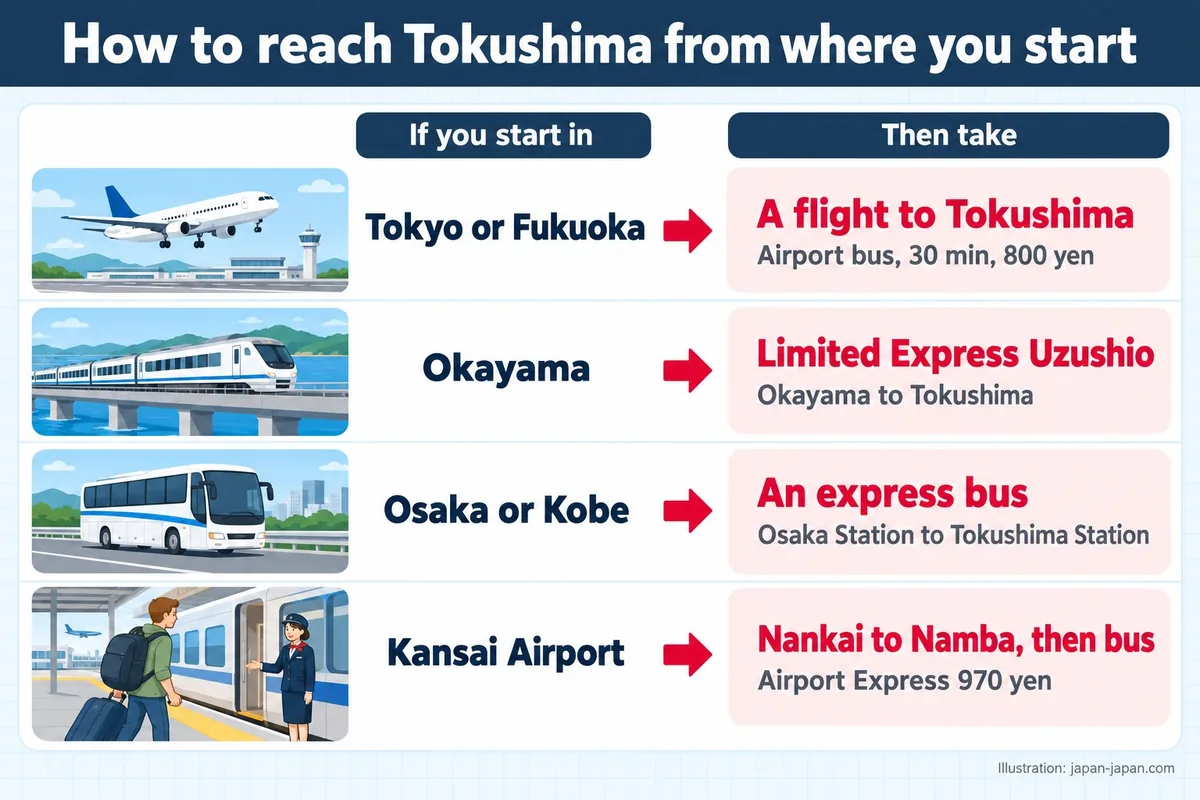
The chart above matches your starting point to the right route. Tokyo and Fukuoka mean a flight, Okayama means the Uzushio, and Osaka or Kobe means a bus.
From Kansai Airport. Many visitors land at Kansai Airport first. From there, Nankai trains run to Namba in central Osaka without a change. Our Kansai Airport to Namba guide gives the times.
The Rapi:t limited express takes 34 to 49 minutes for 1,670 yen. The Airport Express takes 43 to 55 minutes for 970 yen. From central Osaka, switch to an express bus for Tokushima.
Rail passes that cover Tokushima
Four passes in our rail pass database reach Tokushima or the routes into it. The table below compares them by who runs each one and what it covers.
| Pass | Run by | What it covers |
|---|---|---|
| ALL SHIKOKU Rail Pass | JR Shikoku | Non-reserved seats on limited express, rapid and local trains on all JR Shikoku and Tosa Kuroshio Railway lines |
| Japan Rail Pass | JR Group | All JR trains except the Nozomi and Mizuho; 7, 14 or 21 days from 50,000 yen |
| Nankai Tokushima Freepass | Nankai Electric Railway | All Nankai lines, including the Airport Line from Kansai Airport |
| Nankai Rail and Ferry Ticket to Tokushima | Nankai Electric Railway and Nankai Ferry | A one-way Nankai train ride to Wakayamako Station, plus the ferry |
The ALL SHIKOKU Rail Pass is the main pass for visitors who stay on the island. It covers ordinary-class non-reserved seats on limited express, rapid and local trains on all JR Shikoku and Tosa Kuroshio Railway lines. Use it if Tokushima is one stop on a wider trip around Shikoku.
Coming from Okayama or further, look at the Japan Rail Pass. It covers all JR Group trains, including limited express trains, but no seat on the Nozomi and Mizuho Shinkansen.
The pass costs 50,000 yen for 7 days in the Ordinary Car on the official website. Children pay 25,000 yen. You can also buy it for 14 or 21 days.
Two Nankai tickets suit travellers from the Osaka side. The Nankai Tokushima Freepass covers all Nankai Electric Railway lines, including the Airport Line from Kansai Airport.
The Nankai Rail and Ferry Ticket to Tokushima, is sold as Tokushima Sukippu. It pairs a one-way Nankai train ride to Wakayamako Station with the Nankai Ferry.
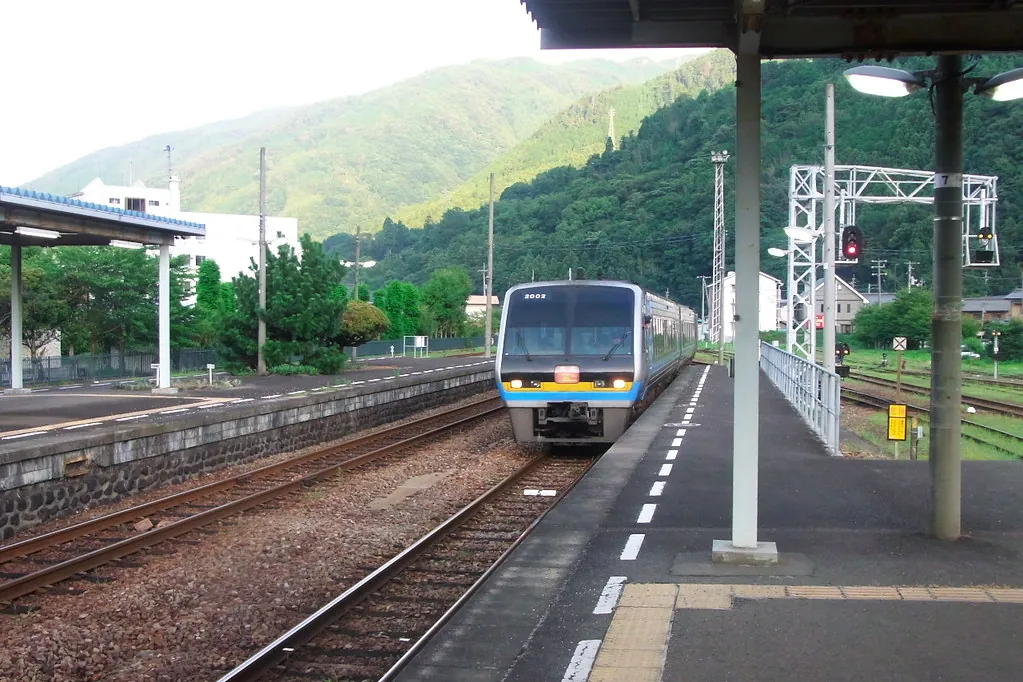
The photo shows JR Tokushima Station, where the Uzushio and the airport bus both end. JR Shikoku has made several changes for passholders. On 2 April 2025 it launched a QR code train ticket service for inbound travellers.
On 6 August 2026 it announced wider QR code boarding for the ALL SHIKOKU Rail Pass and revised pass benefits. JR Shikoku Tours moved its Tokushima branch to Tokushima Station Clement Plaza on 19 February 2026.
Booking a room for the festival nights
Well over one million people come to Tokushima City for the 4 nights. They arrive in the busiest travel week of the summer.
Rooms in the city go first. Book your bed as soon as you fix your dates, then reserve your train seats.
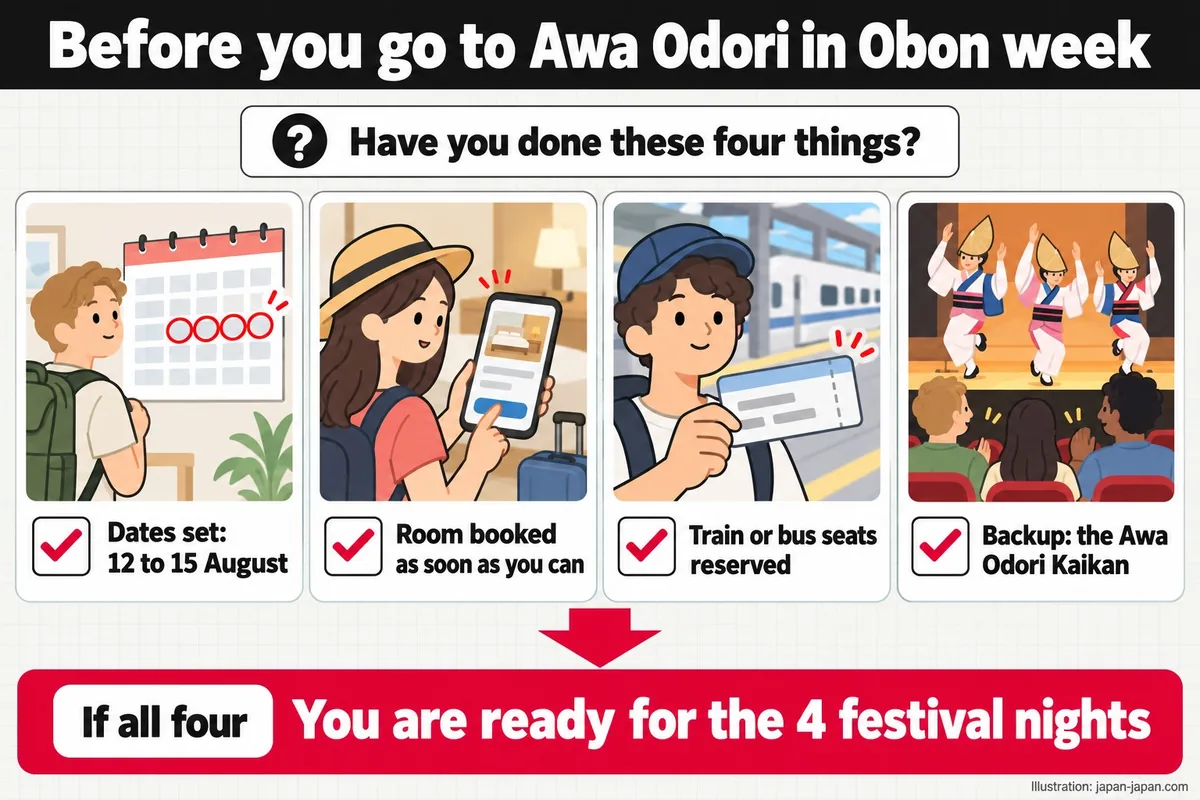
The checklist above sets the order: confirm 12 to 15 August, book the room, reserve seats, and keep the Awa Odori Kaikan as a backup.
If Tokushima City is full, widen the map. Naruto sits on the other side of the airport, 15 minutes by taxi from the terminal to Naruto Station. Okayama is on the Uzushio line, so you can stay there and ride into Tokushima for the evening.
Osaka and Kobe both have express buses to Tokushima. Choose a base where the return trip fits your night, and book the return seat with the outbound one.
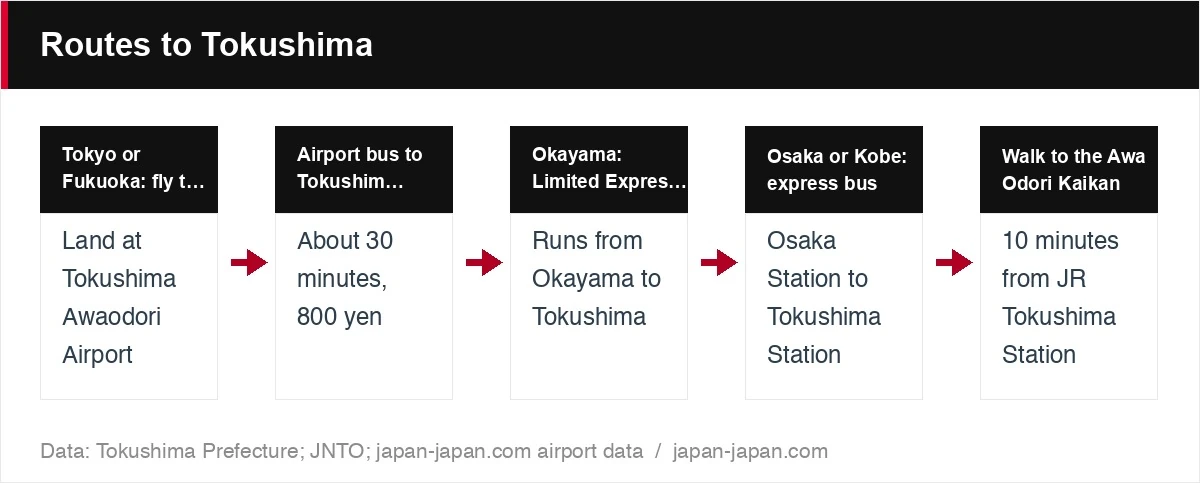
The flow above traces each route from the start city to Tokushima Station and on to the Awa Odori Kaikan. Every route ends at the same station, so you can plan your evening from there.
Your bags need a plan too. Tokushima Awaodori Airport has coin lockers in 4 sizes, from 300 yen a day.
Its hands-free sightseeing service sends bags on from the 1F information desk, open 08:30 to 11:45. Drop your suitcase on arrival and walk the festival streets with a small bag.
Eat before the dancing starts, because the yatai lines grow long after dark. Tokushima has its own noodle style. Our Tokushima ramen guide covers its rich soy-flavoured pork-bone broth.
Awa Odori Kaikan: the dance outside August
Cannot make 12 to 15 August? The Awa Odori Kaikan shows the dance all year. The Tokushima Prefecture Awa Odori Kaikan page gives the address as 2-20 Shinmachibashi, Tokushima City.
It is a 10-minute walk from JR Tokushima Station. By car, it is about 15 minutes from Tokushima Interchange.
If you take a taxi, show the driver this name: 阿波おどり会館 (Awa Odori Kaikan), meaning Awa Odori Hall.
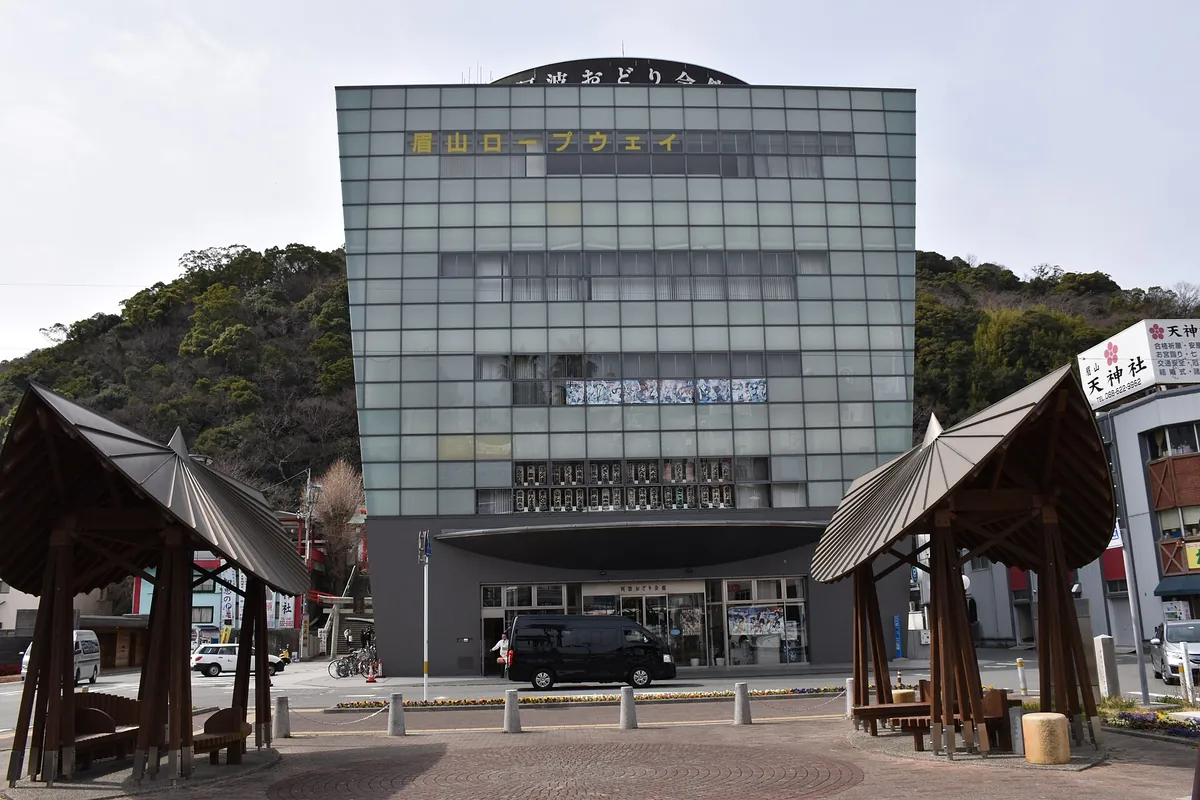
The photo shows the hall, the home stage for Awa no Kaze, a group that performs only at the Kaikan. You watch their show and then dance with them afterwards.
The JNTO Awa Odori Kaikan spot page describes the daily pattern. A local group performs daytime shows, and a different famous troupe takes the stage every night.
At the end, the dancers invite visitors to try the easy moves with them. An old Tokushima saying fits the moment: the dancing fool and the watching fool are both fools, so why not dance?
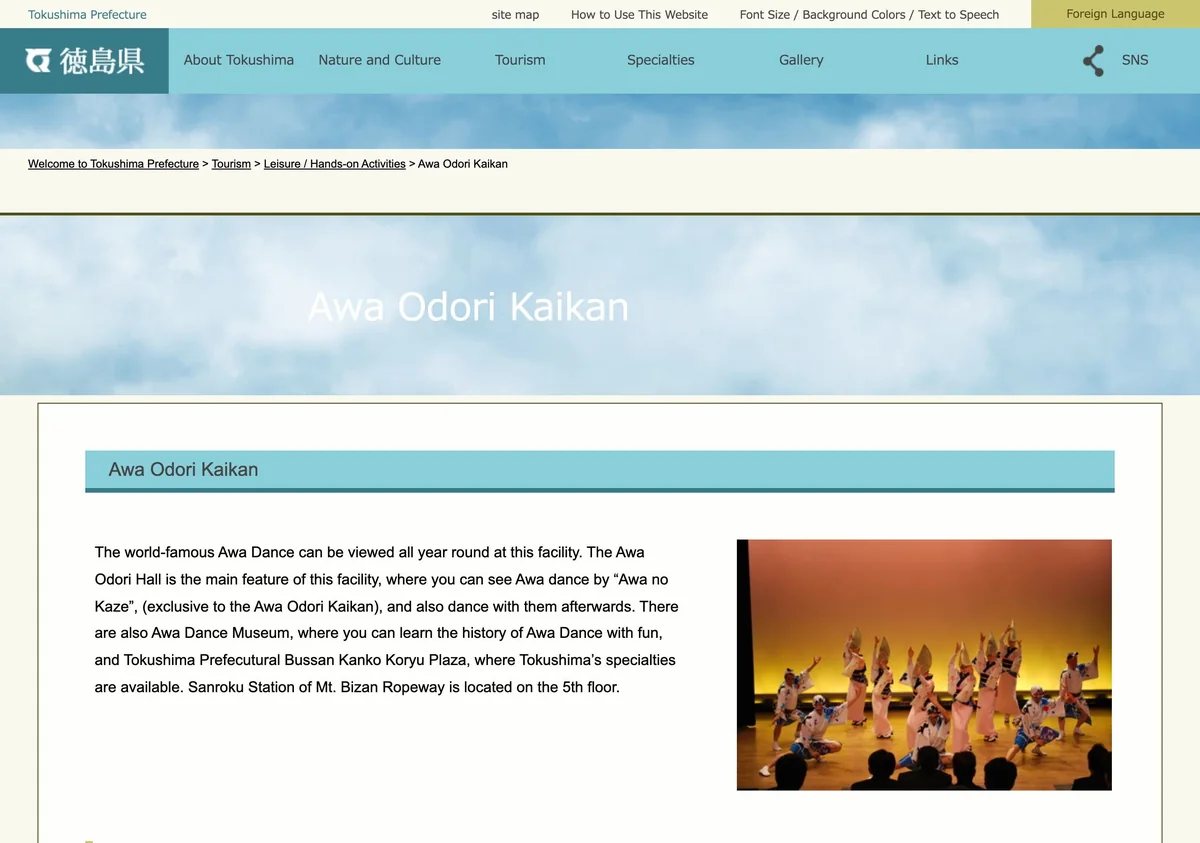
The screenshot above is the prefecture’s English page for the hall, with the address and the walking time from the station.
The building holds more than the stage. The Awa Dance Museum tells the history of the dance with photos and videos. The Tokushima Prefectural Bussan Kanko Koryu Plaza sells local products.
On the 5th floor, the Bizan Ropeway runs up Mt. Bizan for views over the city by day or night. Afterwards, walk the nearby Shinmachi streets for shops, cafes and bars, or follow the river path.
FAQ
When is Awa Odori in 2027?
The Tokushima City Awa Odori runs from 12 to 15 August 2027, Thursday to Sunday. The Naruto City Awa Odori comes first, on Monday 9 August. Mountain Day, Wednesday 11 August, is the national holiday right before the first night.
Is Awa Odori free to watch?
The dance moves along major roads that the city closes for the festival, so you can stand along the route. Spectator stands go up at several points for a seated view. Outside August, the Awa Odori Kaikan holds shows indoors every day.
Can tourists join the Awa Odori dance?
Yes. Festival dancers must belong to a registered ren, but visitors can join the Niwaka Ren. You need no costume, and a famous troupe gives a lesson first. At the Awa Odori Kaikan, the dancers also invite the audience to join them after each show.
How do you get from Osaka to Tokushima for Awa Odori?
Take an express bus. Many buses bound for Tokushima leave from Osaka and Kobe, and JNTO names the service from Osaka Station to Tokushima Station. By rail, go to Okayama by Shinkansen and change to the Limited Express Uzushio. Nankai also sells a rail and ferry ticket to Tokushima.
About the author