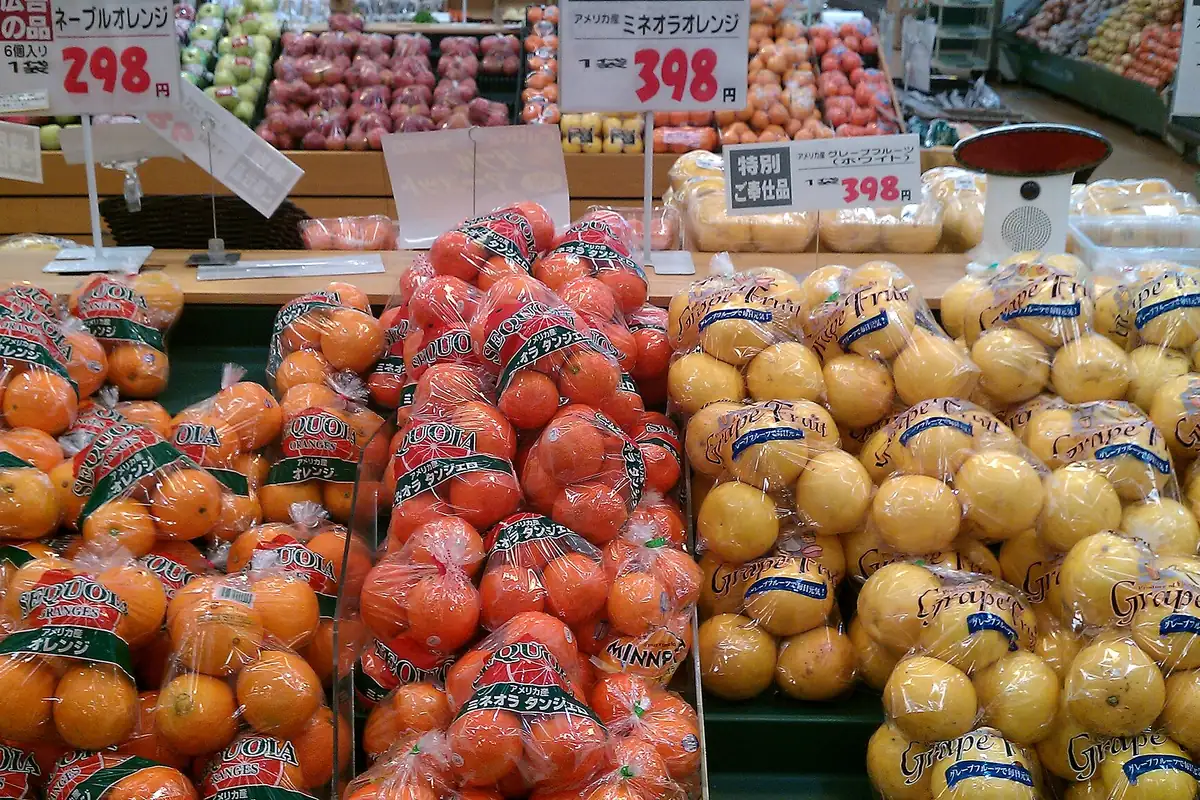

It is prohibited to bring most fresh fruit into Japan. Mangoes, longans, guavas, lychees, citrus fruits, pears and apples are named.
Checked against the official page on · Report a correction
Fruit that is not prohibited still needs a phytosanitary certificate issued by the exporting country's government and an import inspection before customs.
Fresh fruit at the Japanese border
This is decided when you land in Japan, by the quarantine services. Airport security at your departure airport is a separate check.
It is prohibited to bring most fresh fruit into Japan. Mangoes, longans, guavas, lychees, citrus fruits, pears and apples are named. Fruit that is not prohibited still needs a phytosanitary certificate issued by the exporting country's government and an import inspection before customs.
- Named as not allowed
- mangoes, longans, guavas, lychees, citrus fruits, pears, apples
- Allowed from Southeast Asia with a certificate
- pineapple, coconut and durian are given as examples
- Paperwork
- phytosanitary certificate issued by a government agency of the exporting country
- Duty-free shop purchases
- still need import inspection
- Penalty
- imprisonment of up to three years or a fine of up to 3 million yen (up to 50 million yen for business entities)
Declaring fresh fruit when you arrive
Take any fruit and its phytosanitary certificate to the Plant Quarantine Counter and complete the inspection before going through customs.
If you bring fresh fruit into Japan without declaring
Illegally bringing in fruits can result in imprisonment of up to three years or a fine of up to 3 million yen (up to 50 million yen for business entities). The police are notified in malicious cases.
Why Japan checks fresh fruit
Plant quarantine exists to keep out fruit flies and other pests that would damage Japanese agriculture, and fruit can carry them.
Frequently asked questions
Can I bring fruit to Japan?
It is prohibited to bring most fresh fruit into Japan. Mangoes, longans, guavas, lychees, citrus fruits, pears and apples are named. Fruit that is not prohibited still needs a phytosanitary certificate issued by the exporting country's government and an import inspection before customs.
Which fruits are named as not allowed?
Mangoes, longans, guavas, lychees, citrus fruits, pears and apples are given as examples of fruit that cannot be brought in.
Are any fruits allowed?
Some are. The Plant Protection Station says pineapple, coconut and durian can be brought from Southeast Asia, but they still need a phytosanitary certificate from the exporting country's government and an import inspection before the customs inspection.
Does fruit bought at a duty-free shop need inspection?
Yes. Import inspections are required for all plants, even plants purchased at duty-free shops.
Read more
- Japan Packing List for Winter: What to Wear and Carry OnJapan packing list for winter: layers for Tokyo (1.2°C lows), boots for Sapporo (-6.4°C…
- What Can You Not Bring Into Japan? 2026 Customs Banned ListMeat, most fresh fruit, amphetamine medicines and fake brand goods are stopped at Japan…
- Osechi 2027: Boxes From 6,480 Yen, Order by 22 DecemberOsechi is Japan's boxed New Year meal, eaten 1 to 3 January. 2027 department store boxe…
- Nishiki Market vs Kuromon vs Tsukiji: Hours and Eating RulesNishiki Market asks you to eat at the shop, Kuromon welcomes eating as you stroll, and …