Why Is There a Matcha Shortage? 6 of 15 Tea Brands Limit It
We checked the official online shops of 15 Japanese tea brands on 17 and 18 October 2026. We also read the October 2026 tea situation report from Japan’s Ministry of Agriculture, Forestry and Fisheries (MAFF) and a special report on green tea exports from Osaka Customs.
4 of the 6 brands with limits give a number or a clear rule. Ippodo limits how much matcha each customer can buy but gives no number. Hoshino Seichaen has stopped selling some matcha online because supply is short. Morihan says it sets no quantity limit, although items can sell out.
We saw no limit on the online shops of the other 8 brands: Fukujuen, Gion Tsujiri, Itohkyuemon, Jugetsudo, Nakamura Tokichi, Nanaya, THE MATCHA TOKYO and Tsuen. Our matcha shop database lists the rule for every brand next to its shops and prices.
MAFF says tencha output rose to 6,278 t in 2025, about 3.2 times the 2014 level, in response to higher demand.
What the official numbers show: tencha output and crude-tea prices
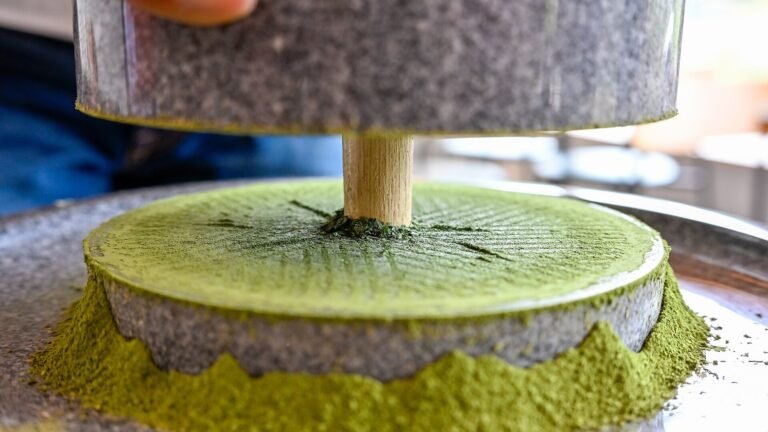
Tencha is the shaded tea leaf that factories grind into matcha. MAFF’s tea situation report tracks how much of it Japan makes and what it sells for. MAFF says tencha output has been rising in response to higher demand.
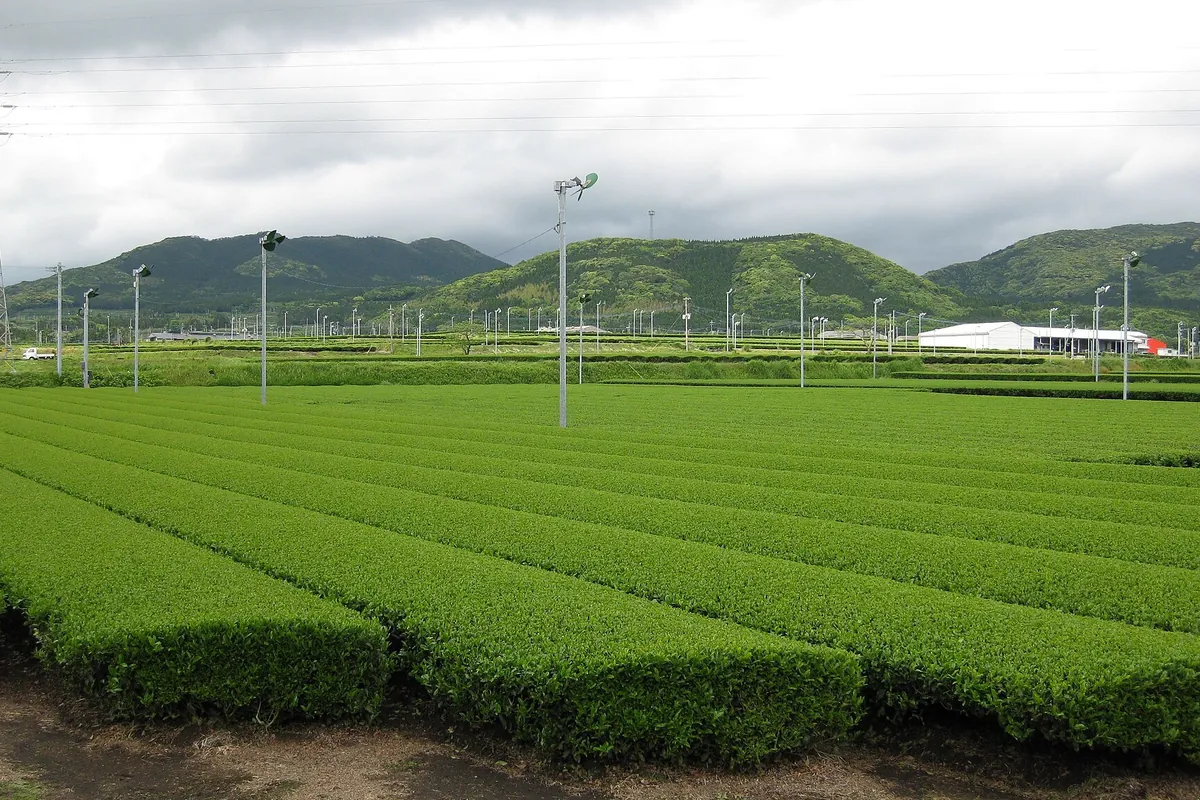
MAFF names Kagoshima, Kyoto and Shizuoka as the main tencha areas. Kagoshima made 30,000 t of crude tea and ranks No. 1 for tencha. Kyoto ranks No. 2 for both gyokuro and tencha.
The table below puts MAFF’s main output and price figures in one place. Crude tea is the dried leaf that farmers sell before final processing, so its price shows what tea makers pay.
| Figure | Value | Source |
|---|---|---|
| Tencha output, 2025 | 6,278 t | MAFF |
| Tencha output vs 2014 | About 3.2 times | MAFF |
| Tencha crude-tea price, 2025 | 8,562 yen/kg | MAFF |
| Sencha crude-tea price, 2025 | 1,746 yen/kg | MAFF |
| Tencha vs sencha price | About 4.9 times | MAFF |
| First-flush tencha, 2025 | 10,030 yen/kg | MAFF |
| 2026 first flush | About twice in Kagoshima, about 70% higher in Shizuoka | MAFF |
In 2025 tencha averaged 8,562 yen/kg across all seasons. Sencha, the everyday green tea, averaged 1,746 yen/kg. MAFF puts the gap at about 4.9 times. First-flush tencha, picked in spring, fetched 10,030 yen/kg.
The 2026 first flush cost even more. MAFF says first-flush tea traded at about twice the previous year’s price in Kagoshima and about 70% higher in Shizuoka. Those are prices for tea in general, not only for tencha.
Matcha exports: powdered green tea leaves Japan
Japan’s green tea exports reached a record 72.1 billion yen in 2025, MAFF says. Of the 12,612 t exported that year, 8,718 t was powdered tea, worth 60,384 million yen.
Powdered tea made up about 70% of export volume and about 80% of export value. It sold abroad at 6,927 yen/kg, against 3,007 yen/kg for other green tea. MAFF says the United States takes about 30% of Japan’s green tea export volume.
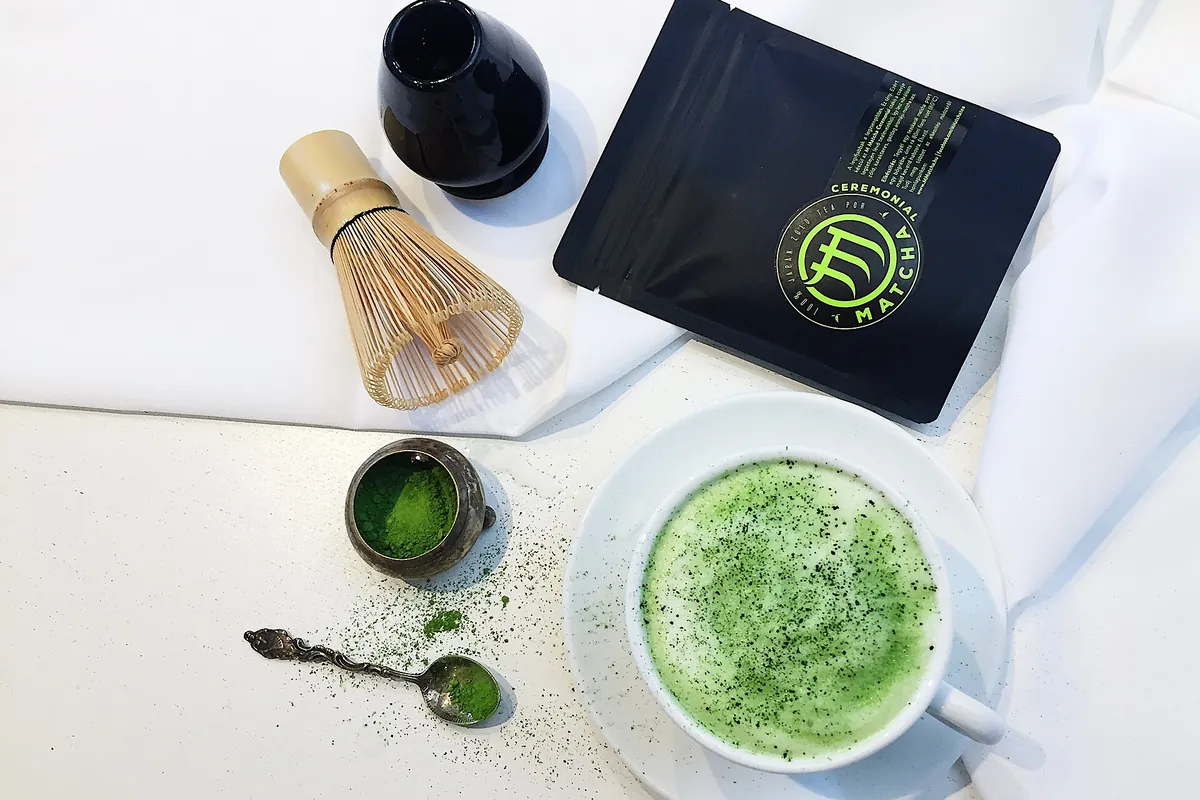
MAFF says exports reached 67.4 billion yen from January to August 2026, ahead of the previous year’s pace.
Osaka Customs published its special report on green tea exports on 17 December 2025. It notes that the trade item “powdered green tea”, added in 2019, includes matcha. The report calls matcha a boom overseas.
In 2019 Japan exported 2,200 t of powdered green tea. From January to October 2025 it shipped 6,889 t. That was 172.3% of the same period a year earlier and 68.3% of all green tea exports by volume.
Prices rose as well. Powdered green tea from the Kinki region, which includes Kyoto and Osaka, was exported at 4,255 yen/kg in 2019. In January to October 2025 it went out at 7,515 yen/kg.
According to the industry, most powdered green tea leaving the Kinki region is matcha. Much of it goes into matcha lattes. The MAFF and Osaka Customs figures cover different items and periods, so read each set on its own.
Why matcha is so expensive in 2026
Osaka Customs reports that matcha prices have soared. It lists the reasons the tea industry gave:
- New buds did not grow well in the hot, dry summer of 2024.
- Demand for matcha rose sharply in Japan and abroad, and stocks ran short.
- Matcha posts became a talking point on social media abroad, and matcha became very popular, especially with young people.
- Visitors to Japan buy matcha too, so sales inside Japan are also growing.
MAFF gives a wider background. It says demand for powdered tea, including matcha, grew alongside health consciousness and interest in Japanese food.
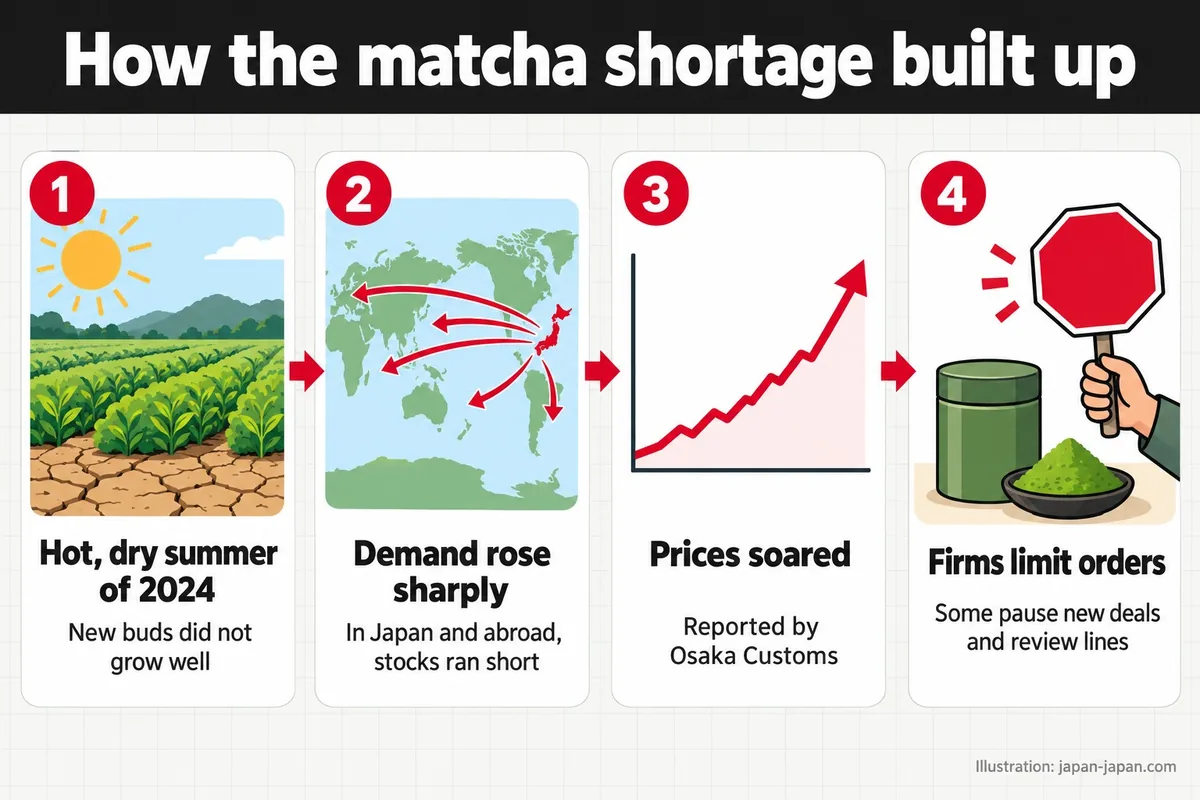
The illustration traces that chain from the 2024 summer to the order limits you see today. Tea companies have responded in three ways, Osaka Customs says. They have paused new business deals for a time, limited order quantities and reviewed their product lines.
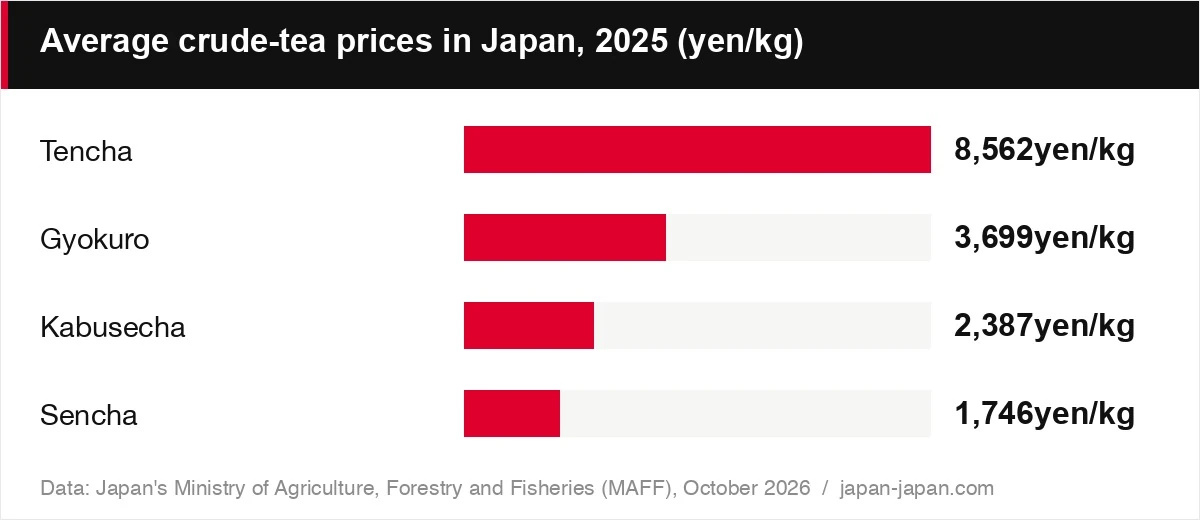
The bar chart below compares the 2025 crude-tea prices of four leaf types from the MAFF report.
| Item | Value |
|---|---|
| Tencha | 8562 yen/kg |
| Gyokuro | 3699 yen/kg |
| Kabusecha | 2387 yen/kg |
| Sencha | 1746 yen/kg |
Tencha averaged 8,562 yen/kg in 2025. Gyokuro averaged 3,699 yen/kg, kabusecha 2,387 yen/kg and sencha 1,746 yen/kg. Tencha is the most expensive leaf by a wide margin.
Shop prices show the same pressure. The Ippodo Tea October and November 2026 price revision notice lists new prices from 1 October 2026. Hatsu-mukashi (初昔), 20 g, went from 648 yen to 864 yen. Kanza (閑坐), 20 g, went from 10,800 yen to 16,200 yen.
Both Ippodo prices include tax. Japan’s consumption tax on food, tea included, is 8%. Our Ippodo Tea page lists its other matcha and its shops in Kyoto and Tokyo.
For today’s prices across all 15 brands, read our guide to how much matcha costs in Japan. It found a median of 125.1 yen per gram across 124 matcha.
Which shops in Japan limit matcha purchases
Six brands limit matcha orders in their online shops. On their notices you will see the words 購入制限 (konyu seigen), which means “purchase limit”.
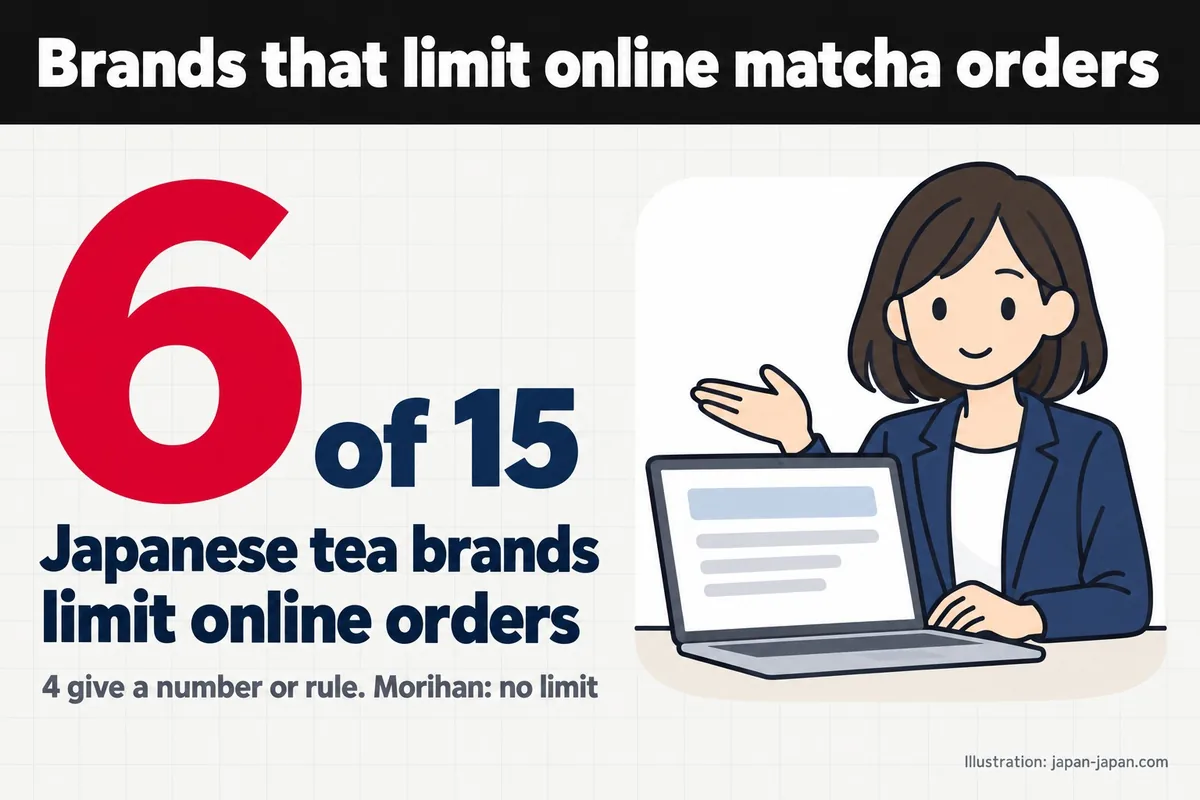
The figure shows the count: 6 of the 15 brands, of which 4 give a number or a rule. The table below sets out each rule as the brand states it, with Morihan added for contrast.
| Brand | Limit | Since |
|---|---|---|
| Marukyu Koyamaen | One matcha order a month per delivery address, up to 5 items | Irregular sales since August 2025 |
| Kanbayashi Shunsho | Matcha ships once a day per customer | Notice of 23 April 2026 |
| Horii Shichimeien | Up to 7 matcha items per order | Sales resumed 24 September 2026 |
| Saijoen | 1 item per checkout for 3 matcha, 5 items for 2, no per-checkout limit for 10 | 8 July 2026 |
| Ippodo | Limits per customer, no number given | Notice of 1 August 2025 |
| Hoshino Seichaen | Some matcha no longer sold online | Notice of 6 January 2025 |
| Morihan | No limit (items may sell out) | Shop terms |
The Marukyu Koyamaen official online shop matcha catalogue says matcha is in short supply after a sharp rise in demand. All matcha products sell on an irregular schedule. The shop allows one matcha order a month per delivery address, up to 5 items in total.
Marukyu Koyamaen also does not ship matcha to hotels, forwarding companies or logistics warehouses. Our Marukyu Koyamaen page has its two shops in Uji and Kyoto city.
The Kanbayashi Shunsho official online shop notice of 23 April 2026 limits matcha to one shipment a day per customer. If a month’s purchases look larger than personal use, the shop may not ship them. Orders sent to a hotel get one shipment per customer.
The Horii Shichimeien online matcha sales resumption notice caps orders at 7 matcha items in total. Each product also has its own limit. The shop cancels what it judges to be multiple orders from one customer, without notice and without a refund.
The Saijoen online shop order policy notice took effect on 8 July 2026. Three matcha are limited to 1 item per checkout and two to 5 items. Ten have no per-checkout limit, up to the stock set for each. Made-to-order matcha can take up to two weeks to ship.
The Ippodo Tea notice on matcha purchase limits, dated 1 August 2025, says some buyers tried to buy up matcha and resell it. Ippodo now limits how much matcha it sells to each customer but gives no number. Since February 2026 it has also limited bancha teas such as hojicha and genmaicha.
Hoshino Seichaen, in Yame, Fukuoka, stopped selling some matcha brands online because of short supply, in a notice of 6 January 2025. It ships only within Japan and refuses orders through forwarding services.
The Morihan official online shop terms set no sales quantity. Items can still go out of stock, shown as 品切れ (shinagire), depending on production.
All six limits apply to online orders. Only Marukyu Koyamaen says a shop also limits matcha: its Makishima factory shop does, because of high demand. The other brands’ store pages show no limits for shoppers in person. Store hours and nearest stations are in our matcha shop listings.
Can you still buy matcha in Japan?
Yes, at some brands on some days. Stock depends on the brand and changes from day to day. Here is what the official shops showed on 17 October 2026.
- Hoshino Seichaen: All 12 matcha items in the Hoshino Seichaen official online shop matcha list were marked SOLD OUT.
- Horii Shichimeien: The 30 g Uji-mukashi was sold out. Online sales had resumed on 24 September 2026 at 14:00, after a notice of 3 September. Delivery can take about one month.
- Tsuen: The matcha list showed 10 items in stock and none sold out.
- Marukyu Koyamaen: All matcha sells on an irregular schedule, which the shop restarted in August 2025.
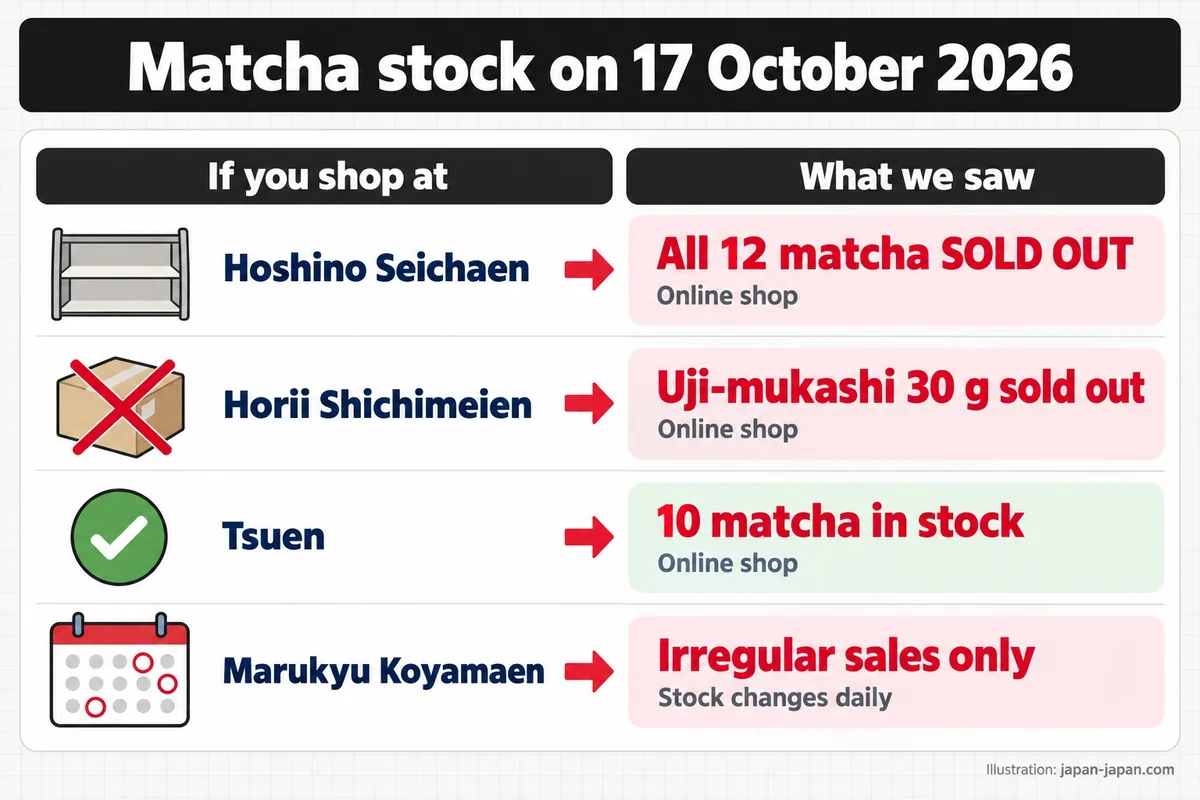
The lookup chart sums up those four checks. Horii’s notice also warns that it may end sales once items sell out, which Japanese shops write as 完売 (kanbai).
The prices in this article come from the brands’ official online shops. Prices in physical shops can differ, so check the price tag at the counter before you pay.
If you take matcha powder home on a plane, our page on powders on planes covers the security check.
Japan changes its tax-free shopping rules from 1 November 2026. Our tax-free shopping guide covers the rules.
Price notices from 15 brands, 2025 to 2026
6 of the 15 brands posted price revision notices dated 2025 or 2026. Here they are by brand, with the dates each notice gives.
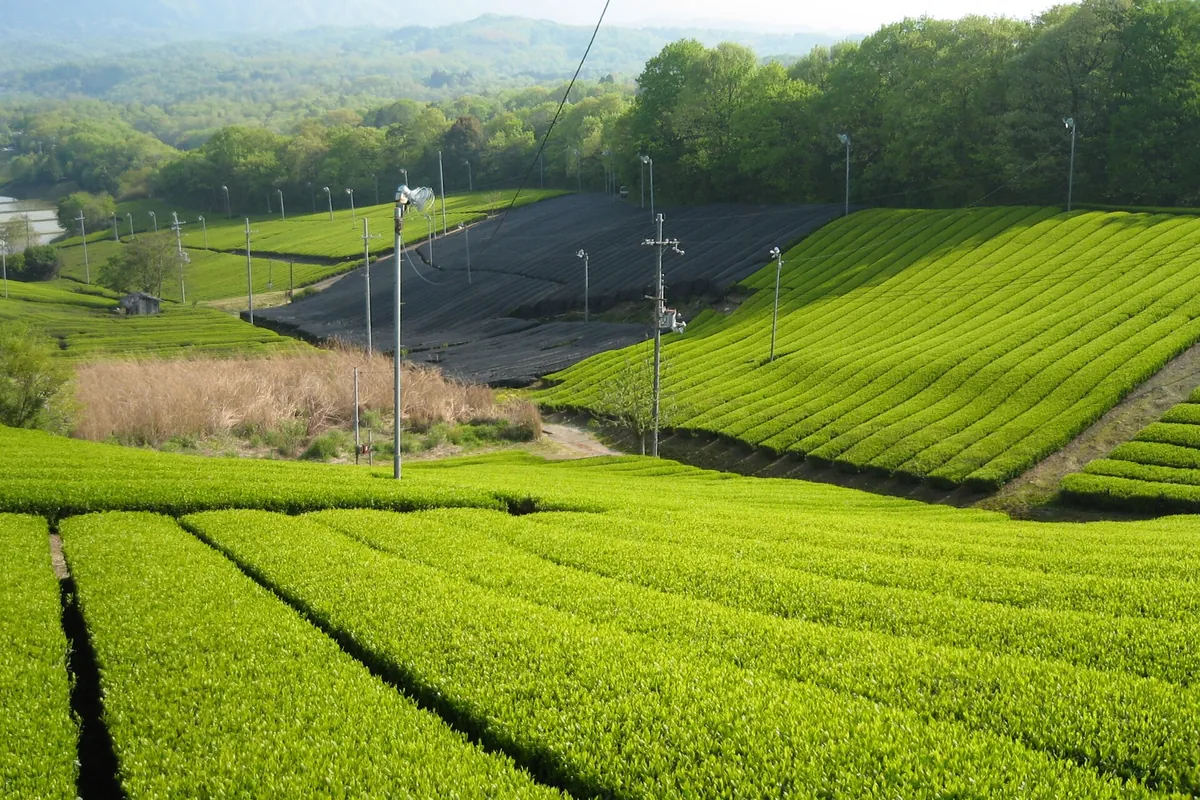
- Ippodo: Raised matcha prices and changed product specifications in October 2025. On 1 September 2026 it announced more revisions from October and November 2026.
- Kanbayashi Shunsho: Raised matcha prices at its shops from 1 August 2025.
- Fukujuen: Its global shop lists a matcha price notice dated 10 October 2025. Our Fukujuen page has its shop at Kansai International Airport.
- Nakamura Tokichi: Announced on 18 August 2026 that some prices would rise for orders from 1 September 2026. See our Nakamura Tokichi page for its shops.
- Saijoen: A notice of 8 July 2026 changed the prices of all matcha products for orders from 1 August 2026.
- Hoshino Seichaen: Has revised prices, mainly of matcha, since July 2026.
Ippodo’s notices explain why prices keep moving. A new tea field takes about five years before it can be harvested, so growers cannot raise output quickly. Many growers have switched to matcha, which cuts the supply of gyokuro, sencha and bancha.
In its 2025 notice Ippodo said the average matcha price in the Kyoto Prefecture tea market in May 2025 was about 2.7 times the year before. The average for all Japanese tea was about 2.5 times.
FAQ
Why is there a matcha shortage in Japan?
Osaka Customs reports, citing the tea industry, that new buds did not grow well in the hot, dry summer of 2024. At the same time, demand rose sharply in Japan and abroad and stocks ran short. MAFF says tencha output grew to 6,278 t in 2025, but demand grew too.
Why is matcha so expensive in 2026?
The leaf itself costs much more. MAFF says tencha averaged 8,562 yen/kg in 2025, about 4.9 times the price of sencha, and 2026 first-flush tea rose again. Ippodo, for example, raised a 20 g Kanza from 10,800 yen to 16,200 yen on 1 October 2026.
Which shops in Japan limit matcha purchases?
6 of the 15 brands we checked limit online matcha orders: Marukyu Koyamaen, Kanbayashi Shunsho, Horii Shichimeien, Saijoen, Ippodo and Hoshino Seichaen. Morihan says it sets no limit. In shops, only Marukyu Koyamaen’s Makishima factory shop says it limits matcha purchases.
Can you still buy matcha in Japan in 2026?
Yes, but stock varies by brand and by day. On 17 October 2026 Tsuen showed 10 matcha in stock, while Hoshino Seichaen had all 12 sold out. Marukyu Koyamaen sells matcha on an irregular schedule, so check the shop on the day you plan to buy.
About the author