Nikko vs Hakone vs Kamakura: Which Day Trip From Tokyo?
Times and fares are from our Tokyo to Nikko route page, Tokyo to Hakone route page and Tokyo to Kamakura route page. Entry fees and opening hours come from each shrine, temple and operator.
Nikko vs Hakone vs Kamakura side by side
Nikko is in Tochigi Prefecture, north of Tokyo. Hakone and Kamakura are both in Kanagawa Prefecture, to the south-west. Nikko trains leave from Asakusa, Hakone trains from Shinjuku, and Kamakura trains from Tokyo Station. The table puts the main numbers in one view.
| Nikko | Hakone | Kamakura | |
|---|---|---|---|
| Leave from | Asakusa | Shinjuku | Tokyo Station |
| Direct train | Tobu limited express, 1 h 47 min | Romancecar, 1 h 24 min | JR Yokosuka Line, 54 min |
| Cheapest one way | 3,050 yen | 1,270 yen | 1,040 yen |
| Cheapest round trip | 6,100 yen | 2,540 yen | 2,080 yen |
| Fastest way | Shinkansen + JR Nikko Line, 1 h 41 min, 5,790 yen | Kodama + Hakone Tozan, 46 min riding time, 4,170 yen | JR Yokosuka Line, 54 min, 1,040 yen |
| Pass | NIKKO PASS world heritage area, 3,000 yen, 2 days | Hakone Freepass from Shinjuku, 7,100 yen, 2 days | Enoshima-Kamakura Freepass from Shinjuku, 1,640 yen, 1 day |
| Main entry fee | Toshogu, 1,600 yen | Owakudani guided walk, 800 yen | Kotoku-in, 300 yen |
| Rain and snow a year | 1,950 mm | 3,561 mm | – |
The fare rows use the cheapest way to each place. For Hakone, that is the Odakyu Rapid Express plus the Hakone Tozan Train: 1,270 yen for 1 h 40 min of riding time. The direct Romancecar is quicker but costs 2,470 yen. A round trip on the cheapest way comes to 6,100 yen for Nikko, 2,540 yen for Hakone and 2,080 yen for Kamakura.
The quickest way is not always the direct train. To Nikko, the Tohoku Shinkansen to Utsunomiya plus the JR Nikko Line takes 1 h 41 min from Tokyo Station for 5,790 yen. To Hakone, the Kodama to Odawara plus the Hakone Tozan Train takes 46 min of riding time for 4,170 yen, plus the change at Odawara.
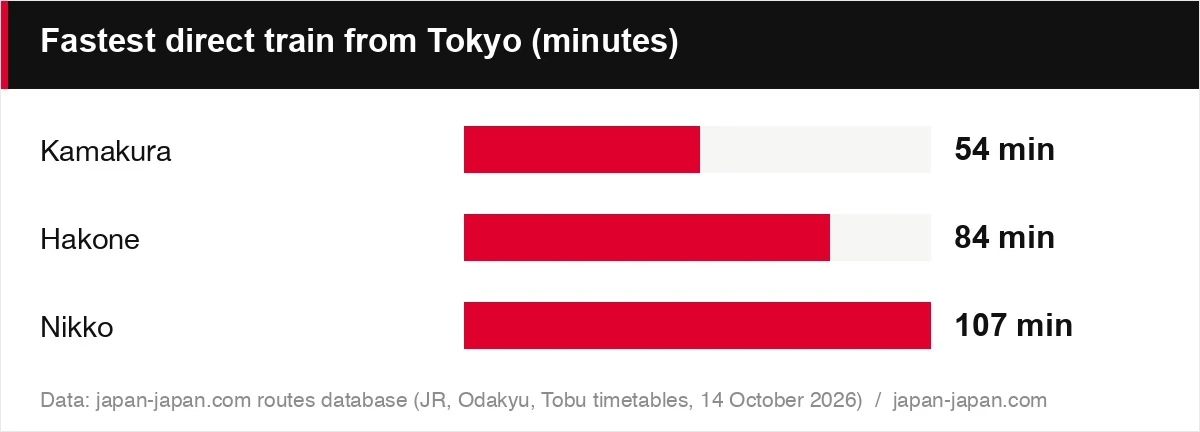
The chart below keeps to trains you can ride without changing. Kamakura takes 54 min, Hakone 84 min and Nikko 107 min.
| Item | Value | Note |
|---|---|---|
| Kamakura | 54 min | JR Yokosuka Line |
| Hakone | 84 min | Romancecar |
| Nikko | 107 min | Tobu limited express |
On a direct train, Kamakura is 53 min closer than Nikko each way.
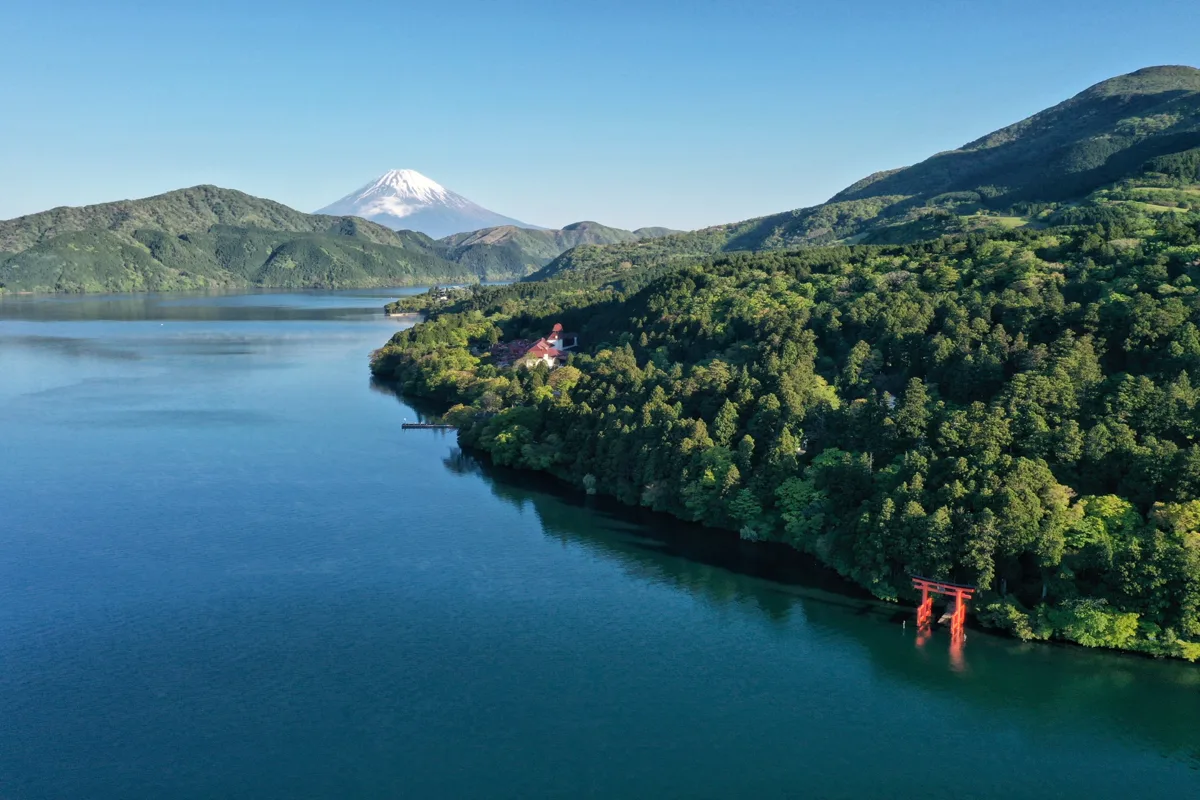
Getting there: three stations, three trains
Check your starting station first. A hotel near Asakusa favours Nikko, one near Shinjuku favours Hakone, and one near Tokyo Station favours Kamakura.
Nikko from Asakusa. The Tobu limited express (Kegon, Revaty Kegon and SPACIA X) runs direct to Tobu-Nikko. The fastest takes 1 h 47 min for 3,050 yen: a 1,400 yen fare plus a 1,650 yen limited express charge. On 14 October 2026 there were 16 trains, the first at 06:30 and the last at 20:59. The fare is the same from TOKYO SKYTREE and Kita-Senju stations.
SPACIA X is the newest of the three trains, but most of its runs end at Kinugawa-Onsen. The Tobu Railway SPACIA X timetable shows four trains a day from Asakusa to Tobu-Nikko, Nos. 1, 3, 5 and 11. They take 109 to 110 minutes. A Standard Seat on SPACIA X costs a 1,940 yen limited express charge instead of 1,650 yen. Special seats cost more on top of that: the Cockpit Suite, a private room for up to 7 people, is 18,000 yen per room.
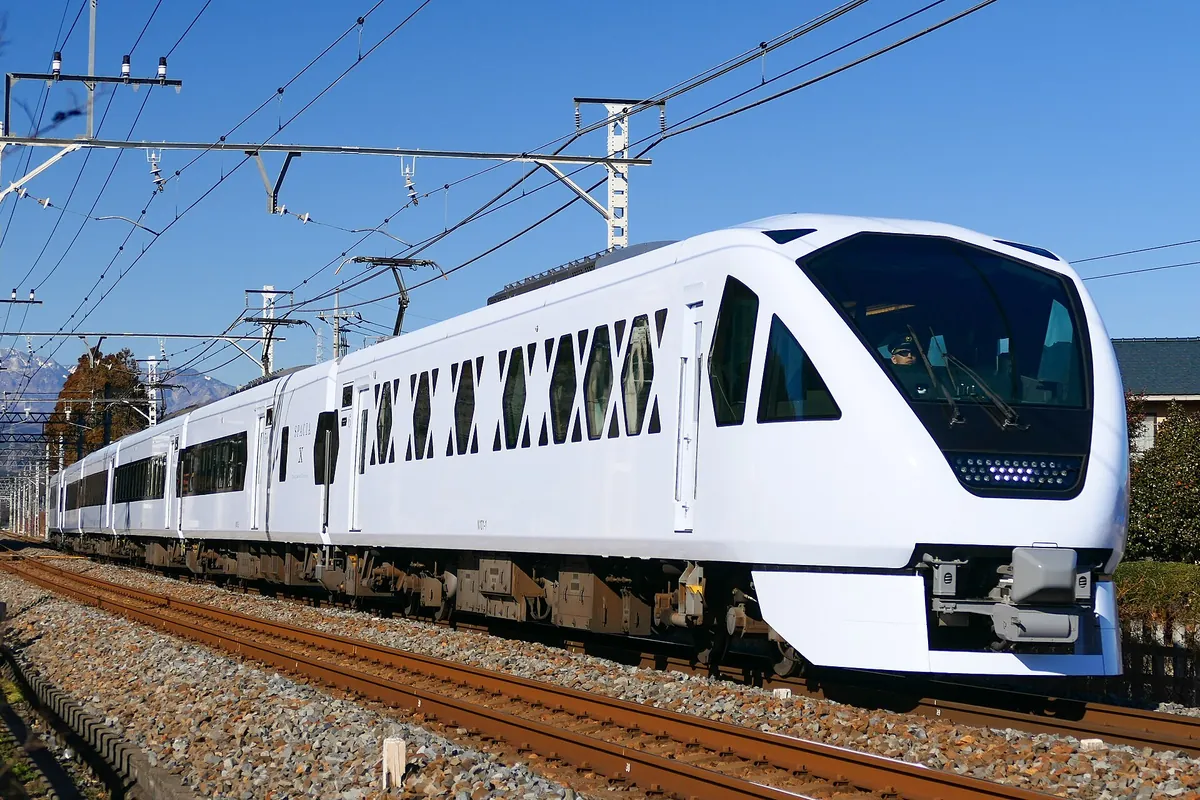
The photo shows a SPACIA X train on the Tobu line. If you only care about speed, the Kegon and Revaty Kegon trains are just as quick and cost less.
With a Japan Rail Pass, take the Tohoku Shinkansen from Tokyo or Ueno to Utsunomiya and change to the JR Nikko Line. Without a pass this costs 5,790 yen and takes 1 h 41 min. The timetable allows at least 8 minutes to change at Utsunomiya. The Nikko Tourism Association getting to Nikko page says this route costs more but is fully covered by the Japan Rail Pass.
Hakone from Shinjuku. The Odakyu Romancecar runs direct to Hakone-Yumoto, and all seats are reserved. The Odakyu Romancecar guide and FAQ puts the limited express charge at 1,200 yen on top of the fare. Bought online, it is 1,150 yen. The fastest Romancecar takes 1 h 24 min for 2,470 yen in all. On 14 October 2026 there were 16 Romancecars, the last leaving Shinjuku at 18:00.
The cheaper way is an Odakyu Rapid Express to Odawara, then the Hakone Tozan Train. It costs 1,270 yen for 1 h 40 min of riding time, plus the change at Odawara. A JR Pass only gets you as far as Odawara, about 30 minutes from Tokyo by Shinkansen. The Hakone Tourist Association JR Pass answer says you pay separately from there.
Kamakura from Tokyo Station. The JR Yokosuka Line runs straight to Kamakura Station in 54 min at the fastest, for 1,040 yen. You need no seat ticket. The first train leaves Tokyo Station at 05:24 and the last at 23:35, reaching Kamakura at 00:31.
Straight from Haneda Airport. Our Haneda Airport to Kamakura page lists the Keikyu Line and JR at about 57 min for 810 yen, with two changes. For Hakone, our Haneda Airport to Hakone page lists one highway bus to Togendai, about 3 hr by way of Gotemba.
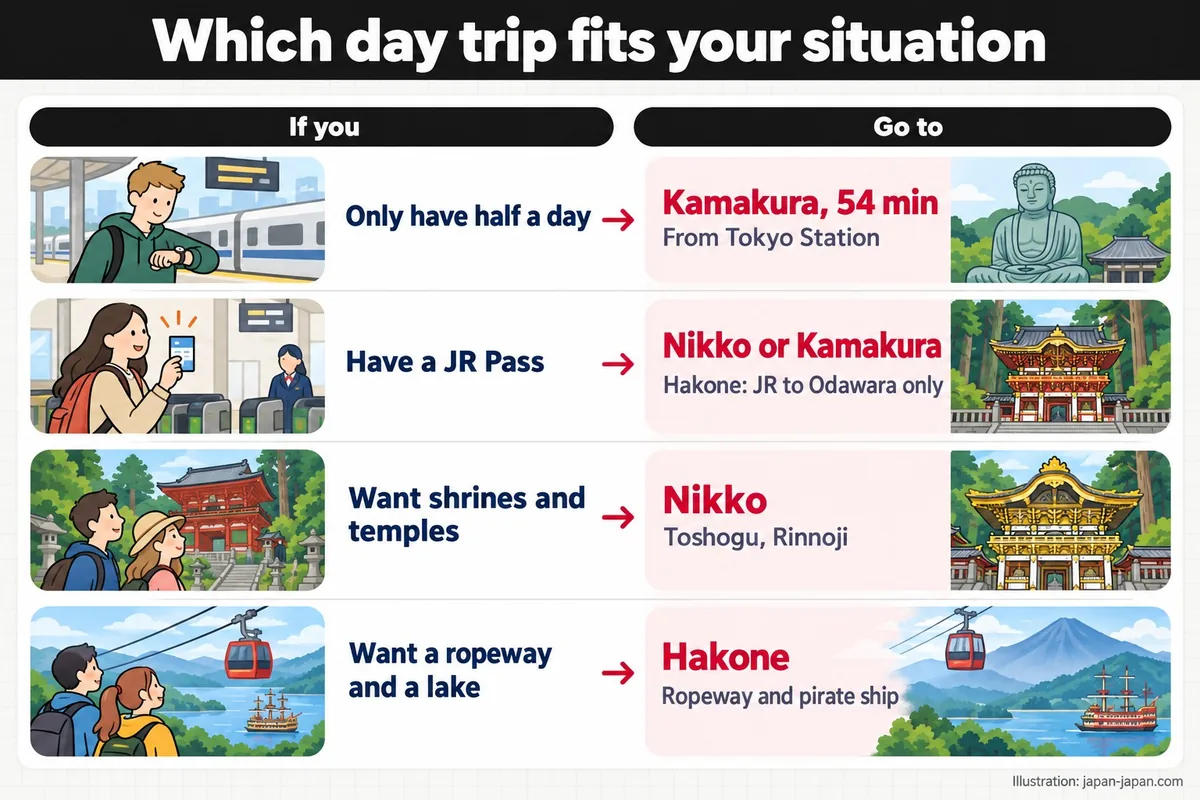
The drawing above matches four common situations to a trip.
Nikko in a day: Toshogu, Rinnoji and Futarasan
One day is enough here. The Nikko Tourism Association first-time visitors guide says a day trip is enough to see the core World Heritage sites in a few hours. The three sites in this section, Toshogu, Rinnoji and Futarasan-jinja, make up that core.
Toshogu is the shrine most visitors come for. The Nikko Toshogu admission and hours page lists 1,600 yen for adults and high-school students and 550 yen for primary and junior-high pupils. A set ticket with the Treasure Museum costs 2,400 yen. Your ticket covers the area from the front gate to the Yomeimon gate, the Sleeping Cat corridor, the Okumiya and the Crying Dragon hall. At the window, look for the sign 拝観料 (haikanryo), which means admission fee.
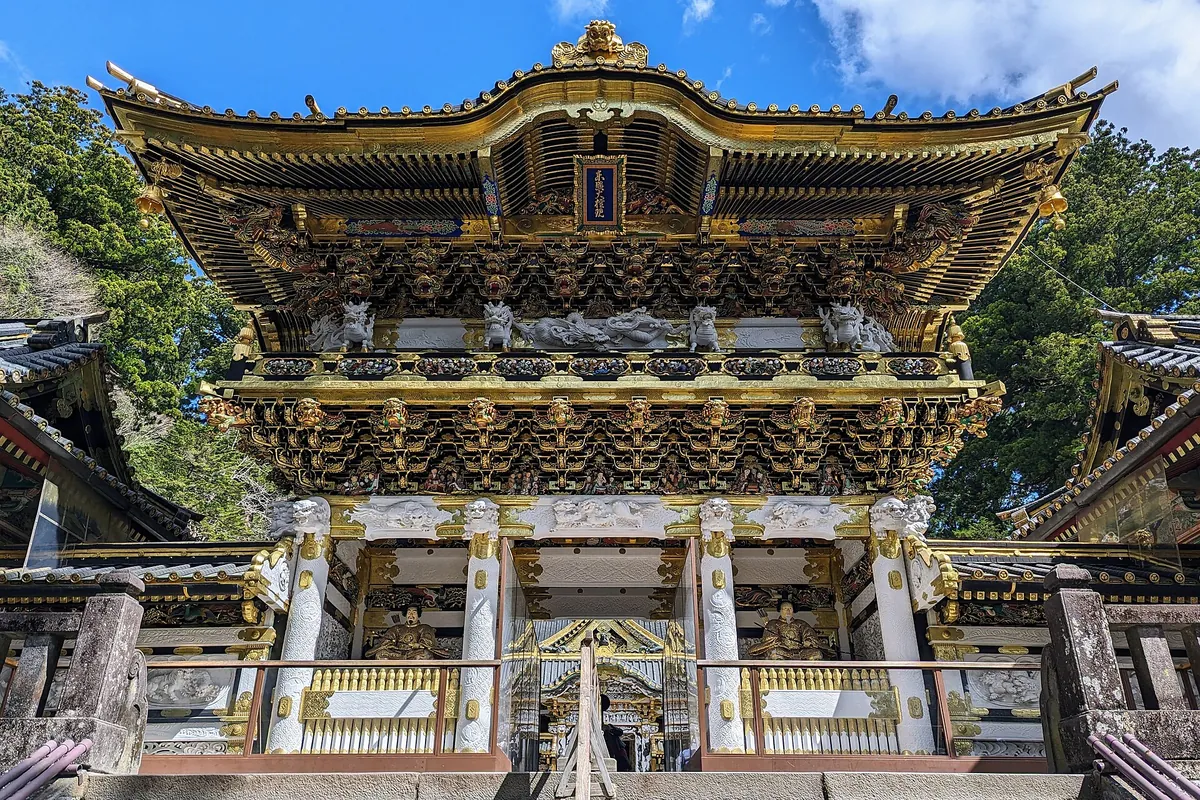
The photo shows the Yomeimon gate, which your Toshogu ticket covers. Toshogu opens 9:00 to 17:00 from 1 April to 31 October and 9:00 to 16:00 from 1 November to 31 March. Entry ends 30 minutes before closing.
| Place | Nikko Toshogu |
|---|---|
| Price | Adults and high-school students 1,600 yen, primary and junior-high 550 yen; with the Treasure Museum 2,400 yen |
| Hours | 1 April to 31 October 9:00-17:00; 1 November to 31 March 9:00-16:00; entry ends 30 minutes before closing |
| Official site | Nikko Toshogu admission and hours page |
Rinnoji opens at 8:00 all year. It closes at 17:00 from April to October and at 16:00 from November to March, according to the Rinnoji temple visitor information. An adult Sanbutsudo ticket costs 400 yen and takes 10 to 20 minutes. The Taiyuin ticket costs 550 yen and needs 30 minutes to 1 hour.
At Futarasan-jinja, the Shinen garden costs 300 yen, cash only. The Nikko Tourism Association Futarasan-jinja page puts it 16 minutes from Nikko or Tobu-Nikko Station by the World Heritage Tour bus.
Winter hours make the timing tight. The first Tobu limited express leaves Asakusa at 06:30 and reaches Tobu-Nikko at 08:25. The last one back leaves Tobu-Nikko at 18:41 and reaches Asakusa at 20:35. From November to March, Toshogu shuts at 16:00, so a late start leaves you little time inside.
Tobu sells two passes to foreign visitors. The NIKKO PASS world heritage area costs 3,000 yen for 2 days. It covers one round trip between Asakusa and Shimo-Imaichi, Tobu trains to Tobu-Nikko and Tobu buses in the World Heritage area. The NIKKO PASS all area costs 8,000 yen for 4 days and adds the Lake Chuzenji cruise from mid-April to November 30. With either pass, the limited express needs its own ticket, from 1,450 yen one way. Neither pass covers shrine or temple admission.
Two autumn dates are worth planning around. Toshogu’s Autumn Grand Festival falls on 16 and 17 October every year. Yabusame is on the 16th, and the procession of 1,000 samurai on the 17th. Light-up NIKKO 2026 runs on three evenings, 6 to 8 November. Our Nikko in November page lists the other events that month.
Hakone in a day: the train, ropeway and lake loop
Hakone is less about one sight and more about the ride. Most day-trippers start at Hakone-Yumoto and change between four kinds of transport on a loop to Lake Ashi.
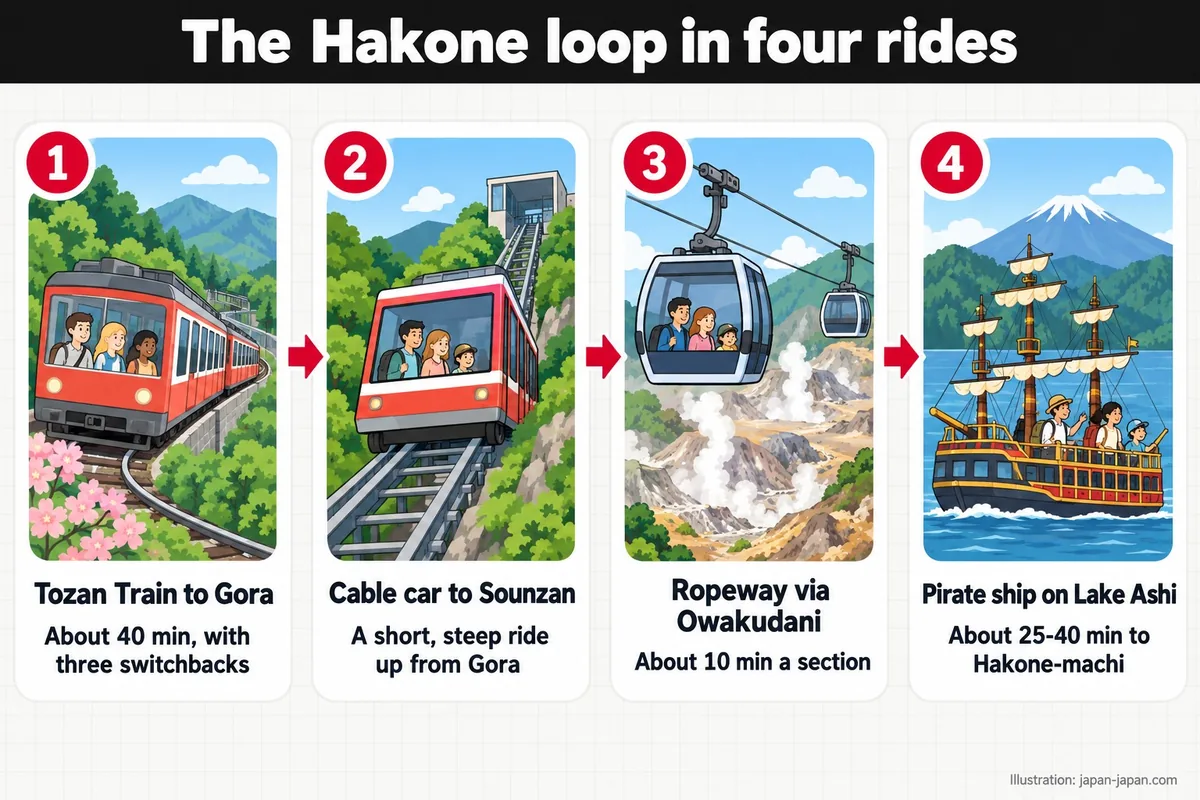
The drawing shows the usual order. The Hakone Navi Hakone Tozan Train page gives the first leg: 8.9 km from Hakone-Yumoto to Gora in about 40 minutes. The line opened in 1919, climbs grades of 80‰ and reverses direction at three switchbacks. At Gora, change to the Hakone Tozan Cable Car up to Sounzan.
At Sounzan, board the Hakone Ropeway. It has four stations: Sounzan, Owakudani, Ubako and Togendai. Gondolas carry 18 people and leave about every minute, and each section takes about 10 minutes. The Hakone Navi Hakone Ropeway page gives hours of 9:00 to 17:00 from February to November and 9:00 to 16:15 in December and January. The ropeway stops for strong wind, lightning, typhoons and high volcanic gas.
| Place | Hakone Ropeway |
|---|---|
| Price | One-way and return tickets from 2,000 yen (adults); included in the Hakone Freepass |
| Hours | February to November 9:00-17:00; December and January 9:00-16:15; stops in strong wind, lightning or high volcanic gas |
| Access | Board at Sounzan from the Hakone Tozan Cable Car, or at Togendai from the pirate ships and buses |
| Official site | Hakone Navi Hakone Ropeway page |
At Togendai, walk down to the pier for the Hakone Sightseeing Cruise. Three pirate ships sail to Hakone-machi and Moto-Hakone in about 25 to 40 minutes.
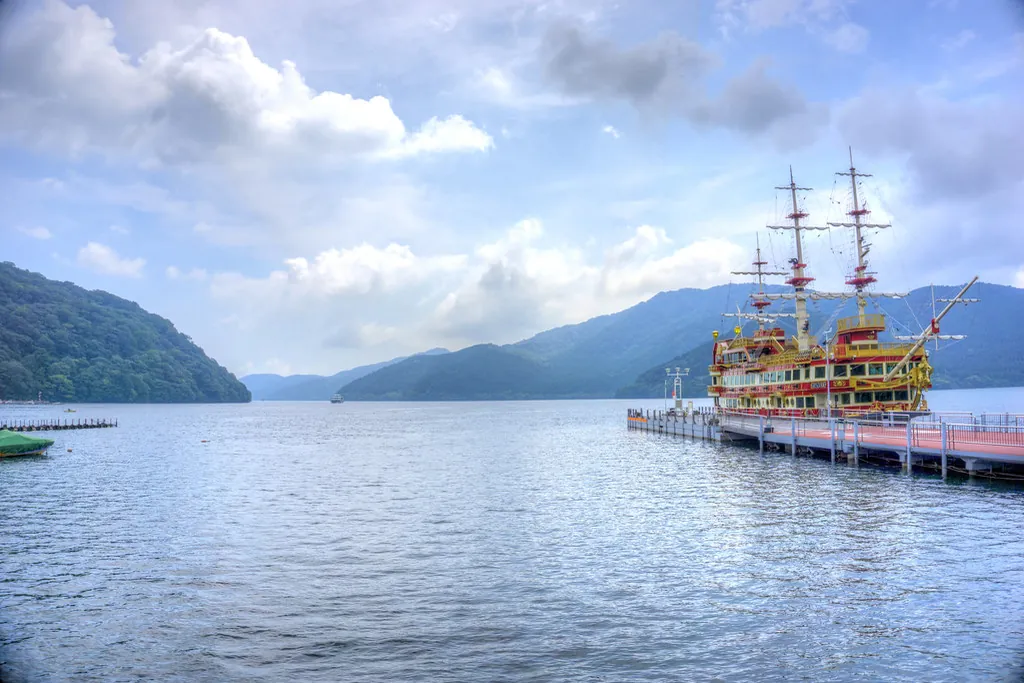
The photo shows one of those ships on Lake Ashi. The Hakone Freepass covers the cruise.
Owakudani, the ropeway’s middle station, is the steaming crater area of an active volcano. The Kanagawa Prefecture Owakudani visitor information asks people with asthma, other breathing problems or a heart pacemaker not to visit. The gas can be life-threatening for them. The nature trail, about 700 m long, opens only on guided walks: about 40 minutes, four times a day, 30 people each. Book online, then pay 800 yen on the day by card or transit IC card, since cash is not accepted.
The Hakone Freepass covers the whole loop. From Shinjuku it costs 7,100 yen for 2 days, and from Odawara 6,000 yen. It includes one Odakyu round trip and eight kinds of transport in Hakone. The Romancecar still needs its own ticket. The Odakyu Hakone Freepass guide works out a Shinjuku round trip as 7,100 + 2,400 = 9,500 yen. A 2-day pass ends after the last service on the next day, so 2 days does not mean 48 hours.
Hakone Town charges a bathing tax at hot springs: 50 yen per day visitor and 150 yen per night for overnight guests. The Hakone Town bathing tax page exempts children under 12. Read our guide to onsen and tattoos before you go.
Kamakura in a day: the Great Buddha and Hachimangu
Kamakura packs its two big sights into one short tram ride and one short walk. Start in Hase. From JR Kamakura Station, the Enoden takes 4 minutes to Hase Station for 200 yen.
The Kotoku-in Great Buddha of Kamakura visitor guide puts the temple a seven-minute walk from Hase Station. Admission is 300 yen, and children aged 6 to 12 pay 150 yen. Going inside the statue costs 50 yen more. Kotoku-in opens 8:00 to 17:30 from April to September and 8:00 to 17:00 from October to March. Entry ends 15 minutes before closing, and the statue’s interior is open 8:00 to 16:30. No reservation is needed.
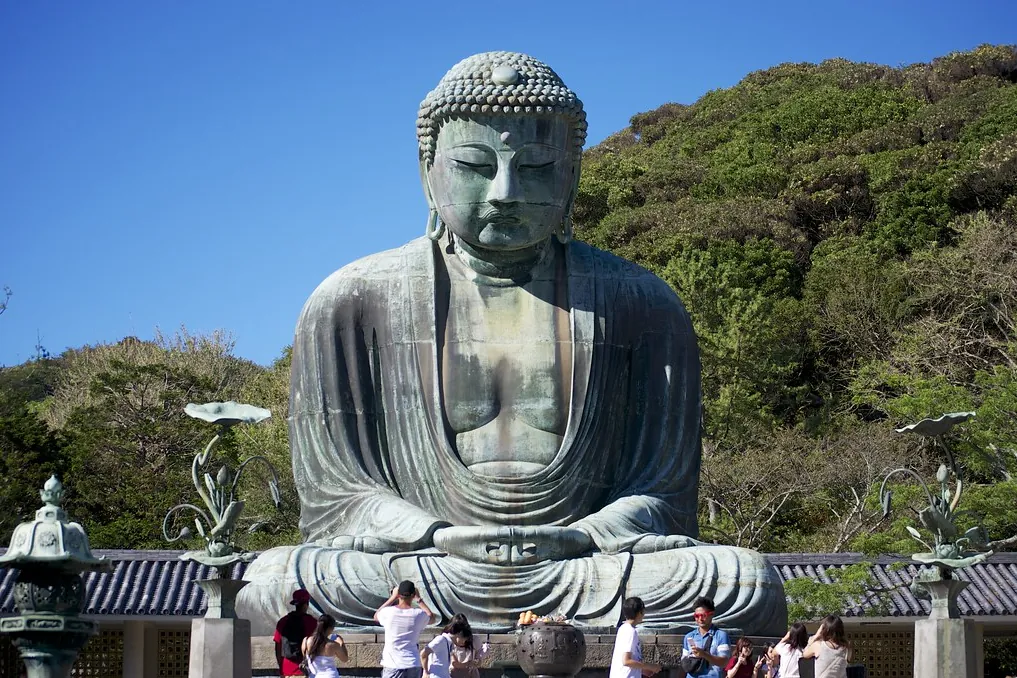
As the photo shows, the Great Buddha sits in the open air. That makes it unusual among Japan’s large Buddha statues.
| Place | Kotoku-in (Great Buddha of Kamakura) |
|---|---|
| Price | 300 yen, ages 6-12 150 yen, under six free; inside the statue 50 yen extra |
| Hours | April to September 8:00-17:30; October to March 8:00-17:00; last entry 15 minutes before closing |
| Access | Enoden from Kamakura to Hase Station, then a seven-minute walk |
| Official site | Kotoku-in Great Buddha of Kamakura visitor guide |
Hase-dera is about 5 minutes away on foot. The Hase-dera temple admission and hours page lists 400 yen for adults. Entry runs 8:00 to 16:30, or to 17:00 from April to June.
Tsurugaoka Hachimangu sits on the other side of town, 10 minutes on foot from the east exit of JR Kamakura Station. The Tsurugaoka Hachimangu access and opening hours page gives gate hours of 6:00 to 20:00 all year. The Kanagawa Prefecture Tsurugaoka Hachimangu guide lists the grounds as free and the treasure hall at 200 yen for adults.
To add Enoshima, stay on the Enoden from Kamakura for 24 minutes and 260 yen. The Enoden Noriorikun one-day pass page sells unlimited Enoden rides for 800 yen, valid on the day of issue. Our Enoden 1-day pass page explains where to buy it. From Shinjuku, the Enoshima-Kamakura Freepass costs 1,640 yen for 1 day. It includes an Odakyu round trip and unlimited Enoden rides, but the Romancecar needs its own ticket. Trains from Tokyo are on our Tokyo to Enoshima route page.
The Kamakura City Tourist Association crowd-free walking route is a one-day loop on foot that starts and ends at Kamakura Station. During Golden Week, Kamakura City runs a trial that lets registered residents skip the queue outside Enoden Kamakura Station. In 2026 the station did not need to restrict entry, so the trial did not take place.
Rain and hotels by month: Nikko vs Hakone
Our month-by-month guide covers Nikko and Hakone but not Kamakura, so this section compares the two. Japan Meteorological Agency normals for 1991–2020 put Nikko at 1,950 mm of rain and snow a year and Hakone at 3,561 mm. Nikko gets 1,611 mm less.
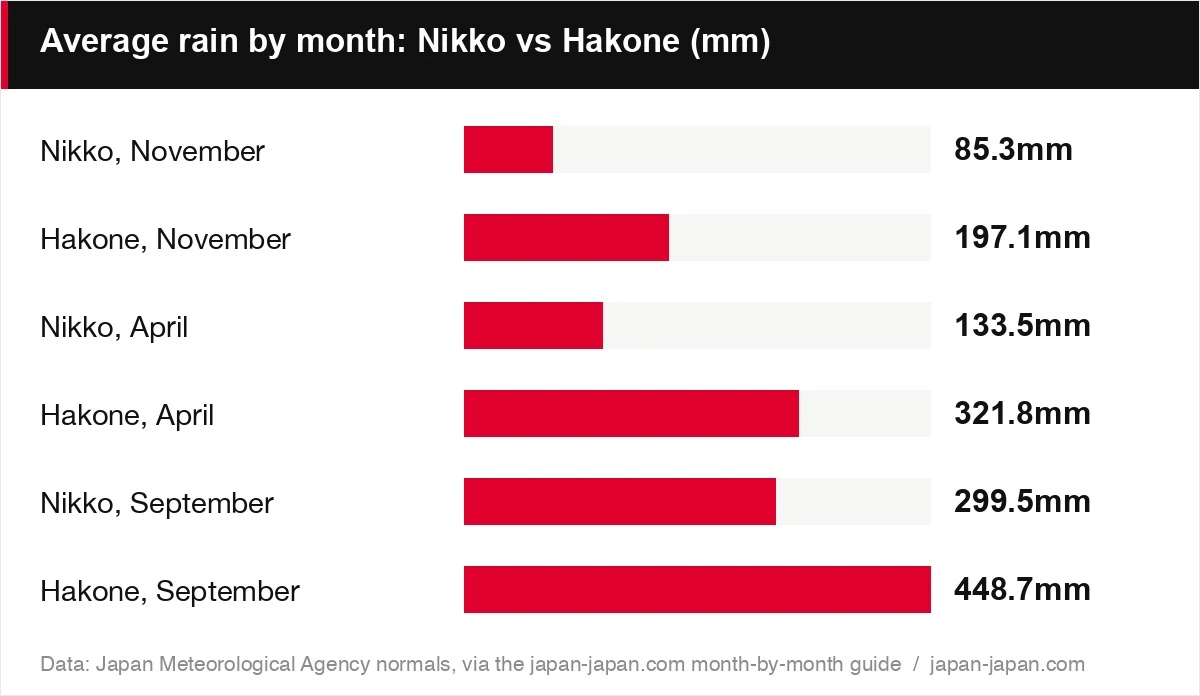
| Item | Value |
|---|---|
| Nikko, November | 85.3 mm |
| Hakone, November | 197.1 mm |
| Nikko, April | 133.5 mm |
| Hakone, April | 321.8 mm |
| Nikko, September | 299.5 mm |
| Hakone, September | 448.7 mm |
The chart compares three popular travel months. In November, Nikko averages 85.3 mm over 6.6 wet days and Hakone 197.1 mm over 9.7 days. In April the gap is 133.5 mm against 321.8 mm, and in September 299.5 mm against 448.7 mm.
Nikko is drier in every month, but it does not always have fewer wet days. In July, Nikko has 17.7 wet days against 15.8 in Hakone, and it also has more in August and September. Nikko’s average high runs from 5.9°C in January to 28.0°C in August, so pack warm layers for a winter visit.
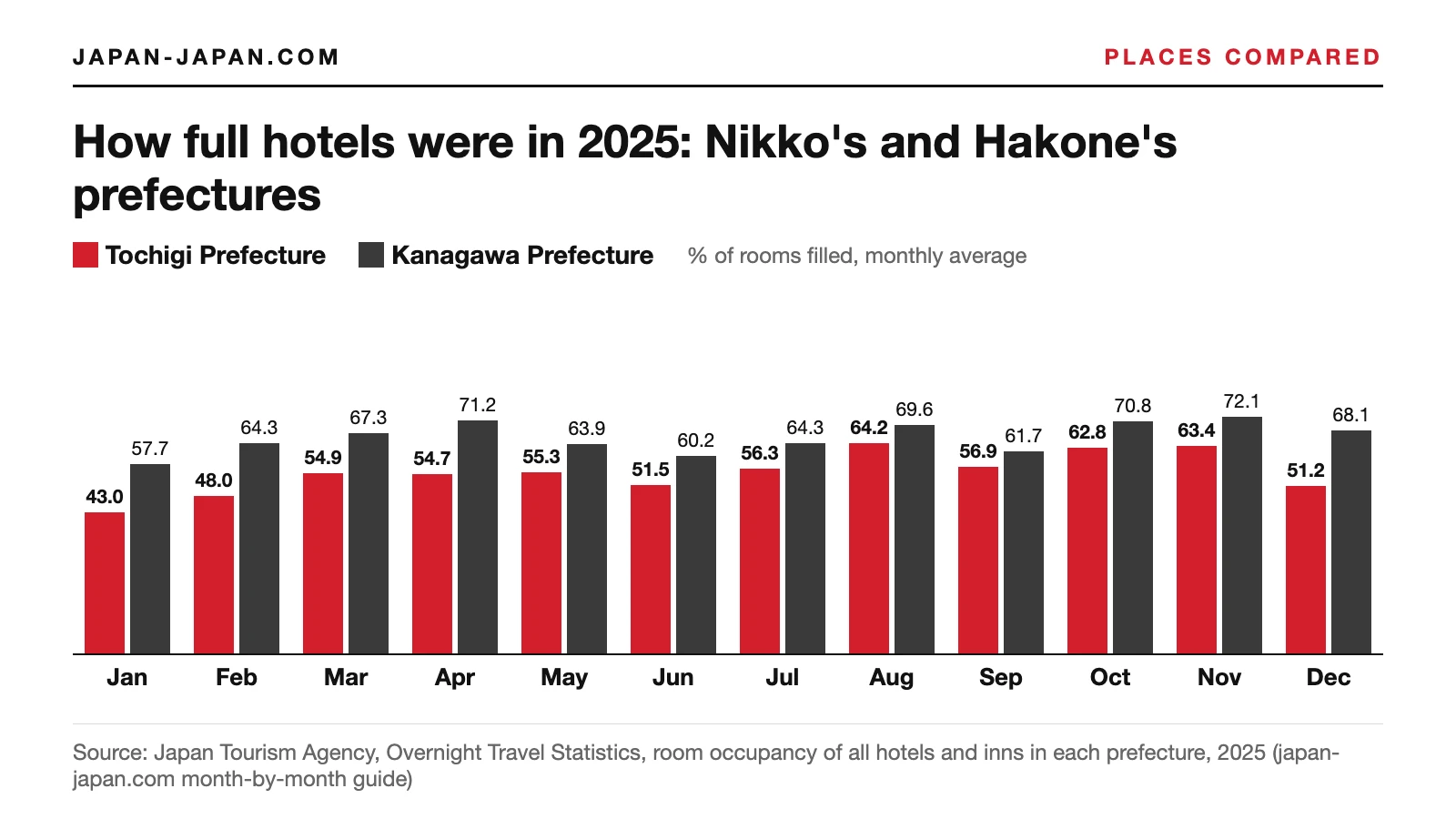
For crowds, the Japan Tourism Agency publishes hotel occupancy by prefecture, not by town. In 2025, hotels across Tochigi Prefecture were fullest in August at 64.2% and emptiest in January at 43.0%. Across Kanagawa Prefecture, the high was 72.1% in November and the low 57.7% in January. Kanagawa was fuller in all 12 months, which reflects the whole prefecture rather than Hakone alone.
Month pages: Nikko weather by month, Hakone rain by month and Hakone in November.
Which day trip should you choose?
Decide by time, passes and what you want to see. The drawing below runs through the two questions that settle most cases.
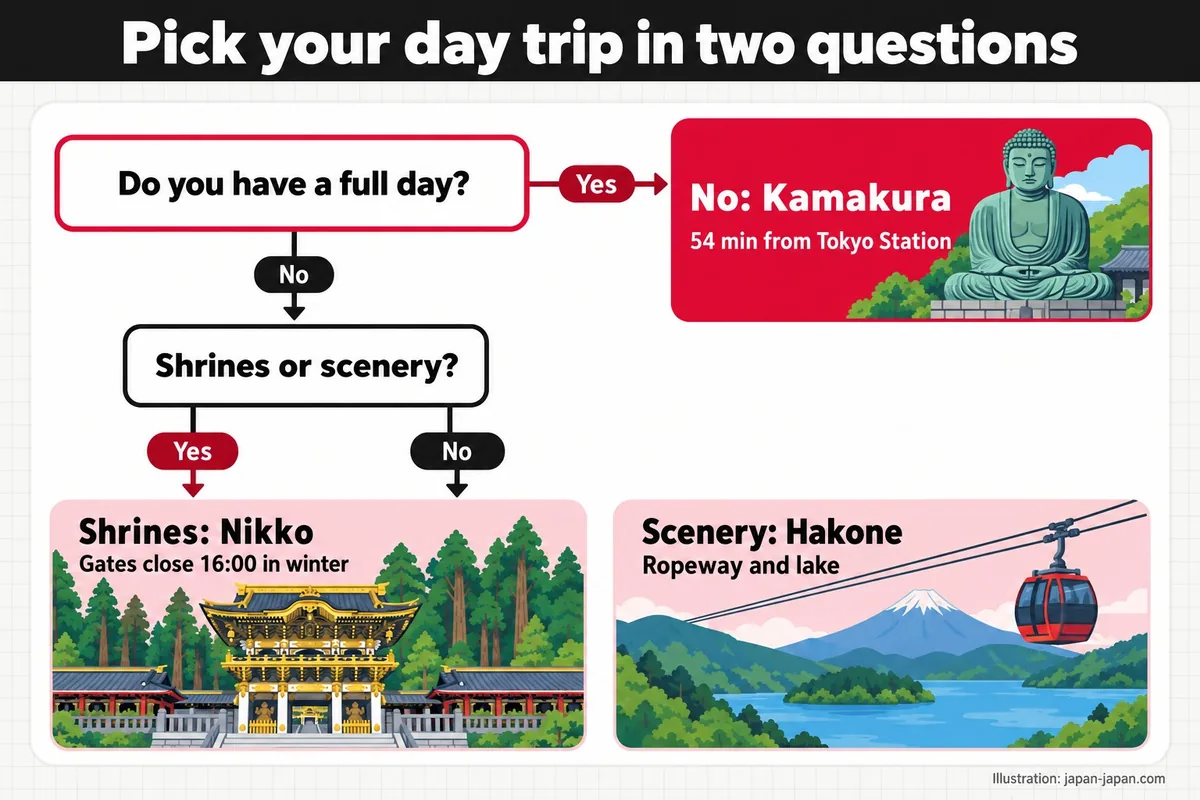
- Half a day or a late start: Kamakura. It is 54 min from Tokyo Station, and the last train back leaves Kamakura at 23:07.
- You hold a JR Pass: Nikko by Shinkansen and the JR Nikko Line, or Kamakura by the Yokosuka Line. For Hakone, JR only takes you to Odawara.
- Shrines and temples: Nikko. Leave early in winter, because Toshogu closes at 16:00.
- Ropeways and a lake: Hakone, on the Hakone Freepass at 7,100 yen from Shinjuku.
- Drier weather: Nikko, with 1,950 mm of rain and snow a year.
- Just landed at Haneda: Kamakura, about 57 min by train.
To see both Hakone and Kamakura, the Hakone Kamakura Pass costs 8,520 yen for 3 days. It covers all Odakyu Line trains, the Hakone loop and the Enoden, but not the Romancecar.
Big bags slow down any day trip. Leave them in coin lockers in Japan or send them ahead with luggage forwarding. For a longer route, see our 10-day Japan itinerary. Check whether the JR Pass is worth it before you buy one.
Nikko, Hakone or Kamakura: what 98 people in Japan would tell a friend
On 13–14 October 2026, japan-japan.com ran an online survey of people living in Japan about 32 travel choices. 130 people answered. We removed answers that looked machine-written, one from outside Japan and most of those that contradicted themselves, which left 98. Shares below are of the 98 respondents unless a smaller group is named; they describe these people, not all travellers in Japan. See all 32 comparisons and how we asked.
For one day trip from Tokyo, the places named most were Kamakura (27.6%), Yokohama (25.5%) and Hakone (17.3%). Among the three on this page, 27.6% (27 people) chose Kamakura, 17.3% (17 people) Hakone and 8.2% (8 people) Nikko.
Visits were close: 63.3% (62 people) have been to Nikko, 62.2% (61 people) to Hakone and 61.2% (60 people) to Kamakura.

FAQ
Is Nikko or Hakone better for a day trip from Tokyo?
Hakone is closer and cheaper: 1 h 24 min by Romancecar from Shinjuku, or 1,270 yen the cheapest way. Nikko takes 1 h 47 min from Asakusa and costs 3,050 yen. Pick Nikko for World Heritage shrines and temples, and Hakone for the ropeway and Lake Ashi.
Can you see Nikko in one day?
Yes. The Nikko Tourism Association says you can see the core World Heritage sites in a few hours. Take an early train, such as the 06:30 from Asakusa that arrives at 08:25. From November to March, Toshogu closes at 16:00, and the last Tobu limited express back leaves at 18:41.
Is Kamakura worth it as a half-day trip?
Yes, if time is short. The JR Yokosuka Line takes 54 min from Tokyo Station for 1,040 yen. The Great Buddha costs 300 yen, the grounds of Tsurugaoka Hachimangu are free, and the Enoden to Hase takes 4 minutes.
Does the JR Pass cover Nikko, Hakone and Kamakura?
For Nikko, yes, by the Tohoku Shinkansen to Utsunomiya and the JR Nikko Line. The Tobu trains from Asakusa are not JR, so you pay for those. Kamakura is on the JR Yokosuka Line. For Hakone, JR takes you only as far as Odawara, and you pay from there.
About the author