Tipping in Japan: No Tip Expected, 10% Tax on the Bill
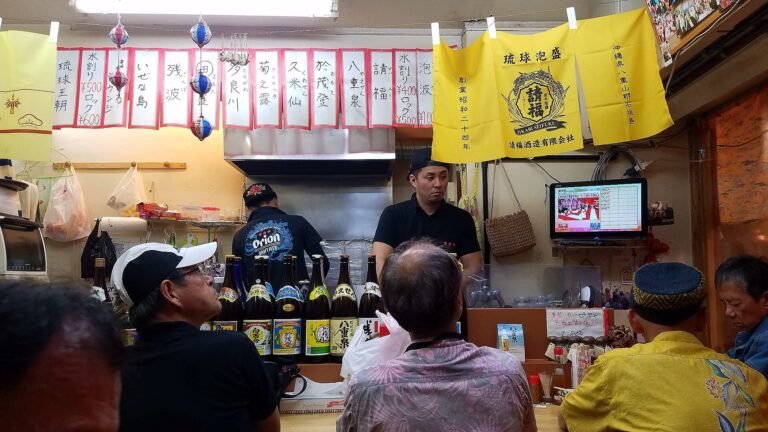
The JNTO Tipping in Japan page lists the places where people do not tip: bars, cafes, restaurants, taxis and hotels. That covers almost every service a visitor pays for in a normal trip. You hand over the amount on the bill or the meter, take your change, and leave.
Japan does have a custom of giving money from the heart. JNTO calls it kokorozuke (心付け). It appears only in some situations, and nobody expects it from a visitor. The same JNTO page says a tip is not expected even with private guides, and that you should give it quietly if you choose to.
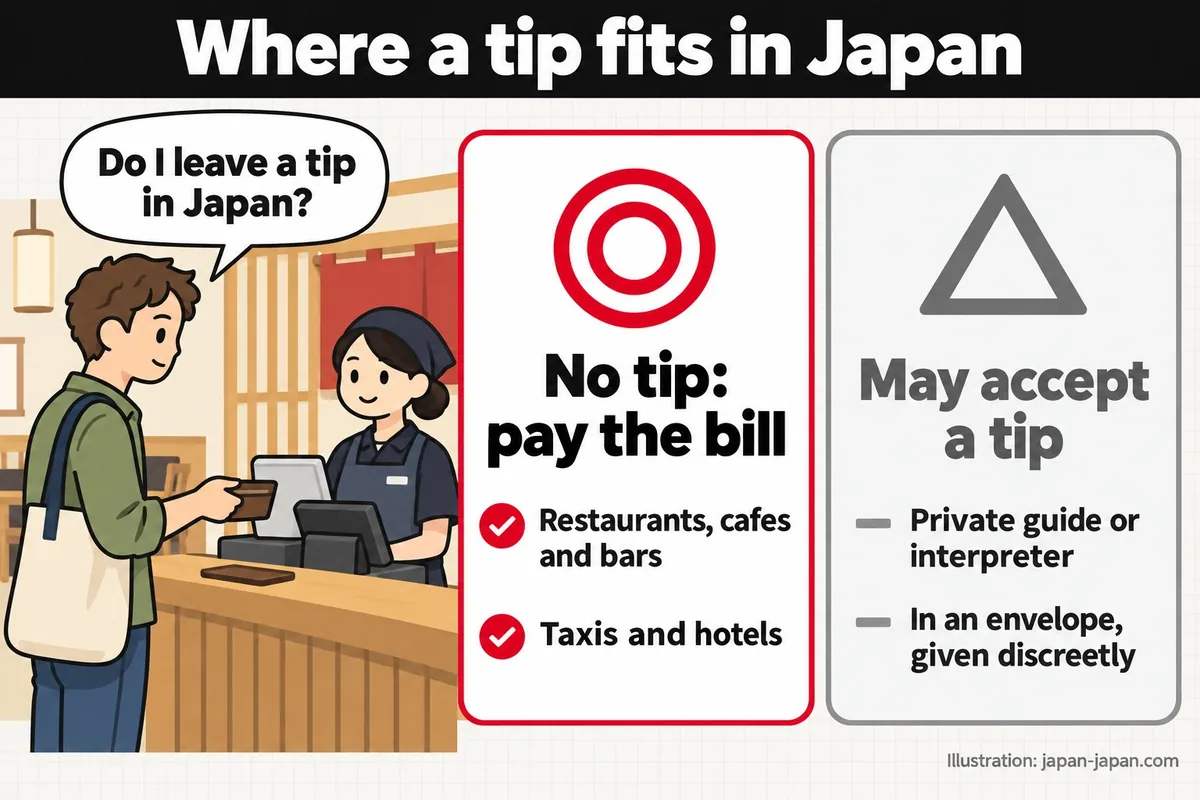
The picture above splits the two cases. On the left are the places where you simply pay the bill. On the right is the single case JNTO describes, where a guide or interpreter may accept a tip in an envelope.
| Situation | Tip? | What you pay | Source |
|---|---|---|---|
| Restaurants and izakaya | No | The bill, with 10% consumption tax and any table charge | JNTO, Osaka bureau |
| Cafes | No | The price on the bill | JNTO |
| Bars | No | The bill | JNTO, Osaka bureau |
| Taxis | No | The meter or app fare | JNTO, Osaka bureau |
| Hotels and ryokan | No | Room rate plus any local tax | JNTO |
| Private guide or interpreter | May accept | Optional, in an envelope, discreetly | JNTO |
The table sums up each situation, what you pay there and where the rule comes from. The rest of this guide follows a trip in order. It ends with the official charges that often look like a tip on a receipt.
Restaurants, cafes and izakaya
At a restaurant, cafe or izakaya, you pay what the bill says and nothing more. Staff do not add a tip line, and you do not leave coins on the table. Take the bill to the register near the door, pay there, and walk out.
It has one charge that surprises many first-time visitors. The JNTO Japanese customs and etiquette guide explains that a small appetizer often arrives on its own at an izakaya. You pay for it, because restaurants treat it as a table charge. Menus or signs usually make this clear.
This appetizer is called otoshi. It works as a seat charge and goes to the restaurant like any other item on the bill. If you are not sure whether a place has a cover fee, ask the staff before you order. Our izakaya guide for beginners covers otoshi, ordering and paying in more detail.
The consumption tax on your receipt
The figure you see at the bottom of a receipt includes consumption tax. The National Tax Agency consumption tax basics page sets the standard rate at 10.0% and the reduced rate at 8.0%. Both rates have applied since 1 October 2019.
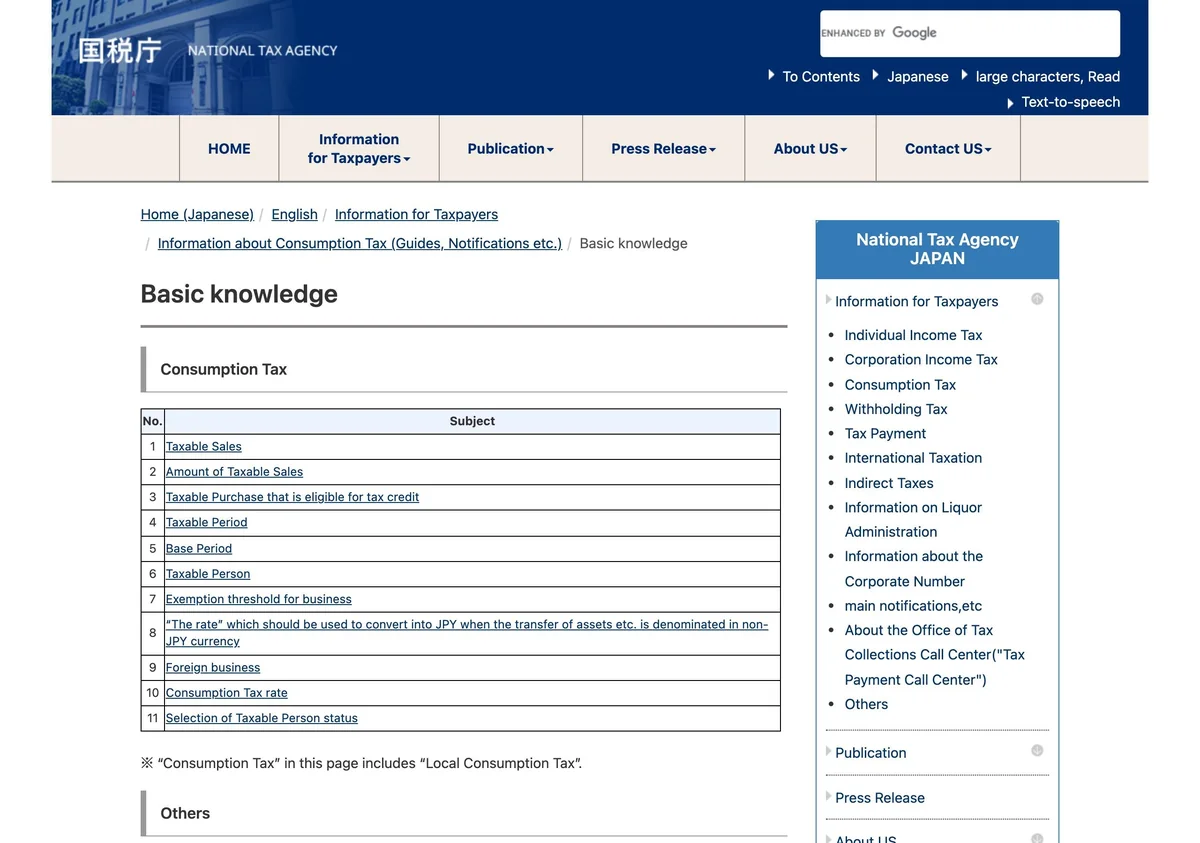
The screenshot shows the National Tax Agency’s English page with the rate table. The 10.0% standard rate splits into 7.8% national tax and 2.2% local tax. The reduced 8.0% rate covers food and drink, but it excludes alcohol and dining out. So a meal you eat at the table falls under the 10% rate.
That tax is the only extra amount on a normal restaurant bill. It is set by law, and you cannot choose to pay more or less. If you want to reward good service, use words instead of money.
The Osaka Convention & Tourism Bureau manners guide says the same thing in plain terms. There is no custom of leaving tips in Japan. If you are grateful for the service at a bar, restaurant or taxi, saying “arigato” is fine.
Some small shops and cafes take cash only, while others are cashless. JNTO suggests you check the accepted payment methods before you go in. That matters more than any tip, because a cash-only counter will not take your card at the end of the meal.
Taxis and ride-hailing apps
You do not tip taxi drivers in Japan. JNTO puts taxis on its list of services where tipping is not common. Pay the fare on the meter, or the amount shown in the app if you booked one, and keep the receipt.
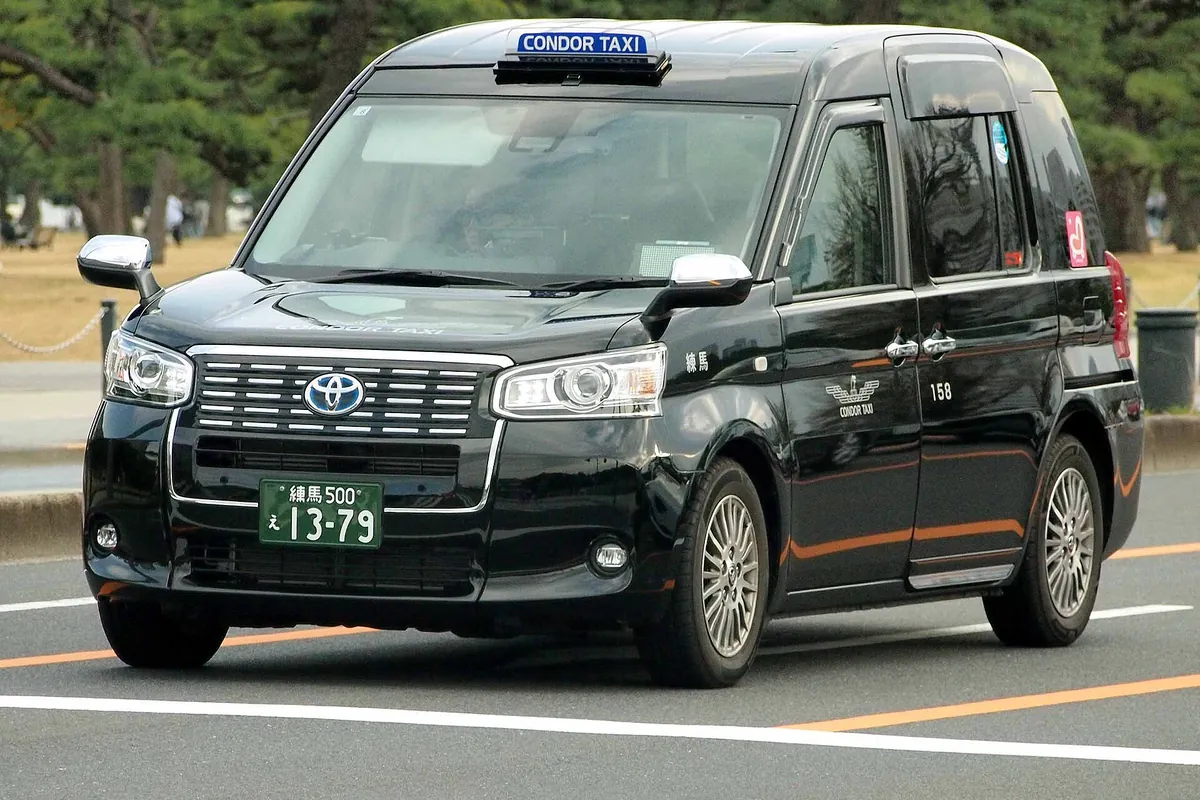
The photo shows a typical Tokyo taxi. The fare builds up on the meter during the ride. When the ride ends, you pay that number and take your change.
The Osaka Convention & Tourism Bureau names taxis directly. If you are grateful for the ride, a simple “arigato” is enough.
Apps work the same way. You see the fare in the app, and the payment goes through the card you added. There is no tip screen to worry about in the normal flow. For which apps run in Japan and how ride-sharing is regulated, read Is There Uber in Japan? Taxi Apps, GO and Ride-Share Rules.
Many visitors take a taxi on day one, straight from the airport. Our airport guides for Haneda Airport and Narita Airport list the taxi stands and the other ways into the city. For flat rates and meter fares by airport, see Taxi Fares in Japan. Trains and buses from every major airport are compared in our airport transfers guide.
Hotels and ryokan: taxes on the bill instead of tips
You do not tip at hotels or ryokan in Japan. JNTO lists hotels among the places where tipping is not common. What does appear on the bill is local tax: an accommodation tax in some cities and a bathing tax at hot spring towns.
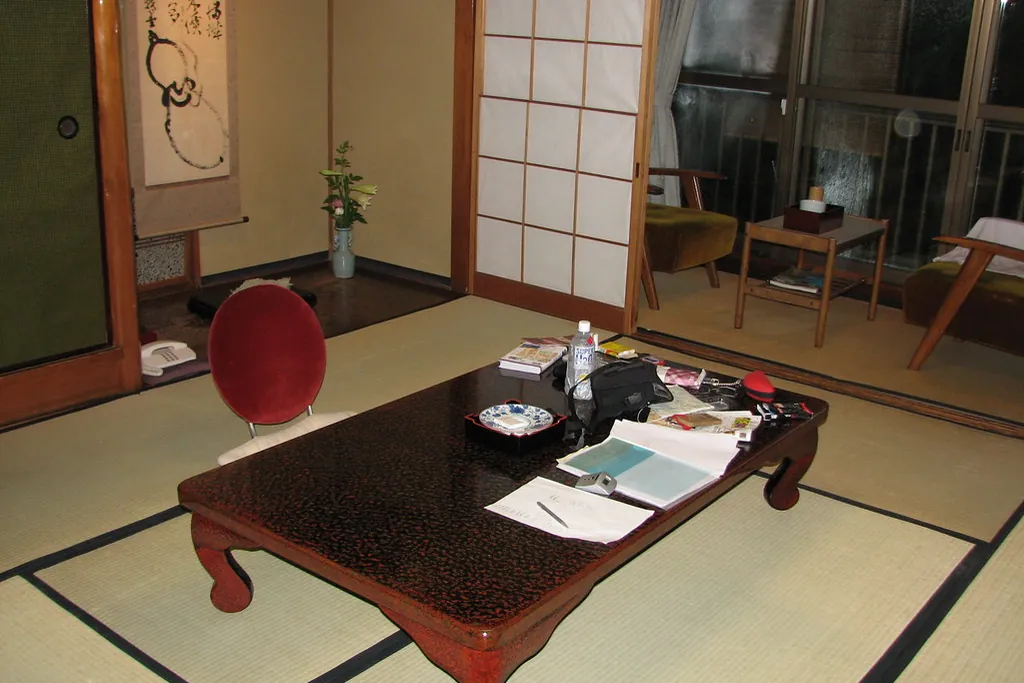
A ryokan is a traditional Japanese inn with tatami rooms like the one in the photo. Staff often serve dinner in the room and lay out the futon. It feels like personal service, and visitors from tipping countries want to say thanks with cash. You do not need to. The price of your stay already covers the service.
Tokyo accommodation tax
The Tokyo Bureau of Taxation accommodation tax for guests page sets two flat rates per person per night. A room rate of 10,000 yen up to 15,000 yen carries 100 yen. A rate of 15,000 yen or more carries 200 yen. Stays under 10,000 yen are not taxed.
The room rate here means the room-only price, without meals. If two people share a twin room, the hotel divides the rate per person before it applies the tax. Children pay too when their own share reaches 10,000 yen.
Tokyo plans to change this from 1 April 2027. The tax becomes 3% of the room rate, and stays under 13,000 yen per person per night will not be taxed. Simple lodgings and private rentals will also come under the tax from then.
You pay the tax to the hotel, using whatever payment method the hotel offers. You may be asked to pay it at the front desk, separately from the room price you booked. That small line on the bill is a tax that goes to the city.
Bathing tax at hot springs
Hot spring towns add a bathing tax. The Ministry of Internal Affairs bathing tax page sets the standard rate at 150 yen per person per day. The town where the spring sits charges it, and the ryokan collects it from you on its behalf.
The money pays for public baths and sanitation, protection of the hot spring sources, firefighting equipment and tourism. Like the hotel tax, it shows up as its own line on the bill.
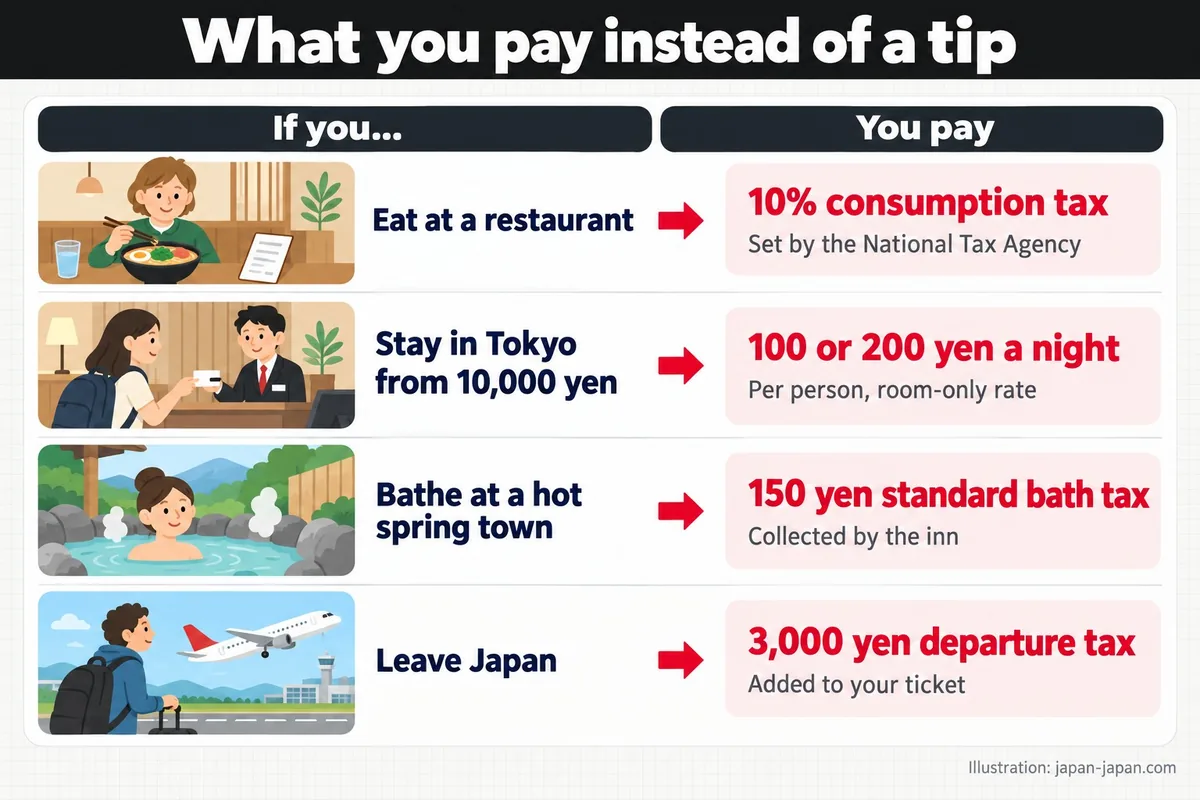
The chart above matches each situation with the official amount you pay there. A meal carries 10% tax, and a Tokyo hotel night from 10,000 yen carries 100 or 200 yen. A hot spring bath carries 150 yen, and leaving Japan carries 3,000 yen.
Kokorozuke at a ryokan
Kokorozuke is the custom JNTO describes as a gratuity from the heart. Some Japanese guests hand one to ryokan staff. You do not have to, and staff will not expect it from you. If you skip it, nobody will treat you differently.
For what a night costs, what the meals include and how to use the baths, see our ryokan guide. Tax rates in other cities are collected in guide to accommodation tax rates by city.
When tipping in Japan is OK: private guides and interpreters
JNTO names one case where a tip can be appropriate. If you hire a private guide or interpreter who is used to overseas practices, they may accept a tip as a way to say thanks.
Note the wording: guides may accept a tip, not ask for one. JNTO also says tipping is not expected, even in these cases, and that you should give it discreetly. You can end the day with thanks alone.
This exception applies to a person you hired yourself for a private tour or for interpreting. It does not extend to hotel staff, taxi drivers or restaurant servers, which JNTO lists separately as places where people do not tip.
JNTO does not set an amount. If you want to give something, choose a sum you are comfortable with. Think about how the guide would feel receiving it in front of others, because the point is to keep it quiet.
Timing matters too. Hand it over at the end, once the tour or the meeting is done. That way the gift reads as thanks for work already done.
How to hand over a tip in an envelope
If you decide to tip a guide, put the money in an envelope. JNTO says it is customary to place a gratuity in an envelope rather than hand over loose notes.
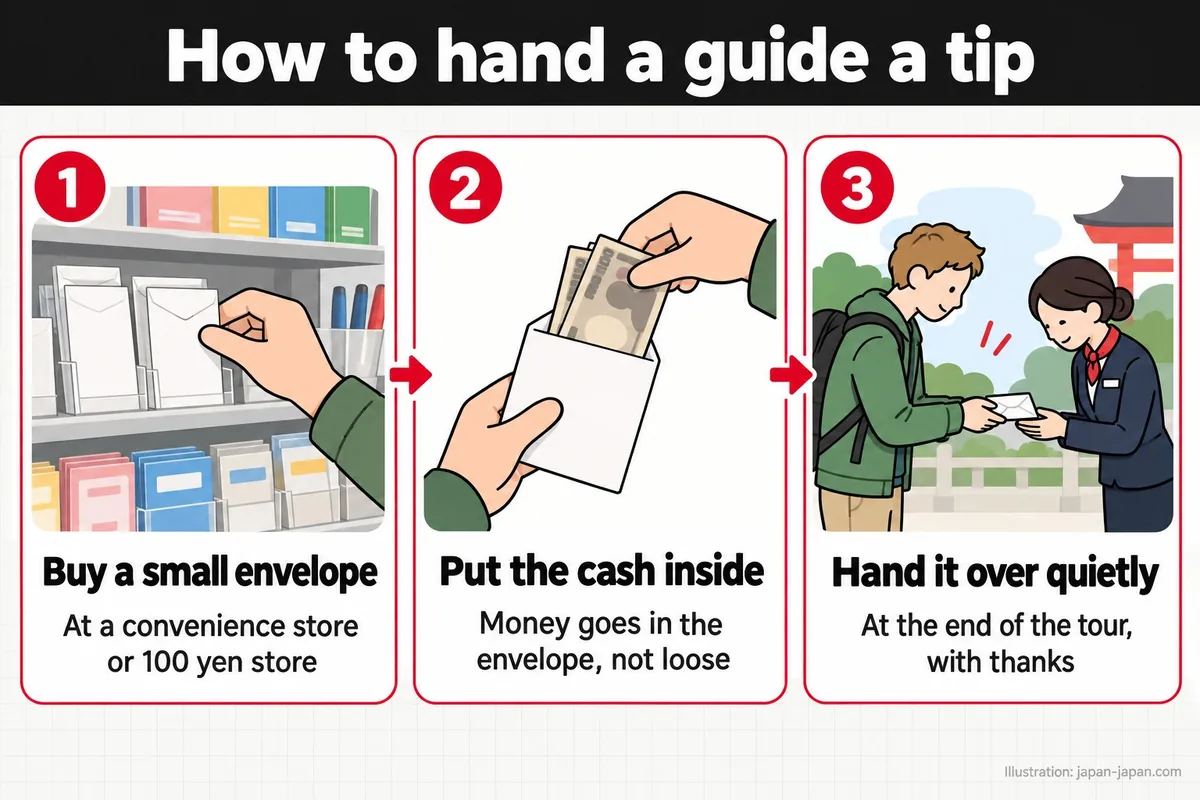
The three steps in the drawing follow JNTO’s advice. Buy a small envelope, put the cash inside, and hand it to the guide quietly at the end.
You can buy small cash envelopes at convenience stores, stationery stores and 100 yen stores, according to JNTO.
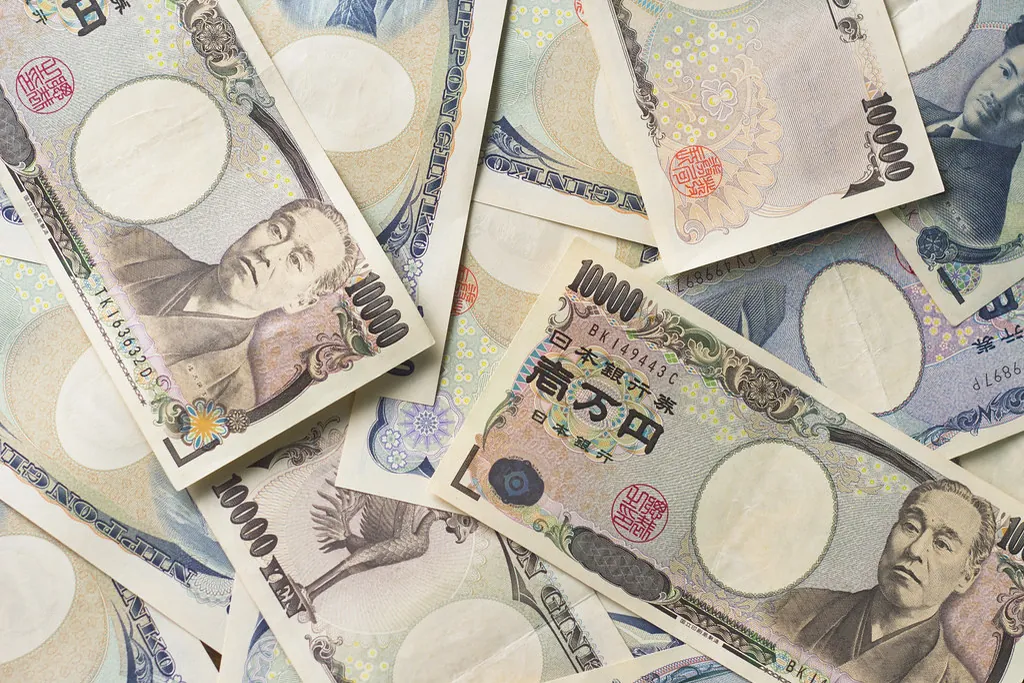
The notes in the photo are Japanese yen. You need cash for the envelope, so plan where to get it.
Some 7-Eleven stores have a money exchange machine that turns foreign notes into yen. It does not take coins, and each exchange must be below 100,000 yen. At the till, 7-Eleven accepts only Japanese yen in cash.
A Seven Bank ATM is the other easy option. It lets you withdraw up to 100,000 yen each time, or 30,000 yen with a magnetic stripe card. The menus come in 12 languages, and there are more than 28,000 of these ATMs in Japan. Our 7-Eleven ATM guide covers card brands and hours.
Other charges visitors mistake for tips
Several official charges can look like a tip or a service fee on a receipt. Each one is set by a government body, and you cannot opt out of it.
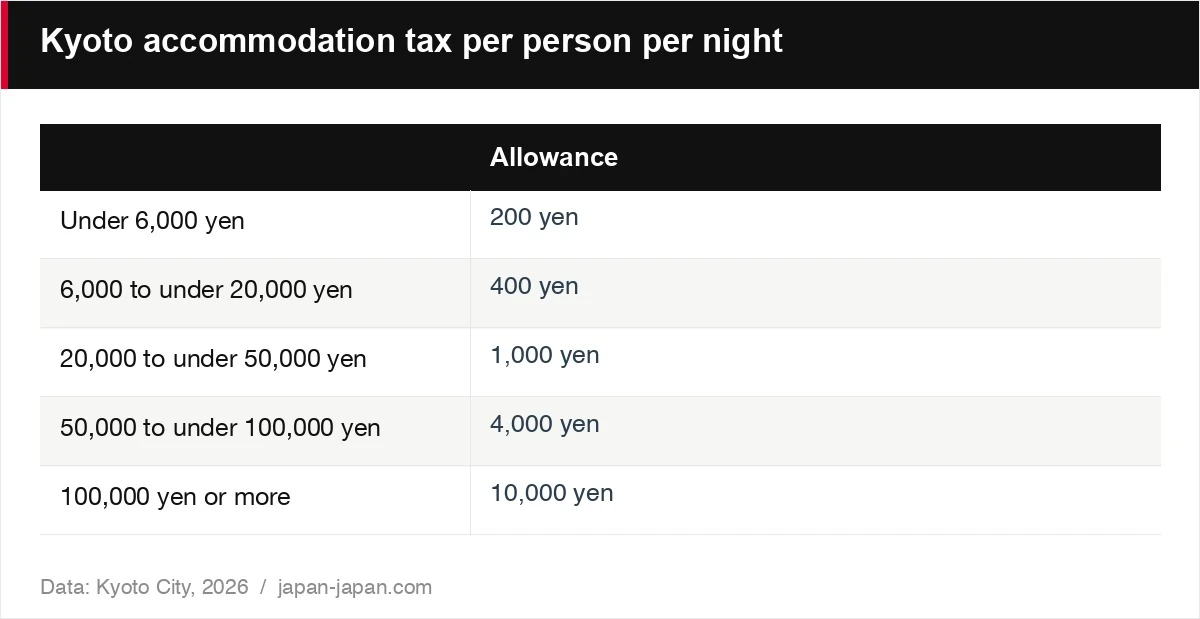
| Item | Value |
|---|---|
| Under 6,000 yen | 200 yen |
| 6,000 to under 20,000 yen | 400 yen |
| 20,000 to under 50,000 yen | 1000 yen |
| 50,000 to under 100,000 yen | 4000 yen |
| 100,000 yen or more | 10,000 yen |
The bar chart shows Kyoto’s accommodation tax per person per night. The Kyoto City accommodation tax page sets five bands. A room rate under 6,000 yen carries 200 yen. From 6,000 yen up to 20,000 yen it is 400 yen. From 20,000 yen up to 50,000 yen it is 1,000 yen. From 50,000 yen up to 100,000 yen it is 4,000 yen, and at 100,000 yen or more it is 10,000 yen.
Kyoto taxes every guest, at hotels, ryokan, simple lodgings and private rentals alike. The room rate here counts the room charge and any service charge, but not meals or consumption tax. Kyoto City notes the tax may already be inside what you paid a booking site, so check with the property.
The international tourist tax is the next one. The National Tax Agency international tourist tax page sets it at 3,000 yen per departure. It applies to anyone leaving Japan, whatever the purpose of the trip. The airline or ship operator collects it, usually by adding it to the ticket price.
The 3,000 yen rate applies to departures from 1 July 2026. Some tickets bought under contracts signed before that date keep the earlier 1,000 yen rate. Our departure tax guide explains who pays and when.
Tax-free shopping is changing as well. The Japan Tourism Agency new tax-free system page says that for purchases from 1 November 2026, you pay the full tax-inclusive price in the shop. You get the consumption tax back after customs confirms at departure that you are taking the goods out of Japan.
You must complete that customs check within 90 days of purchase, at a kiosk in the departure lobby before you check your bags. The refund comes from the shop or a refund company it uses. Our guide to what changes on 1 November 2026 and the 90-day deadline page walk through each step.
| Charge | Amount | Who sets it |
|---|---|---|
| Consumption tax | 10% standard, 8% reduced | National Tax Agency |
| Tokyo accommodation tax | 100 or 200 yen per person per night from 10,000 yen; 3% from 1 April 2027 | Tokyo Bureau of Taxation |
| Kyoto accommodation tax | 200 to 10,000 yen per person per night | Kyoto City |
| Bathing tax at hot springs | 150 yen per person per day (standard) | Ministry of Internal Affairs and Communications |
| International tourist tax | 3,000 yen per departure | National Tax Agency |
The table brings these charges together. Each row shows what the charge is for, how much it is and which authority sets it. Use it to read a receipt and confirm that nothing on it is a tip.
Saying thank you without money
In Japan, people show thanks with words. The JNTO customs and etiquette guide says tipping is not customary and will often be met with confusion. It suggests “arigato gozaimashita” and a smile instead.
Here is the phrase you will use most:
- ありがとうございました: arigato gozaimashita, “thank you” for something that is finished, such as a meal or a ride.
- ありがとう: arigato, the short and casual “thank you” the Osaka Convention & Tourism Bureau mentions for bars, restaurants and taxis.
Say it as you pay at the register, as you step out of a taxi, or as you check out of your hotel. It costs nothing and fits the local way of showing thanks.
JNTO also points out that a word or two in Japanese is always appreciated. Learning how to say “please” and “thank you” makes a real difference. That small effort does the job a tip does in other countries.
Small acts help too. Fold your oshibori towel and set it to the side after use. Show up on time for a restaurant booking, or cancel well in advance. In small restaurants, the kitchen buys ingredients based on reservations, so a no-show wastes food.
FAQ
Is it rude to tip in Japan?
Tipping is not customary in Japan, and JNTO says it will often be met with confusion. Say “arigato gozaimashita” with a smile instead.
Do you tip taxi drivers in Japan?
No. JNTO lists taxis among the services where people do not tip, and the Osaka Convention & Tourism Bureau says “arigato” is enough. Pay the fare on the meter or in the app and take your change.
Should I tip at a ryokan in Japan?
No, you do not need to. JNTO lists hotels among the places where tipping is not common. Some guests give kokorozuke, a gratuity from the heart, but nobody expects it from a visitor.
Is there a service charge or hotel tax on the bill in Japan?
You may see accommodation tax in Tokyo, Kyoto and some other cities, plus a 150 yen standard bathing tax at hot springs. Kyoto City’s rules count any service charge as part of the room rate. These lines are taxes and set charges, not tips.
About the author