Fushimi Inari Shrine Entrance Fee: Free, Hours and Trains
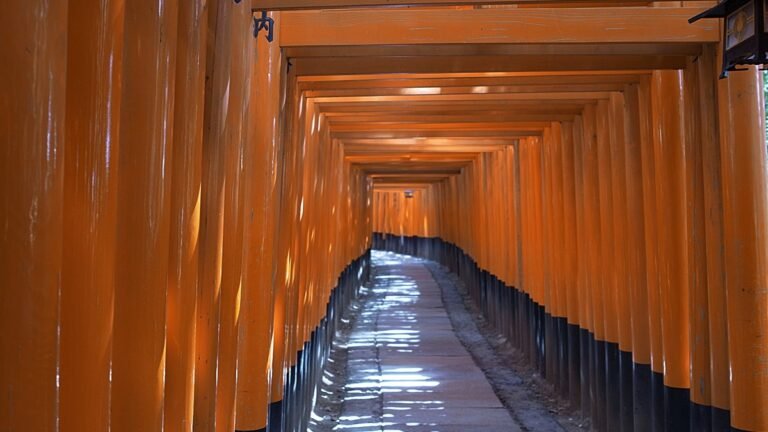
The ANA Japan Travel Planner Fushimi Inari Taisha page is clear on all three points. Entrance to the shrine is free, the shrine is always open, and there are no closing days. The JR West Explore Japan Fushimi Inari-taisha page adds that the shrine is never closed to the public.
So the money you spend on this visit goes elsewhere. You pay a train fare to get there. You may buy a snack on the approach or a charm at the shrine windows. If you sleep in Kyoto, your hotel collects the city’s lodging tax, which changed on 1 March 2026. This guide covers each of those costs, then the trains, the hike and the best hours to go.
The trip itself is short. The flow chart below follows it from the platform at Kyoto Station to the top of the mountain.
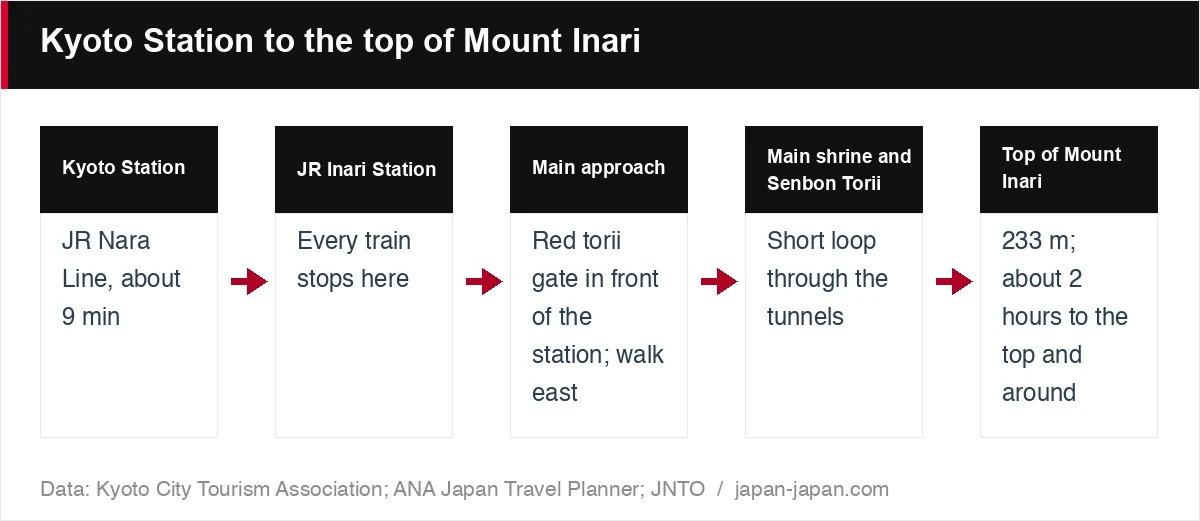
You ride one train, step out at the shrine’s front gate and climb as far as you like. Mount Inari is 233 meters tall, and the summit loop is a steady uphill walk through the gates.
No Fushimi Inari Shrine entrance fee: what costs money
Everything inside the shrine grounds is free. That covers the main shrine buildings, the Senbon Torii tunnels, the paths up Mount Inari and any visit after dark. Shrine priests and shrine maidens sell protection charms from windows along the side of the main shrine. Buying one is your choice.
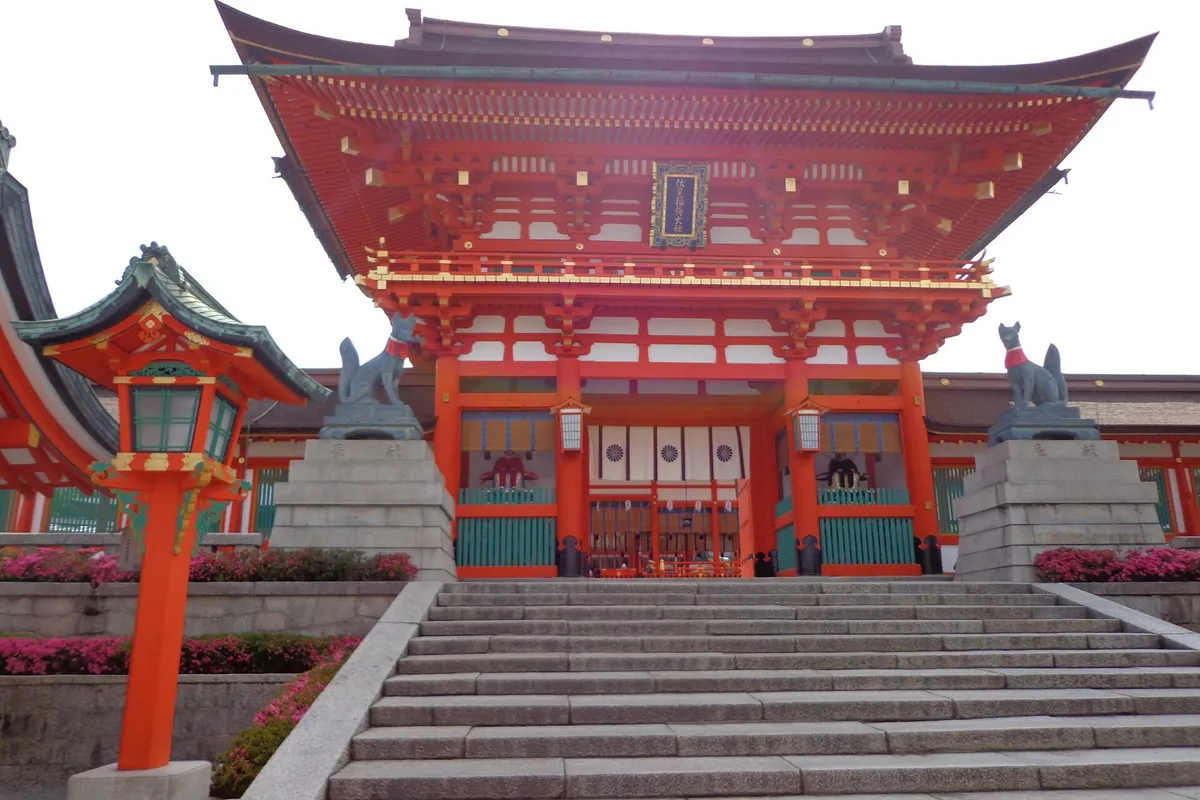
The photo below shows the vermilion buildings at the foot of the mountain, where every visit starts.
The main paid option is the English guided tour. The Kyoto City Tourism Association Fushimi Inari guided tour page lists the details. Kyoto City Visitors Hosts, the city’s official guides, lead the walk, and the shrine officially supports the tour. It starts every day at 10 AM and 11:30 AM and lasts about one hour. The fee is 4,000 yen per person.
The fee covers the 60-minute walk through the Senbon Torii and a Kagura performance at the Kagura Hall. Female shrine attendants called Kagurame perform this sacred dance. You may not take photos or video while they dance. Train fares to the shrine are not part of the fee.
- Children: Each paying adult can bring one child aged 0 to 12 for free. Every extra child needs an adult ticket.
- Earphones: Only paying guests get earphones. Buy an adult ticket for a child who needs a set.
- Timing: Be at the meeting point 10 minutes early. Tours start on time.
- Days off: No tours run on days with large events or festivals at the shrine. Check the booking calendar first.
The tour runs only in English. Children must stay with an adult for the whole hour.
The illustration splits the two lists. The shrine, the paths and night visits sit on the free side. The train, the tour and the lodging tax sit on the paid side.
Food on the approach costs a little too. The JNTO Fushimi Inari Taisha Shrine spot page points to sweet shops selling tsujiura senbei. This fortune cookie may date back to the 19th century. Tea stalls sell inari sushi and kitsune udon, both made with aburaage, the fried tofu that foxes are said to love. About halfway up the mountain, a shop and tea stall sell drinks, snacks and ice cream.
Getting there from Kyoto Station and Gion
From Kyoto Station, take the JR Nara Line to JR Inari Station. The Kyoto City Tourism Association access to Fushimi Inari page gives the ride as about 9 minutes. JR West lists it as 5 minutes. Every train on the line stops at Inari, including the Miyakoji Rapid and the Regional Rapid Service. Board the first one that comes.
When you leave JR Inari Station, a large red torii gate and the main approach stand right in front of you. Walk east and you reach the shrine within a few minutes. On signs and maps, look for 伏見稲荷大社 (Fushimi Inari Taisha), which means Fushimi Inari Grand Shrine.

The photo shows JR Inari Station with the shrine’s big torii gate across the road.
From Gion or Shijo Kawaramachi, use Keihan instead. Board at Keihan Gion-shijo Station and ride straight to Fushimi Inari Station in about 22 minutes. Limited express trains do not stop at Fushimi Inari, so take a slower train. From the station, walk east for about 5 minutes through a temple town of souvenir shops and Kyoto-style restaurants. You cross the Inari Bridge and the JR tracks before the red torii gate comes into view. JNTO gives the same walk as about 7 minutes.
Skip the City Bus South No. 5 from Kyoto Station. The tourism association warns that its timing can vary by more than 24 minutes. The table below puts the three options side by side.
| Route | From | Time | Note |
|---|---|---|---|
| JR Nara Line | Kyoto Station to JR Inari Station | About 9 min | All trains stop; red torii gate at the station |
| Keihan Line | Gion-shijo Station to Fushimi Inari Station | About 22 min | Limited express skips it; walk east about 5 min |
| City Bus South No. 5 | Kyoto Station | Varies | Can run more than 24 min off schedule; avoid |
The shrine stands at 68 Fukakusa Yabunouchi-cho in Fushimi Ward, in the south of Kyoto. The box below sums up entry, hours and the quickest train.
| Place | Fushimi Inari Taisha |
|---|---|
| Price | Entrance free |
| Hours | Always open, no closing days |
| Access | JR Nara Line from Kyoto Station to JR Inari Station, about 9 min; the shrine is in front of the station |
| Official site | ANA Japan Travel Planner Fushimi Inari Taisha page |
To tap in and out instead of buying paper tickets, use an IC card. Our guide to IC cards in Kyoto explains which cards you can use on the city’s buses and subway. An ICOCA card costs 2,000 yen at JR West ticket machines, and that price includes a 500 yen deposit you get back. JR West says ICOCA works on railways and buses all across Japan.
The lookup chart above sums up the choice: where you start decides which train you take.
Flying into Kansai Airport? Ride to Kyoto Station first. Our Kansai Airport to Kyoto page compares the two direct options. The JR Haruka express takes about 75 minutes, and the visitor one-way ticket costs 2,200 yen. The limousine bus takes 85 to 88 minutes for 2,800 yen. At Kyoto Station, change to the JR Nara Line for the short hop to Inari.
The Miyakoji Rapid that stops at Inari also runs on to Nara, so you can pair the shrine with a day trip. Our Kyoto to Nara route page has the details. If you plan to ride Keihan several times, look at the KYOTO-OSAKA SIGHTSEEING PASS, which covers the Keihan Main Line.
The torii gate hike: how long it takes
A full loop of the torii gate hike takes about two hours. The ANA guide describes a two-hour walk to the top and around the mountain, with wide views over Kyoto. JNTO allows two to three hours to tour the mountain.
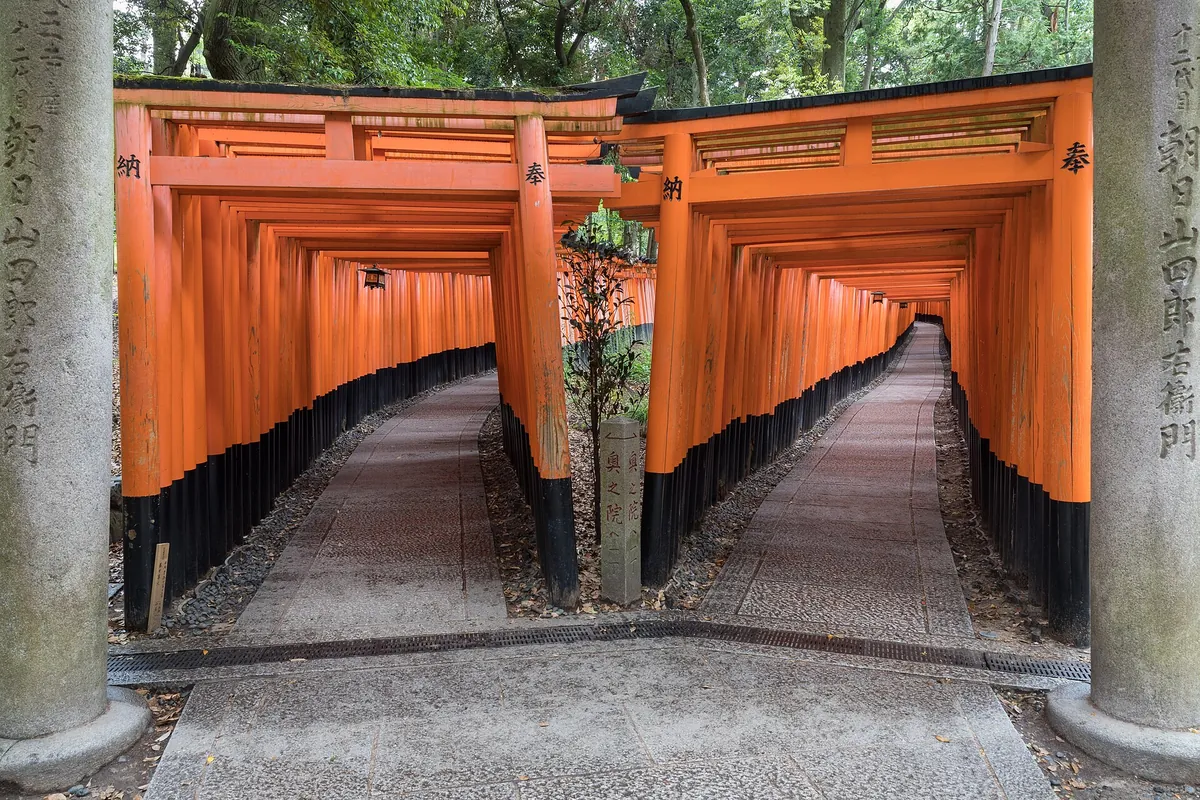
The photo shows one of the paths lined with red torii, the scene most people come to see.
The gates have a long history. The shrine traces its roots to 711, before Kyoto became Japan’s capital. It grew in the Edo Period, in the 17th and 18th centuries, when Japan was at peace and trade was strong. Merchants came here to pray for business success. They paid for torii gates along the paths from the main shrine to the top of Mount Inari.
That custom never stopped. Companies and people from all over Japan still dedicate gates to the shrine, and some gates date from the Edo period (1603-1867). The approach to the Okunoin shrine is called Senbon Torii, which means one thousand torii gates. JNTO says the whole mountain has as many as 10,000, along with many stone altars called otsuka.
Fushimi Inari Taisha is the head shrine for all of Japan’s Inari shrines. More than 30,000 shrines across the country honor Inari, the deity of good harvests and business success. Five deities are worshipped here.
Look for fox statues along the way. Foxes are the messengers of Inari. Many statues hold a key in their mouths, the key to a rice granary. Others hold a jewel, which stands for the spirit of the gods.
You do not have to reach the top. Most visitors make a short round through the tunnels at the base of the mountain. The ANA guide calls that perfectly fine if you are short on time.

The three tips in the illustration cover the main choices: a short loop at the base, the full two-hour loop, or a visit timed to miss the crowds.
For the full loop, JNTO suggests going from late morning until mid-afternoon and eating a light lunch on the way. Wear shoes you can climb steps in, and carry water for the upper paths.
Best time to go: early morning, night and winter
Because the shrine never closes, you pick the hour. ANA calls the entrance perhaps the most popular selfie spot in Kyoto. The crowd thins once you pass the gate and head up the hill. An early start or a visit after dark lets you skip the busiest part of the day.
Night visits are allowed on every day of the year, since there are no closing days. The lower tunnels are the easiest part to see after dark. If you plan the full loop, go in daylight so you can enjoy the views over the city.
Winter is cold but dry. The Japan Meteorological Agency Kyoto climate normals cover 1991 to 2020. In January, Kyoto averages 4.8°C, with a daily low of 1.5°C and a high of 9.1°C. February averages 5.4°C with a 1.6°C low. December averages 7.2°C with a 3.5°C low.
Rain is light in those months: 53.3 mm in January and 57.3 mm in December on average. November is milder, at 12.5°C on average with an 8.4°C low. For a month-by-month view of weather and events, see our Kyoto by month guide or Kyoto in January. In November the city fills up for the autumn leaves, and our Kyoto autumn leaves crowd guide shows how to plan around it.
New Year is the most crowded time at shrines across Japan, as families make hatsumode, the first shrine visit of the year. New Year’s Day 2027 falls on Friday 1 January. Banks close from 31 December to 3 January. JR Central makes every Nozomi reserved-seat only from 25 December 2026 to 5 January 2027, so book Shinkansen seats to Kyoto early.
Our New Year 2026–27 holiday page lists closures and the busiest travel days. The New Year in Japan guide explains what is open and how hatsumode works.
Beyond the gates: Fushimi sake and ramen
The shrine is only one part of the Fushimi area. The Kyoto City Tourism Association Fushimi in Winter page notes that Fushimi is 10 to 20 minutes by Keihan train from central Kyoto. It lists several stops worth adding after the torii gates.
Start with sake. More than 20 sake breweries stand within a 3-kilometer radius in Fushimi. Near Fushimi Momoyama Station, restaurants run by the breweries pour rare and limited-edition sake with dishes to match. Kizakura Kappa Country, Torisei Honten and Bar En are three of them. Fushimi Momoyama Station is about 15 minutes from Fushimi Inari Station.
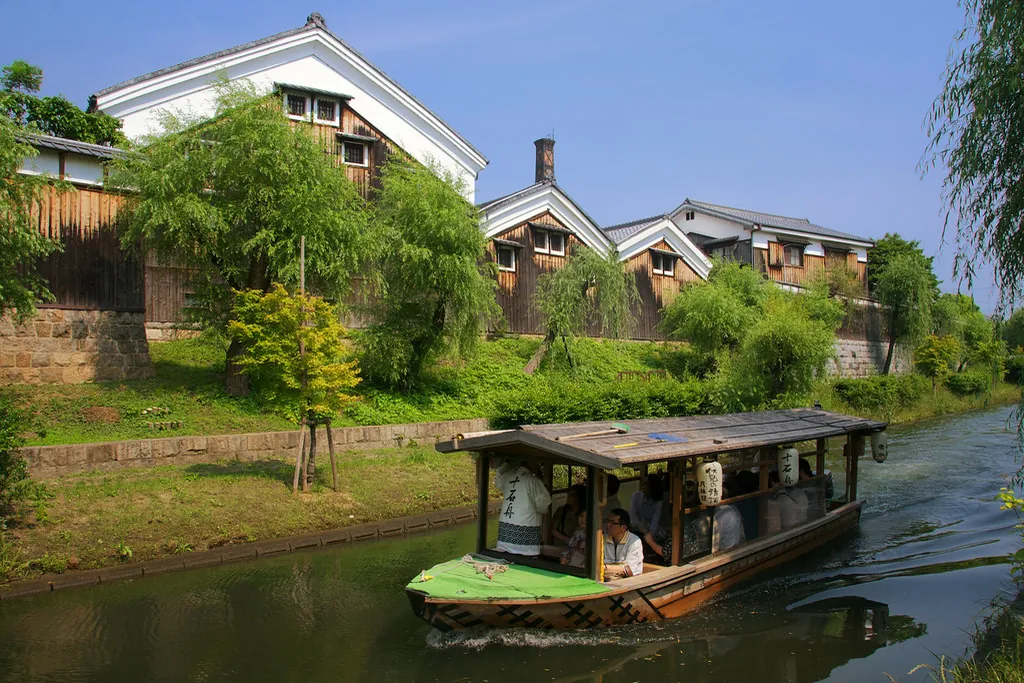
The photo shows one of the old brewery buildings in the Fushimi district.
For lunch, try the ramen. More than a dozen ramen shops cluster around Fujinomori Station and Fushimi Momoyama Station. Most bowls cost less than 1,000 yen. Fujinomori Station is about 3 minutes from Fushimi Inari Station.
In late winter, head to Yodo. Kyoto’s main cherry blossoms open from late March to early April. In the Yodo area of Fushimi, early Kawazu-zakura trees bloom from early February until mid-March. Yodo Station is about 20 minutes from Fushimi Inari Station.
Fans of the anime character Chiikawa can visit Chiikawa Mogu Mogu Honpo, a minute’s walk from the shrine. The store sells original and limited goods. Entry from 9:30 to 13:00 needs an advance reservation. From 13:00, the store hands out numbered tickets on the day.
Staying near Fushimi: Kyoto accommodation tax
If you stay the night in Kyoto, you pay the city’s lodging tax, also called the Kyoto accommodation tax. The City of Kyoto lodging tax page sets new rates from 1 March 2026. The tax runs from 200 yen to 10,000 yen per person per night, based on the room rate.
The bar chart below shows the five rate bands.
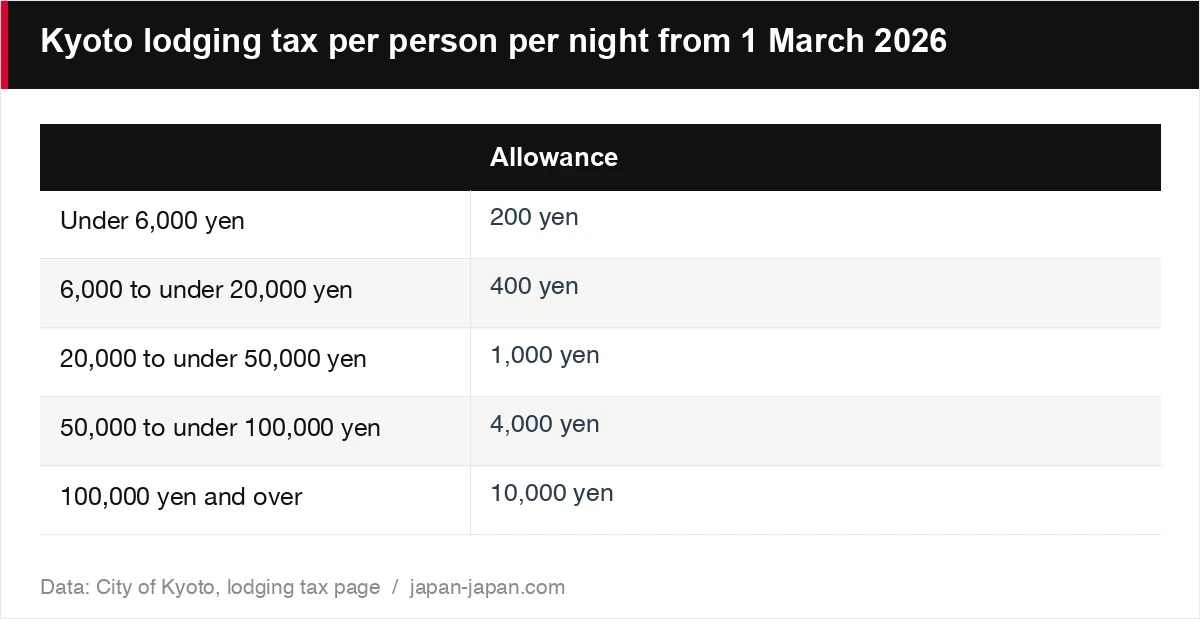
| Item | Value | Note |
|---|---|---|
| Under 6,000 yen | 200 yen | Unchanged |
| 6,000 to under 20,000 yen | 400 yen | Was 200 yen |
| 20,000 to under 50,000 yen | 1000 yen | Was 500 yen |
| 50,000 to under 100,000 yen | 4000 yen | Was 1,000 yen |
| 100,000 yen and over | 10,000 yen | Was 1,000 yen |
Under 6,000 yen a night, you pay 200 yen, the same as before. From 6,000 to under 20,000 yen, you now pay 400 yen instead of 200 yen. From 20,000 to under 50,000 yen, the tax is 1,000 yen, up from 500 yen. From 50,000 to under 100,000 yen it is 4,000 yen. At 100,000 yen or more it is 10,000 yen. Both of those top bands paid 1,000 yen before the change.
The room rate means the room charge and service charge only. Meals and consumption tax do not count. Every guest pays, whether at a hotel, a ryokan, a guesthouse or an unlicensed rental.
You pay the tax to the place you stay. The city adds that the tax may already be inside what you paid a booking site or travel agency. Ask the front desk at check-in if your booking does not say. Students on school trips run by Japanese schools other than universities are exempt, along with their teachers.
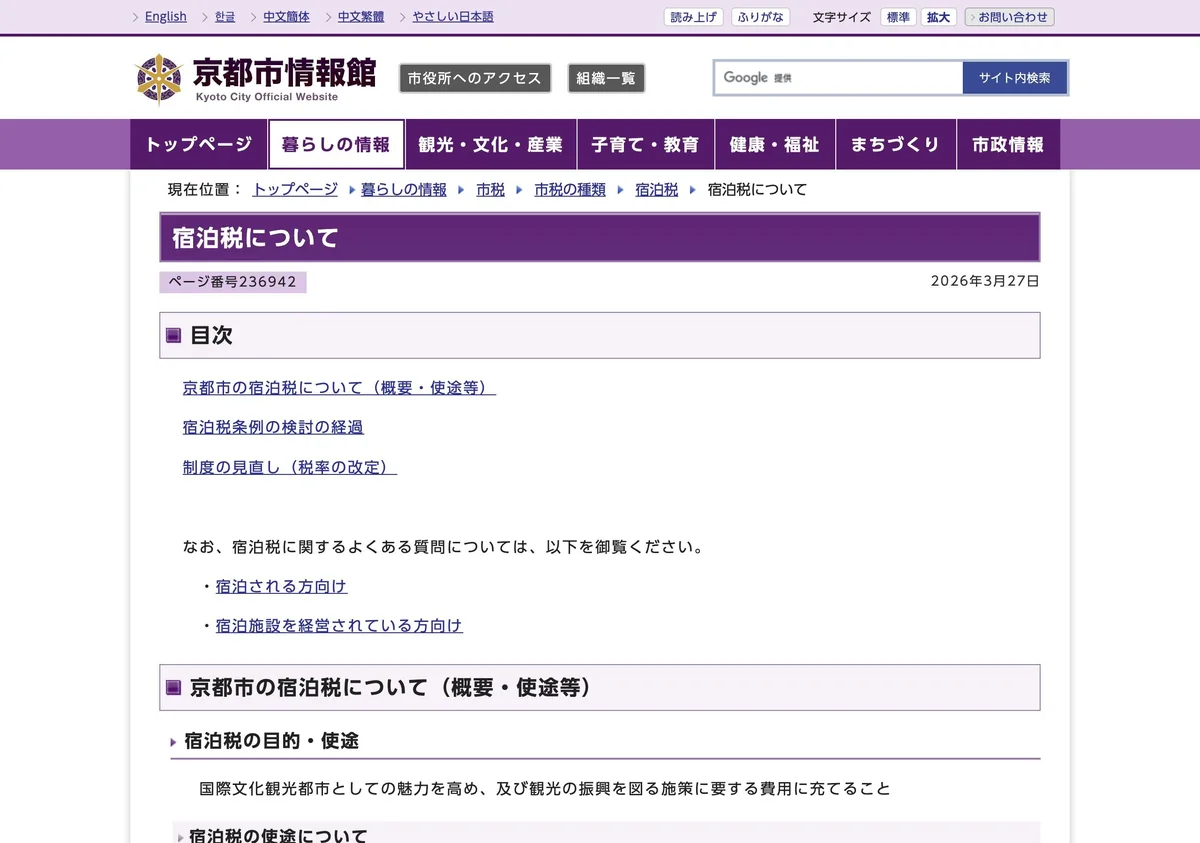
The screenshot shows the City of Kyoto’s own Japanese-language page on the lodging tax, where the city lists the rates and the start date.
Kyoto’s top rate of 10,000 yen a night stands out in Japan. Our Japan hotel tax by city guide compares Kyoto with other cities in Japan.
FAQ
Is Fushimi Inari Shrine free to enter?
Yes. Entrance to the shrine is free, and that includes the Senbon Torii and the paths up Mount Inari. You only pay if you join the English guided tour, which costs 4,000 yen per person.
Is Fushimi Inari open at night?
Yes. The shrine is always open and has no closing days, so you can walk the torii tunnels after dark. Stay on the lower paths at night and save the summit loop for daylight.
How long does it take to hike to the top of Fushimi Inari?
Plan on about two hours to reach the top and walk around the mountain. JNTO allows two to three hours for the full tour. A short round through the tunnels at the base takes much less time.
Do you pay Kyoto’s lodging tax at the hotel or when you book?
You pay it to the place you stay. The City of Kyoto says it may already be included in what you paid a booking site or travel agency. Ask at check-in if you are not sure.
About the author

_torii_,_%E4%BC%8F%E8%A6%8B%E7%A8%B2%E8%8D%B7%E5%A4%A7%E7%A4%BE_%E5%8D%83%E6%9C%AC%E9%B3%A5%E5%B1%85_-_panoramio.jpg)
.jpg)
