Chichibu Night Festival 2026: Dates, Fireworks and Access
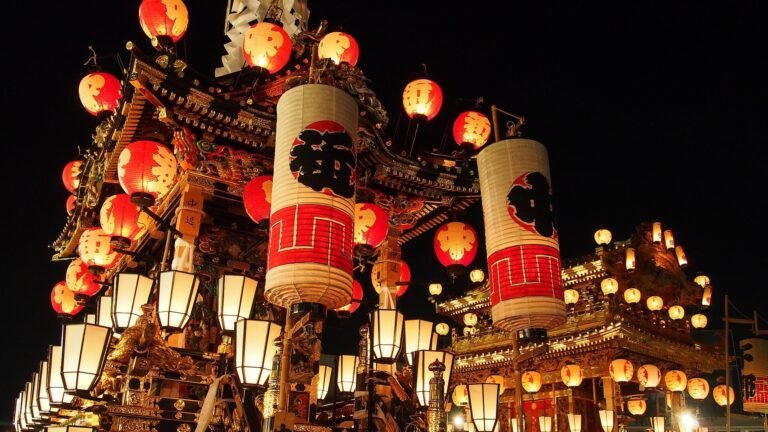
The festival belongs to Chichibu Shrine, the main shrine of Chichibu City in western Saitama. The Chichibu City tourism site Chichibu Night Festival page puts it among Japan’s three great float festivals. The other two are Kyoto’s Gion Matsuri and Hida’s Takayama Matsuri. Most of it is free to watch from the street. This guide uses the city’s 2025 figures, because the 2026 notice comes out in November.
Chichibu Night Festival 2026 dates and schedule
The dates never move. 2 December is the yoimiya, or eve, and 3 December is the taisai, the main festival. In 2026 they fall on a Wednesday and a Thursday, so both are working days in Tokyo.
The two days feel different. The Chichibu City tourism site Chichibu Night Festival Q&A explains the difference. On the 2nd, the four yatai floats start at about 9 to 11am and roll mostly along the main street. They are Miyaji, Kamimachi, Nakamachi and Motomachi. The city calls the 2nd the easier day to watch. You can see floats pass each other, children dance on the float stages, and each float pays its visit to the shrine.
On the 3rd, all six floats set off at about 8 to 9am and are pulled around the town all day. At night they move in procession to the Otabisho, the resting place of the shrine’s deities for the night. Each float climbs the steep Dango-zaka slope to get there.
| Day | Floats out | What to see | Fireworks (2025) |
|---|---|---|---|
| 2 Dec (eve) | 4 yatai, from about 9-11am | Floats passing each other, hiki-odori dances, shrine visits | 7pm-8pm, 370 shots |
| 3 Dec (main day) | All 6 floats, from about 8-9am | Shrine visits, night procession to the Otabisho, Dango-zaka climb | 7:30pm-9:55pm, 4,100 shots |
The table puts the two days side by side with the 2025 fireworks. Pick the 2nd for space and close views of the floats. Pick the 3rd for the procession, the climb and the big fireworks show.
In 2025 the city added a third date. On 5 December a yabusame horseback archery rite took place. A ceremony at Chichibu Shrine began at 1pm, and the archery followed at 2pm behind Michi-no-Eki Chichibu, the roadside station. Look for it in the 2026 notice before you plan a third day.
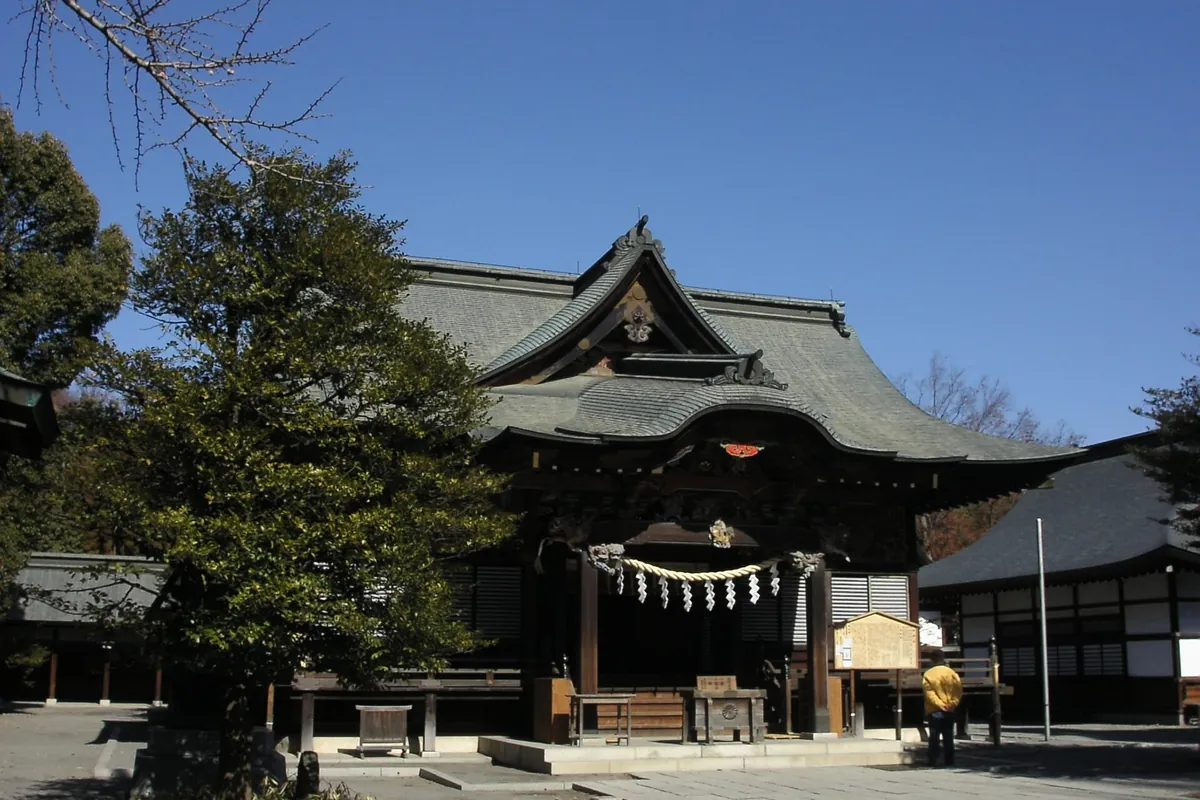
The photo shows Chichibu Shrine, the heart of the festival. Every float stops at its gate during the day on the 3rd.
Detailed plans come out late. The Chichibu City tourism site 2025 Chichibu Night Festival notice first went online on 12 November 2025, with the traffic map and the float timetable. Expect the 2026 versions around mid-November.
The 3rd is also a school holiday in town. Chichibu keeps it as a day to enjoy traditional culture, and primary and junior high schools close, so local families fill the streets too.
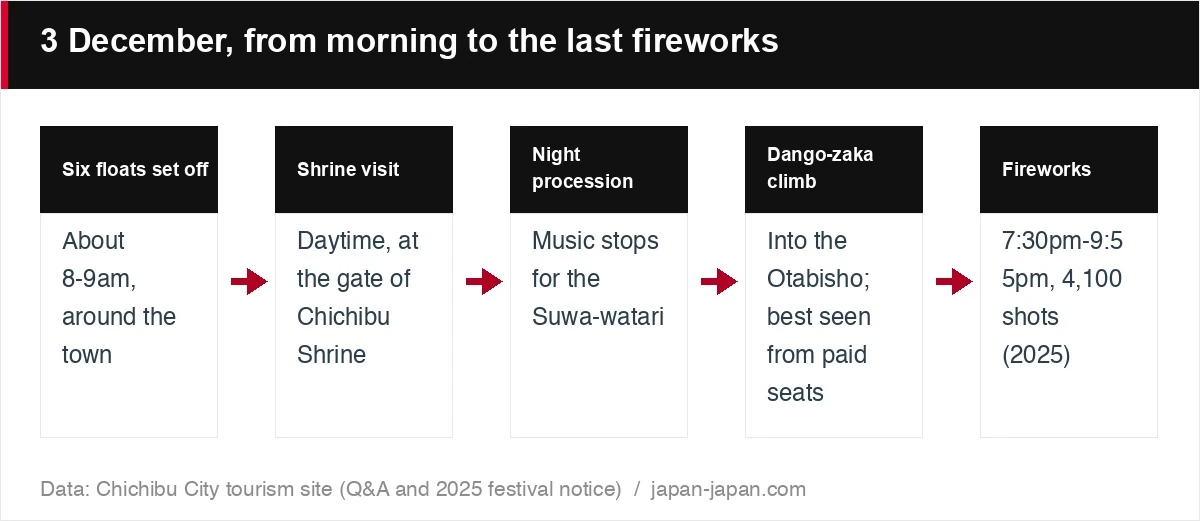
The flow chart follows the main day from the morning start to the last fireworks. Use it to decide when to arrive and where to be after dark.
The six floats and the Dango-zaka climb
Six floats take part. Two are kasaboko, tall floats hung with lanterns and topped with a parasol of flowers: Nakachika and Shimogo. Four are yatai, which carry musicians and a stage: Miyaji, Kamimachi, Nakamachi and Motomachi.
The floats weigh up to 20 tonnes. The Japan Tourism Agency multilingual guide Chichibu Night Festival says they are built with traditional wood joinery and contain not a single nail. The same guide dates the festival in its current form to over 300 years ago.
It also explains why there are six. When the Edo government banned religious festivals from 1827, six districts of Chichibu kept holding theirs for 50 years. Three districts held the festival one year and the other three the next. Each float today stands for one of those six towns.
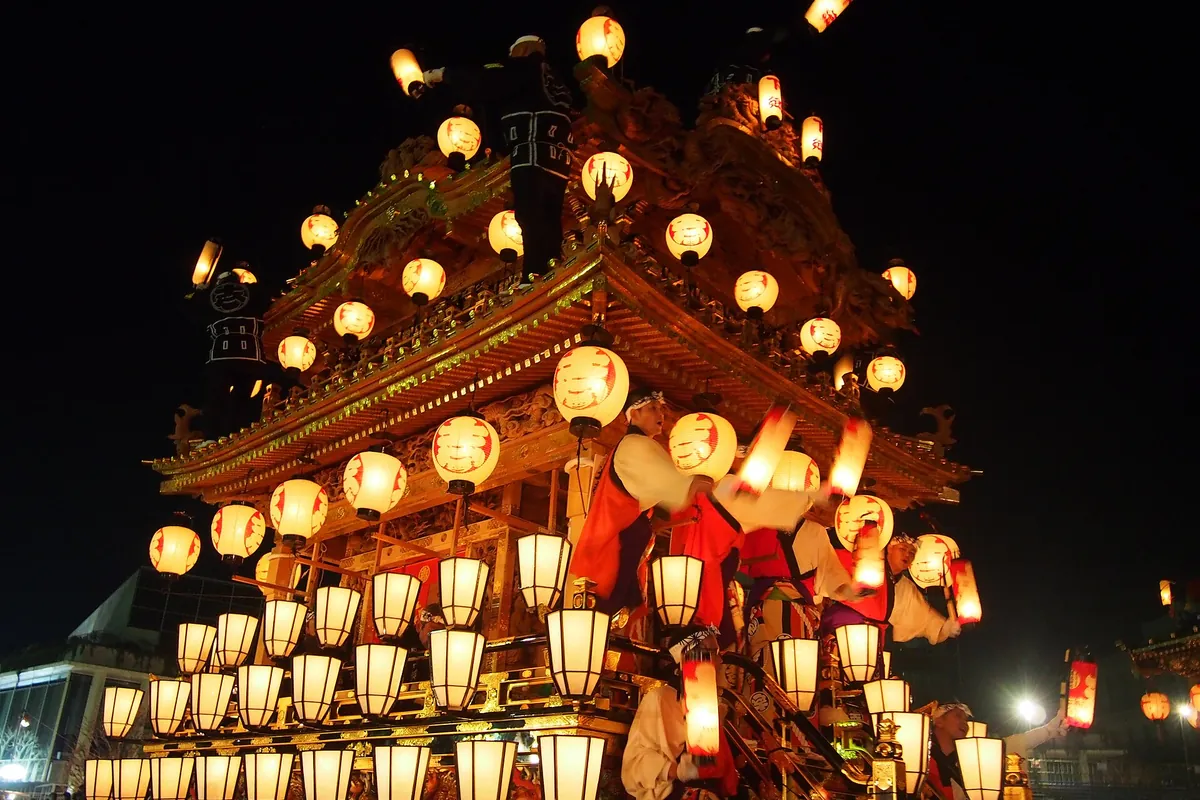
At night the floats glow with rows of paper lanterns, as in the photo. Hundreds of people pull each one on two long ropes.
The city’s Q&A lists these moments to watch for.
- Dango-zaka climb: on the night of the 3rd, each float is hauled up Dango-zaka, a short steep slope, into the Otabisho. It is the climax of the festival.
- Giri-mawashi: the floats have four wheels and cannot steer. At a corner, the crew lifts the back with lever poles, sets the float on a single pivot pole and swings it round.
- Surechigai: when two floats meet, both stop, and the musicians play a strong rhythm called onami at each other.
- Miyamairi: in the daytime each float is pulled to the gate of Chichibu Shrine for prayers. The four yatai offer a dance there.
- Hiki-odori: children perform classical dance on the yatai stage to nagauta songs on the shamisen, at set stops along the route.
During giri-mawashi the music changes to a quick drum piece called tamaire. Listen for it as the float turns. The Kamimachi float uses its own turning device, called the kirin.
One quiet moment surprises many visitors. On the night of the 3rd, near the Chichibu Brand Hall on Motomachi street, the music stops and the floats pass in silence. This is the Suwa-watari, a sign of respect for the nearby Suwa Shrine.
The legend behind it comes from the Japan Tourism Agency guide. The goddess Myoken loves the dragon god of Mt. Buko, whose wife is the deity of Suwa Shrine. Each year Myoken visits Suwa Shrine to ask for a single night with him. Only the Motomachi float stops here, and a local child reads out a request to pass.
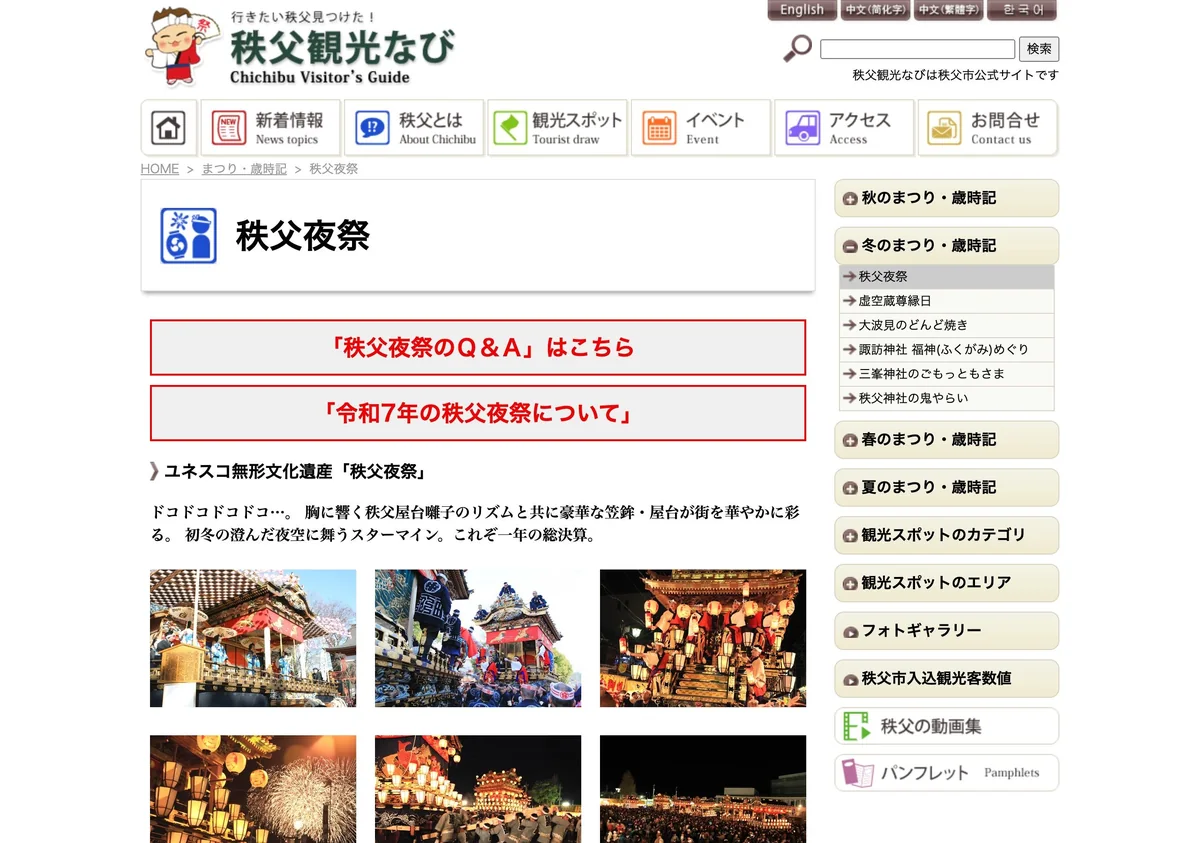
This is the festival page on Chichibu Visitor’s Guide, the city’s official tourism site. It links in Japanese to the Q&A, the yearly notice and a page for each float.
One yatai a year opens side stages and turns into a kabuki theatre, the yatai shibai. The turn rotates from Miyaji to Motomachi, Kamimachi and then Nakamachi. In 2025 it was the Nakamachi float, and the city notice names the float each year.
The caller at the front of each float, in a red and white under-robe, keeps shouting horyai. The Q&A explains that the call stands for Horai, the mythical mountain the floats represent. Each district picks its callers, and a person gets the role once in a lifetime.
The festival is on UNESCO’s Intangible Cultural Heritage list as part of Japan’s Yama, Hoko, Yatai float festivals. On any other day, the Chichibu Festival Exhibition Hall near the shrine shows float replicas with projection mapping. It opens all year until 5:00pm, festival days included.
Fireworks times and where to watch
Fireworks run on both nights, and the 3rd is the big show. In 2025 the city listed 370 shots of single fireworks and star mines from 7pm to 8pm on the 2nd. On the 3rd, a full display of 4,100 shots ran from 7:30pm to 9:55pm.
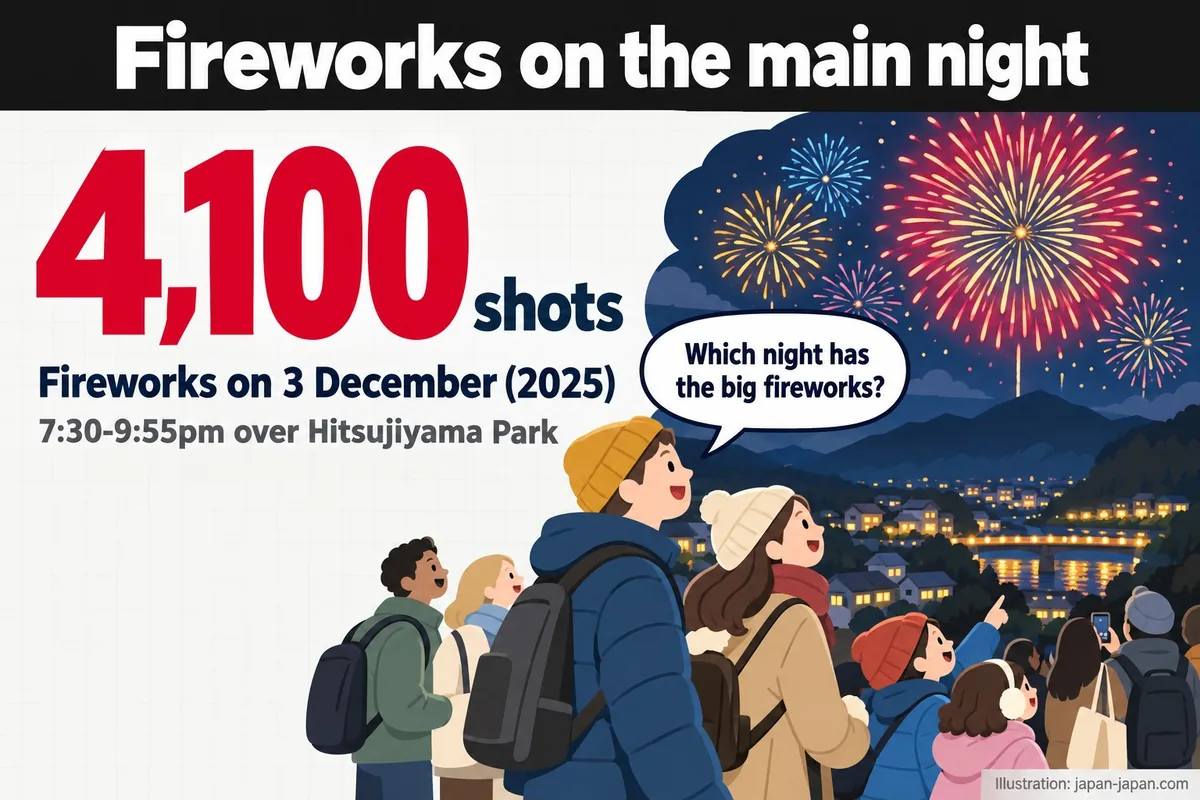
The drawing sums up the main night: 4,100 shots over Hitsujiyama Park in 2025. The shells go up from inside the park, and the park is closed to the public during set hours.
For the 3rd, the 2025 notice named three spots with a clear view.
- Route 140 between the traffic lights in front of Seibu-Chichibu Station and the Uenomachi crossing.
- The Chichibu City Hall car park, set up as a fireworks viewing area.
- The area in front of Seibu-Chichibu Station.
The Q&A adds the fronts of Chichibu Station and the Civic Hall, and the roadside of Route 140. It also warns that few places give you the floats and the fireworks at the same time. So pick one plan for the evening: stay with the floats in the streets, or walk to Route 140 for an open sky.
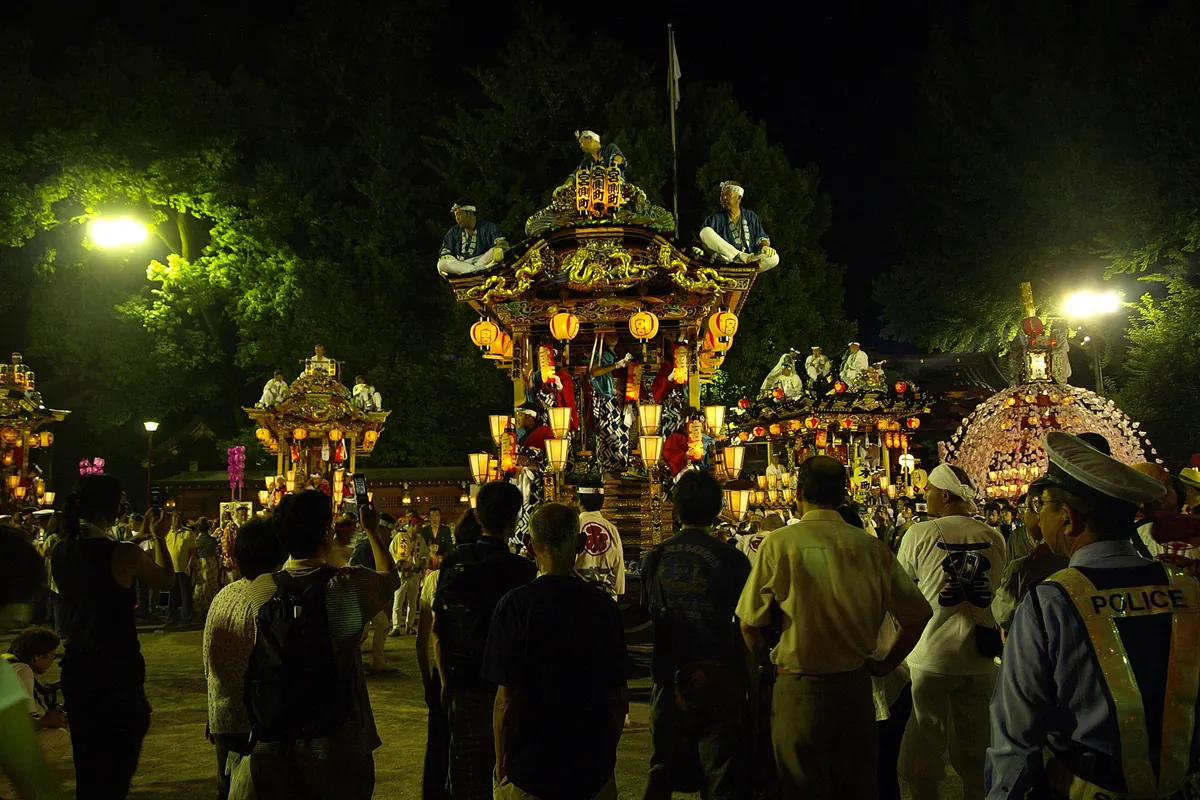
The last shell of 2025 went up at 9:55pm, so dress for the coldest part of the night.
The 2026 times will appear on the city’s traffic map, which came out on 12 November in 2025. Check them before you choose a train home.
Paid seats and free viewing spots
You do not need a ticket to enter the festival. The streets, the shrine and most of the route are free. Paid seats cover one part: the stands at the Otabisho, where the floats arrive at night after the Dango-zaka climb.
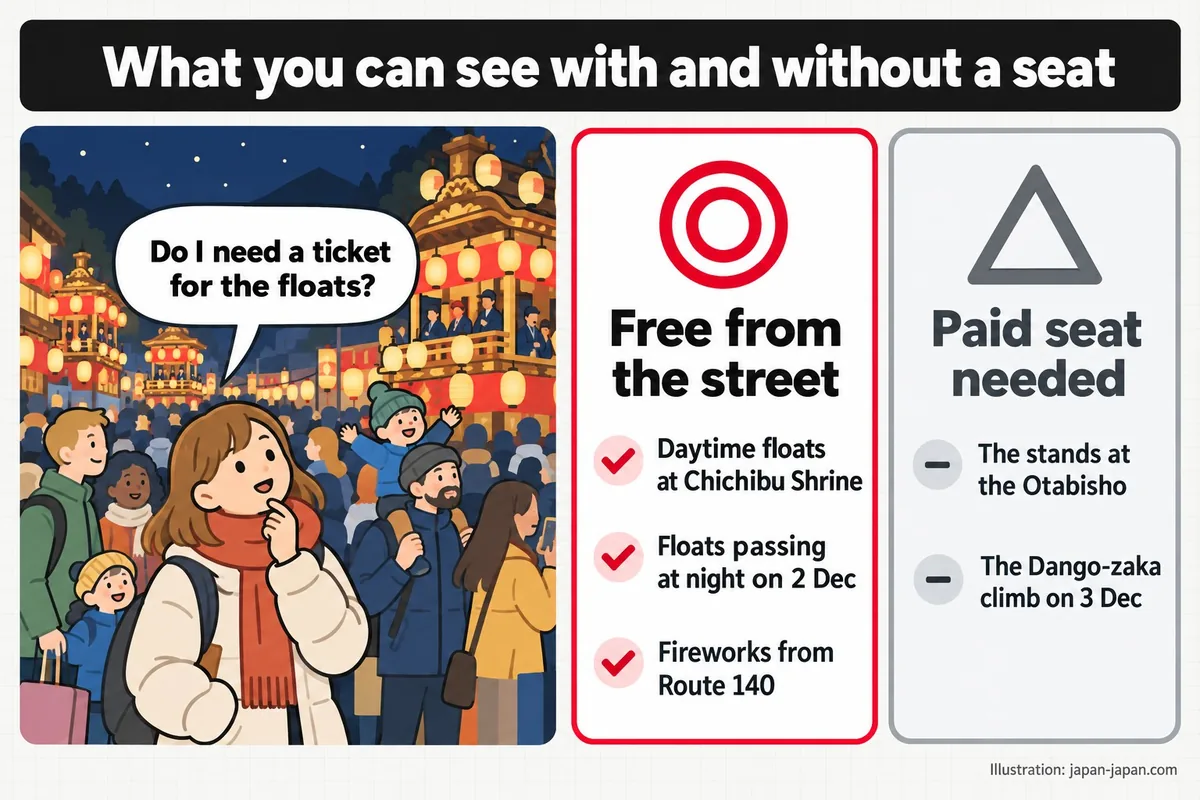
The drawing splits what you can see from the street from what needs a seat. The Q&A is direct about the climb. The area around Dango-zaka is narrow and full of temporary paid stands, so watching without a booking is almost impossible.
The Chichibu Tourism Association runs the Otabisho seats and sells them. The city and the festival committee do not deal with private seat sales, so ask the association about sale dates and same-day tickets. The city calls the seats 屋台観覧席 (yatai kanranseki, float viewing seats). You will also see 桟敷席 (sajiki-seki, stand seats).
Without a seat, the Q&A points you to these places on the 3rd.
- Daytime: Chichibu Shrine and the main street.
- Night: Chichibu Shrine, the front of Chichibu Station on the Chichibu Railway, and Motomachi and Nakamachi streets.
- Fireworks: Route 140, Seibu-Chichibu Station and the City Hall car park.
The 2nd is the best day for free viewing. Four floats move along the main street, they pass each other after dark, and the crowds are lighter. If you can come on both days, watch the floats up close on the 2nd and the fireworks on the 3rd.
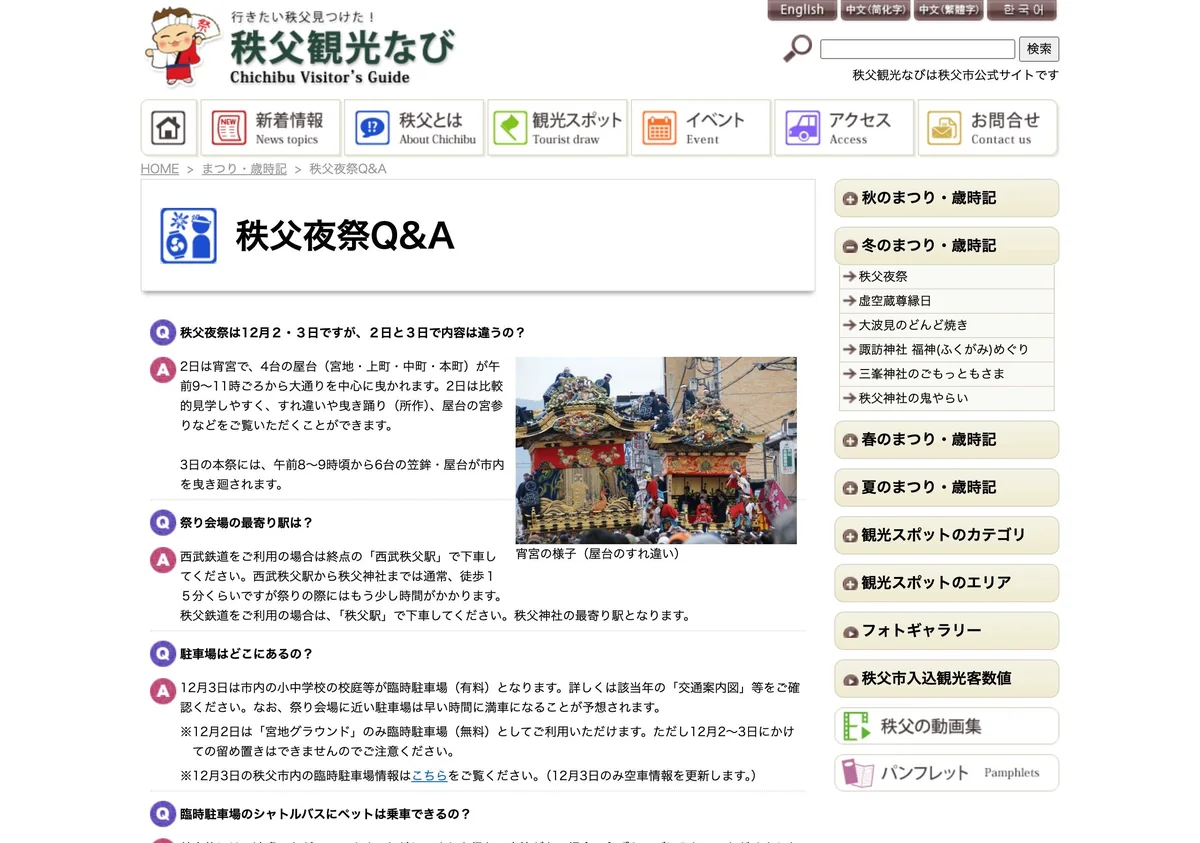
The screenshot shows the city’s Q&A page in Japanese. Its first answers cover the difference between the two days, the nearest stations and the car parks.
Getting there from Tokyo: trains, parking and shuttles
Take the train. The city asks visitors to use public transport, because car parks are limited and the town gets very crowded on the 3rd.
Seibu Railway. The JNTO Chichibu Night Festival float experience page gives the route from Tokyo Station. Ride the Tokyo Metro Marunouchi Line to Ikebukuro, about 20 minutes. Change to the Seibu Railway Limited Express Laview to Seibu-Chichibu Station, about one hour 20 minutes.
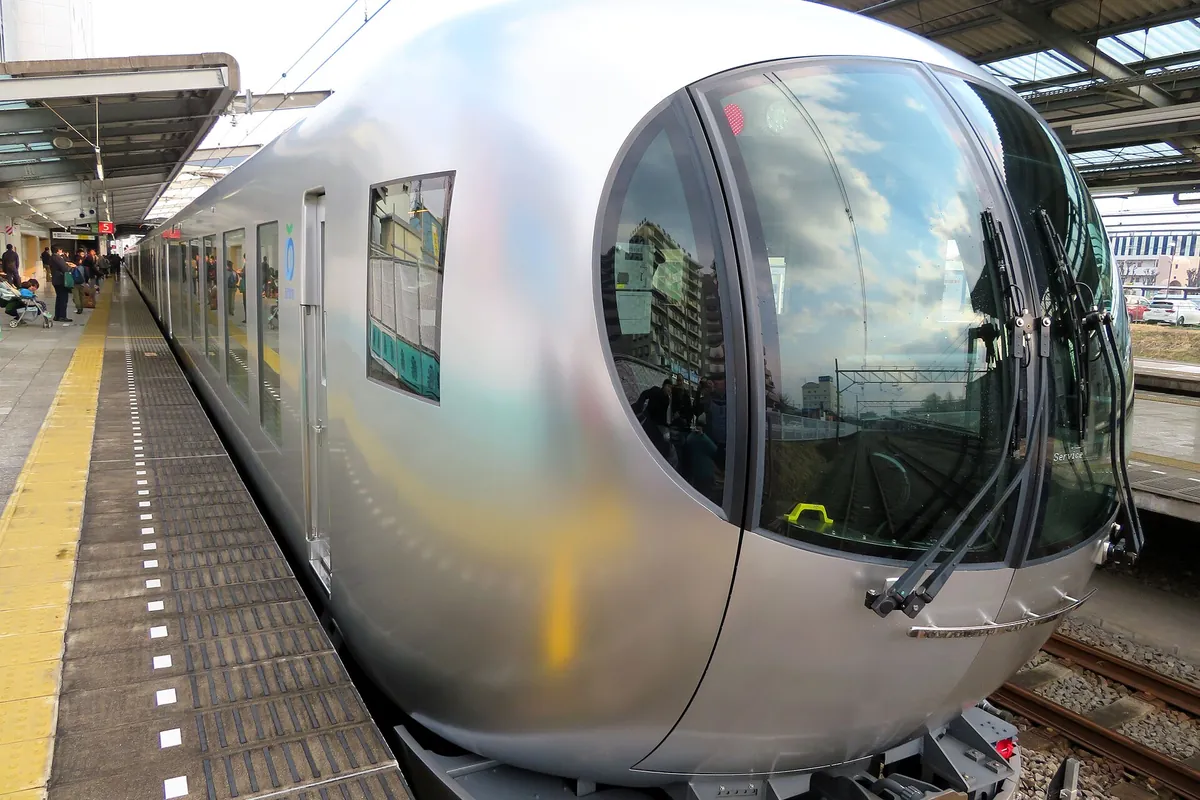
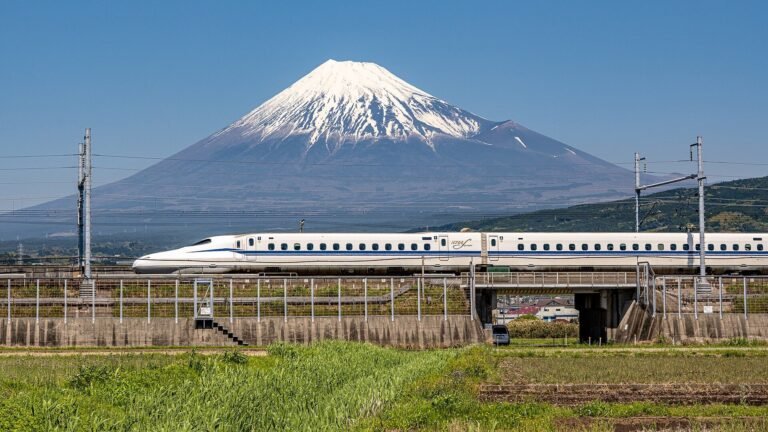
The photo shows the Laview, the silver Seibu express with large round windows. From Seibu-Chichibu Station, Chichibu Shrine is normally a 15-minute walk. During the festival it takes longer because of the crowds.
Chichibu Railway. Chichibu Station is the closest station to the shrine. The Chichibu City tourism site access page gives about 70 minutes from Kumagaya to Chichibu, so this line suits you if you travel via Kumagaya.
From the airports. Both rail routes start from Ikebukuro. Our Haneda Airport to Ikebukuro guide shows the Keikyu Line and JR at about 49 minutes for 680 yen. The Airport Limousine bus takes 50 to 70 minutes for 1,400 yen. From Narita, compare the bus options on our Narita Airport to Ikebukuro page.
By car. Leave the Kan-Etsu Expressway at Hanazono IC and follow Route 140 for about 35 km into Chichibu. Roadworks near Michi-no-Eki Chichibu bring lane closures and detours, and the city expects them to last until the end of fiscal 2027.
For 3 December 2025, the city opened eight temporary car parks, mostly on school grounds. You cannot reserve a space, and the ones closest to the festival fill early. P1 to P4 opened at 7:00, P5 to P7 at 9:00 and P8 at 13:00, and all closed at 24:00. You pay the fee even if you only drop someone off.
| Vehicle | Fee per vehicle (3 Dec 2025) | Car parks |
|---|---|---|
| Regular car, including kei cars | 1,000 yen | P1 to P8 |
| Motorbike | 500 yen | P1 to P8 |
| Medium vehicle | 3,000 yen | P1 only |
| Large vehicle | 5,000 yen | P1 only |
On 2 December only Miyaji Ground opened, free of charge, from 9:00 to 21:00. You could not leave a car there overnight into the 3rd.
Two free shuttle buses ran on the 3rd. One linked the main gate of Chichibu Daiichi Junior High School with Miyanokawa Children’s Park from 10:00 to 23:00. The other linked Kagemori Ground with the Chichibu Library car park from 13:00 to 23:00. Pets are asked to stay off the buses, and any pet that has to ride must travel in a cage.
Expect big crowds. The Chichibu City mayor’s report on the 2025 festival counted about 248,000 visitors over the two days.
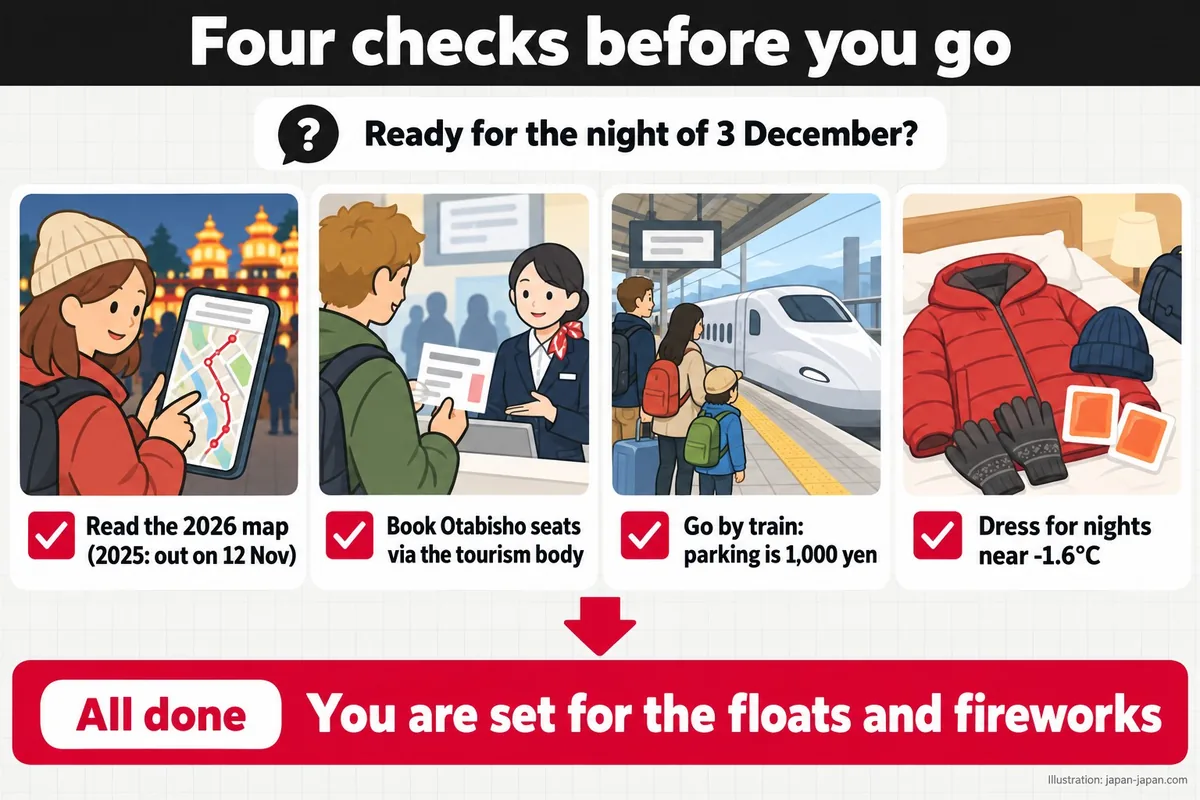
The checklist covers four things to sort out before you leave Tokyo: the map, a seat, the train and warm clothes.
December weather in Chichibu and what to wear
Chichibu is cold at night in December. The Japan Meteorological Agency Chichibu climate normals for 1991 to 2020 give December an average of 4.0°C. The daily high is 11.2°C and the daily low is -1.6°C. By the end of the fireworks, expect temperatures near freezing.
The sky is on your side. December averages 30.7 mm of rain and 192.3 hours of sunshine, so clear nights are common and the fireworks stand out.
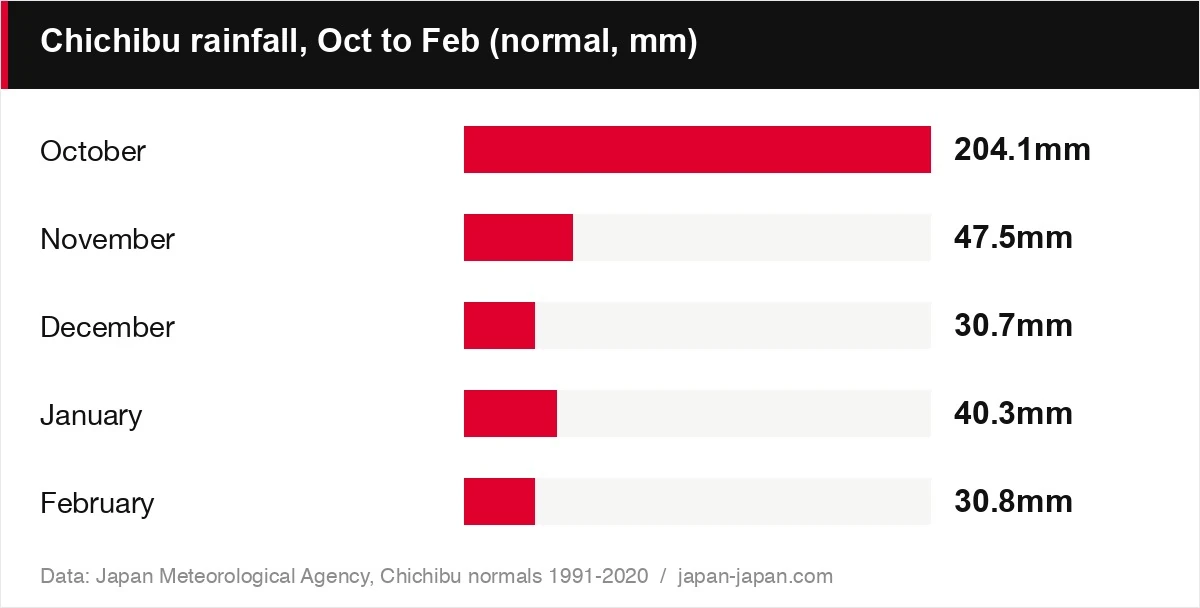
| Item | Value | Note |
|---|---|---|
| October | 204.1 mm | |
| November | 47.5 mm | |
| December | 30.7 mm | Festival month |
| January | 40.3 mm | |
| February | 30.8 mm |
The chart shows how dry Chichibu gets after October: 204.1 mm in October, 47.5 mm in November and 30.7 mm in December. January and February stay low at 40.3 mm and 30.8 mm.
Compare the months on either side. November averages 9.2°C, and January drops to 1.8°C. Chichibu is also colder than the capital: our Tokyo in December guide gives Tokyo a high of 12.0°C and a low of 3.8°C.
Pack for hours of standing still outdoors.
- A warm coat, a hat and gloves.
- Comfortable shoes for crowded streets and the walk from the station.
- Disposable hand warmers, sold all over Japan from autumn to spring in stick-on and pocket versions.
Our disposable hand warmers page confirms you can pack them in both carry-on and checked bags. Leave refillable fuel warmers at home, because our refillable hand warmers page shows they cannot go on a plane in Japan at all.
Japan festivals in December: fitting it into your trip
The Chichibu Night Festival is one of the biggest Japan festivals in December. It comes early in the month. December has no national holiday in 2026, as our December holidays page shows, so the festival falls on two ordinary working days.
That makes planning simple. Go to Chichibu on the Wednesday or Thursday, then spend Saturday 5 and Sunday 6 December in Tokyo. Hotels in Tokyo were 78.2% full in December 2025, according to our Tokyo in December guide, so book early. Senso-ji also holds its Hagoita-ichi battledore fair in December.
Later in the month, Christmas is a normal working day: Friday 25 December 2026. Our Japan Christmas guide covers markets, lights and what stays open.
The year-end break follows. Banks close from 31 December to 3 January, and New Year’s Day falls on Friday 1 January 2027. JR Central makes every Nozomi reserved-seat only from 25 December 2026 to 5 January 2027. Our New Year 2026–27 page lists closures and the busiest travel days.
For more cold-season trips, our list of places to visit in Japan in winter picks spots region by region.
FAQ
When is the Chichibu Night Festival in 2026?
It runs on Wednesday 2 December and Thursday 3 December 2026. The festival keeps the same dates every year. The 3rd is the main day, with the Dango-zaka climb and the larger fireworks show.
Do you need a ticket to see the Chichibu Night Festival?
No. The streets, Chichibu Shrine and most of the float route are free. You need a paid seat only for the Otabisho stands, which are also the only practical way to see the Dango-zaka climb. The Chichibu Tourism Association sells those seats.
Can you visit the Chichibu Night Festival as a day trip from Tokyo?
Yes. The Seibu limited express takes about 80 minutes from Ikebukuro to Seibu-Chichibu, and Ikebukuro is about 20 minutes from Tokyo Station on the Marunouchi Line. The city asks visitors to come by public transport. If you stay for the fireworks, check your train home before you go.
What time do the Chichibu Night Festival fireworks start?
In 2025 they started at 7pm on 2 December, with 370 shots until 8pm. On 3 December the main show ran from 7:30pm to 9:55pm with 4,100 shots. The 2026 times will be on the city’s traffic map, which came out on 12 November in 2025.
About the author

Photo: ChichibuFes1.jpg by ちちびあん (CC BY-SA 4.0, cropped), via Wikimedia Commons.


.jpg)

