Places to Visit in Japan in Winter 2026-27: Picks by Region
Sapporo's Snow Festival runs 4–11 Feb 2027, Niseko Grand Hirafu plans to open on 28 Nov 2026 and Naha averages 17.3°C in January. Dates and routes.
By Shunta Fujii
Places to visit in Japan this winter: the short answer
Choose places to visit in Japan this winter by what you want to do. Sapporo’s Snow Festival runs 4–11 February 2027, Niseko Grand Hirafu is due to open on 28 November 2026, and Naha averages 17.3°C in January.
For a thatched village under snow, go to Shirakawa-go. Tour buses heading there must book their parking space from 1 December 2026. For city sights, start with Tokyo, Kyoto and Osaka. Tokyo gets 192.6 hours of sunshine in an average January, the most of the four places in our weather table.
Plan around New Year. Banks close from 31 December to 3 January, and many sights close for several days.
The look-up below matches each kind of trip to a place and a date.

The sections that follow give January weather from the Japan Meteorological Agency, the festival and ski dates, and the new parking rule at Shirakawa-go. They end with the winter dates to plan around and the quickest ride from each airport.
Best cities to visit in Japan in winter
Tokyo is the sunny pick. The Japan Meteorological Agency (JMA) puts Tokyo’s January average at 5.4°C, with daily highs of 9.8°C and lows of 1.2°C. Snow falls on just 2.8 days in an average January. The city also gets 192.6 hours of sunshine that month, the most of the four places in the table below. The air is dry, with 59.7mm of rain over the month and 51% humidity on average. December and February are a little milder, at 7.7°C and 6.1°C on average.
Kyoto is a little colder. The JMA’s Kyoto averages give January a mean of 4.8°C, with highs of 9.1°C and lows of 1.5°C. Flakes fall far more often than in Tokyo, on 16.3 days in an average January. Little of it settles: new snow adds up to 5cm over the month, and the deepest cover averages 3cm. Kyoto gets 123.5 hours of sunshine in January.
The table below sets the four places side by side.
| City | Average (high / low) | Days with snow | Hours of sunshine |
|---|---|---|---|
| Sapporo | −3.2°C (−0.4°C / −6.4°C) | 29.1 | 90.4 |
| Tokyo | 5.4°C (9.8°C / 1.2°C) | 2.8 | 192.6 |
| Kyoto | 4.8°C (9.1°C / 1.5°C) | 16.3 | 123.5 |
| Naha | 17.3°C (19.8°C / 14.9°C) | 0.0 | 93.1 |
All four rows are JMA normals, the averages for 1991–2020. The column for days with snow counts the days on which any snow fell, so a light flurry counts the same as a heavy fall.
Kyoto and Osaka are both reached from Kansai Airport. The JR Haruka to Kyoto takes about 75 minutes with no change of train. Visitors with a foreign passport can buy a one-way Haruka ticket for 2,200 yen. The limousine bus takes 85–88 minutes and costs 2,800 yen, with the first bus at 06:45 and the last at 23:20.
For Osaka Station (Umeda), JR’s Kansai Airport Rapid Service takes about 65 minutes, again with no change. The limousine bus to Osaka Station takes 68–70 minutes for 1,800 yen and stops at three points around the station. It makes 67 departures a day from Terminal 1, from 06:50 to 23:45.
Tokyo has two big airports, Narita and Haneda. Our guide to getting from Narita or Haneda into Tokyo compares the trains and buses from both, with costs and last trains.
Hokkaido: Sapporo Snow Festival and Niseko
Hokkaido is the place for deep snow. The 2027 Sapporo Snow Festival, the 77th, runs for 8 days from Thursday 4 February to Thursday 11 February 2027. It uses three sites: Odori in the city centre, the Tsudome sports hall, and Susukino, where it lines Ekimae-dori from Minami 4-jo to Minami 6-jo.
The Odori site stretches from West 1-chome to West 11-chome. The organisers plan this layout:
- 1-chome: winter attractions.
- 2-chome: Sapporo International Art Festival 2027.
- 3-chome: small snow sculptures.
- 4, 5, 7, 8 and 10-chome: the five large snow sculptures, the symbol of the festival.
- 6 and 9-chome: medium and small snow sculptures.
- 11-chome: the International Snow Sculpture Contest.
The last day, Thursday 11 February, is National Foundation Day, a national holiday listed on our February holidays page. A linked event follows straight after. Sapporo Snow Sports Park 2027 runs at the Daiwa House Premist Dome from Friday 12 to Sunday 14 February.
Dress for real cold. The JMA’s Sapporo averages put January at −3.2°C, with highs of −0.4°C and lows of −6.4°C. Snow falls on 29.1 days in an average January and adds up to 137cm over the month. The deepest snow on the ground averages 76cm. February, the festival month, averages −2.7°C, and its deepest snow averages 95cm.
Sapporo is close to its airport. From New Chitose Airport, the JR Rapid Airport reaches Sapporo in about 30 minutes. Its station sits under the domestic terminal, and the international terminal is a short walk away along a connecting passage. Coin lockers start at 400 yen a day, in 3 sizes. To send a bag on, use the Yamato Transport counters: domestic terminal 1F and 2F, or international terminal 3F.
For skiing, go on to Niseko. Niseko Grand Hirafu plans to open its 2026-27 season on 28 November 2026 and to stay open until 5 May 2027. Night skiing is planned from 12 December 2026 to 22 March 2027. The resort says opening dates can move with the snow.
The resort has 22 runs: 9 for beginners, 6 intermediate and 7 advanced. It has 2 gondolas and 7 lifts, and you ski with Mt Yotei, one of Japan’s 100 Famous Mountains, in front of you. The ski area covers 135 hectares, from 1,200m at the top to 260m at the base, a vertical drop of 940m. The longest run is 5,300m, and the steepest pitch is 40°.
The snow is the draw. On the resort’s own figures, 620cm of new snow fell in January of the 2025-26 season. Averaged over the 2020-21 to 2025-26 seasons, the deepest January snow was 175cm at the base and 380cm on the upper mountain. On January operating days, the upper mountain averaged highs of −7.4°C and lows of −11°C.
Pick your weeks with care. The resort calls late December to February its high season, with deep snow, many events nearby and a busy resort. Night skiing runs every day in that period. From opening to mid-December, before the winter holidays, the slopes are relatively quiet, and March gets quieter again. In Japanese, the resort lists night skiing as ナイター (naitā).
GoSnow, a ski school at the resort, teaches group and private lessons in English. The resort’s official school runs group lessons in Japanese and private lessons in Japanese or English. Rentals for 2026-27 are 10% off when booked early. If you rent at the resort and stay nearby, the shop keeps your skis, board and boots until the next day.
Allow time to get there. By car, the resort is about 2 hours 10 minutes from New Chitose Airport. By JR and bus it takes about 3 hours 30 minutes: JR via Sapporo and Otaru to Kutchan Station, then a bus or taxi. In winter, a direct bus also links New Chitose Airport and Niseko.
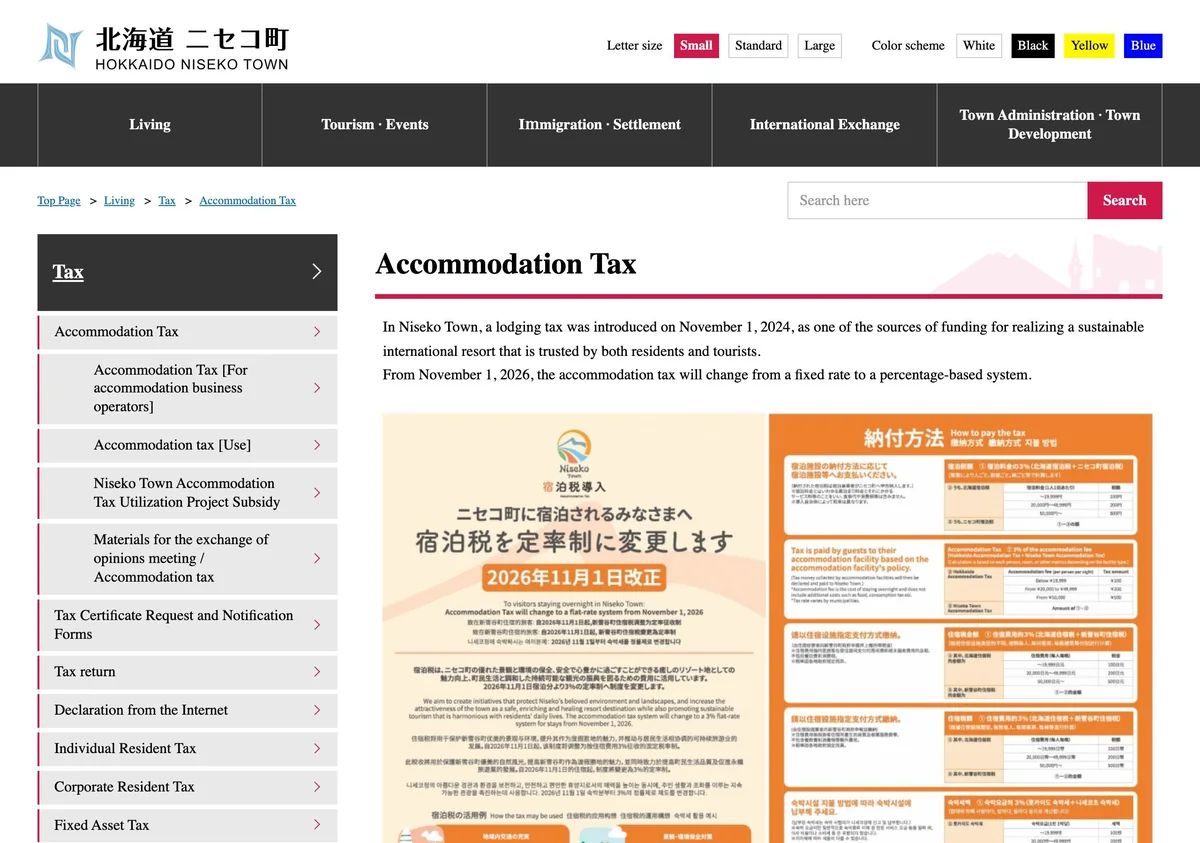
Check the tax before you book a room. Niseko Town introduced an accommodation tax on 1 November 2024. From 1 November 2026 it changes from a flat amount to a percentage of the room charge. Hokkaido has an accommodation tax of its own as well, and the town’s page refers you to the Hokkaido Government’s website for it. The screenshot below shows the town’s tax page.
Our Japan hotel guide covers room types and the hotel taxes in Tokyo, Osaka and Kyoto.
Japan tourist attractions in winter: Shirakawa-go, Mt Fuji, Hakone
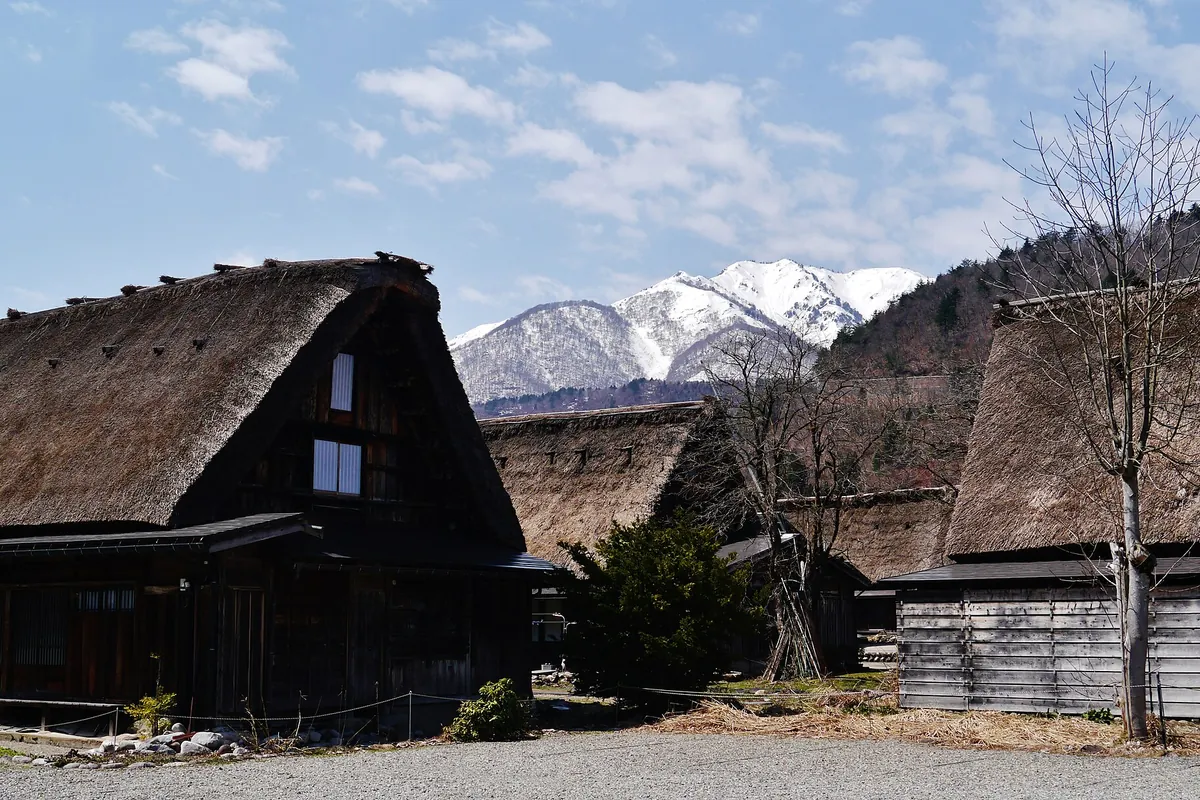
Shirakawa-go is a World Heritage village of steep thatched farmhouses. A new rule for coaches starts this winter. Shirakawa Village has made tour buses book ahead at the village-run Seseragi Park Oro car park, the main gateway to the site.
The rule covers large, medium and micro tour buses that use the bus spaces, from Tuesday 1 December 2026. Bookings opened on Monday 1 June 2026. The village’s stated aim is to ease crowding in the settlement in a way that fits with residents’ daily lives. If you visit on a coach tour, ask the operator whether its bus has a parking slot for your date.
The photo below shows the village’s thatched houses.
To pair the village with Kanazawa, fly into Komatsu Airport, which shares its runway with a Japan Air Self-Defense Force base. Hokutetsu Bus runs from there to Kanazawa in about 40 minutes for 840 yen. A taxi takes about 60 minutes and costs 14,400 yen.
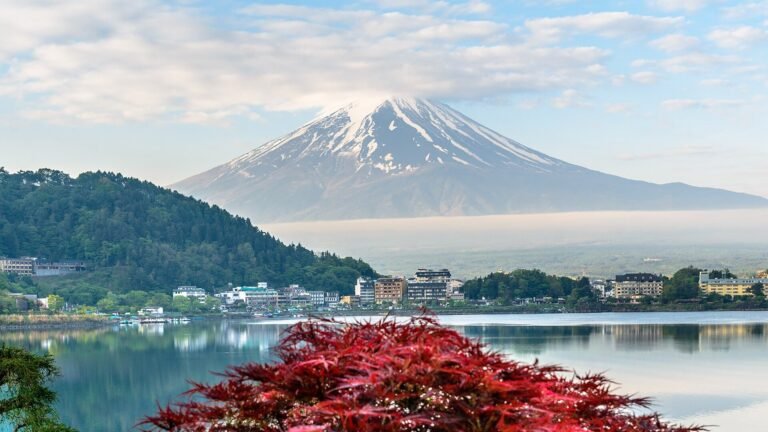
Mt Fuji and Hakone each have a direct bus from Haneda Airport. A Keikyu Bus and Fujikyu Bus highway bus runs to Mt. Fuji Station and Kawaguchiko Station in about 2 hours 20 minutes. Board at stop 7 at Terminal 3, stop 14 at Terminal 2 or stop 13 at Terminal 1.
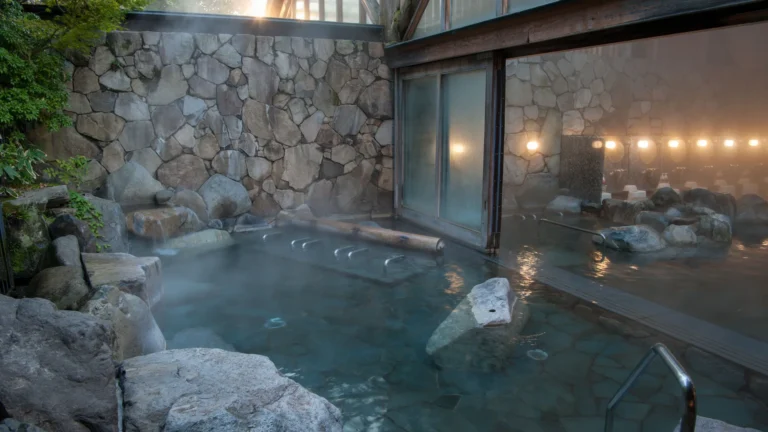
For Hakone, one highway bus run by Keikyu Bus and Odakyu Highway Bus goes from Haneda to Togendai on Lake Ashi, by way of Gotemba. The ride to Hakone takes about 3 hours from the same stop numbers. Hakone is a hot-spring area, so if you have tattoos, read our guide to bathing in an onsen with tattoos before you go.
Okinawa: a warm place to visit in Japan in January
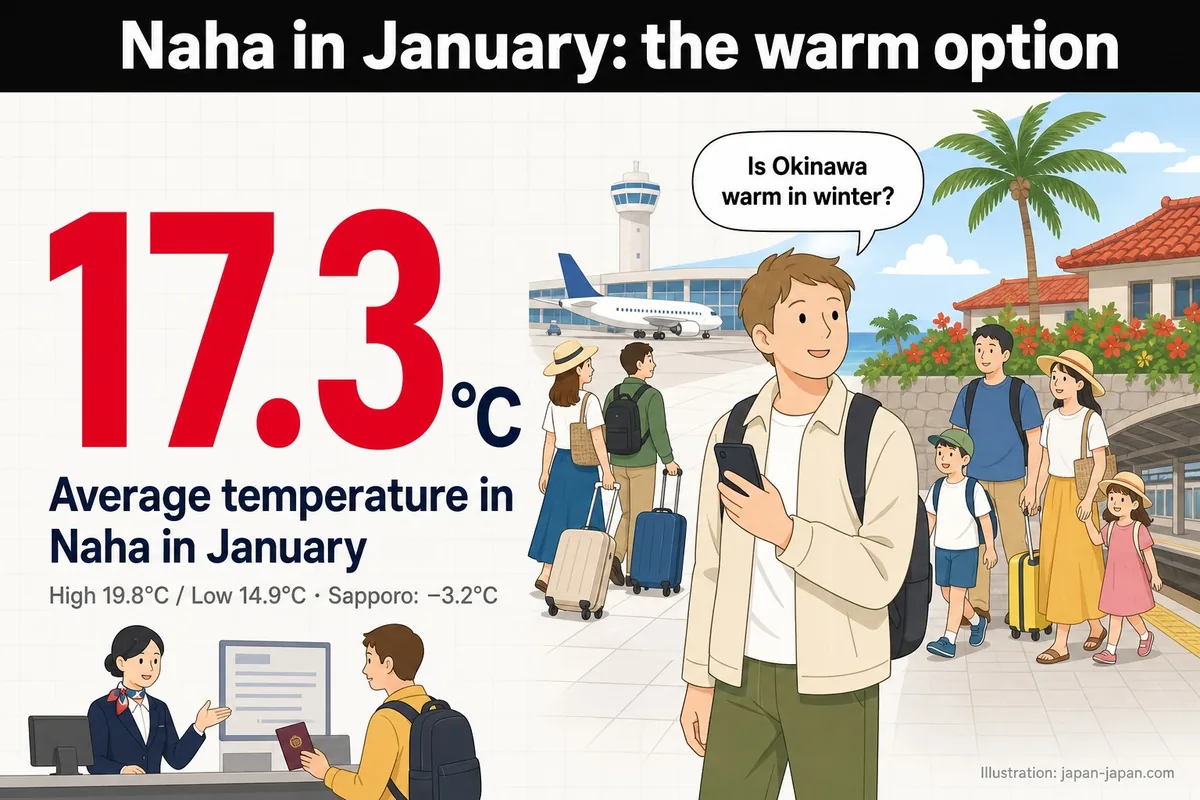
Naha is the mild choice. The JMA’s Naha averages give January a mean of 17.3°C, with highs of 19.8°C and lows of 14.9°C. The average number of snow days is 0.0. Sapporo, for comparison, averages −3.2°C in the same month. December and February in Naha are mild too, at 19.0°C and 17.5°C on average.
The figure below puts Naha’s January average next to Sapporo’s.
Choose Naha for warmth rather than sunshine. It gets 93.1 hours of sunshine in January, fewer than Tokyo’s 192.6 hours, and 101.6mm of rain. Wind is stronger too: the average speed is 5.3 metres per second, against 2.7 in Tokyo, so pack a windproof layer.
Getting in is quick. The Yui Rail monorail to Kokusai-dori leaves from the airport terminal. It reaches Kencho-mae station in about 13 minutes for 290 yen. At Naha Airport, a connecting building joins the international terminal to the domestic one.
Winter 2026-27 dates to plan around
Put these dates in your plan before you book. The table below lists them in order, from the Niseko tax change to the Emperor’s Birthday.
| Date | What happens | Where |
|---|---|---|
| 1 Nov 2026 | Accommodation tax changes from a flat amount to a percentage of the room charge | Niseko Town |
| 28 Nov 2026 | Grand Hirafu ski season opens (planned) | Niseko |
| 1 Dec 2026 | Tour buses must book parking at Seseragi Park Oro car park | Shirakawa-go |
| 12 Dec 2026 | Night skiing starts (planned) | Niseko Grand Hirafu |
| 25 Dec 2026 – 5 Jan 2027 | Every Nozomi is reserved-seat only | Nozomi trains (JR Central) |
| 31 Dec 2026 – 3 Jan 2027 | Banks closed; New Year’s Day is Friday 1 Jan | Nationwide |
| 9–11 Jan 2027 | Every Nozomi reserved-seat only; Coming of Age Day is Monday 11 Jan | Nozomi trains; nationwide |
| 4–11 Feb 2027 | Sapporo Snow Festival; National Foundation Day is Thursday 11 Feb | Sapporo |
| 12–14 Feb 2027 | Sapporo Snow Sports Park 2027 | Daiwa House Premist Dome, Sapporo |
| 23 Feb 2027 | Emperor’s Birthday (Tuesday) | Nationwide |
New Year needs the most planning. New Year’s Day, Friday 1 January 2027, is the only national holiday in the break. Banks still close from 31 December to 3 January, and many sights close for several days. Our New Year 2026–27 page covers the closures and busy trains.
Trains fill up too. JR Central makes every Nozomi on the Shinkansen reserved-seat only from 25 December 2026 to 5 January 2027, so book a seat before you travel. Last winter’s busiest day was Sunday 4 January 2026, when 350,000 passengers headed to Tokyo.
January has one more holiday. Coming of Age Day is Monday 11 January 2027, and JR Central makes every Nozomi reserved-only again from 9 to 11 January. The national museums in Tokyo and Kyoto close on Mondays, but they open on a Monday holiday and close the next day instead. Our January holidays page and the 2027 holiday calendar give every date with its weekday.
February is quieter for arrivals. In 2025, February had the fewest visitors arriving in Japan of any month, 3,258,491, while January ranked third with 3,781,629. February 2027 has two holidays: National Foundation Day on Thursday 11 February and the Emperor’s Birthday on Tuesday 23 February.
Before you book, run through the checklist below.
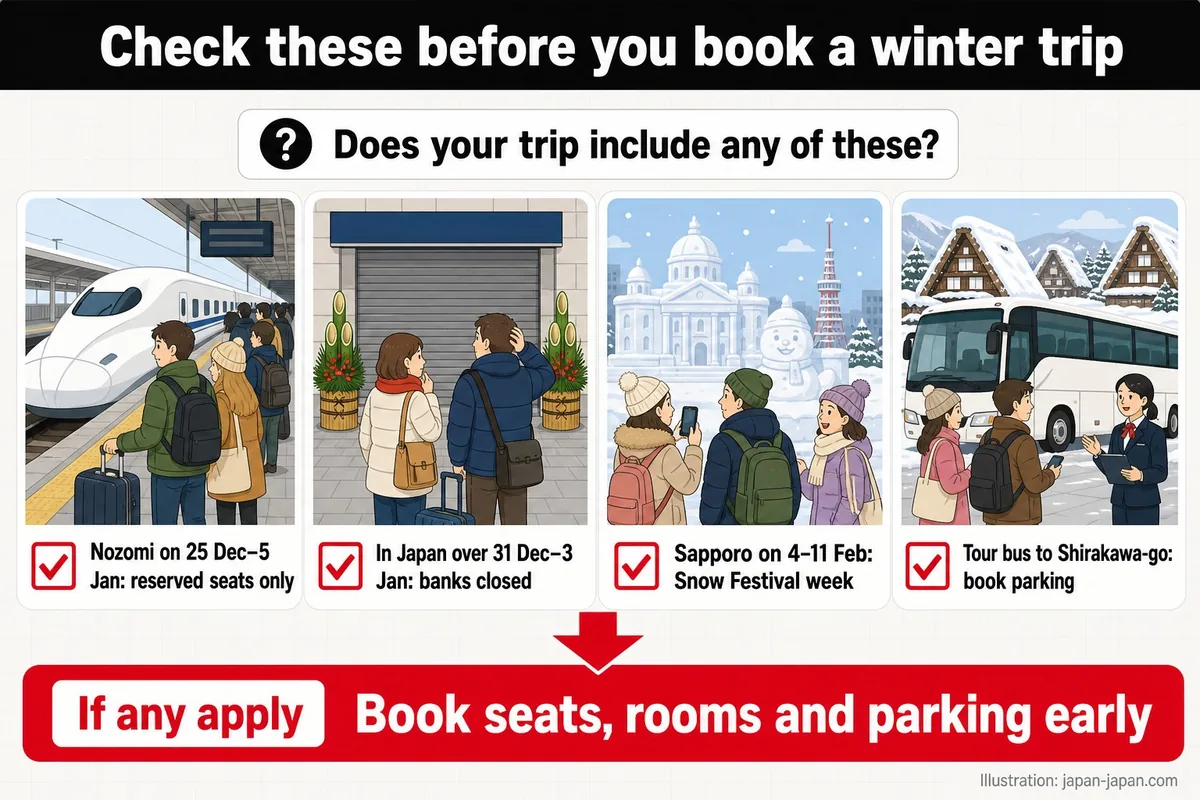
The ski dates in the table are the resort’s plans, so check its site again before you fix travel around them.
Getting there from the airport
Every route in the chart below needs no change. It shows the quickest listed time from the airport to each place, in minutes.
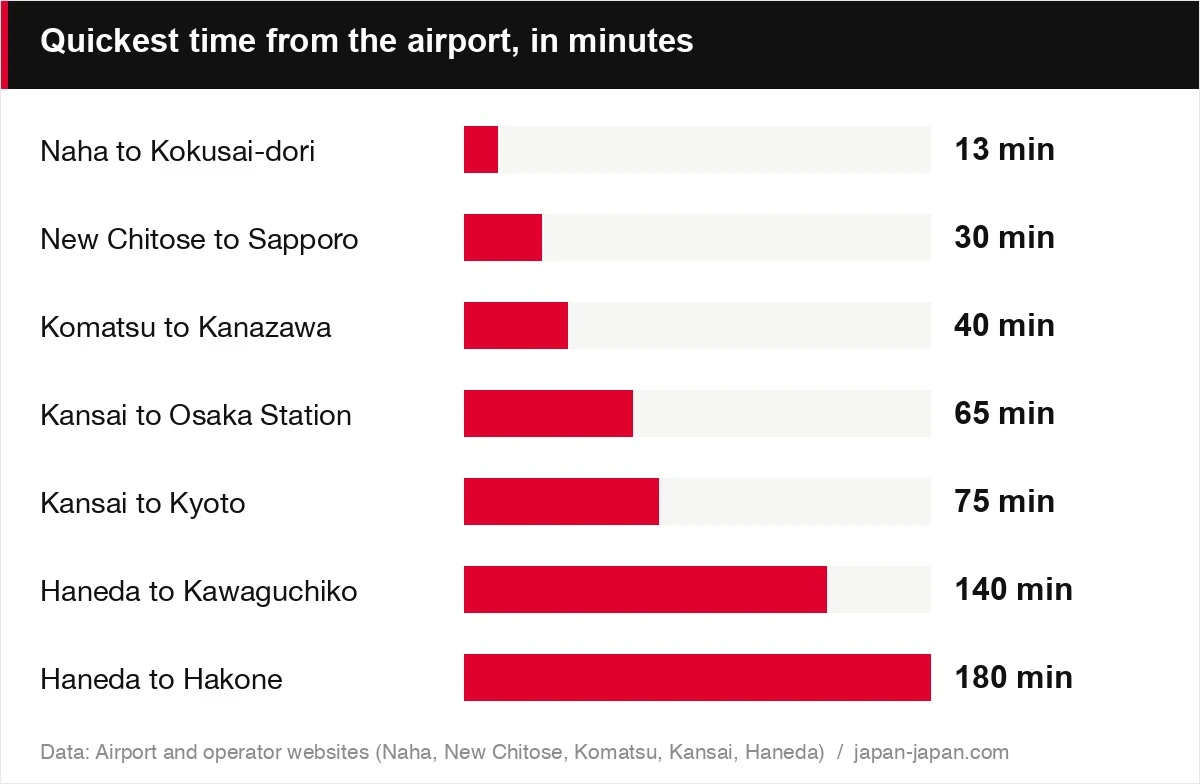
| Item | Value | Note |
|---|---|---|
| Naha to Kokusai-dori | 13 min | Yui Rail monorail, 290 yen |
| New Chitose to Sapporo | 30 min | JR Rapid Airport |
| Komatsu to Kanazawa | 40 min | Hokutetsu Bus, 840 yen |
| Kansai to Osaka Station | 65 min | JR Kansai Airport Rapid Service; limousine bus 1,800 yen |
| Kansai to Kyoto | 75 min | JR Haruka, 2,200 yen with a foreign passport |
| Haneda to Kawaguchiko | 140 min | Keikyu Bus and Fujikyu Bus |
| Haneda to Hakone | 180 min | Keikyu Bus and Odakyu Highway Bus |
Each route links to its own page:
- Naha Airport to Kokusai-dori: Yui Rail monorail, 13 minutes, 290 yen.
- New Chitose Airport to Sapporo: JR Rapid Airport, 30 minutes.
- Komatsu Airport to Kanazawa: Hokutetsu Bus, 40 minutes, 840 yen.
- Kansai Airport to Osaka Station: JR Kansai Airport Rapid Service, 65 minutes; limousine bus, 1,800 yen.
- Kansai Airport to Kyoto: JR Haruka, 75 minutes, 2,200 yen one way with a foreign passport.
- Haneda Airport to Kawaguchiko: Keikyu Bus and Fujikyu Bus, 2 hours 20 minutes.
- Haneda Airport to Hakone: Keikyu Bus and Odakyu Highway Bus, 3 hours.
For Tokyo itself, the airport trains are quick. From Haneda, the Keikyu train reaches Shinagawa in 11 minutes by Keikyu’s estimate, for 330 yen. From Narita, the Keisei Skyliner reaches Nippori in 36 minutes at the fastest. The Narita Express reaches Tokyo Station in 53 minutes at the fastest, with no change.
Hokkaido is a short domestic flight from the big cities. Grand Hirafu’s access page puts the flight to New Chitose at about 1 hour 30 minutes from Haneda or Narita. From Kansai it takes about 1 hour 55 minutes.
Ski gear and winter coats make bags heavy, so think about sending yours on. Yamato Transport runs courier counters at 16 of the airports in our guide, and a bag reaches most of the country the next day.
FAQ
When is the Sapporo Snow Festival in 2027?
From Thursday 4 February to Thursday 11 February 2027, 8 days in all. It is the 77th festival and uses three sites: Odori, Tsudome and Susukino. The five large snow sculptures stand on Odori, and the last day is National Foundation Day, a public holiday.
Where is warm in Japan in January?
Of the four places in our weather table, Naha in Okinawa is the warmest. Its January average is 17.3°C, with highs of 19.8°C and lows of 14.9°C, and its average count of snow days is 0.0. The Yui Rail monorail runs from Naha Airport to Kencho-mae in about 13 minutes for 290 yen.
Do you need a reservation to visit Shirakawa-go?
If you come on a tour bus, yes. From 1 December 2026, tour buses using the bus spaces at the Seseragi Park Oro car park must book in advance. That covers large, medium and micro buses. Bookings opened on 1 June 2026, and the village says the aim is to ease crowding in the settlement.
Is New Year a busy time to travel around Japan?
Yes. JR Central makes every Nozomi reserved-seat only from 25 December 2026 to 5 January 2027. Last winter’s busiest day, Sunday 4 January 2026, saw 350,000 passengers heading to Tokyo. Banks close from 31 December to 3 January, and many sights close for several days.
Photo: Kawaguchiko & Fuji, Japan (48852141032).jpg by dconvertini (CC BY-SA 2.0), via Wikimedia Commons.

.jpg)