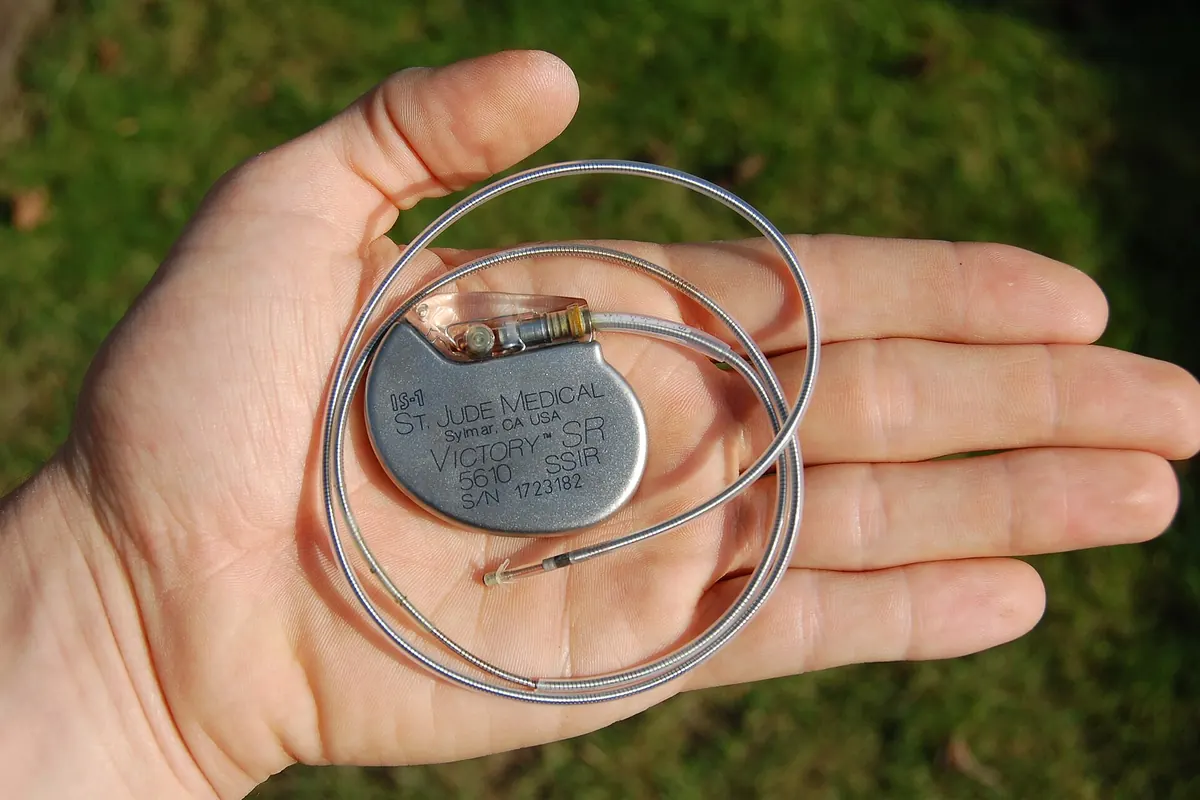

In Japan pacemakers are carry-on only and cannot go in checked bags.
Checked against the official page on · Report a correction
Carry-on: Yes. Heart pacemakers and other medical devices implanted in or attached to the body are allowed in the cabin, including ones powered by lithium batteries. Checked baggage: Not accepted as checked baggage. The device stays on or in your body.
Pacemakers on flights in and from Japan
The rule for pacemakers comes from the Civil Aviation Bureau's list of restricted items and is the same on domestic and international flights.
| Where | Allowed? | What applies |
|---|---|---|
| In the cabin | Yes | Yes. Heart pacemakers and other medical devices implanted in or attached to the body are allowed in the cabin, including ones powered by lithium batteries. |
| In checked baggage | No | Not accepted as checked baggage. The device stays on or in your body. |
Narita Airport
Narita says that if you tell the inspector you use a pacemaker, you get a physical check by a same-sex inspector instead of the metal detector.
Narita International Airport FAQ
Pacemakers, implants and insulin pumps at the metal detector
Nothing here has to be packed. The questions are what to tell the screener and which check replaces the metal detector.
- Worn devices share the row with implants
- Japan's list covers heart pacemakers and other medical devices implanted in the body or attached to the outside of it, powered by radioactive material or by lithium batteries. The TSA's entry for external medical devices gives examples of the second kind, among them insulin pumps, neurostimulators, ports and feeding tubes, and asks you to tell the officer where the device is before screening begins.
- The check that replaces the metal detector at Narita
- Narita Airport describes the alternative for passengers with metal in the body that cannot be removed: a physical check that does not use a handheld metal detector. As a general rule a staff member of the same gender carries it out. The airport adds that at busy times a female officer may screen a male passenger, and that male officers do not screen female passengers.
- If the device can be disconnected
- For devices worn outside the body the TSA sets out both cases. One that can be safely disconnected is submitted for X-ray screening, and the agency says to ask the manufacturer whether it can pass through X-ray, a metal detector or advanced imaging technology. One that cannot be disconnected may need additional screening, with careful and gentle inspection in sensitive areas.
- The checked-baggage column
- Japan's list marks the row yes for the cabin and no for checked baggage. The TSA's entry for medical devices containing radioactive material, implanted or fitted externally after treatment, reads the same: carry-on yes, checked no. Taiwan's table enters not applicable under both kinds of baggage: such a device may be carried only when implanted in the body or fitted to it for medical need.
Pacemakers: the rule country by country
Extra conditions apply in Taiwan and Australia.
| Flying from | Carry-on | Checked bag | What the authority says |
|---|---|---|---|
| JapanCivil Aviation Bureau | Yes | No | Heart pacemakers and other medical devices implanted in or attached to the body are allowed in the cabin, including ones powered by lithium batteries. Source |
| United StatesTSA | Yes | With limits | Tell the TSA officer before screening if you have a medical device attached to your body (examples include a neurostimulator and an insulin pump) and where it is. Devices containing lithium batteries must be carried in carry-on baggage.TSA entry: External Medical Devices Source |
| TaiwanCivil Aviation Administration | With limits | — | Radioisotopic cardiac pacemakers and other medical devices may be carried only when implanted in the body or fitted externally for medical reasons. Source |
| AustraliaHome Affairs, CASA | With limits | No | Radioisotopic cardiac pacemakers and other devices, including those powered by lithium batteries, are allowed when implanted into a person. They cannot be carried in carry-on or checked baggage.CASA Pack Right entry: Radioisotopic cardiac pacemakers including those powered by lithium batteries Source |
Each row comes from that authority's own page. Airlines can be stricter, and the screening officer has the final say.
Frequently asked questions
Can you go through airport security with a pacemaker?
On flights in and from Japan: Yes. Heart pacemakers and other medical devices implanted in or attached to the body are allowed in the cabin, including ones powered by lithium batteries. In checked baggage: Not accepted as checked baggage. The device stays on or in your body.
Do you need a medical certificate or pacemaker card at security in Japan?
No, but it helps. Narita Airport says that letting the inspector know you use a pacemaker is what brings the physical check in place of the metal detector. For implants it asks passengers to show a medical certificate or other supporting documents for the device to make screening smoother. The TSA says you may provide its notification card or other medical documentation to describe your condition.
Can you go through airport security with a metal implant or surgical wire?
Yes. Narita Airport says a passenger with a metal implant may choose a pat-down inspection from a screener of the same gender in place of the metal detector, and that the same applies to passengers in wheelchairs who cannot pass through it. Declaring the implant to the security officer is what starts that check, and a medical certificate makes it go more smoothly.
Can you put a pacemaker in checked luggage?
Not on flights in or from Japan. Not accepted as checked baggage. The device stays on or in your body.
What is the rule for pacemakers on flights from Taiwan and Australia?
Taiwan: Radioisotopic cardiac pacemakers and other medical devices may be carried only when implanted in the body or fitted externally for medical reasons. Australia: Radioisotopic cardiac pacemakers and other devices, including those powered by lithium batteries, are allowed when implanted into a person. They cannot be carried in carry-on or checked baggage.
Read more
- Ibuprofen to Japan: Yes, 2 Months’ Supply Without PaperworkYes. You can bring ibuprofen to Japan: a 2-month supply over the counter or 1 month on …
- Can You Take an Electric Toothbrush in Hand Luggage? YesYes. You can take an electric toothbrush in hand luggage or checked bags to Japan. Spar…
- teamLab Botanical Garden Osaka: Tickets and If It RainsteamLab Botanical Garden Osaka is a night-only outdoor museum in Nagai Park, opening 18…
- Can You Bring Alcohol Wipes on a Plane to Japan? 2026 RulesYes. Alcohol wipes sit outside the 100ml liquid rule. Gel and spray go in 100ml contain…
Sources for this page
- Japan Civil Aviation Bureau (MLIT) — Items restricted in carry-on and checked baggage (updated 24 April 2026)
- Narita International Airport — FAQ: security check
- Narita International Airport — FAQ: prohibited items
- TSA — What Can I Bring?: External Medical Devices
- Taiwan CAA — Dangerous goods passengers and crew may carry
- CASA — Pack Right: Radioisotopic cardiac pacemakers including those powered by lithium batteries
- Taiwan CAA — Table of dangerous goods passengers and crew may carry or check (Chinese)