Lake Kawaguchi Maple Corridor 2026: Dates, Light-Up, Access
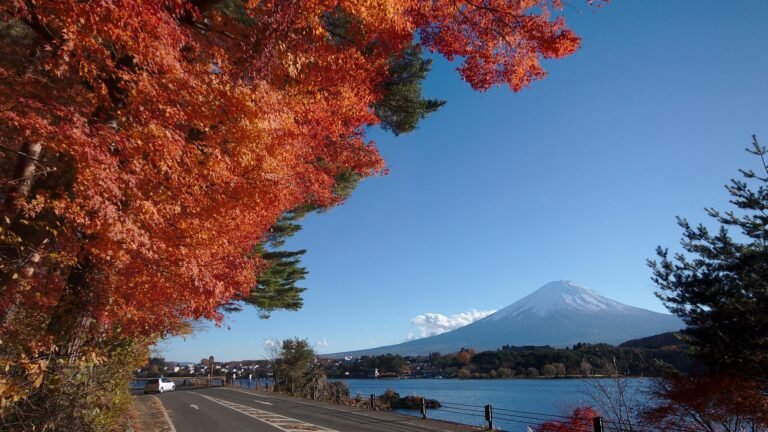
The corridor sits on the north shore of Lake Kawaguchi, at the foot of Mount Fuji in Yamanashi Prefecture. On 6 October 2026 the leaves were still green, so you have a few weeks to plan. If you want a weekend, decide early: the town’s walking event on 14-15 November and the 21-23 November long weekend both fall inside the festival.
What you see at the Momiji Corridor
The Momiji Corridor is the main venue of the Fujikawaguchiko Autumn Leaves Festival. The Japan Weather Association tenki.jp Lake Kawaguchi Maple Corridor page describes 100 large maple trees lining the Nashikawa stream for 350 m. The address is Kawaguchi, Fujikawaguchiko Town, on the north shore of the lake.
You will meet two English names for the same place. Some guides say Maple Corridor and others say Momiji Corridor. In Japanese it is もみじ回廊 (Momiji Kairō), which means “maple corridor”. Save those characters on your phone and show them to a bus or taxi driver if you are unsure where to get off.
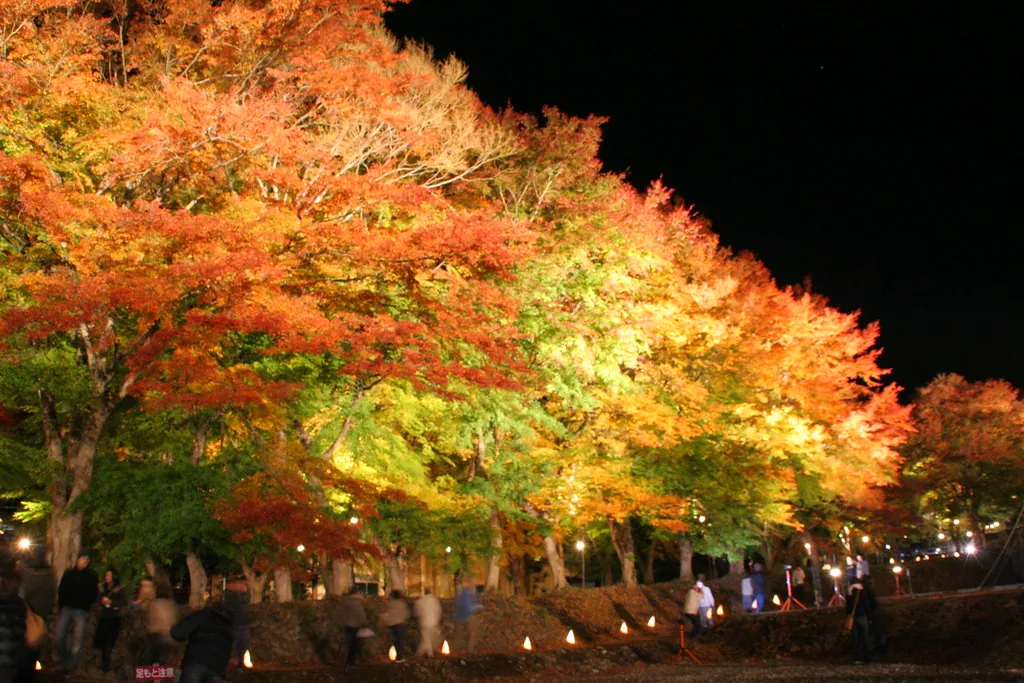
The photo shows the scene the corridor is known for: red and orange maples arching over a path beside the stream. After dark the trees are lit. tenki.jp describes the night view as lit autumn leaves with Mount Fuji behind them, so a clear evening gives you both in one walk.
The site is simple to visit. tenki.jp lists toilets, a shop and parking for 500 cars. It also lists the corridor as open 24 hours with no closing days, and entry costs nothing. For questions in Japanese, the contact number on the page is 0555-72-3168.
| Place | Momiji Corridor (Lake Kawaguchi Maple Corridor) |
|---|---|
| Price | Free |
| Hours | Open 24 hours, no closing days. Light-up from sunset to 21:00 during the festival, 7-29 Nov 2026 |
| Access | Nearest station: Kawaguchiko Station (Fujikyu Railway). By car: Chuo Expressway Kawaguchiko IC; parking for 500 cars |
| Official site | Japan Weather Association tenki.jp Lake Kawaguchi Maple Corridor page |
The box above sums up the fee, hours and access. tenki.jp also lists nearby spots such as the Itchiku Kubota Art Museum and the Kawaguchiko Music Forest Museum. Pair the corridor with one of them in daylight, then walk back under the trees once the lights come on.
When the maples peak in 2026
Expect the best colour between early and late November. On 6 October 2026 at 15:00, tenki.jp rated the corridor as green, with no autumn colour at all. Its forecast for this year is early to late November, the same window as an average year.
The national picture comes from the Japan Weather Association 2026 autumn leaves forecast, released on 1 October 2026. It expects eastern Japan, which includes Kanto and Koshin, to peak around the average date or later. The reason is warmth. Temperatures have run high since late September and should stay above normal through October and November.
The same release adds two points that matter at Lake Kawaguchi. Leaves colour earlier in a cool autumn and later in a warm one, based on temperatures from September to November. Places at high elevation also tend to peak earlier than the forecast for their region. The lake sits at the foot of Mount Fuji, well above the Kofu basin, which is why its window opens before the city’s.
For a fixed reference point, look at Kofu, the capital of Yamanashi. Our Kofu autumn leaves page shows the Japan Meteorological Agency’s sample maple there turning red around 29 November in an average year (1991-2020). In 2025 it turned red on 5 December, 6 days later than average. In Tokyo, the sample maple turns red around 28 November on average.
The Japan Weather Association tenki.jp forecast by region adds other points nearby. Mount Takao, west of Tokyo, is forecast from 19 November, later than its start of 11 November last year. Nikko’s Irohazaka is forecast from 21 October and Kamikochi from 13 October. Higher ground comes first, which matches what the release says about elevation.
If you are in Japan for the 10-12 October long weekend (Sports Day is 12 October), the corridor will most likely still be green. The forecast window only opens in early November. Kyoto runs later: our Kyoto autumn leaves guide covers Arashiyama, which tenki.jp forecasts from 13 November.
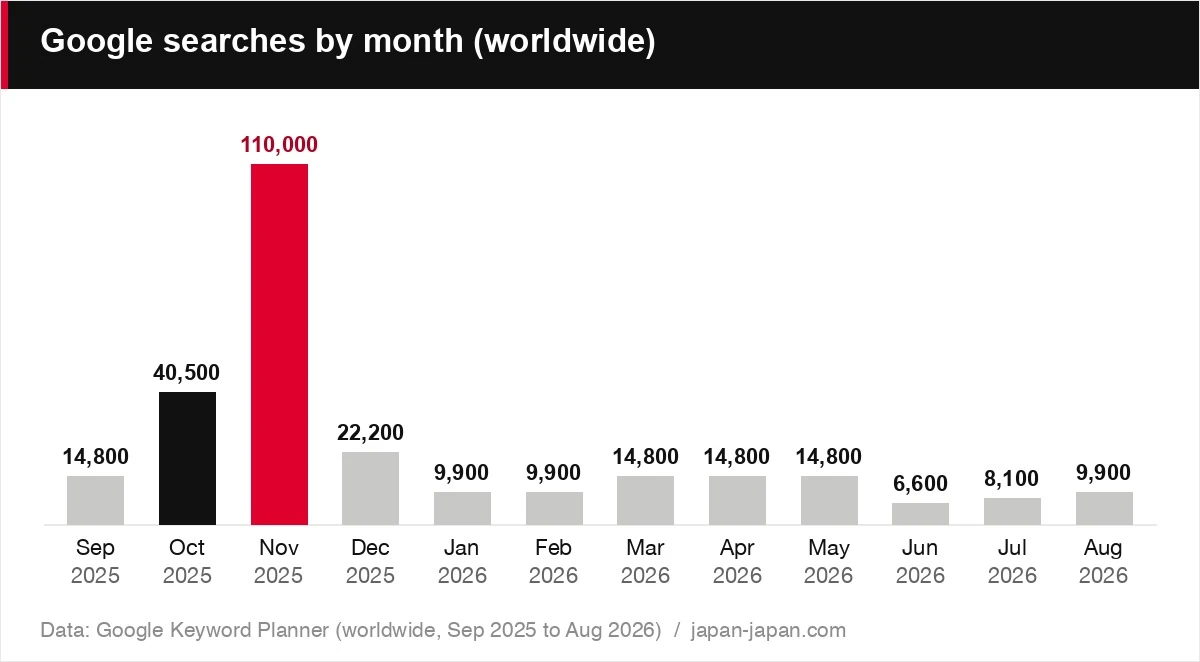
Search interest follows the leaves. In 2025, worldwide Google searches for “lake kawaguchi maple corridor” rose from 40,500 in October to a peak of 110,000 in November, 2.7 times higher.
| Month | Searches |
|---|---|
| Sep 2025 | 14,800 |
| Oct 2025 | 40,500 |
| Nov 2025 | 110,000 |
| Dec 2025 | 22,200 |
| Jan 2026 | 9900 |
| Feb 2026 | 9900 |
| Mar 2026 | 14,800 |
| Apr 2026 | 14,800 |
| May 2026 | 14,800 |
| Jun 2026 | 6600 |
| Jul 2026 | 8100 |
| Aug 2026 | 9900 |
The chart shows the whole year, with November 2025 standing far above every other month. If you are reading this in October, you are planning ahead of most visitors, which helps when you book a room by the lake.
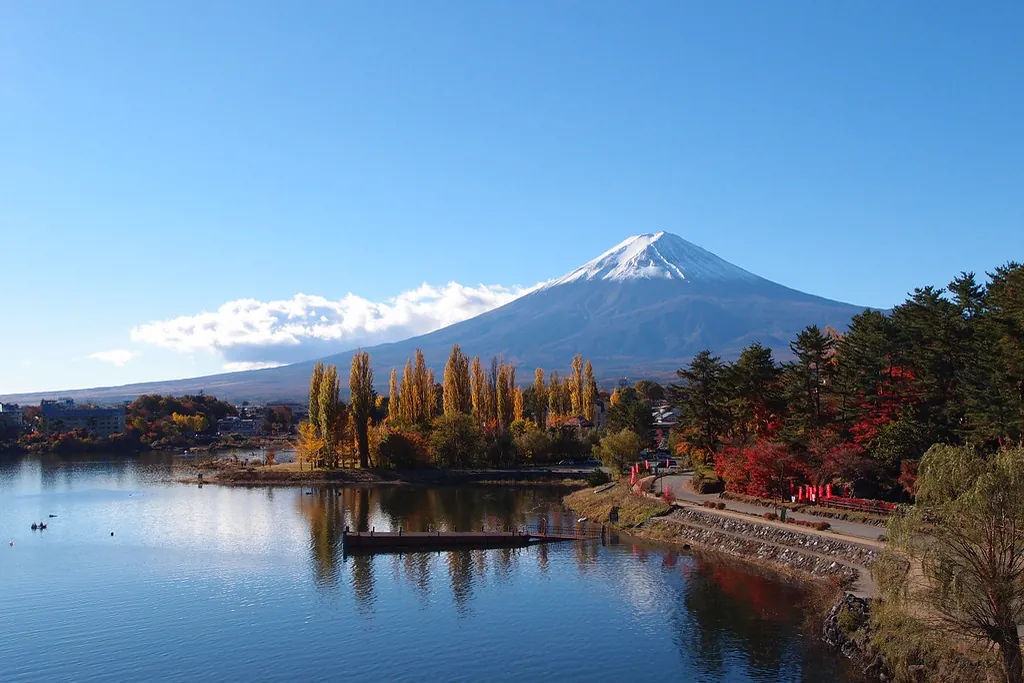
The photo shows the November view many people come for: Mount Fuji across the water with coloured leaves in front. Forecasts move as the weeks pass. The Japan Weather Association plans 3 to 4 updates on tenki.jp through November, so open the corridor page again a week before you travel.
Lake Kawaguchi maple corridor: 2026 dates and light-up hours
The festival runs from Saturday 7 November to Sunday 29 November 2026. On each of those 23 days the corridor is lit from sunset until 21:00, and entry is free. Our Mount Fuji in November page lists the festival alongside the rest of the month around the mountain.
The table lines up the key dates: the forecast check, the two holidays, the town’s walk and the last night.
| Date | Day | What happens | Source |
|---|---|---|---|
| 6 Oct | Tue | Corridor rated green, no colour yet; peak forecast early to late Nov | tenki.jp |
| 3 Nov | Tue | Culture Day (national holiday) | Cabinet Office |
| 7 Nov | Sat | Autumn Leaves Festival opens; light-up from sunset to 21:00 | tenki.jp |
| 14-15 Nov | Sat-Sun | Mt Fuji, Lake and Momiji Walk at Oike Park | Fujikawaguchiko Town |
| 21-23 Nov | Sat-Mon | Three-day weekend; Labor Thanksgiving Day on 23 Nov | Cabinet Office |
| 29 Nov | Sun | Last day of the festival and the light-up | tenki.jp |
Here is how to use those hours. On a day trip, arrive in the afternoon, see the trees in daylight and stay for the start of the light-up. If you sleep by the lake, go after dinner and walk the full 350 m before 21:00. Aim to be at the corridor by 20:00 so you are not rushing when the lights go off.
The first weekend, 7-8 November, sits at the start of the forecast window. The last weekend, 28-29 November, sits at the end of it. The middle two weeks give you the best overlap between the festival dates and the forecast peak.
Busy days: 3 Nov and the 21-23 Nov weekend
Two national holidays shape the month. Culture Day is Tuesday 3 November and Labor Thanksgiving Day is Monday 23 November, according to the Cabinet Office national holidays page. Culture Day comes four days before the festival opens. Labor Thanksgiving Day falls on a Monday, so Saturday 21 to Monday 23 November is a three-day weekend for people working in Japan.
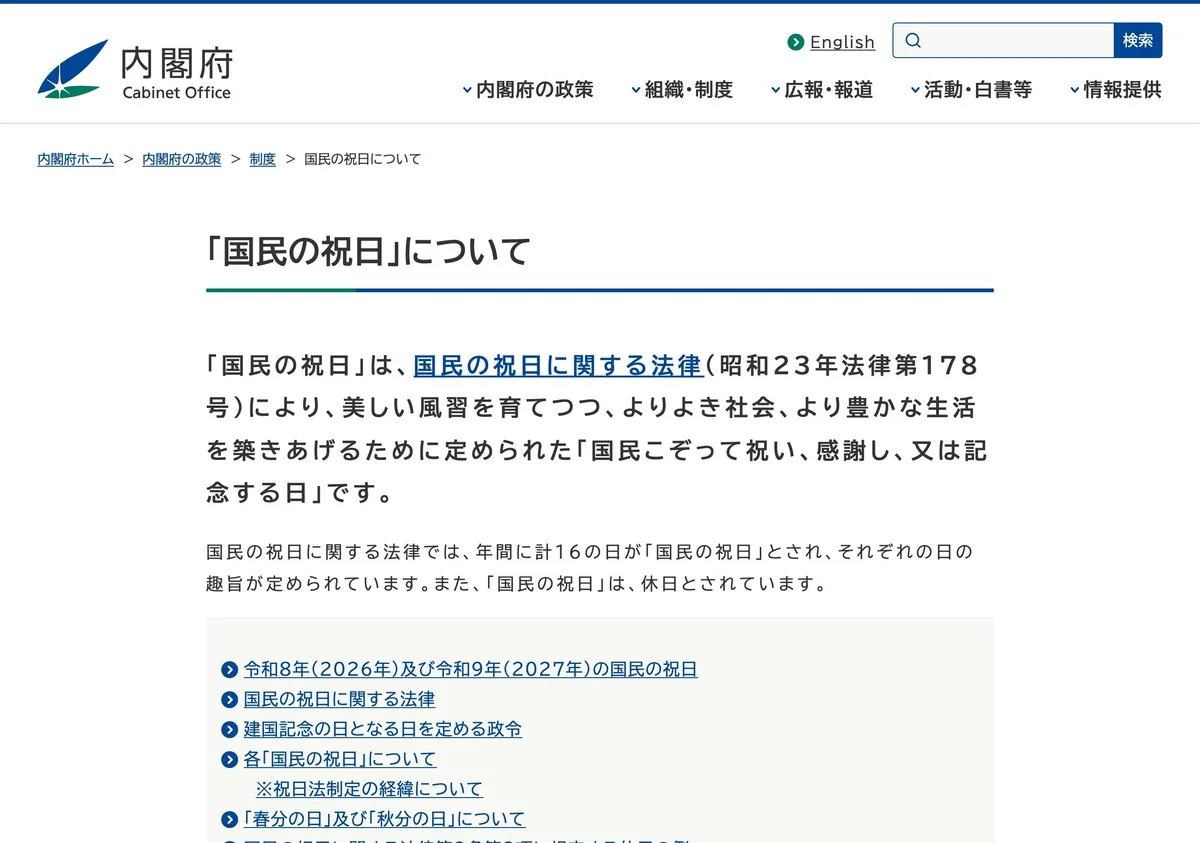
The screenshot shows that Cabinet Office page, the government’s official list of national holidays for 2026 and 2027. Our November public holidays page adds the weekdays and the long weekends in English. November is also a big month for visitors from abroad: 3,517,659 people arrived in Japan in November 2025.
The town adds its own event. The Fujikawaguchiko Town 2026 Mt Fuji, Lake and Momiji Walk page lists the walk on Saturday 14 and Sunday 15 November. The venue is Oike Park by Lake Kawaguchi. Saturday’s course passes the Mt Fuji trail, Hana no Miyako and Oshino Hakkai, with 30, 20, 10 and 5 km options. Sunday’s Lake Kawaguchi course offers 20, 10 or 5 km.
Anyone in good health can join, and children of primary school age or younger need an adult with them. Advance entry costs 2,000 yen for adults and 1,000 yen for high school students. On the day, adults pay 2,500 yen, and junior high students and younger walk free. Registration opens at Oike Park on Friday 13 November from 2pm to 4pm, and 30 minutes before each start on the event days.
If you drive that weekend, use the car parks at Oike Park and nearby. The town asks drivers to follow the parking staff and never park on the road.
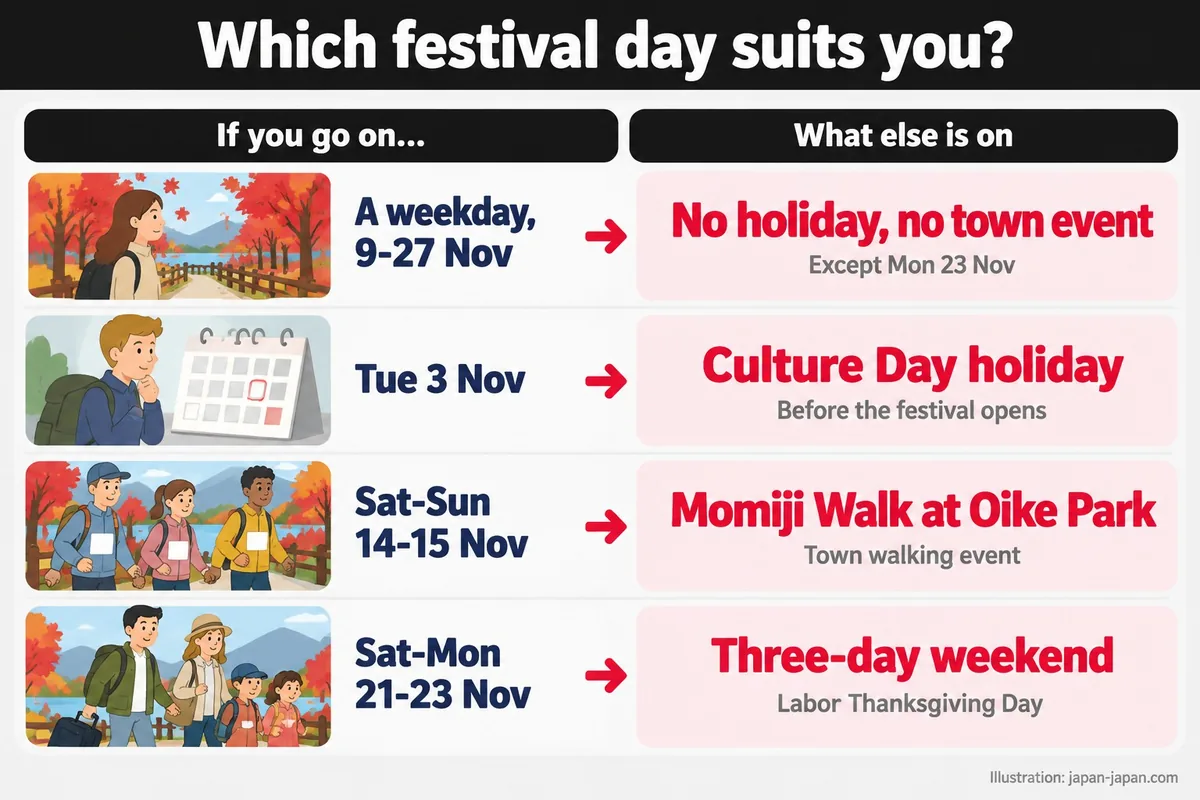
The illustration sums up the choice by date. Weekdays inside the festival, apart from Monday 23 November, have no holiday and no town event. The weekend of 14-15 November adds the walk, and 21-23 November adds a long weekend. If your dates are flexible, pick a weekday between 9 and 20 November. You get the festival lights and the middle of the forecast window.
Kawaguchiko weather in November: what to wear
Kawaguchiko weather in November is mild by day and cold at night. The Japan Meteorological Agency Kawaguchiko climate normals give an average daily high of 13.8°C and an average daily low of 2.2°C for November. The monthly mean is 7.5°C, based on data from 1991-2020.
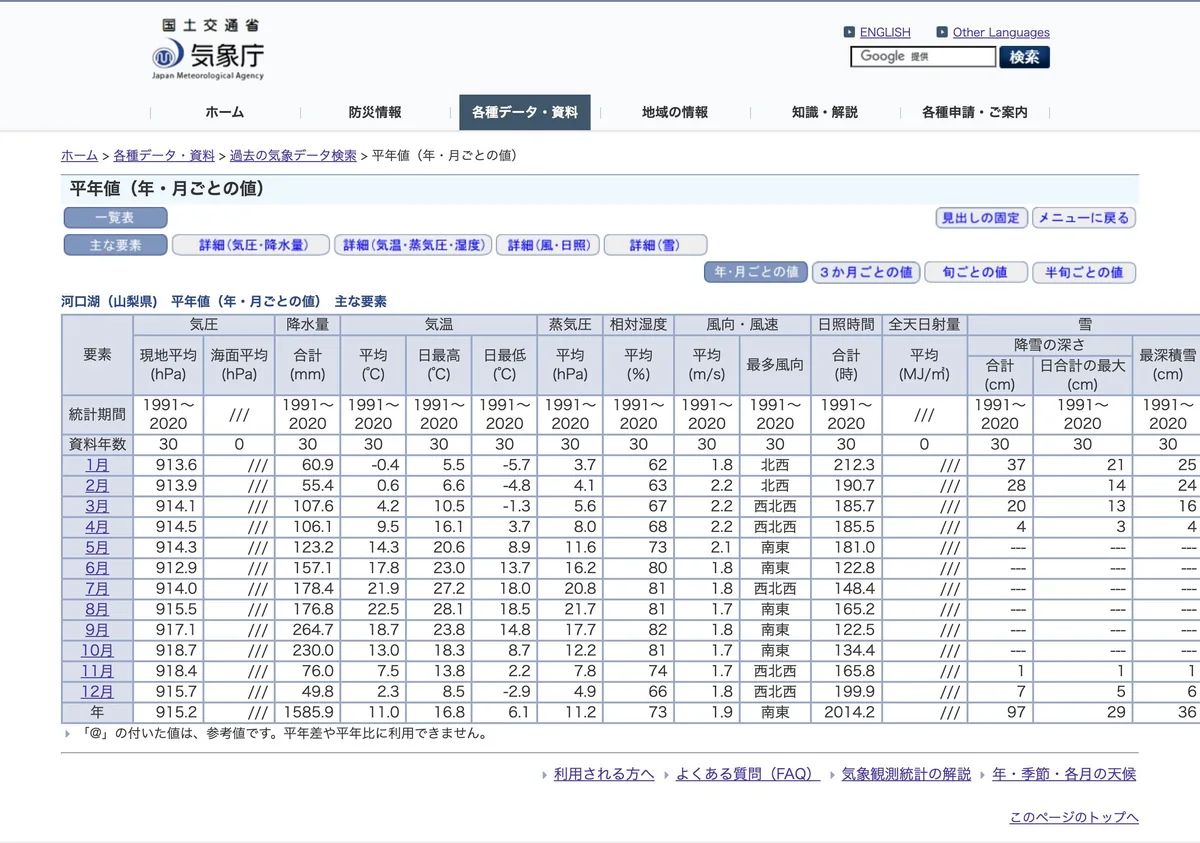
The screenshot is the agency’s table of normals for its Kawaguchiko weather station, with one row per month. Read across the November row and you will find the figures used here. The months either side show how fast the season turns.
| Month | Average high | Average low | Rain |
|---|---|---|---|
| October | 18.3°C | 8.7°C | 230.0 mm |
| November | 13.8°C | 2.2°C | 76.0 mm |
| December | 8.5°C | −2.9°C | 49.8 mm |
November is also much drier than October. Rain drops from 230.0 mm to 76.0 mm, and sunshine rises from 134.4 hours to 165.8 hours. More sun means more chances of a clear view of Mount Fuji behind the maples. Snow is rare this early: the November normal for total snowfall is just 1 cm.
This autumn has started warm. On 6 October 2026, tenki.jp still forecast a high of 25°C and a low of 14°C for Fujikawaguchiko Town. That fits the warm autumn in the Japan Weather Association forecast. Expect a sharp drop by November, when the normal high is 13.8°C.
Dress for the low, not the high. The lights stay on until 21:00, long after dark, and 2.2°C is only an average, so some nights will be colder. Bring a warm coat, a hat and gloves, plus a light layer you can take off on the train. By December the average low drops to −2.9°C, so late-November visitors should pack for winter.
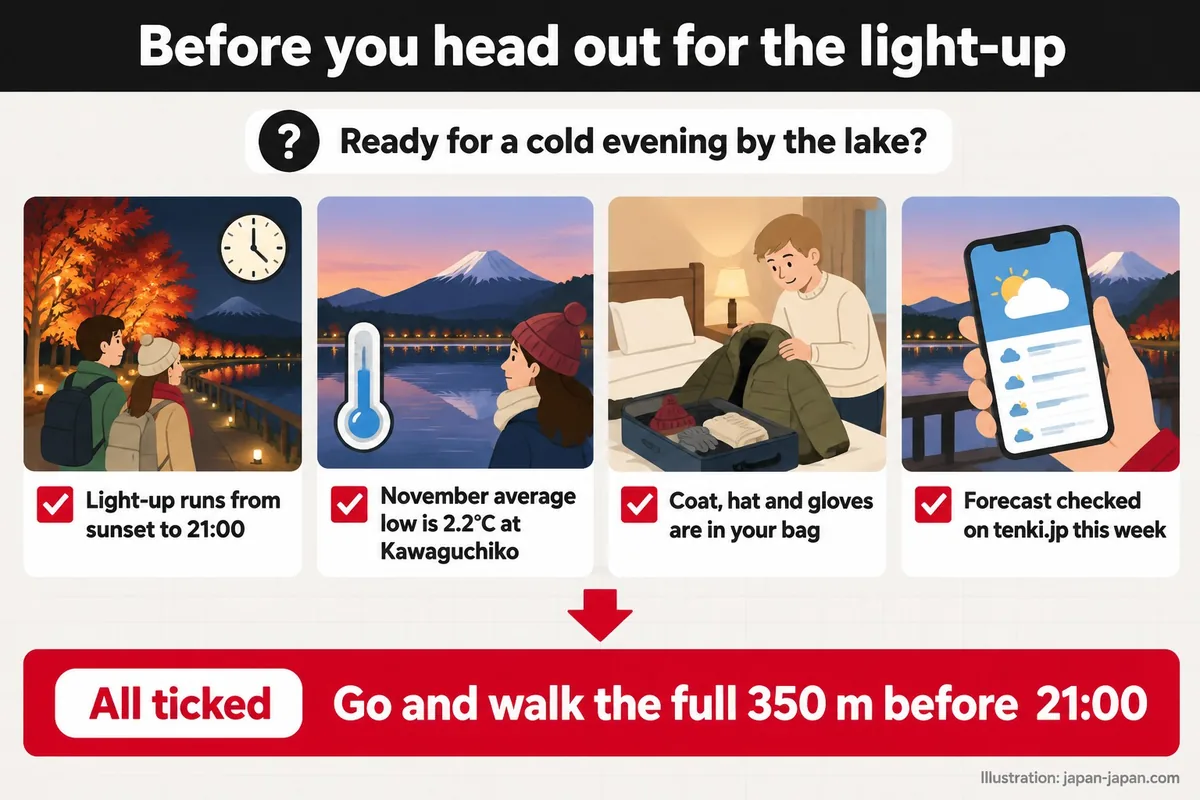
The checklist covers four things to confirm before you leave for the evening.
Tokyo to Kawaguchiko by train or bus
Tokyo to Kawaguchiko takes between 1 h 35 min and 1 h 54 min from Shinjuku. Our Tokyo to Mt Fuji route page compares three ways. Its times and fares come from JR East, JR Central and Fujikyu pages, checked on 29 September 2026.
- Highway bus: 1 h 35 min from Busta Shinjuku to Kawaguchiko Station for 2,200 yen, run by Keio Bus and Fujikyu Bus.
- Limited Express Fuji Excursion: 1 h 54 min from Shinjuku Station to Kawaguchiko with no change, for 4,200 yen.
- Limited Express Azusa + Fujikyu Line: 1 h 49 min of riding time from Shinjuku Station, changing at Otsuki, for 3,600 yen.
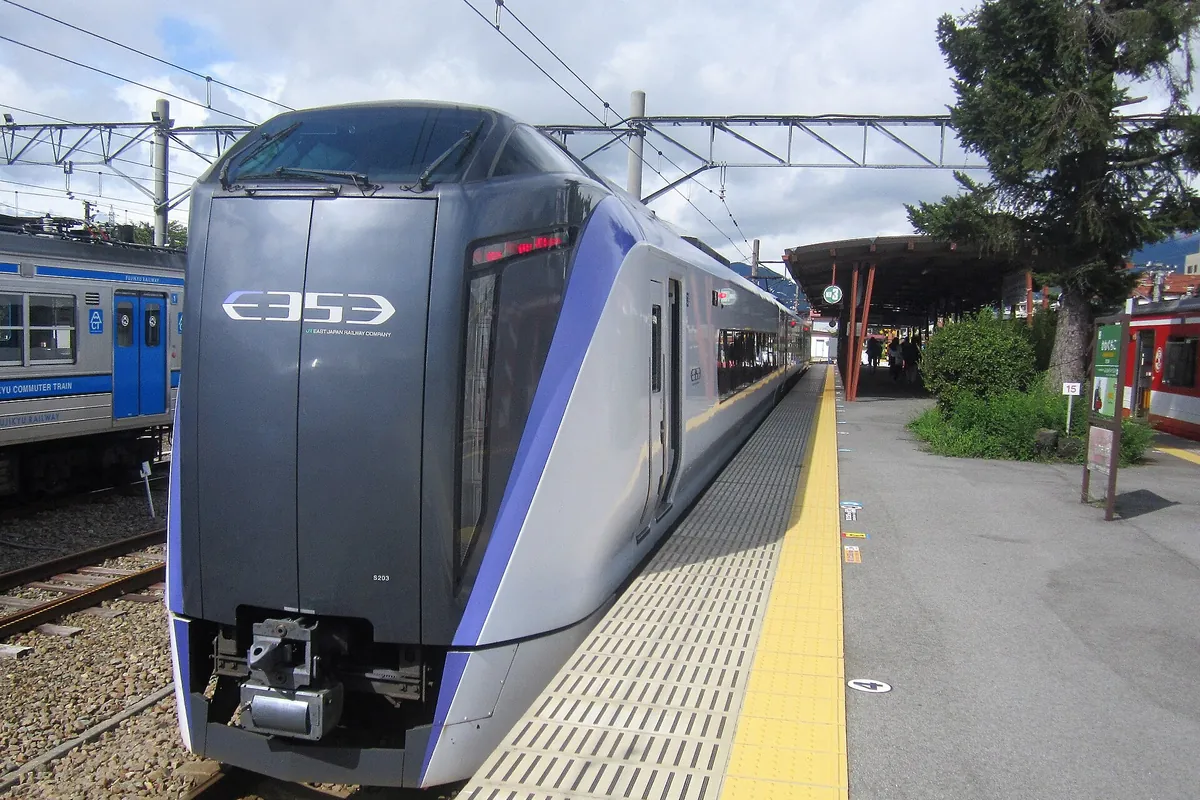
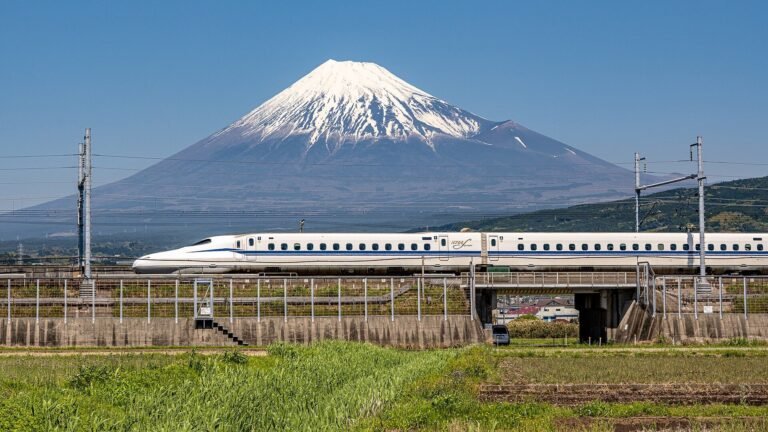
The photo shows the Fuji Excursion, the only train on our list that needs no change between Shinjuku and Kawaguchiko. With no change, it is the easiest choice with luggage, and it is also the most expensive of the three.
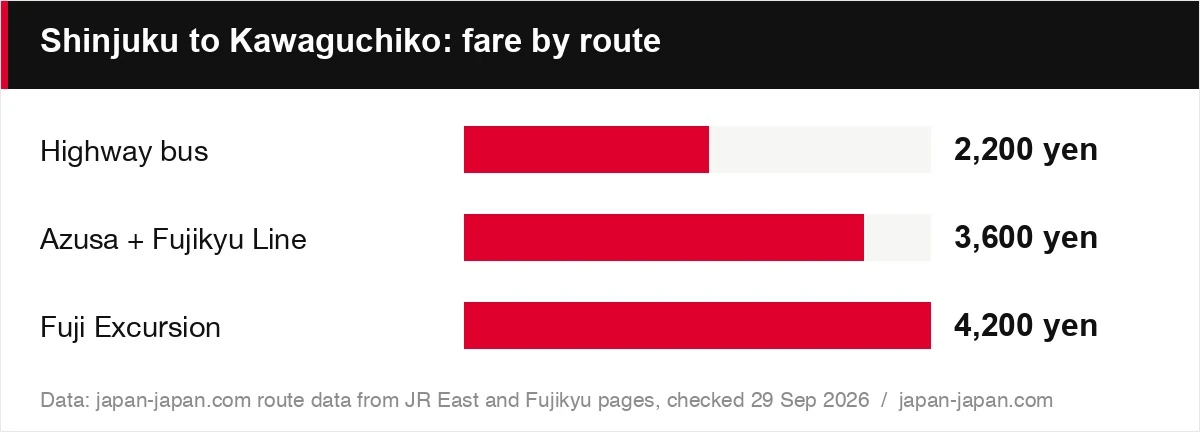
| Item | Value | Note |
|---|---|---|
| Highway bus | 2200 yen | 1 h 35 min from Busta Shinjuku |
| Azusa + Fujikyu Line | 3600 yen | 1 h 49 min riding, change at Otsuki |
| Fuji Excursion | 4200 yen | 1 h 54 min, no change |
The chart puts the three fares side by side. The bus costs 2,000 yen less than the Fuji Excursion and is also the quickest on paper. The Azusa route sits in the middle on price. Any wait at Otsuki comes on top of its 1 h 49 min of riding.
The bus runs often. Fujikyu Bus’s timetable for 14 October 2026 lists 55 buses a day from Busta Shinjuku to Kawaguchiko Station. The first leaves at 06:45 and the last at 22:25. Even the last bus gets you to the lake in time for a morning walk under the maples.
On a busy weekend, a train has one edge over the bus: it does not share the expressway with holiday traffic. That matters most on 21-23 November.
Rail pass holders should look at our JR TOKYO Wide Pass page. It lists all Fujikyu Railway lines as covered, along with JR East lines in the pass area, so the Fujikyu leg to Kawaguchiko is included.
From Kawaguchiko Station to the corridor
tenki.jp names Kawaguchiko Station on the Fujikyu line as the nearest station to the corridor. The corridor itself is on the north shore, along the Nashikawa stream. From the station, take a local bus or a taxi around the lake to the north shore. If you need help, show the driver the Japanese name you saved on your phone.
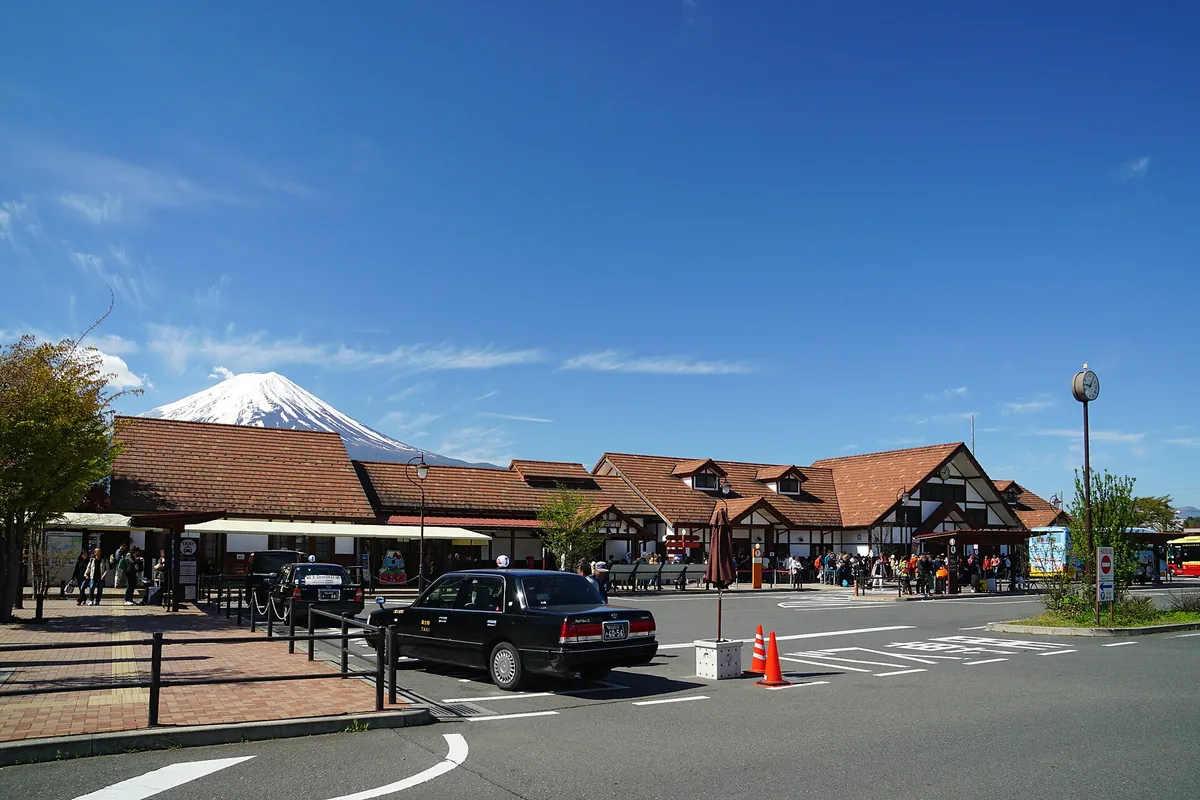
The photo shows Kawaguchiko Station, where the Fuji Excursion, the Fujikyu trains and the highway buses from Shinjuku all end. It is the place to sort out your onward bus or taxi.
By car, tenki.jp gives the Kawaguchiko interchange on the Chuo Expressway as the nearest exit, and lists parking for 500 cars at the corridor. On 14-15 November, the town’s walk also uses the car parks at Oike Park.
You can also go straight from the airport. Our Haneda Airport to Mt. Fuji and Kawaguchiko page lists a Keikyu Bus and Fujikyu Bus highway bus that takes about 2 hr 20 min with no change. It stops at Mt. Fuji Station and Kawaguchiko Station. At Haneda Airport, board at stop 7 at Terminal 3, stop 14 at Terminal 2 or stop 13 at Terminal 1.
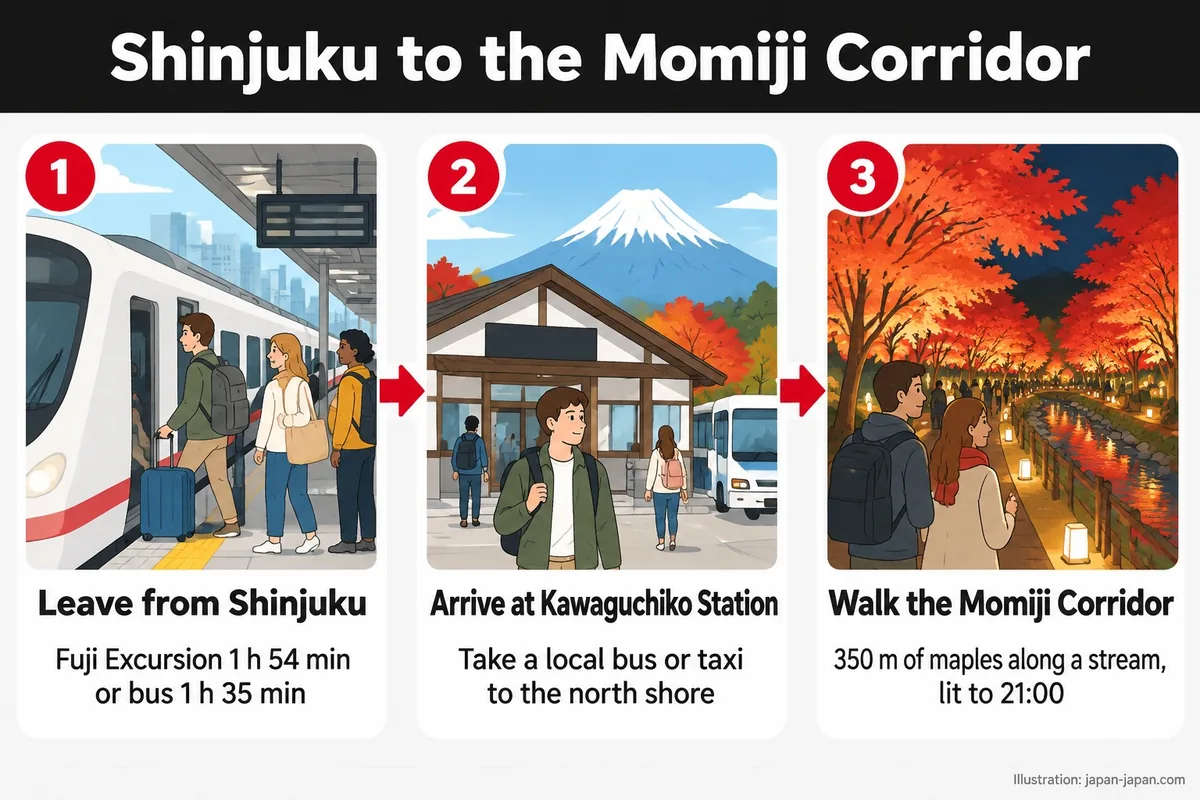
The steps above show the whole trip, from Shinjuku to the 350 m walk under the maples.
Plan the evening around the 21:00 switch-off. The simplest way to see the lights without watching the clock is to stay one night near the lake. If you return to Tokyo the same night, look up your train or bus home before you set out. Then leave the corridor soon after you have seen it lit.
FAQ
When is the best time to see the Lake Kawaguchi maple corridor in 2026?
tenki.jp forecasts peak colour from early to late November 2026, and the festival with its light-up runs from 7 to 29 November. On 6 October the leaves were still green. Check the forecast again a week before you go, since it gets 3 to 4 updates through November.
What time does the Momiji Corridor light-up end?
The light-up ends at 21:00. It starts at sunset and runs during the Fujikawaguchiko Autumn Leaves Festival, from 7 to 29 November 2026. Arrive by 20:00 to walk the full 350 m before the lights go off.
Is there an entry fee for the maple corridor festival?
No, tenki.jp lists the corridor as free, open 24 hours and with no closing days. The separate Mt Fuji, Lake and Momiji Walk on 14-15 November does charge. Adults pay 2,000 yen in advance or 2,500 yen on the day.
How cold is Kawaguchiko in November?
The Japan Meteorological Agency’s normals for Kawaguchiko give a November average high of 13.8°C and an average low of 2.2°C. Evenings at the light-up are close to the low, so wear a warm coat, a hat and gloves. By December the average low falls to −2.9°C.
About the author

Photo: Kawaguchiko Momiji Tunnel Fuji.jpg by Fabimaru (CC BY-SA 4.0, cropped), via Wikimedia Commons.