Japan Fall Foliage 2026: Peak Dates from Hokkaido to Kyushu
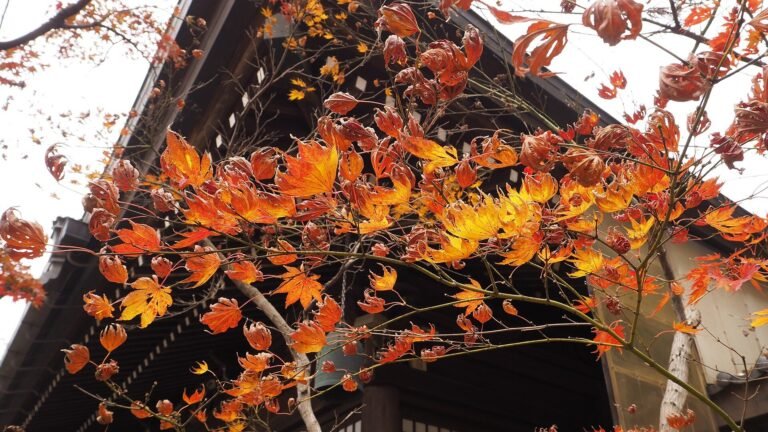
Plan around two kinds of date. The forecast tells you when a famous spot should look its best this year. The Japan Meteorological Agency (JMA) average tells you when the maple outside each city’s weather office usually turns. Use the forecast for this trip and the average to sanity-check it. Our autumn leaves dates by city list every JMA station from Hokkaido to Kyushu.
Japan fall foliage forecast 2026 by region
The Japan Weather Association 2026 autumn leaves forecast came out on Thursday 1 October 2026. Its headline: the peak will be about average or later than average across the country. The association plans 3 to 4 more updates through November on its tenki.jp site.
Temperature drives the date. Leaves peak earlier when September to November is cool and later when it is warm. The first half of September was cooler than usual, so some high ground in Hokkaido, Tohoku and Hokuriku coloured early. From late September the weather turned warm, and the association expects October and November to stay warmer than average. Lowland spots in eastern and western Japan may therefore peak late.
The association sets its peak as the point when most leaves on a maple have turned red. Its forecast covers the iroha maple. In Hokkaido it uses yama-momiji, o-momiji or itaya maples, depending on the spot. On Japanese maps you will see the word 見頃 (migoro), which means “at its best”. The stage before it is 色づき始め (irozuki-hajime), “starting to colour”.
The forecast is built on JMA records. The association compared past maple dates at each station with temperature data and wrote its own formula. It then feeds in this year’s observed temperatures and its own outlook for the coming weeks. Because the outlook changes, read the date on any forecast before you trust it.
The tenki.jp tables also compare each spot with last year. Many spots are forecast earlier than their 2025 peak, even where the date is average or late against the long-term normal. Compare like with like: this year against average is the number that matters for planning.
Northern Japan: Hokkaido and Tohoku
Expect roughly average timing. A cold snap in early October may push some mountain and lowland spots ahead of average. Southern Tohoku may run late because November should be warm. The Japan Weather Association tenki.jp foliage forecast by area gives these first-round dates:
- Sounkyo Momijidani (Hokkaido): from 19 September, against 26 September in 2025.
- Jozankei Onsen (Hokkaido): from 15 October.
- Onuma Park (Hokkaido): from 22 October.
- Oirase Stream (Aomori): from 13 October, against 28 October in 2025.
- Naruko Gorge and Urabandai: from 23 and 22 October.
Eastern Japan: Kanto, Koshin, Hokuriku and Tokai
The forecast calls for average or late peaks here. Only a few very high areas turned early. Kamikochi is forecast from 13 October and Nikko’s Irohazaka road from 21 October. Mount Takao, the easy day trip from Tokyo, is not forecast until 19 November. That is later than its 11 November peak in 2025. Shirakawa-go is due from 30 October, Yahiko Park in Niigata from 9 November and Korankei near Nagoya from 16 November.
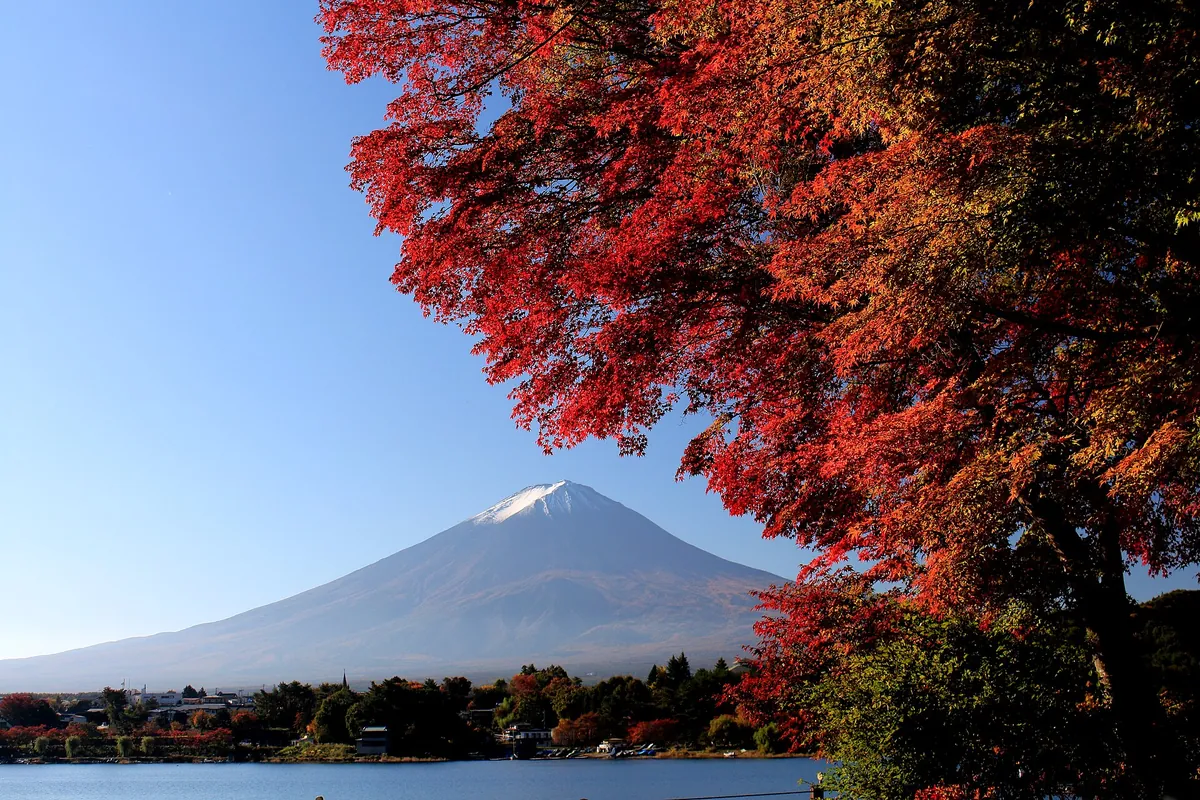
The photo shows Lake Kawaguchi, where red maples frame Mount Fuji. The lakeside festival and its evening light-up are in our Lake Kawaguchi Maple Corridor guide.
Western Japan: Kansai, Chugoku, Shikoku and Kyushu
Western Japan should stay warm into November, so colour may come slightly late. Kyoto’s Arashiyama is forecast from 13 November, the same as 2025. Miyajima near Hiroshima is due from 18 November and Mount Daisen from 27 October. In Shikoku, Kankakei gorge is forecast from 11 November. In Kyushu, Fukayabakei is due from 10 November and Takachiho Gorge from 16 November.
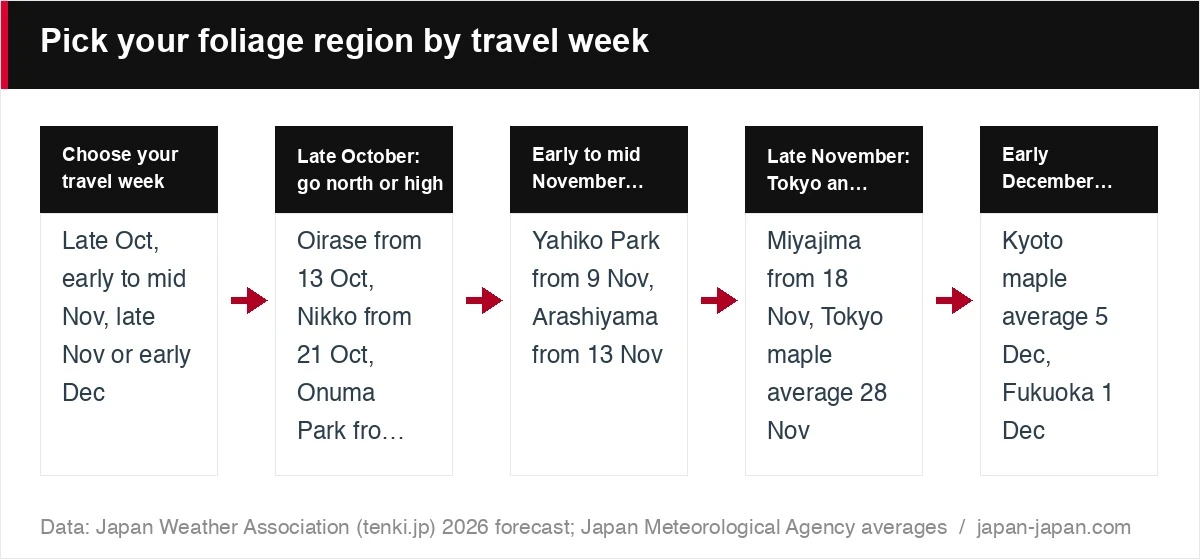
The flow above turns these forecasts into a choice by travel week. Pick your dates first, then pick the region that peaks in them.
Average maple dates in major cities
The JMA keeps a sample maple at or near each weather observatory. Staff record the day it turns red and the day it loses most of its leaves. The averages cover 1991 to 2020. The JMA maple leaf colouring dates by city table lists every station with its 2025 date and the gap from average.
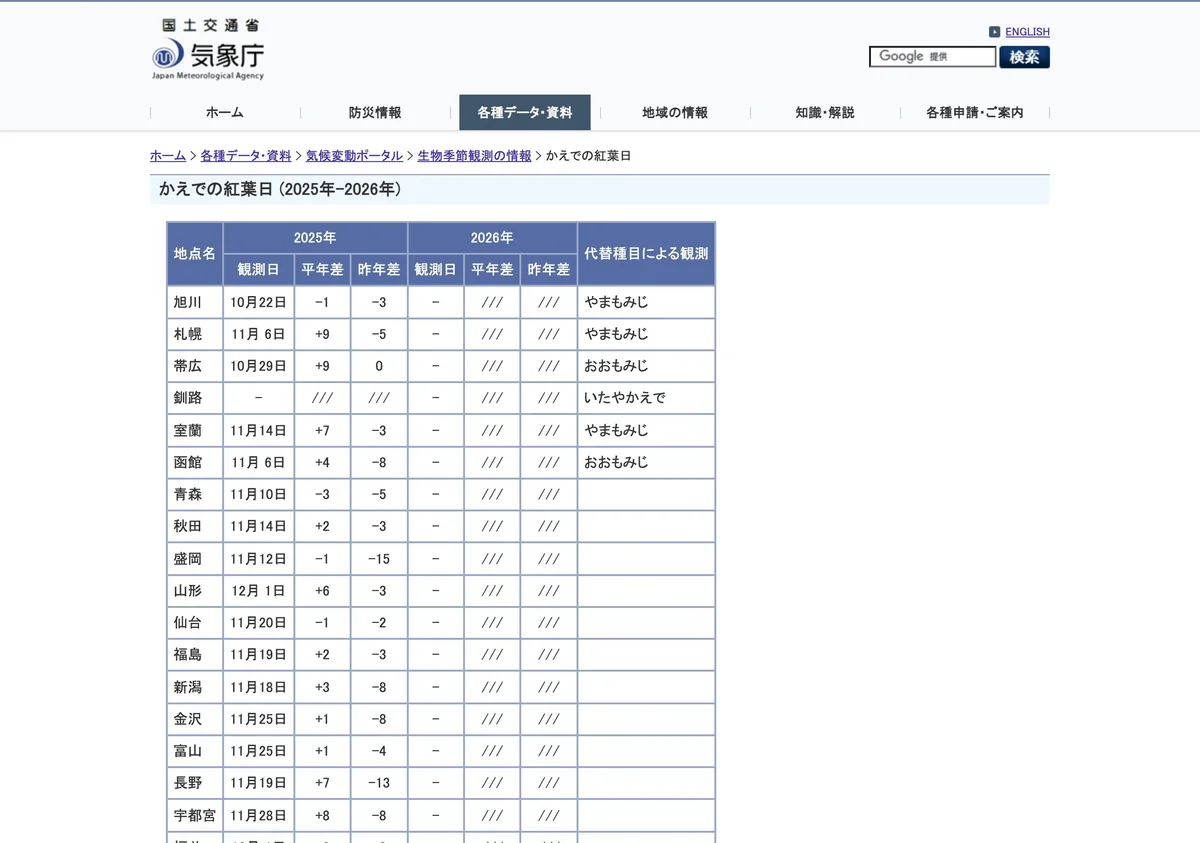
The screenshot is that JMA table. Each row gives a city, its 2025 date, the difference from average and the difference from the year before. A plus number means later than average. The 2026 column fills in as each sample tree turns.
The dates move south over the season. Asahikawa averages 23 October and Sapporo 28 October. Hakodate follows on 2 November. Aomori and Morioka average 13 November, and Sendai 21 November. Tokyo and Nagoya average 28 November. Kyoto averages 5 December, Yokohama 14 December and Kagoshima 15 December.
| City | Maple red (average) | Ginkgo yellow (average) | 2026 forecast nearby |
|---|---|---|---|
| Sapporo | 28 Oct | 4 Nov | Jozankei Onsen: from 15 Oct |
| Sendai | 21 Nov | 23 Nov | Naruko Gorge: from 23 Oct |
| Niigata | 15 Nov | 13 Nov | Yahiko Park: from 9 Nov |
| Tokyo | 28 Nov | 23 Nov | Mount Takao: from 19 Nov |
| Nagoya | 28 Nov | 18 Nov | Korankei: from 16 Nov |
| Kyoto | 5 Dec | 24 Nov | Arashiyama: from 13 Nov |
| Hiroshima | 22 Nov | 15 Nov | Miyajima: from 18 Nov |
| Fukuoka | 1 Dec | 20 Nov | Fukayabakei (Oita): from 10 Nov |
The table puts the maple average, the ginkgo average and a nearby 2026 forecast spot side by side. City trees sit on flat ground, so the famous hills around each city often peak earlier.
Last year is a good guide to how much a single year can swing. In 2025 Sapporo’s maple turned on 6 November, 9 days late. Tokyo’s turned on 23 November, 5 days early. Kyoto’s turned on 10 December, 5 days late. Use our pages for Tokyo autumn leaves dates and Kyoto autumn leaves dates to see the leaf-fall averages too. Tokyo’s tree has lost most of its leaves by 13 December, and Kyoto’s by 18 December.
Why mountains turn weeks before cities
The JMA date comes from one tree in town. Mountain valleys are colder, and colder air brings colour sooner. The Japan Weather Association says high ground peaks earlier than the forecast for the surrounding area.
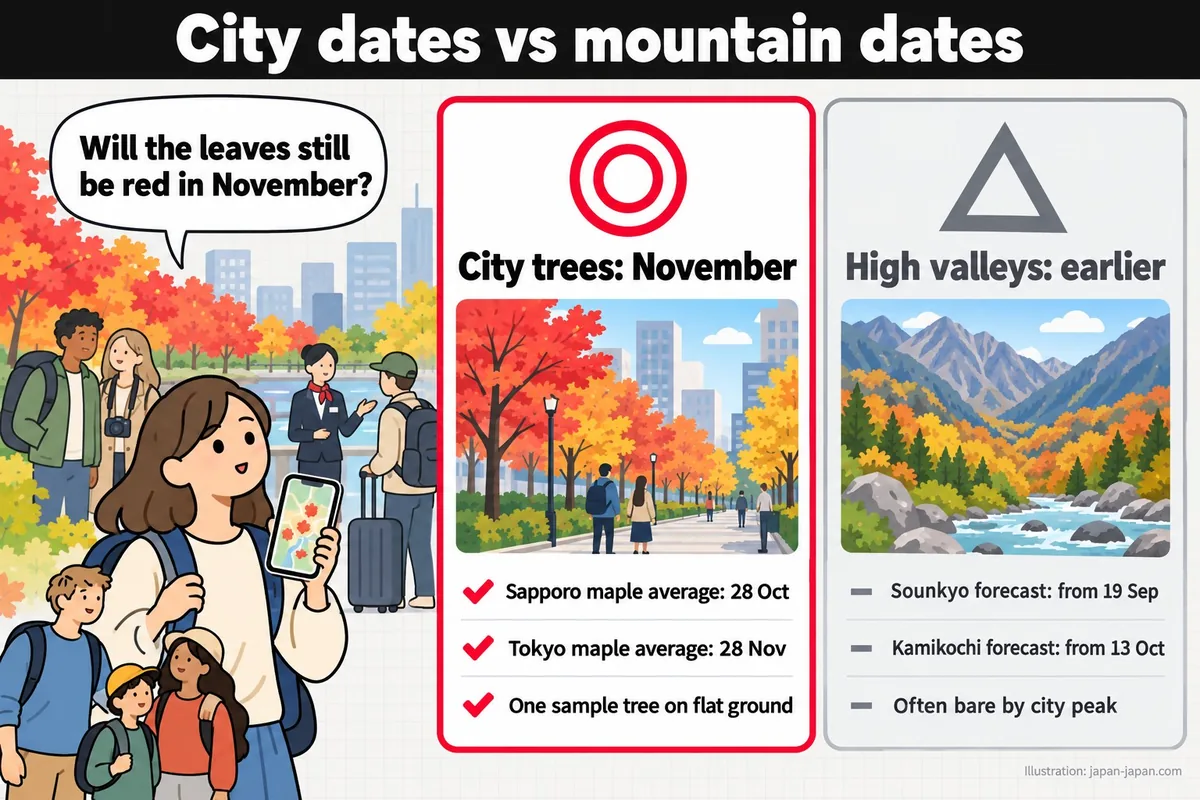
The drawing splits the two kinds of date. On the left is the city tree on flat ground. On the right are the high valleys that peak first and are often bare by the time city maples turn.
Hokkaido shows the gap clearly. Sapporo’s sample maple averages 28 October. Sounkyo Momijidani in the Daisetsuzan mountains was forecast to peak from 19 September. That is more than a month earlier than the city. If you land in Hokkaido in mid-November, Sapporo’s city maples will usually be bare, and the gorge colour will be long gone. Our Hokkaido autumn leaves dates page lists every Hokkaido station.
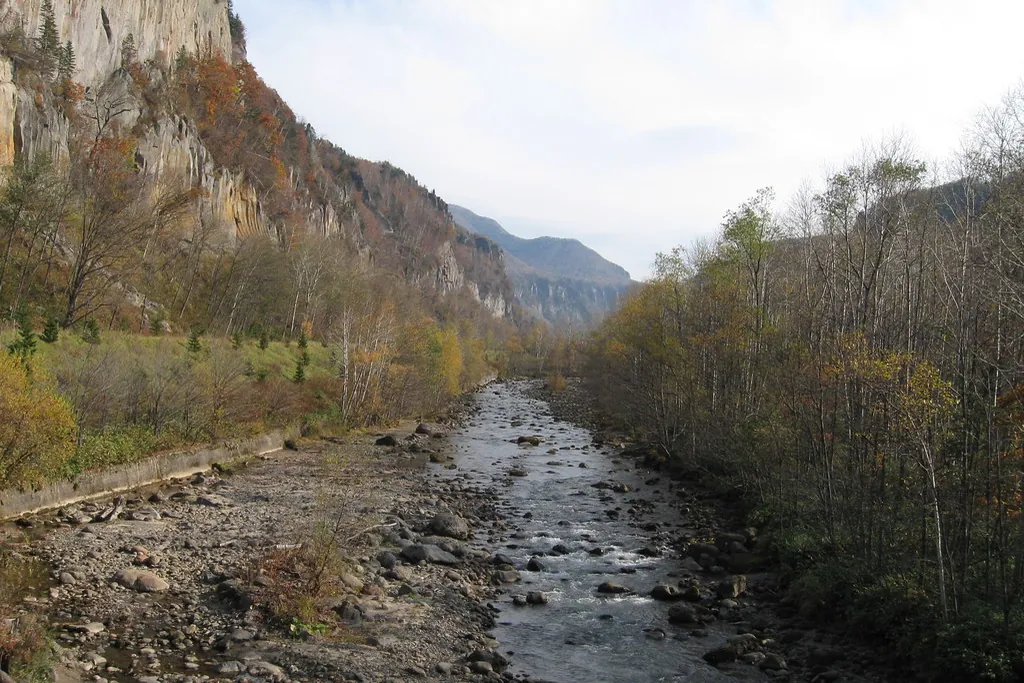
The photo shows the cliffs of Sounkyo gorge. The Daisetsuzan Sounkyo Kurodake Ropeway lifts visitors from the gorge towards Mount Kurodake. The Hokkaido Tourism Kurodake Ropeway page lists opening hours of 6:00 to 18:00, which vary by season. It also notes closures for maintenance or bad weather. A bus from JR Kamikawa Station takes about 30 minutes. From the 7th station, the climb to the summit takes about 90 to 120 minutes.
The same rule works on Honshu. Kamikochi in the Japan Alps is forecast from 13 October. Nagano city’s average is 12 November, about a month later. Plan high valleys for October and city parks for November.
Ginkgo yellow vs maple red
Japan has two foliage shows. Maples turn red. Ginkgo trees turn bright yellow. The JMA tracks both, and in many cities the ginkgo comes first.
The JMA ginkgo yellowing dates by city table shows the gap. In Kyoto the ginkgo averages 24 November, while the maple averages 5 December. Tokyo’s ginkgo averages 23 November, five days before its maple. Sapporo is the reverse: the ginkgo averages 4 November, a week after the maple. Sendai’s ginkgo averages 23 November, two days after its maple.
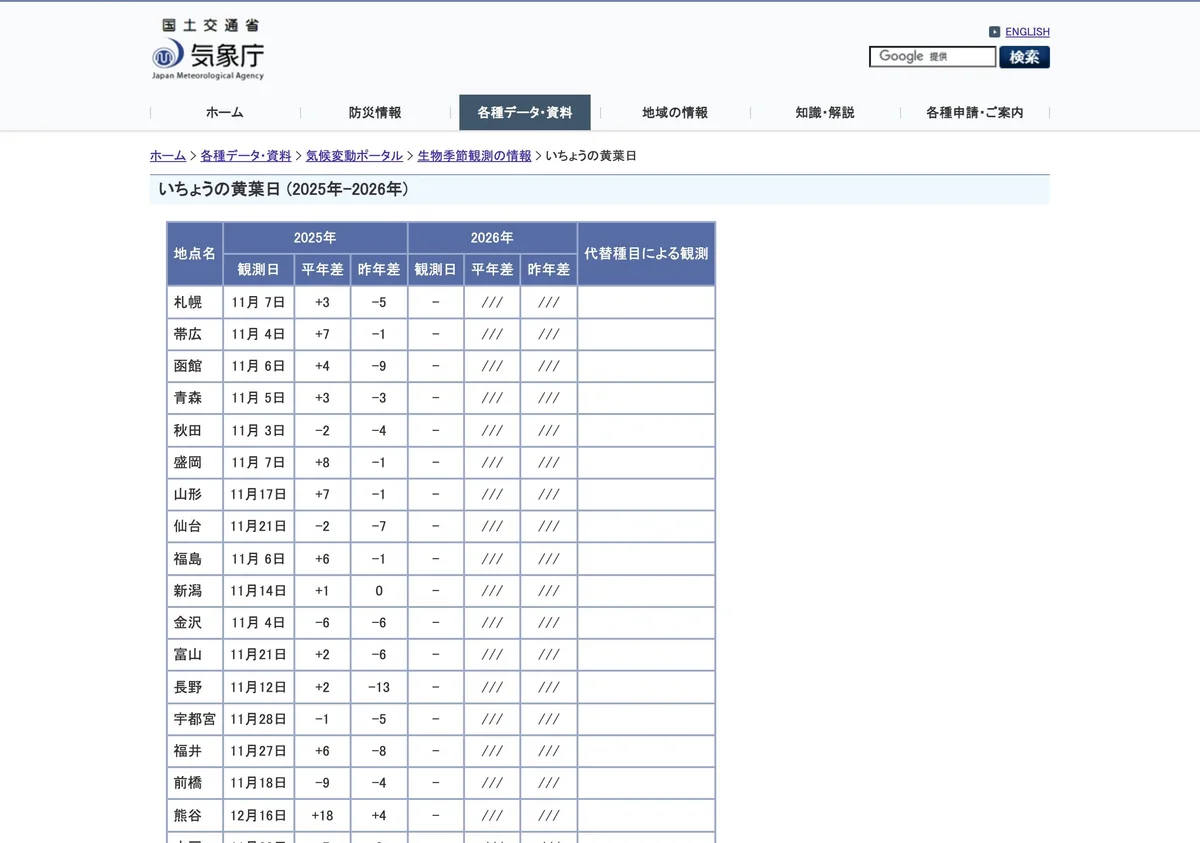
This screenshot is the JMA ginkgo table. It has the same columns as the maple table: city, 2025 date, gap from average and gap from 2025. Tokyo’s ginkgo turned on 22 November in 2025, one day early.
For a trip in the last ten days of November, this works in your favour. Tokyo’s ginkgo avenues and maples can both be in colour at once. Our ginkgo yellow leaf dates page lists the ginkgo average for each station.
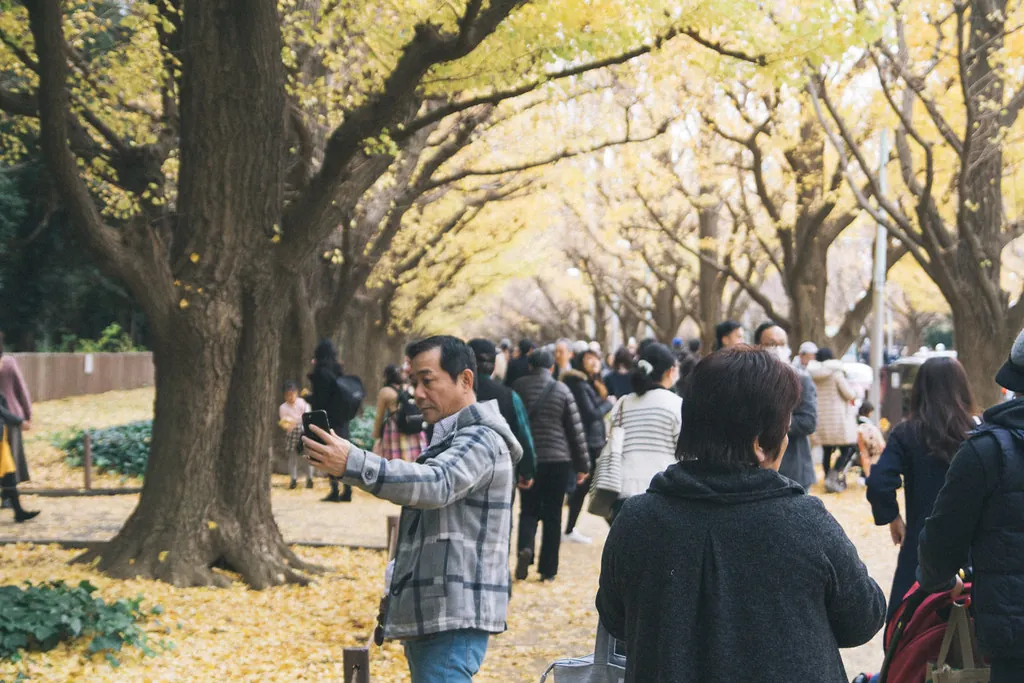
The photo shows Icho Namiki, the ginkgo avenue at Meiji Jingu Gaien in Tokyo. The GO TOKYO Meiji Jingu Gaien page tags it for autumn leaves. Gaien sits a few minutes’ walk from Gaienmae Station on the Tokyo Metro Ginza Line. The grounds also hold Jingu Stadium and the Meiji Memorial Picture Gallery. The gallery is closed for construction until 31 May 2027.
| Place | Meiji Jingu Gaien Ginkgo Avenue (Icho Namiki) |
|---|---|
| Price | Varies per facility in the grounds |
| Hours | Hours vary by facility; closing days irregular |
| Access | A few minutes’ walk from Gaienmae Station, Tokyo Metro Ginza Line |
| Official site | GO TOKYO Meiji Jingu Gaien page |
Tenki.jp ranks Meiji Jingu Gaien fourth in its national list of popular foliage spots. Go early on a weekday for the clearest view down the avenue.
Where to go week by week, late October to early December
Match your travel week to the region that peaks in it. The dates below come from the 2026 forecast and the JMA averages.
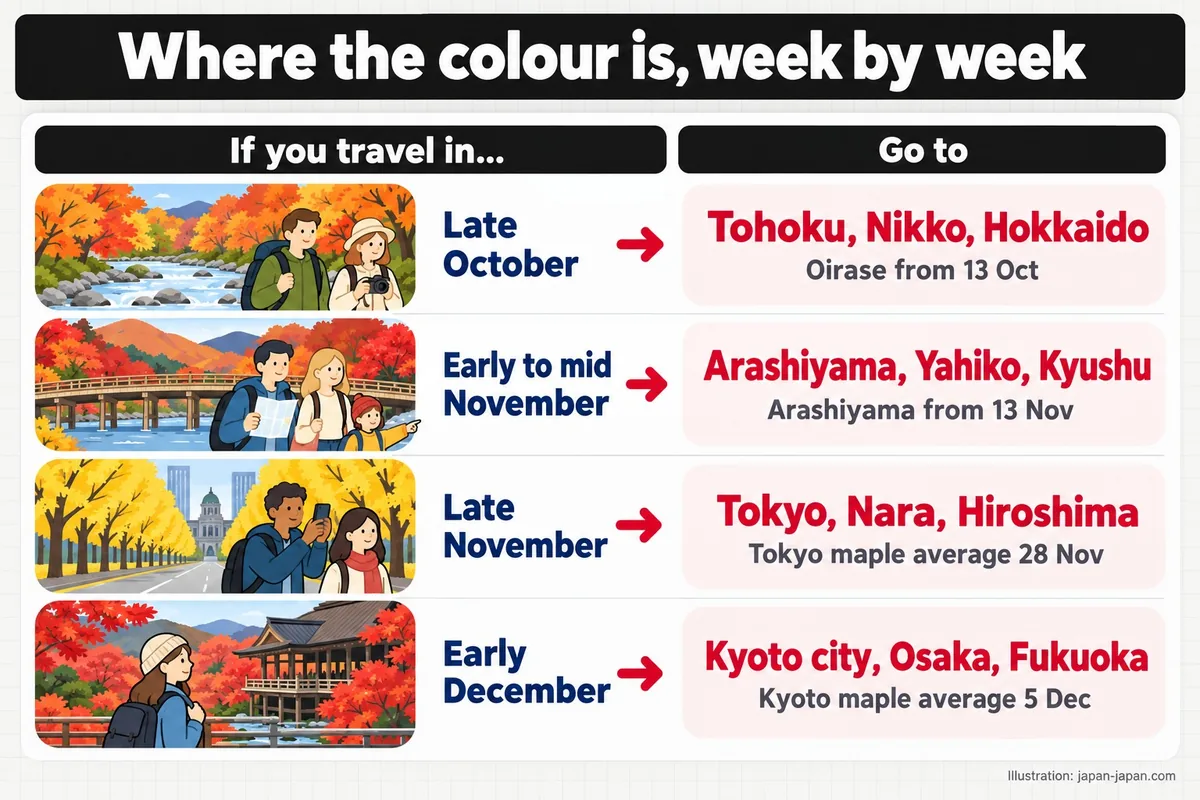
The lookup chart gives one row per travel week. Find your week on the left and read across to the region.
Late October: Tohoku, Hokkaido lowlands and high Honshu
Go north or go high. Oirase Stream is forecast from 13 October, Urabandai from 22 October and Naruko Gorge from 23 October. In Hokkaido, Jozankei Onsen is due from 15 October and Onuma Park from 22 October. Nikko’s Irohazaka road is forecast from 21 October. Shirakawa-go follows from 30 October. Asahikawa’s city maple averages 23 October.
Early to mid November: Tohoku cities, Hokuriku, Kansai hills and Kyushu gorges
The colour reaches northern cities. Akita averages 12 November, and Aomori and Morioka 13 November. Yahiko Park is forecast from 9 November and Fukayabakei from 10 November. Kyoto’s Arashiyama is due from 13 November, and Takachiho Gorge and Korankei from 16 November. See Tohoku autumn leaves dates for the station list.
Late November: Tokyo, Nagoya, Nara and Hiroshima
This is the main week for big-city colour. Miyajima is forecast from 18 November and Mount Takao from 19 November. Nara’s maple averages 21 November and Hiroshima’s 22 November. Tokyo’s ginkgo averages 23 November, and Tokyo and Nagoya maples follow on 28 November.
Early December: Kyoto’s late gardens, Osaka and Kyushu cities
Kyoto keeps going after Tokyo. Its city maple averages 5 December. The Kyoto City Tourism autumn leaves calendar plots peak times in past years from 31 October to 12 December. Some temples and shrines hold special openings and evening light-ups during the season. Osaka and Fukuoka maples average 1 December, and Kagoshima’s 15 December.
If you only have one week
Fix the week first and choose the region second. Landing in late October, spend your foliage days in Tohoku, Nikko or Hokkaido. Landing in late November, stay in Tokyo and Kyoto and skip the mountains. Landing in early December, put Kyoto, Osaka or Fukuoka near the end of your trip.
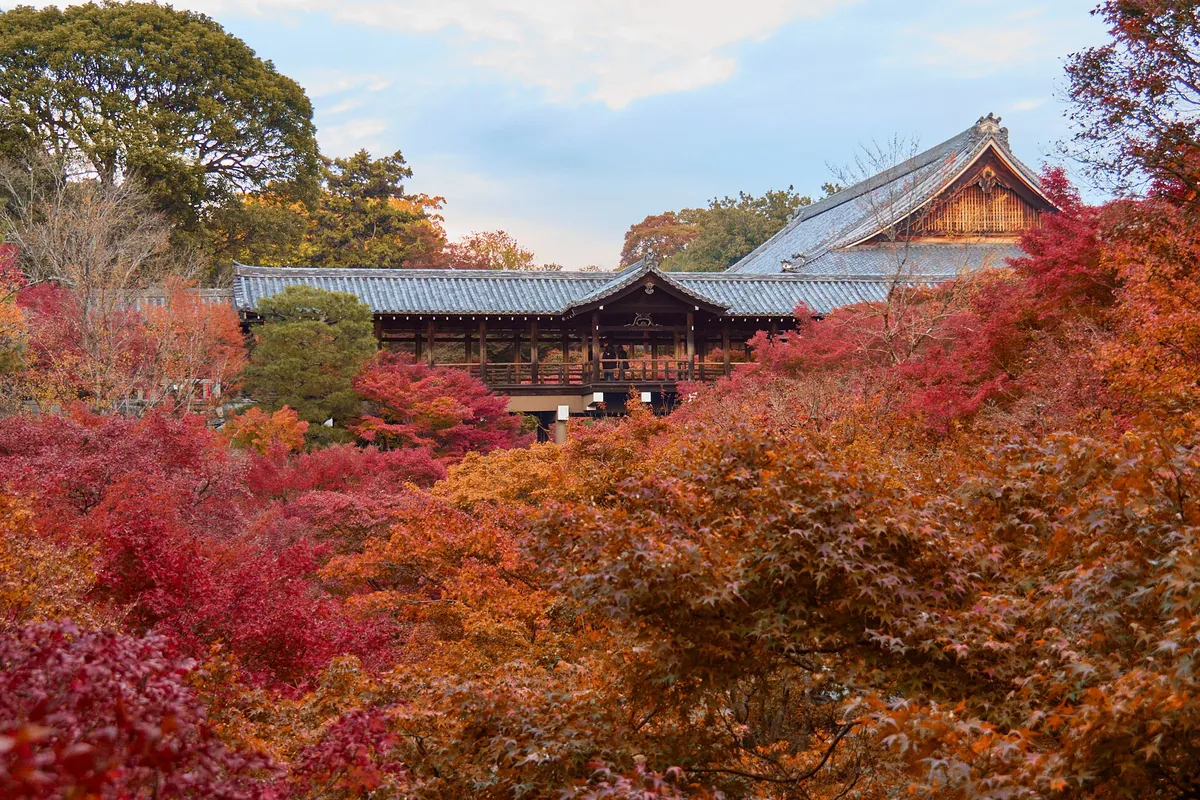
The photo shows maples in the valley below Tsutenkyo Bridge at Tofuku-ji in Kyoto. The calendar tracks spots like this one through to its final update. In 2025 that update came on 12 December. For crowd tips and the busiest temples, read our Kyoto autumn leaves crowds guide.
November holidays and busy weekends in 2026
Two national holidays fall in November. The Cabinet Office national holidays page lists Culture Day on 3 November and Labor Thanksgiving Day on 23 November. In 2026, Culture Day is a Tuesday. Labor Thanksgiving Day is a Monday, so Saturday 21 to Monday 23 November becomes a three-day weekend.
That weekend lands in Tokyo’s ginkgo week and close to Kyoto’s peak. Expect full trains to the famous temples and long waits for night light-ups. Book rooms early and move your big sights to Tuesday to Thursday if you can. Our Japan November holidays page shows what closes and what gets busy. For the wider month, see Japan in November.
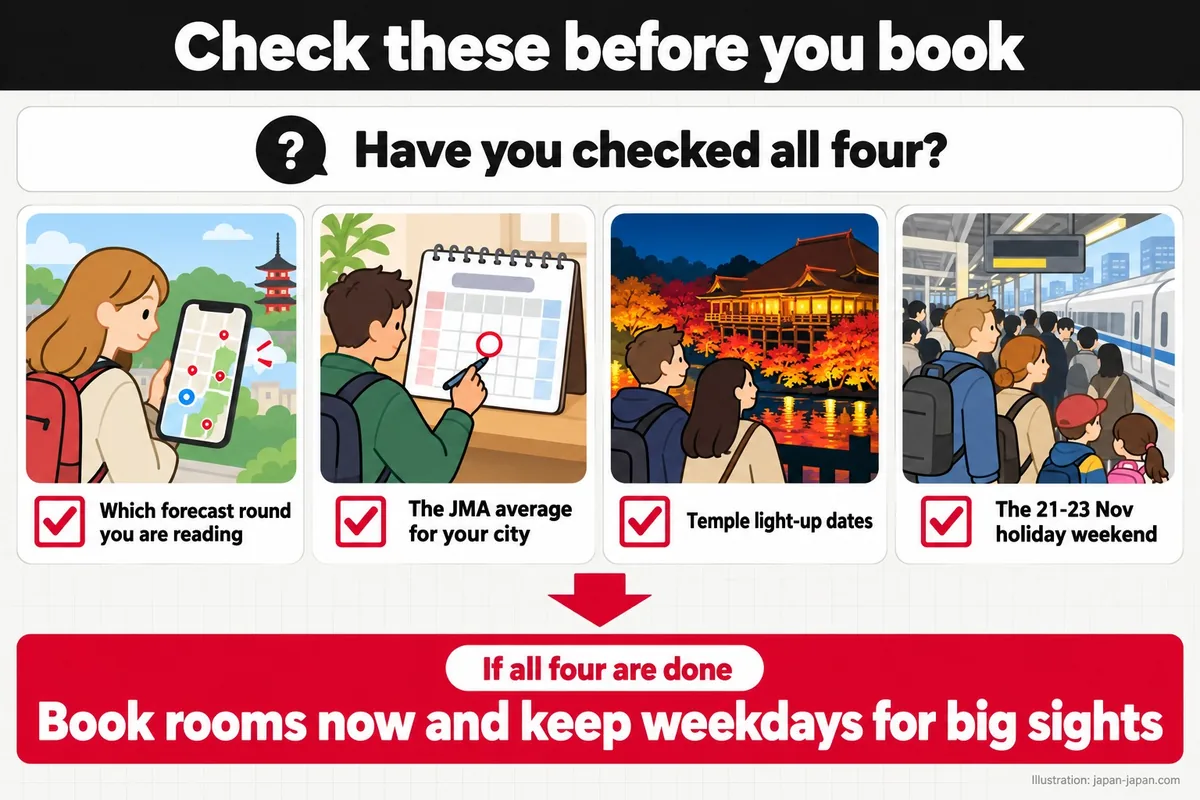
The checklist covers four things to confirm before you book. Run through it once now and again in early November.
- Forecast date: Check which round of the tenki.jp forecast you are reading. The first came out on 1 October.
- City average: Look up the JMA average for your city on our autumn leaves pages.
- Light-ups: Check temple light-up dates on the Kyoto calendar.
- Holiday weekend: Avoid 21 to 23 November for the busiest spots.
Late autumn evenings get cold, especially in the hills. Our Japan temperature by month guide lists average highs and lows city by city.
FAQ
When is the best time to see fall foliage in Japan?
For most big cities, aim for mid-November to early December. Tokyo’s sample maple averages 28 November and Kyoto’s 5 December. Hokkaido and mountain areas peak earlier, from September into October.
Is fall foliage later than usual in Japan in 2026?
About average, or a little late. The Japan Weather Association forecast of 1 October 2026 expects average or late peaks across Japan. October and November should stay warmer than usual, and lowland spots in eastern and western Japan may turn late.
Can you still see autumn leaves in Hokkaido in November?
Only in a few lowland places early in the month. Hakodate’s sample maple averages 2 November, but Sapporo’s averages 28 October. Mountain spots like Sounkyo peak from mid-September, so they are bare by November.
Do ginkgo trees and maples peak at the same time?
Not quite. In Kyoto the ginkgo averages 24 November and the maple 5 December. In Tokyo the ginkgo averages 23 November and the maple 28 November, so late November can give you both.
About the author

.jpg)

