Luggage Forwarding in Japan, With Rates and Airport Cut-Offs

TA-Q-BIN is Yamato’s everyday parcel service, and travellers use it to move suitcases between hotels, stations and airports. The Yamato Transport TA-Q-BIN service page covers parcels from Size 60 to Size 200. You hand the bag over in the morning, ride the train with a day pack, and find the suitcase waiting at the next stop.
This guide uses Yamato’s own rate tables, quoted in cash and including tax. It also sets out the JR Central shinkansen rules, so you can decide whether to forward a big bag or carry it on the train.
How TA-Q-BIN works, step by step
You can hand a suitcase to a Yamato sales office, a TA-Q-BIN agency or a convenience store. Yamato also lists pickup at your home. JR Central notes that you can leave bags at a hotel or station for delivery, so ask at your front desk too.

The illustration shows the four steps in order. In practice they look like this.
- Bring the bag to a counter. A sales office, an agency or a convenience store all take TA-Q-BIN. Each one gives 100 yen off per parcel when you drop it off yourself.
- Fill out the waybill. Write the delivery address, the date you want it to arrive and a clear list of what is inside. Yamato warns that a vague description can delay the parcel or stop delivery.
- Pay at the counter. Cash is accepted. Cards, QR code apps and e-money get the cashless rate at sales offices and with drivers.
- Keep the Sender Receipt. It holds your tracking number. For airport deliveries you swap this receipt for your bag.
Delivery times depend on the distance. If you need a parcel early, TA-Q-BIN Time Service delivers parcels accepted by the evening by 10:00 am the following morning.
Tracking and picking up
Yamato can email you within about one hour of delivery, with the waybill number and the time. If you send a bag to a sales office instead of a hotel, check online that it shows Waiting for Customer Pickup before you go.
Bring ID such as your passport when you collect it. If nobody picks the parcel up within one week, Yamato may return it to the sender.
Discounts worth asking for
The discounts stack up across a long trip. Yamato lists these per parcel.
- Drop-off: 100 yen off at an agency, a sales office or a convenience store.
- Kuroneko Members drop-off: 150 yen off at a Yamato sales office, if the waybill comes from the Neko-Pit tablet.
- Round Trip TA-Q-BIN: 200 yen off when you book the outward and return legs together.
- Sales Office Pickup Service: 60 yen off when you collect the parcel at a sales office yourself.
The multiple-parcel discount gives 100 yen off each extra parcel to the same address. It does not cover suitcases or travel bags of Size 160 or larger, so most families will not get it.
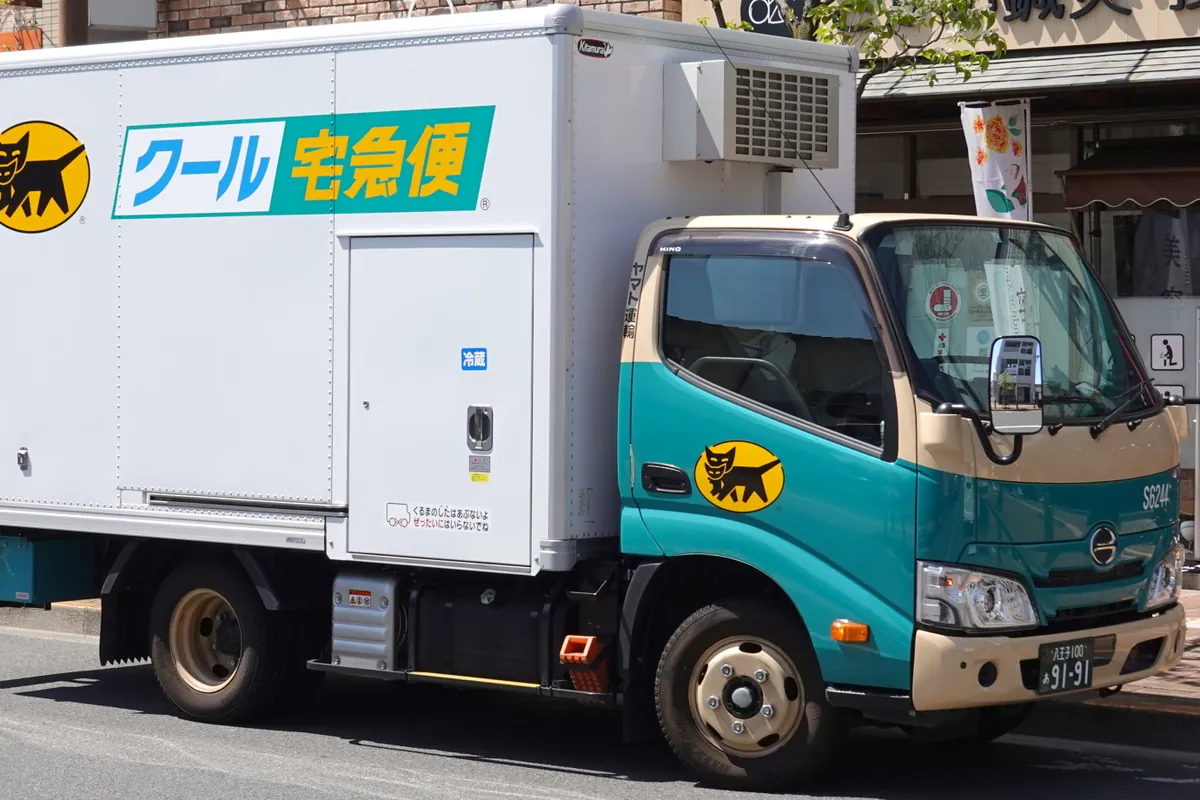
The photo shows a Yamato delivery truck, the same company that runs the counters. Each parcel is insured up to 300,000 yen, tax included. If something goes wrong, call the English line on 03-6834-7503. It runs from 8:00am to 9:00pm, 365 days a year.
What luggage forwarding in Japan costs by size and region
Yamato prices each parcel by its size and by region. Size means the length, width and height added together in centimetres. Each size also has a weight cap, and Yamato bills the larger of the two.
So a bag that measures 120cm in total but weighs 25kg is billed as Size 160. The longest single side can be 170cm. The table uses the Yamato Transport TA-Q-BIN rate table for parcels sent from Kanto. That region covers Tokyo, Kanagawa, Chiba, Saitama and four more prefectures.
| Size (total cm / weight) | Within Kanto | To Kansai | To Hokkaido |
|---|---|---|---|
| Size 60 (60cm / 2kg) | 940 | 1,060 | 1,460 |
| Size 80 (80cm / 5kg) | 1,230 | 1,350 | 1,740 |
| Size 100 (100cm / 10kg) | 1,530 | 1,650 | 2,050 |
| Size 120 (120cm / 15kg) | 1,850 | 1,970 | 2,370 |
| Size 140 (140cm / 20kg) | 2,190 | 2,310 | 2,710 |
| Size 160 (160cm / 25kg) | 2,510 | 2,630 | 3,030 |
| Size 180 (180cm / 30kg) | 3,060 | 3,730 | 4,130 |
| Size 200 (200cm / 30kg) | 3,720 | 4,390 | 4,790 |
A large suitcase of up to 160cm and 25kg is Size 160. Within Kanto that is 2,510 yen in cash. Sending the same bag from Tokyo to Kyoto or Osaka in the Kansai region costs 2,630 yen. To Hokkaido it costs 3,030 yen. Going the other way, a Size 160 bag from Hokkaido to Kansai costs 3,490 yen.
The price jumps at the top two sizes. Size 200 costs 3,720 yen within Kanto, 4,390 yen to Kansai and 4,790 yen to Hokkaido. If your bag sits on the line between two sizes, a smaller case or a lighter load can save several hundred yen.
Cash or card
Yamato publishes a separate cashless rate. It applies to card, QR code or e-money payments at a sales office. Paying online in advance through Apple Pay or Kuroneko Pay also counts. If you top up a short e-money balance with cash, the cash rate applies to the whole parcel.
Some convenience stores cannot take parcels larger than Size 180. For a Size 200 bag, go to a Yamato sales office.
| Item | Value | Note |
|---|---|---|
| Within Kanto | 2510 yen | |
| To Kansai | 2630 yen | |
| To Hokkaido | 3030 yen | |
| To Narita or Haneda Airport | 3170 yen | Airport TA-Q-BIN |
| To Kansai Airport | 3290 yen | Airport TA-Q-BIN |
| To New Chitose Airport | 3690 yen | Airport TA-Q-BIN |
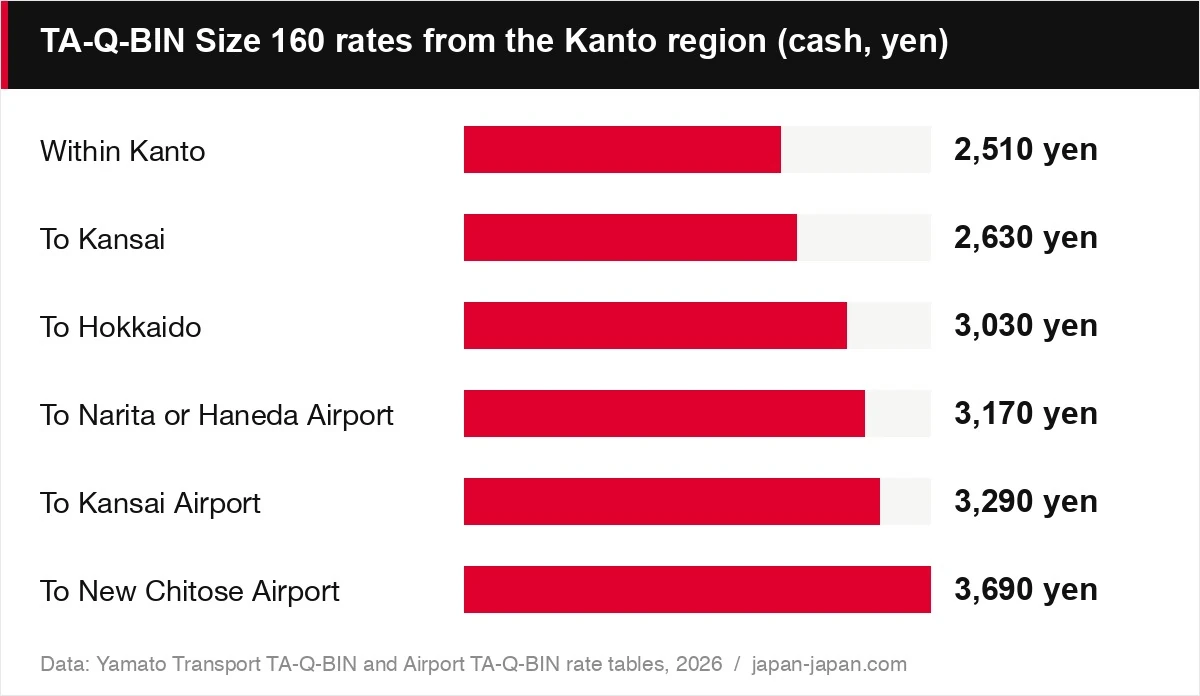
The bar chart puts six Size 160 prices from Kanto side by side. The three airport prices are higher because they include the airport fee, which the next section explains.
Sending bags to the airport before you fly
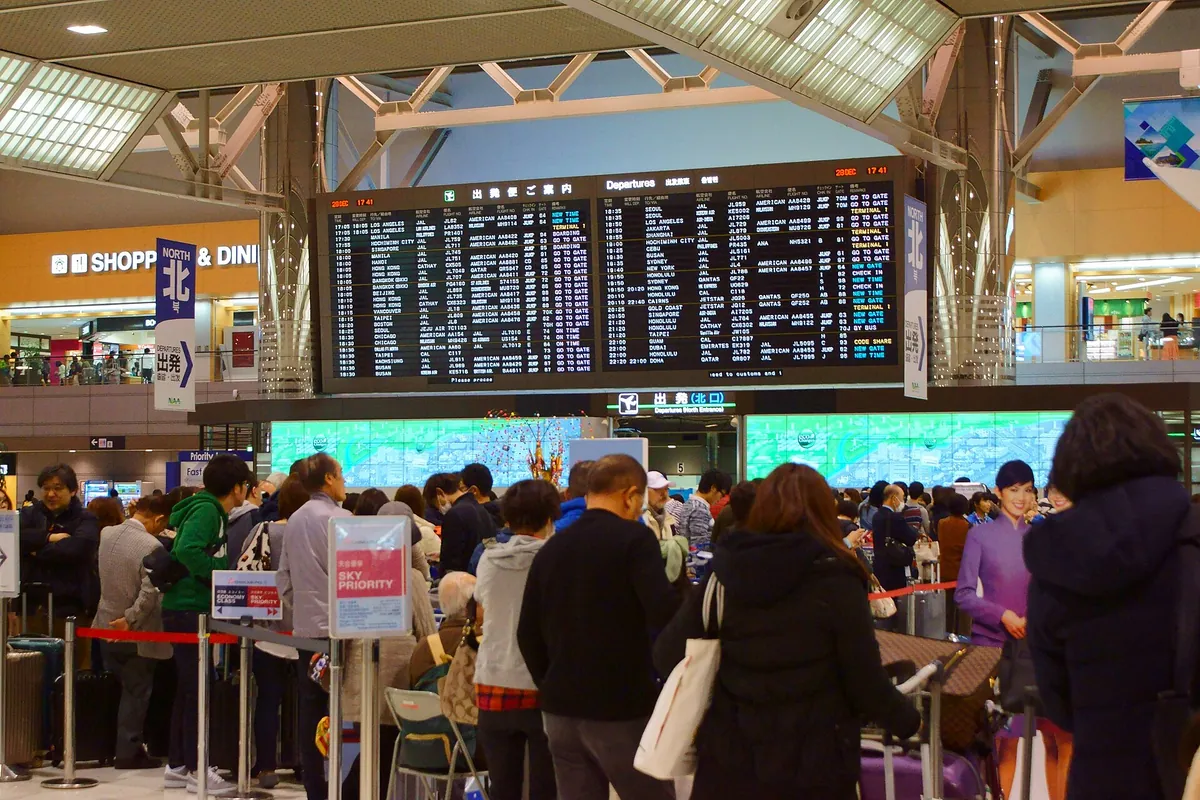
Airport TA-Q-BIN spares you a long ride with a suitcase. The Yamato Transport Airport TA-Q-BIN page sets out the timing. Drop the bag off at least two days before departure, or three days in some areas.
Yamato delivers it to the airport by the day before you fly. On departure day you collect it at a participating counter and walk to check-in. The sending deadline differs by counter, so ask at the counter which day and hour still counts.
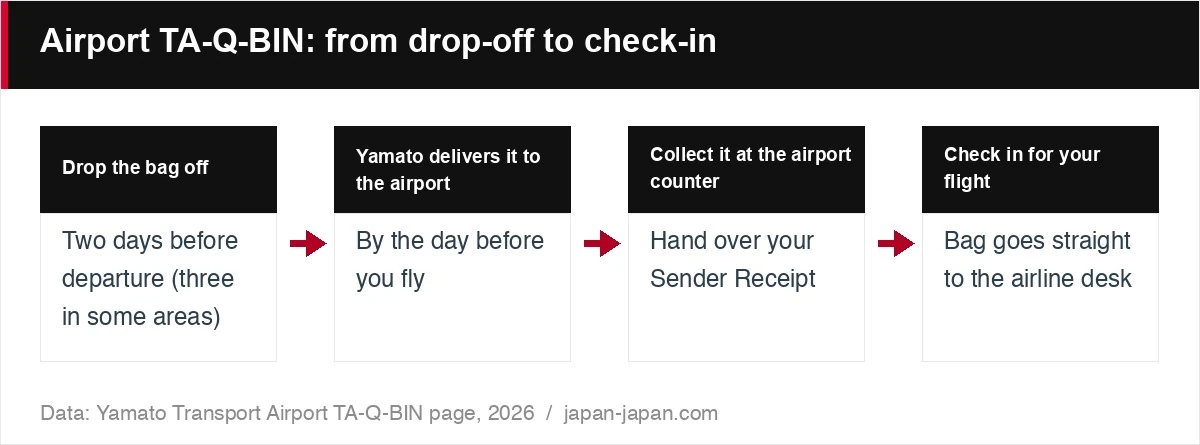
The flow chart shows the three days from drop-off to check-in. Bring the Sender Receipt from your waybill, because the airport counter hands the bag over in exchange for it.
Airport rates
Airport rates are the normal TA-Q-BIN rate plus an airport fee of 660 yen. The Yamato Transport Airport TA-Q-BIN rate table gives these cash prices for a Size 160 bag sent from Kanto.
- Narita Airport or Haneda Airport: 3,170 yen.
- Kansai Airport or Itami: 3,290 yen.
- New Chitose Airport: 3,690 yen.
A Size 200 bag from Kanto to Narita or Haneda costs 4,380 yen. Airport TA-Q-BIN does not accept parcels heavier than 30kg. You cannot choose a delivery time slot or pay cash on delivery for bags going to an airport.
Arriving and leaving
The service also runs the other way. When you land, you can send bags from the airport counter to your hotel. With Round Trip TA-Q-BIN you drop bags at an airport counter on the way home, with no new waybill or payment. The return leg must start within one month of the first drop-off, and Kansai Airport adds a 660 yen airport fee for it.
After you collect your bag, finish the tax-free customs check before you check in. The guide to the airport customs check explains the passport scan and the green or red result. The Narita Airport Terminal 1 guide shows where the station is and how to change terminals.
Same-day delivery from airports and stations
Same-day delivery suits your first day in Japan or a move between two cities. The Yamato Transport Same-day Delivery Service page says no reservation is needed. The service runs between airports or stations and hotels, but only from some sales offices to some areas.
Yamato gives two sample prices for a Size 160 bag.
- Haneda Airport to a hotel in Tokyo’s 23 wards: 5,780 yen per piece.
- Kyoto Station service counter to a hotel in Kyoto city: 3,470 yen per piece.
These cost more than the 2,510 yen next-day rate within Kanto. You pay for the time it saves. Yamato’s sample day starts at Haneda. You send the bag from the Yamato counter and go sightseeing. When you check in at the hotel, the bag is waiting.
The steps are simple. Find a service counter and check its hours and fees. Fill out the same-day delivery form, pay, and leave the bag. Cut-off times differ by counter, and weather or traffic can delay delivery.
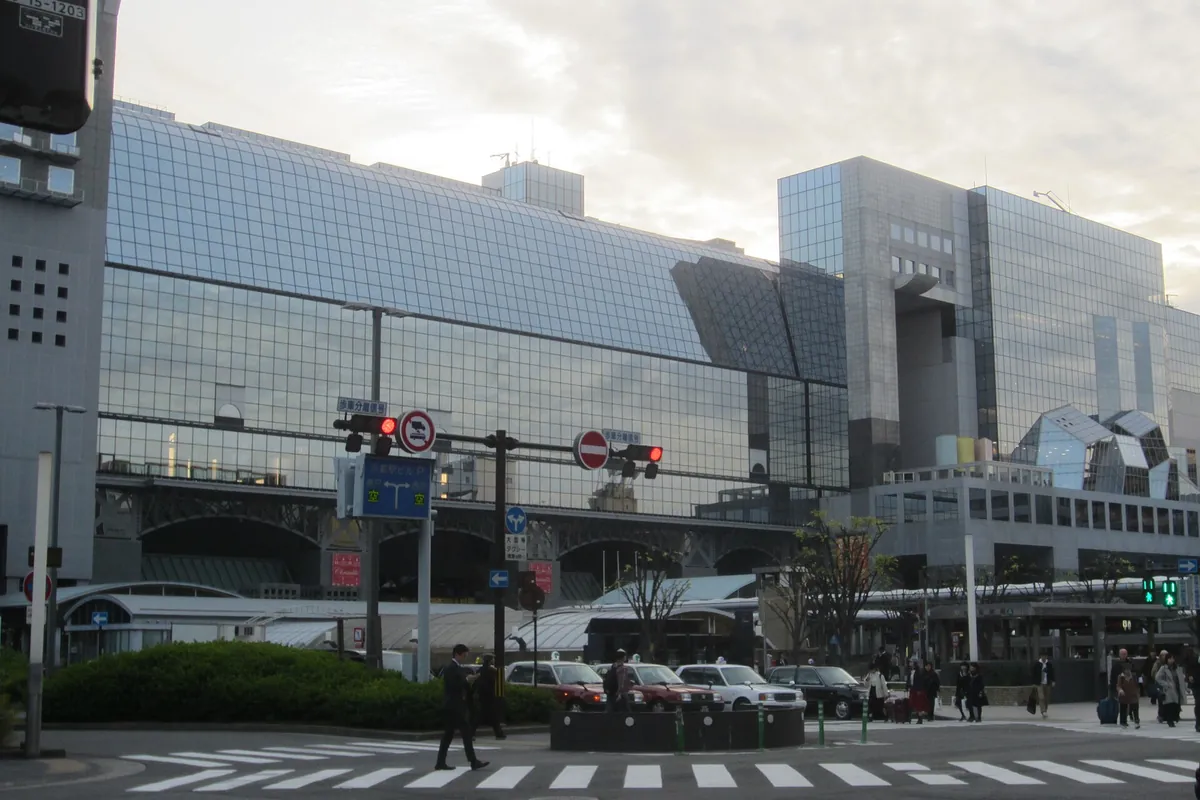
Kyoto Station, shown in the photo, has its own Yamato service counter for same-day delivery. From Kansai Airport, the JR Haruka from Kansai Airport to Kyoto takes 75 minutes for 2,200 yen. It is an easy ride with only a day bag.
Two more rules apply. Delivery to an airport adds the Airport Express Delivery Fee to the regular fee. JR Central also runs LUGGAGE EXPRESS, a paid hands-free service for bags up to 200cm in total, and it needs a reservation.
Lockers for a few hours
Sometimes you only need to park a bag for an afternoon. Airport lockers do that job. Our terminal pages list lockers from 400 yen at Narita Terminal 1 and from 300 yen at Kansai Airport Terminal 1.
Size limits and what you cannot send
TA-Q-BIN refuses anything over Size 200 or heavier than 30kg. The Yamato Transport dangerous and prohibited items page also lists things you must keep with you, whatever the bag size.
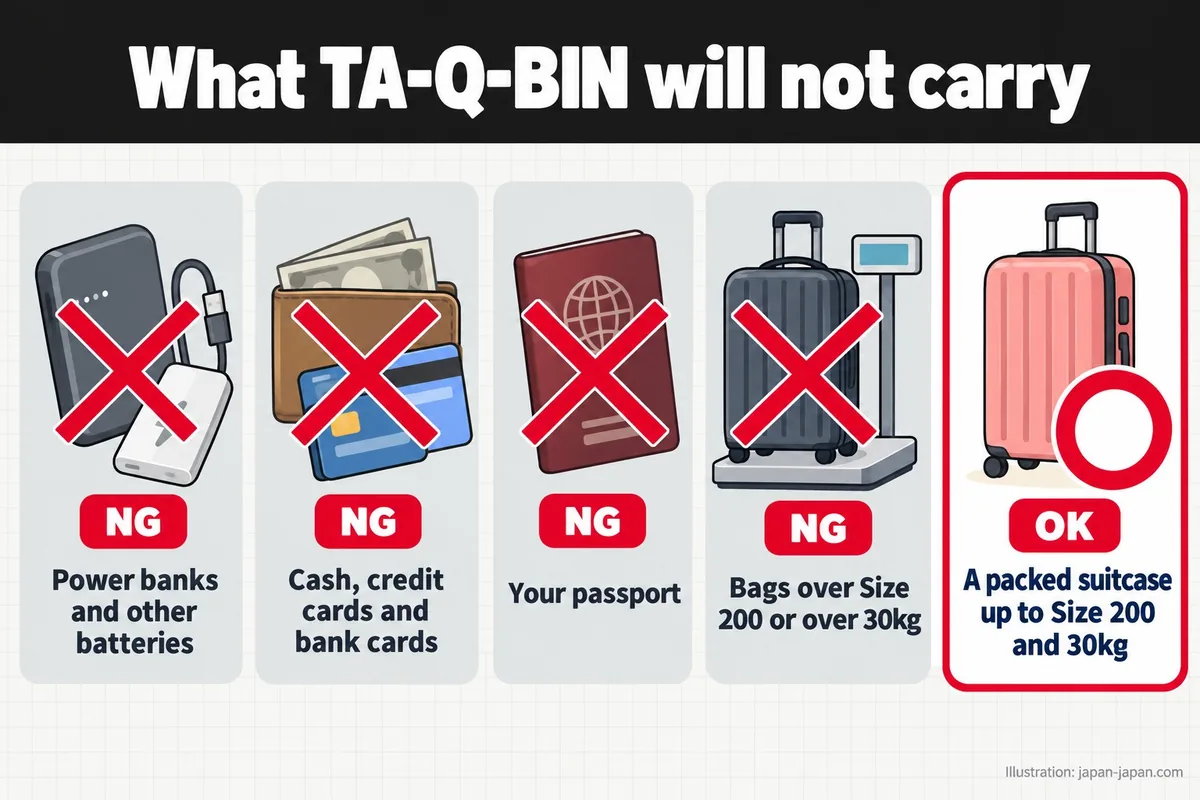
The illustration groups the items travellers most often pack by mistake. The full list includes these items.
- Cash, bank checks and other securities.
- Credit cards and bank cards.
- Passports and other papers that are hard to replace.
- Products containing dangerous substances, such as batteries.
- Fireworks, gas cylinders and other flammable items.
- Parcels whose contents add up to more than 300,000 yen.
Keep your power bank in your day bag, along with any spare batteries. Some regions move parcels by air, including Okinawa to the rest of Japan. Since December 31, 2025, Yamato cannot fly lithium battery devices such as laptops and phones for customers without a contract. If your suitcase has a built-in battery, read our page on smart luggage before you send it.
Skis and snowboards
Ski TA-Q-BIN carries skis, snowboards and other luggage to a snow resort. The Yamato Transport Ski TA-Q-BIN page asks you to send them two days before you arrive, or three in some areas. You pick them up at the resort reception desk.
You cannot send skis or boards from a convenience store, so use a sales office. A bag cover is required: a ski cover costs 400 yen and a snowboard cover 600 yen. Our page on skis and snowboards on flights covers the airline side.
Forward it or take it on the shinkansen
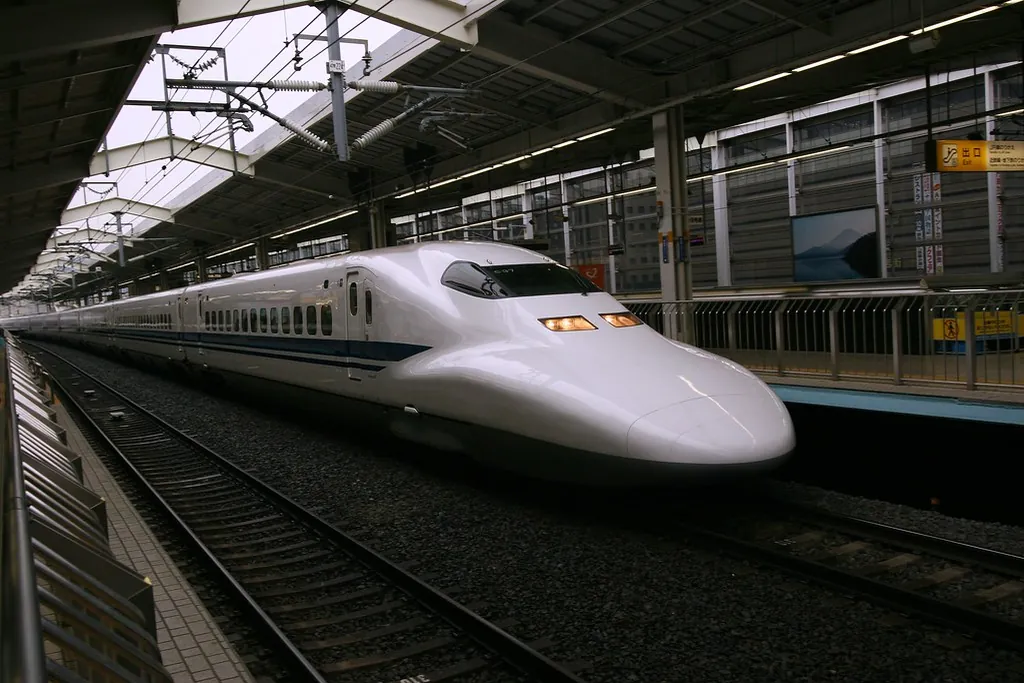
Many travellers simply wheel their suitcase onto the train, as in the photo. The JR Central shinkansen luggage information page sorts bags by the sum of their three sides.
- Up to 160cm: place it at your feet, on the overhead rack or in the deck storage area. No reservation is needed.
- 161 to 250cm: reserve a seat with an oversized baggage area when you buy your ticket. The seat costs the same as a normal reserved seat.
- Over 250cm: you cannot bring it on board.
If you board with an oversized bag and no such reservation, you pay a 1,000 yen fee, tax included. Each passenger may carry two pieces of up to 30kg each, with no side longer than 200cm. The rule applies on the Tokaido, Sanyo, Kyushu and Nishi Kyushu Shinkansen.
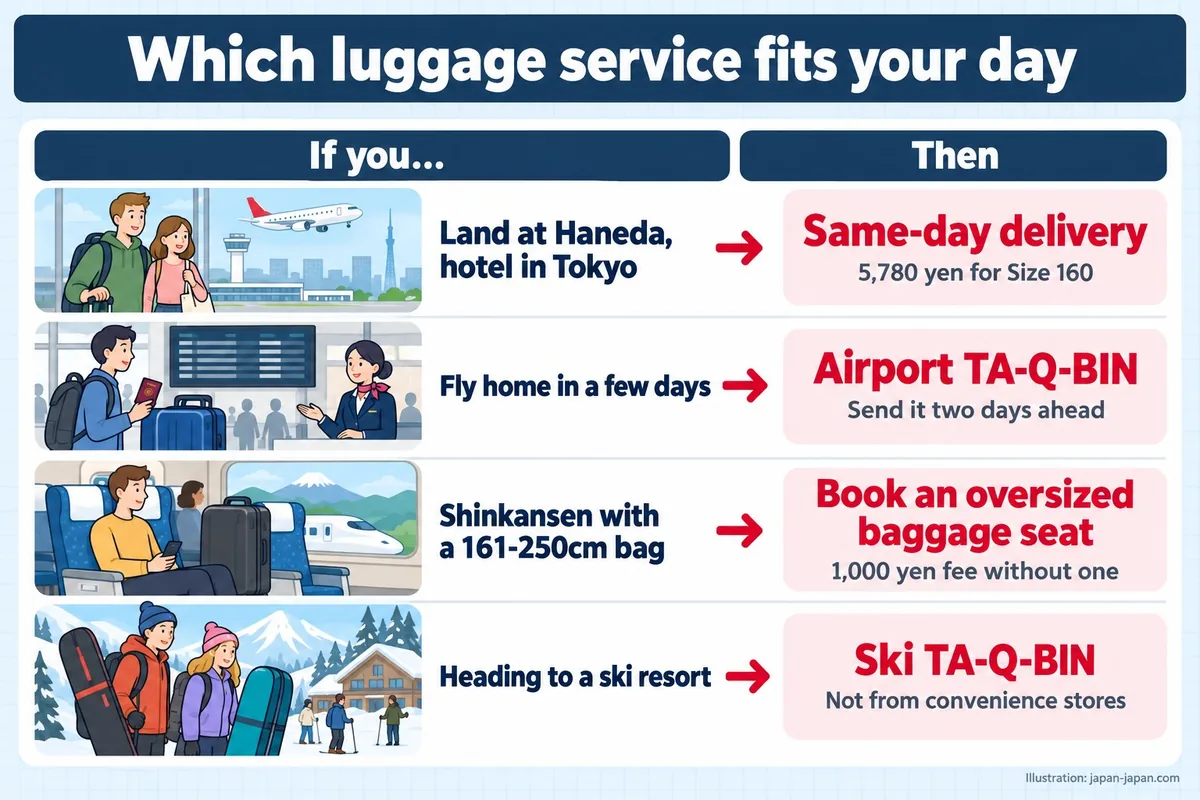
The chart matches common situations with the service that fits. A Nozomi has 57 seats with an oversized baggage area. Five back-row passengers share each space, so book early if you need one.
For one bag under 160cm on the Tokyo to Kyoto route, carrying it costs nothing. Forwarding it costs 2,630 yen, but you ride with free hands. With two large bags, or a bag over 160cm, forwarding saves you the hunt for a reserved baggage seat. JAPAN RAIL PASS holders can ask at a JR ticket office for a seat with an oversized baggage area.
Related guides
To plan the airport leg, our airport transfer routes list times and fares from 73 routes. Before you pack, check your carrier’s limits in baggage rules by airline; ANA, for example, allows a 115cm, 10kg cabin bag.
For a full trip plan, the 10-day Japan itinerary shows where a forwarded bag saves the most effort. Winter visitors can use the Japan packing list for winter. If you are weighing rail costs too, read whether the JR Pass is worth it. Before you set drop-off dates, check the busiest travel days in our public holidays guide.
FAQ
How much does it cost to forward a suitcase in Japan?
A Size 160 suitcase costs 2,510 yen in cash within the Kanto region. Sending it from Kanto to Kansai costs 2,630 yen, and to Hokkaido 3,030 yen. Dropping it off yourself takes 100 yen off.
How many days before my flight should I send luggage to the airport?
Send it at least two days before your departure date, or three days in some areas. Yamato delivers it to the airport by the day before you fly. Each counter sets its own deadline, so ask when you drop it off.
Can I send luggage on the same day I arrive in Japan?
Yes, from some airports and stations. Yamato’s same-day service needs no reservation. A Size 160 bag from Haneda Airport to a hotel in Tokyo’s 23 wards costs 5,780 yen.
Can I take a large suitcase on the shinkansen instead?
Yes. Bags up to 160cm need no reservation. For 161 to 250cm, reserve a seat with an oversized baggage area, or pay a 1,000 yen fee on board.
About the author





_-_007.jpg)