What Is Kobe Beef? A5 Grades, Rules and Where to Eat It
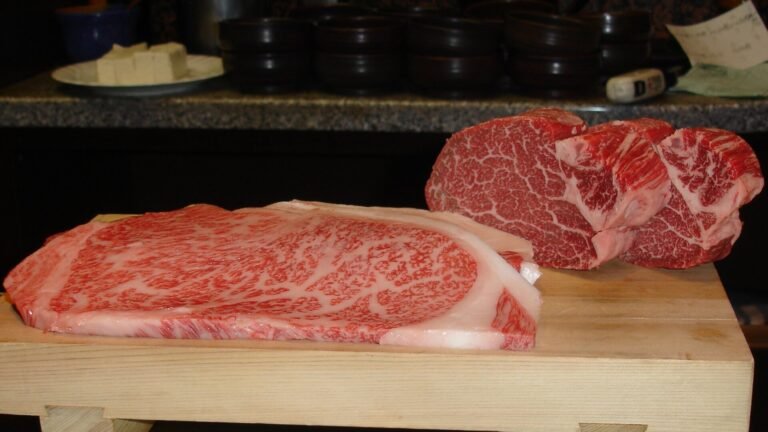
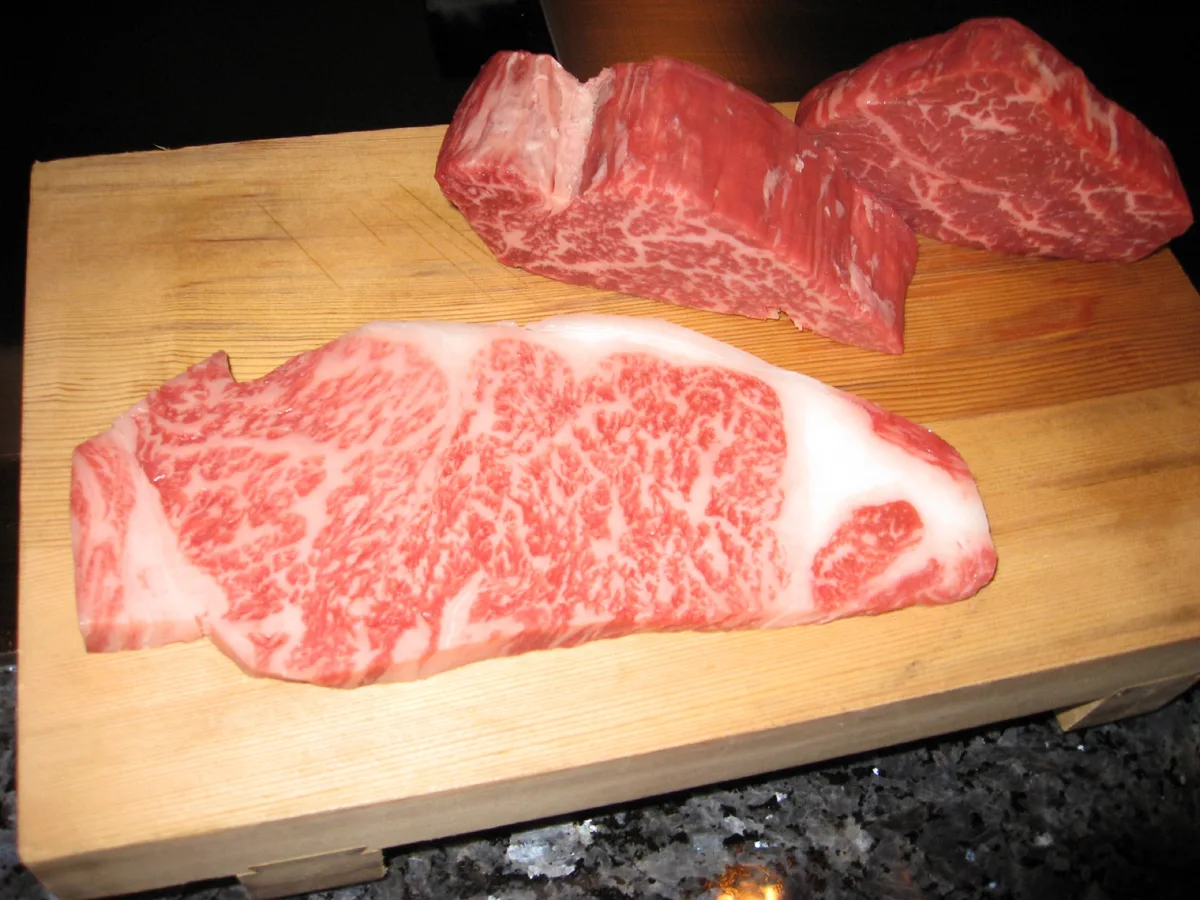
That means Kobe beef can grade A4 as well as A5. A5 is a carcass grade from the Japan Meat Grading Association (JMGA): yield grade A plus quality grade 5. Quality grade 5 needs BMS 8 or higher. Japan graded 306,478 carcasses A5 in 2024, so an A5 label on its own does not make beef Kobe beef.
Here is what to do as a visitor.
What counts as Kobe beef
Two articles in the association’s bylaws define Kobe beef. Article 20 sets the rules for Tajima beef, and Article 21 picks Kobe beef out of that group.
Tajima beef (Article 20). The seed stock must be Tajima cattle produced in Hyogo. The breeding farm must be in Hyogo and registered with the association. The cattle must be bred and fattened in Hyogo, as steers or cows, for more than 28 months and under 60 months. They must be processed at a slaughterhouse in Hyogo, and the meat must grade A or B at rank 2 or above. This beef can be called Tajima beef or Tajima-gyu.
Kobe beef (Article 21). Kobe beef is selected from Tajima beef, and only heifers and steers qualify. It must also meet these conditions.
- Yield grade A or B, with a meat quality grade of 4 or above.
- Marbling of BMS 6 or above.
- A carcass of 270 to 499.9 kg for a heifer, or 300 to 499.9 kg for a steer.
- If the carcass is damaged, a member of the association checks it and decides whether it still counts.
Beef that passes can be called KOBE BEEF, Kobe-gyu or Kobe-ushi. The association’s FAQ says these are the strictest criteria in Japan.
The FAQ also gives the numbers behind the rules. About 7,000 Tajima cattle go to market each year, and only about 5,500 of them are certified as Kobe beef. Calves stay on breeding farms until they are eight or nine months old. Fattening farms then raise them for about two years. On average they go to market 30 to 32 months after birth. Raising Tajima cattle takes two to four months longer than regular Japanese Black wagyu.
A Tajima carcass weighs around 420 kg, about 50 kg lighter than the national average. Farmers say the breed’s fine texture would be lost if the cattle grew much bigger. That is the reason for the 499.9 kg cap. The cattle eat dried forage and rice straw, plus feed blended from soybean, corn, barley and wheat bran. They get no pasture grass at all.
What about the stories of beer, music and massage? The FAQ says almost no cattle have been raised on beer. Music at feeding time may lift their appetite, but its effect on meat quality has not been proved. Massage may lower stress, but it does not soften the meat or add marbling.
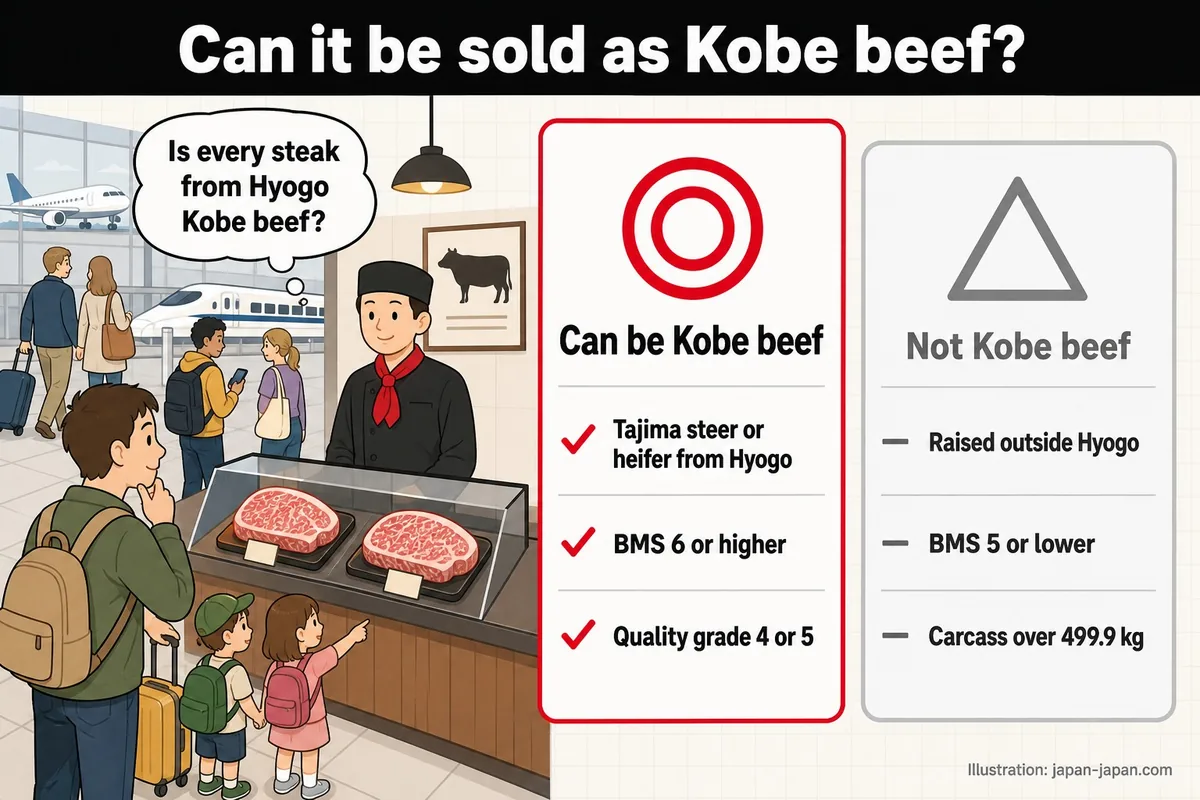
Beef from cattle raised outside Hyogo, with BMS 5 or lower, or with a carcass over 499.9 kg cannot be Kobe beef. The illustration below sums up where the line falls.
A5 wagyu: what the grade means
A5 comes from the JMGA’s beef carcass trading standard. Every carcass gets two marks: a yield grade and a meat quality grade.
Yield grade (A, B or C). This rates how much usable meat the carcass gives. A means a yield score of 72 or more, B means 69 to under 72, and C means under 69.
Meat quality grade (5 to 1). Graders score four things from 5 down to 1: marbling, meat color and brightness, firmness and texture, and fat color, luster and quality. The carcass takes the lowest of the four scores. Marbling is read on the Beef Marbling Standard (BMS), which runs from 1 to 12.
- Marbling grade 5: BMS 8 to 12.
- Marbling grade 4: BMS 5 to 7.
- Marbling grade 3: BMS 3 or 4.
- Marbling grade 2: BMS 2.
- Marbling grade 1: BMS 1.
Put the two marks together and you get 15 grades, from A5 down to C1. The standard applies to every carcass regardless of breed, age or sex, except calves. So A5 tells you about the carcass, and nothing about the brand or where the animal was raised.
This is why Kobe beef can be A4. A Kobe carcass with BMS 6 or 7 has marbling grade 4, so its quality grade tops out at 4. It is graded A4 or B4. Kobe beef with BMS 8 or higher reaches A5 or B5 only when the other three scores are also 5. The association’s FAQ says JMGA grades every Tajima carcass.
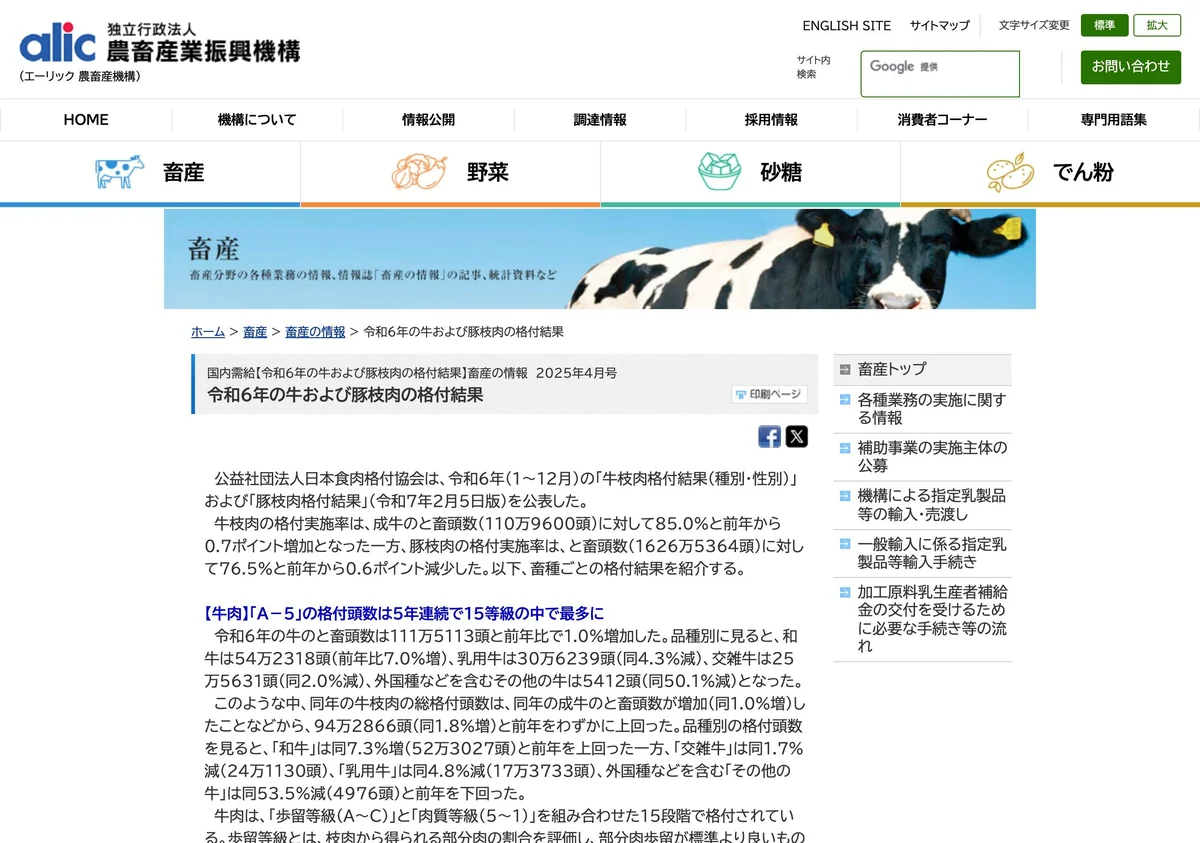
ALIC, Japan’s Agriculture & Livestock Industries Corporation, summarised JMGA’s 2024 results in its April 2025 report. In 2024, 306,478 carcasses graded A5. That was 32.5% of all graded carcasses, and A5 was the most common of the 15 grades for the fifth year in a row. Wagyu made up about 98.5% of the A5 total: wagyu steers 60.9% and female wagyu 37.6%. A4 came second, at 15.0% of all graded carcasses.
The screenshot below shows the start of the report, which is in Japanese. The blue headline in the screenshot announces the A5 result for beef.
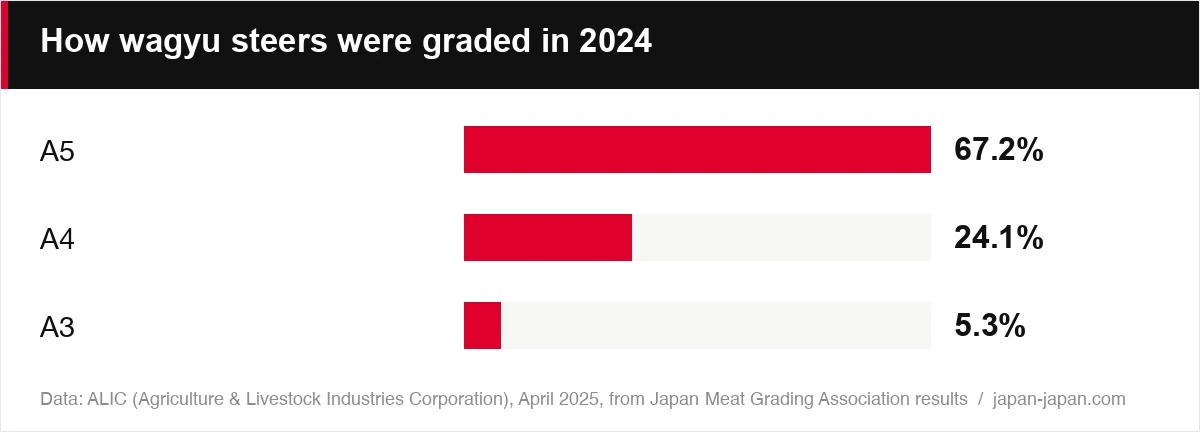
Wagyu steers score higher still. In 2024, 67.2% of wagyu steers graded A5, 24.1% graded A4 and 5.3% graded A3. Yield grade A as a whole covered 97.5% of them. The chart below shows the split.
| Item | Value |
|---|---|
| A5 | 67.2 % |
| A4 | 24.1 % |
| A3 | 5.3 % |
For a wagyu steer, A5 is the most common result. Judge a restaurant by the brand and the ID number as well as the grade.
Matsusaka beef, Hida beef and other wagyu brands
Japan has over 200 wagyu brands, according to JNTO, the national tourism organization. Each brand sets its own rules on area, bloodline, breed, grade, rearing method and raising time.
JNTO names Matsusaka beef, Kobe beef and Omi beef as the top three. All three come from the Kansai region, and their bloodlines trace back to Tajima cattle from Hyogo.
Matsusaka beef (Mie). Matsusaka Ushi comes from virgin cows raised in and around Matsusaka City. Each animal is tracked from birth to slaughter to prove it is genuine. The meat is heavily marbled, with a high fat-to-meat ratio. JNTO says some farms give the cattle beer to increase their appetite.
Omi beef (Shiga). Omi beef, also spelled Ohmi, has a very fine grain and unusually viscous fat. Before meat eating became common in Japan in the 19th century, miso-marinated Omi beef was presented to the shogun as medicine.
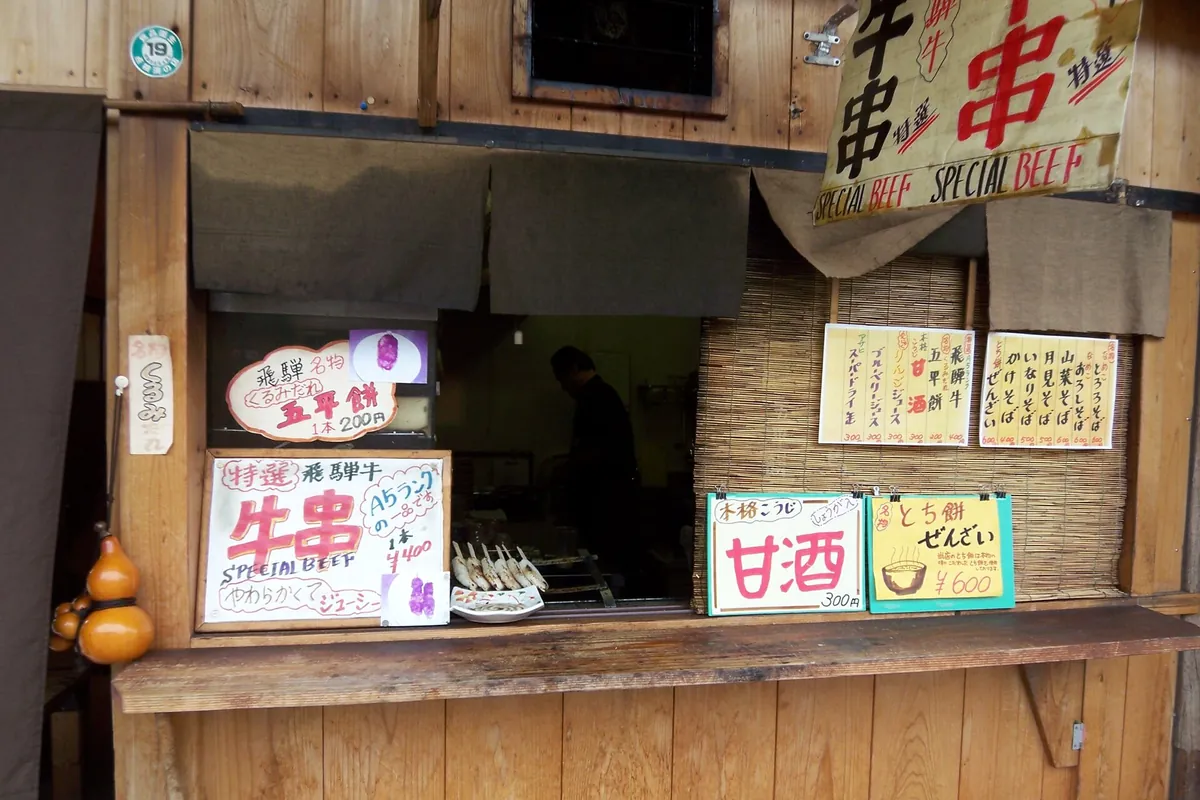
Hida beef (Gifu). Hida beef comes from black-haired Japanese cattle raised for at least 14 months, says JNTO’s Philippines site. It is known for intense marbling. Try it as sirloin steak, as yakiniku, as kushiyaki skewers, or in sukiyaki and other hot pots.
The photo below shows Hida beef in Takayama, Gifu Prefecture. Planning a trip? Our Takayama by month guide lists the festivals and events in each month.
Other brands. Kyoto beef comes from cattle raised for at least 22 months. Miyazaki beef has twice won the Wagyu Olympics, and by custom the champion of a major sumo tournament receives a Miyazaki cow. Iwate Japanese Shorthorn is a breed that makes up less than one percent of all cattle. Its beef is leaner, with more red meat and less fat. Kumamoto Akaushi comes from the rare Japanese Brown breed, and roast beef is a popular way to serve it. Yonezawa beef from Yamagata is easiest to try in an ekiben, a bento sold at train stations and on some Yamagata trains.
The table below compares Kobe beef with the three brands above.
| Brand | Prefecture | Cattle | What sets it apart |
|---|---|---|---|
| Kobe beef | Hyogo | Tajima steers and heifers | BMS 6 or higher, quality grade 4 or 5, carcass up to 499.9 kg |
| Matsusaka beef | Mie | Virgin cows | Tracked from birth to slaughter |
| Omi beef | Shiga | Tajima bloodline | Very fine grain and viscous fat |
| Hida beef | Gifu | Japanese Black | Raised for at least 14 months |
Why Kobe beef costs more
The association’s FAQ names two reasons for the price.
The bloodline. Tajima cattle, the seed stock for Kobe beef, have kept a pure bloodline from the Edo period (1615 to 1867) to today. Protecting that line adds to the cost of producing the beef.
Scarcity. Kobe beef is less than about 0.2% of all beef eaten in Japan. About 5,500 head are certified a year, while A5 was Japan’s most common beef grade in 2024. The cattle also stay on the farm longer: more than 28 months by rule, and 30 to 32 months on average.
Reading the menu. On a menu, wagyu means the beef comes from one of four Japanese breeds. Kokusan-gyu, or domestic beef, only means the animal spent more than half its life in Japan. Kobe beef is wagyu, because Tajima cattle belong to the Japanese Black breed. You may also see sashi, the fat inside the red meat, and shimofuri, meat with fine and heavy marbling. The FAQ says Tajima cattle have both fine muscle fiber and heavy marbling.
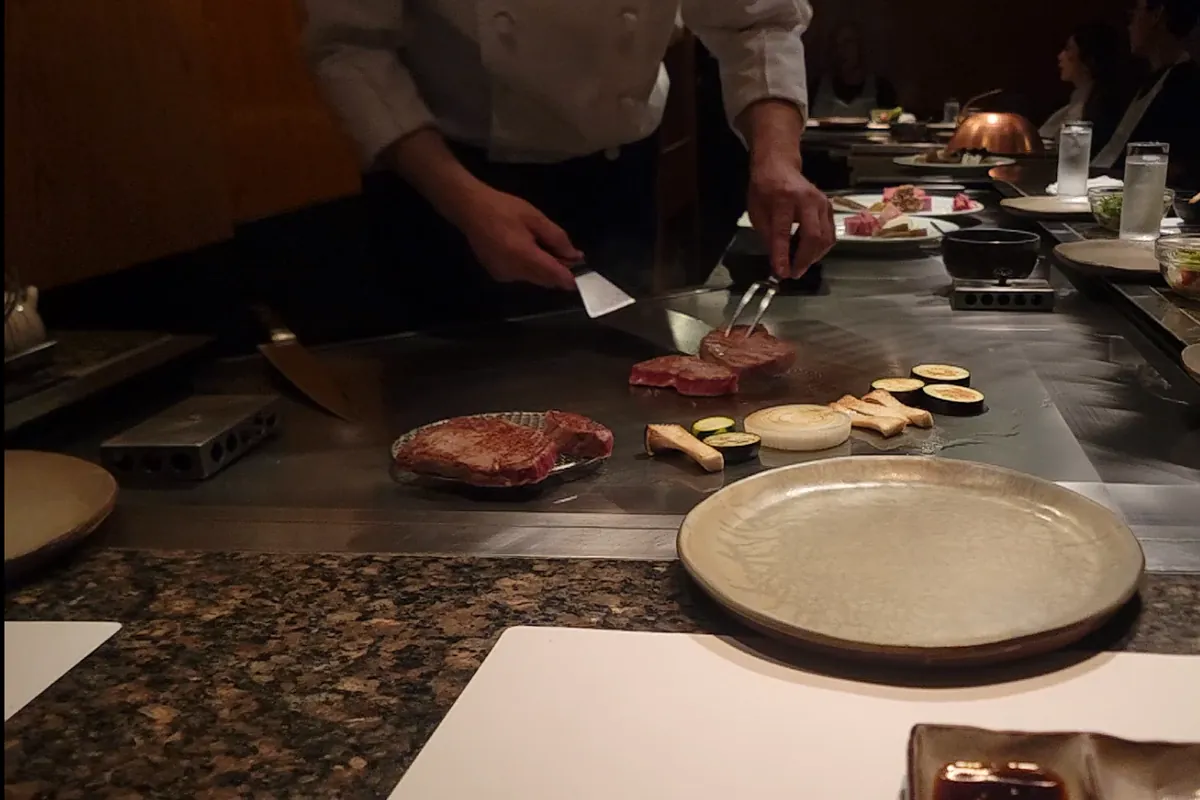
JNTO suggests eating Kobe beef as steak or in sukiyaki or shabu-shabu. At a teppanyaki restaurant, the chef grills the beef on an iron plate in front of you. The photo below shows beef cooking on a teppanyaki griddle.
Kobe beef restaurants: how to find the real thing
Start with the association’s official shop list. It lists designated shops by prefecture across Japan and by country overseas. Each shop has a registration number. Many shop names on the list include 神戸牛 (Kobe-gyu), which is Japanese for Kobe beef.
Use the category filter to narrow the list. Pick Restaurant for places where you can eat, or Retail sale for shops that sell over the counter. Online retail shows mail-order sellers, and Wholesale covers wholesalers.
The name spread abroad early. The FAQ says word came from the many foreigners who settled in Kobe from the Meiji period (1868 to 1912). Kobe’s port had opened to foreign trade on January 1, 1869. Exports came much later: Kobe beef first went abroad in February 2012, to Macao. The list’s overseas section covers countries such as the USA, the UK, Singapore and Hong Kong.
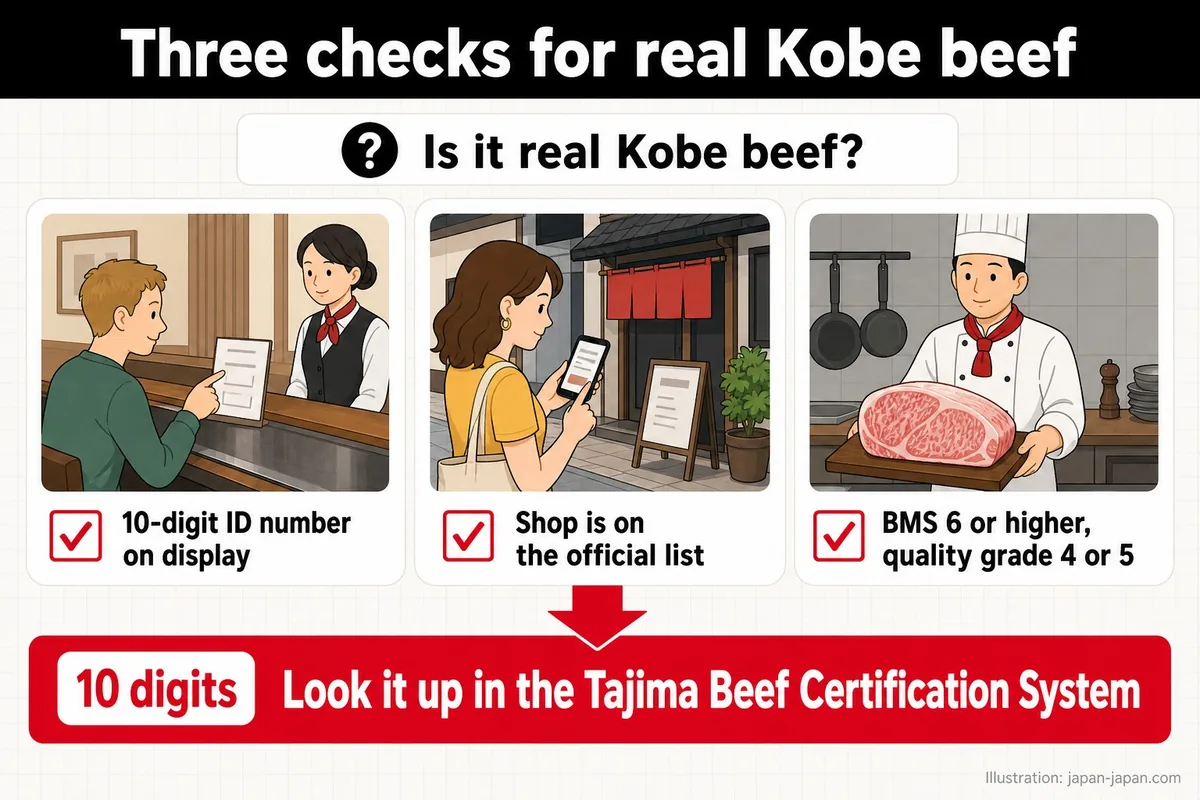
Check the 10-digit ID number. Butchers and restaurants display a 10-digit individual ID number for the beef. Look it up in the Tajima Beef Certification System. It shows the animal’s lineage, where it was born and raised, and the market where it was sold. It also tells you whether the beef is certified Kobe beef.
The illustration below sums up the three checks.
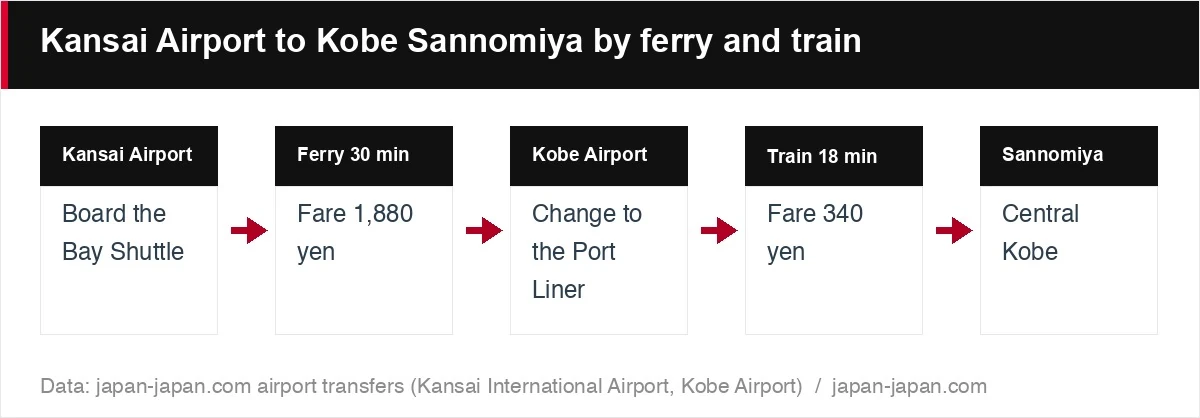
Getting to Kobe. Kansai Airport has three ways to Sannomiya in central Kobe. The limousine bus runs straight there in 65 to 75 minutes for 2,200 yen. JR’s Haruka and JR lines cost 2,000 yen. The Bay Shuttle ferry crosses the bay to Kobe Airport in 30 minutes for 1,880 yen. Our Kansai Airport to Kobe page has first and last departures and where to board.
The diagram below shows the ferry route. From Kobe Airport, the Port Liner takes 18 minutes to Sannomiya for 340 yen, as our Kobe Airport guide shows. If you fly into Kobe Airport, take the same Port Liner to Sannomiya.
Taking wagyu home from Japan
Japan’s Animal Quarantine Service sets out three steps for taking animal products abroad. You need an export quarantine inspection for two kinds of items.
- Items your destination country requires a certificate for.
- Items subject to Japan’s animal quarantine.
The three steps come in this order.
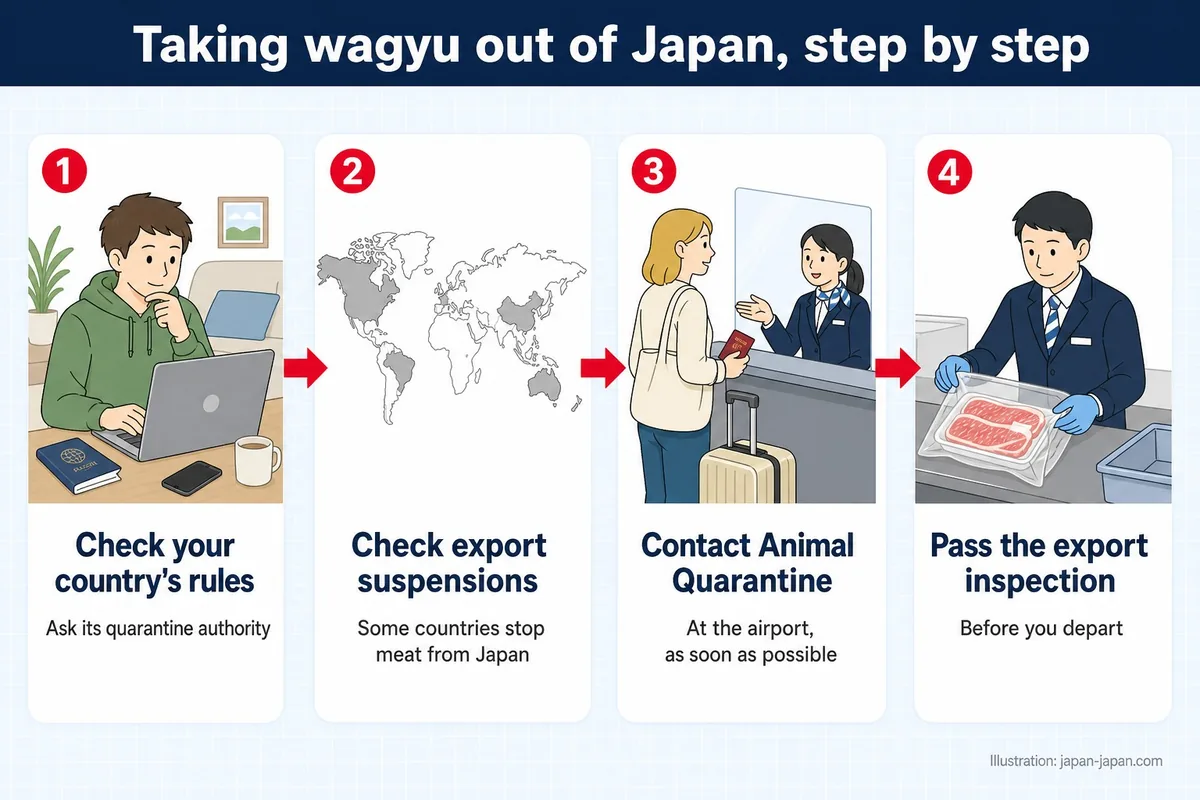
- Check your country’s rules. Ask your destination country’s quarantine authority whether you can bring the item in. Ask which certificate it needs, too.
- Check for suspensions. Some countries have suspended meat products from Japan. If yours has, Animal Quarantine Service cannot issue an export certificate.
- Book the inspection. Contact Animal Quarantine Service at the airport or seaport before you depart. The documents depend on your destination, and arranging them can take time, so get in touch as early as you can.
The illustration below walks through the steps.
The service’s FAQ answers two common questions. Even ham bought at a Japanese supermarket can leave Japan. Your destination must accept it, its import rules must be met, and the ham must pass the export inspection. How long the inspection takes depends on your destination’s requirements.
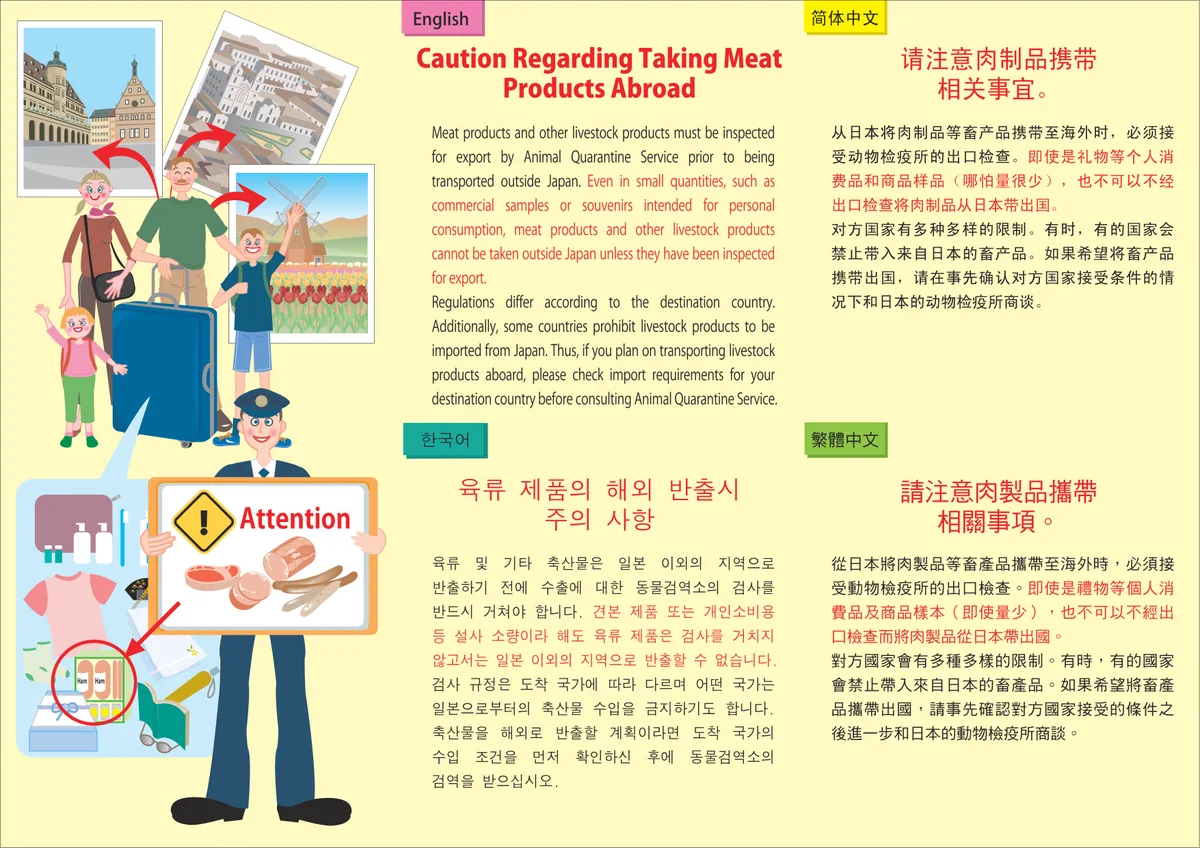
The service also publishes a leaflet on taking meat products out of Japan, covering exports and souvenirs. The page below shows its English, Chinese and Korean panels.
Bringing meat into Japan is a different matter. Most meat and meat products cannot come in, because they need an inspection certificate from the exporting country’s government. That certificate is hard to get for personal use. Our page on bringing meat into Japan explains the rule, which covers gifts and vacuum-packed products too. The same goes for jerky and dried meat. For your home country’s rules on Japanese food, see our guide to Japanese snacks to bring home.
Kobe beef or other wagyu: what 98 people in Japan said
On 13–14 October 2026, japan-japan.com ran an online survey of people living in Japan about 32 travel choices. 130 people answered. We removed answers that looked machine-written, one from outside Japan and most of those that contradicted themselves, which left 98. Shares below are of the 98 respondents unless a smaller group is named; they describe these people, not all travellers in Japan. See all 32 comparisons and how we asked.
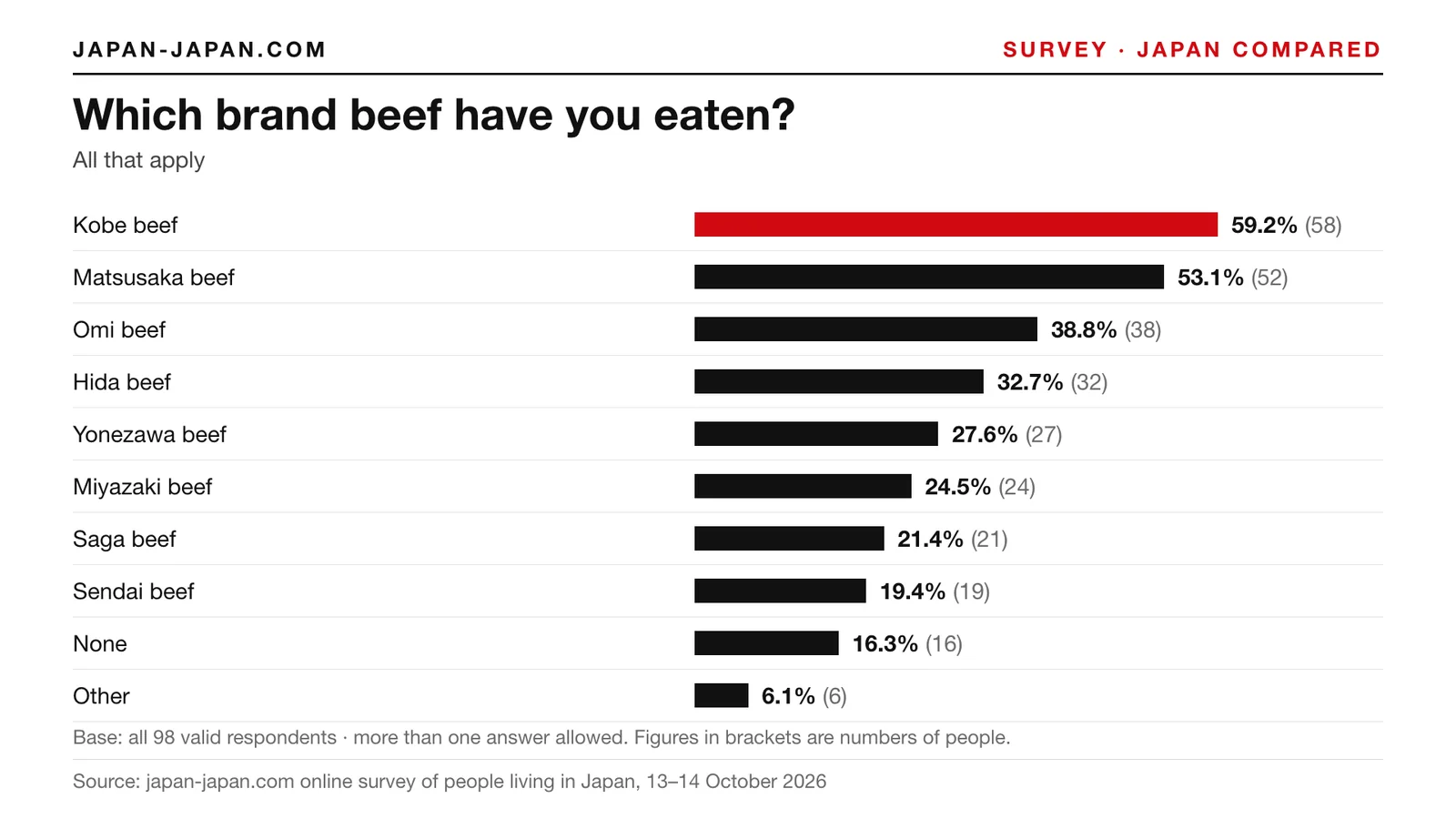
83.7% (82 people) have eaten at least one brand of wagyu named in the survey. The ones eaten most were Kobe beef (59.2%), Matsusaka beef (53.1%) and Omi beef (38.8%).
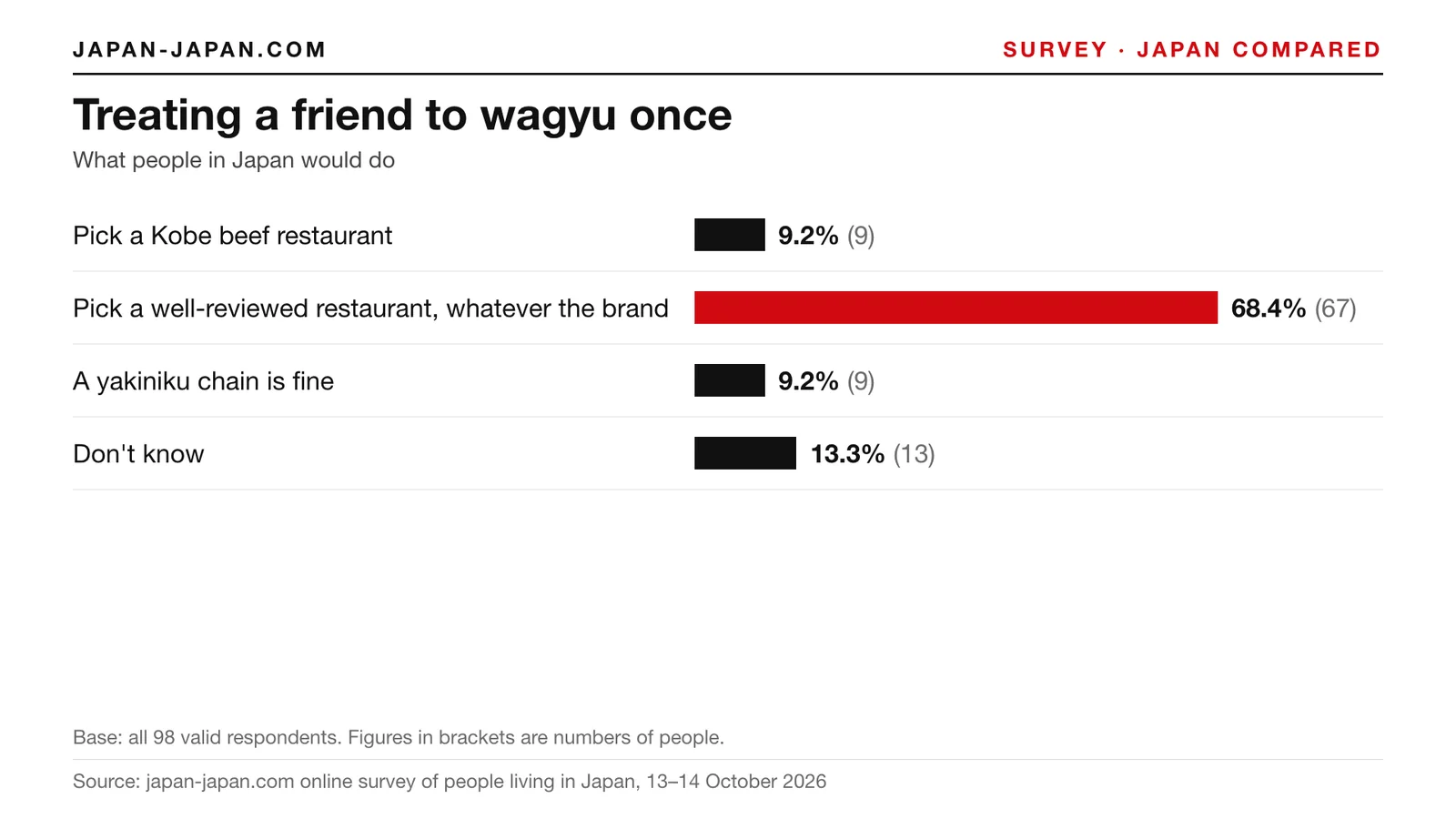
Asked what they would do to treat a friend from abroad to wagyu just once, 68.4% (67 people) would pick a well-reviewed restaurant whatever the brand. 9.2% (9 people) would look for a Kobe beef restaurant and 9.2% (9 people) said a yakiniku chain is fine.
FAQ
Is all Kobe beef A5?
No. Kobe beef needs yield grade A or B and quality grade 4 or 5, so it can be A4, A5, B4 or B5. A carcass with BMS 6 or 7 cannot go above quality grade 4.
Is A5 wagyu the same as Kobe beef?
No. A5 is a carcass grade that any beef in Japan can earn, and 306,478 carcasses graded A5 in 2024. Kobe beef is a brand for Tajima cattle from Hyogo, and only about 5,500 head qualify a year.
What is the difference between wagyu and kokusan-gyu?
Wagyu means one of four Japanese breeds: Japanese Black, Japanese Brown, Japanese Poll and Japanese Shorthorn. Kokusan-gyu means a cow that spent more than half its life in Japan, whatever its breed or where it was born. Kobe beef is wagyu, because Tajima cattle are Japanese Black.
Can you bring Kobe beef home from Japan?
Only if your country accepts it and it passes an export quarantine inspection before you leave. Ask your country’s quarantine authority first, then contact Animal Quarantine Service at the airport as early as you can. Some countries have suspended meat products from Japan, and no certificate can be issued for them.
About the author