Ibuprofen to Japan: Yes, 2 Months’ Supply Without Paperwork
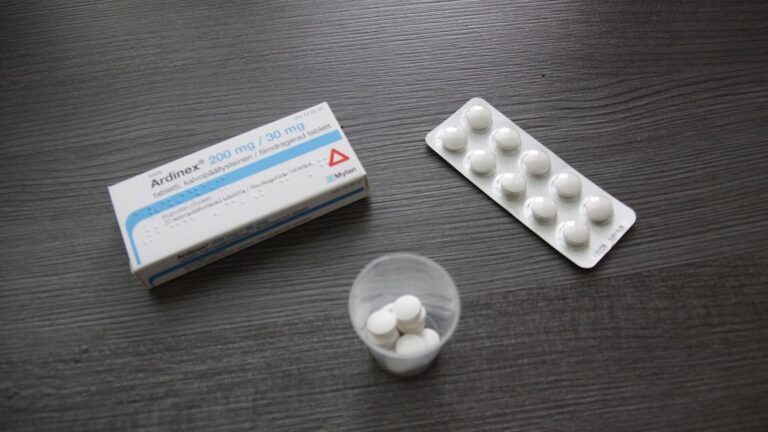
These limits come from the MHLW page on bringing medicines into Japan for personal use. They cover the Advil, Motrin or Nurofen you already keep at home. Count the days of your trip, check the box, and you are done.
Plain ibuprofen is not among the narcotics or stimulants’ raw materials that Japan names. Trouble starts with some combination cold tablets, which we cover below. Our ibuprofen entry in the Japanese medicine database tracks how the ingredient appears on Japanese boxes.
How much ibuprofen you can bring to Japan without paperwork
Japan sorts medicine by type, and each type has its own free amount. The Ministry of Health, Labour and Welfare (MHLW) sets these numbers. Customs officers apply them when you land.
Here is how the MHLW list maps onto ibuprofen.
- Ibuprofen your doctor prescribed: this counts as a prescription drug, so the limit is a 1-month supply.
- Ibuprofen you bought off the shelf: this counts under other drugs and quasi drugs, so the limit is a 2-month supply.
- Ibuprofen gel or cream: this is a drug for external use, so the limit is 24 per item.
The table below puts the limits next to each other, with what to do above them.
| Type | Free amount | Ibuprofen example | Above it |
|---|---|---|---|
| Prescription drug | 1 month supply | Ibuprofen your doctor prescribed | Import Confirmation |
| Other drugs | 2 month supply | Advil or Nurofen bought off the shelf | Import Confirmation |
| External use | 24 per item | Ibuprofen gel or cream | Import Confirmation |
| Narcotics, stimulants’ raw materials | None | Cold tablets with codeine or pseudoephedrine | Permit before you enter |
A month’s supply depends on your own dose. Take the number of tablets you swallow on a normal day and multiply by the days you will spend in Japan. If that total stays inside the limit, pack it and go. Our guide to how much medicine you can bring gives the same three limits in one place.
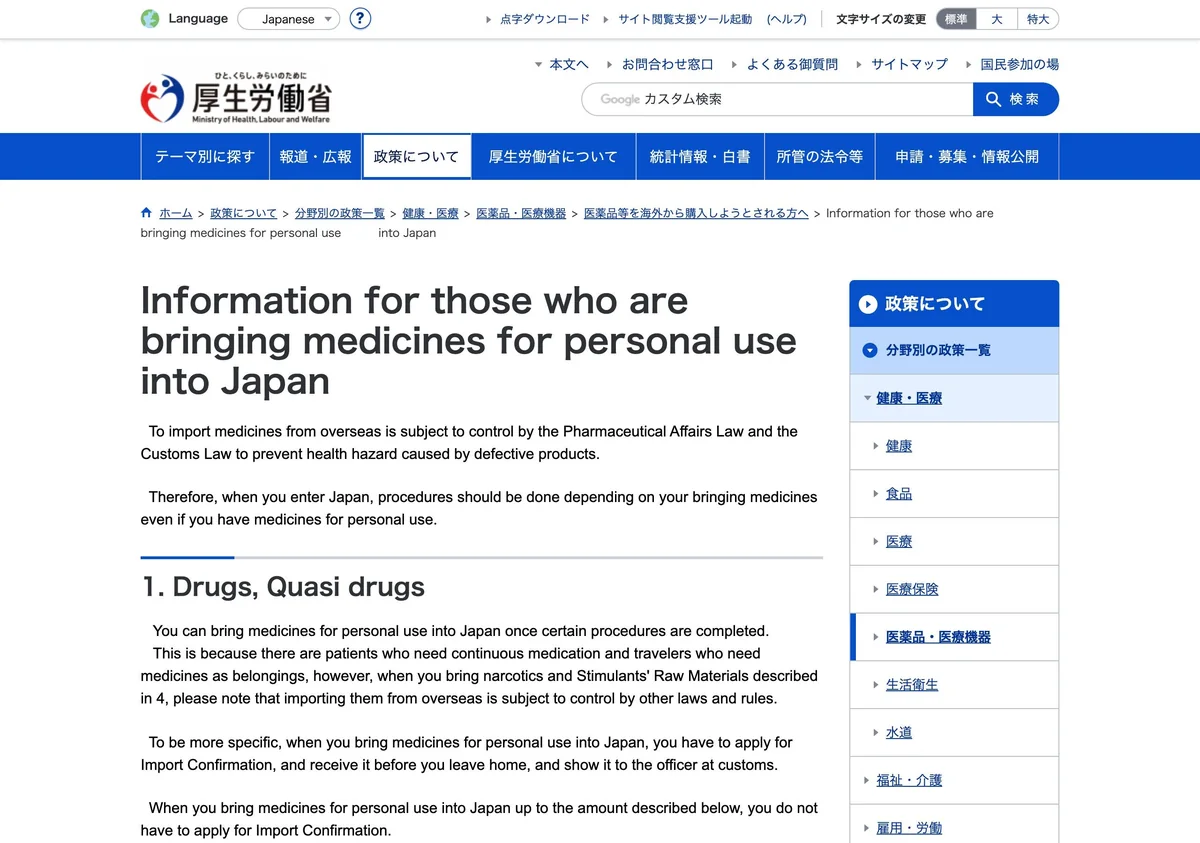
The screenshot below shows the ministry’s English page for travellers. Look for the lines marked with a diamond. Prescription drugs get 1 month, external use gets 24 per item, and other drugs get 2 months.
Patches and sprays sit in a different row of the same rule. Packing an ibuprofen gel with patches? Our page on pain relief patches and sprays gives the flight limits on spray cans.
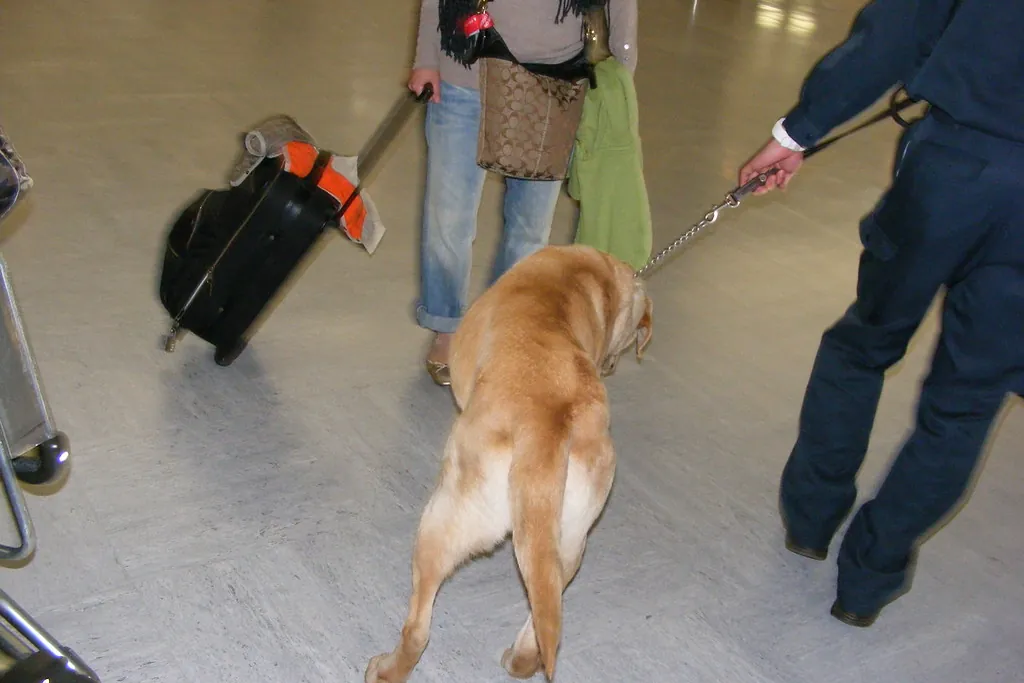
The photo below shows the customs area at Narita Airport, where officers check what you carry. You walk through it after you collect your bags.
Japan’s ministry page also names a group of foreign products sold for brain or mental effects. Ibuprofen is a painkiller and falls outside that group. It also falls outside the lists of banned medicines.
When you need Import Confirmation or a permit
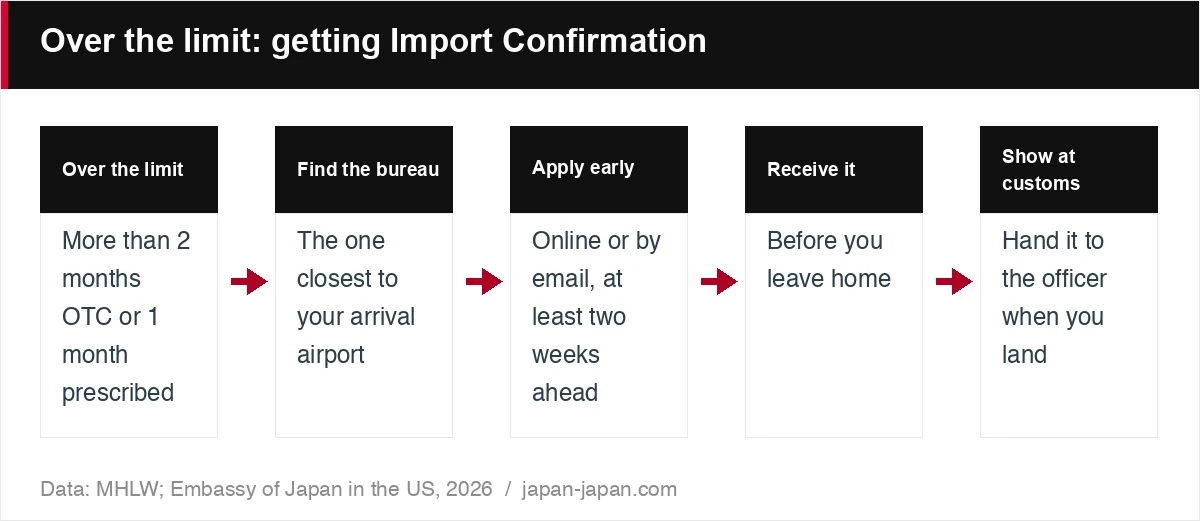
Go over the limit and you need Import Confirmation. The MHLW page says you apply for it, receive it before you leave home, and show it to the officer at customs.
The Embassy of Japan in the US page on bringing medications to Japan calls the paper Yunyu Kakunin-sho. It used to be called Yakkan Shoumei. Apply to the Regional Bureau of Health and Welfare closest to your arrival airport. The embassy asks you to apply at least two weeks before you travel.
- Narita or Haneda: the Kanto-Shin’etsu Regional Bureau, phone +81-48-740-0800.
- Kansai or Chubu Centrair: the Kinki Regional Bureau, phone +81-6-6942-4096.
Both bureaus also take email. The MHLW page lists yakkan@mhlw.go.jp for Kanto-Shin’etsu and kiyakuji@mhlw.go.jp for Kinki. Write to the bureau that covers your arrival airport, even if you leave Japan from a different one.
Some personal import procedures can now be done online, through the Application for Import Confirmation site linked from the MHLW page. The diagram below shows the order of the steps.
Plain ibuprofen stops there. Combination cold tablets bring a second set of rules. The MHLW Narcotics Control Department permits for travellers page lists codeine as a narcotic and pseudoephedrine as a stimulants’ raw material. If your medicine contains either one, the page says you need permission before you enter Japan.
That permission comes from the Narcotics Control Department office for your arrival area. Apply at least 14 days before you travel. The Tokyo office does not accept last-minute applications for any reason.
- Application form: one for import, and an export form if you will fly home with leftovers.
- Medical certificate: signed by your doctor, issued within 3 months, with doses and strength.
- Photos of the package: sent as JPEG, PDF or Word files.
The department needs the exact name and strength of your medicine. Its email system cannot open HEIC photos, and files over 10MB should go in several emails. Send a short follow-up email without attachments and ask them to confirm they received your application.
You must carry permitted medicine yourself. You cannot post it to Japan or hand it to a relative. Some ingredients cannot come in at all, even on prescription; Adderall is the example the department gives. Our list of medicines that are banned in Japan names them.
Ibuprofen in your carry-on and checked bag
Ibuprofen tablets can go in either bag. Japan’s liquids list does not cover tablets or capsules, so airport security treats them like any other item. Our medicine entry in the What You Can Bring database records yes for the cabin and yes for the hold.
The Narita Airport FAQ on prohibited items gives one rule for everyday medicines, solid or liquid. Carry on the amount you will need during the flight. Put the rest in your checked bag.
The photo below shows a security lane at Haneda Airport. Your bag goes on the belt and through the X-ray here.
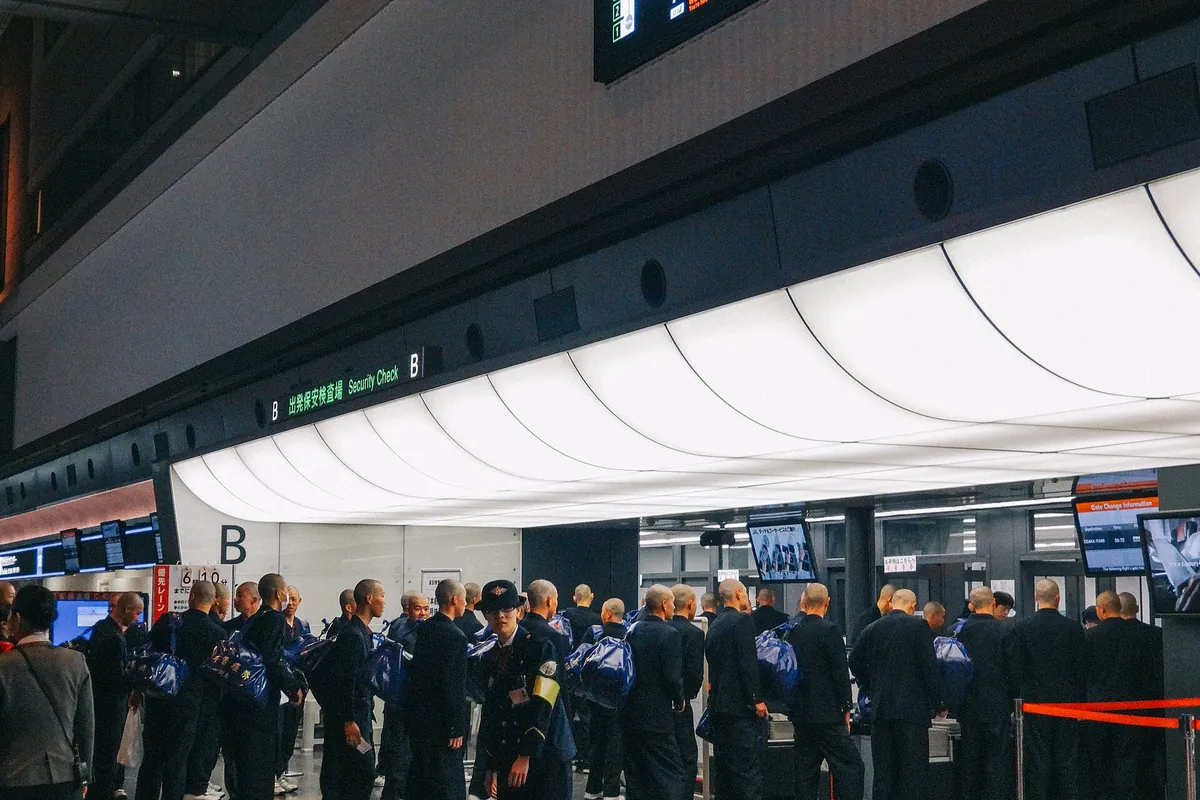
Liquid ibuprofen, such as a children’s syrup, follows the medicine exception on international flights. Medicines are exempt from the liquids quantity limit, but you may only carry on the amount needed in the cabin. Bottles of 100 ml or less can simply go in your clear 1 liter bag.
Tell the screener about liquid medicine before your tray goes through. If you have a medical certificate or prescription, show it. Narita also accepts a medicine notebook or the leaflet from the box.
The Japan Civil Aviation Bureau page on restricted items on flights sends you to the full list for passengers. Questions about a specific airline go to that airline. Our Narita Airport guide covers the terminals once you are through.
Buying ibuprofen in Japan: EVE A and 205 products
Ibuprofen is easy to find in Japan. On 3 October 2026, PMDA’s search of package inserts for medicines sold over the counter returned 205 products containing ibuprofen. That count leaves out ibuprofen piconol, which is a different ingredient.
The brand names will not help you. Advil and Motrin do not sit on Japanese shelves. Read the ingredient instead: ibuprofen is written イブプロフェン (ibupurofen) on the box. If you need help, show staff this line: イブプロフェンの薬はありますか (Ibupurofen no kusuri wa arimasu ka?). It means “Do you have medicine with ibuprofen?”
The photo below shows a drugstore front in Tokyo. Painkillers usually sit with cold and fever medicine.
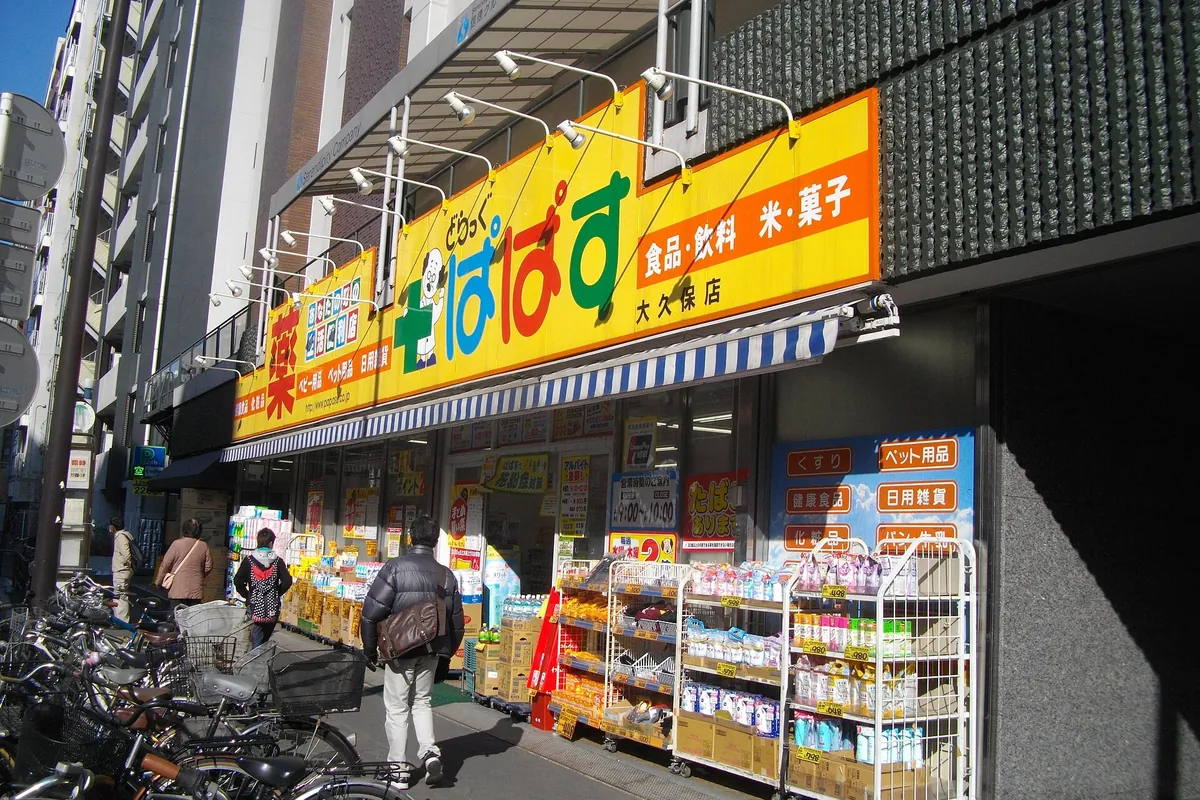
Every box carries one of five classes. EVE A is marked 第②類医薬品 (dai-ni-rui iyakuhin), a designated class 2 medicine. A pharmacist or a registered salesperson may sell class 2 and class 3 medicine. Class 1 medicine needs a pharmacist, so its shelf closes when no pharmacist is on duty.
From 1 May 2026, medicines with any of 8 ingredients are checked before sale. Ibuprofen is not one of them. Lulu Attack EX contains dihydrocodeine and methylephedrine, which are on the list, so expect questions at the till. Our guide to buying medicine in Japan explains the classes and the checks.
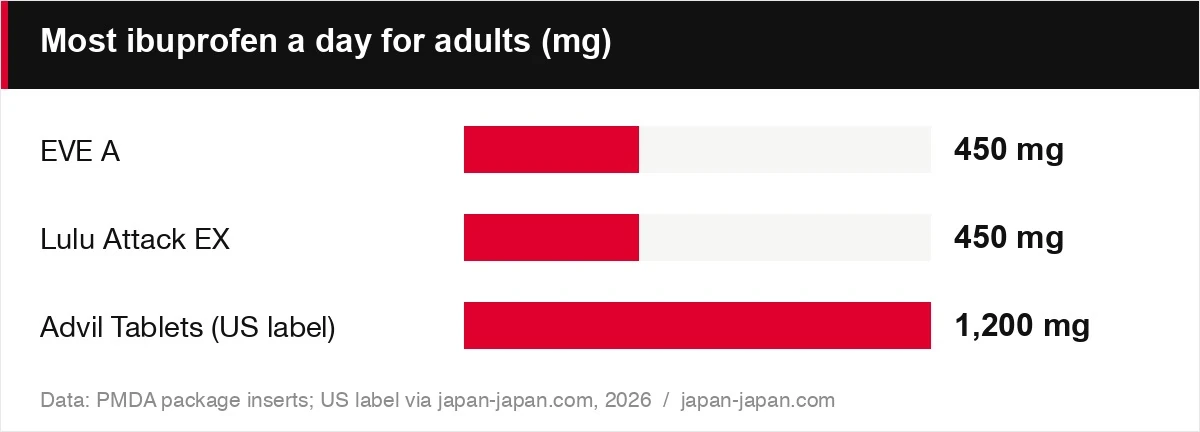
The chart below compares the most ibuprofen a day that each label allows for adults.
| Item | Value |
|---|---|
| EVE A | 450 mg |
| Lulu Attack EX | 450 mg |
| Advil Tablets (US label) | 1200 mg |
EVE A and Lulu Attack EX both stop at 450 mg a day in the chart. The US label for Advil Tablets allows 1,200 mg a day.
If you cannot take ibuprofen, Japan sells acetaminophen too. Tylenol A is a class 2 medicine with 300 mg of acetaminophen in each tablet. The adult dose is 1 tablet, up to 3 times a day.
Japanese ibuprofen doses vs Advil
Japanese ibuprofen products use lower doses than US ones. Plan around that gap before you open a Japanese box.
The PMDA EVE A package insert lists three ingredients in a dose of 2 tablets.
- Ibuprofen: 150 mg.
- Allylisopropylacetylurea: 60 mg, a sedative that boosts the painkiller.
- Anhydrous caffeine: 80 mg.
Adults aged 15 and over take 2 tablets, up to 3 times a day, with at least 4 hours between doses. Avoid an empty stomach. Under 15, the insert says do not take it. Our EVE A page in our Japanese medicine database has the full list of uses.
The insert lists EVE A for period pain, headache, toothache, sore throat, joint and muscle pain, and lower back pain. It also covers pain after a tooth is pulled, sprains, bruises and fever with chills. That range makes it the box most visitors pick up first.
The same insert sets a few rules that matter on a trip. Do not drive after a dose, because it can make you drowsy. Do not drink alcohol before or after. Stop and see a pharmacist if 5 or 6 doses bring no relief.
Lulu Attack EX is a cold medicine. The PMDA Lulu Attack EX package insert lists 450 mg of ibuprofen in 6 tablets, the adult dose for 1 day. Adults take 2 tablets, 3 times a day, within 30 minutes after meals. The same 6 tablets hold 750 mg of tranexamic acid and 24 mg of dihydrocodeine phosphate. Do not take it for more than 5 days.
Some people should not take EVE A at all. The insert rules it out for anyone who has had asthma after a painkiller or cold medicine. It also rules it out within 12 weeks of a due date. If you are pregnant, breastfeeding or under a doctor’s care, ask the pharmacist first.
Do not mix your own ibuprofen with a Japanese product. The EVE A insert says not to take other painkillers, cold medicine, sedatives or motion-sickness medicine with it. Our Lulu Attack EX page lists everything in that tablet.
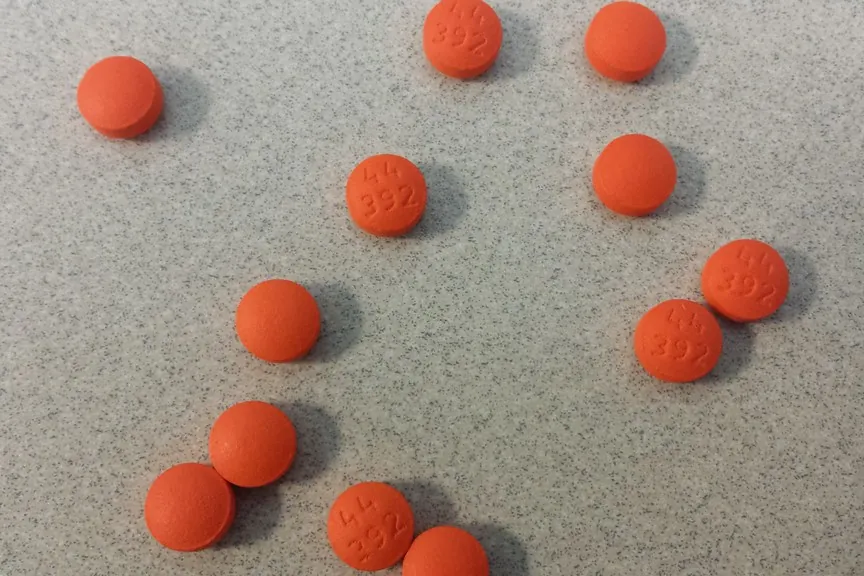
The photo below shows ibuprofen tablets in a blister pack. Japanese packs push out the same way: press the bump hard and break the foil.
Taking EVE A home: the South Korea rule
EVE A is a popular buy, but it cannot go to South Korea. The Korea Customs Service issued a press release on 17 July 2025. It named Japanese painkillers containing allylisopropylacetylurea as examples of medicines banned from entry.
EVE A contains allylisopropylacetylurea at 60 mg per 2 tablets. If you fly on to Seoul or live in South Korea, leave EVE A in Japan.
Other places set their own limits on medicine bought in Japan.
- Taiwan: 12 per kind, 36 in total.
- South Korea: 6 bottles in total, before the ingredient rules.
- Mainland China and Hong Kong: a reasonable quantity.
Our guide to taking Japanese medicine home puts the official pages of all four places side by side. Cold tablets with codeine-type ingredients need the same care, so check our codeine and dihydrocodeine page before you pack Lulu Attack EX.
If you entered Japan with a permit for a narcotic and still have some left, you need export permission too. The Narcotics Control Department asks you to send the export form with your import application. Food, plants and meat follow separate rules, listed in our article on what you cannot bring into Japan.
FAQ
Can I bring prescription-strength ibuprofen to Japan?
Yes. Japan lets you bring up to a 1-month supply of prescription drugs without paperwork. For more than that, get Import Confirmation before you leave home and show it at customs.
Do I need to declare ibuprofen at Japanese customs?
Not within the limits: a 2-month supply over the counter or a 1-month supply on prescription needs no Import Confirmation. If you carry more, show your Import Confirmation to the officer at customs. Plain ibuprofen needs no permit from the Narcotics Control Department.
Is EVE A the same as Advil?
Both contain ibuprofen, but the doses differ. EVE A gives 150 mg a dose and 450 mg a day, plus 60 mg of allylisopropylacetylurea and 80 mg of caffeine. The US label for Advil Tablets allows 1,200 mg a day. EVE A is for ages 15 and over only.
Can I bring children’s liquid ibuprofen on the plane to Japan?
Yes. Medicines are exempt from the liquids quantity limit on international flights, in the amount your child needs during the flight. Tell the screener and put the rest in your checked bag. Pack enough for the whole trip, because EVE A is not for children under 15.
About the author