Japanese 7-Eleven Egg Sandwich: 278 Yen vs $5.49 in the US
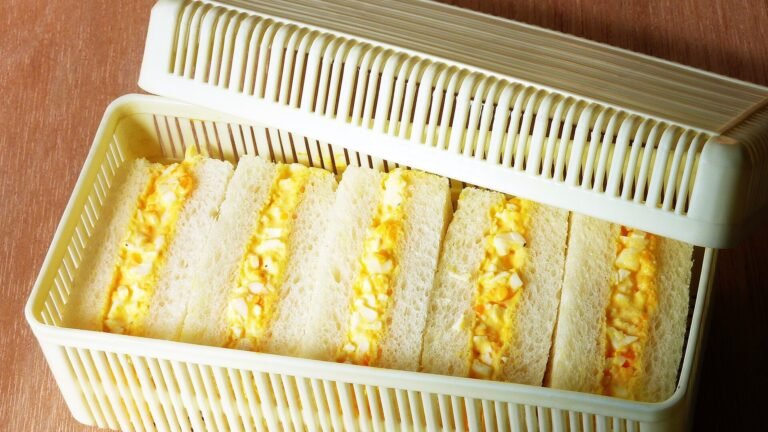
The prices here come from Seven-Eleven Japan’s own product pages, copied on 17 October 2026. One more price comes from the label on a sandwich our editor bought in Tokyo. We give prices before tax first, because the official list and the shelf labels both lead with that number.
How much is the egg sandwich at 7-Eleven Japan?
The price of a 7-Eleven egg sandwich in Japan depends on where you buy it. The Seven-Eleven Japan product search for egg sandwich returns 84 results for たまごサンド (tamago sando). The first page shows 15 listings. Some of them are the same sandwich, listed twice for different areas.
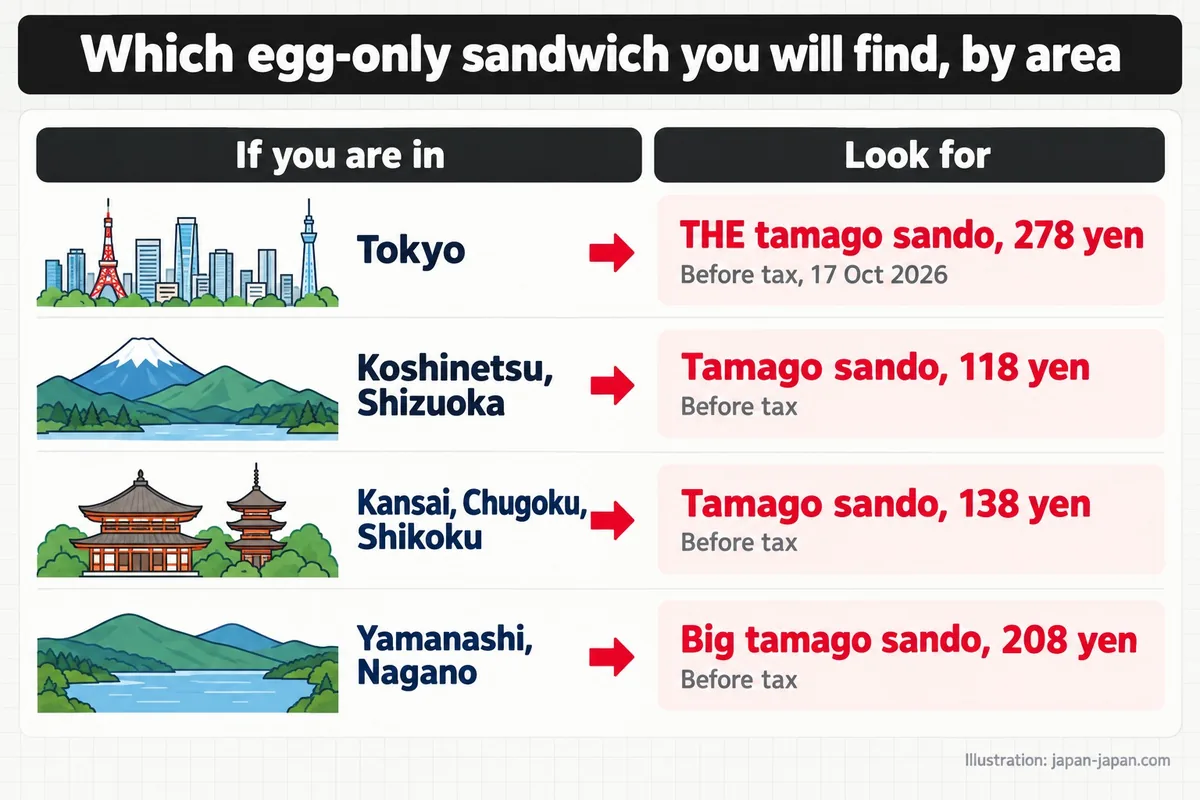
Four listings on that first page are egg salad only. A plain たまごサンド costs 118 yen in Koshinetsu and Shizuoka. Another たまごサンド costs 138 yen in Hokuriku, Gifu, Aichi, Mie, Kinki (Kansai), Chugoku and Shikoku. でっかい たまごサンド (dekkai tamago sando, the big egg sandwich) costs 208 yen in Yamanashi, Nagano and Shizuoka. THE egg sandwich costs 278 yen, and it is the one on the list for Tokyo.
The lookup chart below sorts those four by area. Use it to guess which egg sandwich you will see before you walk into a store.
THE egg sandwich covers the most ground of the four. Its full name is セブンーイレブンこだわりTHE たまごサンド. The Seven-Eleven Japan THE egg sandwich product page lists 12 areas: Tohoku, Saitama, Chiba, Tokyo, Kanagawa, Koshinetsu, Hokuriku, Tokai, Kinki, Chugoku, Shikoku and Kyushu. A second listing at the same 278 yen covers Ibaraki, Tochigi, Gunma and Saitama. Neither listing names Hokkaido or Okinawa. Our THE Egg Sandwich page keeps its price, areas and allergens in one place.
Egg also turns up in sandwiches with a second filling. The egg and tuna sandwich (たまご&ツナサンド) costs 278 yen, the same as THE egg sandwich. The ham and egg sandwich (ハムとたまごのサンド) costs 347 yen. A ham cutlet and egg sandwich (ハムカツ たまごサンド) is listed at 327 yen in most areas and 308 yen in Kinki. Shizuoka gets its own tuna and egg sandwich (静岡限定 シーチキン& たまごサンド) at 278 yen, on sale from 14 October 2026.
The table puts the main egg sandwiches side by side. It includes the one we bought in Tokyo, which is not on the official list.
| Sandwich | Price before tax | Where it is listed |
|---|---|---|
| たまごサンド (egg sandwich) | 118 yen | Koshinetsu, Shizuoka |
| たまごサンド (egg sandwich) | 138 yen | Hokuriku, Gifu, Aichi, Mie, Kinki, Chugoku, Shikoku |
| でっかい たまごサンド (big egg sandwich) | 208 yen | Yamanashi, Nagano, Shizuoka |
| THE たまごサンド (THE egg sandwich) | 278 yen | 12 areas from Tohoku to Kyushu, incl. Tokyo |
| たまご, red Ureshii Ne! sticker | 230 yen | The one we bought in Tokyo (not on the official list) |
| たまご&ツナサンド (egg and tuna) | 278 yen | Tohoku to Okinawa, incl. Tokyo |
| ハムとたまごのサンド (ham and egg) | 347 yen | Aomori to Okinawa, incl. Tokyo |
The Seven-Eleven Japan Kanto sandwich product list says size, price and release date can differ by area. A sandwich with the same name can cost a different amount in another region. The list also says a listed item may not be stocked in every store. It may not be out yet in some areas either.
Every price with tax on the official list uses the 8% reduced rate for food you take away. Eating in changes that. The Seven-Eleven Japan English FAQ for visitors says a 10% rate applies when you eat reduced-tax items in a store’s eat-in area.
That is how you meet the egg sandwich in a store: wrapped, with the name and price on a label.
Two egg sandwiches in Tokyo: THE and Ureshii Ne!
In Tokyo we found two egg sandwiches at 7-Eleven, and only one of them is on the official list. The first is THE egg sandwich at 278 yen before tax, or 300.24 yen with tax. The second had a red Ureshii Ne! (うれしい値!) sticker and the name たまご (Egg Salad) on the package.
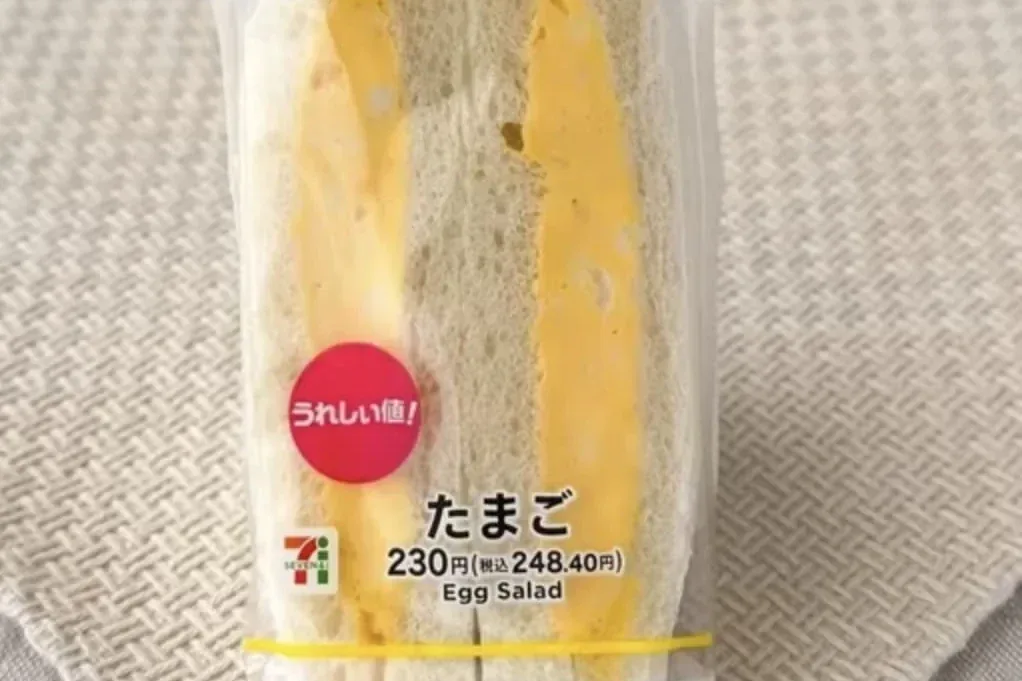
The photo above shows the label on the one we bought in Tokyo: 230 yen before tax and 248.40 yen with tax. Our editor bought it at a 7-Eleven store in Tokyo before 17 October 2026 and photographed the label. That makes it 48 yen cheaper than THE egg sandwich before tax.
We checked Seven-Eleven Japan’s product pages on 17 October 2026, and the Ureshii Ne! sandwich was not there. We do not know why the two sandwiches have different prices. Seven-Eleven Japan’s pages do not explain it, so we do not guess.
The sticker is a small pun. うれしい (ureshii) means happy, and 値 (ne) means price. Read it as a happy price.
If both sit on the same shelf, the price label tells them apart. On Seven-Eleven Japan’s list, THE egg sandwich goes by its long official name. The cheaper one we bought was labelled simply たまご.
TODAY’s food editor described the bread of the Japanese sandwich as milk bread (shokupan).
What is in it: allergens and calories
THE egg sandwich lists three allergens and 402 kcal per sandwich. Japan requires labels to show 8 allergens (特定原材料8品目). Of those 8, the official page lists egg, milk and wheat for THE egg sandwich.
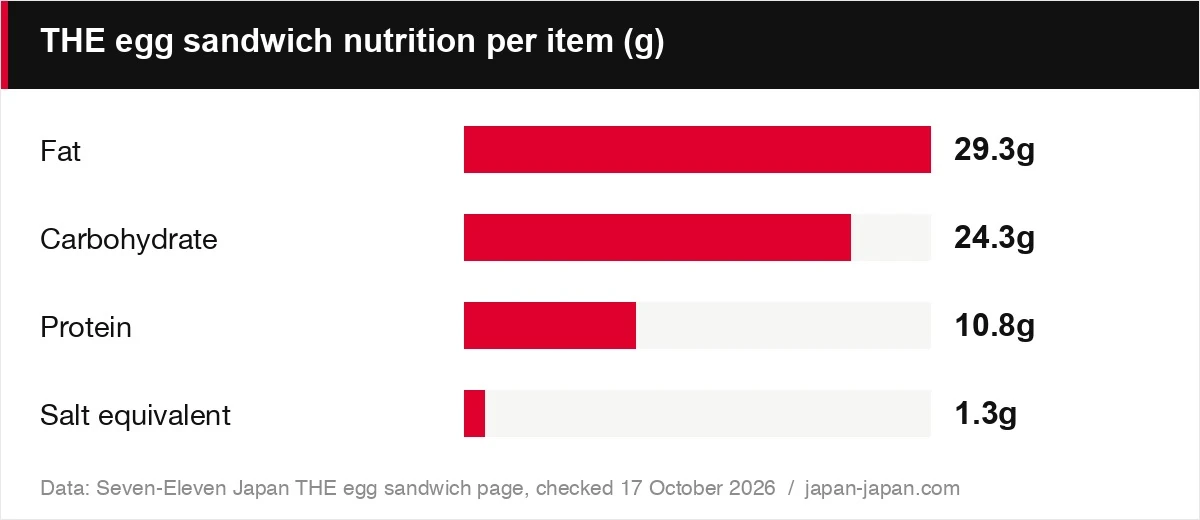
Per sandwich, the page gives 10.8 g of protein and 29.3 g of fat. It also gives 24.3 g of carbohydrate, made up of 23.1 g of sugar and 1.2 g of fibre. Salt equivalent is 1.3 g.
Fat is the largest of the four by weight, at 29.3 g, as the chart shows. Salt is the smallest, at 1.3 g.
| Item | Value | Note |
|---|---|---|
| Fat | 29.3 g | |
| Carbohydrate | 24.3 g | 23.1 g sugar, 1.2 g fibre |
| Protein | 10.8 g | |
| Salt equivalent | 1.3 g |
The other egg sandwiches on the Tokyo list have fewer calories. The egg and tuna sandwich has 339 kcal, with 10.6 g of protein and 21.4 g of fat. The ham and egg sandwich has 332 kcal, with 11.9 g of protein and 18.2 g of fat. The mixed sandwich (ミックスサンド) costs 288 yen and has 297 kcal. All three list egg, milk and wheat.
The sandwich pages show only the 8 required allergens. Pork is not one of the 8. So the official page cannot tell you whether an egg sandwich contains pork, gelatin or other animal ingredients.
The same gap runs across the store. In our 7-Eleven food database, 22 of 108 items list pork on the allergen pages for the hot counter, oden, steamed buns and Seven Cafe. The pages for onigiri, sandwiches, bento, desserts and snacks list only the 8, so they never show pork.
The illustration sets what the label shows against what it leaves out.
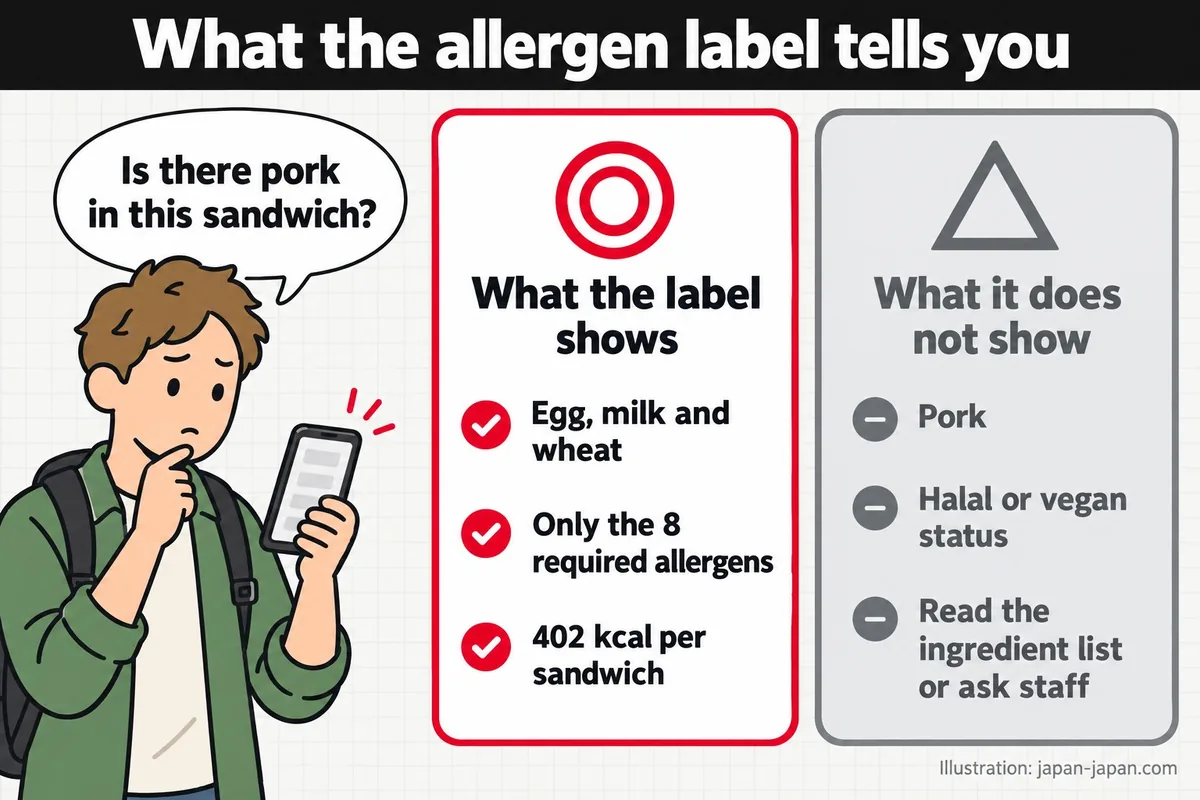
An allergen list is not a halal or vegan check. It does not cover alcohol, other animal ingredients or how the food is made. Before you buy, read the full ingredient list on the package. It sits under the heading 原材料名 (genzairyo-mei, ingredients). You can also ask staff.
The ingredient list is in Japanese. A translation app pointed at the 原材料名 block is the quickest way to read it. For a wider look at eating meat-free or halal here, read Is Japan Vegetarian-Friendly? A Vegan and Halal Food Guide.
7-Eleven’s egg sandwich in the US vs Japan
7-Eleven sells a Japanese-style egg salad sandwich in the US for 5.49 US dollars, and it differs from the one in Japan. The TODAY report on 7-Eleven’s US egg salad sandwich covered the launch. Senior food editor Emi Boscamp wrote it, and TODAY published it on 4 December 2025.
The report said the sandwich was on sale at participating 7-Eleven, Speedway and Stripes stores across the US. We opened the article again on 18 October 2026.
The most visible difference is the crust. A 7-Eleven spokesperson told TODAY that the US sandwich keeps its crust. The egg sandwiches TODAY’s editor ate in Japan were crustless.
The spokesperson gave a reason. The company kept the crust for consistency, freshness and quality. It said the crust helps protect the bread’s texture and flavour through its shelf life.
The spokesperson also said the US version is not identical to the Japanese one. The reason given was differences in locally sourced ingredients.
The US sandwich still has Japanese roots. 7-Eleven developed it with Warabeya, a fresh-food maker that supplies Seven-Eleven Japan and 7-Eleven Hawaii. It uses Kewpie mayonnaise, picked after tests with different egg ratios and Japanese mayonnaise brands. For the bread, 7-Eleven worked with several bakeries for more than six months.
TODAY also put the launch in context. 7-Eleven began changing the fresh food in its US stores in 2024, and the egg salad sandwich came after that.
The table compares the two sandwiches on the points the official page and TODAY cover.
| Item | Japan | US |
|---|---|---|
| Price | 278 yen before tax on the Tokyo list | 5.49 US dollars |
| Crust | TODAY’s editor ate crustless ones in Japan | Keeps the crust |
| Where | 12 areas on Seven-Eleven Japan’s list, incl. Tokyo | Participating 7-Eleven, Speedway and Stripes stores |
| Maker | Warabeya supplies Seven-Eleven Japan | Developed with Warabeya, Kewpie mayonnaise |
We do not convert the US price into yen. The US figure is a single price from one article, and exchange rates move every day. Compare the two in your own currency on the day you travel.
If you tried the US version first, THE egg sandwich in Japan is the closest match on the Tokyo list. Going by TODAY’s editor, expect it without the crust.
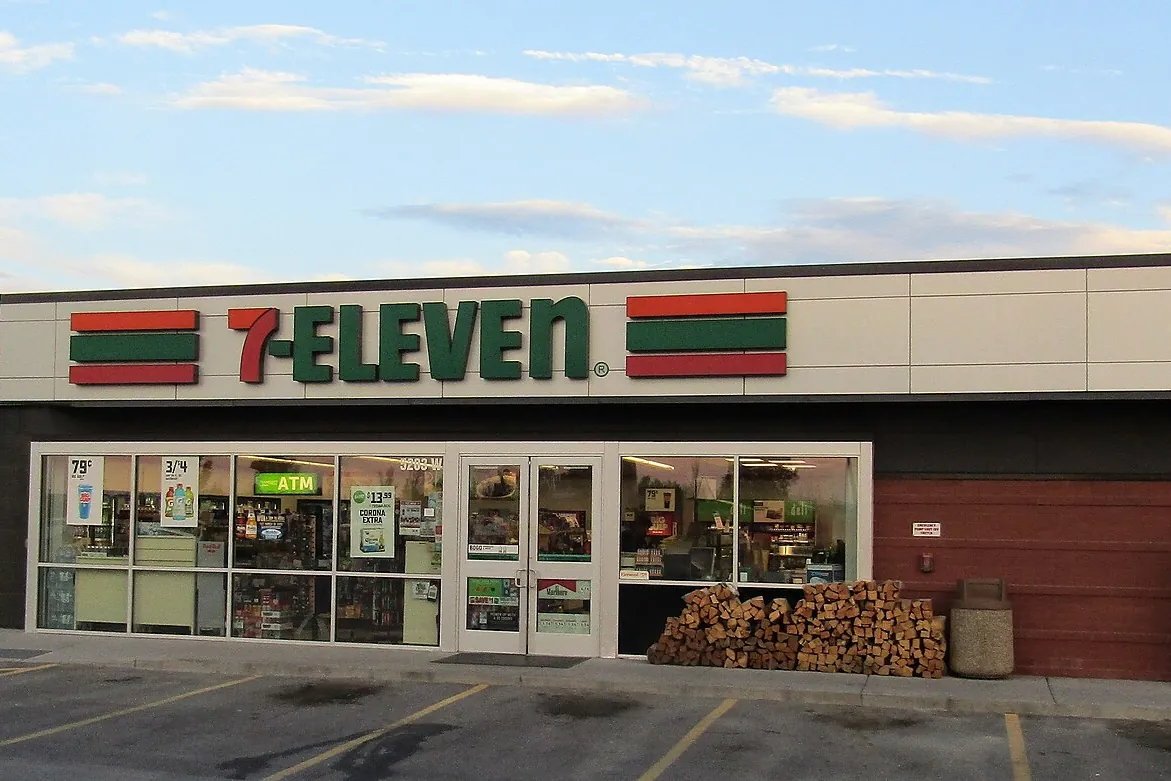
The photo shows a 7-Eleven store in the United States, where the US version is sold.
How to find it in the store
Look for the word たまご (tamago, egg) in the sandwich name. Seven-Eleven Japan’s pages give names and prices, not shelf positions. So the name on the label is your best guide.
The quick guide below matches the Japanese names to what each one is.
| Japanese on the label | Say it | What it is | Price before tax |
|---|---|---|---|
| たまごサンド | tamago sando | Plain egg sandwich (some areas) | 118 or 138 yen |
| THE たまごサンド | za tamago sando | Egg sandwich on the Tokyo list | 278 yen |
| でっかい たまごサンド | dekkai tamago sando | Big egg sandwich | 208 yen |
| たまご (red うれしい値! sticker) | tamago | The one we bought in Tokyo | 230 yen |
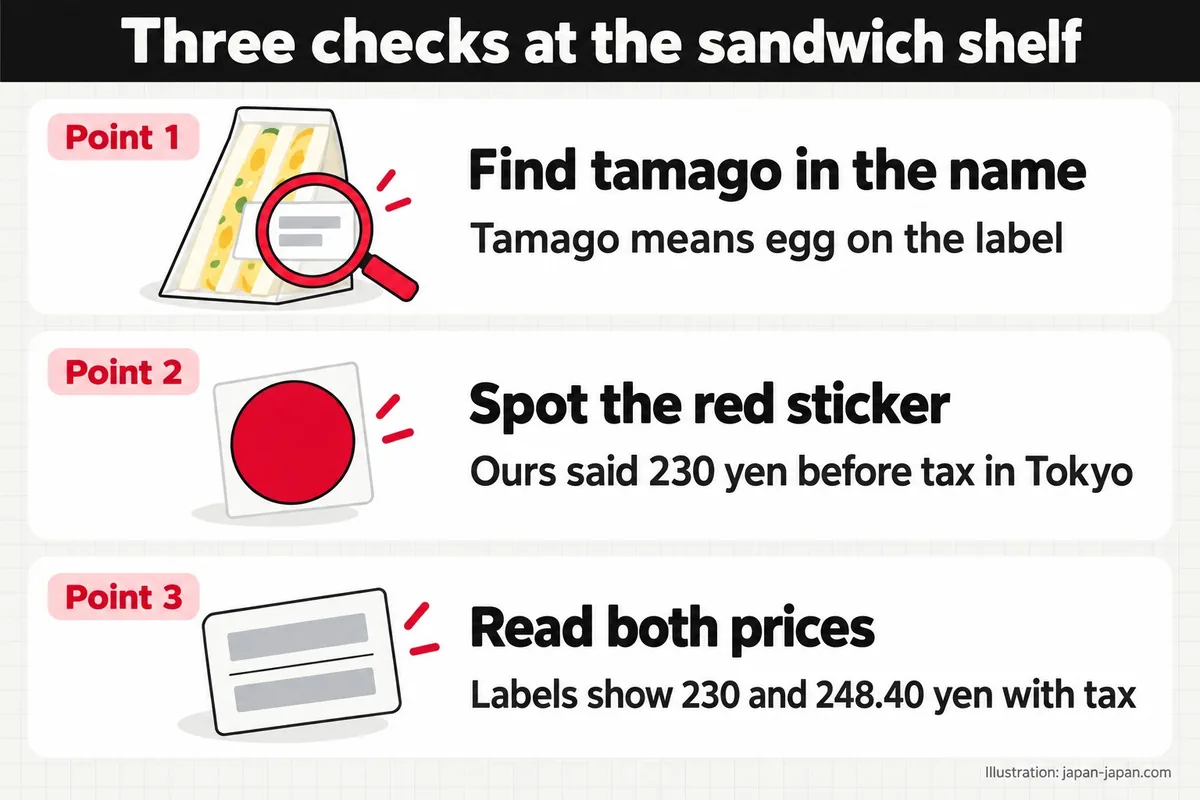
Labels show two prices. The one we bought in Tokyo said 230 yen before tax and 248.40 yen with tax. The with-tax figure is the one that matters if you take the sandwich away.
The illustration sums up the three checks to make at the shelf.
If you cannot find it, ask a staff member. たまごサンドはどこですか? (tamago sando wa doko desu ka?) means “Where is the egg sandwich?”
At the till, これください (kore kudasai) means “this one, please”.
Some days the shelf may be empty. Seven-Eleven Japan says a listed item can end early if sales beat forecasts and ingredients run short. It suggests asking the store about a product.
Stores are easy to find in the capital. Tokyo has 2,943 7-Eleven stores at the end of September 2026, the most of the three big chains there. Our page on 7-Eleven, Lawson and FamilyMart in Tokyo has the counts.
For paying, our 7-Eleven Japan payments guide lists the cards and apps each till takes.
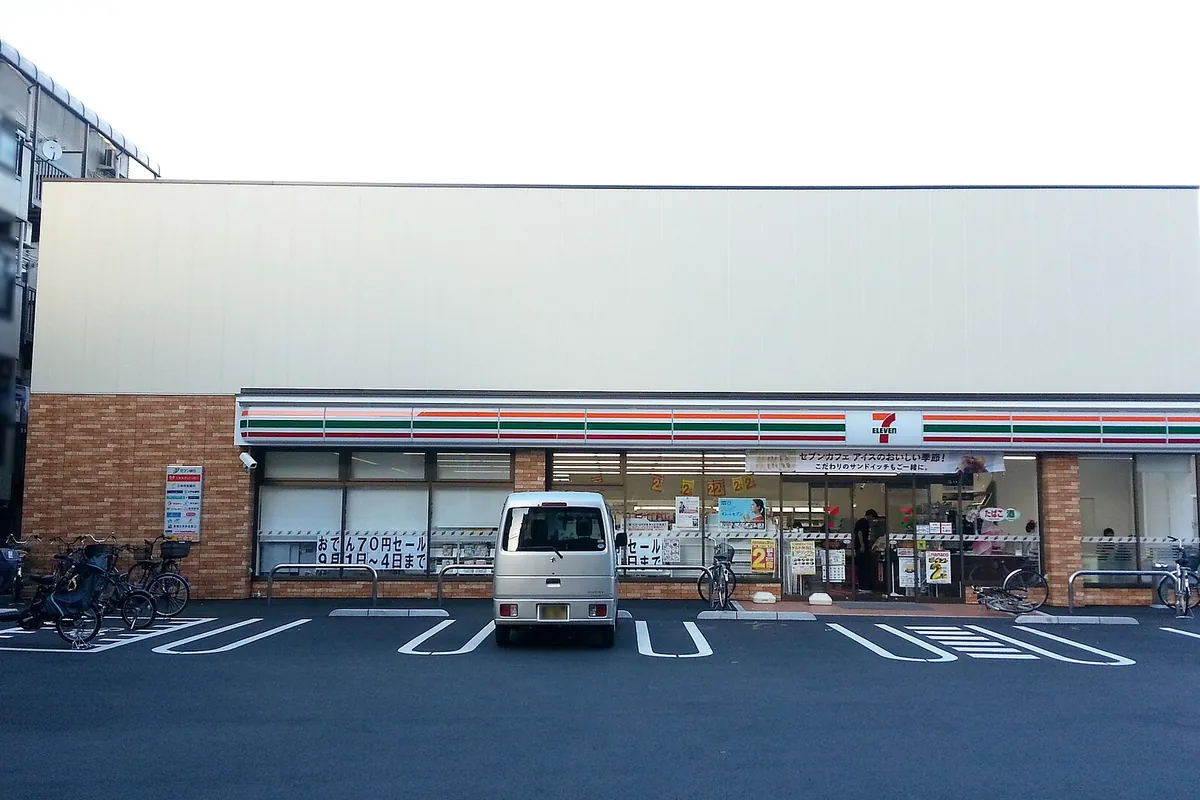
The photo shows a 7-Eleven store in Japan, where you will find THE egg sandwich on the Tokyo list.
FAQ
How much is the 7-Eleven egg sandwich in Japan?
THE egg sandwich costs 278 yen before tax, or 300.24 yen with 8% tax, on Seven-Eleven Japan’s Tokyo list (17 October 2026). Plain egg sandwiches in other areas cost 118, 138 or 208 yen before tax. If you eat it in the store’s eat-in area, the tax rate is 10%.
Why are there two egg sandwiches at 7-Eleven in Tokyo?
We found THE egg sandwich at 278 yen and a cheaper one with a red Ureshii Ne! sticker at 230 yen before tax. That is 48 yen less. Only THE egg sandwich was on Seven-Eleven Japan’s product pages on 17 October 2026, and we do not know why the prices differ.
Is the 7-Eleven egg sandwich in the US the same as in Japan?
No. A 7-Eleven spokesperson told TODAY the US version is not identical because of locally sourced ingredients, and it keeps its crust. It sells for 5.49 US dollars at participating 7-Eleven, Speedway and Stripes stores. It was developed with Warabeya, which supplies Seven-Eleven Japan, and uses Kewpie mayonnaise.
Does the 7-Eleven egg sandwich contain pork?
The official sandwich pages do not say. They list only Japan’s 8 required allergens, and THE egg sandwich shows egg, milk and wheat. Pork is not one of the 8, so read the 原材料名 ingredient list on the package or ask staff before you buy.
More 7-Eleven and konbini guides
Our 7-Eleven Japan food database covers prices and allergens for the whole store. Across 119 items with an official price, the median is 204 yen before tax (220.32 yen with tax). 60 of the 119 cost more than 200 yen.
Two more sandwiches from the same shelf have their own pages: the 7-Eleven chicken katsu sandwich and the 7-Eleven melon pan, a soft sweet bun.
To see which chain leads where you are staying, open convenience stores by prefecture. 7-Eleven has the most stores in 26 of the 47 prefectures. For what else to try, read Japanese Convenience Store Food: 9 Must-Try Konbini Picks.
About the author


.jpg)
