Sushi Bus Tokyo: 16,000 Yen Sushi Tour Starts 10 October
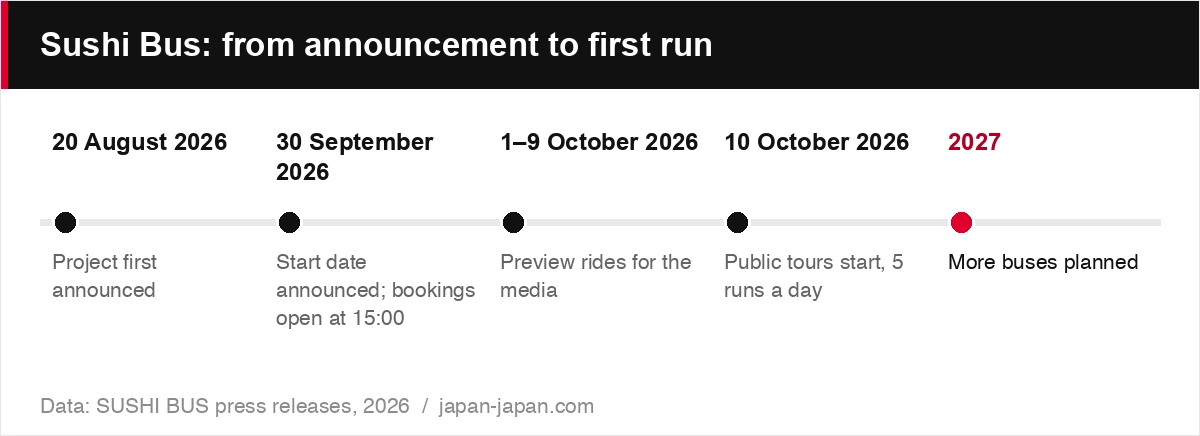
SUSHI BUS Inc. announced the start date on 30 September 2026 and opened bookings at 15:00 that day. The SUSHI BUS press release on 10 October launch sets the price at 16,000 yen. The company based that figure on about 100 US dollars. The bus runs daily, though the company warns of irregular days off for maintenance.
The company first revealed the project on 20 August 2026. It runs the tours with WILLER ACROSS, which rents out the converted restaurant bus and supports the operation. The company built the tour mainly for overseas visitors, and it says Japanese residents are welcome too.
The timeline below shows how the launch came together, from the first announcement to the first public run.
What the Sushi Bus is
The Sushi Bus is a converted double-decker restaurant bus with a conveyor belt on the open top deck. The SUSHI BUS first press release on the double-decker explains how it works. Chefs make the sushi in a kitchen downstairs. A small lift carries the plates up, and a crew member sets them on the belt beside your seat.
You pick what you want as it passes, as you would at any conveyor belt sushi restaurant in Japan. Everything is all-you-can-eat for about 70 minutes, and one drink is included.
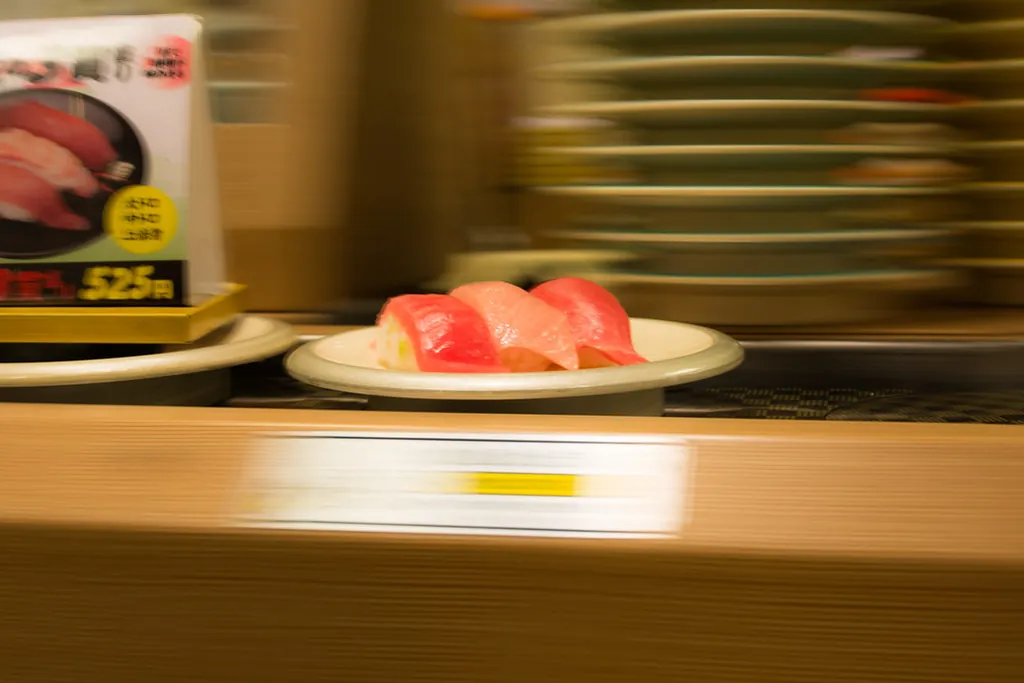
The photo above shows plates moving on a sushi conveyor belt. On the bus, the fish comes pre-cut from a wholesaler at Toyosu Market. The company buys 10 to 15 kinds of topping, and the line-up changes with what is available that day.
The company says it spends more on fish than a typical sushi chain. Its medium-fatty tuna (chutoro) slice weighs 12 grams. The company puts that at about 1.5 times a usual conveyor belt sushi slice. It also ran more than 100 tests to keep plates on the belt when the bus brakes hard.
The first bus is the Maguro (tuna) bus. Its wrap turns the whole vehicle into a giant piece of tuna sushi, about 12 m long and 4 m high. When it rains, a clear roof closes over the top deck and the tour still runs.
Sushi Bus route: Tokyo Tower, Ginza, Asakusa and Skytree
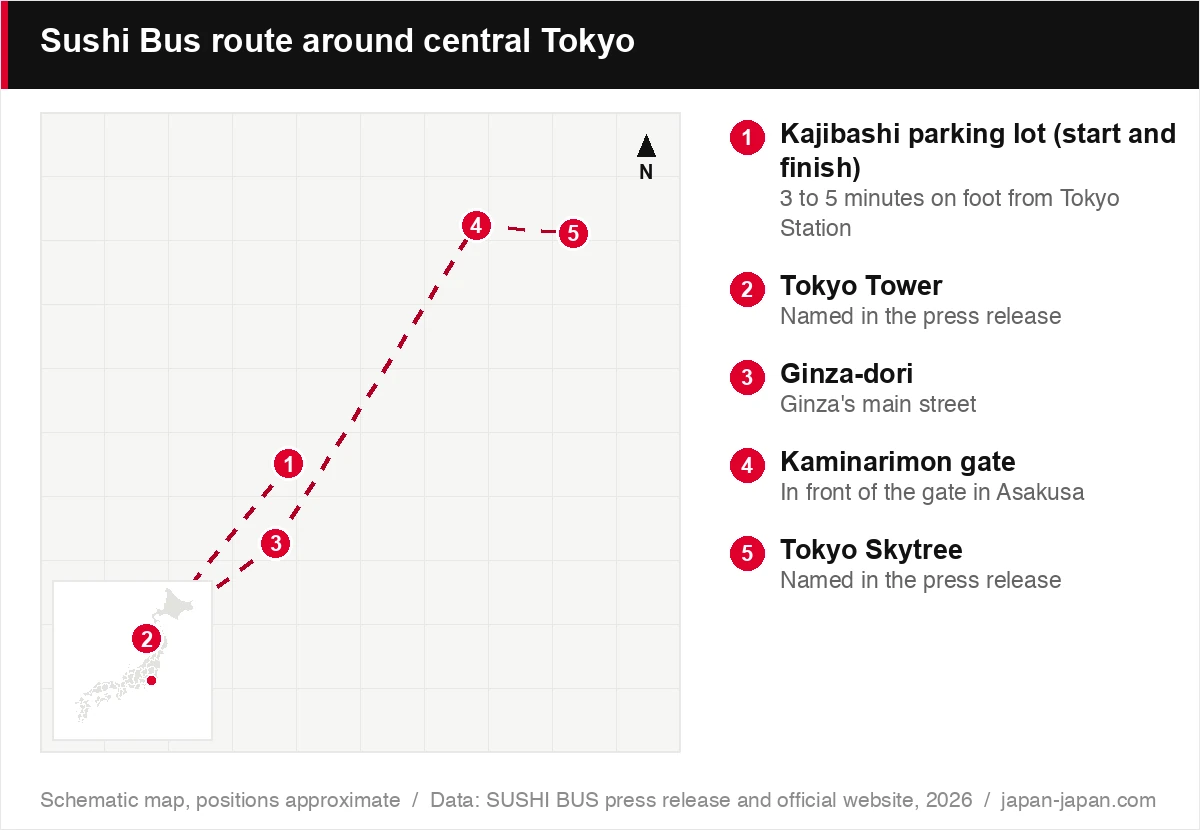
Every tour starts and ends at Kajibashi parking lot, 3 to 5 minutes on foot from Tokyo Station. The bus has no final destination. It loops past the sights and brings you back, so treat the 70 minutes as a meal with a view.
The press release names Tokyo Tower, Ginza-dori, the Kaminarimon gate in Asakusa and Tokyo Skytree as sights along the way. The SUSHI BUS official website and booking page also lists the Imperial Palace and the National Diet Building. The organiser picks the route on the day, based on traffic and weather.
The map below marks the starting point and the main sights the company names. The order can change from run to run.
The bus keeps to the legal speed limit. The company says its test runs averaged about 30 km/h and fitted within 70 minutes. For riders who get motion sick, the company compares the trip to eating a meal on a plane or a bento on the shinkansen.
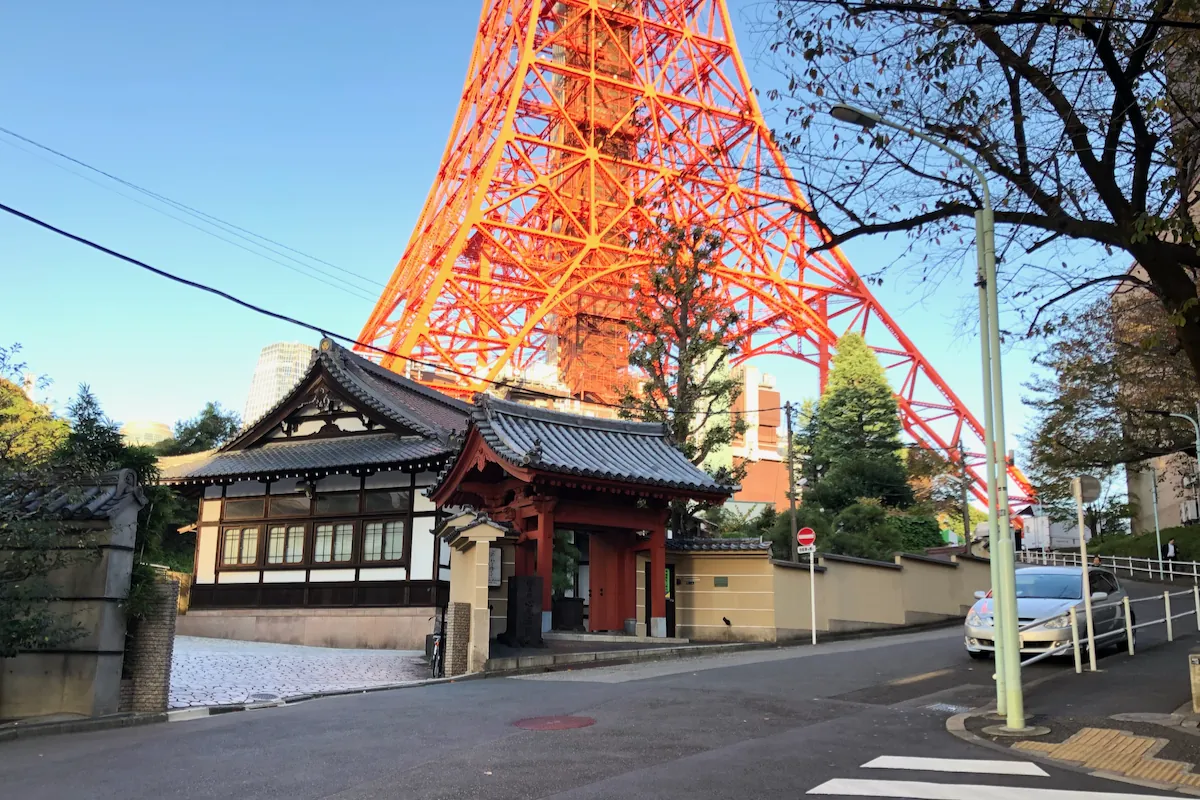
Tokyo Tower, shown above, is one of the landmarks on the company’s list. The company also pitches being looked at as part of the fun. Expect people on the pavement to point their phones at a bus dressed as tuna sushi.
Sushi Bus Tokyo times and price
There are 5 departures a day, and each run lasts about 70 minutes. Every seat costs 16,000 yen, tax included. The official site says anyone aged 2 or over pays the normal price, so children pay the same as adults.
| Departure | Back at Kajibashi | Ride | Price per person |
|---|---|---|---|
| 11:00 | 12:10 | About 70 min | 16,000 yen |
| 13:00 | 14:10 | About 70 min | 16,000 yen |
| 15:00 | 16:10 | About 70 min | 16,000 yen |
| 17:00 | 18:10 | About 70 min | 16,000 yen |
| 19:00 | 20:10 | About 70 min | 16,000 yen |
The table above lists every departure from Kajibashi parking lot. Each run has 20 seats, all on the upper deck. That makes 100 seats a day at most, and the company advises booking early.
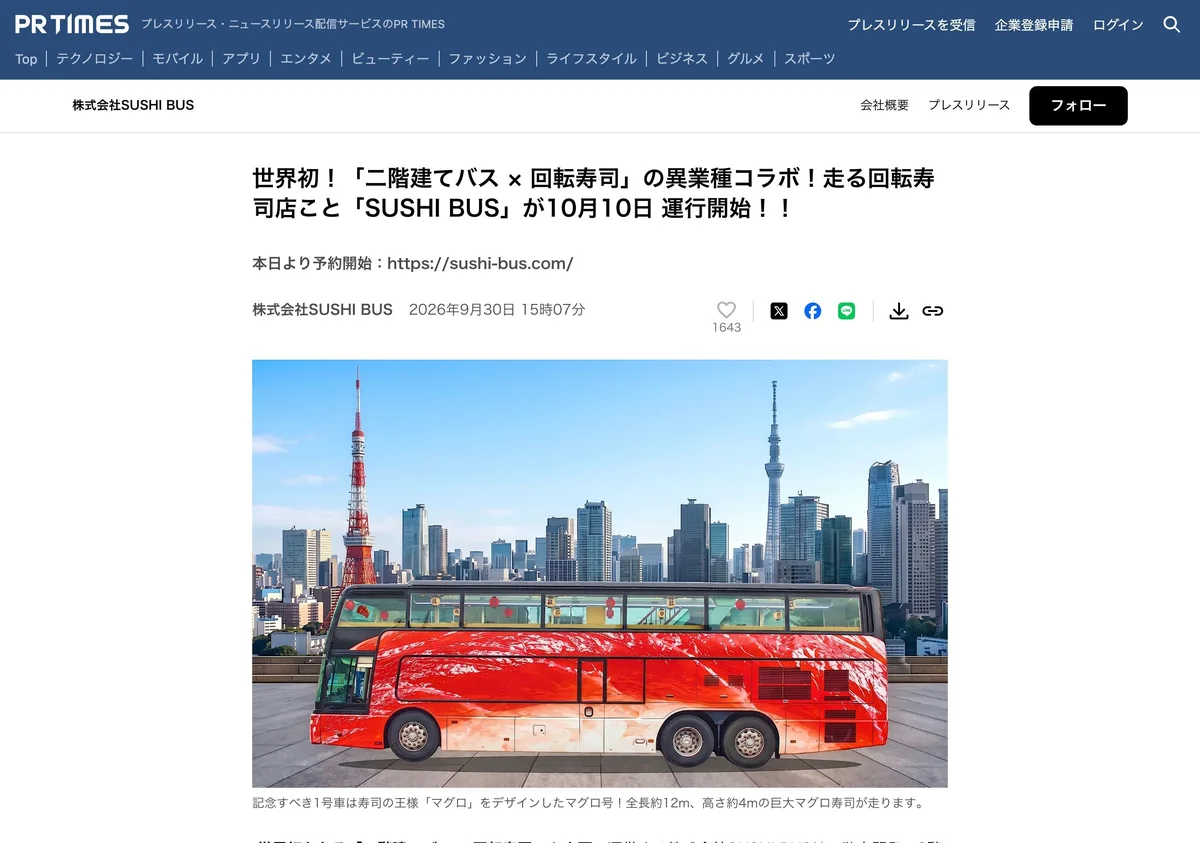
The screenshot shows the SUSHI BUS press release that lists these times and the price. Reservations go through the official website. The company plans to add more buses during 2027, but for now one bus covers every tour.
Who it suits (and who should skip it)
The Sushi Bus suits first-time visitors who want sushi and a city tour in one go. It also works for travellers with dietary needs. The company says it caters for vegetarian and halal diets, allergies and religious restrictions. Tell the team when you book, using the contact form on the website.
Our vegetarian, vegan and halal food guide for Japan covers what to watch for at other meals, such as fish stock hidden in soups and sauces.
Families and groups should book first. With 20 seats per run, one family can take a good share of the bus. The contact form also has an option for private hire (kashikiri), which suits a larger party.
Skip it if you want to eat a lot of sushi for little money. An ordinary conveyor belt sushi shop charges by the plate and is the cheaper way to fill up. The company pitches its quality against pricier places instead. It compares its two-piece chutoro plate with plates that sell for 600 to 800 yen at sushi restaurants.
If you are in the city this month, our Tokyo in October guide lists other events to plan around the ride.
Getting to the Sushi Bus from Narita and Haneda
Kajibashi parking lot sits a short walk from Tokyo Station. So the real question is how fast you can reach Tokyo Station from the airport. Our airport transfer pages list the times and fares for both airports.
From Haneda, the Keikyu Line and JR is the quickest and cheapest way: about 33 minutes for 540 yen. You change once, at Shinagawa or Hamamatsucho. The Tokyo Monorail and JR Yamanote Line cost 720 yen. The Airport Limousine bus runs straight to the Yaesu side of the station in about 55 minutes for 1,200 yen. It leaves Terminal 3 only 6 times a day, from 08:00 to 16:00. Our Haneda Airport to Tokyo Station page has the bus stops for each terminal.
From Narita, the Narita Express reaches Tokyo Station without a change in 53 minutes at the fastest, for 3,140 yen. The AIRPORT BUS TYO-NRT costs 1,500 yen and takes about 65 minutes. The Airport Limousine bus costs 3,100 yen and takes 75 to 100 minutes. Our Narita Airport to Tokyo Station page has the last departures.
So can you ride on the day you land? From Haneda, the 33-minute train and the short walk put the 17:00 or 19:00 run within reach after an early afternoon arrival. From Narita, the trip is longer, so pick the 19:00 run or save the bus for your second day. Either way, leave time for immigration, customs and baggage claim, and drop your suitcase at the hotel first.
A Welcome Suica card works on Tokyo trains, subways, buses and the Tokyo Monorail, which saves buying tickets at each change. Our guide to IC cards in Tokyo explains where to buy one. If you need directions near the station, show staff the name 鍛冶橋駐車場 (Kajibashi Chūshajō), which means Kajibashi parking lot.
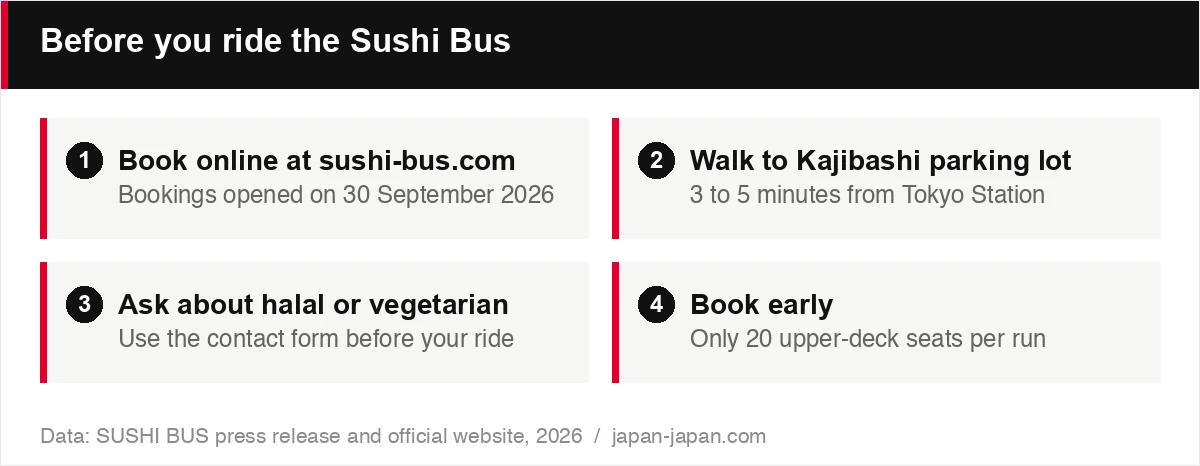
The checklist below sums up what to do before you ride.
Sushi Bus Tokyo FAQ
How much does the Sushi Bus in Tokyo cost?
A seat costs 16,000 yen per person, tax included. That covers all-you-can-eat sushi for about 70 minutes and one drink. Anyone aged 2 or over pays the same price.
Where does the Tokyo Sushi Bus depart from?
Every tour leaves from Kajibashi parking lot, 3 to 5 minutes on foot from Tokyo Station. The bus brings you back to the same place at the end of the loop. The official website has a map of the meeting point.
Does the Sushi Bus have halal or vegetarian options?
Yes. SUSHI BUS says it caters for vegetarian and halal diets, as well as allergies and religious restrictions. Contact the team through the form on the official website before your ride.
About the author


.jpg)
