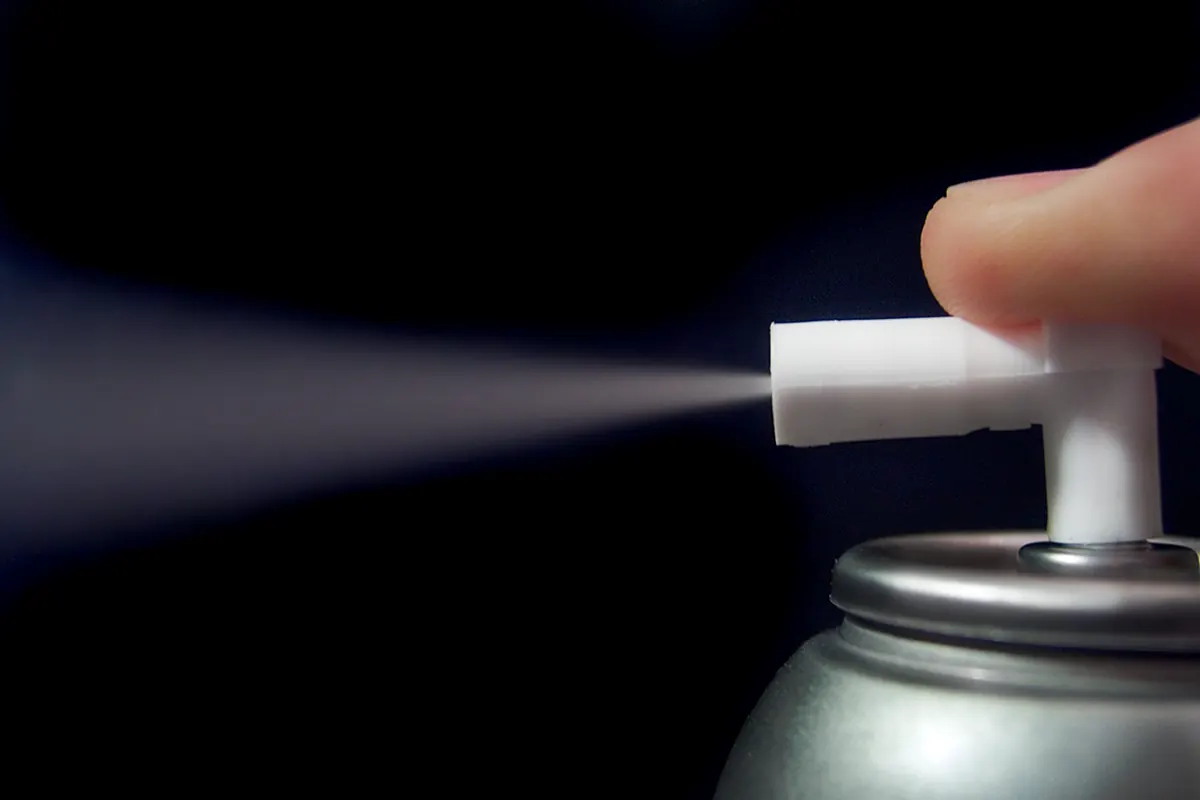

In Japan aerosols are allowed in carry-on and checked bags, with conditions.
Checked against the official page on · Report a correction
Carry-on: Depends on what is in it. Toiletry and medicinal aerosols, and other aerosols that use no flammable or toxic gas: 0.5 litres or 0.5kg per can, 2 litres or 2kg per person, valve protected. Checked baggage: Yes within 0.5 litres or 0.5kg per can and 2 litres or 2kg per person.
Aerosols on flights in and from Japan
On a domestic flight only the quantity limits apply. On an international flight the liquid rule comes on top.
| Where | Allowed? | What applies |
|---|---|---|
| In the cabin | Yes, within limits | Depends on what is in it. Toiletry and medicinal aerosols, and other aerosols that use no flammable or toxic gas: 0.5 litres or 0.5kg per can, 2 litres or 2kg per person, valve protected. On international flights sporting and daily-use aerosols such as water repellent, anti-static and laundry starch sprays cannot go in the cabin at all, and toiletry sprays must be 100ml or less. |
| In checked baggage | Conditions | Yes within 0.5 litres or 0.5kg per can and 2 litres or 2kg per person. Toiletry and medicinal sprays may use flammable gas; any other spray can is allowed only if its gas is neither flammable nor toxic. Paint sprays, model sprays, tyre repair sprays, pepper and tear gas sprays, oxygen sprays and air dusters are banned from both bags. |
- Domestic flights in Japan
- The 100ml liquid limit does not apply.
- International flights from Japan
- Each container 100ml or less, all of them inside one transparent re-sealable bag of 1 litre or less, one bag per person.
The 2 litre allowance is shared between toiletries, medicines and aerosols together.
Narita Airport
Narita's FAQ says high-pressure gas sprays are dangerous goods, but some types of body spray may be put in checked baggage.
Narita International Airport FAQ
How Japan's lists sort spray cans by contents and label
For a spray can the answer turns on what it holds and what it is used for, and Japan's lists draw that line in more than one place.
- Which table a spray can falls in
- Japan's list of restricted items has a table for cosmetics, a table for medicines and a third for spray cans other than those. The first pair are defined as including flammable liquids and high-pressure gas. The third admits only cans that use no flammable or toxic gas and pose no hazard other than the compressed gas itself.
- The label tells you which gas is inside
- The dangerous goods part of the list ends with a reference on can markings. A product marked 高温に注意 (caution: high temperature) uses non-flammable gas. A product marked 火気と高温に注意 (caution: fire and high temperature) uses flammable gas. The English liquids list describes the same split as cans not labelled Highly Flammable or No Fire.
- Sprays refused in both cabin and checked baggage
- The Japanese version of the liquids list names the sprays that fit neither permitted group: paint sprays, model sprays, tyre repair sprays, tear gas sprays, oxygen sprays and air dusters. They cannot enter the cabin and cannot be checked at the counter. The English version of the same row lists only paint, pepper and tyre repair sprays.
- Laundry starch spray: checked in Japan, refused by the TSA
- Japan's liquids list puts aerosol laundry starch, water repellent and static remover sprays in a group that may be checked but cannot enter the cabin on international flights; the Japanese version adds anti-slip sprays. The TSA is stricter on the same product: Spray Starch shows No in both of its columns, carry-on and checked, and so does Cooking spray.
- A crew-comfort clause in Hong Kong and Taiwan
- Hong Kong's CAD and Taiwan's CAA attach a condition to permitted aerosols that Japan's list does not carry: the gas released must not cause extreme annoyance or discomfort to crew members that would keep them from performing their assigned duties correctly.
Aerosols: the rule country by country
The carry-on answer for aerosols is the same in all 7 other places we checked. The limits themselves are not identical, so read the row for the country you fly from.
| Flying from | Carry-on | Checked bag | What the authority says |
|---|---|---|---|
| JapanCivil Aviation Bureau | With limits | With limits | Depends on what is in it. Toiletry and medicinal aerosols, and other aerosols that use no flammable or toxic gas: 0.5 litres or 0.5kg per can, 2 litres or 2kg per person, valve protected. Source |
| United StatesTSA | With limits | With limits | Toiletry aerosols such as deodorant: carry-on 3.4oz/100 ml or less; checked up to 2 kg (70 ounces) or 2 L (68 fluid ounces) per person and 0.5 kg (18 ounces) or 500 ml (17 fluid ounces) per container. Spray paint is banned in both bags.TSA entry: Deodorant (aerosol), Spray Paint Source |
| European UnionEuropean Commission, EASA | With limits | — | Aerosols count as liquids. Hand luggage: 100 ml per container, all in one re-sealable one-litre bag. Source |
| United KingdomUK Government | With limits | Yes | Sprays, including hairspray and spray deodorants, count as liquids. Hand luggage: 100ml per container at most airports, up to 2 litres at some. Source |
| South KoreaMOLIT Aviation Security 365 | With limits | With limits | Toiletry aerosols: 0.5 litres or less each, 4 cans in total, in carry-on or checked baggage. Sports or household aerosols (non-toxic only): same amounts, checked baggage only. International carry-on also falls under the liquids standard. Source |
| TaiwanCivil Aviation Administration | With limits | With limits | Medicinal and toiletry aerosols and certain Division 2.2 aerosols may go in hand and checked baggage: max 0.5 kg or 0.5 L each, 2 kg or 2 L per person (e.g. 4 cans of 500 ml). On international flights the carry-on liquid limit also applies. Source |
| Hong KongCivil Aviation Department | With limits | With limits | Medicinal, toiletry and other non-flammable, non-toxic aerosols may go in carry-on (under the cabin liquid rule) and checked baggage, e.g. four aerosol cans of 500 ml each. Flammable or toxic aerosols for other uses are forbidden. Source |
| AustraliaHome Affairs, CASA | With limits | With limits | Toiletry and medicinal aerosols: 0.5 kg or 0.5 L per item and 2 kg or 2 L in total per person, with a fitted cap. Household aerosols with a flammable gas label are not permitted. International carry-on: 100 mL or 100 g max.CASA Pack Right entry: Aerosols containing flammable gas in toiletry or medicinal articles, Aerosols - household - with a flammable gas diamond label. Source |
Each row comes from that authority's own page. Airlines can be stricter, and the screening officer has the final say.
If security in Japan will not let aerosols through
- What to do
- Move aerosols to the bag you check in before you reach security, within the checked-baggage limits above. Narita Airport states that anything given up at the checkpoint is discarded and cannot be returned.
Buying aerosols in Japan
- Where to buy
- Drugstores and hundred-yen shops.
Frequently asked questions
Can you bring aerosols on a plane?
On flights in and from Japan: Depends on what is in it. Toiletry and medicinal aerosols, and other aerosols that use no flammable or toxic gas: 0.5 litres or 0.5kg per can, 2 litres or 2kg per person, valve protected. On international flights sporting and daily-use aerosols such as water repellent, anti-static and laundry starch sprays cannot go in the cabin at all, and toiletry sprays must be 100ml or less.
What is considered an aerosol on a plane?
A substance kept in a container under pressure. Australia's Home Affairs defines aerosols that way and gives deodorant, hairspray, sunscreen spray and shaving cream as examples. Japan's main list is wider for cosmetics: it counts both gas-filled aerosol sprays and liquid-filled mist sprays as sprays.
Why are aerosols restricted on planes?
Because the can holds gas under pressure. Narita Airport's FAQ says a high-pressure gas spray is classed as a dangerous good, and Japan's liquids list names High-pressure Gases among the articles prohibited by air transportation. Hong Kong's CAD gives the reason for such limits: dangerous goods can be a danger to you and the aircraft in flight due to temperature and pressure difference.
Can you take an aerosol can in hand luggage in the UK or Europe?
The European Union: Aerosols count as liquids. Hand luggage: 100 ml per container, all in one re-sealable one-litre bag.
Can you put an aerosol can in checked luggage?
Yes within 0.5 litres or 0.5kg per can and 2 litres or 2kg per person. Toiletry and medicinal sprays may use flammable gas; any other spray can is allowed only if its gas is neither flammable nor toxic. Paint sprays, model sprays, tyre repair sprays, pepper and tear gas sprays, oxygen sprays and air dusters are banned from both bags.
What is the rule for aerosols on flights from South Korea, Taiwan and Hong Kong?
South Korea: Toiletry aerosols: 0.5 litres or less each, 4 cans in total, in carry-on or checked baggage. Sports or household aerosols (non-toxic only): same amounts, checked baggage only. International carry-on also falls under the liquids standard. Taiwan: Medicinal and toiletry aerosols and certain Division 2.2 aerosols may go in hand and checked baggage: max 0.5 kg or 0.5 L each, 2 kg or 2 L per person (e.g. 4 cans of 500 ml). On international flights the carry-on liquid limit also applies. Hong Kong: Medicinal, toiletry and other non-flammable, non-toxic aerosols may go in carry-on (under the cabin liquid rule) and checked baggage, e.g. four aerosol cans of 500 ml each. Flammable or toxic aerosols for other uses are forbidden.
Read more
- Japan Packing List for Winter: What to Wear and Carry OnJapan packing list for winter: layers for Tokyo (1.2°C lows), boots for Sapporo (-6.4°C…
- Can You Bring Alcohol Wipes on a Plane to Japan? 2026 RulesYes. Alcohol wipes sit outside the 100ml liquid rule. Gel and spray go in 100ml contain…
- Can You Take an Electric Toothbrush in Hand Luggage? YesYes. You can take an electric toothbrush in hand luggage or checked bags to Japan. Spar…
- Japan Power Bank Rules 2026: 160Wh, 2 Max and No ChargingYes, in your carry-on only: 160Wh or less, two per person at most. Since 24 April 2026 …
Sources for this page
Show all 14
- Japan Civil Aviation Bureau (MLIT) — Items restricted in carry-on and checked baggage (updated 24 April 2026)
- Japan Civil Aviation Bureau — List and Description of LAGs Restriction (1 October 2015)
- Narita International Airport — FAQ: prohibited items
- Japan Civil Aviation Bureau — List of liquids covered by the quantity limits (Japanese, 1 October 2015)
- TSA — What Can I Bring?: Deodorant (aerosol) + Spray Paint
- European Commission — Information for air travellers
- GOV.UK — Hand luggage restrictions: Liquids
- Aviation Security 365 (MOLIT / KOTSA) — Dangerous goods
- Taiwan CAA — Dangerous goods passengers and crew may carry
- Civil Aviation Department (Hong Kong) — Packing Tips for Air Passenger: Provisions for Dangerous Goods Carried by Passenger and Crew
- CASA — Pack Right: Aerosols containing flammable gas in toiletry or medicinal articles
- Australian Department of Home Affairs — TravelSECURE: What you can and can't bring
- Civil Aviation Department (Hong Kong) — Packing Tips for Air Passengers
- Taiwan CAA — Table of dangerous goods passengers and crew may carry or check (Chinese)