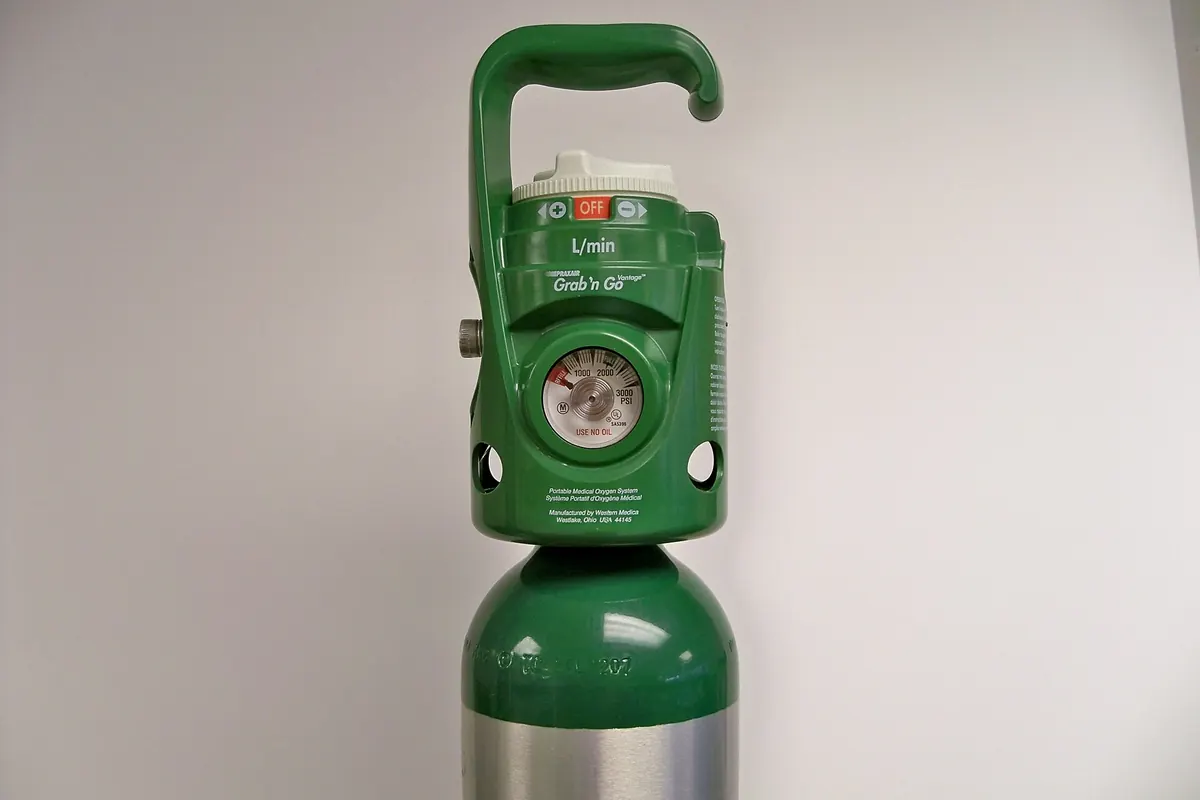

In Japan oxygen cylinders are allowed in carry-on and checked bags, with conditions.
Checked against the official page on · Report a correction
Carry-on: Medical oxygen or air cylinders: yes, 5kg or less per cylinder, with the valve protected against accidental release. Other cylinders: no. Checked baggage: Medical cylinders: on the same terms. Other cylinders: only if no gas is left inside.
Oxygen cylinders on flights in and from Japan
The rule for oxygen cylinders comes from the Civil Aviation Bureau's list of restricted items and is the same on domestic and international flights.
| Where | Allowed? | What applies |
|---|---|---|
| In the cabin | Yes, within limits | Medical oxygen or air cylinders: yes, 5kg or less per cylinder, with the valve protected against accidental release. Other cylinders: no. |
| In checked baggage | Conditions | Medical cylinders: on the same terms. Other cylinders: only if no gas is left inside. |
Narita Airport
Narita says oxygen cylinders other than those for medical purposes are not permitted in carry-on or checked baggage.
Narita International Airport FAQ
Medical cylinders, canned oxygen and concentrators are not one item
Only a cylinder needed for medical use may travel filled: canned oxygen sold for hiking is refused, and a battery-run concentrator follows the rules for electronic devices.
- Air cylinders and empty cylinders share the row
- The row in Japan's list is headed oxygen cylinders, with air cylinders in brackets. For any cylinder that is not for medical use it gives a cross in both columns and a single note: one with no gas left can be checked. CASA applies the same idea to diving gear and lists scuba tanks with the condition must be empty.
- What the 5 kg figure measures
- Japan's list sets 5kg in its per-container column for medical oxygen and air cylinders. Neighbouring lists say what is weighed: Taiwan's CAA table uses gross weight, Hong Kong's CAD says gross mass per cylinder, and CASA titles its entry not more than 5 kg gross weight. In those lists the figure is the cylinder as carried, not the gas inside.
- Approval, advance notice and the pilot
- Japan's list attaches no approval step to a medical cylinder. Elsewhere there is one. Taiwan's CAA and Hong Kong's CAD require the airline's consent, recommend arranging in advance, and add that the pilot-in-command must be informed of the number of cylinders on board and where they are loaded. GOV.UK's table says only: contact your airline.
- Australia may ask for a doctor's letter at screening
- On international flights from Australia, Home Affairs says a doctor's letter should list the medical items a passenger takes through screening, and it names personal supplemental oxygen as one of them. Without proof that an item is medically necessary, the passenger may need to surrender it or make other arrangements.
Oxygen cylinders: the rule country by country
Oxygen cylinders are not allowed in carry-on in the United States and Mainland China.
| Flying from | Carry-on | Checked bag | What the authority says |
|---|---|---|---|
| JapanCivil Aviation Bureau | With limits | With limits | Medical oxygen or air cylinders: yes, 5kg or less per cylinder, with the valve protected against accidental release. Other cylinders: no. Source |
| United StatesTSA | No | No | Personal medical oxygen cylinders may be brought through the checkpoint to the gate area but are not permitted in the aircraft cabin; contact your airline to arrange oxygen service. Non-medical flavored or canned oxygen is prohibited.TSA entry: Medically Necessary Personal Oxygen, Recreational Oxygen Source |
| United KingdomUK Government | With limits | With limits | Contact your airline. This applies to both hand luggage and hold luggage. Source |
| South KoreaMOLIT Aviation Security 365 | With limits | With limits | Medical oxygen or air cylinders: airline approval needed, 5kg or less total mass per cylinder; then allowed in checked baggage, carry-on and on your person. Devices containing liquid oxygen are not allowed at all. Source |
| TaiwanCivil Aviation Administration | With limits | With limits | Oxygen or air cylinders for medical use may go in hand or checked baggage with airline approval; each cylinder at most 5 kg gross weight. Personal medical oxygen devices that use liquid oxygen are forbidden in both. Source |
| Hong KongCivil Aviation Department | With limits | With limits | Cylinders of oxygen or air needed for medical use: carry-on or checked with airline approval, no more than 5 kg gross mass per cylinder; advance arrangements are recommended. Other compressed gas cylinders are forbidden in both. Source |
| Mainland ChinaCAAC | No | No | Compressed gases are listed as dangerous goods that cannot be carried on or checked. An oxygen supply device attached to protective clothing cannot be taken on the flight either. Source |
| AustraliaHome Affairs, CASA | With limits | With limits | Oxygen or air cylinders required for medical use: carry-on or checked with airline approval, not exceeding 5kg per cylinder, with valves and regulators protected from damage. Liquid oxygen is not permitted.CASA Pack Right entry: Oxygen or air cylinders required for medical use - not more than 5 kg gross weight, Oxygen - liquid Source |
Each row comes from that authority's own page. Airlines can be stricter, and the screening officer has the final say.
If security in Japan will not let oxygen cylinders through
- What to do
- Move oxygen cylinders to the bag you check in before you reach security, within the checked-baggage limits above. Narita Airport states that anything given up at the checkpoint is discarded and cannot be returned.
Frequently asked questions
Can you take an oxygen cylinder on a plane?
On flights in and from Japan: Medical oxygen or air cylinders: yes, 5kg or less per cylinder, with the valve protected against accidental release. Other cylinders: no. In checked baggage: Medical cylinders: on the same terms. Other cylinders: only if no gas is left inside.
Can you take canned oxygen on a plane?
No. Narita Airport's FAQ answers a question about an oxygen canister for mountain climbing or sports: oxygen cylinders other than those for medical purposes are not permitted in carry-on or checked baggage. The Japanese liquids list puts oxygen spray among the sprays refused in both, and the TSA prohibits flavoured or canned oxygen that is not medically required.
Can you fly with a portable oxygen concentrator?
Yes. A concentrator is not treated as an oxygen cylinder. Japan's list places it with portable medical electronic devices, allowed in carry-on and checked baggage when the lithium-ion battery is rated 160Wh or less. CASA lists portable oxygen concentrators for both bags and asks for airline approval if any battery exceeds 100 Wh. The TSA says certain models are permitted onboard.
Does the TSA allow an oxygen cylinder in carry-on bags?
Personal medical oxygen cylinders may be brought through the checkpoint to the gate area but are not permitted in the aircraft cabin; contact your airline to arrange oxygen service. Non-medical flavored or canned oxygen is prohibited.
Can you take an oxygen cylinder in hand luggage in the UK or Europe?
The United Kingdom: Contact your airline. This applies to both hand luggage and hold luggage.
Can you put an oxygen cylinder in checked luggage?
Medical cylinders: on the same terms. Other cylinders: only if no gas is left inside.
What is the rule for oxygen cylinders on flights from Mainland China, South Korea and Taiwan?
Mainland China: Compressed gases are listed as dangerous goods that cannot be carried on or checked. An oxygen supply device attached to protective clothing cannot be taken on the flight either. South Korea: Medical oxygen or air cylinders: airline approval needed, 5kg or less total mass per cylinder; then allowed in checked baggage, carry-on and on your person. Devices containing liquid oxygen are not allowed at all. Taiwan: Oxygen or air cylinders for medical use may go in hand or checked baggage with airline approval; each cylinder at most 5 kg gross weight. Personal medical oxygen devices that use liquid oxygen are forbidden in both.
Read more
- Japan Packing List for Winter: What to Wear and Carry OnJapan packing list for winter: layers for Tokyo (1.2°C lows), boots for Sapporo (-6.4°C…
- Can You Bring Alcohol Wipes on a Plane to Japan? 2026 RulesYes. Alcohol wipes sit outside the 100ml liquid rule. Gel and spray go in 100ml contain…
- Glamping in Japan: Prices, Winter Sites and Fire RulesGlamping in Japan is priced per dome or cabin: 10,000 yen a weekday night in Gero, 132,…
Sources for this page
Show all 13
- Japan Civil Aviation Bureau (MLIT) — Items restricted in carry-on and checked baggage (updated 24 April 2026)
- Narita International Airport — FAQ: prohibited items
- Japan Civil Aviation Bureau — List of liquids covered by the quantity limits (Japanese, 1 October 2015)
- TSA — What Can I Bring?: Medically Necessary Personal Oxygen + Recreational Oxygen
- GOV.UK — Hand luggage restrictions: Medicines, medical equipment and dietary requirements
- Aviation Security 365 (MOLIT / KOTSA) — Dangerous goods
- Taiwan CAA — Dangerous goods passengers and crew may carry
- Civil Aviation Department (Hong Kong) — Packing Tips for Air Passenger: Provisions for Dangerous Goods Carried by Passenger and Crew
- CAAC — Air travel basics (航空旅行常识)
- CASA — Pack Right: Oxygen or air cylinders required for medical use - not more than 5 kg gross weight
- Australian Department of Home Affairs — TravelSECURE: What you can and can't bring
- Taiwan CAA — Table of dangerous goods passengers and crew may carry or check (Chinese)
- GOV.UK — Hand luggage restrictions at UK airports