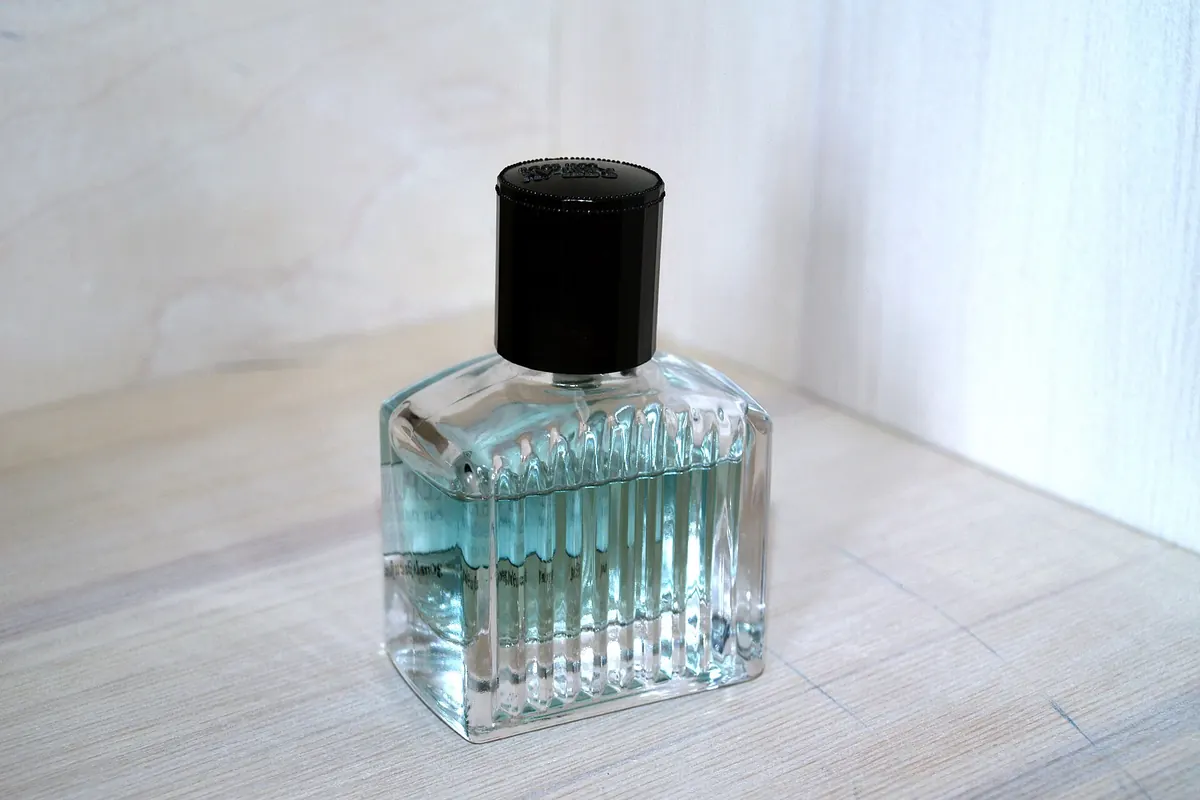

In Japan perfume and cologne are allowed in carry-on and checked bags, with conditions.
Checked against the official page on · Report a correction
Carry-on: Yes. Perfume and cologne are toiletries: 0.5 litres or 0.5kg per bottle, 2 litres or 2kg per person. On international flights liquid, gel and pump-spray perfume must be in bottles of 100ml or less in the liquids bag. Checked baggage: Yes, within the 0.5 litre per bottle and 2 litre per person limits.
Perfume and cologne on flights in and from Japan
On a domestic flight only the quantity limits apply. On an international flight the liquid rule comes on top.
| Where | Allowed? | What applies |
|---|---|---|
| In the cabin | Yes, within limits | Yes. Perfume and cologne are toiletries: 0.5 litres or 0.5kg per bottle, 2 litres or 2kg per person. On international flights liquid, gel and pump-spray perfume must be in bottles of 100ml or less in the liquids bag. |
| In checked baggage | Conditions | Yes, within the 0.5 litre per bottle and 2 litre per person limits. |
- Domestic flights in Japan
- The 100ml liquid limit does not apply.
- International flights from Japan
- Each container 100ml or less, all of them inside one transparent re-sealable bag of 1 litre or less, one bag per person.
Bringing perfume into Japan duty free is capped by Japan Customs at 2 ounces, approximately 56ml. Eau de cologne and eau de toilette are not counted in that allowance.
Perfume and cologne: duty-free bottles, transfers and customs
For perfume and cologne, the special cases are about where the bottle was bought and where the journey ends.
- Splash bottle, pump spray or pressurised can
- Japan's liquids list gives perfume and cologne one row covering liquids, gels and pump-sprays, and the Japanese version adds eau de toilette to the examples. A pump atomiser is therefore counted like any bottle. A pressurised can is an aerosol as well: CASA names perfumes as an example of aerosols containing flammable gas, and Japan wants the valve of a gas-filled spray protected by a cap or similar.
- A bottle over 100 ml from the duty-free shop
- Narita Airport says cosmetics and other liquids bought at duty-free shops once departure procedures are complete can be taken on board outside the liquid restrictions. A perfume bottle over 100 ml that is travelling on to another airport has to be in a security tamper evident bag, a STEB. Japan's Civil Aviation Bureau says the bag stays sealed until the following security check, and that an opened one is seized.
- Changing planes with duty-free perfume
- Narita's FAQ advises buying liquids at the airport of the final connection, because an overseas transfer airport may make you dispose of them. Connecting in Japan, a bottle from an overseas duty-free shop is accepted if it is in a STEB and clears the liquid inspection equipment. Hong Kong screens transfer passengers' sealed bags again and repacks any it opens.
- Why perfume has a quantity limit at all
- Perfume carries a dangerous goods allowance on top of the liquid rules. The heading of Japan's cosmetics table says it covers products containing flammable liquid, and perfume and eau de cologne are a line in that table. EASA names perfume among everyday goods that may be very dangerous when transported by air, and Australia's security page lists it with the flammable items a passenger can take on board.
Perfume and cologne: the rule country by country
The carry-on answer for perfume and cologne is the same in all 8 other places we checked. The limits themselves are not identical, so read the row for the country you fly from.
| Flying from | Carry-on | Checked bag | What the authority says |
|---|---|---|---|
| JapanCivil Aviation Bureau | With limits | With limits | Perfume and cologne are toiletries: 0.5 litres or 0.5kg per bottle, 2 litres or 2kg per person. Source |
| United StatesTSA | With limits | Yes | Carry-on: 3.4oz/100 ml or less. Checked: allowed; the FAA limits medicinal and toiletry articles to 2 kg (70 ounces) or 2 L (68 fluid ounces) in total per person and 0.5 kg (18 ounces) or 500 ml (17 fluid ounces) per container.TSA entry: Perfume, Cologne Source |
| European UnionEuropean Commission, EASA | With limits | — | Perfumes count as liquids. Hand luggage: 100 ml per container, all in one re-sealable one-litre bag. Source |
| United KingdomUK Government | With limits | Yes | Perfumes are listed as liquids. Hand luggage: 100ml per container at most airports, up to 2 litres at some. Source |
| South KoreaMOLIT Aviation Security 365 | With limits | Yes | Perfume falls under liquids, aerosols and gels. Carry-on is restricted on international flights only. Source |
| TaiwanCivil Aviation Administration | With limits | Yes | International flights only: 100 ml per carry-on container, in one resealable 1 litre bag. Source |
| Hong KongCivil Aviation Department | With limits | With limits | Perfumes and colognes are named as toiletry articles. Carry-on: containers of 100 ml or less in one re-sealable 1-litre bag. Carry-on or checked: no more than 0.5 kg or 0.5 L per article (a per-person total also applies). Source |
| Mainland ChinaCAAC | With limits | Yes | Domestic flights: no liquids in carry-on except cosmetics for the trip (one of each type, container up to 100mL). International and regional flights: containers up to 100mL in one resealable 1L clear bag. Source |
| AustraliaHome Affairs, CASA | With limits | With limits | Perfumes and colognes: 0.5 kg or 0.5 L per item and 2 kg or 2 L in total per person, in carry-on and checked bags. On international flights carry-on containers must be 100 mL or 100 g or less; most domestic flights have no limit.CASA Pack Right entry: Toiletries including perfumes, aerosols, hairsprays and colognes Source |
Each row comes from that authority's own page. Airlines can be stricter, and the screening officer has the final say.
If security in Japan will not let perfume and cologne through
- What to do
- Move perfume and cologne to the bag you check in before you reach security, within the checked-baggage limits above. Narita Airport states that anything given up at the checkpoint is discarded and cannot be returned.
Frequently asked questions
Can you take perfume or cologne on a plane?
On flights in and from Japan: Yes. Perfume and cologne are toiletries: 0.5 litres or 0.5kg per bottle, 2 litres or 2kg per person. On international flights liquid, gel and pump-spray perfume must be in bottles of 100ml or less in the liquids bag. In checked baggage: Yes, within the 0.5 litre per bottle and 2 litre per person limits.
Can you take cologne on a plane?
Yes. Cologne is treated the same as perfume. Japan's main list names perfume and eau de cologne on one line, and its liquids list puts them in one row. The TSA has a separate Cologne entry with the same answer as Perfume: 3.4oz/100 ml in carry-on, and checked bags within the FAA limits for toiletry articles.
Can I bring perfume or cologne to Japan?
Yes. Japan Customs gives each adult a duty-free allowance of up to 2 ounces of perfume, counting one ounce as about 28ml. Eau de cologne and eau de toilette are not counted as perfume. If you also send unaccompanied baggage, the allowance applies to the total quantity of both.
Does the TSA allow perfume in carry-on bags?
Carry-on: 3.4oz/100 ml or less. Checked: allowed; the FAA limits medicinal and toiletry articles to 2 kg (70 ounces) or 2 L (68 fluid ounces) in total per person and 0.5 kg (18 ounces) or 500 ml (17 fluid ounces) per container.
Can you take perfume in hand luggage in the UK or Europe?
The United Kingdom: Perfumes are listed as liquids. Hand luggage: 100ml per container at most airports, up to 2 litres at some. The European Union: Perfumes count as liquids. Hand luggage: 100 ml per container, all in one re-sealable one-litre bag.
Can you put perfume in checked luggage?
Yes, within the 0.5 litre per bottle and 2 litre per person limits.
What is the rule for perfume and cologne on flights from Taiwan, Hong Kong and Australia?
Taiwan: International flights only: 100 ml per carry-on container, in one resealable 1 litre bag. Hong Kong: Perfumes and colognes are named as toiletry articles. Carry-on: containers of 100 ml or less in one re-sealable 1-litre bag. Carry-on or checked: no more than 0.5 kg or 0.5 L per article (a per-person total also applies). Australia: Perfumes and colognes: 0.5 kg or 0.5 L per item and 2 kg or 2 L in total per person, in carry-on and checked bags. On international flights carry-on containers must be 100 mL or 100 g or less; most domestic flights have no limit.
Read more
- Can You Bring Alcohol Wipes on a Plane to Japan? 2026 RulesYes. Alcohol wipes sit outside the 100ml liquid rule. Gel and spray go in 100ml contain…
- Can You Take Nail Clippers on a Plane? Yes, Minus the KnifeYes: you can take nail clippers on a plane in Japan, in carry-on and checked bags, unle…
- Japan Packing List for Winter: What to Wear and Carry OnJapan packing list for winter: layers for Tokyo (1.2°C lows), boots for Sapporo (-6.4°C…
- Can You Bring Tweezers on a Plane to Japan? 2026 RulesTweezers with rounded tips can go in your carry-on in Japan. Nail clippers pass too, sc…
Sources for this page
Show all 21
- Japan Civil Aviation Bureau (MLIT) — Items restricted in carry-on and checked baggage (updated 24 April 2026)
- Japan Civil Aviation Bureau — List and Description of LAGs Restriction (1 October 2015)
- Japan Civil Aviation Bureau — List of liquids covered by the quantity limits (Japanese, 1 October 2015)
- Japan Civil Aviation Bureau — Changes in Rules of Liquids Purchased at Duty Free Shops within Certain Airports in Japan (20 October 2015)
- Narita International Airport — FAQ: prohibited items
- Narita International Airport — FAQ: security check
- Narita International Airport — Restrictions on carry-on liquids on international flights
- TSA — What Can I Bring?: Perfume + Cologne
- European Commission — Information for air travellers
- GOV.UK — Hand luggage restrictions: Liquids
- Aviation Security 365 (MOLIT / KOTSA) — Items prohibited on board
- Taiwan CAA — Q&A on the new security measures for carry-on baggage (liquids, gels and aerosols)
- Civil Aviation Department (Hong Kong) — Packing Tips for Air Passenger: Provisions for Dangerous Goods Carried by Passenger and Crew
- CAAC — Air travel basics (航空旅行常识)
- CASA — Pack Right: Toiletries including perfumes, aerosols, hairsprays and colognes
- Australian Department of Home Affairs — TravelSECURE: What you can and can't bring
- EASA — Dangerous goods
- Hong Kong International Airport — Airport Security
- Japan Customs — Customs Answer 7105: Duty-Free Allowance for Accompanied Personal Effects of Overseas Travelers
- Japan Customs — Duty-free allowance for overseas travellers (Japanese)
- Japan Customs — Procedures of Passenger Clearance