Shimanami Kaido Cycling Takes 4 to 10 Hours Over 7 Bridges
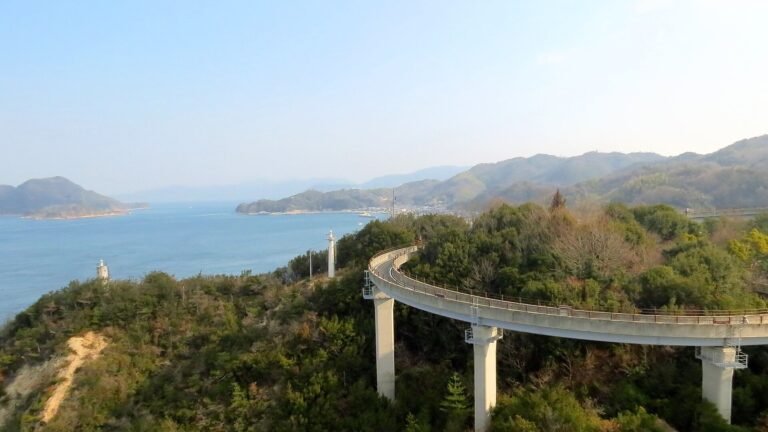
The prices and the terminal count come from the JNTO National Parks page Cycle the Shimanami Kaido. The route links Honshu, Japan’s main island, with Shikoku. On the way it crosses six islands in the Seto Inland Sea.
Safe bicycle lanes run the whole way, so you share very little road with cars. Most visitors ride one way. They start in Onomichi, finish in Imabari, hand the bike back and take a highway bus to Onomichi in about 1.5 hours.
You can also start on the Imabari side, or ride only one section. JNTO rates road conditions as generally good from March to May and from August to November. Autumn is the peak season.
The Shimanami Kaido cycling route, island by island
From the Onomichi side, the islands come in a fixed order. You cross Mukaishima first, then Innoshima, Ikuchijima, Omishima, Hakatajima and Oshima. The last bridge lands you in Imabari on Shikoku. The chart below shows that order from start to finish.
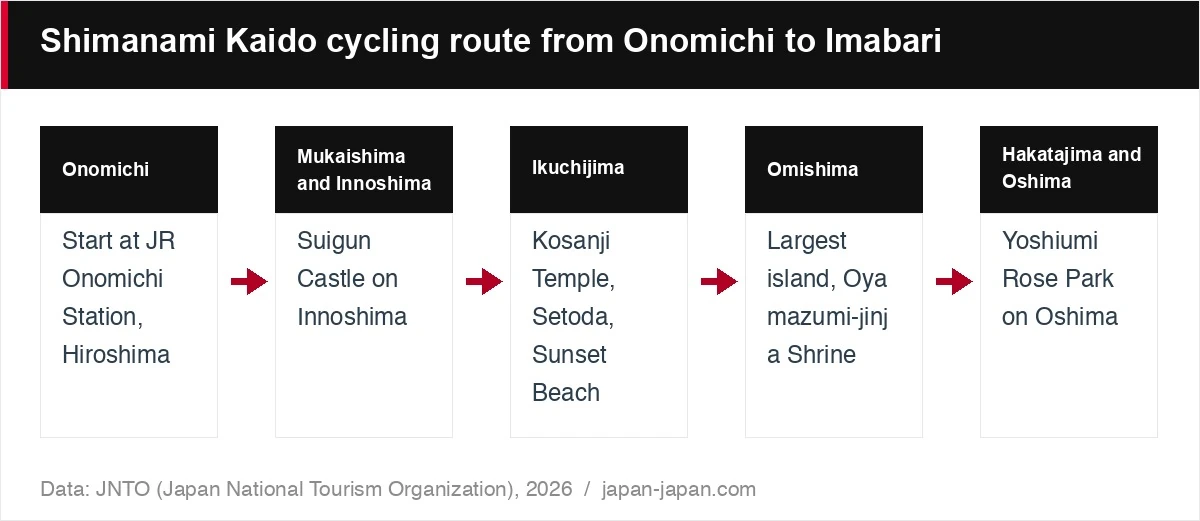
Each island has its own stop. Innoshima is known for Suigun Castle. Ikuchijima has Kosanji Temple, Sunset Beach and the small town of Setoda. Omishima is the largest island on the route and holds Oyamazumi-jinja Shrine. Hakatajima has Kitaura Hachiman Okami-jinja Shrine, said to date from 673. Oshima has the Yoshiumi Rose Park.
Finding the way is simple. A painted blue line on the road, the Yahane Blue Line, marks the course. Follow it and you stay on the route. Information signs stand along the way, and English pamphlets are available.
The JNTO Shimanami Kaido Cycling Road course page lists “Cycle Oasis” rest stops along the road. They have bike racks and facilities for riders. Roadside stations and bicycle shops also line the route. Rental bike stations sit on each of the islands, so a flat tyre or a tired rider is never far from help.
The bridge count depends on the page you read. Most JNTO pages count seven bridges between the islands. The national parks page says nine, so you may see both numbers.
The final crossing is the Kurushima Kaikyo Bridge, from Oshima to Imabari. It was completed in 1999. It was the world’s first triple suspension bridge, with a total length of about 4,100 meters. The photo below shows it spanning the strait.
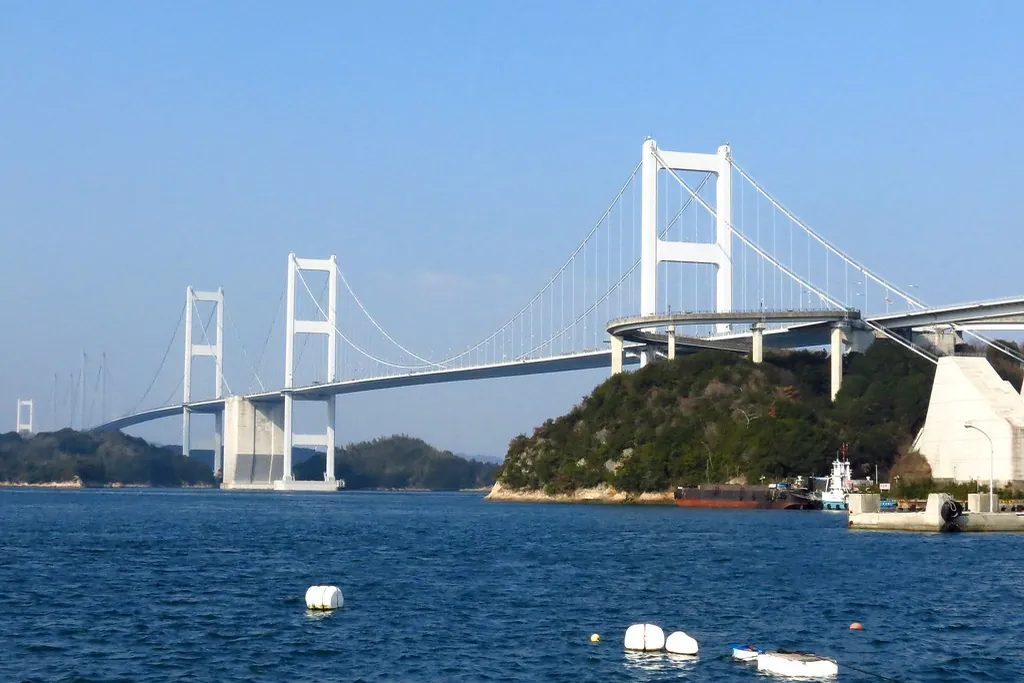
Once you roll off the bridge, Imabari is close. Sunrise Itoyama, the official end point, sits on the Imabari side of the strait. If you started in Imabari, the same bridge is your first climb of the day.
How long it takes: 4 hours or a full day
Experienced cyclists finish the 70km in about four hours, says the JNTO Cycling the Shimanami Kaido itinerary. A leisurely ride with stops at sights takes about 10 hours. The JNTO course page sits in between, with an estimate of 6 hours for its reference route from JR Onomichi Station to Sunrise Itoyama.
All three numbers are estimates, and your pace and route change them. They describe three kinds of trip. The illustration below matches each kind of rider to a plan.
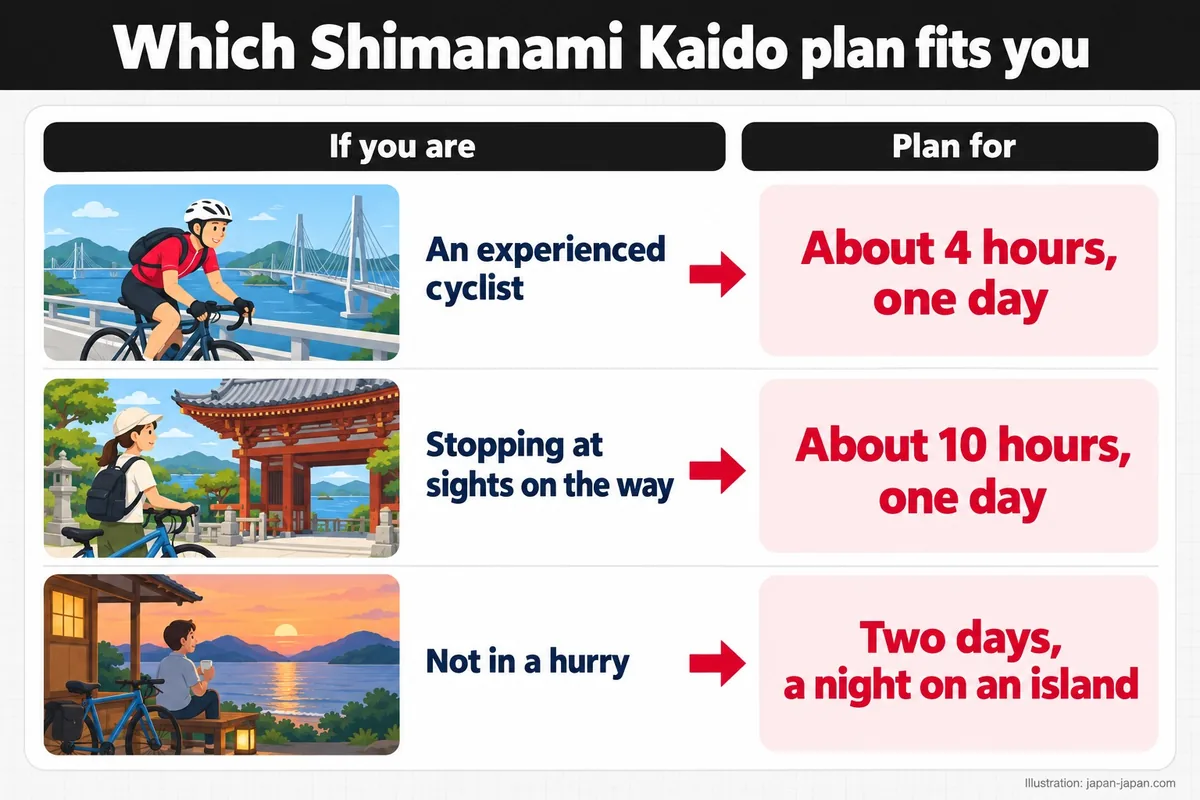
Pick the four-hour plan if you ride often and want the crossing itself. You will see the bridges and the sea, but you will skip most temples and museums. Start early in the morning so you can stop when you like.
Pick the full day if you want to see the islands. Ten hours leaves time for Kosanji Temple, a shrine visit, lunch and a slow stretch along the water. It is also the plan for first-timers who do not ride long distances at home.
Pick two days if you want both the ride and the island towns. The route has a wide range of places to stay, from seaside resort hotels to traditional inns with hot springs. Ikuchijima suits families and couples, and makes a natural halfway stop.
You can also cycle just one section. JNTO notes that riders can choose a course and ride only part of the road. The national parks page adds that model courses exist for different ability levels.
The national rules behind the road help with planning. Japan’s Ministry of Land, Infrastructure, Transport and Tourism (MLIT) names the Shimanami Kaido as one of its National Cycle Routes. The MLIT National Cycle Route page lists it at 70km, from JR Onomichi Station to Sunrise Itoyama.
To earn that label, a route needs cycle stations about every 20km. It needs lodging for cyclists about every 60km near the route. It must also give information in at least two languages, Japanese and English. The usual length rule is about 100km or more, but routes on islands are exempt.
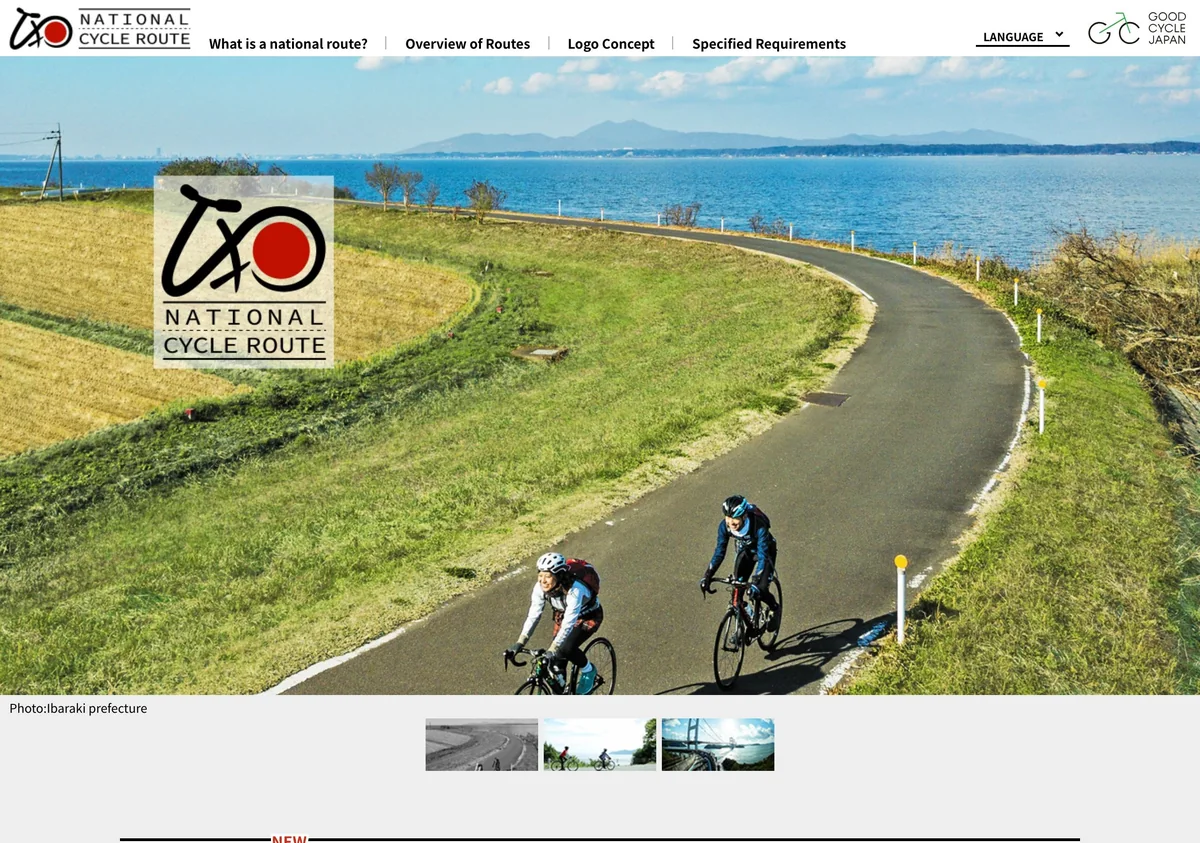
The screenshot below is that MLIT page. It is in Japanese and maps every National Cycle Route in the country. At 70km, the Shimanami Kaido is the shortest route on the list, against 193km for Biwaichi around Lake Biwa.
That spacing means you are rarely far from a rest stop or a bed. If your legs give out halfway, you can stop for the night and finish the next morning.
Shimanami Kaido bike rental: prices and one-way returns
You can rent a bike at terminals on both the Onomichi and Imabari sides. You can return it at any terminal along the route. There are 10 terminals in total, so a one-way ride needs no backtracking. Reserve a bike in advance in English through Shimanami Rental Cycle.
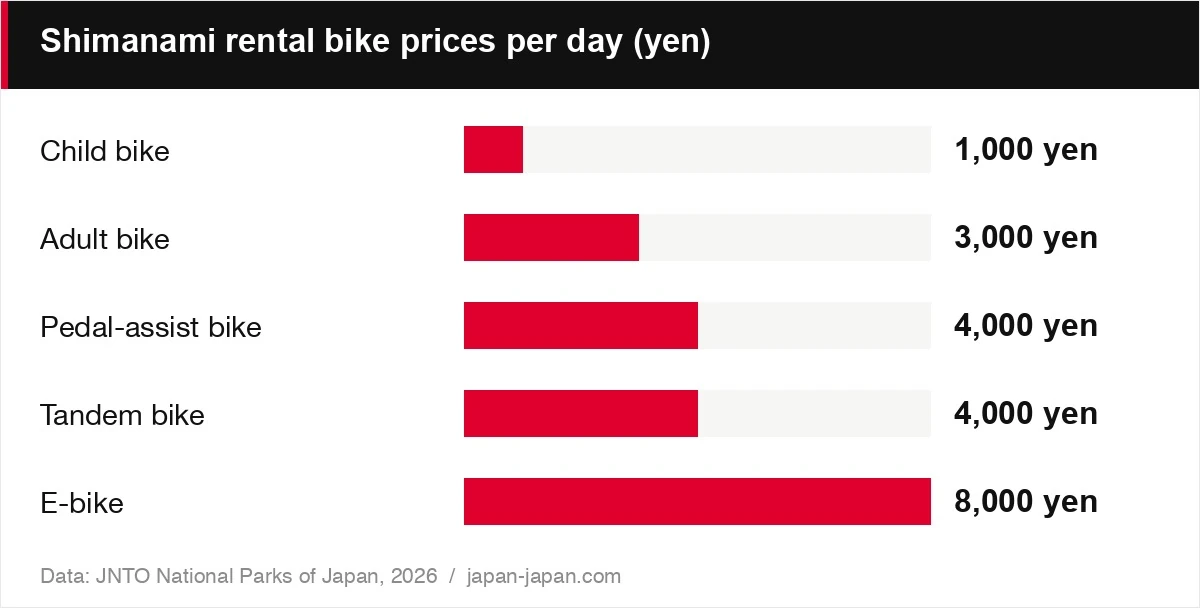
The daily prices on the JNTO national parks page are simple. The chart below compares them.
| Item | Value | Note |
|---|---|---|
| Child bike | 1000 yen | |
| Adult bike | 3000 yen | |
| Pedal-assist bike | 4000 yen | Adults only |
| Tandem bike | 4000 yen | |
| E-bike | 8000 yen |
- Adult bike: 3,000 yen per day.
- Child bike: 1,000 yen per day, for elementary school age and under.
- Pedal-assist electric bike: 4,000 yen per day, adults only.
- Tandem bike: 4,000 yen per day.
- E-bike: 8,000 yen per day.
The pedal-assist bike costs 1,000 yen more than a standard adult bike. It is worth it if you plan the full 70km and rarely ride at home. A motor helps on the climbs up to each bridge. The e-bike is the priciest choice at 8,000 yen.
The rental points are easy to reach by train. In Onomichi, the bike rentals are a 3-minute walk from the station. In Imabari, bike rentals are right in front of JR Imabari Station. That is useful if you arrive from Matsuyama by train.
The four panels below show a typical one-way day, from booking the bike to the bus home.
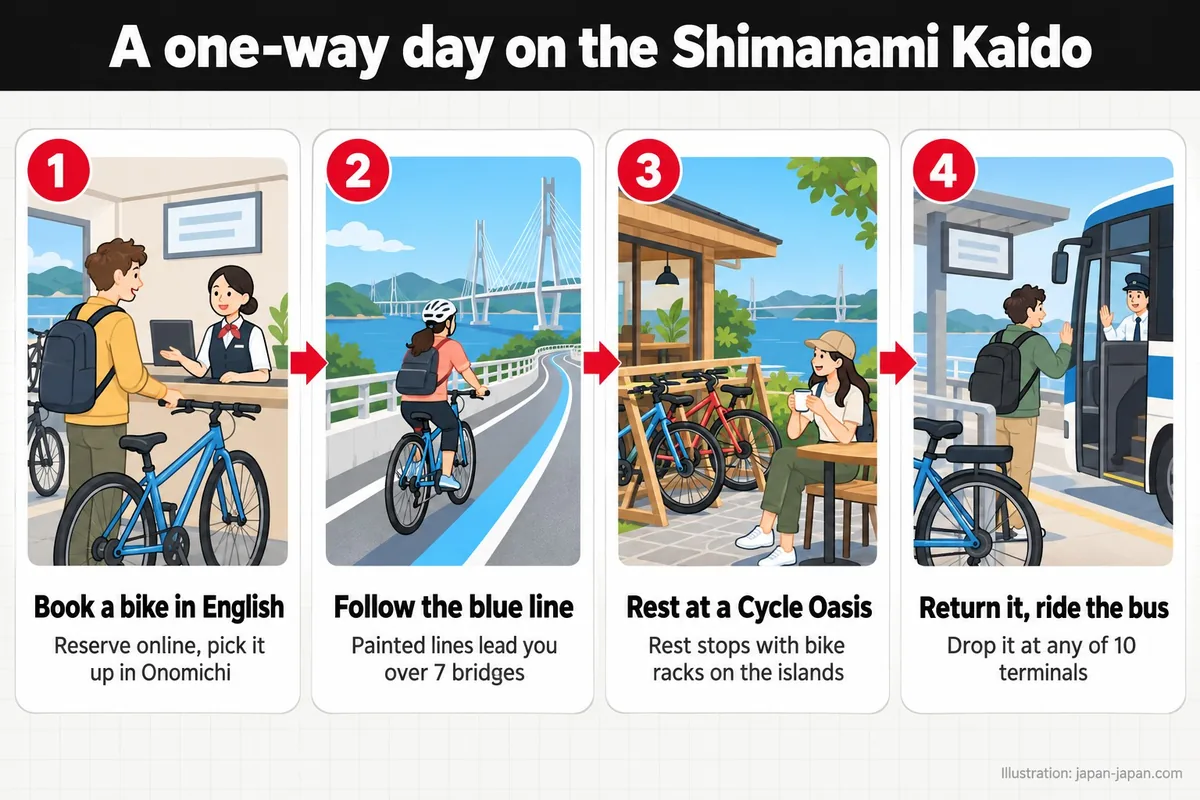
When you book, choose your return terminal as well. A one-way plan that ends in Imabari lets you ride the highway bus back to Onomichi. A plan that ends on an island means you need a ferry, a bus or a second day.
Onomichi also has many private shops for bike rentals and repairs. JNTO’s itinerary says the town is filled with guesthouses, bakeries and shops for bicycle maintenance.
Getting to Onomichi or Imabari
Most riders start in Onomichi, on the Honshu side. From Tokyo Station, take the JR Tokaido Sanyo Shinkansen to Fukuyama Station in 3 hours 30 minutes. Change to the JR Sanyo Line bound for Mihara or Itozaki, and ride 20 minutes to Onomichi Station.
From Shin-Osaka Station, the Shinkansen reaches Fukuyama in 1 hour and 10 minutes. The local train to Onomichi takes about 20 minutes more. From Hiroshima Station, the Shinkansen to Fukuyama takes 30 minutes, then the same 20-minute local train. Our Osaka to Hiroshima route guide and Tokyo to Hiroshima route guide show train times and fares on the main line.
You can also fly. A flight from Haneda Airport in Tokyo to Hiroshima Airport takes 80 minutes. From the airport, take the Hiroshima Airport Line and change to the Sanyo Line to JR Onomichi Station, a trip of about an hour. Our Hiroshima Airport guide covers the limousine bus into Hiroshima: 50 minutes and 1,500 yen to Hiroshima Station.
The table below puts the main ways in side by side, for both ends of the road.
| From | To | How | Time |
|---|---|---|---|
| Tokyo Station | Onomichi | Shinkansen to Fukuyama, then JR Sanyo Line | 3 h 30 min + 20 min |
| Shin-Osaka Station | Onomichi | Shinkansen to Fukuyama, then local train | 1 h 10 min + about 20 min |
| Hiroshima Station | Onomichi | Shinkansen to Fukuyama, then JR Sanyo Line | 30 min + 20 min |
| Haneda Airport | Onomichi | Flight to Hiroshima Airport, then train | 80 min + about 1 hour |
| Haneda Airport | Matsuyama Airport | Flight | About 1 h 30 min |
| Matsuyama Airport | Imabari | Bus or taxi to JR Matsuyama, then JR express | About 20 min + about 40 min |
| Imabari | Onomichi | Highway bus (the way back) | About 1.5 hours |
A rail pass can cover the Shinkansen part. The Setouchi Area Pass costs 22,000 yen for 7 days, and 11,000 yen for children. It covers reserved and non-reserved seats on the Sanyo Shinkansen between Shin-Osaka and Hakata, which includes Fukuyama. It does not cover the Tokaido Shinkansen between Tokyo and Shin-Osaka.
To start in Imabari, fly from Haneda Airport to Matsuyama Airport in about 1 hour 30 minutes. Take the local bus or a taxi to JR Matsuyama Station in about 20 minutes. Then ride the JR express train to JR Imabari Station in about 40 minutes.
The Matsuyama Airport bus access page lists a bus toward Imabari, run by Izumi Kanko Bus. At the stop, look for the sign 今治方面 (Imabari homen), which means “for Imabari”. The limousine bus to JR Matsuyama Station costs 1,000 yen for adults. Our Matsuyama Airport to Matsuyama transfer guide lists the quickest option at 15 minutes, and a 530 yen route bus.
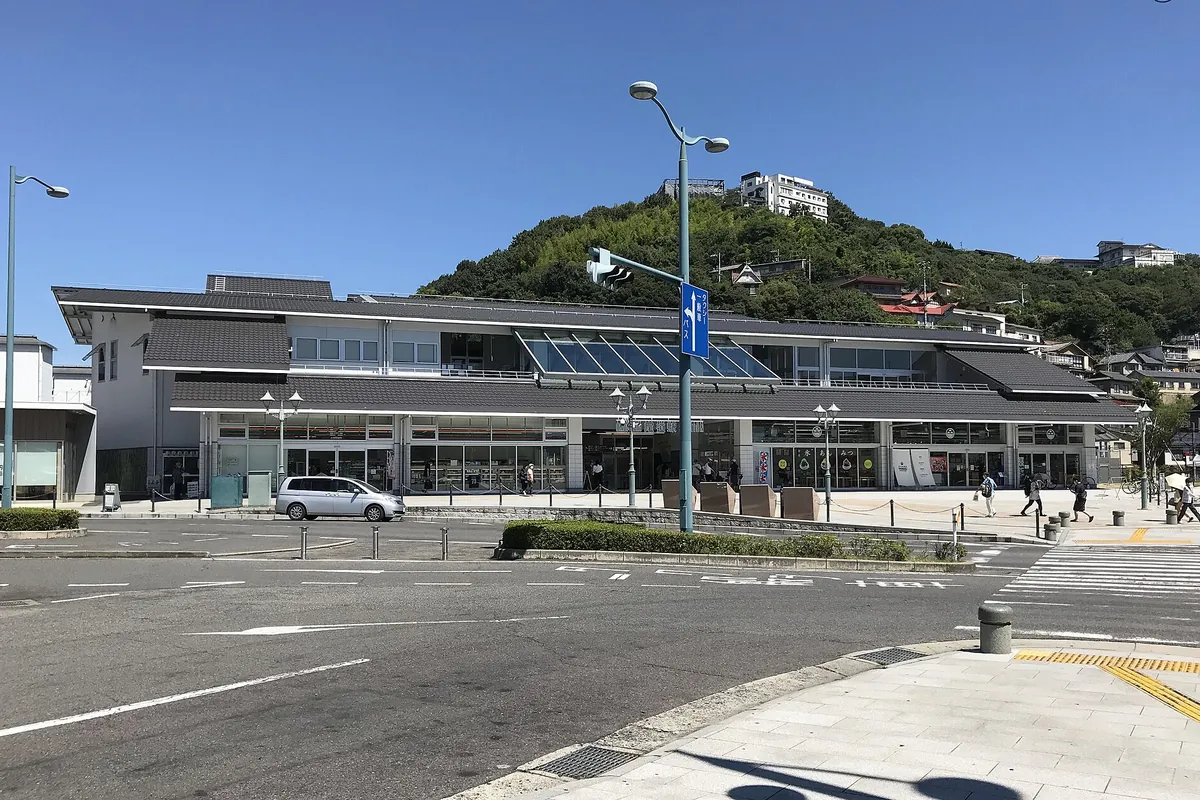
Onomichi itself deserves a few hours. A temple walk connects 25 temples on its steep, cobbled streets. Senkoji, built in 806, sits high above the town and you reach it by a small ropeway. Its park has an observatory with views of the sea and the Shimanami Kaido. The photo below shows the town at the start of the route.
Eat before you set off. The town’s own noodle dish is covered in our Onomichi ramen guide.
Stops worth the detour: temples, shrines and pirate castles
The islands hold more history than the short ride suggests. The course page notes that Innoshima Suigun Castle and the island of Nojima are tied to the Murakami Pirates, who held the area in the 16th century.
Suigun Castle, Innoshima. Built in 1983, this museum tells the story of the Murakami Suigun, a naval clan active from the mid-14th to the 16th centuries. They took tolls from passing merchants, so people often call them pirates. Inside you can see their weapons, armor and other objects.
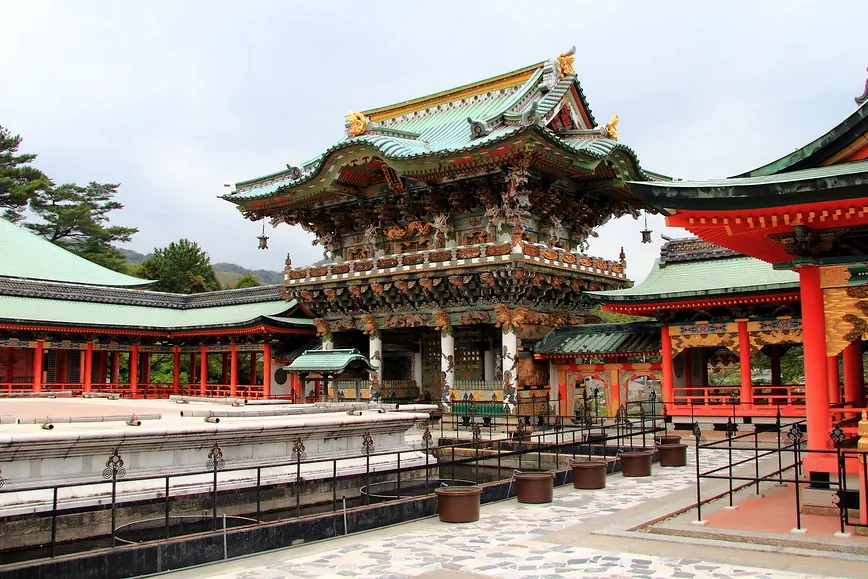
Kosanji Temple, Ikuchijima. Kanemoto Kozo, a businessman who became a priest, founded the temple in 1935. He built it to secure his mother’s place in the Buddhist paradise. It took him more than 30 years to finish. The complex holds copies of famous temples and shrines, including Nikko’s Toshogu Shrine and Kyoto’s Byodoin Temple.
The photo below shows the bright gates and halls of Kosanji. Lock your bike outside and give the grounds at least an hour.
Oyamazumi-jinja Shrine, Omishima. This is one of the most popular stops on the route. The shrine honors the gods of sailors and soldiers. Over the centuries, military leaders left swords and armor here as offerings. The shrine now has the largest museum of samurai-era military equipment in Japan.
Kitaura Hachiman Okami-jinja, Hakatajima. The shrine was first built in 673. It is said to be the oldest shrine on the island.
Yoshiumi Rose Park, Oshima. The park grows 3,500 roses from 400 species. They bloom from mid-May to December, so an autumn ride still finds flowers.
Setoda and Sunset Beach, Ikuchijima. Sunset Beach is a swimming beach on the route. A short ride away, Setoda sells lemonade and gelato made from local citrus. Setoda also has Yunbune, a retro public bathhouse.
Imabari. The end point is Ehime Prefecture’s second largest city. Six sacred sites of the Shikoku 88 Temple Pilgrimage are here, as is Imabari Castle. The local favorite is fried pork and eggs over rice. Ramen made with local sea bream is also popular.
Shimanami Kaido cycling in autumn and winter
Autumn is the peak season for Shimanami Kaido cycling. The JNTO Shimanami Kaido cycling tips page credits the cool weather and clear skies. Road conditions stay good through November.
Spring is the other popular choice, because the ride lines up with cherry blossom season. Summer is hot and humid, but beaches along the route let you cool off. The rainy season runs from late June to early July, so expect wet roads then.
Winter is chilly, but temperatures rarely drop below freezing. You can warm up on the way. Omishima has hot springs, and Setoda has the Yunbune bathhouse. Wear layers you can take off on the climbs to each bridge, and put them back on for the long, windy decks.
Before you set out in any season, run through the checks below.
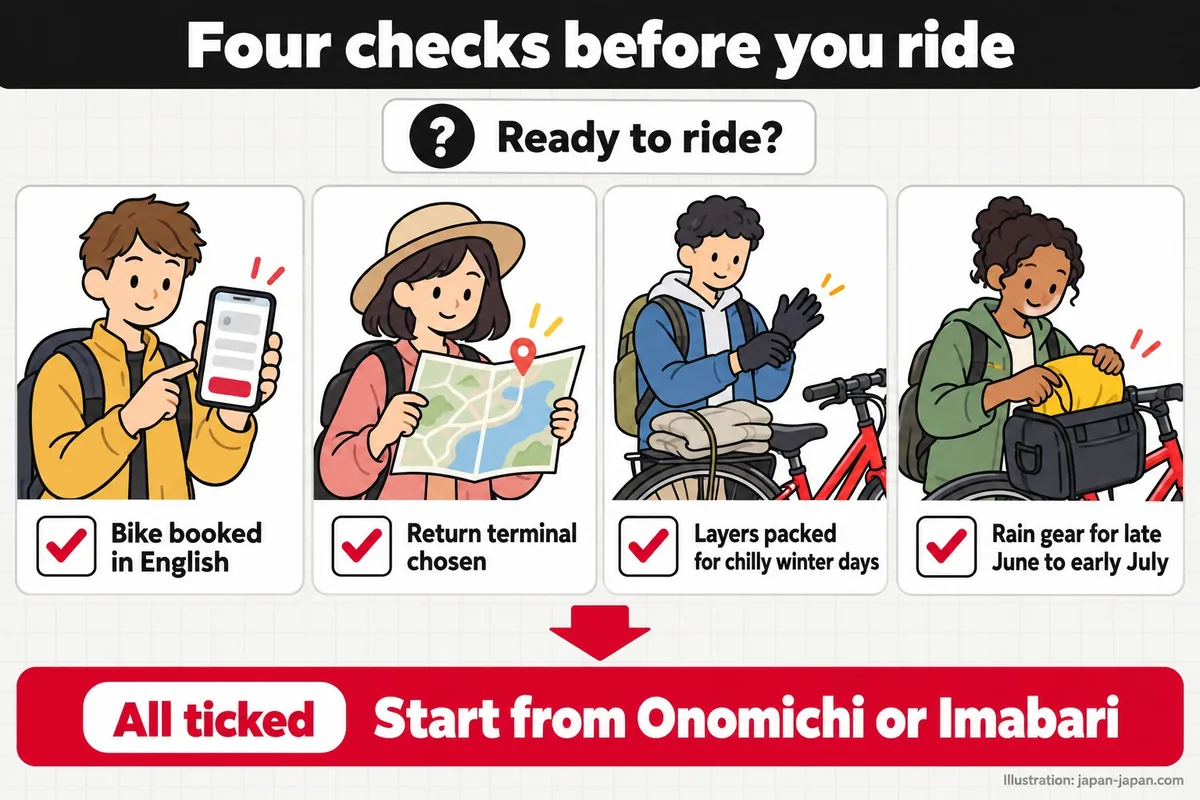
A late-autumn trip pairs well with other plans in the region. Our guide to Japan in November lists events across the country, and our autumn leaves guide tracks when maples turn red, city by city.
The photo below shows riders on one of the bridge decks. In autumn and winter, the sea views are often at their clearest.
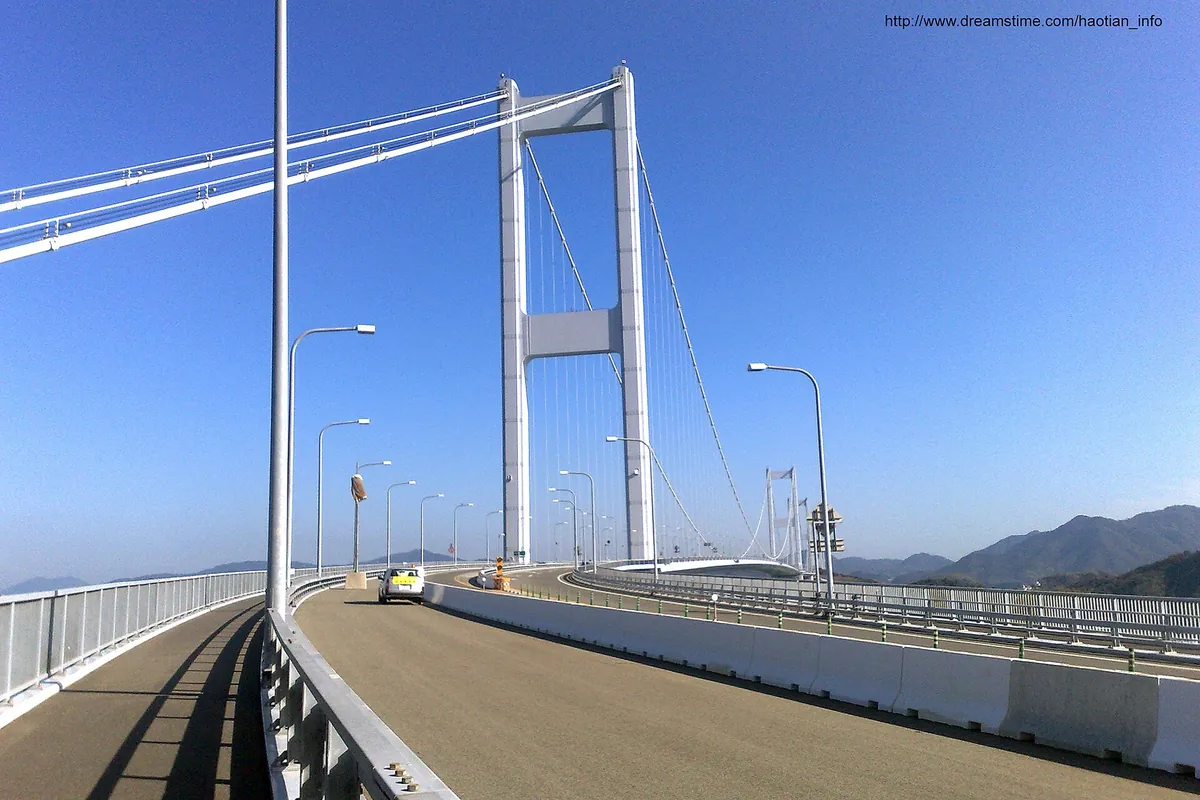
Days are short in late autumn and winter. If you choose the 10-hour plan, start at first light, or split the ride over two days.
Getting back, luggage and related guides
From Imabari, you have two easy ways out. Drop your bike and take the highway bus back to Onomichi, which takes about 1.5 hours. From Onomichi, the JR Sanyo Line reaches Hiroshima in another 1.5 hours.
The other way is to keep going on Shikoku. The JR express train runs from Imabari to Matsuyama in about 40 minutes. From there you can fly home from Matsuyama Airport.
A suitcase does not fit on a rental bike. Send it ahead to your hotel at the far end, or leave it near the airport. Our Matsuyama Airport guide lists the SAGAWA Hands-Free Travel Service counter in the 1F domestic arrival lobby, open 08:10 to 13:00. SAGAWA also delivers bags the same day to partner hotels in Matsuyama City. Hand them in by 13:00 and they arrive after about 17:00.
Coin lockers at Matsuyama Airport start at 300 yen a day, in 6 sizes. At Hiroshima Airport, Yamato Transport handles bag delivery. Our guide to luggage forwarding in Japan explains how to send a bag between hotels.
If you plan a wider loop of the Setouchi region, compare the Setouchi Area Pass with paying for single tickets. One Shinkansen ride from Shin-Osaka to Hiroshima is 10,950 yen with a reserved seat. A return trip plus a side trip can make the 22,000 yen pass pay off.
FAQ
How long does it take to cycle the Shimanami Kaido?
Experienced cyclists ride the 70km in about 4 hours. A slow ride with stops at sights takes about 10 hours. The JNTO course page uses 6 hours as its estimate for the full route.
How much does a rental bike on the Shimanami Kaido cost?
An adult bike costs 3,000 yen per day and a child bike 1,000 yen. Pedal-assist electric bikes and tandems cost 4,000 yen, and an e-bike costs 8,000 yen. You can reserve in English through Shimanami Rental Cycle.
Can you return a Shimanami Kaido rental bike at a different terminal?
Yes. There are 10 rental terminals, and you can return the bike at any of them. Most riders rent in Onomichi, return in Imabari and take the highway bus back in about 1.5 hours.
Is the Shimanami Kaido good for cycling in winter?
Yes, if you dress in layers. Winters are chilly, but temperatures rarely go below freezing. You can warm up in the hot springs on Omishima or the Yunbune bathhouse in Setoda.
About the author