7-Eleven Onigiri in Japan: 135 to 268 Yen and What’s Inside
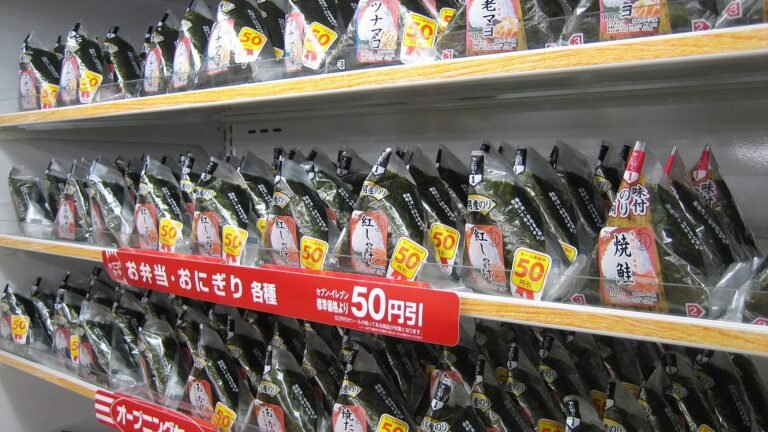
We took every price from the Seven-Eleven Japan onigiri product list (Kanto), the official page for the Tokyo area. Seven-Eleven Japan publishes one list per region, and the same rice ball can carry a different price or not exist at all in another region. Treat the numbers here as the Tokyo-area picture on 17 October 2026.
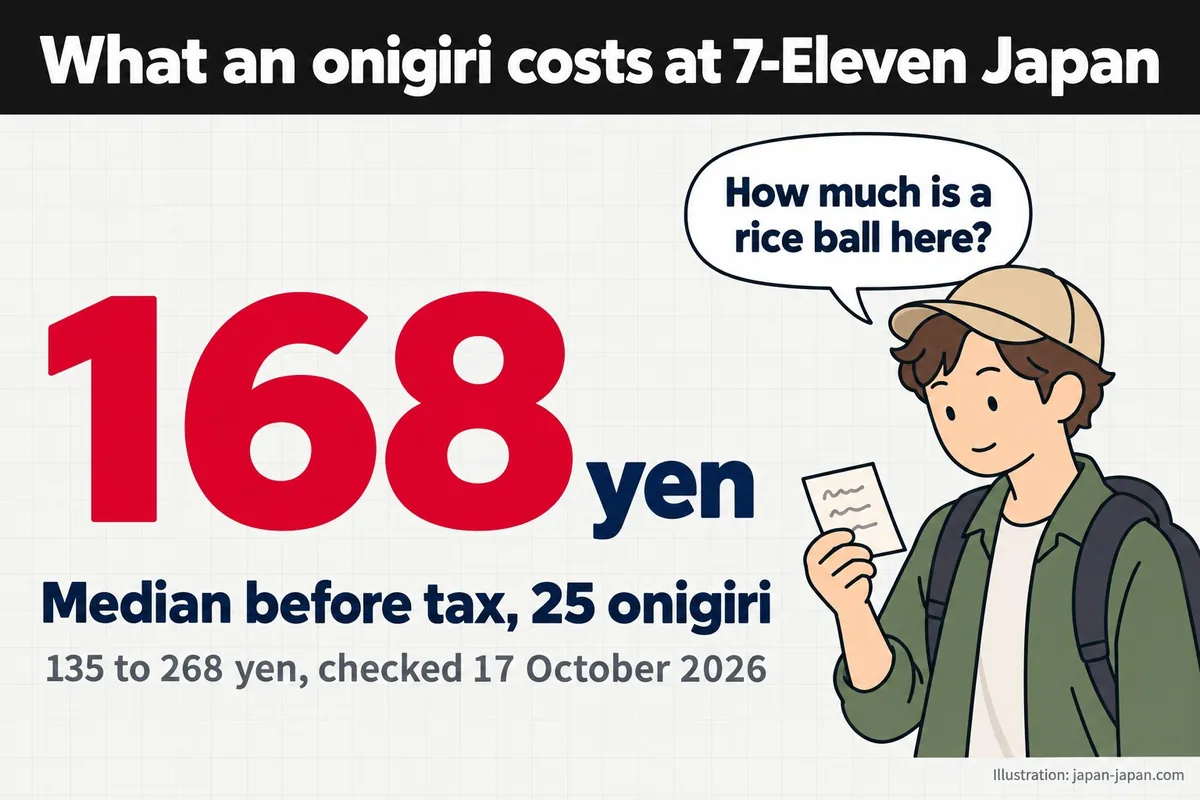
The illustration above sums up the count. The middle price of the 25 onigiri is 168 yen, with 135 yen at the bottom and 268 yen at the top. Half of the onigiri cost 168 yen or less before tax, and half cost more.
How much is onigiri at 7-Eleven Japan?
Most onigiri at 7-Eleven Japan cost between 150 and 200 yen before tax. Of the 25 onigiri we counted, 8 cost 150 yen or less and 3 cost more than 200 yen. The rest sit in the middle, from 158 yen to 198 yen.
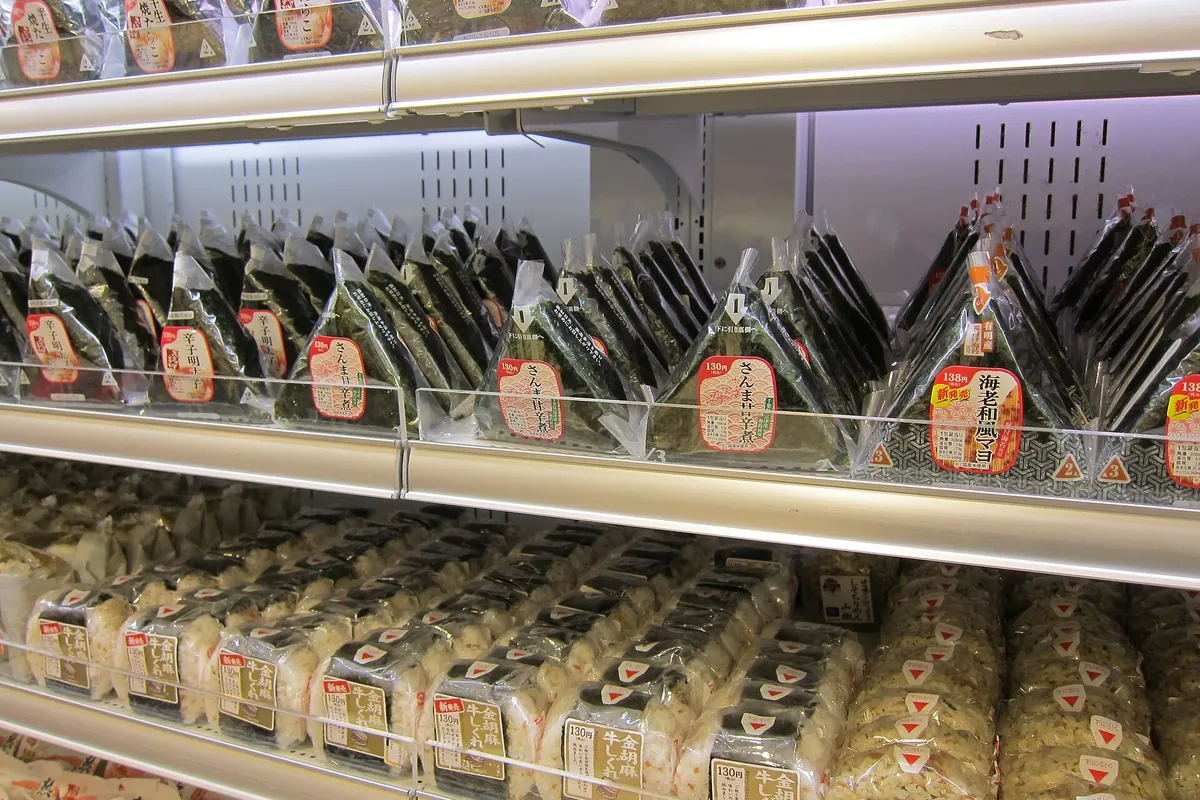
The photo shows wrapped rice balls on a convenience store shelf. The table below groups the 25 onigiri by price, with examples and the price with 8% tax in brackets.
| Price band | Onigiri | Examples |
|---|---|---|
| 150 yen or less | 8 of 25 | Plain salt 135 yen (145.80); salted kelp and edamame 138 yen (149.04); Ginshari tuna mayo 148 yen (159.84) |
| 158 to 198 yen | The rest | Tuna, cod roe and mayo 158 yen; yaki onigiri 168 yen; okaka 178 yen; hand-rolled tuna mayo 182 yen; charcoal-grilled salmon 198 yen |
| More than 200 yen | 3 of 25 | Tonkotsu with egg 208 yen (224.64); chicken and burdock 220 yen (237.60); chashu pork and mayo 268 yen (289.44) |
The cheapest onigiri belong to the Ginshari Musubi line, written 銀しゃりむすび on the label. The plain salt rice ball costs 135 yen (145.80 yen with tax). The Ginshari tuna mayonnaise, minced chicken and green onion miso versions cost 148 yen each (159.84 yen with tax). A salted kelp and edamame barley omusubi costs 138 yen (149.04 yen with tax). Wakame seaweed rice, maitake mushroom rice and fried rice omusubi also sit at 148 yen.
The middle band is where you find the hand-rolled onigiri, 手巻おにぎり (temaki onigiri). Tuna mayonnaise, pickled plum and Hokkaido kelp cost 182 yen each (196.56 yen with tax). Charcoal-grilled salmon and spicy cod roe cost 198 yen (213.84 yen with tax). The grilled soy-sauce rice ball and the egg and soy sauce dashi rice ball both cost 168 yen, and bonito flakes cost 178 yen.
Only 3 onigiri go over 200 yen. The large chashu pork and mayo omusubi costs 268 yen (289.44 yen with tax). The large chicken and burdock omusubi costs 220 yen (237.60 yen with tax). The tonkotsu rice omusubi with a soft-boiled egg costs 208 yen (224.64 yen with tax). The chashu and tonkotsu omusubi are new items, rolling out to stores from 13 October 2026, so some shops may not have them yet.
Our 7-Eleven Japan food database lists the same onigiri next to sandwiches, bento and hot snacks. Across 119 items with an official price, the median there is 204 yen before tax. The onigiri median of 168 yen sits well below that store-wide figure.
Tax at the register
The prices with tax on the official list use the reduced 8% rate for food you take away. The Seven-Eleven Japan English FAQ says the rate becomes 10% if you buy a reduced-tax item and eat it in the store’s eat-in area.
The Kanto list also explains how the till rounds. The register adds up the before-tax prices, works out the tax on the total, and drops any fraction under 1 yen.
To buy one without saying much, point at the onigiri and say これください (kore kudasai), “this one, please”.
Onigiri fillings in English and Japanese
Konbini onigiri labels at 7-Eleven are mostly in Japanese, so the filling name is the part to learn. The list sorts rice balls into three groups. Hand-rolled onigiri (手巻おにぎり) come in a numbered wrapper. Direct-wrapped omusubi (直巻おむすび) have the nori already on the rice. Everything else falls under “other omusubi” (その他のおむすび), which includes the Ginshari Musubi line and the large omusubi.
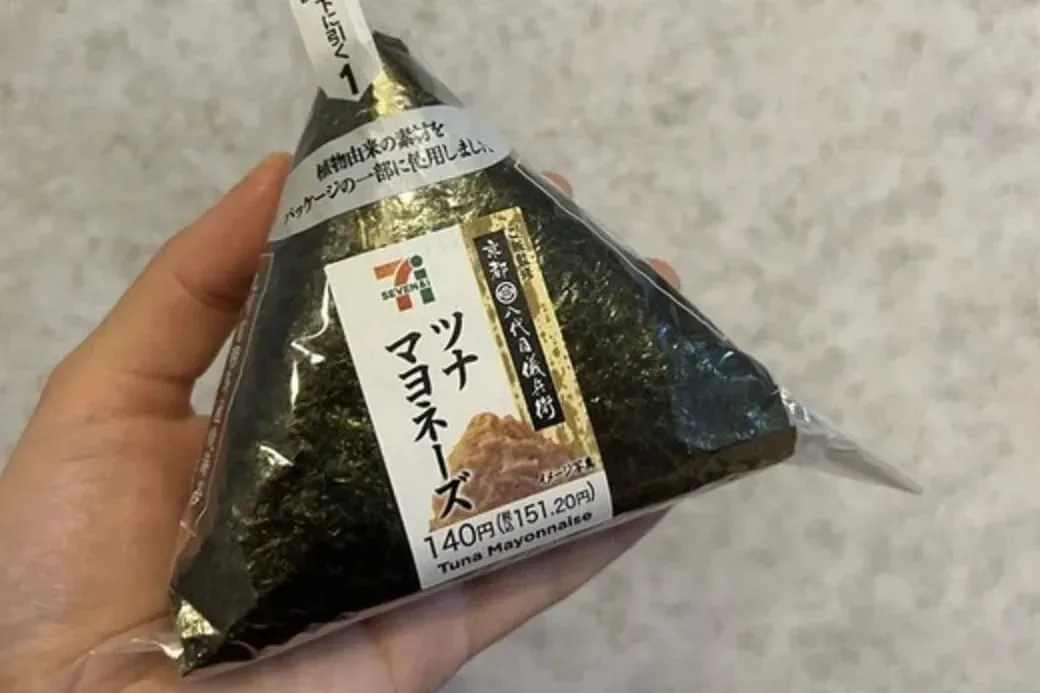
Tuna mayonnaise, in the photo above, is the filling most visitors recognise first. The table below matches each common filling with the Japanese name printed on the label and the Kanto price before tax.
| Filling | Japanese name on the label | Price before tax |
|---|---|---|
| Tuna mayonnaise (hand-rolled) | 手巻おにぎり ツナマヨネーズ | 182 yen |
| Charcoal-grilled salmon (hand-rolled) | 手巻おにぎり 炭火焼銀しゃけ | 198 yen |
| Spicy cod roe (hand-rolled) | 手巻おにぎり 具たっぷり辛子明太子 | 198 yen |
| Pickled plum (hand-rolled) | 手巻おにぎり 熟成仕立て紀州南高梅 | 182 yen |
| Hokkaido kelp (hand-rolled) | 手巻おにぎり 北海道産昆布 | 182 yen |
| Bonito flakes | 味付海苔おにぎり おかか | 178 yen |
| Chicken mixed rice | 直巻おむすび 具たっぷりとり五目 | 188 yen |
| Grilled salmon (Ginshari) | 銀しゃりむすび 焼しゃけ | 168 yen |
| Spicy cod roe (Ginshari) | 銀しゃりむすび 辛子明太子 | 168 yen |
| Red bean sticky rice | もち米もっちり 赤飯おこわおむすび | 198 yen |
Here is what each label word means and what the official list says about it.
- ツナマヨネーズ (tsuna mayonēzu): tuna mixed with mayonnaise. The hand-rolled tuna mayonnaise onigiri costs 182 yen before tax and has 258 kcal. It lists egg and wheat.
- 炭火焼銀しゃけ (sumibiyaki gin shake): charcoal-grilled salmon. The charcoal-grilled salmon onigiri costs 198 yen and has 182 kcal. It lists none of the 8 required allergens.
- 辛子明太子 (karashi mentaiko): spicy cod roe. The hand-rolled mentaiko onigiri costs 198 yen and has 173 kcal, with none of the 8 allergens listed.
- 紀州南高梅 (Kishū nankō ume): pickled plum of the Nanko variety from Kishu. The pickled plum onigiri costs 182 yen and has 166 kcal.
- 北海道産昆布 (Hokkaidō-san konbu): kelp from Hokkaido. It costs 182 yen, has 171 kcal and lists wheat.
- おかか (okaka): bonito flakes, which are dried fish. It costs 178 yen, has 174 kcal and is sold in the Kanto region only.
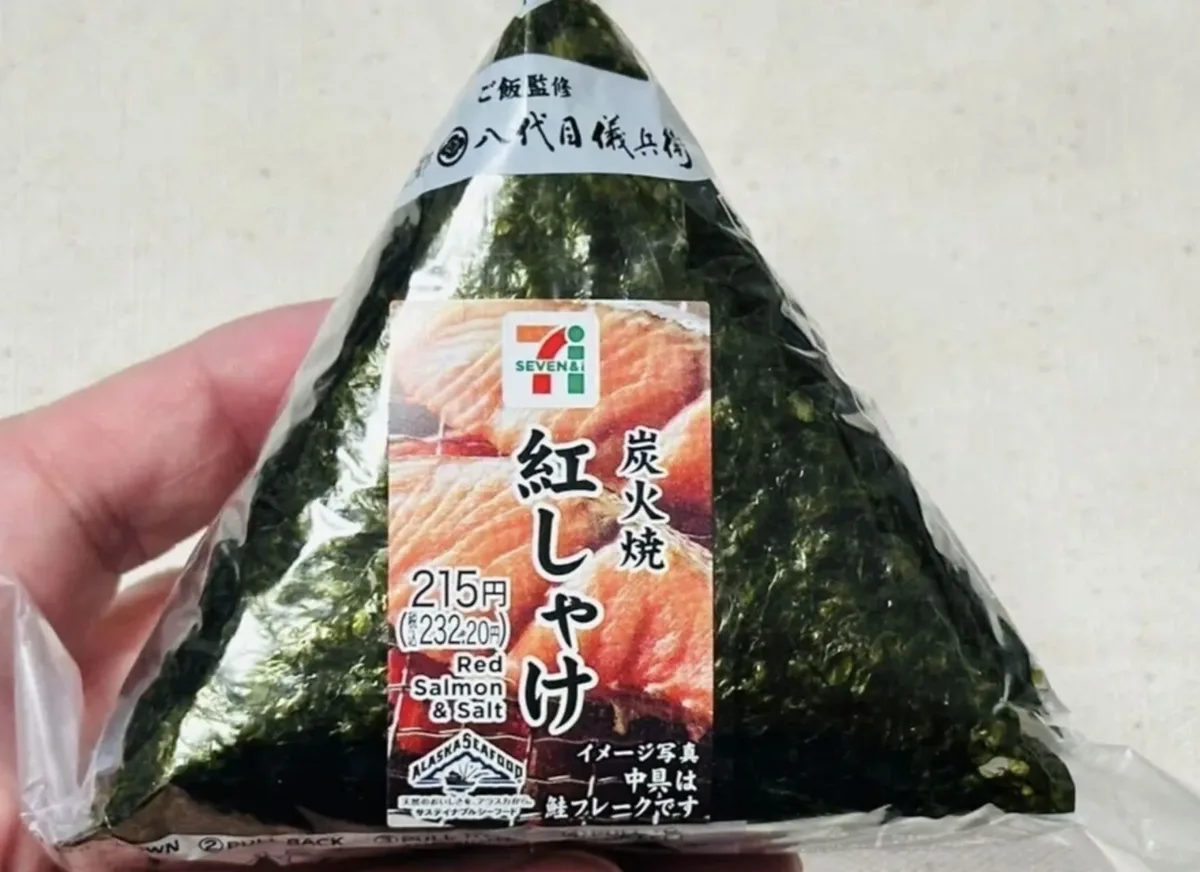
The photo shows the charcoal-grilled red salmon onigiri we bought in Tokyo. On the Kanto list, salmon shows up twice. The hand-rolled charcoal-grilled salmon costs 198 yen, while the Ginshari Musubi grilled salmon (銀しゃりむすび 焼しゃけ, yaki shake) costs 168 yen. The same split applies to spicy cod roe: 198 yen for the hand-rolled version and 168 yen for the Ginshari one.
Tuna mayonnaise is split the same way. The hand-rolled tuna mayonnaise costs 182 yen and has 258 kcal, while the Ginshari Musubi version (銀しゃりむすび ツナマヨネーズ) costs 148 yen and has 227 kcal. Both list egg and wheat. A barley omusubi with tuna, spicy cod roe and mayonnaise (直巻もち麦おむすび ツナ明太マヨネーズ) costs 158 yen.
Two more words help with the mixed-rice omusubi. 五目 (gomoku) means rice cooked with several ingredients, and the chicken version, 具たっぷりとり五目, costs 188 yen and lists wheat. 赤飯 (sekihan) is sticky rice with red beans; the sekihan omusubi costs 198 yen and lists none of the 8 allergens.
Why the label price can differ from the list
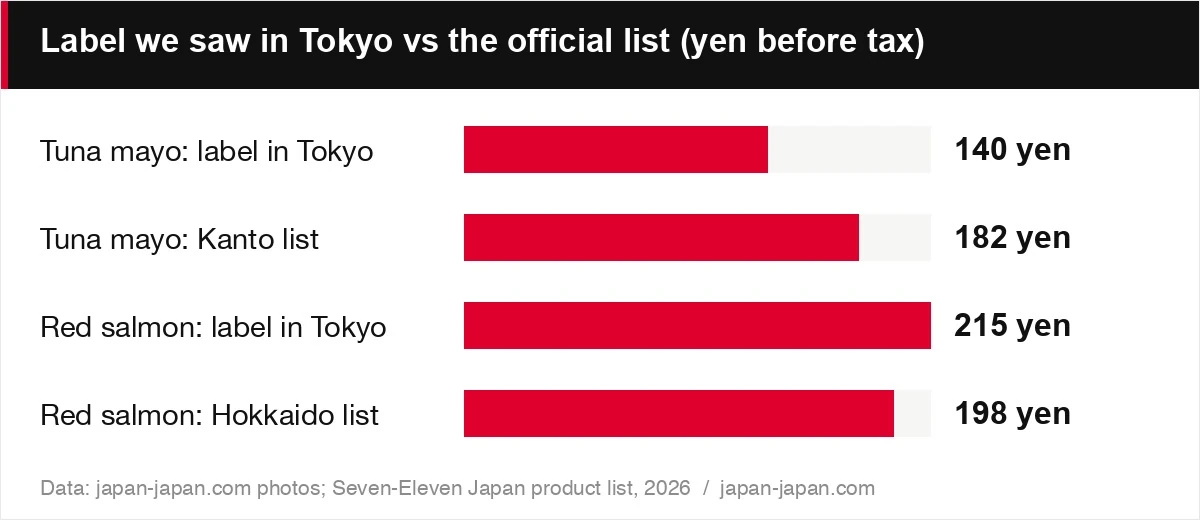
The label in a Tokyo store does not always match the official list. We bought two hand-rolled onigiri at a 7-Eleven in Tokyo before 17 October 2026 and photographed the labels. Both prices differed from the list.
| Item | Value | Note |
|---|---|---|
| Tuna mayo: label in Tokyo | 140 yen | |
| Tuna mayo: Kanto list | 182 yen | |
| Red salmon: label in Tokyo | 215 yen | |
| Red salmon: Hokkaido list | 198 yen | Hokkaido only |
The chart compares the two labels with the official prices. The tuna mayonnaise label said 140 yen before tax (151.20 yen with tax). The Seven-Eleven Japan tuna mayonnaise hand-rolled onigiri page gives 182 yen before tax for the Kanto area. The label we saw was 42 yen lower.
The charcoal-grilled red salmon onigiri went the other way. The label on the one we bought in Tokyo said 215 yen before tax (232.20 yen with tax). The Seven-Eleven Japan charcoal-grilled red salmon onigiri page lists it only for the Hokkaido area, at 198 yen before tax. The label we saw was 17 yen more.
We do not know why the prices differ. The package may be a different version from the one on the list. Seven-Eleven Japan’s own note on the product list says products, sizes, prices and release dates can differ by area. It also says a listed item may not be stocked in every store, and that an item can sell out and end early.
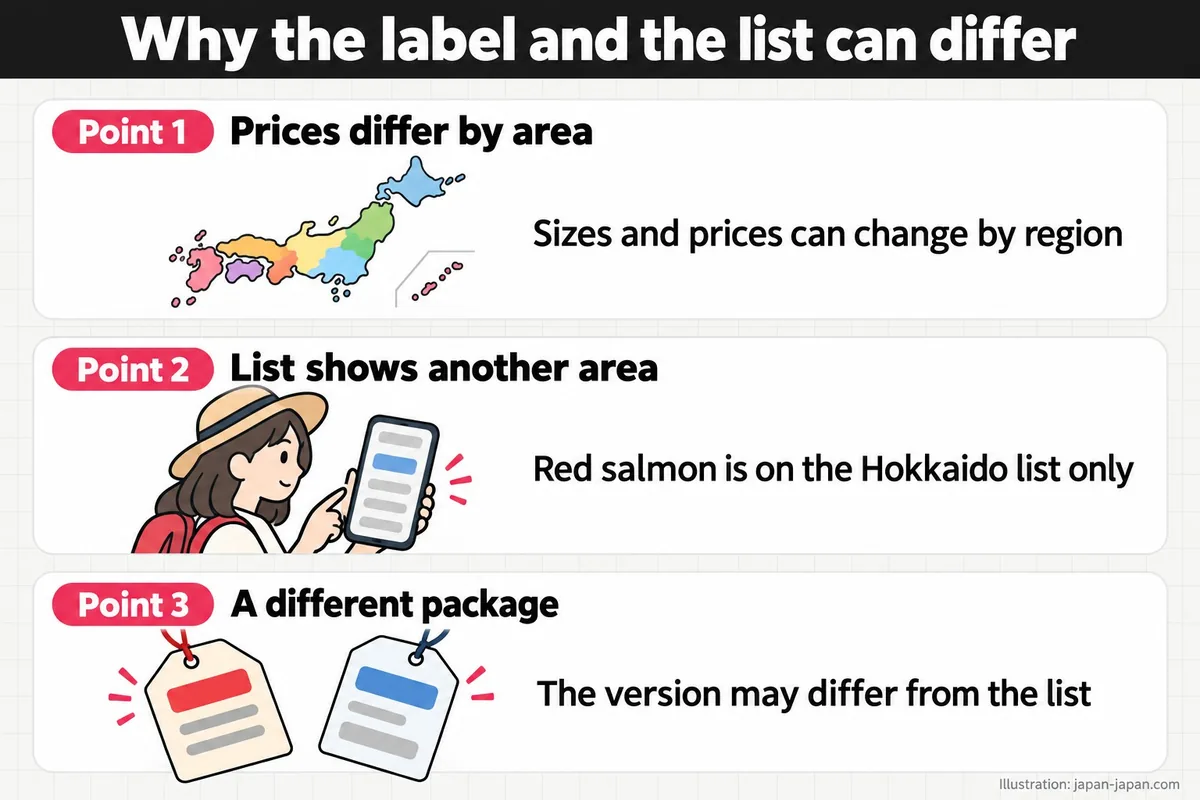
The illustration lists the three reasons a label and the list can disagree. In each case the answer is the same: read the price label on the shelf in front of you. That number, plus 8% tax for take-away, is what you pay at the register.
Allergens, pork and halal
Each onigiri page on the official list shows the 8 required allergens, called 特定原材料8品目 (tokutei genzairyō hachi hinmoku). It also shows calories and price. It does not show any other ingredient.
Of the 25 onigiri we counted, 9 list none of the 8 required allergens. Wheat appears on 16 and egg on 8. The page tells you which allergens are present, but not which ingredient brings them.
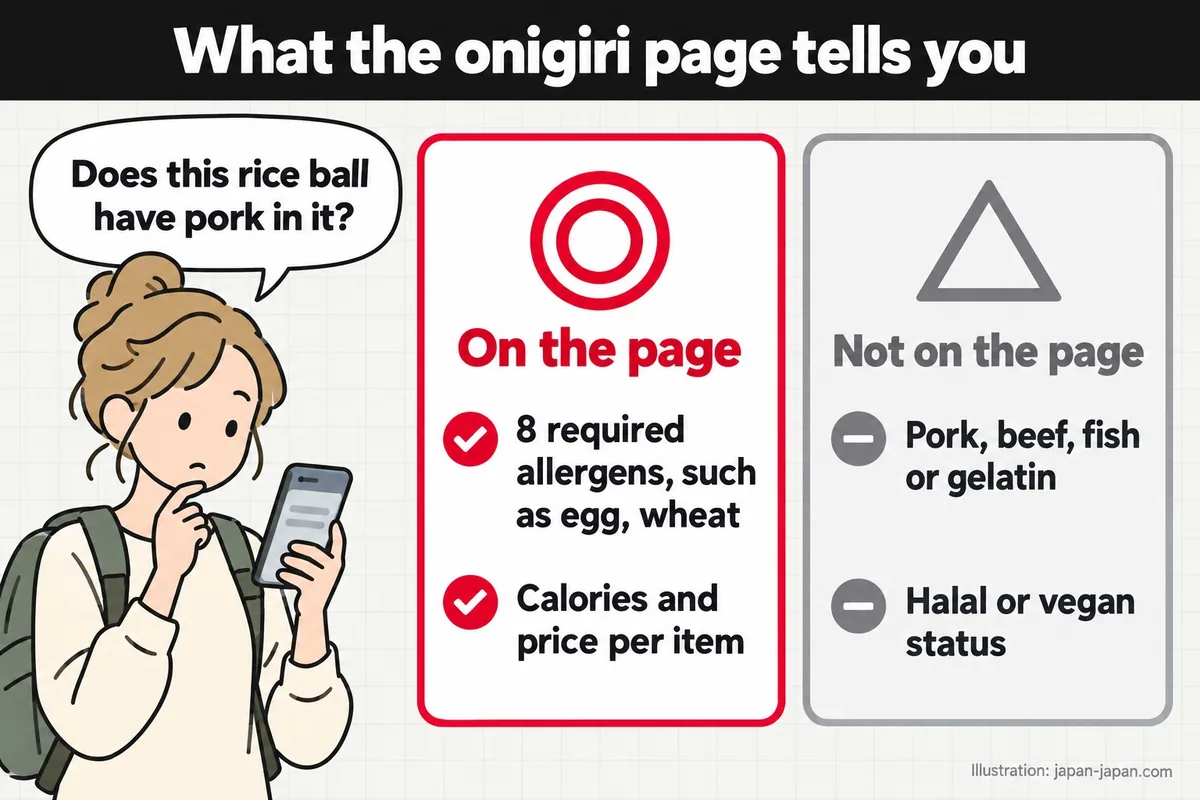
The split in the illustration matters if you avoid pork, other meat or animal products. The onigiri pages do not say whether an onigiri contains pork, beef, fish or gelatin. An allergen list is not a halal or vegan check, because those ingredients are not among the 8.
Some names tell you directly. チャーシュー (chāshū) is roast pork, so the chashu mayo omusubi contains pork. 豚骨 (tonkotsu) means pork bone, and it is in the name of the tonkotsu rice omusubi. 鶏 (tori) and とり mean chicken, as in the chicken and burdock or minced chicken rice balls. おかか is fish. For the rest, read the ingredient list on the wrapper, marked 原材料名 (genzairyōmei, “ingredients”), or ask the staff to look at it with you.
Other sections of the store give more detail. On the allergen pages for the hot counter, oden, steamed buns and Seven Cafe, 22 of 108 items list pork. 14 list beef and 6 list gelatin. Our guide to vegetarian, vegan and halal food in Japan explains where fish stock hides in Japanese food and how to ask about it.
These counts reflect the official pages checked on 17 October 2026. Recipes change, so the wrapper in your hand is the final word.
How to open a hand-rolled onigiri
A hand-rolled onigiri has a numbered plastic wrapper. On the ones we bought in Tokyo, the wrapper has a tab at the top marked 1. It says PULL DOWN in English and 下に引く (shita ni hiku, “pull down”) in Japanese.
Start with that tab and pull it down. After that, keep going in the order of the numbers printed on the wrapper. Take one numbered step at a time instead of tearing the wrapper open.
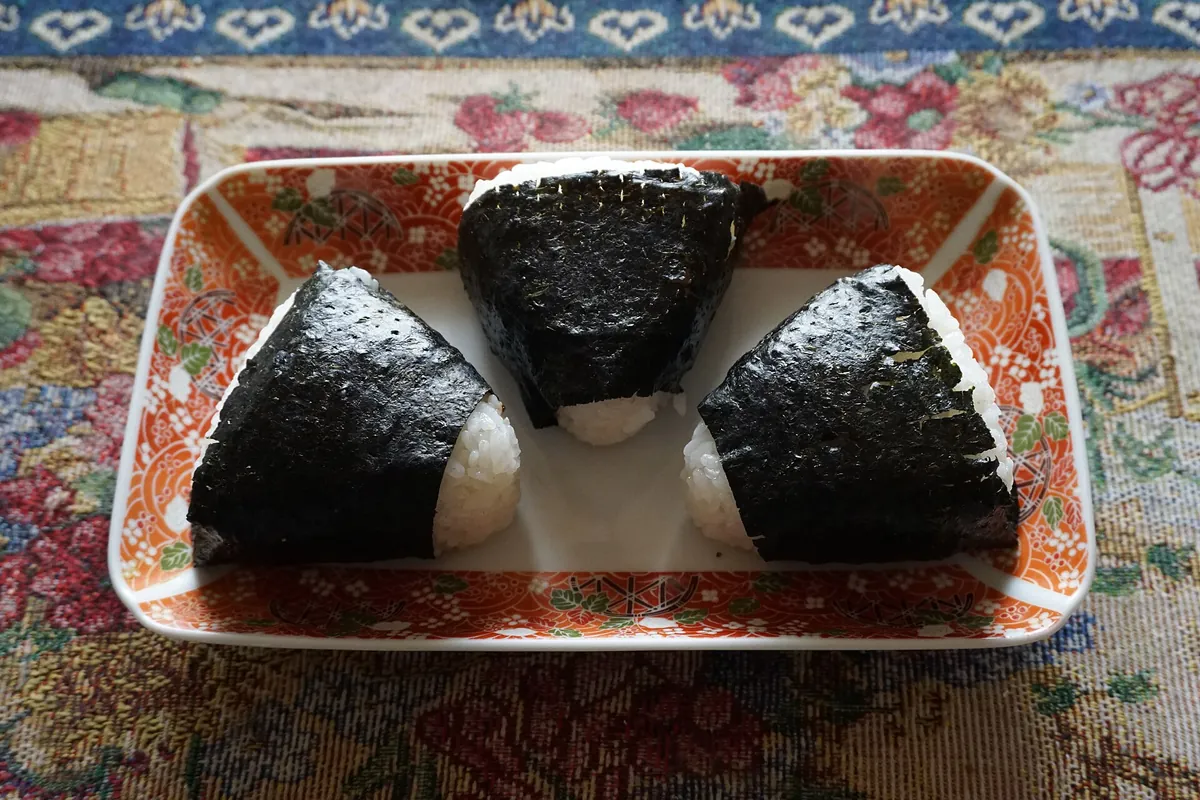
The photo shows the result you want: a triangle of rice with crisp nori around it. On the Kanto list, the hand-rolled onigiri cost 182 to 198 yen before tax.
Direct-wrapped omusubi (直巻おむすび) have the nori already on the rice. Most 7-Eleven stores have a microwave, and staff will heat food if you ask. The FAQ adds that some items cannot be heated in the store, so ask the cashier before you hand an onigiri over.
Planning to eat on a flight? An onigiri counts as solid food. Our page on food and packed meals on the plane explains what goes through security and what falls under the liquid limit.
Konbini onigiri FAQ
How much is an onigiri at 7-Eleven in Japan?
Across the 25 onigiri on Seven-Eleven Japan’s Kanto list, the median price is 168 yen before tax. That is 181.44 yen with the 8% take-away tax. Hand-rolled fillings such as tuna mayonnaise cost 182 yen, and salmon costs 198 yen.
What is the cheapest onigiri at 7-Eleven Japan?
The plain salt rice ball (銀しゃりむすび 塩むすび) is the cheapest, at 135 yen before tax or 145.80 yen with tax. Next comes a salted kelp and edamame barley omusubi at 138 yen. The most expensive is the large chashu pork and mayo omusubi at 268 yen.
Do 7-Eleven onigiri contain pork?
Some do, and the official onigiri pages will not tell you which. They show only the 8 required allergens, and pork is not one of them. Names with チャーシュー or 豚骨 contain pork. For any other onigiri, read 原材料名 on the wrapper or ask staff.
How do you open a 7-Eleven onigiri?
Pull the tab marked 1 at the top of a hand-rolled onigiri. It says PULL DOWN and 下に引く. Then follow the numbers printed on the wrapper in order.
Looking for a 7-Eleven near your hotel? Our page on convenience stores by prefecture shows which chain has the most stores in each of the 47 prefectures.
For more to eat beyond rice balls, our guide to Japanese convenience store food picks 9 konbini items worth trying.
About the author


.jpg)
