Japan Dual Pricing 2026: Who Pays 2,500 Yen at Himeji
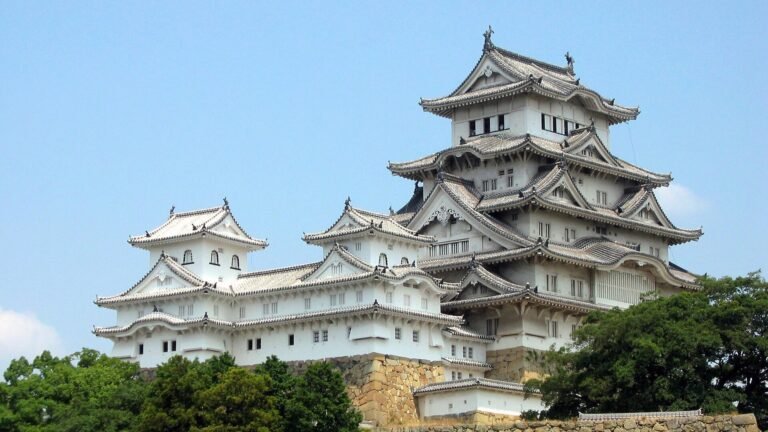
So the higher price is simply the normal price. An adult from Tokyo pays the same 2,500 yen at Himeji as an adult from Toronto.
Three kinds of dual pricing in Japan
Dual pricing in Japan takes three forms. Each one draws the line in a different place.
- City or prefecture residents pay less. This is the most common kind. Himeji Castle, two Kyoto sites, Kenrokuen Garden, the Mt. Moiwa Ropeway and Asahiyama Zoo all work this way. Japanese visitors from other cities pay the higher price too.
- Residents of Japan pay less than overseas visitors. Junglia Okinawa already does this. The national museums have been told to do it within five years.
- Plans that are not decided. Kyoto City Bus has a plan for cheaper resident fares. It still needs city and national approval.
The chart below sorts visitors by where they live and shows which price each person pays.
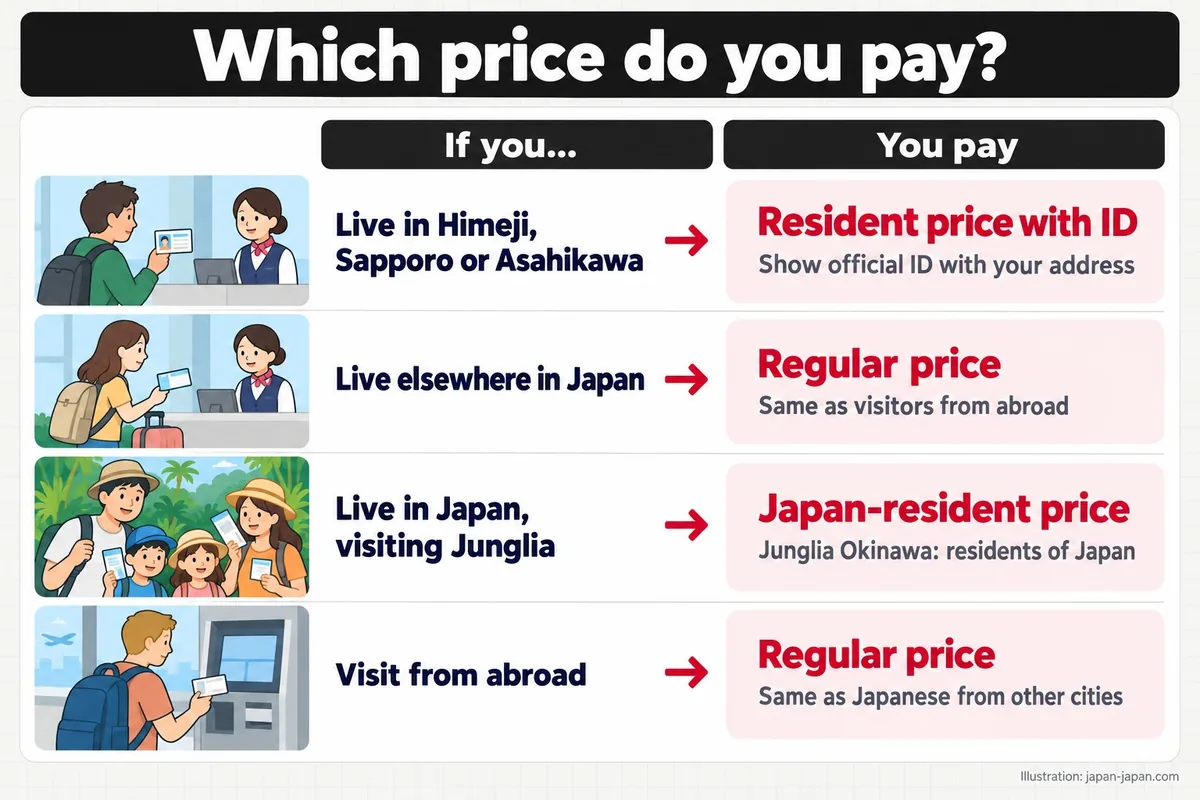
To get a resident price, you show official ID with your address at the counter. Himeji Castle lists a My Number card, a driver’s licence, or another official photo ID with your name and address, such as a residence card. A foreign passport shows no address in Himeji, so it does not earn the local price. Foreign residents who live in Himeji do get it, because the rule is about the address on the card.
The table compares the regular adult price with the lower price at each place we checked. Read the last column first.
| Place | Regular price | Lower price | Who gets the lower price |
|---|---|---|---|
| Himeji Castle | 2,500 yen | 1,000 yen | Himeji City residents (18+) |
| KYOCERA Museum, Collection Room | 730 yen | 520 yen | Kyoto City residents |
| Nijo-jo Castle with Ninomaru-goten | 1,300 yen | Free | Kyoto City residents aged 70+ |
| Kenrokuen Garden | 320 yen | Free on Sat and Sun | Ishikawa Prefecture residents |
| Mt. Moiwa Ropeway, round trip | 2,100 yen | 1,100 yen | Sapporo City residents |
| Asahiyama Zoo | 1,000 yen | 700 yen | Asahikawa City residents |
| Junglia Okinawa 1 Day Ticket | 8,800 yen | 6,930 yen | Residents of Japan |
Himeji Castle: 2,500 yen from 1 March 2026
Himeji Castle changed its fees on 1 March 2026. Until then, every adult aged 18 and over paid 1,000 yen. Now the general adult ticket costs 2,500 yen, and Himeji City residents aged 18 and over still pay 1,000 yen. The Himeji Castle official site: fees from 1 March sets out the old and new prices side by side.
The before-and-after chart shows the same change in one picture.
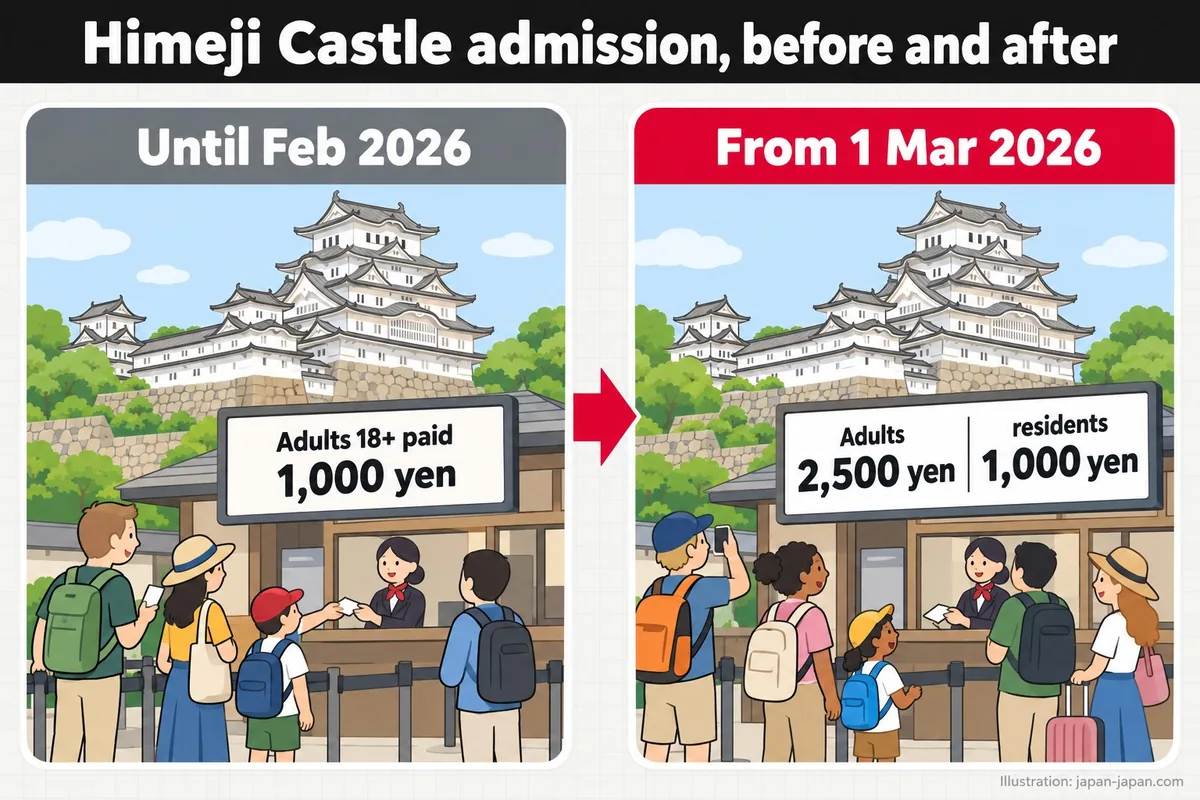
Children now get in free. Everyone under 18 enters at no charge, wherever they live. If you have just turned 18, you stay free until the first 31 March after your birthday. Bring a student ID or another document that shows your age.
The word for resident on the price list is 市民 (shimin, city resident). The castle defines it as a person with an address in Himeji City. The price for everyone else is 一般 (ippan, general). Look for 一般 on the ticket machine. That is your price.
Other tickets changed at the same time. The combined ticket for the castle and Kokoen garden costs 2,600 yen. An annual pass costs 5,000 yen and gives unlimited visits for one year from the day you buy it. Groups of 30 or more pay 2,000 yen per adult at the general rate. We checked these prices on the Himeji Castle official site: visitor information on 11 October 2026.
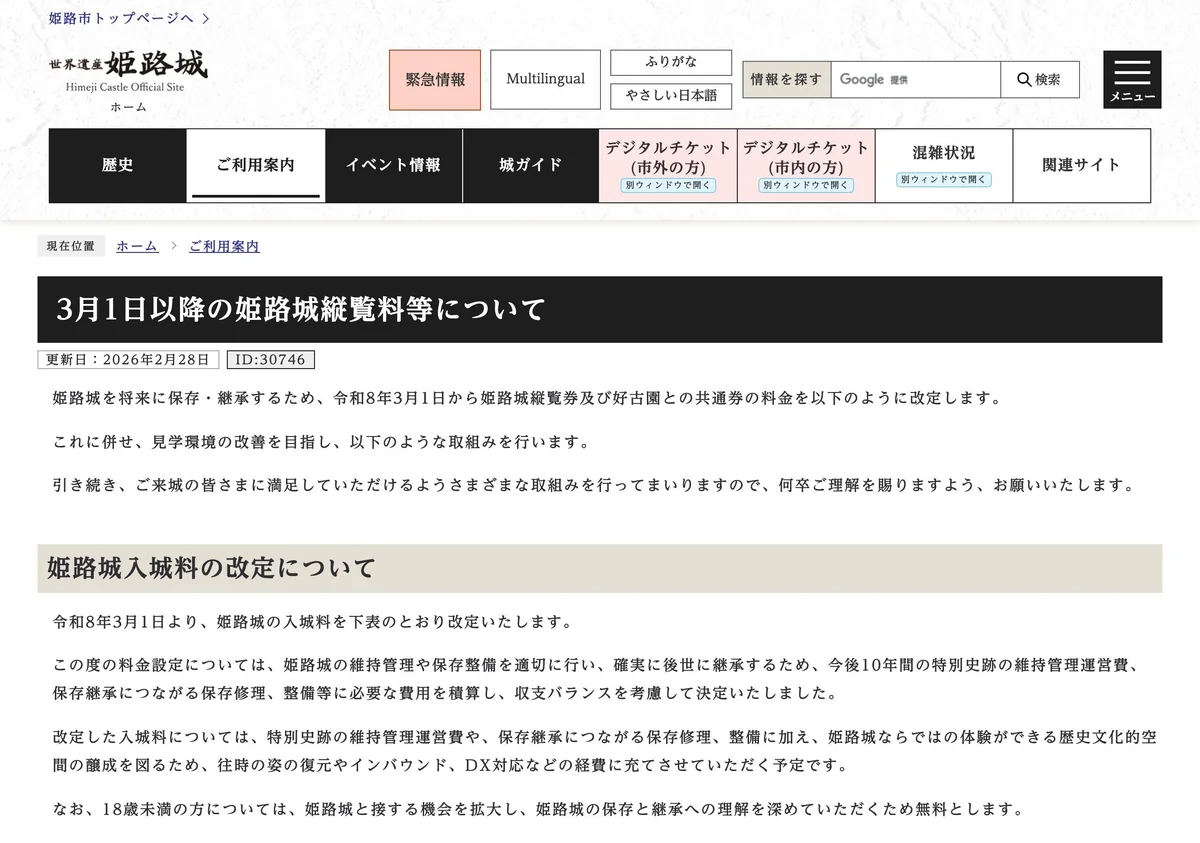
The city says the fee pays for upkeep and repairs over the next 10 years. The screenshot below is that fee notice on the city site, in Japanese. It shows the old 1,000 yen fee and the new 2,500 yen and 1,000 yen fees.
How to buy Himeji Castle tickets
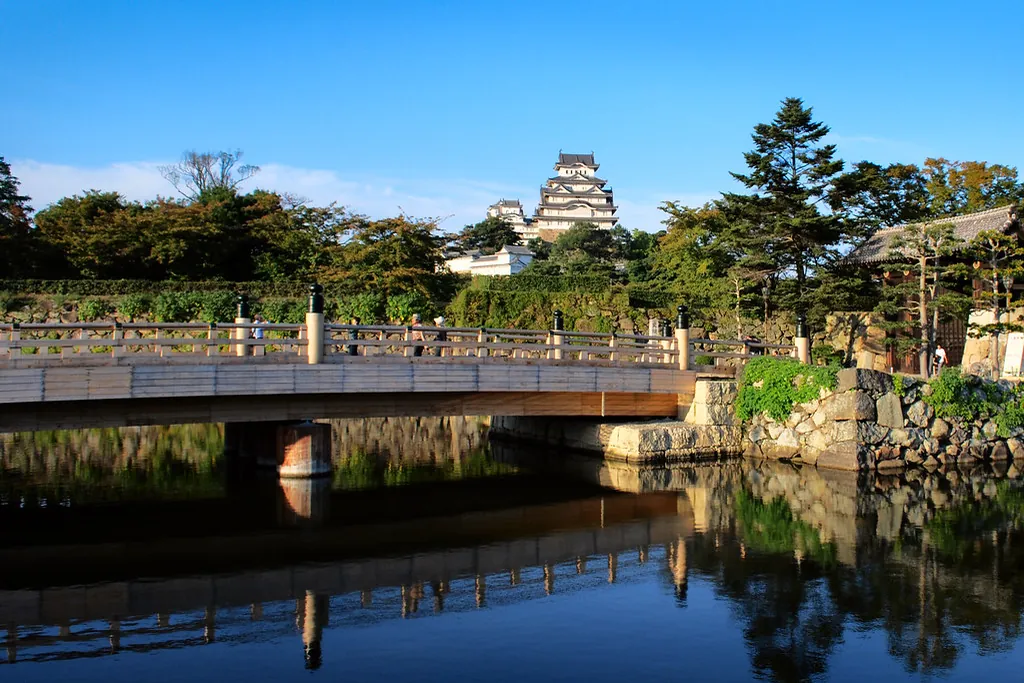
Buy a timed digital ticket before you go. There are two sales sites: one for people who live outside Himeji, and one for residents. Pick the one for people outside the city. Its ticket comes with a voucher for a 1,000 yen coupon to spend in the castle town.
The Himeji Castle official site: digital tickets explains the limits. Each 30-minute arrival slot between 9 a.m. and 3:30 p.m. has 500 tickets. One booking covers up to 10 people. The ticket is valid only on the day you booked. To change the time or the number of people, cancel and buy again.
The castle still sells same-day tickets. Staffed windows serve residents and groups, and ticket machines sell general and combined tickets. At some times, though, no same-day tickets go on sale, because the digital slots have sold. That is the main reason to book ahead.
The checklist below covers the four things to sort out before your visit.
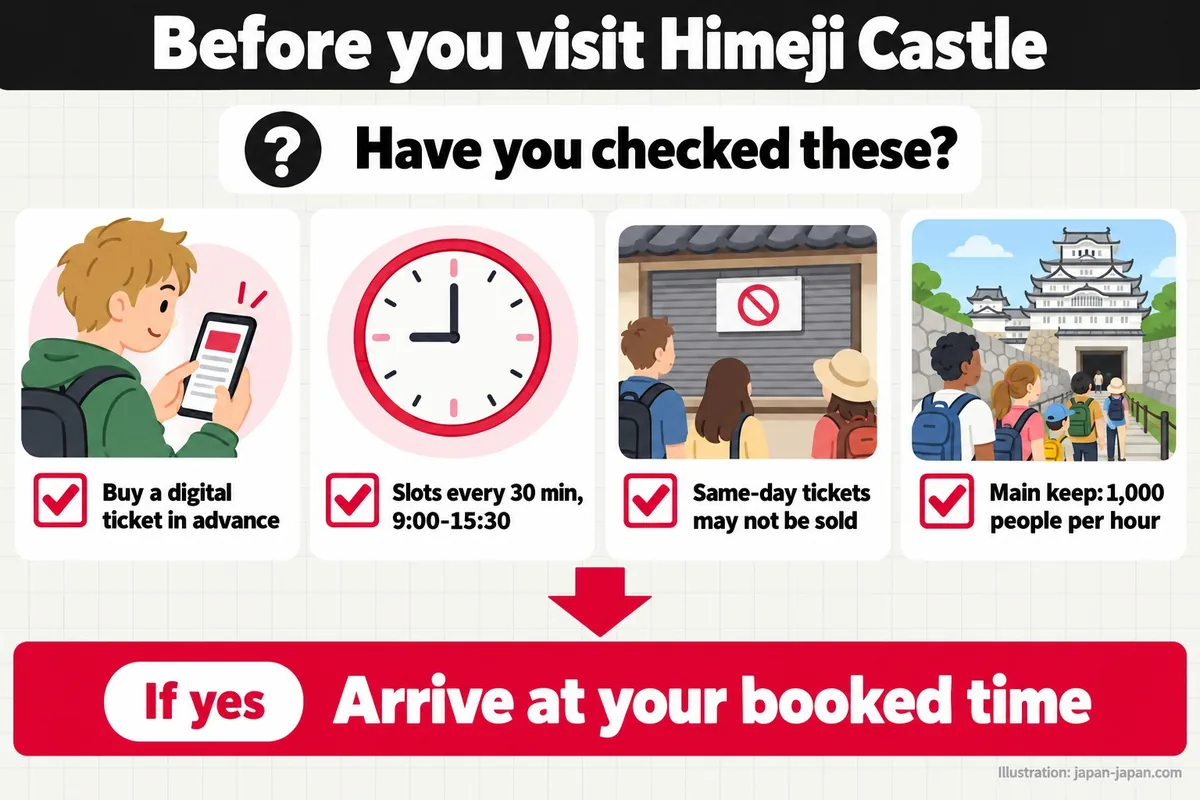
A digital ticket gets you through the gate faster, but it does not give you priority inside. The main keep admits up to 1,000 people per hour. On busy days you wait at the keep entrance. A visit usually takes 90 to 120 minutes, so allow more if you add Kokoen garden.
The castle opens from 9 a.m. to 5 p.m., with last entry at 4 p.m. It closes on 29 and 30 December. You can pay with cash, credit cards, transit IC cards such as Suica and ICOCA, and QR payments such as PayPay and Alipay+.
| Place | Himeji Castle |
|---|---|
| Price | General (18+) 2,500 yen; Himeji City residents (18+) 1,000 yen; under 18 free |
| Hours | 9:00-17:00, last entry 16:00; closed 29 and 30 December |
| Access | Shinki bus from Himeji Station north exit to Otemon-mae, then 5 min walk; or 20 min walk from JR Himeji Station |
| Official site | Himeji Castle official site: visitor information |
From Himeji Station, take a Shinki bus from the north exit to the Otemon-mae stop. The gate is about 5 minutes on foot from there. You can also walk from JR Himeji or Sanyo Himeji Station in about 20 minutes. Our pages on getting from Osaka to Himeji and from Kyoto to Himeji compare the trains. If you land first, the Kansai Airport to Himeji limousine bus takes 2 hr 20 min and costs 3,700 yen.
Since 1 March 2026, pets are not allowed in the paid area, though guide dogs are. Free volunteer guides wait past the gate holding a Free Guide sign.
Resident prices in Kyoto, Kanazawa and Hokkaido
Himeji is the best-known case. Several other places already charge their own residents less. In every case below, a visitor from abroad pays the regular price, and so does a visitor from Osaka or Tokyo.
Kyoto: the KYOCERA Museum and Nijo-jo Castle
The Kyoto City KYOCERA Museum of Art visitor information page lists two prices for the Collection Room. Adults living outside Kyoto City pay 730 yen, and city residents pay 520 yen. School students from outside the city pay 300 yen, while Kyoto students enter free. Special exhibitions have their own prices.
Nijo-jo Castle still charges one adult price for everyone. The Nijo-jo Castle official site: admission fees page lists 800 yen for admission alone, or 1,300 yen with the Ninomaru-goten Palace. Kyoto City residents aged 70 and over enter free. Only Kyoto residents can buy the 2,600 yen annual passport. Anyone can get one discount: show a Kyoto subway or subway-and-bus one-day pass on the day, and admission drops from 800 yen to 700 yen. See our page on the Kyoto Subway and Bus 1-Day Pass for what the pass covers, and our Kyoto month-by-month guide for when to go.
Kanazawa: Kenrokuen Garden
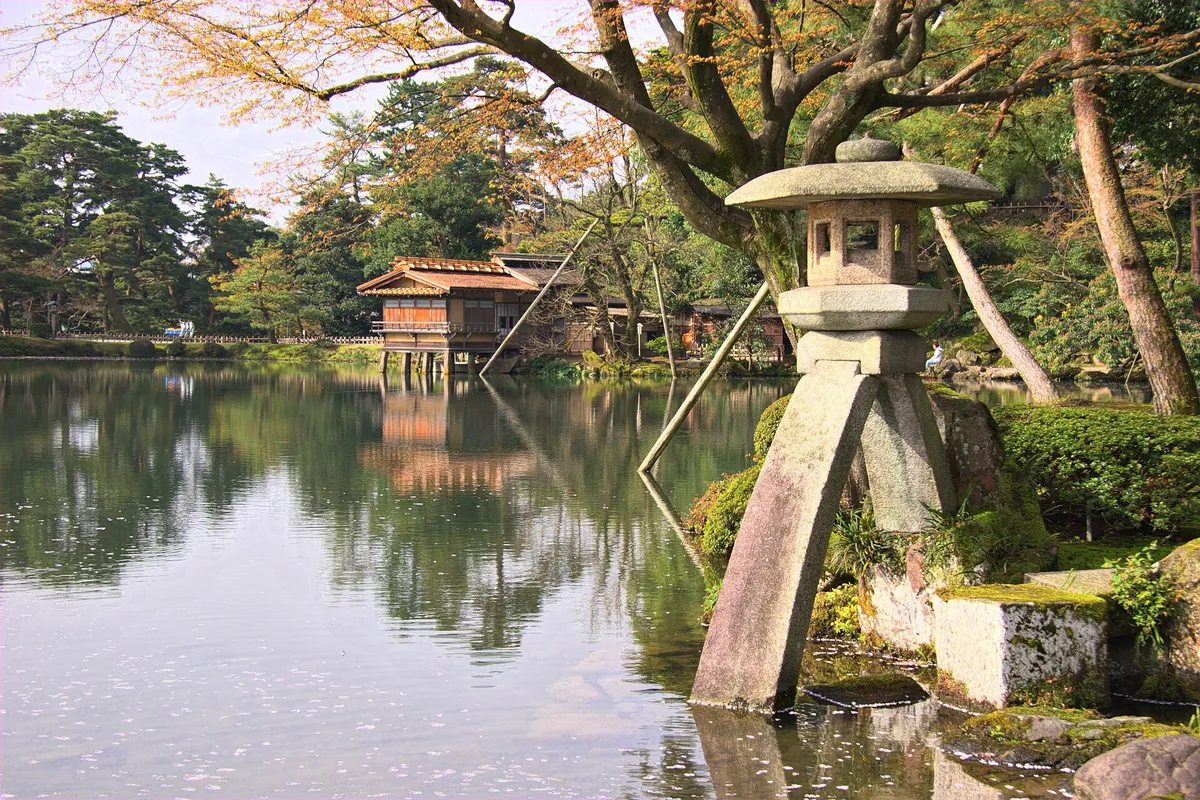
Kenrokuen Garden charges 320 yen for adults aged 18 and over and 100 yen for children aged 6 to 17. On every Saturday and Sunday, Ishikawa Prefecture residents enter free. The Ishikawa Prefecture Kenrokuen Garden visitor information page calls this the prefectural residents’ day. Residents show a My Number card or a driver’s licence at the gate.
Two free entries apply to anyone. Visitors aged 65 and over enter free with official ID that shows their age. Everyone also enters free on set days, such as Culture Day on 3 November. Plan the trip with our Kanazawa month-by-month guide and our page on travelling from Tokyo to Kanazawa.
Hokkaido: Mt. Moiwa Ropeway and Asahiyama Zoo
The Mt. Moiwa Ropeway in Sapporo charges 2,100 yen for an adult round trip on the ropeway and mini cable car. Sapporo City residents pay 1,100 yen. Children pay 1,050 yen, or 550 yen if they live in Sapporo. The Sapporo Mt. Moiwa Ropeway hours and fares page says staff check each resident’s address one person at a time. One-way tickets have no resident price.
The ropeway closes for inspection from 29 March to 28 April 2027. Our Sapporo month-by-month guide covers the seasons, and our New Chitose Airport page shows the 33-minute train into Sapporo for 1,230 yen.
Asahiyama Zoo in Asahikawa charges adults 1,000 yen. Asahikawa City residents pay 700 yen, and children of junior high age and younger enter free. The Asahiyama Zoo (Asahikawa City) admission fees page says the resident rate is only given at the zoo’s own ticket windows. Web and convenience-store tickets come at the 1,000 yen rate only. From the airport, the Asahikawa Airport to Asahikawa Station bus takes about 35 minutes for 750 yen.
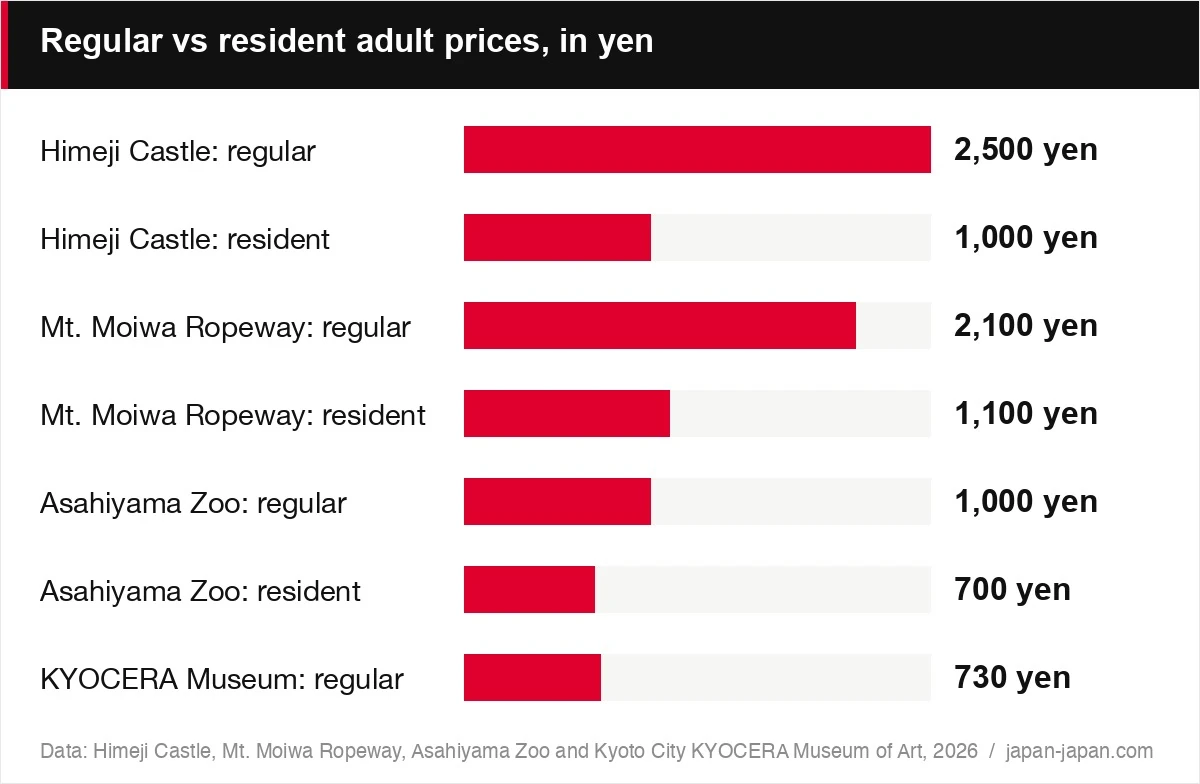
The bar chart sets the regular and resident adult prices side by side for four of these places.
| Item | Value | Note |
|---|---|---|
| Himeji Castle: regular | 2500 yen | |
| Himeji Castle: resident | 1000 yen | |
| Mt. Moiwa Ropeway: regular | 2100 yen | Round trip |
| Mt. Moiwa Ropeway: resident | 1100 yen | Round trip |
| Asahiyama Zoo: regular | 1000 yen | |
| Asahiyama Zoo: resident | 700 yen | |
| KYOCERA Museum: regular | 730 yen | Collection Room |
| KYOCERA Museum: resident | 520 yen | Collection Room |
The widest gap is at Himeji Castle, where residents save 1,500 yen. Himeji has the largest gap of any place in this guide that splits by city.
Residents of Japan vs overseas visitors
This second kind of dual pricing does split by country, but by country of residence. If you live in Japan, for work or study, you count as a resident of Japan. If you live abroad, you pay the higher price, whatever your nationality.
Junglia Okinawa
Junglia Okinawa shows two price lists. The Junglia Okinawa ticket guide (English) lists the 1 Day Ticket at 8,800 yen for adults aged 12 and over, tax included. Children aged 4 to 11 pay 5,940 yen. The page calls these standard rates. The Junglia Okinawa ticket guide (Japanese) lists 6,930 yen for adults and 4,950 yen for children. A note under the price reads 国内在住者向け料金です (kokunai zaijūsha-muke ryōkin desu, this is the price for residents of Japan).
For an adult, the difference is 1,870 yen. Toddlers enter free on both pages. You can change your visit date for free after you buy. Before you book, check our Okinawa month-by-month guide for the weather. Our Naha Airport page covers the monorail from the terminal, which reaches Kencho-mae in 13 minutes for 290 yen.
The national museums
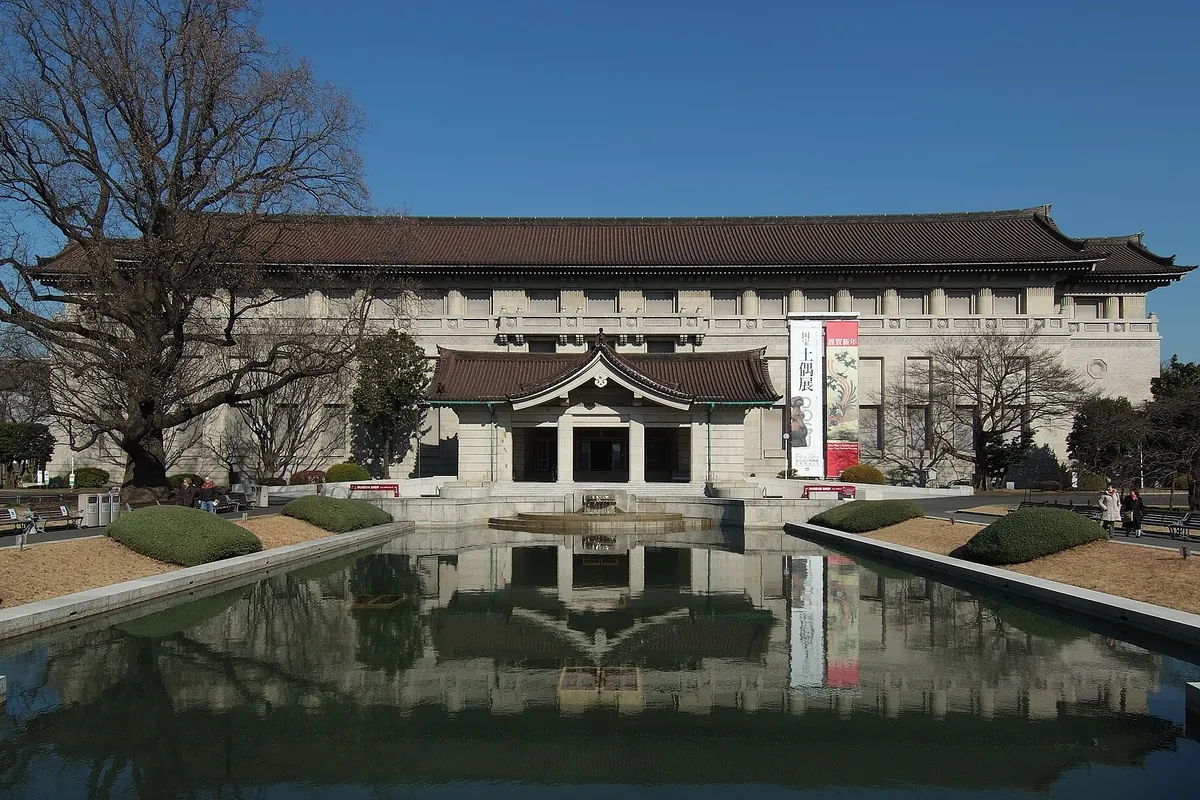
Japan’s education ministry set new five-year goals for the national museums on 27 February 2026. The goal period runs from fiscal 2026 to fiscal 2030, which means April 2026 to March 2031. The MEXT medium-term goals for the National Institutes for Cultural Heritage cover the Tokyo, Kyoto, Nara and Kyushu National Museums. They say each museum will revise its admission fee and bring in dual pricing during the period.
The goals define dual pricing as one price for residents of Japan and another for inbound visitors who live abroad. No amount or start date has been set. The Agency for Cultural Affairs national museum medium-term goals Q&A gives the reasons: rising costs for exhibitions, and multilingual services for visitors from overseas. It adds that free entry for children will continue.
For now, the Tokyo National Museum admission and hours page lists one price for the collection exhibitions. Adults pay 1,000 yen and university students pay 500 yen. Visitors under 18 or over 70 enter free with proof of age. Tickets bought online stay valid for two months. Add it to a Tokyo trip with our Tokyo month-by-month guide.
Planned changes: Asahiyama Zoo and Kyoto City Bus
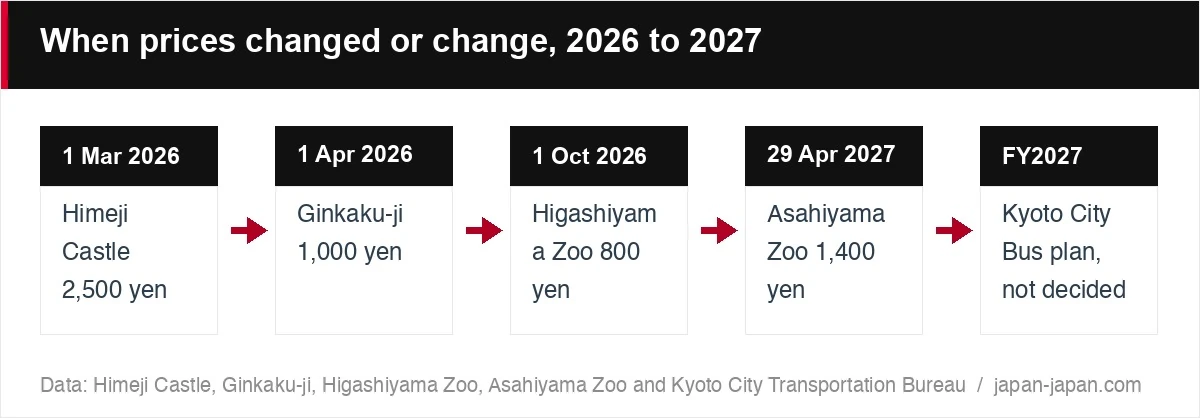
The timeline puts every price change in this guide in order, from March 2026 to fiscal 2027.
Asahiyama Zoo from 29 April 2027
The Asahiyama Zoo (Asahikawa City) fee revision notice sets the new prices from the summer opening on 29 April 2027. Adult admission rises from 1,000 yen to 1,400 yen. The Asahikawa resident rate rises from 700 yen to 800 yen. Children of junior high age and younger stay free. The zoo annual pass rises to 1,600 yen.
The gap between the two adult prices grows from 300 yen to 600 yen. For a summer 2027 trip, budget 1,400 yen per adult.
Kyoto City Bus resident fares (a plan, not decided)
Kyoto City’s Transportation Bureau reported its plan to a city assembly committee in March 2026. The Kyoto City Transportation Bureau resident-priority bus fare outline (PDF) calls it the first pilot project of its kind in Japan. Under the plan, the new fare in the flat-fare zone would be about 350 to 400 yen. Registered Kyoto residents would pay 200 yen. The plan aims to start in the flat-fare zone during fiscal 2027.
Residents would link a My Number card to a transit IC card or another payment method. Cash and coupon tickets would not get the resident fare, because drivers would have to check each rider. The city is also looking at credit card touch payments.
None of this is final. The fares depend on an application to the national government and its approval. A fare bill for the city assembly is also still to come. How the one-day subway and bus pass would change is still under review.
Price rises for all visitors: Ginkaku-ji, Nagoya, Mt Fuji
Some of the 2026 rises have nothing to do with where you live. These places charge the same new price to everyone.
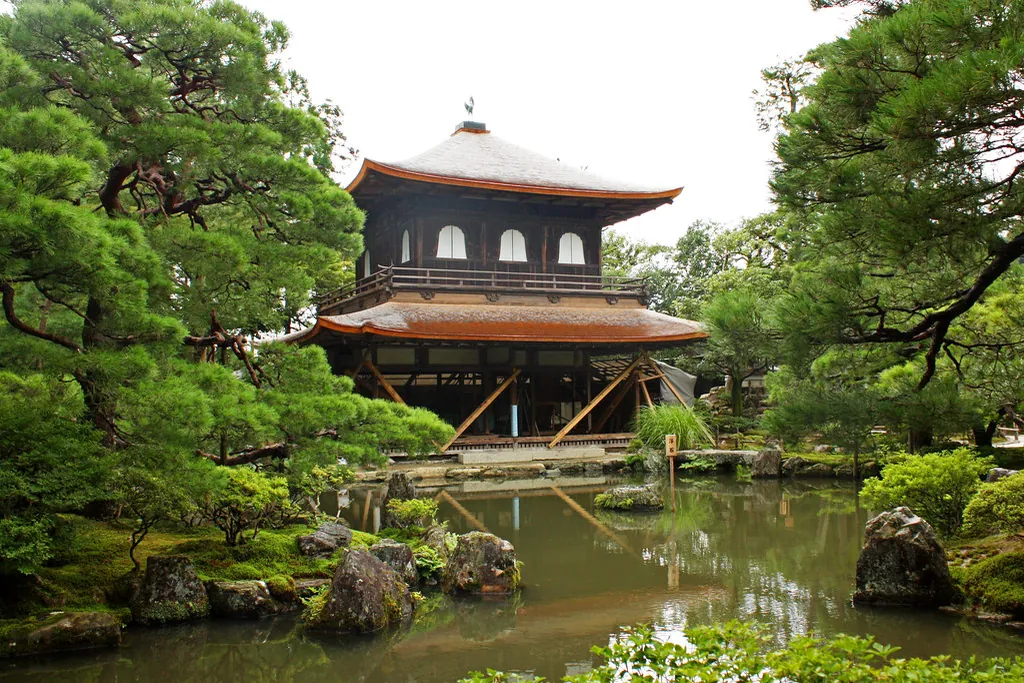
Ginkaku-ji, the Silver Pavilion in Kyoto, doubled its adult fee on 1 April 2026. The Ginkaku-ji official site admission revision notice lists 1,000 yen for adults of high school age and over, up from 500 yen. Elementary and junior high school students now pay 500 yen, up from 300 yen. Children below school age stay free.
Higashiyama Zoo and Botanical Gardens in Nagoya raised its adult ticket from 500 yen to 800 yen on 1 October 2026. The Higashiyama Zoo and Botanical Gardens fee revision notice (PDF) covers visitors of high school age and over. Junior high students and younger stay free. Nagoya residents aged 65 and over have their own line, which rose from 100 yen to 200 yen. Our Nagoya month-by-month guide covers the rest of the city.
Mt Fuji climbing fees
Both sides of Mt Fuji charged 4,000 yen per person per climb in 2026. On the Shizuoka side, the Shizuoka Prefecture Mt. Fuji climbing restrictions page covers the Fujinomiya, Gotemba and Subashiri trails. Climbers had to register in the FUJI NAVI system and finish an e-learning course on rules and manners. Climbers without a smartphone could do every step at the fifth station. Anyone entering between 2 p.m. and 3 a.m. needed a mountain hut booking. These rules ended on 10 September.
On the Yamanashi side, the Yamanashi Prefecture Mt. Fuji Yoshida Trail passage rules apply from 1 July to 10 September. The trail takes up to 4,000 climbers a day, not counting hut guests. The fifth-station gate closes from 2 p.m. to 3 a.m. for anyone without a hut booking. You pay on site or through the Yoshida Trail reservation system. Shizuoka says it will post the 2027 rules once they are decided.
Our page on getting from Tokyo to Mt Fuji covers the buses and trains. Leaving Japan also costs more now: see our article on the Japan departure tax increase.
FAQ
Do foreigners pay more at Himeji Castle?
Foreign visitors pay the same 2,500 yen as Japanese visitors from outside Himeji. The 1,000 yen price is only for people with an address in Himeji City, and they prove it with ID. Foreign residents of Himeji also pay 1,000 yen. Everyone under 18 enters free.
Can tourists get the resident price in Japan?
No. Resident prices need official ID that shows a local address, such as a My Number card or a residence card. A tourist has no address in the city, so the regular price applies. Some free entries do apply to everyone, such as Kenrokuen Garden for visitors aged 65 and over.
Will Japan’s national museums charge foreign tourists more?
They plan to charge people who live abroad more than residents of Japan. The ministry’s goals say this will happen between April 2026 and March 2031. No amount or start date has been set. For now the Tokyo National Museum charges every adult 1,000 yen.
Is the Kyoto City Bus fare going up for tourists?
It could, but it is only a plan. Kyoto proposes a new fare of about 350 to 400 yen, with 200 yen for registered residents, starting during fiscal 2027. The plan still needs approval from the national government.
About the author


_in_Kenrokuen_garden,_Kanazawa,_Japan_(2621644979).jpg)
