Can You Take Nail Clippers on a Plane? Yes, Minus the Knife
The answer comes from the Japan Civil Aviation Bureau, which sets the list that every airport screener in Japan works from. The Japan Civil Aviation Bureau items allowed on aircraft page links to that list for passengers. Our nail clippers entry in the What You Can Bring database records the same line. It says yes in the cabin and yes in the hold, but no in the cabin for a clipper with a cuticle knife.
The same rule covers a domestic hop from Haneda to Fukuoka and a long-haul flight out of Narita. Your airline cannot loosen it, so the answer does not change with the carrier.
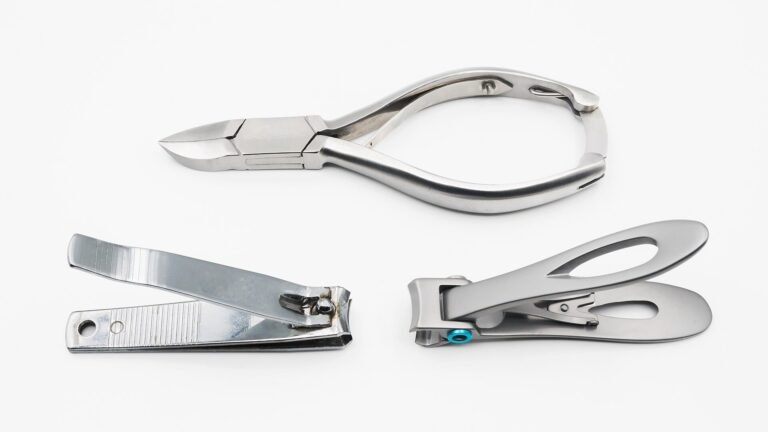
Why does a tiny knife change the answer? The Narita Airport prohibited items FAQ explains the logic. Screeners check carry-on bags for anything that could work as a weapon on board. They check checked bags for goods that could cause a fire or explosion in the hold. A plain clipper is not a weapon. A fold-out blade is, even a short one, so it goes below deck.
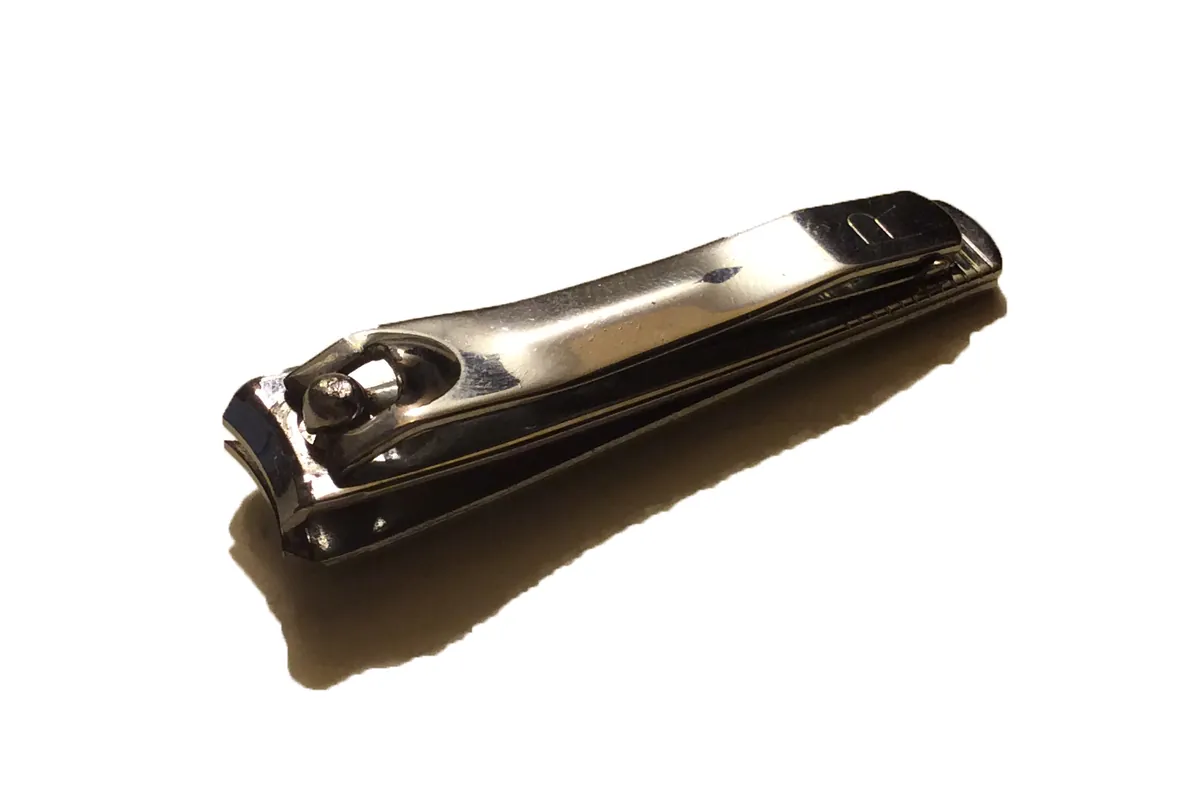
Look at your clippers before you pack them. Many travel sets fold a nail file and a small pick out of the lever. A blunt file or pick is fine. A sharp, flat blade meant for cuticles is the part that sends the clipper to the hold.
On Japanese signs and on the bureau’s own pages, two phrases come up again and again. 機内への持込み (kinai e no mochikomi) means taking an item into the cabin. お預け手荷物 (oazuke tenimotsu) means checked baggage. If a screener points at your nail kit and says one of them, you will know which bag they mean.
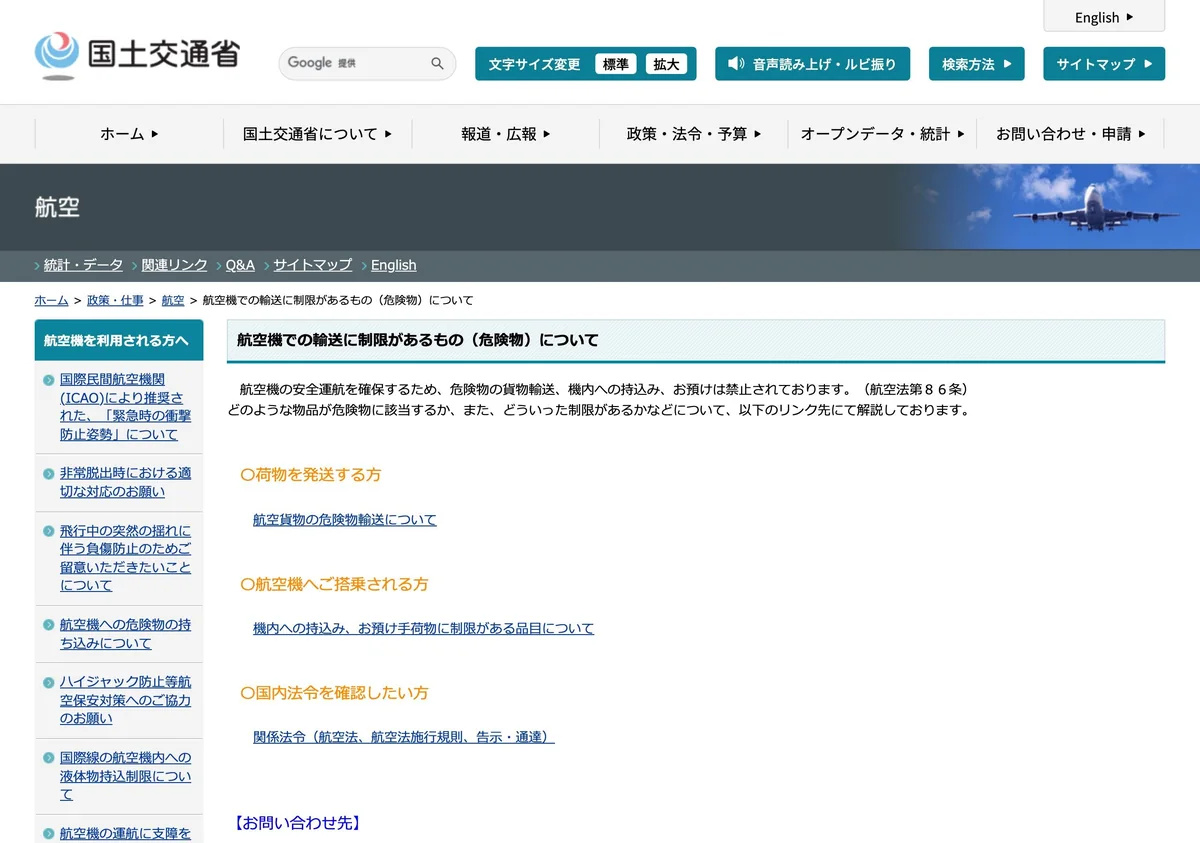
The screenshot above is the bureau’s page on items restricted on aircraft. It cites Article 86 of Japan’s Civil Aeronautics Act. It also links to the list of restricted carry-on and checked items and to the liquids rules for international flights. Questions about a specific item go to your airline, the page says.
Every nail tool, sorted: cabin or checked bag
A full manicure kit mixes three kinds of item: blades, liquids and electronics. Each kind follows its own rule, so one kit can end up split across two bags. The table below sorts eight common nail tools by the bureau’s Japan Civil Aviation Bureau restricted items examples (April 2026) and our database.
| Item | Carry-on | Checked bag | Condition |
|---|---|---|---|
| Nail clippers | Yes | Yes | No cuticle knife attached |
| Clippers with a cuticle knife | No | Yes | The knife counts as a blade |
| Nail scissors | Yes, if small | Yes | Blade 6cm or less, tip not pointed |
| Tweezers | Yes, if rounded | Yes | Rounded tips, not heavy-duty |
| Nail polish | Yes | Yes | 0.5 L per container; 100ml bottles in the bag on international flights |
| Nail polish remover | Yes | Yes | Same limits as nail polish |
| Nail glue | No | No | Unless a safety data sheet shows it is not dangerous goods |
| Rechargeable UV or LED lamp | Yes | Yes | Built-in battery; spare batteries and power banks carry-on only |
Read the table from left to right. A yes in the carry-on column means the item can stay in the bag you keep at your seat. The condition column tells you what makes the answer flip.
Plain nail clippers are the easiest item in the kit. Rounded tweezers also pass, as our tweezers page shows. Pointed or heavy-duty tweezers go in the checked bag.
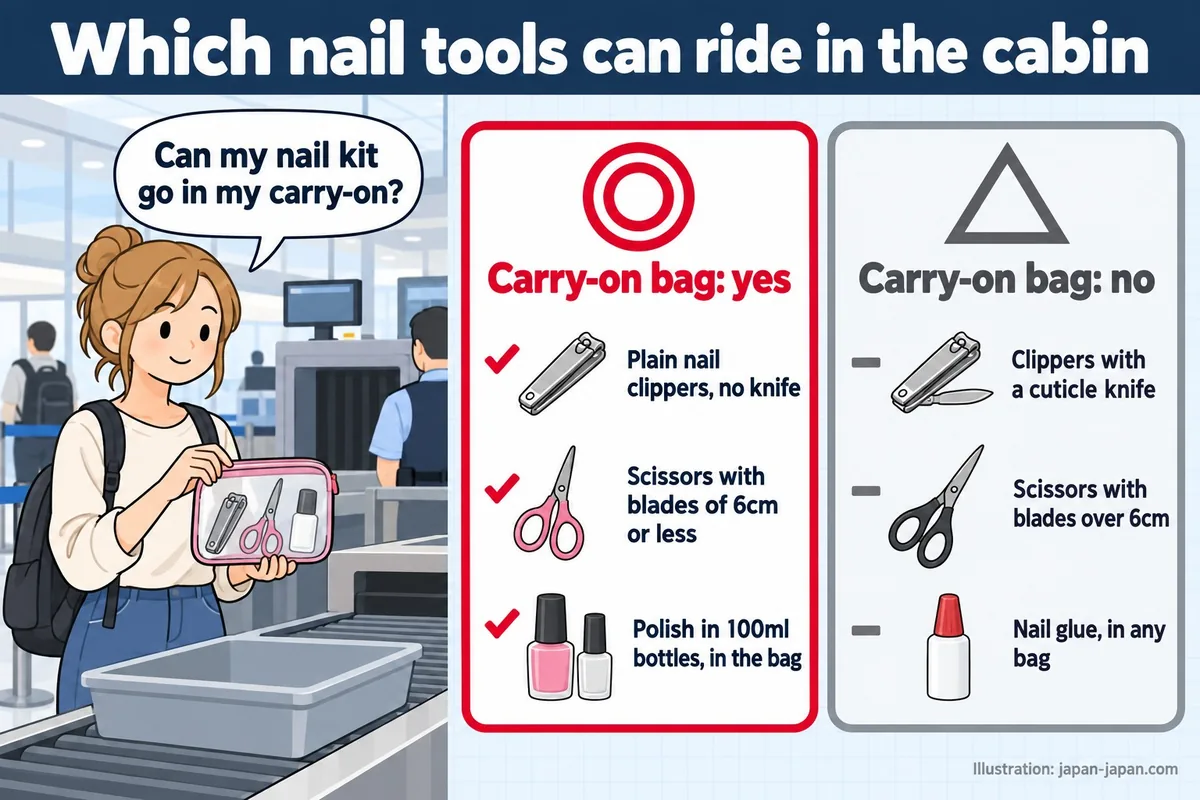
The picture above puts the two groups side by side. On the left are the tools you can keep at your seat. On the right are the three items most often taken at the checkpoint: a clipper with a cuticle knife, long scissors and nail glue.
Razors sit in the same group as blades. Our razors page records that T-shaped razors and small cosmetic razors for eyebrows can be carried on. The Narita FAQ is stricter in its wording and tells travelers to put shaving razors in a checked suitcase. If your kit has an eyebrow razor and you are not sure, put it in the checked bag.
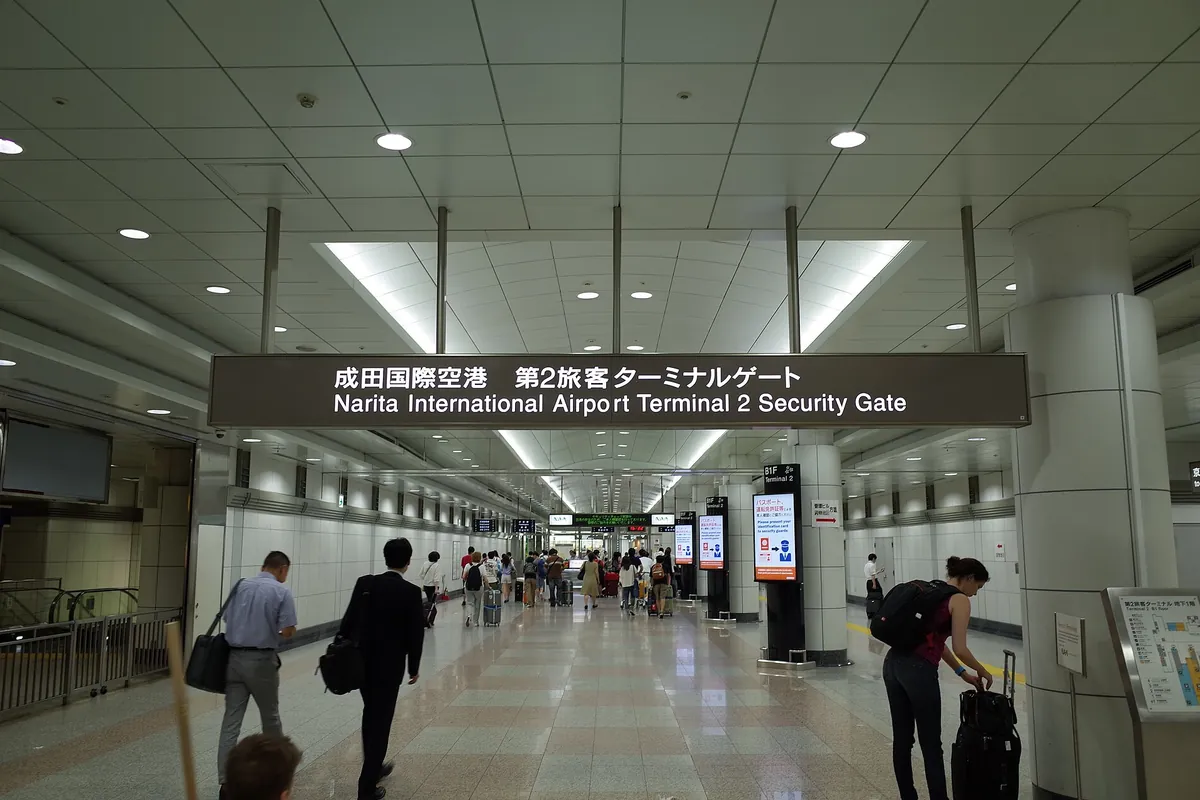
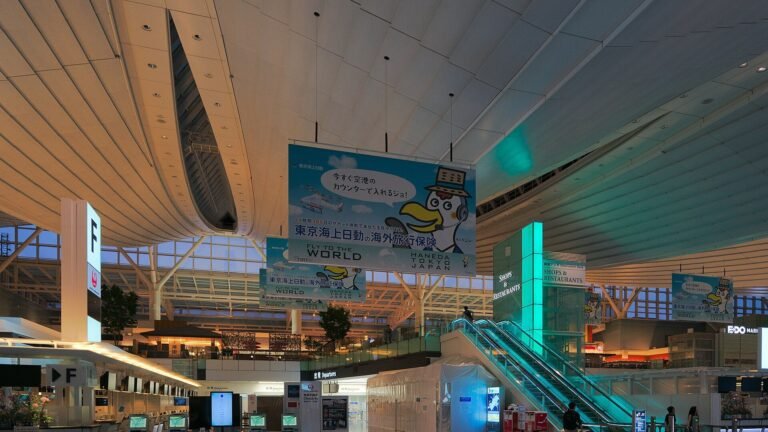
This is the screening area you meet at Narita before you reach the gates. Your carry-on goes through the X-ray, and on international flights your liquids bag goes in a tray of its own. Anything the screener cannot accept in the cabin has to be checked, sent back with someone, or left behind.
Nail scissors and the 6cm blade rule
Nail scissors follow the general scissors rule. Our scissors entry in the What You Can Bring database sets two conditions for the cabin. The blade must be 6cm or less, measured from the tip to the pivot, and the tip must not be pointed.
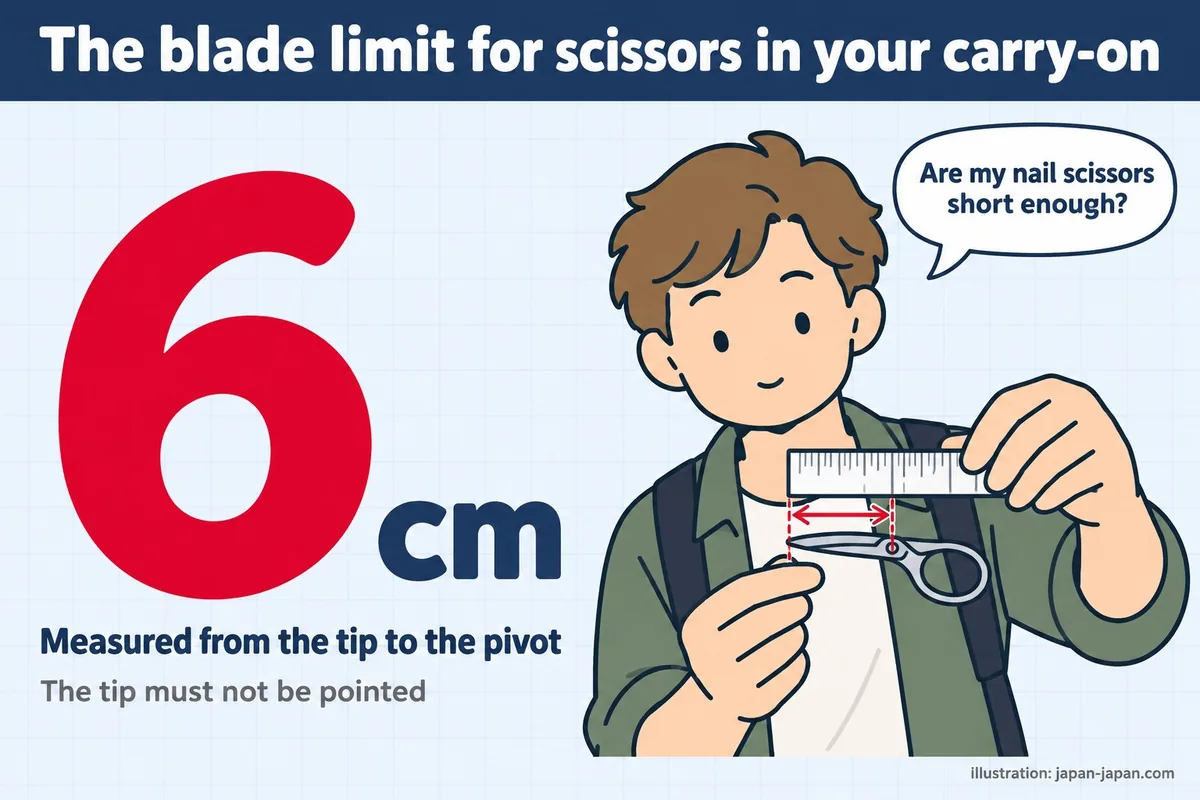
The drawing shows where to measure. Put a ruler on the blade and start at the tip. Stop at the screw or rivet where the two blades cross. That distance is the number the screener cares about, not the length of the whole tool.
Most curved cuticle scissors and small eyebrow scissors come in well under the limit. Small cosmetic scissors for eyebrows or nose hair are named on our scissors page as allowed. The scissors in a travel sewing kit are allowed too. Long hair-cutting scissors and kitchen scissors almost always pass 6cm, so they go in the checked bag.
A pointed tip is the second trap. Some cuticle scissors have a very fine point even with a short blade. If yours do, a screener can still refuse them. Round-ended scissors avoid that question.
Tweezers follow a similar logic, based on the tip. We covered them in a separate guide, Can You Bring Tweezers on a Plane to Japan?, with the same answer for nail clippers.
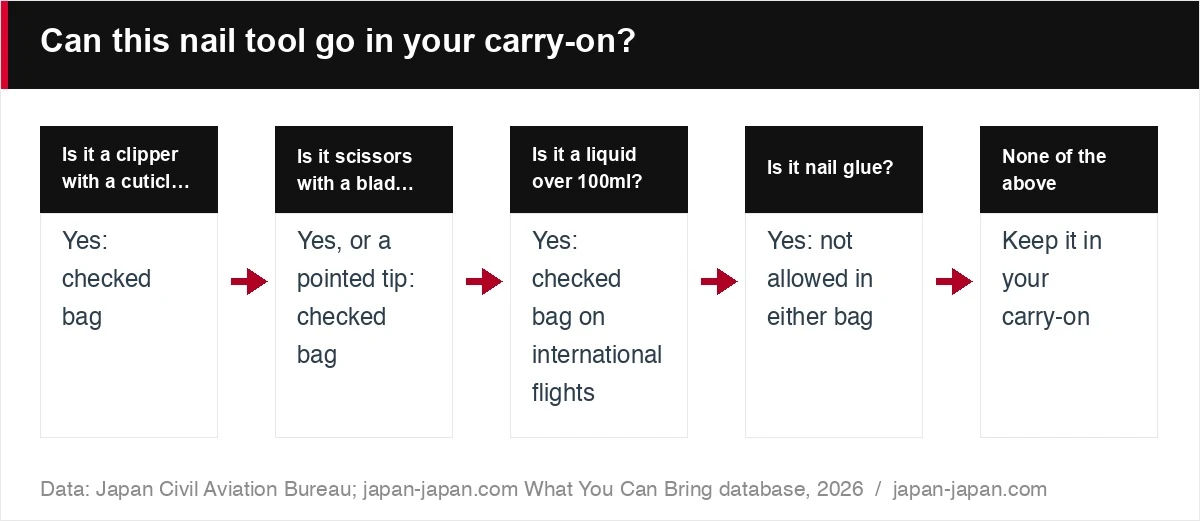
The flow above turns the rules into four questions. Start with the blade, then the liquids, then the glue. If an item fails a question, it moves to the checked bag or stays at home.
Nail polish and remover: the 100ml liquids bag
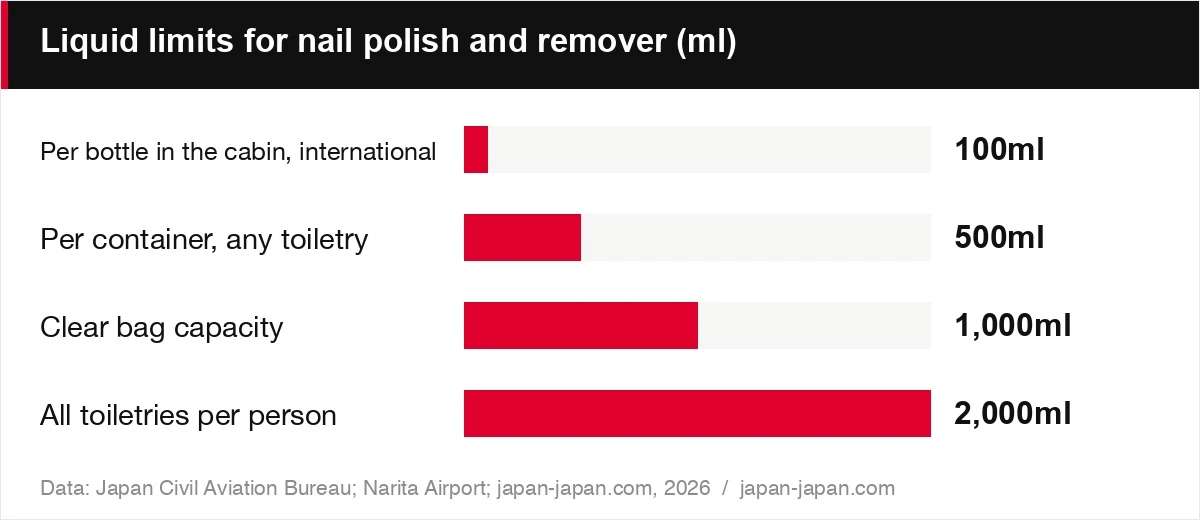
Nail polish and nail polish remover count as toiletries. Our nail polish and remover entry in the What You Can Bring database sets two limits. Each container can hold up to 0.5 litres or 0.5kg, and each person can carry up to 2 litres or 2kg. Those limits apply to both bags, in case you were planning to pack a big refill of remover.
International flights add a second, tighter rule for the cabin. Both items appear on the Japan Civil Aviation Bureau liquids restriction list, so they fall under the liquids limit. Each bottle must hold 100ml or less. All the bottles go in one transparent re-sealable plastic bag of 1 litre or less.
| Item | Value | Note |
|---|---|---|
| Per bottle in the cabin, international | 100 ml | |
| Per container, any toiletry | 500 ml | 0.5 L |
| Clear bag capacity | 1000 ml | 1 L |
| All toiletries per person | 2000 ml | 2 L |
The chart shows how far apart the numbers are. A standard bottle of polish is far below 100ml, so polish rarely causes a problem. Remover is the one to watch, because shops sell it in larger bottles.
The bag itself has a size rule. Our zip-lock bag page gives it as 1 litre or less, about 20cm by 20cm. The Narita FAQ adds a useful detail. A bag of 24cm by 17cm adds up to about 40cm across both sides, so it is accepted. Printed bags are fine too, as long as you can see what is inside.
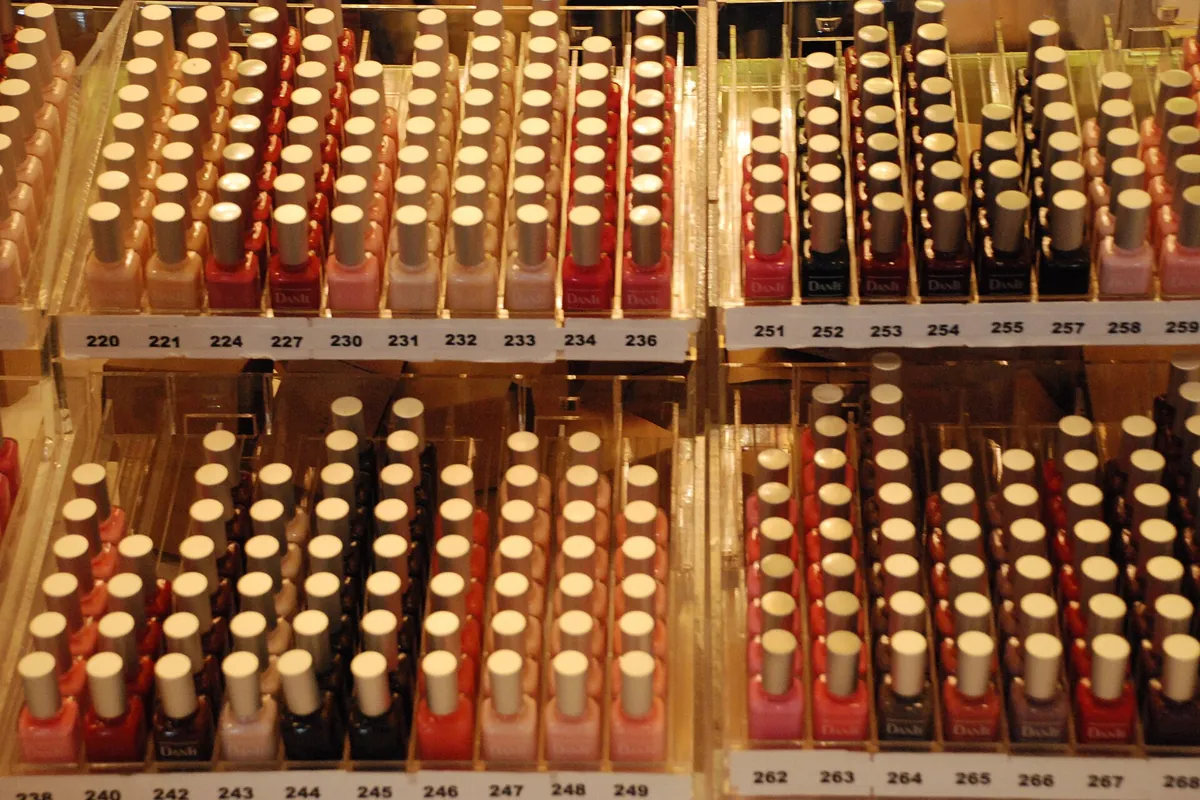
Polish bottles like these go in the clear bag with your other liquids. Put the bag on top of your carry-on so you can lift it out at the checkpoint in one move. For the full liquid rules, including gels and sprays, see our liquids page on the 100ml rule.
The 100ml bag rule is an international-flight rule. The Narita FAQ marks every answer about it [International flight]. On a domestic flight inside Japan, the toiletry limits per container and per person are the ones to check.
Transfers are where people lose bottles. The Narita FAQ says that when you arrive on an international flight and connect to another one without entering Japan, the liquids limit applies again. Anything over the limit is thrown away at the transfer checkpoint. Airlines also treat duty-free bags differently on transfers, which our liquids and duty-free by airline guide compares.
Nail glue, gel kits and UV lamps
Nail glue is the item most likely to be taken from you. Our glue and adhesives page records that adhesives are listed as not allowed, in the cabin or the hold. The one exception is a product with a safety data sheet or a document from the maker showing it is not dangerous goods.
In practice, few travelers carry that paperwork for a small tube of nail glue. Leave it at home and buy a replacement after you land. Japanese drugstores sell nail glue alongside press-on nails.
Gel polish itself is a liquid, so it follows the polish rules. Keep each bottle at 100ml or less and put it in the clear bag on international flights. The cleansers and removers in a gel kit follow the same rule. The same Narita FAQ warns that the oil used to dissolve oil paint is dangerous goods. That is a reminder to check any solvent in your kit before you pack it.
A rechargeable UV or LED lamp is an electronic device with a built-in battery. The Narita FAQ says there is no restriction on lithium-ion batteries built into products such as computers, digital cameras and phones. Pack the lamp switched off, ideally in your carry-on.
Heating tools are different. The Narita FAQ says a rechargeable hair iron cannot go in either bag unless you detach the battery. If your nail kit includes any cordless heated tool, check its battery before the trip.
Loose batteries and power banks have their own rules. Under the Japan Civil Aviation Bureau power bank rules (April 2026), each power bank must be 160Wh or less. Since 24 April 2026, the limit is two power banks per person. You may not recharge a power bank on board or use it to charge another device, and it stays out of the overhead bin.
Power banks and spare lithium-ion batteries ride in your carry-on only, never in the checked bag. Our power bank page and lithium battery page break the limits down by watt-hours.
Flying from the UK and other countries
If you fly into Japan from abroad, the first checkpoint you face is in your departure country, under its own rules. For nail tools, most of those rules line up with Japan’s.
The UK publishes a clear table. The UK Government hand luggage rules for personal items allow nail clippers and nail files in hand luggage and in hold luggage. Tweezers and disposable razors with fixed cartridge blades are allowed in both.
The UK scissors rule matches Japan’s number. Small scissors with blades no longer than 6cm can go in hand luggage. Larger scissors go in the hold, and the UK page adds that you should check with your airline. Round-ended or blunt scissors are allowed in both bags.
The UK also treats liquids the same way for this kit. Contact lens solution is allowed in hand luggage up to 100ml, and the same 100ml limit governs polish and remover in the cabin.
For other countries, our nail clippers page lists the answer for Japan and 3 other places we checked. The carry-on answer for nail clippers is the same in all of them.
The return flight is where Japan’s rules apply. On the way home, you go through screening at a Japanese airport. The cuticle knife, the 6cm blade and the 100ml bottle rules all apply again. A kit that passed in London can still lose a bottle of remover at Haneda if you bought a bigger one in Japan.
Packing a nail kit for your Japan trip
Split the kit before you leave home, not at the checkpoint. Put everything that passes the cabin rules in one small pouch. Put everything else in your suitcase.
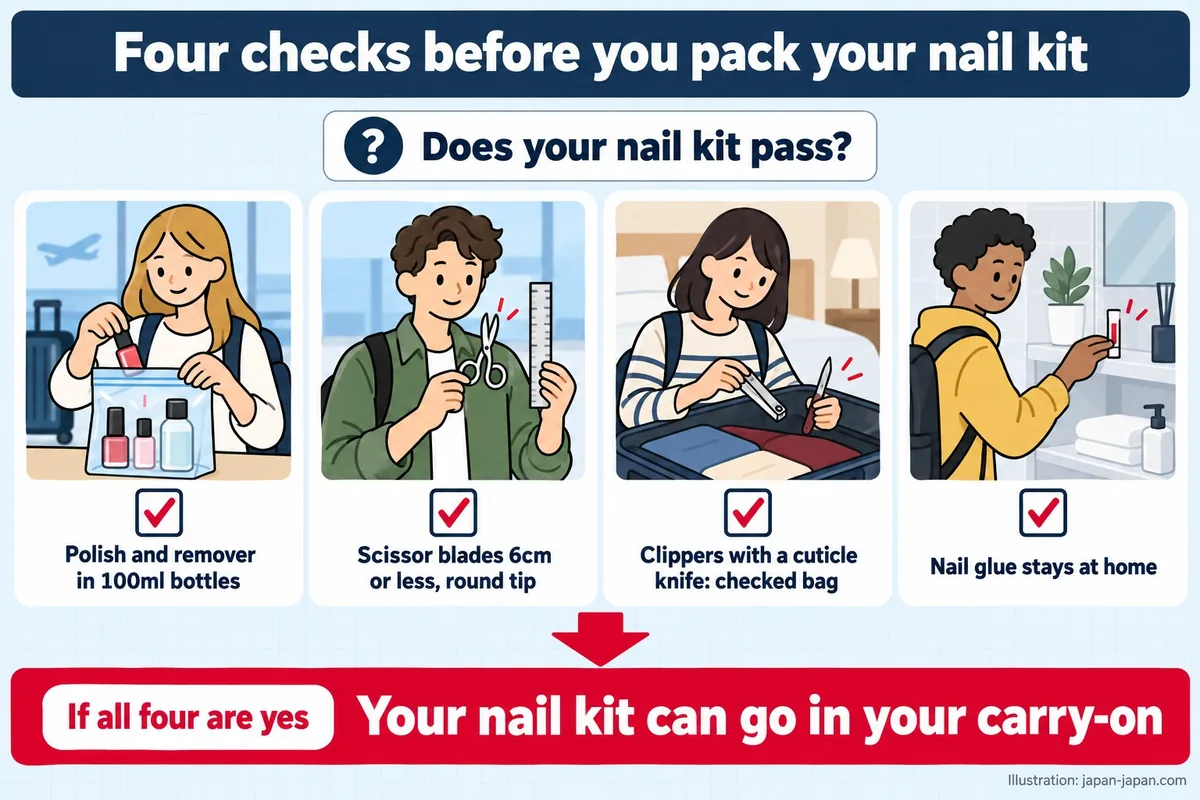
The checklist above covers the four checks that matter. If all four answers are yes, the whole kit can stay in your carry-on.
- Clippers: plain ones in the pouch, any with a cuticle knife in the suitcase.
- Scissors: measure the blade from tip to pivot. 6cm or less with a round tip stays in the pouch.
- Polish and remover: bottles of 100ml or less in the clear bag, larger bottles in the suitcase.
- Glue: leave it at home unless you carry the maker’s safety document.
- Lamp and power bank: lamp switched off, power bank in your carry-on only.
When an item is borderline, the Narita FAQ gives the same advice again and again: put it in your checked baggage. That is the safe default for long scissors, razors and anything with a blade you cannot measure.
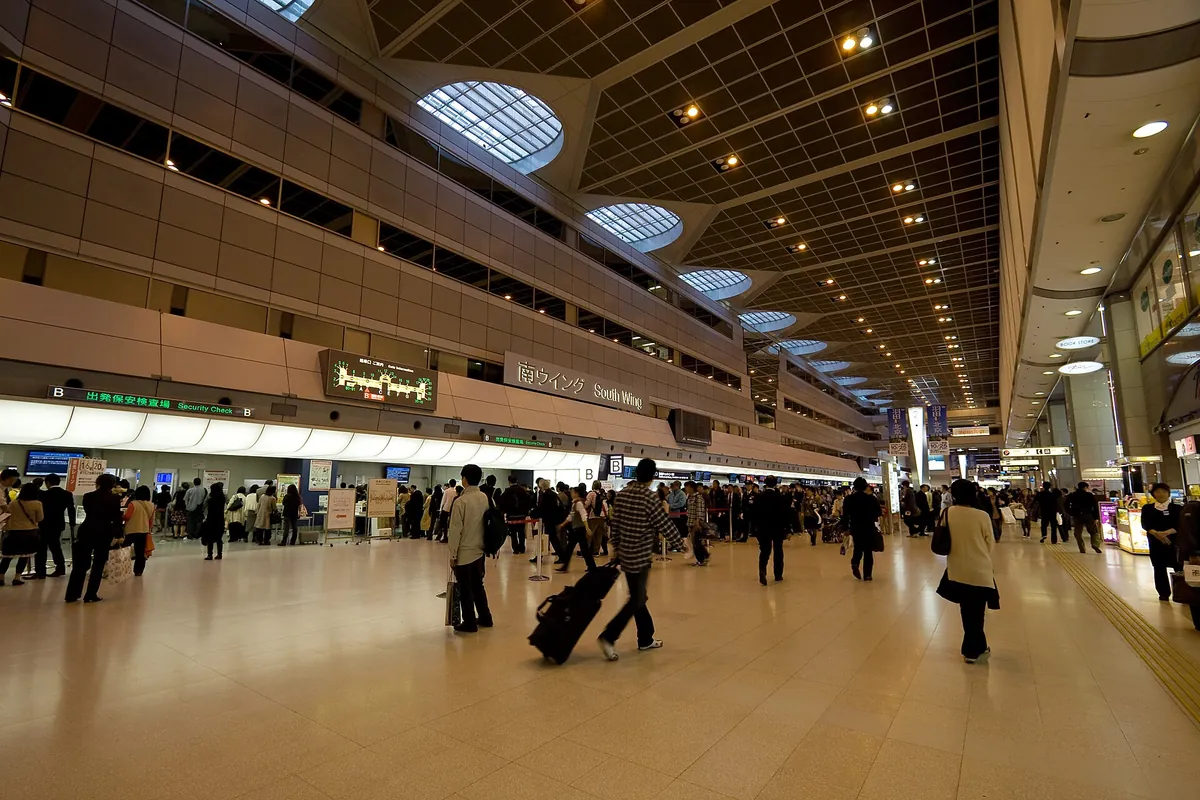
At Haneda and Narita, you drop your checked bag at the airline counter before security. Once the bag is gone, you cannot move a tool into it. Do the sorting at home or at the hotel. Our Haneda Airport guide and Narita Airport guide cover getting there on time.
Japan is a popular place to buy nail polish and nail art supplies. If you are bringing your own cosmetics into Japan, the Ministry of Health guide to personal-use cosmetics imports sets a limit without paperwork. You can bring up to 24 per item, regardless of brand or colour, without Import Confirmation.
The ministry’s example is lipstick: up to 24 lipsticks of any brand or colour. Our cosmetics quantity page applies the same count to other cosmetics. For most visitors, a nail kit is far below that number.
FAQ
Can you take nail clippers in your carry-on on a flight in Japan?
Yes. Japan’s list allows nail clippers in the cabin and in checked baggage, on domestic and international flights. The one exception is a clipper with a small cuticle knife attached, which has to go in your checked bag.
Can you take nail polish on a plane to or from Japan?
Yes. Nail polish counts as a toiletry, with a limit of 0.5 litres per container and 2 litres per person. On international flights, each bottle in your carry-on must be 100ml or less and sit in one clear bag of 1 litre or less.
Are nail scissors allowed in hand luggage in Japan?
Yes, if the blade is 6cm or less, measured from the tip to the pivot, and the tip is not pointed. Small cosmetic scissors for eyebrows usually pass. Longer scissors go in your checked bag.
Can you bring nail glue on a plane in Japan?
No. Adhesives are listed as not allowed in the cabin or the hold. The only exception is a product with a safety data sheet or a maker’s document showing it is not dangerous goods. Most travelers buy nail glue after they land.
About the author